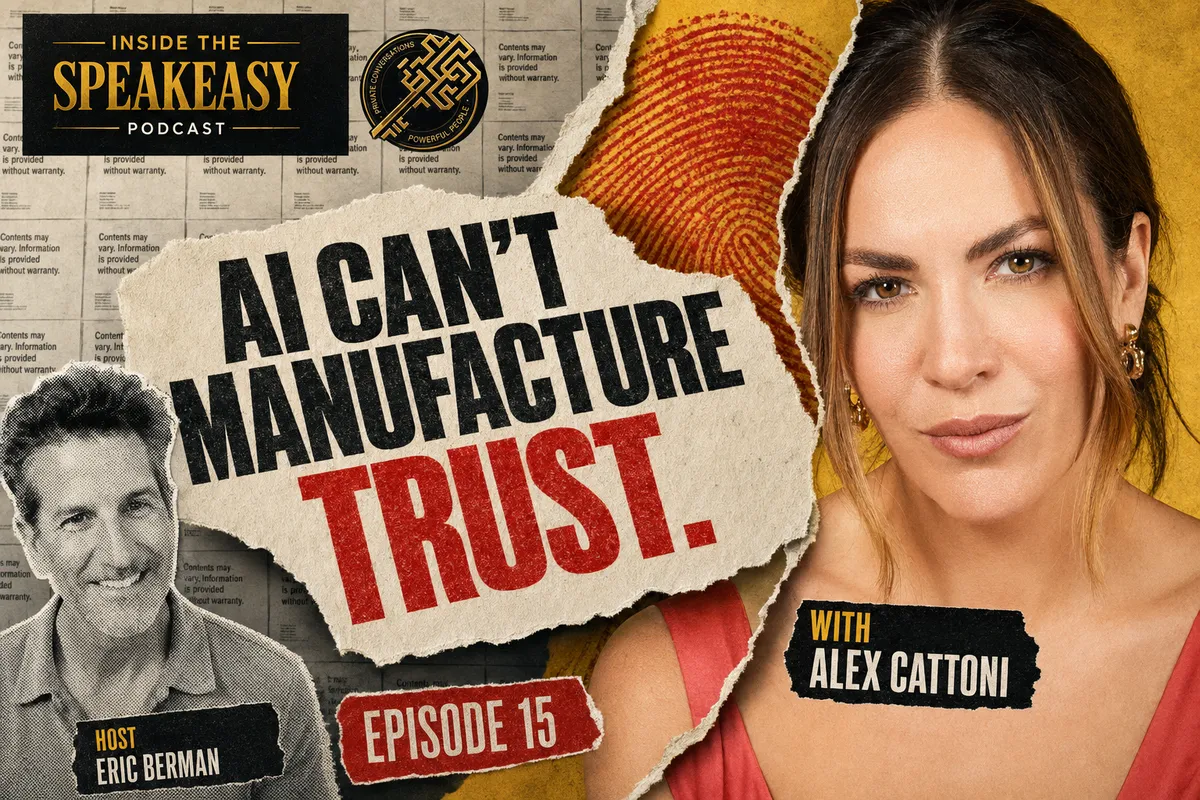
Alex Cattoni, copywriter, marketer, and founder of Copy Posse, went from a marketing intern at Mindvalley in Kuala Lumpur to running a seven-figure education business with a team of 10 women. In this conversation with host Eric Berman, a friend of more than 10 years, Alex walks through the health crisis that pushed her to quit her job, the lonely first year of freelancing on an air mattress in Vancouver, and how co-hosting Flight Club with Glen Ledwell pulled her out from behind the scenes. She explains why she started a YouTube channel after growing jaded with the marketing world, and why she believes the messenger is becoming more important than the message. Alex also lays out her three touch points of trust and makes the case for using AI every day without handing over the human connections that customers are craving.
In this episode, you'll discover:
- The three touch points of trust Alex says every online business has, and why she warns against outsourcing any of them to AI
- How Alex uses AI inside Copy Posse every day, from analyzing data and brainstorming hooks to matching members into accountability pods
- Why Alex believes the messenger is becoming more important than the message in a marketplace flooded with similar offers
- How a celiac diagnosis that came too late, a year on an air mattress, and nonstop networking shaped Alex's freelance business
- What made Alex start a YouTube channel to attract agency clients, and how it turned into Copy Posse and a seven-figure year in 2020
Episode Summary
Alex Cattoni was finishing a business degree with a major in economics at the University of Alberta, with law school on the table, when she decided she wanted to travel again first. Through AIESEC, a student organization that places members in internships abroad, she found a marketing internship listing in Kuala Lumpur, Malaysia. The company was Mindvalley, whose founder, Vishen, was also an AIESEC alumnus. Alex admits she barely understood what the company did; she remembers being confused by its squeeze page. Within a couple of weeks she had sold her car, quit her restaurant job, and moved, telling Vishen and co-founder Mike in her interview that she would clean the toilets if needed.
As one of Mindvalley's early employees, somewhere between employee number 8 and 15, Alex said yes to whatever gaps needed filling. She ran blogs, taught herself pay-per-click advertising, and was promoted to business manager, creative director overseeing most launches, and finally event director, organizing Awesomeness Fest, now called A-Fest, in Maui in 2011. She never held the title of copywriter there, but working closely with the copywriters and marketers is where she fell in love with the psychology of marketing, funnels, and inspiring people to act.
Her exit was driven largely by her health. Alex was suffering from skin issues, allergies, fatigue, anxiety, depression, and panic attacks without knowing she had celiac disease. After almost four years abroad, she quit, moved to Vancouver, and started a freelance copywriting and marketing consulting business. She describes about a year of thinking she had made the biggest mistake of her life, sleeping on an air mattress in her best friend's spare room, before learning shortly after moving home that she was celiac. She networked relentlessly, flying to as many U.S. conferences as she could afford, and says it took at least five years before she stopped fearing she would have to get a 9-to-5 job. Her longest-standing client stayed with her for more than 10 years.
Co-hosting Flight Club with longtime friend Glen Ledwell was the first time Alex stepped out from behind the scenes, and she credits Glen with seeing something in her she had not yet seen in herself. Around 2018 she began building a team because she was turning down about 80 percent of client requests. In 2019 she started a YouTube channel, initially to attract agency clients, but also because she had grown jaded by tactics she did not believe in and saw a shift toward transparency and personal branding. Within a couple of months she realized her viewers wanted to build freelance and consulting businesses of their own. She officially launched Copy Posse with her first coaching program in 2020, reached seven figures that year, and stepped back from Flight Club around 2021.
Today Copy Posse trains freelance copywriters and also teaches business owners to improve their own messaging. Echoing her friend Ryan Levesque, Alex says the messenger is becoming more important than the message, because so many people sell similar things to the same audience in similar ways. When Eric asks how she is handling AI, she points to economics: the more widely available something becomes, the less valuable it is. Now that generative AI can produce words on a page for everyone, trying to out-produce competitors with it is a race to the bottom. She argues that after attention, trust is the most valuable currency in marketing.
Alex lays out three touch points of trust: one-to-many content, one-to-one communications such as DMs and customer service emails, and the customer experience of programs, courses, and memberships. Her team uses AI every day for data analysis, hooks, survey summaries, matching members into accountability pods, custom GPTs, and an AI agent in development, but she is careful not to replace human-to-human trust building. She shares how viewers of a live masterclass insisted in the chat that she was AI, and how many customers write back surprised that a real person answered. The episode closes with her Copy Posse job board, which connects business owners with her trained marketers without any cut for Alex, and a recent three-week trip to Puglia, Italy, during which her team took over her emails.
Big Ideas Discussed
The Three Touch Points of Trust
Alex argues that there are only three ways an online business can build trust with its audience and customers. The first is content, which she defines as any one-to-many communication. The second is one-to-one communication, such as DMs and customer service emails, which she calls probably the most important because converting a one-to-one conversation into a sale is much easier than converting a one-to-many one. The third is the customer experience, meaning how results are delivered through programs, courses, and memberships.
Her warning is that businesses should be very careful about outsourcing any of these three touch points to AI. She points to companies bragging about handing their entire customer support team to AI because nobody is complaining and sales are still coming in, and asks whether those customers will come back, buy again, and trust the business. For entrepreneurs deciding where to automate, her framework offers a practical test: if a task sits on one of these three touch points, protect the human element.
Use AI Everywhere Except Where Trust Is Built
Alex is clear that she is not anti-AI. Her team uses it every single day to analyze data, brainstorm hooks, summarize survey data and content, and match community members into accountability pods. They have custom GPTs and knowledge databases, and they are building an AI agent so people can get answers to their questions immediately. She is also comfortable letting AI help with transactional emails such as recaps, takeaways, and meeting notes.
Where she draws the line is storytelling emails and the communications meant to connect with an audience's pain points. Even if no one can spot a single AI-written email, she believes that replacing your heart and soul over an extended period creates a disconnect people feel, and that they will not email to say they no longer trust you; they will simply move on while conversions quietly drop. In her view, the real question is not whether to be pro-AI or anti-AI, but how to be discerning about how, where, and when to use it.
When Everyone Has the Same Tool, the Messenger Wins
Drawing on her background in business economics, Alex explains that the more widely available something becomes, the less valuable it becomes. Copywriting as simple words on a page was once controlled by a select few who could charge $10,000 for a sales page. Now generative AI is available to everyone, and trying to outcompete rivals by producing more content with the same tools is a race to the bottom. If one person creates 10 pieces of content a day, someone else can create a hundred, or a million.
Echoing her friend Ryan Levesque, Alex believes the messenger is becoming more important than the message, because so many businesses sell similar things to the same people in similar ways. What sets a business apart is who is behind it. That is why she now talks more about personal branding, sharing what you value, and having real conversations, since people want to put their money where their values are. Copywriting may be the wrapping, she says, but it all starts with knowing who you are, what you stand for, who you serve, and how you want to show up.
Say Yes to the Gaps, Then Step Out From Behind the Scenes
Alex's career was built on saying yes to opportunities she did not fully understand. At Mindvalley, she moved from intern to running blogs, teaching herself pay-per-click ads, and eventually serving as creative director and event director. As a freelancer in Vancouver, she spent about a year taking small odd jobs while flying to as many conferences as she could afford to build her network. She describes being extremely comfortable working behind the scenes for clients for a long time.
The turning point came when Glen Ledwell asked her to co-host Flight Club, putting her on stage for the first time despite imposter syndrome about being, in her words, just a little freelance marketer. That confidence carried into her YouTube channel, which she started partly because she had so much to say about modern marketing and few women were teaching it with her level of experience. Eric highlights the lesson for entrepreneurs: getting into the right rooms, around people who see you in a certain light, can change what you believe you are capable of.
Questions We Answer in This Episode
What are the three touch points of trust Alex Cattoni teaches?
Alex Cattoni says online businesses can build trust in only three ways: through content, meaning one-to-many communication; through one-to-one communications such as DMs and customer service emails; and through the customer experience delivered by programs, courses, and memberships. She advises being very careful about outsourcing any of these three touch points to AI.
Is Alex Cattoni against using AI in marketing?
No. Alex Cattoni says she loves AI and that her team uses it every day to analyze data, brainstorm hooks, summarize surveys and content, and match community members into accountability pods. They also use custom GPTs and are building an AI agent. Her concern is replacing the human-to-human activities that build trust.
Why does Alex Cattoni say AI-generated content is a race to the bottom?
Alex Cattoni points to a basic economic principle: the more widely available something becomes, the less valuable it is. Generative AI is now available to everyone, so trying to outproduce competitors with the same tools leads nowhere, because someone can always create more. She believes trust, not volume, is what sets a business apart.
What does "the messenger is more important than the message" mean?
Echoing her friend Ryan Levesque, Alex Cattoni says so many businesses sell similar things to the same people in similar ways that who you are has become the main differentiator. That is why she teaches personal branding and getting clear on your values, since people want to put their money where their values are.
How did Alex Cattoni get her start at Mindvalley?
While finishing her business degree at the University of Alberta, Alex Cattoni found a marketing internship in Kuala Lumpur, Malaysia, through the student organization AIESEC. The company was Mindvalley. As an early employee, she rose to business manager, creative director, and event director, organizing Awesomeness Fest in Maui in 2011.
Why did Alex Cattoni leave Mindvalley to start her own business?
Alex Cattoni left mainly because of serious health problems, including fatigue, anxiety, and panic attacks, that turned out to be caused by undiagnosed celiac disease. After almost four years abroad, she moved to Vancouver and started freelancing. She learned she was celiac shortly after moving home and spent about a year struggling before her business found its groove.
How can business owners hire a copywriter trained by Alex Cattoni?
Alex Cattoni runs a job board for graduates of her higher-level Copy Posse programs. Business owners can go to copyposse.com, scroll down to the job board, and fill out a quick form, and the job is posted to her trained students. Alex says she takes no percentage or kickback from the hires.
Full Episode Transcript
Read the Full Episode Transcript
Cold Open: Why Marketing Still Needs a Human at the Wheel
Alex Cattoni: And that is still a big part of what I do. My flagship program teaches that. It teaches people the skills they need to essentially get paid to write. But more than write, get paid to do marketing for clients. Because, you know, you've been around as long as I have, everyone's always looking for someone to help them with their marketing. And no matter how advanced AI gets, marketing is always still going to be incredibly important and people are going to need to be able to have their hand on the steering wheel for that.
Eric Berman: Welcome to the Speakeasy Podcast where the real conversations happen behind closed doors with the boldest entrepreneurs, creators and growth minds in the game. No fluff, no filters, just the raw strategies, personal stories and mental models that move the needle. I'm Eric Berman. Now let's get into it.
A Friendship That Goes Back to Moscow and Flight Club
Eric Berman: In today's Inside the Speakeasy podcast, I am so honored and excited to have somebody who I've been friends with for, gosh, probably over 10 plus years now. And somebody's taught me so much. And she is absolutely the go to person when I think about branding and especially copywriting. She's my first call and fortunately she'll still takes my calls because she's blown up and been so amazing. Alex Cattoni, one of the biggest gurus when it comes to copywriting and branding and we're going to get into some critical things of what's going on in the world of AI and copy and she's going to throw some big ideas, earth changing ideas on what you should be doing when it comes to AI and copy and what you should not be doing. You're not going to want to miss those. Plus you're going to hear about this incredible, her incredible journey going from an intern over at Mindvalley all the way into running a mega seven figure business and just crushing all things online. Welcome, Alex Cattoni.
Alex Cattoni: Thank you. I always got time for you, Eric.
Eric Berman: Oh, you are too kind. And that's how you know your true friends are when they really blow up and get successful. And they still, like I don't get thrown immediately into the voicemail and you still respond within a couple of days. That's amazing. So I appreciate you for that.
Alex Cattoni: Thank you, thank you.
Eric Berman: But I mean, for those who don't know your story, I mean, wow, we have so much we can cover today, but, well, first of all, other than you and I walking the streets of Moscow, that's how long our friendship goes. And I can. There's not too many calls I'm going to have or interviews. I'm going to have something I could say I went to Russia with because there's three, four of us back in that trip.
Alex Cattoni: Yeah, it was what, like, was it 20? It was 2017, I think. And we went to Moscow. Like very few people I can say, like, hey, remember that one time in Russia?
Eric Berman: That's right. We will always have a connection to Bond due to our trip to Russia.
Alex Cattoni: Yeah, exactly. That was a fun Mastermind trip.
Eric Berman: Yeah, that was a cool experience. And of course that's. You know, I really got to know you quite a bit when you were being a Glen's partner and wing woman for Flight Club Mastermind. And prior to that, your story is amazing. I mean, you started off and I want to go a little bit in your entrepreneurial journey before we talk about what's crushing in copy, like what you've been able to grow. And I'm really curious, I want to get into what's probably on everybody's mind right now is this AI and how it's affecting copy in your whole business and your world. And I know you tackle that head on. So all of us that are freaking out about that, you're going to probably help promise and give you some ideas and directions and some shares on that.
Alex Cattoni: Yes, I will do my best.
Eric Berman: So, I mean, way back and I remember this story pretty vividly, you were one of the early people helping out with this in over in Mindvalley. And a lot of people know Mindvalley and I believe what you went like from intern to some major creative director or something remind me of the story.
Alex Cattoni: That was my title. Major creative Director, major creator.
From AIESEC Intern to Mindvalley in Kuala Lumpur
Eric Berman: Actually, let's take a step back before how do you even get to Mindvalley? All of a sudden you're finding yourself in the middle of wherever that is, wherever you guys were. Where was that? Philippines or somewhere?
Alex Cattoni: Malaysia. Kuala Lumpur, Malaysia. So I was finishing up my degree. I studied at the University of Alberta, U of A, but the Canadian one in Alberta, Canada, and was finishing up my degree in business law with a major in economics. And I was like, apply to law school. But I'm like, you know what? Before I decide I'm going to become a lawyer and like do the second chapter, you know, of my studies, I really want to go abroad. And I had spent the last year of my undergrad degree living in Vienna, Austria. Had just fallen in love with travel. And I thought, okay, I really want to travel again. But I have no money. So I need to find someone who will give me money to travel. And through an organization that I was a member of in university called AIESEC which facilitates students to go do internships abroad. I essentially stumbled upon Mindvalley because Vishen was also an AIESEC member when he was in university and he was an alumni of the program. And so I just found, literally found a job listing on this job site for this program and that said, you know, marketing internship Kuala Lumpur, Malaysia at that point I was like marketing, okay. But they weren't teaching like online marketing in school back then. They called it e-commerce. I remember like they called it e-commerce but it was literally like the back of the textbook. One little chapter that's like websites. And you're like, I don't even understand, like what do you mean? And so what I found, Mindvalley, I literally was like, I have no idea what they do but I really want to go work abroad. And I like marketing. I did a minor in marketing, so I'm like okay. So I applied and two words, it.
Eric Berman: Said travel and marketing. You're like I'm so did the map out and see where you're even going? Like, I mean yeah.
Alex Cattoni: And I have this really like distinctive memory of looking at their website and trying to understand what they did. Right? Because I mean as someone now who's been in the info marketing world for so long, it makes sense. But back then I remember clicking from their website to one of their landing pages and it truly was like a squeeze page where the only thing you could do is enter your name and email address. And I was so confused. I'm like where do I click? What the hell is this? I mean I, I asked so few questions. Like now as an adult I look back and I'm like how did my parents ever let me just on a whim like move to Malaysia? Like thank God it wasn't some like you know, crazy trafficking scam or anything like that. Cuz I truly within a couple of weeks had sold my car, quit my job. I was serving at a restaurant down the street from my parents house because I had moved back into my parents basement. And I said to mom and dad, I'm like, well I'm moving to Malaysia. I had to look it up on the map and like it's above Singapore and below Thailand. That's all I really knew. And off I was, off I went.
Eric Berman: How'd that conversation go?
Alex Cattoni: You know, surprisingly well. I think they were like, wow, okay, good luck. You know, like I think they probably thought like, at least she's not that serious about it. And then when it happened, they were like, I remember having the interview with Vishen and Mike, who was the co-founder at the time. And, and I just remember saying to them, like, I'll do anything, like I'll clean the toilets. Like, I'm just, I'm a fast learner. Just put me anywhere. And that was. I moved over there. I think it was May 2007.
Eric Berman: Okay.
Alex Cattoni: Or 2008, something like that.
Eric Berman: Okay. So the career was born indirectly. You had no idea, nor did you know you were this amazing entrepreneur. So, okay, so you get there and you're interning and then what, you just quickly rise in the ranks? What happened there?
Alex Cattoni: Yeah, I mean, I think that's the perk of joining a startup. You know, I was one of the early employees there. Probably then employee number like 8 and 15, I don't know, somewhere in there. And it was just all about getting scrappy, you know? You know, you've started multiple companies. It's like you get into this environment where you kind of have your role and then there's a million gaps that need to be filled. And I think I was just really good at being like, I'll try that, I'll try that. I mean, for a while I was running the blogs and then for a while I was trying pay per click advertising. Even though I didn't even really know what it was. I was watching all the resources I could find on how to run Google Ads, you know, do pay per click. And then I managed so to get promoted to business manager. And then, and then next thing you know, promoted to creative director where I was overseeing most of the launches and things like that that were happening at the company. And then finally I got promoted to event director where the very last thing I did at Mindvalley before leaving was organized Awesomeness Fest, now called A-Fest, where it's happened in Maui, Hawaii in 2011. So I had the full range of experiences while at the company.
Eric Berman: What a cool. I mean, for those of us think about it, I mean, I had a similar experience too, as you mentioned. I mean, just being able to see all these roles because you don't really know how good you are or what you're going to fall in love with. I mean, school, school. And you sort of go from textbook to course. Now you're like, okay, open play pen. Seriously kind of cool. Hey, I'm actually good at this compared to others. And you start to find your way.
Alex Cattoni: Yeah. And that's when I fell in love with copywriting. Like, I, I never was a copywriter at Mindvalley, I never had that title, but I worked really closely with all the copywriters and the marketers and I kind of just got this holistic view of marketing and just absolutely fell in love with the psychology behind it and how to design funnels and how to inspire people to take action. And it just, I mean, talk about the best education I could have ever gotten in this industry.
Eric Berman: I can imagine. And so now the company's getting bigger and bigger.
Celiac Disease and the Leap Into Freelancing
Eric Berman: It's 2011, as you mentioned. Very scary. Think about life's. Choose your own adventures, right? You know, the big important question, the path, like, should I go down this route, which is something new, or stay here? Scary time. What to do? Walk me through what's going on there.
Alex Cattoni: Biggest reason that I left was because I was experiencing major health issues. So I'm celiac, I'm gluten free. Didn't know it at the time, was basically poisoning myself every day with the food I was eating, which would have happened no matter where I lived in the world, but I didn't know I was celiac. And so I was experiencing major, major health issues that were manifesting from like skin things to allergies, to fatigue, anxiety, depression, panic attacks. Like I was fully sick and just completely falling apart. And honestly, I could not really figure out what was going on with me. And I really thought it was maybe stress related. Obviously I was, you know, put myself into this high stress environment. I was living overseas in a tropical climate where there was mold and different things that maybe I wasn't used to. Like, you start piecing together all these things that could be what's causing your illness. And so I kind of just made the tough decision to quit my job. And at the same time I was also kind of working on stuff on the side and being really inspired by stuff I was working on. And so it kind of just felt like the moment that, okay, it's now or never, and extremely difficult. But I think what made it easier was I had been living away from family and close friends for almost four years at that point. And you really do hit this kind of fork in the road where I was like, either this will be my long term career and I'm going to set down roots and like make Malaysia my home, or now's the time, like, we're just going to freaking go start your business. I quit. I moved to Vancouver, where I live now, Vancouver, Canada, and started my freelance business doing copywriting and marketing consulting. And I'm not going to lie. Like, I, for about a year thought I had made the biggest decision or biggest mistake of my life because I had gone from being star employee, getting praise every day, surrounded by 50 plus incredible entrepreneurial individuals, to being alone, sleeping on an air mattress in, you know, my best friend's spare room, paying her parents a discounted rent because they were so kind to let me rent the spare room for so cheap and thinking, what have I done? Like, I am just destroyed my life. And it was, yeah, it was definitely a humbling experience.
Eric Berman: Wow. I mean, yeah, you figured. I mean, you had three things. I see all these things point at you and I mean, just to close the loop on the health. I mean, you're probably doing that, wondering and are you still not healthy yet? Are you sitting there saying, I did all this, I'm still sick?
Alex Cattoni: Yeah, well, I found out shortly after moving home that I was celiac. And so of course in my head I'm like, if only I had found out, you know, three months to sooner, then I wouldn't have had to quit my job. And I had to really sort of surrender to the. Everything happens for a reason. Everything happens. For me, this was how it was supposed to go. But there were definitely a few moments where I was like, do I come crawling back? Yeah, please hire me back. You know, But I also really didn't want to move back to Malaysia at that point. I had, you know, come back to Canada and enjoyed being back closer to family and stuff. So it was just like, nope, this is my path, I'm doing this.
Eric Berman: And then.
Networking Her Way to Steady Clients
Eric Berman: So now you're starting to grind and when did you sort of get that point of, okay, I'm starting to get a little bit of momentum here. You're putting the boulder up the hill.
Alex Cattoni: It took a while. I mean, I say this to a lot of my students. Like, I was networking my little butt off, you know, Like, I think that's probably right around the time that I met you. Like, I was living in Vancouver, but I was flying down to the States to go to like as many conferences as I could afford and just trying to build my network and get close clients. And it took probably a good year of just doing small, little odd jobs here and there before I really started to sort of find my groove and find clients who then, you know, would pay me ongoing and, you know, put their trust in me and all of that.
Eric Berman: Right. And so, okay, now you are all of a sudden realizing you're an entrepreneur now you're on your own now on One side. How did that feeling shift? Where as much as it was scary, you now controlled your own destiny?
Alex Cattoni: Yeah, it felt good. I was extremely proud of myself. But I think just like anyone starting their own business, like, you're doing it, but the whole time in the back of your mind, you're like, this is just a fluke. Any minute now, it's all gonna come crashing down, and I'm gonna have to go get a 9 to 5 job. Like, I think it took me at least five years of, like, doing it for myself.
Eric Berman: Yep.
Alex Cattoni: And being like, okay, I haven't had to go get a job. I think the fear was real. And of course, like any business, there were ups and downs, But I also built a lot of amazing relationships with clients that, I mean, my longest standing client I worked with for over 10 years, and they became like family, you know, and so it was, you know, it was really cool to be able to. To be behind the scenes in a lot of businesses, which is where I felt very comfortable for a long time. Just completely behind the scenes.
Eric Berman: Right. Just being back there.
Stepping Out From Behind the Scenes With Flight Club
Eric Berman: And then, I mean, me even watching your journey from, you know, as Flight Club, being on stage with Glen and helping get that going, you know, it's hard to really know, you know, unpeel. And even on our trips to, I know you're out there, you know, consulting and having lots of clients, but, you know, it's not like we unpeeled financial, you know, records on our trip and say, hey, you know, we're on a taxi ride. You know, how's the real numbers going? And, yeah, how's business? But I know you started taking off. I think there was, I guess, another turning point. You're doing that, I know at least from my visual. You then decide you want to go 100% in your business, and you're not. You weren't doing Flight Club anymore with Glen because you wanted to go focus all in on that as well as all the other adventures. Where's that? I mean, you've now really were the last. And then you started a YouTube channel. So I want to get into that where you rapidly just said, all right, I'm going all in my business. You started getting some pretty big clients. I mean, was there a turning point where you're feeling like, okay, I had my one client for many years. Now I'm starting to get some good momentum here. I'm gonna start building my team, and then we'll get into YouTube, because I want to get into that story. I mean, you rapidly grew from, like, zero to a hundred super fast, 100,000 followers. I should say really fast.
Alex Cattoni: I think like any business journey, you know, it really is just a series of opportunities that you say yes to. You know, like, I was working behind the scenes, working with clients, and then Glen, who of course, you know, the Speakeasy crew know well, he was always one of my closest friends from back in my Mindvalley days. I met him through coming to conferences and things like that. He was starting out Flight Club, which, you know, was his mastermind. He's. He, as his friend, asked me to partner with him on it. And of course that was like the first time I had ever come out from behind the scenes where I was standing on stage and co-hosting this mastermind. And of course the imposter syndrome of like, but I'm just a little baby freelance marketer. Like, I don't have a big business or a. An outward facing brand. But that really was such a amazing confidence builder and such an incredible way to just be around such brilliant business owners all the time. And so I really, you know, think as much as I know Glen will say that, like, I helped him so much. He also really helped me kind of. He saw something in me that I think I hadn't quite seen in myself, which is like, while I felt comfortable behind the scenes, he was like, no, like, I want you co-hosting this with me. And then, yeah, it would have been around. Well, I started my YouTube channel in 2019, and then it would have been probably in 2021 that I stepped back from Flight Club because it just, you know, my business was growing. It was all just taking too much of my time and energy to split my focus. And that was a tough. It's always tough to say to your best friend, like, I love you, but I'm gonna go fully in on the Copy Posse. And so he obviously handled it really well and has been so supportive.
Building a YouTube Channel Around Authentic Marketing
Alex Cattoni: So what kind of happened was in 20, it was around 2018 where I was starting to build my team because I was getting to a point in my marketing consulting business that I was saying no to way more clients than I could take on. I was getting bigger name clients, I was taking on projects, but I was saying no 80% of the time because I simply just couldn't take it on myself. And so I started to build a small team and grow my agency, which was great, but I was kind of just in this space of like, what's that next mountaintop? Like, what is the next goal for me? What do I want to do next? Because I had done what I had set out to do. I had built a multi six figure business as a one person show, which was very great. And then I started building my team and I really kind of had this like, is this what I want to do? And so when I started my YouTube channel, my primary goal was I'm just gonna use this to attract more clients and I'm gonna build my agency. That was the path that made sense to me. I never in a million years thought that I would have the Copy Posse or what I have today. And I really did it because to be honest, I was getting quite jaded by the marketing world. I was getting kind of, you know, as someone who was doing it behind the scenes, kind of getting jaded by the tactics and the strategies that so many people were talking about that I didn't really believe in or get behind. I was starting to see this major shift happening in the info marketing world where it really was more about transparency and personal branding. And it was getting harder and harder to sell products and services online that you weren't willing to put like your name or your face behind. And that I was working with a lot of clients that were, you know, trying to scale basically a sort of a faceless brand. And I was like, okay. And I had so much to say about it. And I thought, well, who am I to talk about this? Because I've been behind the scenes and completely anonymous for a long time. I'm going to start my YouTube channel and just talk about what I think modern marketing is today. And I think it just struck a chord, I think also because there weren't a lot of women teaching marketing with the experience that I had built up over the previous decade. And I came at it, I think, with a fresh perspective. And I think that's partially why my channel grew as fast as it did. And then it was about a couple months in when I realized that people who were watching were people who wanted to start businesses like I had, consulting and freelancing and working with other clients as opposed to me growing my agency. I realized that there was a huge opportunity and a need in the marketplace for sort of a fresh perspective on marketing for the people who wanted to do it themselves.
Eric Berman: Interesting. So you found that little niche. People liked you. Obviously you're, you know, you're great in the camera. You're not as going from, like you said, behind the scenes. It's so hard knowing you now, you know, behind the scenes, but now, you know, you're on stages. And obviously that Flight Club journey certainly built the confidence. You're on stage, putting yourself in the right rooms. I'm just kind of recapping some of these lessons, which are great for all entrepreneurs. You know, the networking, the getting in the front of the right rooms, putting yourself, you know, with the right people who see you in a certain light is a lot. And now even on YouTube, people see you in that light of being a leader in that niche and doing such great things with respect to the marketing, the copy. And you said something earlier about one of the reasons you didn't expect it to grow that much, and one of the reasons it has grown is the authenticity what you're putting out there. And if anybody wants to see it, they can just go to your channel and see, like, the kind of videos you're doing. And for people that want to find you, what, the cop YouTube channel?
Alex Cattoni: It's just my name. Alex Cattoni.
Eric Berman: Yeah, Alex Cattoni, YouTube. So check her out there, because you'll get some great ideas from that. Now, has it ultimately led to your initial, you know, idea is bringing you a lot more clients by having that and all the energy it's gone into, what is it provided for you having built the channel up now?
Alex Cattoni: Yeah. I think the thing that's the most exciting for me is realizing that there were so many people out there who thought about marketing the same way I did and were looking for a way to do it that didn't feel, like, icky or what I call douchey. You know, like, my mission is to de-douchify the internet because I think there's so much bad marketing out there and there's. There's a better way to do things. And so, you know, I'm not afraid to say it like it is and I'm sure ruffle a few feathers in the process, but there were just so many people and just incredible rad humans who were like, oh, my God, finally someone who's sharing my perspective on marketing. And so all of a sudden realizing that there was such a demand for people to learn, you know, my formulas and methods and strategies for writing copy, but also branding and messaging and crafting your brand promise and all the stuff that goes behind building a successful business, which I had obviously done behind the scenes at Mindvalley, I had done behind the scenes with all the clients I had worked with, and then was sort of in the process of doing it for myself and was really cool to sort of almost be my own case study to put these things into place and go, oh, look, see, like, it actually works when you show up as who you are and when you show up authentically and when you give a voice to this identity that so many people identify with, like being a cool marketer, but they weren't finding their person or their mentor that they wanted to learn that from online.
Launching Copy Posse and Hitting Seven Figures in 2020
Alex Cattoni: And then, you know, 2020 was when I officially launched the Copy Posse, as it is today, with my first coaching program. And in 2020, you know, reach seven figures that year. It was a great year, as we know, to start an online business. Timing was impeccable, so I won't take full credit. I could thank the Pandemic for that a little bit, but it was just sort of go time right after that, you know, now I have a team of 10 women. We have programs, memberships at Mastermind. I did my first live event last year with 200 people, you know, joining and it was just, it's just been cool. It's been like obviously incredibly stressful at times and there are days where I miss my freelancing days of like, remember when I would just have two calls a week and I would be in Russia or Italy or Germany, Right. Like, what am I doing? But to be honest, it's the mission that and the work that we do that keeps me super tapped in and excited about what I do every day.
Eric Berman: That's great. And I want to get in some tactics. And as we roll into that, you talked a little bit Copy Posse and I know you really focus on ton of courses related to marketing, copy branding. I mean, you are one of the best when it comes to the for sure copywriting and branding out there. And like you said, online marketing, you've been in there forever. And the word you keep saying, you keep alluding to and said a couple of times, which I keep talking about thinking about is authenticity. You're going to say like it is, you're going to act it, you're going to do it, versus just being somebody else on stage teaching a bunch of stuff that they're not really living it. And you're living it, which is amazing. People are seeing that and feeling that.
Why the Messenger Now Matters More Than the Message
Eric Berman: So Copy Posse, I'm. Who are you attracting out there? Like, what are people running to you for?
Alex Cattoni: Yeah, so I initially, my first launch was very much geared towards freelance copywriters training people how to basically start a freelancing side hustle. And that is still a big part of what I do. My flagship program teaches that. It teaches people the skills they need to essentially get paid to write. But more than write, get paid to do marketing for clients because, you know, you've been around as long as I have. Everyone's always looking for someone to help them with their marketing. And no matter how advanced AI gets, marketing is always still going to be incredibly important, and people are going to need to be able to. To have their hand on the steering wheel for that. But now I've expanded a lot of my teaching to also include business owners and people who want to improve their own messaging. They're looking to DIY their messaging, whether they're launching something new or improving their brand messaging. Because I think now what a lot of people are feeling is there's so much noise in the marketplace. You know, when we started with online marketing, it was like, if you had a good offer that was kind of enough, people didn't even really need to know, like, who you were selling it as long as you ran ads to a VSL, Right. Like, you're good. Right. And now I think a lot of people are experiencing just the bombardment of noise that's flooding the marketplace. And in my opinion, and I'll echo what my friend Ryan Levesque has said, which is, I really do believe we're entering this era where the messenger is becoming more important than the message, because there are so many people who sell what we sell to the same people in a very similar way. And what makes us different is who we are. And so I've been talking a lot about personal branding lately and a lot about, you know, not being afraid to have the real conversations and share who you are and what you value, because people want to put their money where their values are. And so although copywriting is definitely the wrapping that I think I serve, a lot of my content in, it all boils down first to just getting super clear on who you are, what you stand for, who you serve, and how you want to show up.
Eric Berman: That makes a lot of sense. I mean, it really goes down to trust. At the end of the day, when you're dealing with so many choices out there, who am I going to trust on that decision that I'm going to feel good about? That resonates with me. And it sounds like you're doing an amazing job helping people bring that out.
How AI Is Shaking Up Copywriting
Eric Berman: You said something earlier, and this is definitely my probably number one question I've been excited to ask you going into this talk is, I mean, we got to get into AI, and I've been thinking about you and thinking, oh, my God, how's this affecting Alex? I know you're going to figure this out and really had to turn it into a positive, you know, I hear story after story, people within the Speakeasy community, others, you know, hey, I want to write this. Give me a landing page. Write in the voice of Alex Cattoni or write in the voice of Ryan Levesque or write in the voice of, you know, all these other, you know, Gary Halbert, any of these amazing people. So how are you combating that? How are you teaching your Copy Posse who you're teaching all these people now, how to become copywriters? And they're all fun.
Alex Cattoni: Yeah, yeah. And you're right. I mean, yeah, it definitely was a shake up. And I think, you know, a lot of people were crapping their pants for a while and I think probably still are. But, you know, you said something earlier where you're like, it's all about building trust. Right? Like, to me, this is the thing that so many people seem to be overlooking. After attention, trust is the most valuable currency that we have in marketing. And, you know, I have a degree in business economics. And so, you know, when you look at pure economic principle, the more widely available something becomes, the less valuable it becomes. And so what's happening right now is now AI and generative AI is available to every single person on the planet equally. Right. Copywriting in its simplest form of, like, words on a page is now no longer held by the select elite few who, you know, can charge you $10,000 for a sales page, which, you know, we know is the bros of the copywriting world for a long time. And, you know, when I look at that, I'm like, great. So now at its purest, you know, simplest form of just words on a page, now everybody can do it. And if you're trying to out compete or out scream or out capture attention from your competitors using the same pool of generative AI that everybody else is using, like, that's a race to the bottom because, like, what are you going to, what are you going to say? Like, hey, Eric, you're going to create 10 pieces of content using AI every single day? Well, guess what? I'm going to create a hundred pieces of, guess what? I'm gonna create a million pieces. Like, how do you win that game? And so I like to ask the question of if trust right now is the, you know, the if not, you know, after attention, the most valuable currency in marketing, what can I do to make sure I'm building more trust? Love it.
The Three Touch Points of Trust
Alex Cattoni: And I talk about the three touch points of trust. And there's only three ways that any online business owner can build trust with their community, their audience, with their customers. One is through the content they create. So this is the stuff that we are putting out there, expecting, asking our consumers to spend their time consuming. We didn't take longer than two seconds to create it, yet we're expecting our customers to spend time watching it. Like bullshit. They can see right through it. The second thing. And so I define content as any of like the one to many communications that you have. Whereas the second way to build trust is through your communications one to one. So these are like your DM messages, these are your customer service emails. These are the conversations that are probably the most important. Because if you have someone's attention through a one to one conversation, converting that conversation to a sale is actually so much easier than in a one to many conversation. Yet everyone's bragging about how they're outsourcing their entire customer support team to AI. And then they're going, well, nobody's complaining about it and we're still making sales. It's like, okay, yes. And are those customers going to come back and are they going to buy from you again and are they going to trust you? And then the third thing is consumer experiences or the way we deliver results, whether that's through programs, courses, memberships and all of that. So my philosophy on AI is that if we want to build trust, we should be very careful about outsourcing the only three touch points of trust that we have with our audience to AI. I am not anti AI. I freaking love AI. My team and I use it every single day. We use it to analyze data, we use it to brainstorm hooks. We use it to match members within our community with people who we think they're going to be more likely to connect with to create accountability pods. We use it to summarize survey data. We use it to summarize content we like. We have custom GPTs and knowledge databases. And we're building an AI agent so that people who have questions can, can get the answers they want immediately. We're still doing all of that, but we're just being very careful about not replacing the human to human trust building activities that I think people are so desperate for right now. And as soon as they even just get a whiff of that disconnection, they're probably tapped out and looking somewhere else.
Why Audiences Feel the Disconnect From AI Content
Eric Berman: Love it. So brilliant. Well said. I kind of agree with a lot you're talking about. I think about, you know, where this future is headed and you think of human nature as Brian Tracy, my beloved partner. He says law of expediency, right? We want to do what's most expedient fast. So I think there's going to be a huge wave of laziness across everywhere. Oh. Like you just said, all right, I got my support in there, taking sales, I'm done. I can go back off, take on the next thing. And I think at the rate at which we're also putting content out there, I mean, don't you think that people are going to be able. Our little AI radar meters are going to get sharper and sharper for as consumers. I mean, you're already seeing it, right? Oh, that was AI. That was AI copy. Look at the way the bullets are and the lines. And that was AI that did that. So, like, it's almost like I feel like there's going to be this sense of easy for the content producers to do it because it's one last task and saves them money. So they're going to go that route. But all of a sudden the consumer's gonna look and say, like you said, I love it. You said the trust. They're gonna say, do I really trust this? Is this lazy somebody I want to buy into? How do I get that human connection back?
Alex Cattoni: Yeah, and you said it like. And the argument, right, which a lot of AI people would probably say is like, yeah, but AI is going to get better and better too. And to me, again, this is just an argument of like, yeah, AI is going to get better and better and we're going to get better and better at spotting it. And so there might be like a short little window where you can really take advantage of people's cluelessness. But at the end of the day, if we feel we might not be able to read an email at first glance and go, that was written by AI. And for the record, we use like for some of our transactional type of emails, recap emails, takeaway emails, meeting notes, emails like, great, AI handy, super great. But if we're trying to replace like our storytelling emails or the emails that we send, you know, trying to connect with our audience and resonate with their pain points to then get them to take action and spend time with us and money with us and give us their attention and all of those things, even if someone doesn't directly say, spot an email and go, that's AI if you're replacing your soul, I know this gets a little woo woo, but if you're literally replacing like your heart and soul over an extended period of time with something like AI, I truly believe that people, whether or not they can spot it in one email, will definitely feel a disconnect over an extended period of time. And guess what? They're not going to care enough to email you and say, I no longer trust you. I feel disconnected from you. I think I'm going to go find somebody else. They're not going to say that. They're just going to move on and you're going to be sitting there going, no. Wonder what happened. I wonder why my conversions are down.
Eric Berman: Yeah.
Alex Cattoni: So I'm constantly asking myself now, knowing that distrust is the default state. Like you said, our rate, like, I did a masterclass at the top of the year where I was live like this, you know, talking to my community, and we had thousands of people on the line, and there was a lot of people who didn't know me yet. And we had a bunch of, you know, ads running to the masterclass, and people were in the chat going, this is AI. Like, if this isn't AI or if this isn't automated, like, say something. Say this. Like, they were trying. And I didn't have the chat open, but luckily my team and my community were all in there going, no, it really is her. But, like, isn't that sad that now, as marketers, we're like. The question we really should be asking ourselves is like, how do I prove to my audience that I really do care? Because now they immediately assume that I'm trying to automate everything.
Eric Berman: God, it's so. I mean, it's so funny as you say that, because I think about it too. You're like, I just want a freaking human. Because if the AI doesn't respond perfectly as a human would, and it's so hard, it's gonna take a while to get to that level.
Alex Cattoni: Yeah.
Eric Berman: And then, you know, you're comparing. Like you just said. You said that example. I'm just gonna, all right, I'll go the other product now. Like, I know I can talk to a live person. I want to have it. Even if you're getting the same answers, at some point, you're going to want to have a human connection. So I think what you're saying is so important, it's almost like you're thinking multiple steps ahead to say, we got to use AI, but we also, at the same time, got to be thinking playing a little bit of offense here, slash defense, however you want to say it, to say, well, where do I integrate the human touch as I'm onboarding AI? And is that something you're now teaching with your team and your Copy Posse? You're sort of integrating and saying, look, use AI for this. But make sure you keep on the trust in the human side over here.
Alex Cattoni: Absolutely. I mean, that's kind of the backbone of what it is that I teach. And I think that, you know, for me, I have this sort of philosophy about one of the best ways to build trust is to give control to the customer. And so, again, it doesn't mean you don't use AI. Like, if a customer's like, I would happily talk to your bot because I know I'm asking a question that, like, this bot's gonna give me the best answer. And, like, I don't need to talk to someone. But when we're talking about, like, real struggles and challenges and objections and the number of emails we get back from people saying, I can't believe this is a real person writing me back. Which to me makes me so sad because I'm like, wow. Like, they've already experienced the fatigue of, like, having to.
Eric Berman: There's the opportunity. I mean, I'm thinking. My analogy in my head is slamming the phone down and hitting the zero button, saying, operator, operator. Just.
Alex Cattoni: He's like, agent. Agent. Yeah, exactly. Yeah. I think everyone wants to, like, pick a side, right? Like, why is everything so divisive right now? It's like, you're either this or you're that. It's like, for me, it's not a question of being pro AI or anti AI. Like, you can't be anti AI. Like, it's just part of how we do things now. But I think we need to start being incredibly discerning with how and where and when we use it and make sure we're not throwing the baby out with the bathwater or else in five years, we're going to be like, wow, what happened? Because I had all these customers who loved purchasing from me, and we're all about this and we're all about that. And then slowly, like, numbers start going down. And like, sure, you might be automating everything and taking a little vacation, but, like, again, is that a race to the bottom? Because you're trying to completely outsource any work effort, connection, which is what humans are so desperately craving right now.
The Copy Posse Job Board for Hiring Trained Marketers
Eric Berman: I love it, I love it, I love it. I know we're running down on time, so. One thing I wanted to share. You were so kind earlier in our, quote, virtual green room, non AI green room. We were both there with our real bodies there talking. You said that and you mentioned earlier you're teaching. I mean, like, I've used some of your people before that you've taught, and they've kind of gone under your umbrella, which they're all so amazing. And you've always been kind to say, hey, you need somebody who's, you know, can write copy and sales copy. And now I almost. Look, I'm going to add a third layer to that. Can write sales copy under the new AI world where they know how to be authentic and build trust. You have an army of these people and you have a way for anybody listening. Right. You're going to offer an opportunity for people to reach out to them. Like you have some kind of job board. You want to talk about that?
Alex Cattoni: Yeah. So something I'm really proud of is obviously I've spent the last, you know, five years training incredible copywriters and marketers and business owners. And many of these copywriters and marketers are service providers who work and support other business owners. And I have a community that have all been through my higher level programs and a job board where I don't take a single, you know, kickback override percentage. For me, I am just so happy to help connect business owners who are looking for rad, you know, marketers, content strategists, copywriters, and hire them. And so if you just go to my website, copyposse.com, you'll be able to scroll down and find the job board where you just fill out a quick form. It gets posted on our job board to my highest level trained students and you'll just start getting applications immediately. And we've had so many people say that they have found like the perfect team member, thought partner, copywriter, marketing director, you know, any of the above through that job board. So it's just I'm so happy to be able to connect rad humans together.
Eric Berman: That's amazing. And I can vouch for that because I've hired a few of yours and they've all been amazing and they've all been [unclear] and every one of them has learned a lot from you, from an amazing person. So, wow. I'm so glad we got to spend some time today. Thank you for sharing. I mean, some really, really powerful nuggets for all of us that are putting out copy at a rapid pace and what we should be doing and you know, to kind of close the loop. I know. Since you love to travel and we've done so many travels.
Puglia, Aperol Spritzes, and a Team Email Takeover
Eric Berman: Where was your last trip that you went to?
Alex Cattoni: I just got back from Italy actually a couple weeks ago. So I love to go to Italy almost every summer that I can. And yeah, we just relaxed and we drank Aperol spritzes and ate shit ton of mozzarella. And I literally told my team, like, going back to the whole, like, transparency and authenticity thing, you know, I've was promoting all over my social media, like, I'm offline. So I said to my team, I'm offline. People know I'm offline. I'm not writing and sending emails. So my team did an email takeover and they took over all of the emails that we sent out during those three weeks that I was away. And it was actually really fun. I'd be like, laying by the pool in our villa, reading emails from my team about, like, oh, Alex is gallivanting around and all of that. But it was really, really fun. And, yeah, highly recommend.
Eric Berman: It actually makes them step up, amazingly enough. So it's a double win there because they're learning on the way. And what's favorite parts of Italy, since you go so much, where's your spots?
Alex Cattoni: So we go to Puglia every single year. It's the heel of the boot. So you know how Italy shaped the boot. It's the heel of the boot. It's where we got married. It's just countryside, olive orchards. It's just stunning. And like, the pace is so slow, like there's nothing to do there, which I absolutely love. So I've been to Florence and Venice and Amalfi and Rome and, you know, all of those places, and those are incredible. But I like the just lay by a pool and do nothing kind of vibe.
Eric Berman: So, yeah, we need to shut it down. Well, very cool. And on that note, thanks again for joining us today and look forward to hanging out with you again soon.
Alex Cattoni: Thanks for having me. Bye.
Eric Berman: And that's a wrap from the Speakeasy podcast. If something sparked for you, don't keep it to yourself. Share it, review it, and pass it to the one person who needs to hear this right now. Want in on the real Mastermind? Tap the link in the show notes to apply until next time. Keep scaling, stay sharp, and don't be the smartest one in the room.
About The Guest
Alex Cattoni
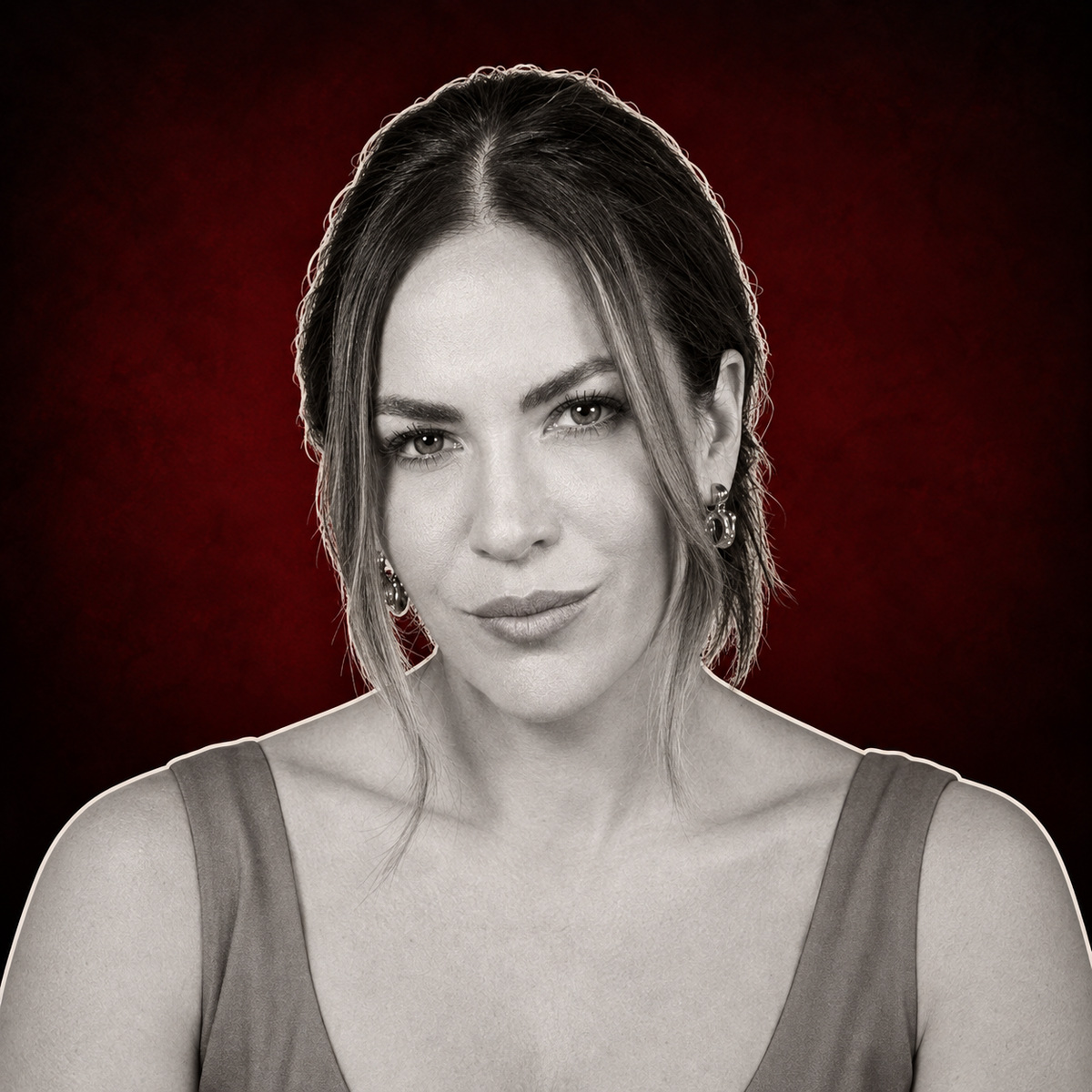
Alex Cattoni is a copywriter, marketer, and the founder of Copy Posse, a community and training company for copywriters, marketers, and business owners that she launched in 2020. She began her career as a marketing intern at Mindvalley in Kuala Lumpur, Malaysia, where she rose to creative director and event director and organized Awesomeness Fest in Maui in 2011. After returning to Canada, she built a freelance copywriting and marketing consulting business in Vancouver and spent roughly a decade working behind the scenes for clients. She later co-hosted the Flight Club mastermind with Glen Ledwell and started her YouTube channel in 2019. Named DigitalMarketer's 2022 Marketer of the Year, Alex teaches authentic, trust-based marketing with a stated mission to de-douchify the internet. She holds a business degree from the University of Alberta.