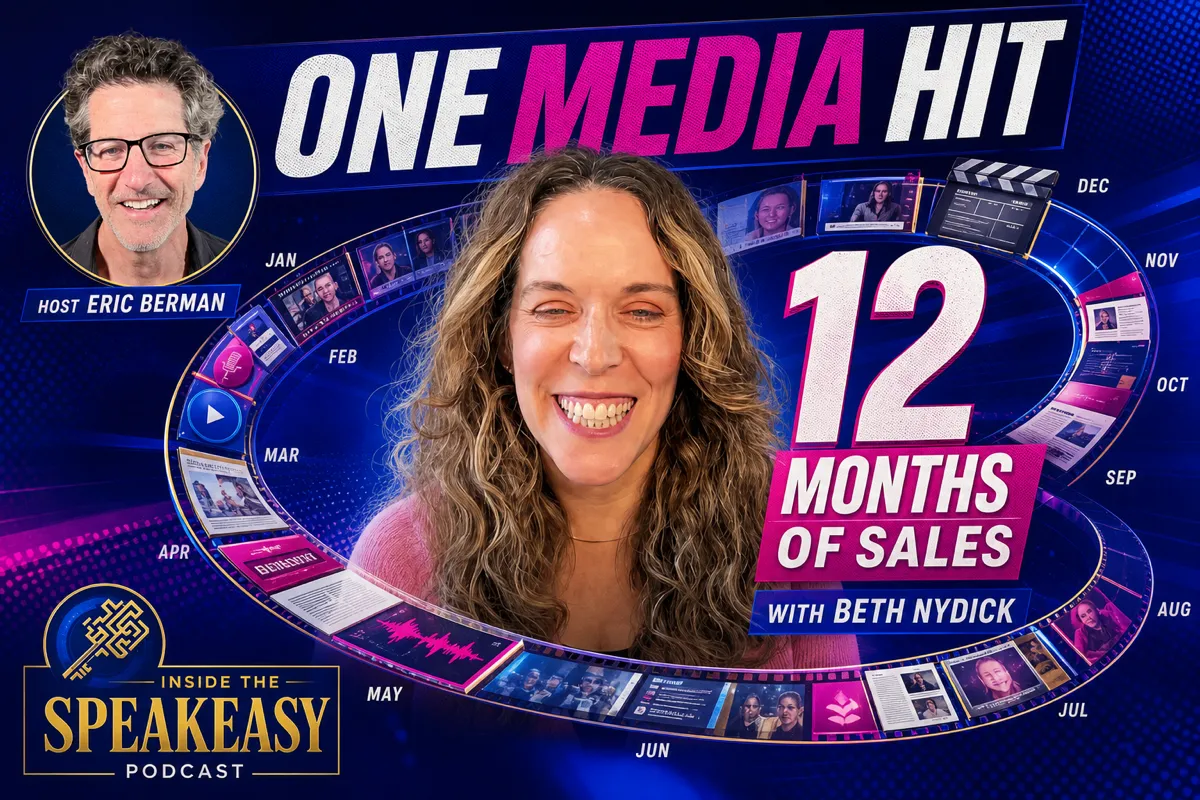
Beth Nydick, a former network TV producer turned media strategist and member of Speakeasy's New Jersey chapter, has learned that getting on TV or a big podcast is the easy part. In this conversation with host Eric Berman, Beth explains why her early appearances on shows like The Chew brought far less traffic than she expected, and why she eventually closed a successful PR firm to focus on what happens after the interview. She shares how she landed her first TV job after Jay Leno singled her out at the Comedy Store, how anyone can get booked by calling their local news station, and why she prefers a podcast with 500 engaged listeners over one with 300,000 downloads. Beth also breaks down her system for reusing one strong placement for a full year, and the "why not me?" mindset she says separates entrepreneurs who get results from those who wait to be rescued.
In this episode, you'll discover:
- How to get booked on local TV by calling the station, asking for the right producer, and pitching consistently until you get a no
- Why Beth says one solid placement a month is enough, and how she reuses it at three, six, nine, and 12 months
- The difference between marketing messaging and media messaging, and why media is about how you make the audience feel
- Why Beth tells most entrepreneurs not to start their own podcast and to treat every guest interview as a one-sided sales call
- What to say in the first 30 seconds of an interview so listeners stop folding laundry and go find you
Episode Summary
Beth Nydick grew up in North Jersey in an entrepreneurial household and wanted to be an actress, but working in TV taught her that the real power sat behind the camera with showrunners and producers. As a junior at Ithaca College, she was at the Comedy Store in LA when Jay Leno started making fun of her and a friend from the stage. After the show he came over, learned she was studying TV, and handed her his card, which led to a summer internship on The Tonight Show. Working as a green room attendant, and later at MTV Networks in New York, she learned that celebrities are just people and that the relationships between managers, publicists, and network producers are where things actually happen.
Around 2014 or 2015, while working as a food blogger, Beth used her TV contacts to get booked on the Dr. Oz Show and The Chew. She parlayed those appearances into a book deal for Clean Cocktails: Righteous Recipes for the Modern Mixologist, even though she had about 3,000 Instagram followers at the time. She says the book keeps selling because she keeps doing TV and media around it, and she uses it as a talking point for what the power of relationships and an idea can do.
For listeners who want to get on TV, Beth's advice is to start local. She explains that local news stations now run with a fraction of the staff they once had, so guests are the content. Her process is to call the station, ask whoever answers for the lifestyle or business producer, bring an idea the audience needs to hear rather than a commercial, and keep pitching every week or two until you get a no. From there, she suggests building a reel, pitching the next biggest market, and doing 10 to 15 segments to find your media personality, which she says is different from the one you have online or on a podcast. YouTube shows count too.
The heart of the episode is what happens after the interview. Beth says most people post an appearance once and never revisit it, and that announcing you were "so honored" to be on a show does nothing for the audience. Her Mic to Millions program teaches what to say, how to say it, and how to promote it consistently. She recommends about 10 solid placements a year, or roughly one a month, and reusing each one at three, six, nine, and 12 months so it enters the sales rotation. She describes reposting her interview with Lori Harder about every three weeks and pulling specific ideas from each conversation rather than simply announcing the appearance.
On podcasting, Beth is blunt: unless you already have a big audience, don't start your own show. Instead, write down 20 friends who host podcasts and DM them. She says she has gotten better results from a show with 500 engaged listeners than from one with 300,000 downloads, and she treats every interview as a silent, one-sided sales call that hooks the listener in the first 30 seconds with a story, a conflict, a transformation, and proof. She also explains why media messaging focuses on how you make people feel, while marketing focuses on pain points and statistics.
Beth shares that before her appearance on The Chew she increased her website's data storage, expecting a flood of traffic. About 12,000 people visited that week, not the 250,000 she had imagined. Later, after COVID stopped her speaking tour, she ran a PR firm whose clients got exposure but not growth until she taught them her tactics, and she eventually closed it to focus on making interviews pay off. She closes with the "why not me?" mindset, Eric connects it to Brian Tracy's "I am responsible," and Beth describes why the in-person, at-home format of Speakeasy's New Jersey chapter matters to her.
Big Ideas Discussed
The 12-Month Content Loop
Beth argues that a media appearance is the beginning of the conversation, not the end. Most people post an interview to their story or make one reel and move on, and many teams push guests to promote an episode the day it goes live. Beth says nobody is counting whether all the downloads happened on day one, and she encourages listeners to go back and work their last five interviews.
Her system is built around about 10 solid placements a year, or roughly one a month, whether that is a podcast, a TV segment, or a stage. The content from each placement is used throughout that month and then brought back at three, six, nine, and 12 months so it enters the sales rotation. She describes posting her conversation with Lori Harder about every three weeks and doing the same with a recent Kelly Roach interview. The effect, she says, is that people tell her she is everywhere when some of those appearances happened months earlier. She tags the host, the show, and anyone mentioned to create energy around each interview.
Media Messaging Is Not Marketing
Beth draws a sharp line between marketing and media. In her view, marketing is about pain points, structure, and statistics, while media is about how you make the audience feel. She finds that many successful digital entrepreneurs struggle with this shift, which is why her one-on-one media advisory work focuses on what a client will say, how they will say it, and what movement sits behind their work.
She also stresses that you are not really talking to the host. You are talking to the parent picking up a child, the person on a walk, or the dad on his way to Walgreens for cold medicine. The goal is to give that listener a reason to put down the socks they are folding, pick up their phone, and go find you. Opening with "I help small business owners" loses them; dropping them into the middle of a story makes them lean in.
Smaller, Engaged Audiences Beat Big Download Numbers
Beth tells most entrepreneurs not to start their own podcast unless they already have a large audience. Instead, she recommends writing down 20 friends with podcasts and sending them DMs, using smaller shows as a safe place to practice an opener, a call to action, and stories that work out loud. She has a free quiz on how to find the right podcast for your brand, which looks at audience size, messaging, and whether the show's vibe and mission align with yours.
Her reasoning is engagement. Beth says she has gotten better results from a podcast with 500 downloads, where people are actually listening, than from one with 300,000 downloads, where much of the audience is not engaged. When a trusted host tells listeners to go find a guest, she says many of them do. She also urges guests to prepare: she and Eric exchanged questions and talking points before recording, because she treats an interview as a silent, one-sided sales call rather than a casual chat.
Exposure Without a System Leads to Disappointment
Beth's own story shows why visibility alone is not enough. Before her appearance on The Chew, she increased her website's data storage because she expected a surge of visitors. About 12,000 people came that week, far short of the 250,000 she had imagined. She kept pursuing TV, including the Dr. Oz Show, because she had a bigger goal: stacking appearances to earn a book deal and speaking opportunities.
Later, after COVID halted her speaking tour around the book, she opened a PR firm. Her publicists delivered placements, but clients said their businesses were not growing. Once she began teaching them her tactics for using media in awareness, credibility, sales, and nurture campaigns, the media started working for them. That lesson led Beth to close a successful PR firm and focus entirely on making the interview work for the business, combined with what she calls a "why not me?" mindset.
Questions We Answer in This Episode
How do you get booked on local TV news?
Beth Nydick recommends calling the station, asking whoever answers for the lifestyle or business producer, and pitching an idea the audience needs to hear rather than a commercial. In small markets the anchor may produce their own segments. She says to keep pitching every week or two until you get a no.
What is the 12-month content loop Beth Nydick teaches?
Beth Nydick suggests landing about one solid media placement a month and using that content all month. She then reuses it at three, six, nine, and 12 months so it enters the sales rotation. The result, she says, is that people feel you are everywhere, even when some appearances happened months earlier.
Should entrepreneurs start their own podcast?
Beth Nydick advises against it unless you already have a large audience that will listen. She recommends writing down 20 friends who host podcasts and DMing them to get booked as a guest. Smaller shows are a safe place to practice your opener, stories, and call to action.
Are smaller podcasts better for guests than big ones?
Beth Nydick says she has gotten better results from a podcast with 500 engaged listeners than from one with 300,000 downloads. She believes larger audiences are often less engaged. When a trusted host tells listeners to find a guest, she says many of them actually do.
What is the difference between media messaging and marketing?
According to Beth Nydick, marketing focuses on pain points, structure, and statistics, while media is about how you make the audience feel. She says many successful digital entrepreneurs struggle with that shift. Her one-on-one media advisory work helps clients decide what to say and how to say it.
What should you say in the first 30 seconds of an interview?
Beth Nydick says to drop the audience into a story rather than opening with a line like "I help small business owners." She teaches guests to lead with a hook, a conflict, a transformation, and proof. The goal is to make a listener stop what they are doing and go find you.
Why don't media appearances always lead to revenue?
Beth Nydick says most people believe one big appearance will change their business, then feel disappointed when it does not. After appearing on The Chew, she received about 12,000 website visitors instead of the 250,000 she expected. She believes the results come from what you do with the media afterward, not from the appearance itself.
Full Episode Transcript
Read the Full Episode Transcript
Cold Open: Why Smaller Podcasts Get Better Engagement
Beth Nydick: I've been on some of those. I have to tell you, the smaller podcasts have better engagement. I've gotten better results from being on a podcast that has 500 downloads because 500 people are listening versus you have 300,000 downloads and no one's really listening. Not all of them. They're not as engaged. It's more of like they're a thought leader and they're listening to their friends. But it's not always an audience who's going to come find you versus like I know if Eric says to everybody, go find Beth, a lot of people are going to come find me because the kind of leader you are.
Meet Beth Nydick: From Acting Camp to Behind the Camera
Eric Berman: She spent 25 years as a network TV producer, NBC, Tonight Show, Paramount. She's written bestselling books. She's been on Oprah, Drew Barrymore Show, Sherri Shepherd Show, so much more. Been featured in Fast Company, a full on media mogul. But she's discovered something's missing. It's not just about getting on media, it's what you do with the media. And she's going to share some incredible tips from being on behind the scenes in front of the camera. And just when she thought things were going to be amazing, it wasn't that easy. And she's going to, she's got so much she's learned along the way and she's actually now built a system that's been missing the entire time. How to turn media appearances, all sorts of myriad appearances, into actual authority and revenue all the way off in New Jersey. Welcome. Beth Nydick.
Beth Nydick: Thanks, Eric. Thanks so much. Yeah, I love this conversation because so many of our listeners and so many of our members of Speakeasy are using visibility to move their business and they're frustrated with us. So I'm excited to have the conversation to give them the inside tips and tricks and hacks from a TV producer.
Eric Berman: I love it. I mean, I think this is so cool because I think, because again, a lot of us get this lure of TV and you know, like, it just seems unattainable and you're going to, we're going to talk about that like, you know, how hard is it to get on some of these media appearances? And that's such a cool story because it's like, okay, I mean, you think you made it, but from what I read and I would know your background, you didn't really make it. Yeah, that might have been a stroke to the ego for a minute, but does it really make an impact. And we'll get into that. I mean, before we drop in there, because I'm excited to jump right in that. I just want to hear a quick backstory so everybody gets to know you a little bit more. I mean, you're out in New Jersey. Did you grow up out there? How'd you get in the world of media and being on TV and all these fun things?
Beth Nydick: Well, I'm a North Jersey girl, so. So we had to start with that. And I actually grew up in an entrepreneur household. My parents were both entrepreneurs. My in laws ended up being entrepreneurs. I was that girl in the playground at third grade selling stickers and hair barrettes. I was always in that. But I wanted to be an actress. I went to, like, the premier acting camp on the east coast. But I. Eric, I can't sing. And back then you needed to sing. Actually, now you need to sing, too. And I really learned by working in TV that the power was really behind the camera. That wasn't about, you know, decision makers or the executives. It was the showrunners. It was the people creating the platform for you to be on. That's where the power was. And I like to be in charge.
Eric Berman: Even that. I want to. I want to drill into that. Oh, actually, I'll come back to that. So keep telling me your backstory. I want to go back to the showrunners because that's interesting for those that.
Beth Nydick: Are the most fun part of my business right now. But I was an actress as a little girl. I wanted to be a TV producer that. Be a star. And I realized going to. I went to Ithaca College and I got to really produce my own show. And I was like, oh, this is it. Behind the camera.
How a Night at the Comedy Store Led to The Tonight Show
Beth Nydick: So actually, my first TV job was at the Tonight Show. And the story behind it is that I was at the Comedy Cellar or the Comedy Store in LA. I was a junior in college and Jay Leno was on stage, and he started making fun of my girlfriend and I. After the show, he came over to us. He's like, thanks for being a good sport, and started talking to us. And he was like, oh, I was a TV communication major. And he was like, what are you going to do with your life? I go, one day, you're going to work for me. He hands me his card. Come see me tomorrow. He was looking for an intern to work with him for that summer. That was my first job in TV. And from that, I learned if you open your mouth and ask for what you want, you can get it.
Eric Berman: Wow. Good for you. I mean. I mean, you never. Isn't that crazy thing. You go back to that day and say, let's just go to the Comedy Store and see. See this Jay Leno. This would be a fun night. And how that one decision, like, literally just completely changed the trajectory. You're, like, so cool. Now you're behind the scenes of The Tonight Show.
Beth Nydick: Yeah.
Eric Berman: I mean, working your way up as an intern. Talk to me.
Beth Nydick: Yeah, I started working there, and I was, like, the green room attendant. So I would greet the celebrities at their cars and bring them into the green room and then take them to set and bring them back to the green room. So it was really more like, hey, how you doing? Are you ready for the show? Kind of thing. But, Eric, when I took them back from the set to their green room, and they would ask me, remember, I'm a kid, right. If they did a good job the first couple of times, I was like, what? And then I realized they're just people. And that allowed me to really step into working on shows like that. My next job was at MTV in New York at MTV Networks, and I got to do all kind of production stuff there. But I was the one that was always given the celebrities because I knew how to handle them. Yeah, I really just treat them like. Because they're just people. I just treated them like people. But even watching them, I understood how little power they actually had and how their managers or their publicists and the relationship that they had with the executives and the producers at the networks, that's where actually things really happen, and it correlates to what we do. Right. Everything's about relationships and how people perceive you as an expert, as a thought leader, as a business owner, and how you can create something out of just those relationships.
Parlaying TV Appearances Into a Cocktail Book Deal
Beth Nydick: And plus, you know, I love TV. So for me, being on TV was always the ultimate. And I got to do that. I started doing it in 2014. 15. I was a food blogger at the time. I got myself on the Dr. Oz show, and I got myself on The Chew, and I used all my TV contacts to get myself on, which I then parlayed that into a cookbook. I have a copy right here called Clean Cocktails, Righteous Recipes for the Modern Mixologist. And I got a book deal because I opened my mouth and because I asked for what I want. And I had this idea for a clean cocktail cookbook, which means alcohol just with better ingredients. And we got an agent, and we got a book. We got the book deal. The book came out, and it's been printed and it keeps selling because I keep doing TV to it and I keep doing media around it. And it's a great talking point about having an idea outside your business and seeing what the power of relationships and the power of an idea and the power of why not me. To have a bestselling book and to have a big business that has nothing to do with cocktails, but everything to do with how I use media to make that cocktail book pay me and get me what I want.
Eric Berman: Got it. Okay. So much to unpack there.
Beth Nydick: Wow.
Eric Berman: I mean, I don't even know where to start.
Green Room Stories With Rita Wilson and Harry Connick Jr.
Eric Berman: Okay, let's go all the way back. Just because while it's on my mind, I mean, everybody's, I'm sure, asking you the questions. You're at the Jay Leno show, seeing all these celebrities just as you're a kid. I mean, how old are you at this point?
Beth Nydick: Like, I was a junior in college, so 20, 21.
Eric Berman: Okay, 20, 21. I mean, all right, top two. Three stories. I'm. I got to hear it.
Beth Nydick: Like, the story I've been. I told the most was a bathroom in Tom Hanks's green room wasn't working, and Rita Wilson, his wife, had come with him. So this was the summer of, like, Forrest Gump. This was a summer of, you know, Tom Cruise with a Mission Impossible, like, all that kind of stuff. So I took Rita Wilson to the bathroom, and she's asking me questions about who I am and what I want to do with my life. She goes to the bathroom, and she comes back and she holds my hand the entire time. We're walking back to the green room, but all I can think about is if she watched her hands or not.
Eric Berman: Oh, gosh.
Beth Nydick: Like, you know. But the best story is I met the bassist and Harry Connick Jr.'s publicist, and they were like, hey, when we're in New Jersey, come see us. So I followed up. Remember, this is before cell phones. So I followed up, and I'm backstage at NJPAC in New Jersey, and I'm walking towards the green room, and Harry Connick is walking towards us. I actually have my best friend with me, and I'm like, hey, Harry, how are you doing? And he looks at me, and I go, Tonight Show. He goes, Beth gave me a big hug. We walked back to the green room, and we had a really fun night partying with him and his band. That was a really good one.
Eric Berman: Right? Again, not the threaded message there is you're not afraid to ask. I mean, I could see that theme Inside here you're just like, I see something, I'm going to, I'm just going to go out there and why not, why not, why not?
Beth Nydick: And people love to give, so why not be a part of that? Yeah, being in that environment and then being at MTV in that environment. Yeah, they're great names. Right. They're impressive logos on my website or on my resume. But what I really learned about it was, yes, asking for what you want, but seeing how the collaboration of what you can do and how people knowing who you are, getting visible within the business.
Eric Berman: Right.
Beth Nydick: Allowed me to get a book deal without. I had like 3,000 followers on Instagram when I got the book deal. It wasn't about that, it was about the engagement, who I was, business.
How to Get Booked on Your Local TV Station
Eric Berman: Okay, so, so let's dig into that because you, I mean, for those of us who are not in the industry, you know, there's showrunners, there's producers, there's this, there's that. And you know, it's taken me several conversations to understand who does what. And you say, who really matters. Okay, so if any of us are out there talking to people that make a college who are the most important people decision, like who do we want to get in front of? And then I'm going to make it kind of a two part question because I really want to make the full circle here. It's step one is, you know, yes, a lot of us can get on podcasts, but not all. So I mean, there's a question of, well, how do we get on bigger podcasts? A lot of us want to know that, I mean, to the next level, people would think, well, how do I get on the TV up here? How do I get on Dr. Oz to do a cookbook like walk me through this process a little bit.
Beth Nydick: So first of all, it's the way we think about it. So everyone who's listening, I want you to think about your local news channel. And that could be New York and LA, but anywhere, Kentucky, Arizona, wherever you are, there is a local news station that now has a quarter of the staff they had five years ago. So everyone's doing six jobs. And the way that they look at people like us is where their content. So without us, there's no show. Think about that like 10am lifestyle show or that 4pm business show. You are the content. When I tell my clients to work with and may want to be on TV, it's about having an idea, a story you want to tell that their audience needs to hear. Right. It's not a Commercial. You can buy a commercial on there too, Right? What is that audience need to hear from you to continue watching that new show? Not to continue about yourself. I were very focused on us and our story and what we're doing, but figure out what that audience needs to hear. For example, WPIX in New York, they had somebody on last year that was talking about how to start a side hustle. Her business had nothing. She was a business coach, had nothing to do about side hustles.
Eric Berman: Right.
Beth Nydick: But being on and having the credibility of being on. So what I always tell my clients to do is call the station. There's some 20 something kid again answering the phone and it's enrolling them and giving you the contact information for the right person. So like, hey, can I talk to the lifestyle producer? Hey, can I talk to the business producer? You've already looked at the website and if you can't garner that information, you know, or if it's a really small market, the anchor probably also produces their own segments.
Eric Berman: Wow.
Beth Nydick: So it's getting that information from the person that answer the phone and then it's about having a good idea and then it's about follow up. Because so many times, Eric, I know you know this people are like, well, I pitched so and so once. Keep pitching every week, every other week until you get a no. And I mean, like for years I've been pitching a couple of these high level podcasts for two to three years. Because when I'm ready, when my brand is at that level, I went, they're like, oh my God, that's been pitching us forever. We have to have her on top of mind.
Eric Berman: They don't need you now. But they're like, they're not. No. Yet they're not like, hey, it's just like, it could be a maybe. But like when you're right, when they think of you, boom. Exactly.
Beth Nydick: So getting on your local show is a place to start. Local. Like I started on my town's high school TV station. So if you're listening and your town has their own TV station in the high school, call the school who sets up these shows. If you want to start with like local TV, everybody wants to be on the Today show, Good Morning America, you know, the news in the morning, that's not where you start, right? Yes, you can get those opportunities. My first TV appearance was Dr. Oz, but I was also a TV producer. They knew that I wasn't going to get on and flip out. Right. Like, I knew what I was doing. So where you're Comfortable. I think it's a great place to start because being on that, being on bigger markets to get yourself to those national shows. Well, how does that work?
Moving Up to Bigger Markets and Finding Your Media Personality
Eric Berman: So, okay, so you hustled, you got your way on the local show, you talked about something. You're whatever it is that as you said, not what you think. It's what people need based on what's going on in the world right now. You're interesting, you're providing value to the show and the end customer. Important. Really? Then what? Like how do you take that into, okay, now I go up the chain there.
Beth Nydick: It's the same as like when you're speaking reel, start a reel together, start a reel of all your TV appearances and then pitch the next biggest market or the plate. Like if you're going to be in Boca for the next Speakeasy mastermind or you're coming to Jersey, what's the TV station that's there that I can go do a segment while I'm there getting on these bigger markets and doing 10 to 12 to 15 of these so that you can kind of figure out what your media personality really is. Because it's not the same personality that you have online, it's not the same personality that you have on a podcast. It's what do you see me on TV? I'm a bigger personality, right? I move more, I'm louder because I've been media trained. It's really about just continuing to pitch these places, right? If you have a friend that has a YouTube channel that has their own YouTube show, that's TV too, right? We used to think of TV as just network. YouTube is also a place for you to be on shows like this. I'd rather you be in set on set because that gives you more of that experience. But how continuing to do that and making that a system within your business so that you can continually grow that visibility, people seeing you or getting exposure does not equal anything but an experience for yourself. It's the multiplying of it, it's the leveling up of it, it's the messaging of it. That's what actually can create that real revenue income, whatever that goal is for you and your brand.
Eric Berman: Let's talk about that. And I think you said the very important point I want to lean over because it seems like this show is brought to you by HighLevel, the AI driven business operating system trusted by over 2 million businesses to help automate, scale and create real leverage. HighLevel isn't just a tool, it's the engine behind some of the most agile and high performing teams on the planet. If you're ready to streamline everything, amplify your reach, and actually build a business that works for you, you're in the right place. Visit www.gohighlevel.com/speakeasy-mastermind-promo to get an exclusive 30 day trial for being a listener of the Inside the Speakeasy podcast. Enjoy the show.
Media Training and the 12-Month Content Loop
Eric Berman: Well, first of all, okay, I want to move up the TV, you know, chain. How long should I mentally prepare to do that? Hustle. And then the second thing you dig into is, well, let's be honest, YouTube is a mega player. And if you get on the right channels and the right shows, you could throw that in your repertoire. You don't have to be in your local TV. If you can get it on a great YouTube show, that could be better. And really working backwards because ultimately you said you've made it, you've gotten on the big show. We're going to dig deep into that. What do you really need to be having if you want to make it? Because that just being on there doesn't give you that, it just gives you the exposure. Like you said, you're getting the practice, you're learning your brand. So I kind of threw a bunch of questions in there to throw your way, which is how long, you know, what ultimately do you need to be doing here to gain the leverage and get to the next step.
Beth Nydick: There's not a how long. Like, TV is not that kind of a science because you could do a great segment and then get picked up by somebody else. Or you need to do 10 to 12 segments till you get comfortable so you stop fidgeting. You know, that's why I work with my clients and we do a lot of media training and we go over what your interview is going to look like. So there's muscle memory there. So you know what you're saying. You're not talking over yourself or talking over the. When I first started, I would talk over at the anchor all the time. It was so bad. Like, I'm happy to post some of my old interviews, but I'm literally talking over the anchor.
Eric Berman: When we're talking, like kicking under the table here, she's just like, right.
Beth Nydick: But the other side of it is like, okay, now you have this piece of context. Most people put it out. Maybe they send an email, probably not. They probably put it on their story or they make a reel and they put it out, but they never revisit it. They never dive deep into the content of what the conversation Was Eric. The worst thing I see online is like I was so honored to be on Eric's podcast and my thought process is who the f cares versus Eric? And I talked about how to make money from media, then I'm going to care about it. What I created, my Mic to Millions program is a system of how you actually give interview. I always call it give a good interview. What you say, how you say it, when you say it, and how you promote it and how you consistently promote it so that the feedback you get is, Eric, you're everywhere. And meanwhile, you've been on vacation for two weeks.
Eric Berman: Right, right, right.
Beth Nydick: I see you, you're on this, you're on this, you're on this. They don't look closely. I was on this and this 6, 8, 12 months ago. Because I'm continually using it because my message is consistent. It looks like I'm everywhere right now. And in my business, my clients business, that's how we increase revenue.
Eric Berman: So I think I might have got a little confused. So you're saying you do a lot of media, so you're everywhere. It just looks like you're everywhere because the way you're taking your content and you're just constantly, not just doing a, you're not just doing once and being done, you're constantly reusing the content many times.
Beth Nydick: Is what you're saying pieces of it? Yeah, I like 10 good solid hits a year, 1ish a month. That's all you need with this concept of like the more the more the more, the more is not better when it comes to media. Quality is what's better when it comes to media.
Eric Berman: So when you say one hit per month, meaning you're going to take your segments and promote it or what, do you dig into that a little more.
Beth Nydick: Meaning like one solid media, podcast, interview, TV interview stage. If you can earn yourself one good placement a month, I'm going to call it a placement instead. Okay, Then you can use the content of that placement all month. And then in my system, I teach you to then use it three months from now, six months from now, nine months from now, 12 months from now. It gets into the sales rotation.
Eric Berman: Right.
Beth Nydick: So that your credibility is being increased, the awareness of your brand is being increased as you share it. Because I'm not going to just share this interview with you, Eric. I'm going to tag you, I'm going to tag Speakeasy, anyone we mentioned, I'm going to tag in there. I might even tag a few of my New Jersey after I think of the words in there as well, to get support and really create some noise and some energy around our interview versus putting on my story and kind of forgetting about it.
Eric Berman: Doing that. Yeah. So it's all the things and that creates this sense of wow, she's everywhere, like you said. And then how often are you finding that your clients, they do a lot, but they walk into the door with you and they're like, well, it's not even clear what they're selling or they don't even have a back off. I mean, I mean, obviously that's step one. Right. You gotta have an offer and what you're trying to get out there.
Beth Nydick: Yeah. People don't come to me without offers. You know, I have a this my Mic to Millions program, which you can do. But when I work one on one in my media advisory, there are high level, like our Speakeasy members or higher level clients and we're really figuring out and determining what your media messaging is because it's not the same as your marketing. Marketing is about pain points and it's about structure and statistics and all the thing media is how you're making me feel. And that's really the bottom line of it. So when we have a different conversation and I find a lot of successful digital entrepreneurs have trouble making that shift and that's why they work with me, so that we can change the conversation we're having, we can uplevel the conversation we're having, figure out what they're going to say, how they're going to say it, what the movement is behind what they're doing so that a media audience will take notice, pick up their phone and find them. Right. That's really what we want.
Eric Berman: Love it.
Podcast Guesting as a One-Sided Sales Call
Eric Berman: Let's talk about podcasting a little bit because I think, you know, maybe some people listening are just like, okay, this seems amazing and exciting, but don't have time, capacity, whatever excuse people want to give. And I get it, we all, I'm there myself, you know, it's, it's reality. But for now, I'm choosing podcasting. What are some tips there? Or like, where do we start? Like you said, is podcasting an easy sort of entry point to figure the things out? And if we are starting there, is it host a podcast? Is it to get on shows? And if so, if it's get on shows, what are you looking for?
Beth Nydick: Yeah, no, we don't need any more podcasts. Please don't start a podcast unless you have a big audience that's already gonna listen. Don't start your own. Come On Eric's go on your friends, start somewhere. Podcasting is about relationships. Right? There's all. I find that there's all of these platforms out there that'll help you pitch, that'll help you get out there. But my advice is always write down 20 names of podcasts of your friends and go DM them. Let's get on. Something mistake people make is like, I just want to be on the top podcast. I've been on some of those. I have to tell you, the smaller podcasts have better engagement. I've gotten better results from being on a podcast that has 500 downloads because 500 people are listening versus you have 300,000 downloads and no one's really listening. So I want everyone to take the honest. Not all of them, but they're not as engaged and they're not. It's more of like they're a thought leader and they're listening to their friends. But it's not always an audience who's going to come find you versus like, I know if Eric says to everybody, go find Beth, a lot of people are going to come find me because the kind of leader you are, it makes a difference. So it's really looking at the kind of platforms you want to be on. I have actually a quiz that's called how to find the right podcast for your brand. And it goes through a free quiz and it goes through all the things that you should look at. The audience size, the messaging. Does their vibe and ethos and vision and mission really align to who you are? Right. You want to be in the same place. I'm not going to be on a platform that doesn't take my boldness. Right. Tells me to like, try to be smaller or like be polite. Like, that's not a place that I should be on. Right? Right. What I find is though, Eric, is most people don't know how to interview. Most people think that this is just a conversation. When I kept coming on your podcast, you sent me the questions you were going to ask me. I sent you what I wanted to talk about. It's not like, let's figure it out.
Eric Berman: Right.
Beth Nydick: This is a silent sales call and that's what I call it. Or a one sided sales call.
Eric Berman: Right. I mean, it's true. I mean, honestly, it's a lot of it is. You're getting even, you and I right now. We're getting to know each other more. I'm learning more about your business. I look at it and say, well, shit, I could have this 30 minute conversation just to get to know you better. But like we could do it live. And I'm learning so much more and actually forces you to stay focused too, versus a lot of us that are ADD and jumping all over the place. And I'm going to follow up with you later to get that download from you because as you know, once you start a podcast, I'm getting hit up every day, two, three people. Like either a these people that want to be on my show or you know, I know it's their teams that are just like trying to get them on shows. Yeah. I look at that. I'm like, well, I don't know, maybe there are good interviews. I can't decipher who's the right person to bring on or not. So for now I've been sticking mostly to members, but alternatively, like at some point I'm like, well, maybe I got to do the circuit myself. We're asking live here. I mean this is a good case study example. Here we have Eric, I assume you're going to say yes, that is a good strategy. You should probably get on call your formula. I should go out there and get on podcasts, the right ones to build a relationship, share, talk about Speakeasy. They may have an audience of members that would love it.
Beth Nydick: Yeah. Believe there's lots of members in our mastermind that you could go beyond. There's but thinking about the ones you should be on, who has that higher level entrepreneur that is looking for an outside mastermind. Right. Because if you're going to be on a business coaches podcast, their clients. Right. Are already paying them.
Eric Berman: Right.
Beth Nydick: Is this something they're going to add on to that? So what kind of audience do you need to be speaking to that's going to be working with a coach and be able to become into your masterminds and be a good member? Not just a member.
Eric Berman: Yep. It's funny because now I'm all shotgun. It's like, yeah, I'll go on the ones that I get invited to from friends. But I'm not paying attention to any of the data to know what I should do. And I assume I'm probably not alone doing what most people do. It's just fire hose, let's just get out there. And you never know what's going to.
Beth Nydick: Stick a hundred percent. But I also, you know, if you were starting out, I'd be like, just go on the 15 of them and just go practice. It's okay. It doesn't matter. Go practice how you're going to do the opener, what your CTA is going to sound like what your stories are. Do you have good stories? Sometimes you need to talk them out loud. And being on your friend's podcast is an easy, safe place to do it.
Hooking the Audience in the First 30 Seconds
Eric Berman: Yep. Now, I mean, as we're talking, I'm sitting here thinking about future, and I'm always in these conversations lately. You know, we can't avoid that. The AI conversation. And, you know, as we think about strategies, I'm starting to think now full circle. I mean, having the podcast episodes seemed to me like part of me thinking, you know, I think it might get more momentum because anything that's real, I think moving forward is very interesting. Who's having real conversations? How do I know if this person's AI talking to me? Oh, this is a real. So a couple questions for you. You know, you know, when you work with someone who's already visible but not in demand, so they're out there. Some of us are visible, not in demand. What's the first thing you do to transform them from seen to being really wanted?
Beth Nydick: I really focus on the conversation. For example, if I came on here and you're like, tell us about yourself. And I'm like, I help small business owner. Like, you want to die? Right? Click off.
Eric Berman: Yeah.
Beth Nydick: Versus dropping you into a story. And that's what. And that's part of my. What I teach is that first 30 seconds, that first three minutes you really need to get me. Right. What's the hook? What's the conflict that you're. That we're going to have a conversation about how are you reframing a transformation and what's the proof behind it? So often we just want to talk about ourselves, and we have to remember that we're actually. I'm not actually talking to you. I'm actually talking to the audience member. I'm talking to that mom picking up their kid or going for a walk or that dad on his way to Walgreens to get cold medicine. Right. Like, think about when you're listening to a podcast. So what's the conversation somebody needs to have with you so that you go find them later? So you put down the socks when you're folding laundry and pick up your phone and go find them on Instagram. And I think it starts with my first 30 seconds. Like I said, I like to drop you in the middle of a story.
Eric Berman: Right.
Beth Nydick: Give me something that's going to make me lean in versus, like, I help small business owners. Okay, dude.
Eric Berman: Right.
Beth Nydick: I'm out.
Eric Berman: Right? Yeah. And that's great.
Why Visibility Alone Doesn't Create Revenue
Eric Berman: And why do you think most Entrepreneurs fail to turn visibility into revenue. I mean, we talked about that. You got visible, even though they're. When they're everywhere. So, I mean, we hit on this a little bit earlier, but maybe to dig in a little bit more. Why are they not, you know, they're out there. Why are they just missing the boat?
Beth Nydick: On the money side, the messaging in digital is get media, get media, get media, right? Get on the platform. And it's not. The conversation is not about what you do once you get there. That's the conversation I'm having and very few people are having. So the philosophy or the thought process is like, well, if I get on this, then my life is going to change, my business is going to change. And that's not true. So you've come away so excited about a thing, but then you're so disappointed with the outcome because it's really on you to do something with it, right? Not on them to create something. Like, so we talked about the system before pushing it.
Eric Berman: You just have to keep using that.
Beth Nydick: Media, you know, like I was on let's. For example, I was on Lori Harder's podcast last year, last May. If you look through my feed every three weeks, it's in there. You know, I was just on Kelly Roach's podcast. Now you're going to see it for the next three months. I'll take a little break. I'll start doing it again. But I'm not, again, I'm not saying, hey, I'm on Kelly's podcast. I'm talking about the conversation we had. I'm pulling out a piece of this.
Eric Berman: Sound back to value to the listener. You're bringing back value to the listener. And then you're, you're also bringing in the implied credibility of where that, that value came from. And that point you brought. I want to. It's so important because I heard it in my, in the San Diego group a couple of times from somebody who's got a lot of followers and engagement. It was just like talks about how much he repost old content. And you're like, most of us just think, wait a second. My followers always already saw that. And we're just so like myopic at like in our own heads to think, yeah, right. Like, all your followers really saw that. Like, like barely anybody saw it. Even if they did, they probably didn't remember because they got a million other things that they went on in their mind. So, yeah, repost it. And it's such a simple, small tactic that very few people are doing, self included. I Mean, every once in a while do a retread. But it's just like, yeah, I got to do that more. Especially the good ones. Like, why am I not reposting? I don't know, my conversation with [unclear] and other people. Like, I need to keep doing it.
Beth Nydick: I think it's about looking at it as a sales mechanism and an asset and not a visibility thing. Like, the visibility and the exposure is great, but are you bringing it into your awareness campaigns? Are you bringing it to your credibility campaign? Why are you not bringing it in your sales campaign? Why is it not a part of your nurture sequence? Go listen to me here. Minute 42 to 47 is exactly what you need to hear.
Eric Berman: So is that the picture for you? I mean, like you had that big high that went to a low. You were on the TV and did that is exactly what happened, you realize. And then did you start getting a different. You had. Then things changed when you did follow this formula. Right. To get it out there.
Beth Nydick: Yeah. So I was on all this ABC, NBC TV early in my career and I was thought that I was going to blow up. You know, I actually, the week before I went on The Chew, I increased my, at that time, my data storage for my website because I thought I was going have so many people come to my website. You know, I did have 12,000 people come to my website that week, but it wasn't the 250,000 people who I thought were going to come.
Eric Berman: Yeah.
Beth Nydick: So looking at the data and look what happened. I got myself into more opportunities like the Dr. Oz show and other platforms that I was on because I wanted to continue. Honestly, that feeling, because I love live TV, that was like my jam. But I also understood that I needed to pile these things up so that I could get a book deal or that I could get on stages that I wanted to get to. I had a bigger goal than just being on TV.
Eric Berman: Right.
Beth Nydick: So understand then when I started working after Covid started, I actually was a speaker. So I had the book and I started speaking around the country to the book and that stopped. And I opened the PR firm 2020-2023 24. And I was having great success. I had amazing publicists that work for me. But my clients were like, but we're not getting any. Like our business isn't growing our exposure. Like people know more about us, but we weren't getting anywhere. And as soon as I started teaching them my tactics, that's when they started getting making the media actually work for their business. So I Have all my case studies from when I worked with those brands and those clients, which I'm so grateful for because it taught me that this piece was so much more important than the getting the media piece. I actually closed a successful PR firm to go head first into just really talking about making the interview work for you.
Eric Berman: Wow, that's great. And I think part of it must be just the mindset shift, too. Walking into these interviews and others and saying, look, my goal here is to do great content, get something the audience is going to want, have no expectations of what's going to happen on the initial rush, but realize there's an asset here that I'm creating that if I. That's the thing I need to do. This is just early phase of, you know, a long journey with this asset that I'm creating and step one kind of thing. And that probably helps people's mindset going through that. I don't know.
Beth Nydick: I love that you said that because I always say it's the beginning of the conversation, not the end. Because most people look at the interview coming out as the end of the conversation.
Eric Berman: Got it.
Beth Nydick: I know your team is not like this, Eric, but other teams will just send you podcasts out and you're like, I have to promote it today. It's not about that immediacy. There's nobody counting. You had all the downloads on the first day. So everyone that's listening that thinks that they didn't do it with the last five interviews, go back and do it with the last five interviews. Right.
The "Why Not Me?" Mindset
Eric Berman: Love it. So what do you. I mean, you've worked with so many. I mean, you've talked to a lot of entrepreneurs, lot of people, a lot of clients. You know, what's a common fear or mindset block that you see most people don't realize is holding them back from doing all the things.
Beth Nydick: Yeah. It's asking themselves, why me? Why should I be the one that gets to go on X show? Why should I be the one? And my philosophy is, why not me? Why can't I be the one? Why can't I be the one? So it's funny you say that, because most of my testimonials are actually about this thought process and less about what we did, because it's really allows you space and possibility of creating whatever you want next if there's not anything in the way. So if you can come from a space of, I'm the one that can do this, why can't I be the one to do this? Versus why should I be the one to do this. I think it opens up so much for you. The issue with entrepreneurship and the whole is that we're a lot of early stage, some mid stage and late stage are really waiting for somebody to come save them. Right. And I think that you create your own possibility of success with the things that you allow to happen versus the things that happen because you're in a room or you're doing something else or because you think you're going to hire the right VA or the right marketing person or the right agency. It's not about that. It's what you get yourself to do and who you get yourself to talk to. And I'm not saying like, I have a list of five women that I met when I was in [unclear]. I was away last week then. I haven't DMed yet, but I will now that I told the world I have to do it today. But we all do that. It's just how far I'm going to say it this way. What we do is personal development on crack. And as far as you can push yourself and as far as you can believe in yourself is as far as you can go. So taking that off of your head, I think it really allows a space for you to be like, let's do it.
Eric Berman: I love it. It's almost like, like I said it before, I think, and I love what you're doing. You're doing such great work. And I think it's just giving people to believe themselves. In a roadmap, it's. I don't really know where to go with this and maybe my idea is good, maybe it's not, but it's having somebody to say, why not you? You need the roadmap. You have it in you. Let's go. It's not, you know, there's a few. There's a formula for anything else. Just here's the formula. Let's go do it. Are you ready?
Beth Nydick: You know, it's not about the smartest person in the room. It's not about the best message in the room. It's about what's inside and how much you let people see that. Because like I said before, maybe media is all about letting people see you and making you sure that they're feeling who you really are.
Eric Berman: That's right. Well, and I'd say I'd add basically this conversation and the hustle and the follow through and the follow up and the staying on it. And I mean, I just almost got done writing my first book at some is kind of my second book is Going to be on the follow up stuff. But first one's going to be Proximity Pays. Which actually goes a lot into what we talked about is how do you gain proximity and get into the right circles to do the things you talked about and getting access. And you also said something there, which is one of my. You didn't say the words correctly. But I felt it threaded in your talk in what you were saying is one of my favorite quotes of all time from my mentor Brian Tracy and my partner, still my business partners. I am responsible. And I felt a lot of that in what you said is like, look, it's not going to happen for you. You got to take the responsibility and can't just do the things. And all of a sudden the lights will just oh, you know, you got to stay in there. And our sale line too. And you said something else too early. I'm going to bring back again as we sort of wind up is I go for the no. And I like [unclear] quote I heard years ago is one of my favorite quotes. He goes, a no's better than a maybe. And I love the no because it's like, yeah, it's like great. I don't care if it's a no. It doesn't bother me. In fact, I'd rather that than just give me an answer. But until I get an answer, I'm going to chase either I'm binary. I need a yes or a no here. Otherwise you're just going to keep hearing from me and having a system to do that without getting taking it personally, you know, it just is what it is, right? It's almost the attitude of well, it should be yes. Why is it going to be a no? Like you need this. I really believe it until you tell me I'm crazy.
Beth Nydick: You're like, I love that you said that. Because my like close friends call me Rosie. Because I always like, of course it's going to happen. You know, we can talk about manifestation and all that whatever stuff. But it's really like for me, it's like, of course I'm going to be. Of course your next book is going to be a bestseller. Of course.
Eric Berman: Yeah.
Beth Nydick: And coming, I think I just think coming from that protects you you from all of that bad juju and all those bad thoughts so that you can go do the thing.
Eric Berman: I love it.
Beth's Experience in the New Jersey Speakeasy Chapter
Eric Berman: I love it. Well, so I'm going to turn it a little bit. Thank you for being such an amazing member of our newest chapter, New Jersey. So tell us about your experience. Like what do you love about Speakeasy.
Beth Nydick: So far, I love that it's in person and it's at somebody's house. It feels comfortable, it's intimate. We get to know each other really well. The hot seats have been really interesting. We're still a small group, so. So it's really vulnerable and we're having those conversations that I want to have. But plus, Eric, when I mean in person is because a lot of people like us. My kids are out of the house. It's just me home all myself all day long. And next week I get to see my friends in person. And I can't wait.
Eric Berman: I love it. That is the magic and it's right. And again, more and more as we are living behind computers and AIs and seeing real people and having real conversations. We had it last night at my house. It was great over here. Hopefully we'll have you here someday. And as we wind up, thank you so much for your time. Is there any questions or anything I didn't cover that I maybe should have?
Beth Nydick: No. You know, I always love listening to your interviews and I'm so happy that I get to be part of it. I think that the last thing I want to say, it goes back to what we were talking before is like, if you take anything from this conversation, it's all about how you perceive yourself and the things that you'll allow yourself to do. So if you want somebody to kick you in the ass, if you want somebody to go do it, DM Eric and I will support you.
Eric Berman: I'll support you.
Beth Nydick: We'll support you. We'll get a little, you know, a little Jersey and a little West Coast. But I appreciate it, I love it.
Eric Berman: And definitely we'll drop the information about Beth inside this podcast, in the notes. You should absolutely hit her up if any of these things are of interest to you and you want a proper kick in the butt from the Jersey side and to get on some media and learn how to do some other cool things and which a lot of us certainly need. Definitely Beth is your go to, so reach out to her. Thank you so much for your time today. I know you got a lot going on. Appreciate you and I look forward to seeing you again soon.
Beth Nydick: Always. I'll talk to you soon. Thanks, Eric.
Eric Berman: And that's a wrap from the Speakeasy podcast. If something sparked for you, don't keep it to yourself. Share it, review it, and pass it to the one person who needs to hear this right now. Want in on the real mastermind? Tap the link in the show notes to apply. Until next time. Keep scaling, stay sharp and don't be the smartest one in the room.
About The Guest
Beth Nydick
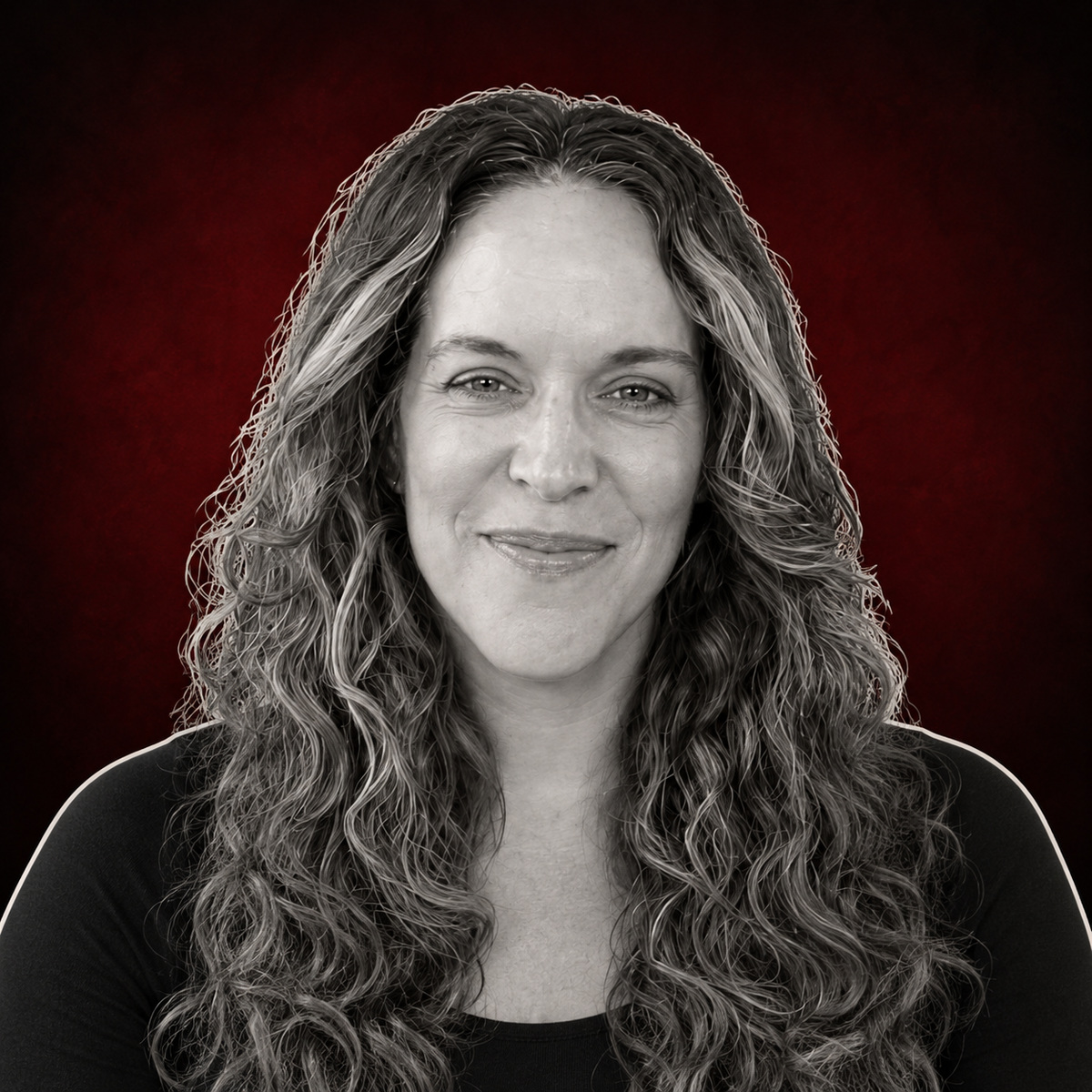
Beth Nydick is a media strategist and former network TV producer who helps entrepreneurs turn media appearances into authority and revenue. She grew up in North Jersey, studied at Ithaca College, and began her TV career as an intern on The Tonight Show after meeting Jay Leno at the Comedy Store, later working at MTV Networks in New York. Her website lists producing credits at NBC, MTV, VH1, and Paramount. While working as a food blogger, she appeared on the Dr. Oz Show and The Chew and parlayed those appearances into her cookbook, Clean Cocktails: Righteous Recipes for the Modern Mixologist. After running a PR firm, she closed it to focus on teaching clients how to make interviews pay off through her Mic to Millions program and one-on-one media advisory work. Beth is a member of Speakeasy's New Jersey chapter.