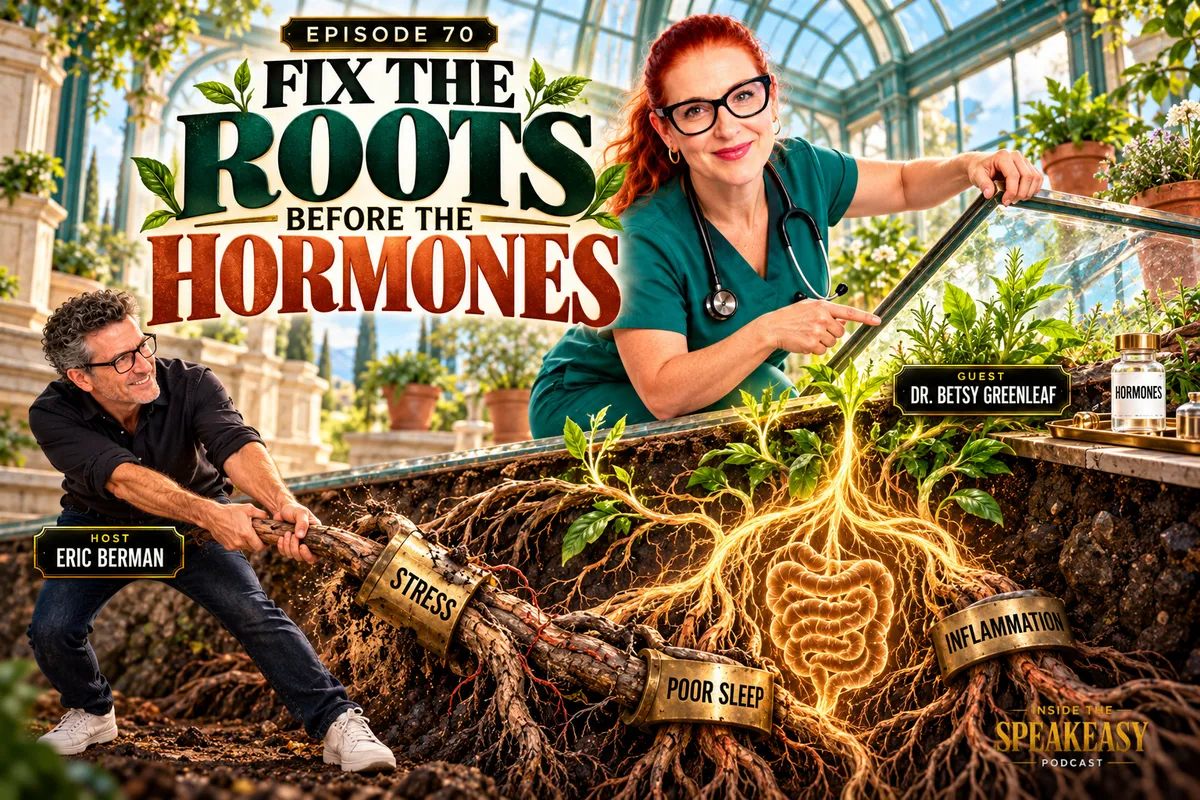
Dr. Betsy Greenleaf, founder of The International Pause Institute and the first woman in the United States board certified in urogynecology, has a blunt message about menopause: hormones are just a tool, not the answer. After 17 years of hospital-based reconstructive surgery, a car accident that ended her operating career, and an MBA, Betsy now runs a midlife practice built around what she calls the PAUSE protocol. In this conversation she explains why so many people say hormones did not work for them, and why she looks first at stress, inflammation, and the gut microbiome. She shares the simple food rule she gives patients, what a stool test and a zonulin result can reveal, and why sex drive is often a gut and stress problem rather than a missing pill. She also tells the story of an e-commerce store she built from YouTube tutorials that now sells internationally without marketing, and why her social media book argues that being found by the right people matters more than going viral.
In this episode, you'll discover:
- Why Dr. Betsy Greenleaf calls hormones a tool rather than a cure, and why stress and inflammation must be addressed before prescriptions can work well
- How the PAUSE protocol treats body, mind, and spirit like a three-legged stool, moving from life stressors to gut health before adding hormones
- What a gut microbiome test involves, why Betsy watches zonulin as a measure of leaky gut, and how her coffee filter analogy explains it
- The four-category food rule of eating only things that once walked, swam, flew, or grew, and why free habits like sleep beat magic pills
- How Betsy built a pelvic health e-commerce store from YouTube tutorials and why her book Go Viral, Be Found favors the right avatar over follower counts
Episode Summary
Dr. Betsy Greenleaf's central argument is that midlife health problems are not solved by reaching straight for hormones. Menopause, she says, is finally having its moment on social media and in the press, but the conversation has swung from two decades of fear about hormones to the opposite assumption that hormones will fix everything. Betsy describes hormones as one tool in the toolbox, neither good nor bad and definitely not a panacea, and says the people who tell her hormones did not work often had bodies that were not prepared to use them.
Her perspective comes from a long clinical career. Betsy started out wanting to be a veterinarian, moved through pediatrics and general surgery, and settled in obstetrics and gynecology because she wanted ongoing relationships with patients rather than fix-and-go procedures. She spent 17 years working for a hospital doing reconstructive surgery, and she says she was becoming unhappy and burnt out under pressure to see more patients in less time. A car accident injured her neck and ended her ability to operate, which she now calls perfect timing because she would not have stopped on her own. She went back for an MBA, began teaching and speaking, and thought she was done with clinical medicine until a menopause question at a national conference prompted her to blurt out that she was opening a clinic, and she realized she did not like how menopause was being treated and knew she could do much better.
The PAUSE protocol is her answer to the hormone-first approach. Betsy treats total wellness as a three-legged stool of body, mind, and spirit, and she starts by looking for stressors in a patient's life, then at inflammation and the gut microbiome, before adding hormones. She says that roughly 90 percent of medical conditions are caused or worsened by a bad gut, and that mood, frequent illness, and sex drive are gut symptoms people rarely connect. Her explanation of libido is direct: the brain is the most important sex organ, Viagra is a blood flow pill rather than a desire pill, and a body that is stressed or inflamed chooses survival over reproduction. In practice, she notes, she often starts these steps at the same time as hormones because patients arrive wanting a prescription.
Much of the episode turns practical. Betsy likes gut microbiome testing, which involves an at-home stool kit that FedEx picks up, and she watches zonulin as a marker of leaky gut, using a coffee filter with holes to explain why partially digested food can trigger inflammation and sometimes autoimmune problems. She mentions that several companies offer these tests, some direct to consumers, but says people can begin without one by shifting toward a Mediterranean-style diet and away from processed foods. Her shorthand rule is that food should once have walked, swam, flew, or grew. She also argues that the closest thing to a magic pill is free: sleep, hydration, good food, and whatever lowers stress, even though these basics are not exciting enough to compete with the newest trend.
On hormones themselves, Betsy prefers bioidentical options and explains that the hormones used in the Women's Health Initiative study were modified so they could be patented, which she believes is why they behaved differently in the body. She lists the benefits she sees for brain health, mood, bones, the heart, and genitourinary syndrome of menopause, which she links to recurrent urinary tract infections. For partners, her advice is to stop trying to fix things and ask how they can help. She adds that she also treats men facing andropause and low testosterone after 40.
The business thread runs alongside the medical one. Betsy built a pelvic health e-commerce store in 2018 by teaching herself from YouTube videos, and she says it now has international buyers even though she has never marketed it. After being removed from social platforms for discussing sexual health, she wrote a book for health practitioners called Go Viral, Be Found, arguing that a small, dedicated audience built around a clear avatar is worth more than a huge following. Taken together, the episode offers a grounded way to think about midlife health as a system rather than a prescription, presented as Betsy's clinical view rather than individual medical advice.
Big Ideas Discussed
Hormones Work Better When Stress and Inflammation Come First
Dr. Betsy Greenleaf's core clinical point is that hormones are a tool, not a cure. She says many patients get a prescription, feel no better, and conclude that hormones do not work for them. In her view, the hormones were not the problem. The body simply was not optimized to use them because a layer of stress and inflammation had never been addressed. She applies the same logic to peptides, which she sees becoming popular, especially among entrepreneurs.
Her PAUSE protocol reflects that order of operations. Betsy describes total wellness as a three-legged stool of body, mind, and spirit, warning that a physician can do a great deal for the body, but the stool still falls over if the mind and spirit are not supported. She begins by looking for stressors in a patient's life, then examines gut inflammation and microbiome issues, and only then layers in hormones, which she says work better once that groundwork is done. For a founder used to chasing the newest fix, the lesson is that the sequence of interventions can matter as much as the interventions themselves.
The Gut Shapes Mood, Immunity, and Sex Drive
Betsy argues that the gut deserves attention whenever something feels off. She says about 90 percent of medical conditions are caused or worsened by an imbalanced gut, and that much of the body's happy hormone is made there. The symptoms she says people rarely connect to the gut are depression and anxiety, getting sick often, and a drop in sex drive. She is careful to say there is still a role for antidepressants, but suggests looking at the gut first.
Her explanation of libido is one of the episode's clearest moments. Betsy calls the brain the most important sex organ and says Viagra is a blood flow pill, not a desire pill. When the body is stressed or inflamed, she explains, it decides this is not the time to reproduce and shuts those processes down, because it cannot be in a stress state and a reproductive state at once. For high-output entrepreneurs who wear long hours as a badge, her point is that stress has physical costs that show up in places they may not expect.
The Free Basics Beat the Magic Pill Most People Want
Asked what the real magic pill is, Betsy names things patients do not have to pay her for: more sleep, better food, enough fluids, and lowering stress through whatever works for the person, whether a hobby, breathwork, or journaling. She says focusing on those alone can reverse many problems. Eric Berman admits he is guilty of trading sleep for one more task, and Betsy notes that the I will sleep when I am dead mindset undermines the very results people want.
Why do people skip the basics? Betsy says they are not sexy. The brain craves novelty because new things produce dopamine, so the latest trend always sounds more exciting than seven or eight hours of sleep. To make nutrition simple, she gives patients a four-category rule: eat things that once walked, swam, flew, or grew, because, as she puts it, there are no free-range Twinkies and no Dorito trees. She also emphasizes getting enough protein, sometimes through shakes and bars, while still favoring whole foods.
Build for the Right Audience Instead of Going Viral
Betsy's business lessons come from doing things before she knew the rules. In 2018, after a patient asked why the products she recommended could not be found in one place, she taught herself to build an e-commerce site from YouTube videos over about three months, not realizing she could have hired someone. She intended it only for her patients, yet she says it now sells to buyers in Australia, England, and elsewhere without any marketing, and marketing it is still on her to-do list.
Her social media experience has been similarly hard-won. Betsy says she has been kicked off platforms more than once for talking about sex and pelvic health, and she turned those lessons into a book for health practitioners called Go Viral, Be Found, with go viral crossed out in the title. Her argument is that big follower counts do not necessarily translate into more business. Instead, she recommends identifying your avatar and serving that group well, because a small, dedicated following found by the right people is worth more than a giant audience that does nothing.
Questions We Answer in This Episode
Why does Dr. Betsy Greenleaf say hormones are just a tool for menopause?
Dr. Betsy Greenleaf says hormones are a tool because they are neither good nor bad and are not a cure on their own. She sees many patients who say hormones did not work for them, and she believes the real issue is an unaddressed layer of stress and inflammation. In her view, dealing with stress, inflammation, and gut health first prepares the body to use hormones better, which is why she builds her PAUSE protocol around that sequence.
What is the PAUSE protocol from Dr. Betsy Greenleaf?
The PAUSE protocol is Dr. Betsy Greenleaf's signature approach for menopause, andropause, and midlife health. She describes it as a whole-body system that treats wellness as a three-legged stool of body, mind, and spirit. The process starts by identifying stressors in a patient's life, then looks at inflammation and microbiome issues in the gut, and adds hormones when appropriate. Betsy says the name also reflects the need for busy people in their 40s and 50s to pause and focus on their own health.
How can gut health affect mood, immunity, and sex drive according to Dr. Betsy Greenleaf?
Dr. Betsy Greenleaf says gut health is connected to symptoms most people never link to digestion. She points to depression and anxiety, frequent illness, and low sex drive as possible gut health signs. On libido, she explains that an inflamed gut signals the body that it is not the time to reproduce, so it shuts down reproductive processes, including desire. She also says about 90 percent of medical conditions are caused or worsened by a bad gut, though she still sees a role for medications such as antidepressants.
What does a gut microbiome test involve and what is zonulin?
A gut microbiome test, as Dr. Betsy Greenleaf describes it, is a home stool kit: you collect a sample in a tray, scoop it into a container, and a courier picks it up. One marker she watches is zonulin, which she calls a direct measure of leaky gut. She compares a healthy gut lining to a coffee filter; when it has holes, material leaks through that the body does not recognize, triggering an antibody reaction, inflammation, and sometimes autoimmune disease. She says testing is helpful but not required to start improving diet.
What is the walked, swam, flew, or grew food rule?
The walked, swam, flew, or grew rule is Dr. Betsy Greenleaf's simple guide for what patients should eat. She tells them that their food should fall into four categories, things that at one point walked, swam, flew, or grew, because, in her words, there are no free-range Twinkies and no Dorito trees. She pairs the rule with a general shift toward a Mediterranean-style diet, away from processed foods, and stresses getting enough protein, sometimes with shakes or bars, while favoring whole foods.
Why does Dr. Betsy Greenleaf prefer bioidentical hormones?
Dr. Betsy Greenleaf prefers bioidentical hormones because they closely match what naturally occurs in the body. She explains that the hormones used in the Women's Health Initiative study were modified versions created so they could be patented, and that they were not processed in the body the same way as natural hormones. She believes that was the biggest issue with them. Betsy says the right hormones may support brain health, mood, bones, the heart, and vaginal and urinary health, and she frames the choice as personal.
How can partners support someone going through menopause?
Dr. Betsy Greenleaf's main advice for partners is to listen rather than try to fix the problem. She says many men are natural problem solvers, so the best thing they can do is bite their tongue, empathize, and ask, what can I do to support you? Betsy sees many women become defensive when they feel their partners do not understand, and she says that, as in any relationship, communication matters most because assuming what the other person is thinking gets you nowhere.
What social media lesson does Dr. Betsy Greenleaf share with health practitioners?
Dr. Betsy Greenleaf's social media lesson is that being found by the right people matters more than going viral. After being removed from platforms for discussing sex and pelvic health, she wrote Go Viral, Be Found for health practitioners, with go viral crossed out in the title. She says she knows people with enormous followings that do not translate into more business, and recommends identifying your avatar and serving a small, dedicated group well instead.
Full Episode Transcript
Read the Full Episode Transcript
Cold Open and the Sponsor Read
Announcer: Welcome to Inside the Speakeasy podcast, the private room where today's sharpest founders, innovators, and renegade thinkers come to trade the ideas that move industries. This show is brought to you by HighLevel, the AI-driven business operating system trusted by over 2 million businesses to help automate, scale, and create real leverage. HighLevel isn't just a tool. It's the engine behind some of the most agile and high-performing teams on the planet. If you're ready to streamline everything, amplify your reach, and actually build a business that works for you, you're in the right place. Visit www.GoHighLevel.com/Speakeasy-Mastermind-Promo to get an exclusive 30-day trial for being a listener of the Inside the Speakeasy podcast. Enjoy the show.
Dr. Betsy Greenleaf: I often tell patients what you should eat should fall into four categories. The things that you eat should have at one point walked, swam, flew, or grew, because there's no free-range Twinkies. There's no Dorito trees.
Introducing Dr. Betsy Greenleaf and Midlife Hormone Changes
Eric Berman: Okay, ladies, you've just about hit 40, and all of a sudden things are just like, what's going on? Is something happening in my body? Things are different. My hormones seem a little bit out of whack. Well, that's not just you. You're not alone. That could be happening. And to help explain what's going on and help solve a lot of these issues and get you back on track, I am so, so excited to bring one of the most world-renowned experts with all things hormones, menopause, things of that nature, to tell you what is actually going on and how to solve some of the problems and get your head around all the craziness and get you excited about what's to come and give you some clarity. One of my favorite people from New Jersey, our actual Speakeasy New Jersey leader, Dr. Betsy Greenleaf. Welcome, welcome.
Dr. Betsy Greenleaf: Thank you so much, Eric. I'm so excited to be speaking with you.
Eric Berman: Yes, and for those that don't know you yet, they're going to get excited to get to meet you. And Betsy is a renowned, a premier expert in the menopause, andropause. She's a best-selling author and entrepreneur. She's a multi-entrepreneur. She does lots of stuff. Spokesperson, innovative specialist in female pelvic medicine and reconstructive surgery for over two decades. Definitely a trailblazer in all things there. She's sought out by a lot of people in the space. She's made history as the first female to achieve board certification in urogynecology. We'll have to get into that. She's also founder of the International Pause Institute, giving those in premenopause, menopause, and andropause their life, energy, and sanity back. The CEO of the Pelvic Floor Store, your online resource for pelvic health, and the founder of Femversity, a women's empowerment through education website. Her approach is holistic, focusing on body, mind, and spirit, getting countless busy women to discover pelvic peace, inner strength, and reclaim their confidence. Yes, we all want that. All right, that was a lot. An incredible background. Every time I talk to you, you're like, I got this going on, I got this going on, I'm doing this now. I'm like, oh my God, how do you have time to do it? How do you sleep?
Dr. Betsy Greenleaf: I know. It's entrepreneurial ADD.
Eric Berman: Yeah, exactly. Well, before we get into all this stuff, I mean, there's always a story. I mean, you don't just magically wake up one day and be the world-renowned expert in menopause. Like, there's a story to get there. And also I want to point out for those listening today, you know, if you're not female, you might be surrounded by loved ones that are, that you might want to make sure they listen to this podcast and/or join you and help give you some clarity. And also as entrepreneurs and owners, you know, Betsy's done a lot on the business side that's been really impressive, especially the social media front. So she's going to also drop in some great tips on that side too, how to really scale and do some magical things. So that being said, let's rewind. I know you're in New Jersey now. Did you, were you always, grew up in New Jersey? I mean, give a little bit of backstory of younger Betsy back in the day.
Dr. Betsy Greenleaf: Yeah, yeah. You know, it's funny. I was born on Long Island, so I moved to New Jersey when I was five and have never left. I keep trying to leave, and I keep saying that I want to leave, but then I had to finally come to a realization that I really like New Jersey. Like, that's a lot for New Jersey, to admit that we like New Jersey.
Eric Berman: All right. That's great.
Dr. Betsy Greenleaf: Yeah. It's such a, like, as a location, it's so close to, like, New York, Philadelphia, DC. Like, at one point I had visited Mississippi and almost took a job there. And I remember people telling me, in their spare time, they're like, it's so awesome, we drive six hours here and eight hours there. And I'm like, within an hour, I'm in New York, I'm in Philadelphia, I'm at the Jersey Shore, I'm in the mountains. I have everything I need right here. You know, great airports. I can get anywhere else I want to go.
Eric Berman: It's like an hour circle. It's a lot of, okay, I didn't realize it was that [unclear]. That's great.
Dr. Betsy Greenleaf: Yeah, yeah.
From Aspiring Veterinarian to Obstetrics and Gynecology
Eric Berman: Cool. So, I mean, you grew up, did you go to college out there? And then how'd you walk down this career, and how'd you ultimately get to where you are today?
Dr. Betsy Greenleaf: So I always had a tendency towards medicine. And so I did, I actually went off to American University in Washington, DC, and then ended up a semester later back in New Jersey and just finished all my education. So I went, you know, college, medical school, fellowships, all here. I definitely, it's funny, I was always interested in medicine, but I wanted to become a veterinarian. I did like human medicine, but I liked animals a lot better. But New Jersey doesn't have a veterinary school, so it's harder to get into a veterinary school if you don't live in a state that has one. So I applied to medical school as my backup plan and ended up going into medical school. And the funny thing was, once I was in medical school, I was like, oh, maybe I'll do pediatrics. That's kind of close enough to veterinary medicine in that, you know, the babies can't tell you what's going on, and babies are cute. But I actually did not like working with the parents. The parents were very difficult. Especially, I found it incredibly frustrating, especially the inner city parents. And I don't want to sound judgmental, but, like, here were people that were getting free, like, free milk or free formula, and they were watering it down because they didn't want to take the time to go get the free formula. And I just found it very frustrating. And gynecology was definitely the last thing I thought I'd ever do. Like, you know, people are always like, how'd you end up in gynecology? And, you know, most people, I would think, aren't like, I hope I don't have to watch what I say on your podcast, but most people aren't like, hey, I'm going to look at vaginas all day long. You know, so that wasn't, it wasn't like I was like, okay. But you become very desensitized in medical school, and you don't even realize what you're looking at. And one of my favorite stories is I'm eating lunch in residency, and I have a friend who's a podiatrist, and, you know, we're eating lunch, and I said to her, oh my God, how do you look at people's nasty feet all day long? And I thought she was going to choke on her sandwich. She's like, are you kidding me? She's like, what are you looking at all day long? And I was like, oh yeah, I kind of forgot. I actually didn't start in gynecology. I started in general surgery. I went halfway through that and just found that general surgeons are amazing people, but they're like body mechanics. They just, you know, fix the body, get it done, on your way. There wasn't this relationship building that happens in general surgery. And I was going around, you know, on rounds, and I was saying to people, like, how do you feel now that your gallbladder is out? Like, how are you feeling now that your appendix is out? Like, I wanted more of this emotional connection with my patients versus, like, okay, let me get in there, fix it, and, like, never talk to you ever again. So that's how I ended up switching into obstetrics and gynecology.
Eric Berman: And then people, I mean, you're a people person. So I can see that you're a people person.
Dr. Betsy Greenleaf: Yeah.
Eric Berman: So it was like, kind of like general, like, hey, I want a general surgeon to be like that if I have to ever have my appendix out. But, you know, yeah, let's grab dinner after you take the gallbladder.
Dr. Betsy Greenleaf: Yeah, let's grab dinner after you take the gallbladder out and, you know, let's hang out.
Burnout, a Car Accident, and Reinventing Her Career
Eric Berman: Yeah. Okay, so you're on your way of doing that, and then somehow you discover, like, okay, this is fun, but there's more to life. There's so much more I have to give. How did you go from just being a doctor to this teaching around the world?
Dr. Betsy Greenleaf: Yeah. So that actually came in, like, it took a very long time. I was in practice working for a hospital for 17 years doing reconstructive surgery and just kind of building my career and not knowing that there was anything else out there. And then I always kind of felt like I was missing a creative side of me, because you can't really get very creative in gynecology. And so, but I still didn't know what else was out there. And I got to the point, actually, working for a hospital, I was reaching the point of being unhappy and burnt out, you know, as being told, see more patients, spend less time. And I wanted to kind of get off the merry-go-round, but I didn't know how to. And that's where I actually feel like the universe kicked in, because I had a car accident. And so I had a car accident, I injured my neck, and I could no longer do surgery because I couldn't be in the positions that we needed to be in with my neck for hours at a time. And sometimes when people hear that story, they're like, oh God, that's terrible. And I'm like, no, it's perfect, because I wasn't going to stop. And if I kept going the way I was going, I was going to burn out. So that forced me to actually go, all right, well, what's next? And what's been next has been so much fun. I mean, I've been teaching, speaking, I'm traveling. I went back to school and got my MBA, got a dual degree in strategic management, innovation, and entrepreneurship. So now I'm able to, like, kind of have my toes in, like, a lot of different things. I started an e-commerce store where I sell pelvic health products that I recommend to patients. And I mean, I could go, like, the list goes on with all the things that I've done. It was just crazy. And then not too long, like, I thought I was done with clinical medicine, like, I'm retired, that's it. And I was teaching and speaking, and somebody, I was at a big national conference, and somebody asked me a menopause question. And I don't know what made me do it, but I blurted out that I was opening a clinic. And then after I said it, I was like, oh shit, why did I just say that? But then I realized, I looked around, and menopause was starting to become really popular, and I didn't like how it was being treated. So, and I knew I could do much better.
Eric Berman: Just to get a head around this, how long ago is this now?
Dr. Betsy Greenleaf: That was probably about three, four years ago. About three, four years ago.
The Entrepreneur Inside the Doctor and an Accidental E-Commerce Store
Eric Berman: Okay, so not that long ago. You're out there speaking, doing stuff, and all of a sudden, just to interrupt for a second, it's funny, because obviously we're talking to lots of entrepreneurs, being Speakeasy and everything else, is, you know, I feel like, you know, when do we discover sometimes that we actually have this entrepreneur inside of us? Like a lot of, especially think of the doctor route, right? And I'm so fascinated about the people in the space that I get to meet, like you and others, that aren't your traditional, like, hey, I'm just going to go into the clinic. You're like, exploded, like, wait, I got so much more to offer. I'm an entrepreneur, actually. You know, I was an entrepreneur, like, hidden in the suit of a doctor, but now you're more alive being what you're probably, in hindsight, meant to do, which is to be an entrepreneur that happened to have that skill set. Is that right? And then now you're probably exploding and loving life. And, you know, so it's like, okay, the cape came off, and here we are, Superwoman and all the things you can do. Okay. And your natural entrepreneur instincts pop up, like, like that seminar. Sure, I could do it.
Dr. Betsy Greenleaf: Yeah, I could build it. It'll be ready next week. Even my e-commerce store was so funny. That came about in 2018. I was seeing patients, and I was telling them, like, oh, I recommend this product and that product. You need to go to this website and buy this, and that website and buy that. And one of my patients said to me, why can't there just be one place? And at the time, Amazon didn't carry a lot of these kinds of products. And so I was like, yeah, that's a great idea. Why isn't there one place? I'll make a website. Not knowing at the time that I could probably have hired somebody to do it. Like, I didn't even know that. Like, so I actually YouTubed how to make a website. It took me three months, because I would do it a little bit at a time. And then next thing I know, I had an e-commerce website, which, I only intended it to sell to my patients. And still to this day, I really should ask the people that have bought from me how they found it. But somehow I now have international sales. And I never actually marketed it. Still to this day, I've not marketed that site. And that's actually on the list of things to do, because I'm like, if it's doing this well and I'm not marketing it, and people are buying from Australia and England and all over the world, I'm like, can you imagine what would happen if I actually marketed this thing?
Menopause Myths and Why Hormones Are Just a Tool
Eric Berman: Yeah. Well, that's a good segue. So let's get into the why. Why are people buying from you? What are you teaching people? Let's get into pain, solution, right? What are you talking about these days? What are you seeing out there as a big core issue?
Dr. Betsy Greenleaf: Yeah. So I think anything around midlife care, because, and we're seeing menopause right now, like, have its day. Like, now all of a sudden it's kind of exploded on social media and in the media, but it wasn't like that before. And even, like, when I, you know, I love to shock people by saying the word vagina, because to me it's no big deal. But usually everybody gets a little, like, you know, blushing, kind of, be like, oh my God, you said the V word. But there was a study in England that 65% of women are uncomfortable saying the word vagina, yet 80% of women will have a pelvic health condition at some point in their lives. And so what I was seeing in the office is people were coming in thinking they were the only ones having symptoms. You know, the same thing with menopause. Like, women just kind of thought, like, all right, I'm getting older. You know, maybe the sex drive is dropping. Maybe I'm having some dryness and discomfort down there. Maybe I'm having moodiness and brain fog and lack of motivation. And people just kind of chalked it up to, like, all right, well, I'm getting older, and that's just the way it is. Especially, I think what's happening in the menopause world is we have a lot of Gen Xers hitting this age. Like, I think the baby boomers kind of just accepted it, but the Gen Xers were kind of, like, rebellious, and we're like, uh-uh. Like, this is not going to be the way my mom was, and we're going to fight this, and there's got to be a better way. So I think that's why now there's a really big push for education and solutions to the feelings that people start having in their 40s and 50s, where, like, every little ache and pain starts showing up, and it's not just about getting older.
Eric Berman: Yeah. Okay, I love it. So that big thing I heard there is, look, you're not alone. Clearly, obviously, everybody goes through it. I don't know what people feel. Is it fear? Is it denial? Is it they don't know what's going on? And, like, so what are you doing now? What are some big tips and things you teach your patients?
Dr. Betsy Greenleaf: Yeah, so I think the biggest misconception is that, all right, I'm getting older, maybe I'm going through this change of menopause, and therefore hormones must be the answer. So we're just coming out of, you know, almost two decades of fear surrounding hormones, because there was a study that came out in the early 2000s called the Women's Health Initiative that really scared the living daylights out of doctors and practitioners and patients to use the hormones. So we now know that that study was not the best study in the world, and it was the type of hormones that were being used were the problem, that they were not natural, and that they potentially caused issues with heart disease and cancers. But on the other end, people think, well, then hormones must be the answer, then. And if I take hormones, I'm going to feel great. Well, what I like to teach everybody, hormones are just a tool. It's a tool in our toolbox. They're not good. They're not bad. And they're definitely not the panacea. And what a lot of people are missing is the fact that there's a layer of stress and inflammation that exists in many of us that's not being addressed. And that's where we have to focus first, because if we can deal with the stress and the inflammation first, then we can prepare the body so that it utilizes the hormones better. Because I see a lot of people who, you know, get prescriptions for hormones, and then they come in and they're like, oh, hormones didn't work on me. Well, it's not that the hormones didn't work. It's that your body wasn't optimized for that tool to work well. So, you know, it just really is, and a lot of what I do in particular, and one of my passions, is the gut and gut microbiome. So we have trillions of bacteria that live in our gut, and it's that balance of bacteria that keeps us healthy. And we're now finding that if the gut is off, I could honestly say about 90% of medical conditions are either caused or worsened by a bad gut. So if we can, you know, balance the gut, a lot of times we can deal with, you know, sometimes those, like, the brain fog, or the, or here's another one. Anxiety and depression often shows up a lot after the age of 40. And 90% of your happy hormone is made in your gut. And so taking hormones may or may not help that problem. What we really need to be doing, we fix the gut, we can make more happy hormones. You know, not that there isn't a role for antidepressants. There's definitely a role for those medicines. I'm not saying, like, don't use them at all, but maybe we need to look at the gut and support that first.
The PAUSE Protocol, Peptides, and the Free Magic Pill
Eric Berman: Yeah, there's stuff that you got there, because of the issues that you can fix easily. Okay, so that was a lot to unpack, and a lot of good stuff, because you're saying, you know, before you go down, it's almost like in my mind, I'm thinking this timeline. Okay, well, hormones is sort of, like, three steps down. Like, you're not even ready for that yet. Like, we got to go fix anxiety, where you're at mentally. We got to fix gut. Like, what is the Dr. Betsy protocol? So somebody sees you, whether, I don't know, like, what, what is it, a course you have? How do they work with you, and is there a protocol that you can maybe share some ideas from what you do with your patients?
Dr. Betsy Greenleaf: Yeah. So the signature protocol is actually called the PAUSE protocol, because not only are we kind of dealing with menopause and andropause, because I actually do see some men too, and that's the men's version, but also by the time we're reaching 40, 50, we're probably on the go so much that we're not focusing on our own health, and sometimes we just have to mentally take a pause and, like, you know, focus on ourselves. So with that, I'm doing, like, this whole body system approach, where we're looking at stressors in the life, because I always talk to patients that total wellness is like a three-legged stool: body, mind, spirit. As a physician, I can do tons of things to your body, but if you're not supporting the mind and the spirit, like that three-legged stool, it's just going to fall over. So we start going down the road of, let's investigate where you need support in your life, let's, you know, find out where the stressors are, see what we can do to change that. From a body standpoint, we're looking at inflammatory issues in the gut and microbiome issues in the gut and seeing if, you know, that's impacting. And then we're balancing all that. And then potentially we're adding the hormones. And when we do, they work better. You know, it's like, what's happening right now is I see peptides being super, super popular. And in fact, actually, I'm involved with a company that is creating a peptide course for practitioners. And I know especially in the entrepreneur world, it's a big hot topic, peptides. But once again, peptides are just another tool. They're not going to work if the body's not optimized to use them. So none of these things are panaceas. So.
Eric Berman: Right, right. Somebody just wants the magic pill. You know, shoot a peptide in, take a hormone pill, everything's going to be great. And you're saying no.
Dr. Betsy Greenleaf: And here, you know the craziest thing? You know what is the magic pill? Things that you don't even have to pay me for. Things like sleeping more, eating whole foods, drinking enough fluids, like, decreasing stress, whatever that looks like for you, whether it's a hobby or breathwork or journaling or whatever you, like, enjoy. Like, those things are all free, and focusing on just those things, you can reverse so many problems.
Eric Berman: Yeah. So why are people not doing this? It's just because it's not easy, right? It's just they don't, either don't know, they don't realize it, and they want the magic pill. Is that sort of the, you know, I don't have time? Yeah, it's not sexy.
Dr. Betsy Greenleaf: Yeah. It's definitely not sexy to be like, sleep, sleep more, you know, drink more fluid. It's not exciting. The brain likes things that are new. The brain likes things that are exciting, because it produces dopamine. So, like, you're always hearing, like, what's the newest trend? That's exciting.
Eric Berman: You know, it seems like, well, it seems almost too easy to just get seven to eight hours of sleep. You know, like, you know it, but how many people, especially entrepreneurs, how many people are doing it? Because I know I'm guilty of this. It's like, oh, let me get one more thing done during the day.
Sex Drive, Stress, and Why Viagra Is Not a Desire Pill
Dr. Betsy Greenleaf: Like, you hear some people say, like, oh, I'll sleep when I'm dead. You know, like, they just go, go, go. But just changing that can change a lot of things, like libido. Sometimes I hear, you know, with sex drive, people are always like, I want a pill for sex drive. And the women come in, they're very upset, because they're like, it's not fair, men have Viagra. And I'm like, Viagra, here we go. I'm sorry if I offend your audience.
Eric Berman: No, let's get in.
Dr. Betsy Greenleaf: Viagra is not a horny pill. Like, let's just put it that way. It's not a horny pill. They don't have a horny pill, because there's different things that turn people's brains on. Your brain is your biggest, your most important sex organ. You've got to figure out what turns your brain on. Viagra is just a blood flow pill. That's all. Because, like, a man could take a Viagra, and if he's not, you know, mentally stimulated, it's not really going to do much. You've got to have that mental stimulation first to trigger the blood flow, and it just aids in blood flow. So if someone is stressed or inflamed, I'm always talking about how sex and stress can't coexist. So even if there was a pill, like, it would probably not work if you're really stressed, if you're working long hours, if you're always on the go, if you're eating inflammatory foods and fast foods. Like, this is not going to happen, because the body chooses two states. It either chooses reproduction, which is sex drive and hormones, or it chooses stress, and it can't be in both states at the same time.
Eric Berman: Very interesting. So a couple of things to unravel. I mean, I feel like there's probably a little bit of placebo effect. Somebody takes a Viagra, or some women taking something similar. They're like, mentally, they're like, cool. Like, I'm now in that state where I want to, like, get aroused, or, you know, have, you know, go that route. So maybe that probably helps into it and takes away the stress. So a lot of people you're talking to, you're just like, look, you're not even ready for, I mean, obviously you're helping them through your protocol. But, like, it's almost like, wait a second, I want Dr. Betsy for the hormones and the sex stuff and this and that. And you're like, I'm not going there yet. Like, you know, what are you doing for sleep? Like, fix your eating, fix your gut before we can go play in that space.
Eric Berman: Everything you hear on this show comes back to one idea: proximity. I wrote the book on it, literally. Proximity Pays, my best-selling book, available now at proximitypays.com.
Dr. Betsy Greenleaf: Yeah. A lot of times we're doing it simultaneously, because nobody wants to come in and be like, I want hormones, and I'm like, no, I'm not giving you hormones. So a lot of times I'm like, all right, well, simultaneously kind of get this started. But really it's only going to work really well once we can balance out the gut, you know, decrease the stress, decrease inflammation. So.
Warning Signs After 40 and Hidden Gut Health Symptoms
Eric Berman: Got it. Okay. I guess for somebody listening, I want to get to more of the emotional state. Maybe a couple other tips, if you have any on that end. What is the unknown that maybe signals that people aren't paying attention to that they should be paying attention to?
Dr. Betsy Greenleaf: Yeah. I think the biggest thing is a lot of people kind of get through their 20s and 30s, and we don't realize where we've kind of gotten into this habit of abusing our bodies. And so, and our bodies are pretty resilient. And so the staying up, you know, late at night, the working late hours, the, you know, eating the crappy food, the drinking the alcohol, like, that doesn't really, it's not really affecting us. And then all of a sudden, we tend to hit the age of 40. That's when it can start. Some people, like I said, it's 50. Some people it's 60s. But most of the time it's hitting 40. And all of a sudden the body goes, ah, ah, you can't do that anymore. So now all of a sudden they may be struggling. Like, maybe they're sleeping, and then they wake up and they just can't get going in the morning. And then they try to do coffee to try to get it going, but then that night they can't fall asleep. Like, that can be an underlying cortisol issue. That can be an underlying stress hormone issue. Or they find, you know, you always hear about people who, like, they do things and then they injure themselves. And that may be a signal that, like, you know, things are off, because, you know, the body's going to make you slow down, because you're just going to push it to a certain point, and the body is going to be like, no, that's not happening anymore. This is where people start getting diagnosed with the cholesterol issues and blood pressure issues and diabetes and stuff. Well, that's, like, years of stress and mistreating the body. But it doesn't mean that you have to accept it. It's a sign to be like, okay, you know what, now let's go try to reverse these things.
Eric Berman: Okay, so you're seeing that. And for those that are noticing it, is it go back to what you said earlier? Like, well, step one is, okay, why don't you start with the basics, get more sleep? You talk a lot about gut health. I mean, what's, okay, what's two or three tips on the gut health that, you know, what is something we would notice? Is it the same thing, stress? You know, you think gut health, you think, okay, well, I'm having issues with going to the bathroom or other stuff. Like, what are the gut health symptoms? What's the top two or three things you solve that with?
Dr. Betsy Greenleaf: Yeah. Well, I would say the things that people don't often think of as gut health, and this has been proven time and time again in research, directly connected to gut, is mood. So depression and anxiety can be a gut health symptom. Immunity. So all of a sudden you get sick all the time, that's most likely gut health. And the one that people never think of is sex drive. They've done studies in both men and women, and if the gut is inflamed, sex drive will be affected, because the body goes, oh, it's not the time to reproduce. So it will shut down all processes of reproduction, which includes sex drive, because your body doesn't know the difference between you just want to have fun with your partner versus you're trying to make another being. So it will shut it all down. A lot of people don't connect those. So I think, you know, getting that word out is going to be, you know, important. We really should, anything that's happening, we should always think gut. And it's funny that, like, Hippocrates in 440 BC said, let food be thy medicine. And now I'm like, wow, like, he knew back then. You know, the other thing is, yeah, we didn't evolve to have to take supplements, but really we should be able to do it eating food. So.
Gut Microbiome Testing, Zonulin, and the Four-Category Food Rule
Eric Berman: Yeah, the natural. And then, okay, so now I'm listening, I'm saying, well, shit, obviously you can't see the gut. You just have feelings that you're off, and you may not realize it's the gut. So is there a recommended test that you say, like, look, everybody should go out and do these? I mean, what is your sort of stack of, like, a diagnostic? Like, here's the two or three things you should go take.
Dr. Betsy Greenleaf: I really prefer, like, I really like gut microbiome testing, because I like to see it. I want to know what's going on. And on that, people are like, what does that entail? It's like a poop-in-the-box test. So you get a little kit, you go into your bathroom. I know it's not fun. And you poop in a little tray that looks like a French fry tray. And if you've ever done it, you're laughing at me right now, because you know what it looks like. And then you take a little scoop, you put it in the container, and then FedEx comes and picks it up at your house.
Eric Berman: Is there, like, a company, or is there somebody you recommend, or do you have one of these? Like, what would you go to?
Dr. Betsy Greenleaf: Yeah, there's a bunch of companies that are out there that do it, and they're all good. There's none of them that are perfect, but they're all really good. I like, I tend to like a GI-MAP, which is by a company called Precision Analytics.
Eric Berman: I know I've been using Function Health for a couple of tests recently. I think they have a gut one, but I'm kind of tempted to do it now.
Dr. Betsy Greenleaf: Yeah, a lot of people are coming out, because they realize how important it is. There's another, Vibrant Wellness has a good test. Some of the companies that are out there will let consumers order these directly. Some of them you have to order through a practitioner. So, yeah, so there's a bunch of them. Now, empirically, you don't necessarily need that test. I, as a physician, want to see it, because I want to know what I'm tweaking. But empirically, you can just start changing the diet, like switching to more of a Mediterranean diet and off of processed foods. I often tell patients, like, you should eat one of four things. What you should eat should fall into four categories. The things that you eat should have at one point walked, swam, flew, or grew, because there's no free-range Twinkies. There's no Dorito trees.
Eric Berman: And what are the four things? It walked?
Dr. Betsy Greenleaf: Walked, swam, flew, or grew.
Eric Berman: Flew or grew. Okay, I like that. So it had some kind of movement before it came to you.
Dr. Betsy Greenleaf: Yeah. It was alive at some point, you know. And for the vegans, well, then if something grew, then that's good. It's a little harder to talk about it, because we do have healthy processed foods now, and I'm going to say that in quotes. Ideally, eating the whole foods is much, much better. But I also am really big on getting enough protein in the diet. And so sometimes we're having to supplement that with shakes and bars.
Eric Berman: So your gut health test is going to say, yeah, you got, like, things aren't great. And at the end of the day, the solution is always going to be the same. It's going to be like, go hit those four targets.
Dr. Betsy Greenleaf: Yeah.
Eric Berman: But what are you afraid of seeing when you get a gut health test?
Dr. Betsy Greenleaf: Yeah. A lot of what I see is something called a zonulin level. A zonulin level is indicative of an inflammatory leaky gut, meaning that leaky gut is almost like a coffee filter. The gut should be acting like a coffee filter. If you poured hot water over coffee grounds, it would filter through the filter. On the other side, you'd get brown liquid coffee. You'd go, I recognize that as coffee. Well, if there's holes in that filter and you pour hot water, then you go take a swig of your coffee, you're getting a mouthful of coffee and a mouthful of coffee grounds. It's kind of like if there were little holes in the gut and things are leaking through. What's coming through on the other side, the body doesn't recognize as nutrients. Even though it is food, the body will then develop an antibody reaction to what's coming through, and that causes inflammation that can sometimes trigger autoimmune diseases. So we have to heal that lining. So zonulin is a direct measure of leaky gut.
Bioidentical Hormones and Advice for Supportive Partners
Eric Berman: I love that. Okay, cool. So anybody should take a test, see how leaky your gut is, and maybe it'll motivate us to eat properly, because we all fall into the habits of eating that yummy stuff that we shouldn't be eating, and then it all affects everything, like you're talking about, all the way through menopause and everything else that's going on. Okay, for those that are going through it and they're very aware, we talked about the blind spots. Now I want to talk about the awareness. What tips do you have for that audience? Or maybe even the loved ones that are listening, that are watching, the men that are watching the loved ones go through things, and how can we be more supportive?
Dr. Betsy Greenleaf: I know. It becomes very hard, because the partners start tiptoeing. They're walking on eggshells.
Eric Berman: Yeah, yeah, I noticed sex drive. Okay, so I guess I just asked two questions. Let's start with the first one, then we'll get into the men. First, the women that are now hyper-aware, is it go back to the same sort of set of answers? You got to deal with gut, you got to deal with stress, and that's going to help you through this. Is it all kind of related to the same thing?
Dr. Betsy Greenleaf: Yeah. So for the systemic symptoms of menopause, definitely going back to the basics is going to help. Some people do very, very well with hormones supporting it. Some people don't ever really need to take hormones. And I see two camps on social media right now. You have the people that are like, everyone should be on hormones. And then you have the camp of, like, no, we didn't evolve to have to supplement with hormones. And I think there's a little bit of a midline with that, and that it's a personal decision, and it's, you know, what's right for you. But I think the old school, being scared of hormones, they're just going to cause cancer or heart disease, I think we need to kind of get away from that, because it can really help with quality of life. And I think that's more important to it, like, living better as opposed to, you know, living longer. And I tend to go more with the bioidentical hormones, because they're very similar to what naturally occurs in our body. The hormones that I don't like, which were the ones that were in that study, they are not bioidentical. They're not equivalent to what's naturally in the human body. And the question always is, like, well, why do they exist? And they exist purely for business purposes. And I'm not vilifying the pharmaceutical companies. They did what businesses do. You can't patent something that naturally occurs in the body. So let's make something that's kind of like what's naturally in the body, and we'll just tweak the hormone and put some other compounds on it. And now, like, ooh, look, it kind of works like natural hormones, but now I can patent it and protect my intellectual property and sell it and make money. That's what businesses do, you know, take their IP and sell it.
Eric Berman: That killed things. Wow.
Dr. Betsy Greenleaf: Yeah. I don't think they knew, when they developed these hormones, that they don't get processed in the body the similar way as natural hormones. And that really became the biggest issue with them.
Eric Berman: So if I'm listening to this again, and I'm aware, and you're saying, okay, well, maybe Dr. Betsy says hormones could be good, the right hormones. What does it do for me? How does it help?
Dr. Betsy Greenleaf: Yeah. So basically, we do know from a standpoint of brain health that hormones are also, like, almost very similar to neurotransmitters in the brain. So it can decrease our risk of Alzheimer's, risk of Parkinson's. It's going to help brain fog. It's going to help with mood. You know, we do know that there's some effect on the cardiovascular system, in protection of the heart and the blood vessels. From a standpoint of, like, pretty much bone health, you know, we have, like, you can actually die from breaking a hip. Like, people forget that. If you break a hip, your risk of dying is very high, so protecting against osteoporosis. And then even more so from my standpoint is something that they've renamed, and it's probably not the most fun to talk about, but it's called genitourinary syndrome of menopause. It's the dryness that happens to women's vaginas as they age. That is something that, if you ignore it, gets worse. It doesn't go away. And so we do know we get shifts in the microbes in the vagina during this that actually increase our risk of recurrent urinary tract infections. And then potentially, then, there's always a risk of dying from sepsis if that infection gets into our bloodstream. So that actually becomes a life-and-death type of issue. So it's not just about, you know, making sex more comfortable, though, but of course, if sex is more comfortable, you're more likely to do it. And then there is that added wellness benefit of happiness that can happen with a healthy sex life. So I find that some women are very reluctant to rejuvenate the vagina, whether it's hormones or all the way up to lasers, we have so many different things that we can do, because I think it seems vain or silly. But it's really, there's an underlying health issue that does keep you healthy long term. So.
Eric Berman: Got it. All right. So, ladies, listen to that. Let's rejuvenate the vaginas through hormones and other types of cool things, and more of that for all of us. That was really helpful to understand the hormone side. And then for the men, what tips do you have for the men?
Dr. Betsy Greenleaf: You know what I find, and I don't want to sound sexist, but I do, like, in general, I find that men tend to be problem solvers. So the best thing that they can do for women is just listen. I know it's hard, because they want to solve it. You know, they hear their partners, their wives, complaining, and they want to fix the problem. And the best thing to do is just bite your tongue and listen, and just kind of, like, empathize with them, and be like, you know, maybe ask the question, what can I do to support you? I think that's probably the easiest and best question, because, first of all, they're not going to expect it, and it's going to sound, like, super awesome. And then they're going to go, oh. Because I see so many women that start to get defensive with their partners over this, that they know their partners don't understand and they don't get it. And I think trying to understand and just being supportive is going to be more important. And I think in general, with any relationship, it always comes down to communication, because when we assume what the other person's thinking, that's where you get nowhere. So, yeah.
Social Media Lessons, Go Viral, Be Found, and Treating Men
Eric Berman: All right, men, so listen up. We've heard that millions of times, too. So just stop trying to do that. We all know that. Just let's shut up, listen, and be supportive.
Dr. Betsy Greenleaf: Yeah, that's right.
Eric Berman: But I appreciate that. Last quick topic is the social media side and the business side. You know, you've done a lot of work with growing your business and social media, and others that are, other entrepreneurs that are listening, what are some kind of takeaways, tips that you've learned from all that?
Dr. Betsy Greenleaf: Well, first of all, I will tell you, in the topics that I talk about, with sex, vagina, I've learned very quickly how to get yourself kicked off of social media, because I've successfully done that a couple of times. But out of that, I've learned a lot about social media. And in fact, I actually just wrote a book about it, specifically for health practitioners. The title's geared towards doctors, but it's really good for any health practitioner. It's called Go Viral, Be Found. But the Go Viral actually in the title is crossed out, because I really believe that the point is not going viral, because I have friends that have, like, 8.4 billion followers, and it doesn't necessarily translate into more business. So I think the goal is really identifying your avatar, like, who are the people that you speak to, and then really catering to that group. And if you have a small group of dedicated followers, it's going to be much more important than having this giant following that really does nothing. So it's more about being found by the right person than it is getting really big. So.
Eric Berman: Thank you for sharing such amazing words of wisdom. Is there anything else that we didn't talk about that you wish we talked about today?
Dr. Betsy Greenleaf: Just, I will add, and it's not very common that people know this, but interesting enough is I actually see male patients, too. And the reason is, like, well, how's a gynecologist seeing men? And what I found is women tend to be the ones that seek out healthcare first. And so I had so many female patients I was helping, they would start saying to me, like, hey, can you help my, like, partner, my husband, my, you know, my brother, like, somebody, the males in their lives. And in general, men don't usually seek care until there's something major going on. So what's been nice is that slowly we've added more men into the practice. And so we're looking at things with them when it comes to hormones and low testosterone and changes that are starting to happen to them over the age of 40. Because you guys don't get, you know, away scot-free on this. You guys have changes, too.
Eric Berman: Yeah, yeah. I love it. Well, cool. That's good to know. So if you hopefully are inspired to see Dr. Betsy, learn more of what she has, you can see all our information will be listed along with this podcast. So definitely reach out to her. And thank you so much for joining us today.
Dr. Betsy Greenleaf: Thank you.
Announcer: And that's a wrap from the Speakeasy Podcast. If something sparked for you, don't keep it to yourself. Share it, review it, and pass it to the one person who needs to hear this right now. Want in on the real mastermind? Tap the link in the show notes to apply. Until next time, keep scaling, stay sharp, and don't be the smartest one in the room.
Eric Berman: Hello, I've been noticing you've been following along to Inside the Speakeasy podcast. And if the conversations I'm having out there resonate with you, then I'd like to invite you to apply to learn more about becoming a member of Speakeasy.
About The Guest
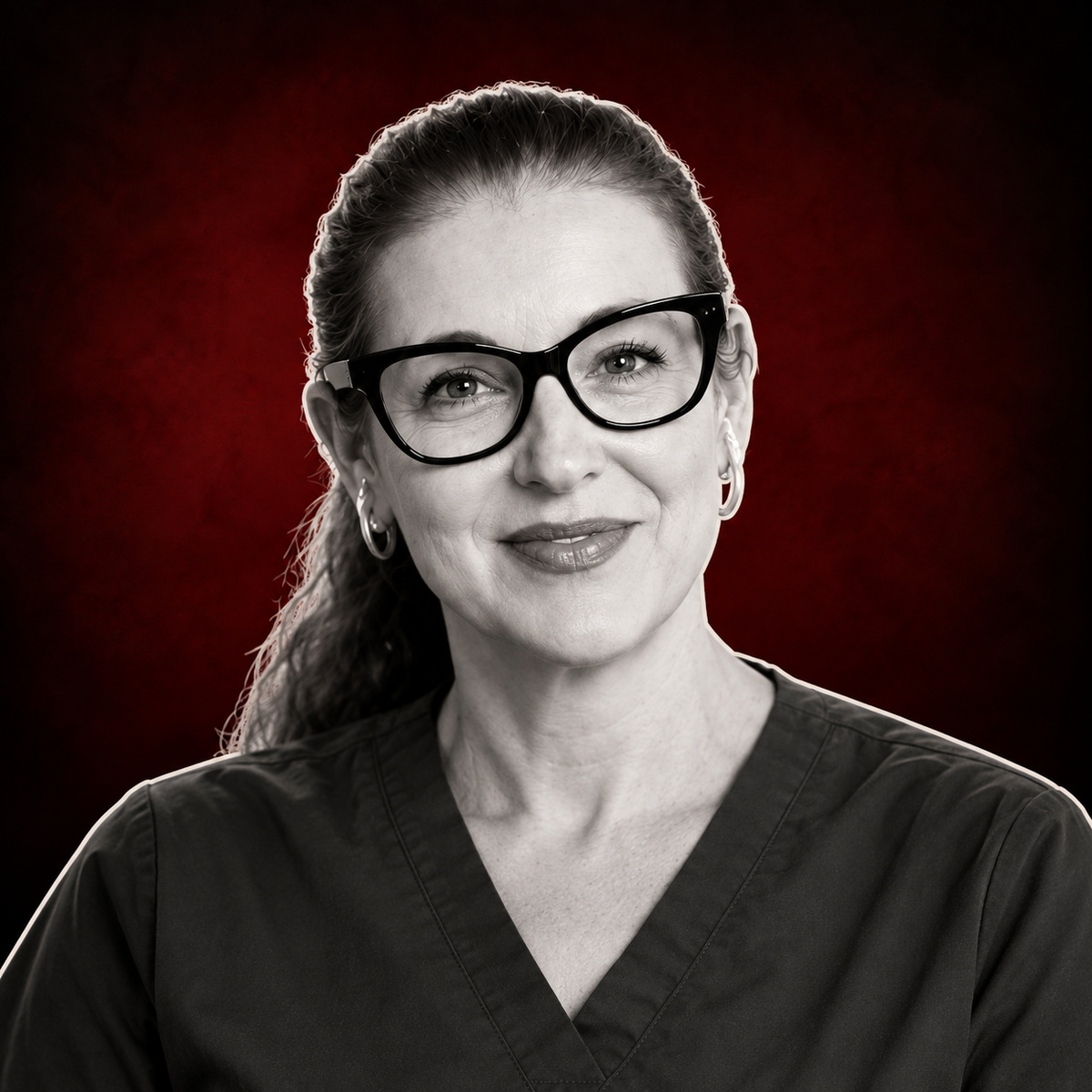
Dr. Betsy Greenleaf
Dr. Betsy Greenleaf is a quadruple board-certified physician and the founder of The International Pause Institute, which focuses on helping people in premenopause, menopause, and andropause regain their energy and quality of life. She has spent more than two decades in female pelvic medicine and reconstructive surgery, including 17 years with a hospital, and she was the first woman in the United States to become board certified in urogynecology. Betsy is CEO of the Pelvic Floor Store, an online resource for pelvic health products she began building in 2018, and the founder of Femversity, a women's empowerment through education website. She holds an MBA with a dual degree in strategic management, innovation, and entrepreneurship. A best-selling author, she recently wrote Go Viral, Be Found, a social media book for health practitioners. Today she treats both women and men through her PAUSE protocol, teaches and speaks on midlife health, and Eric Berman introduces her as Speakeasy's New Jersey leader.