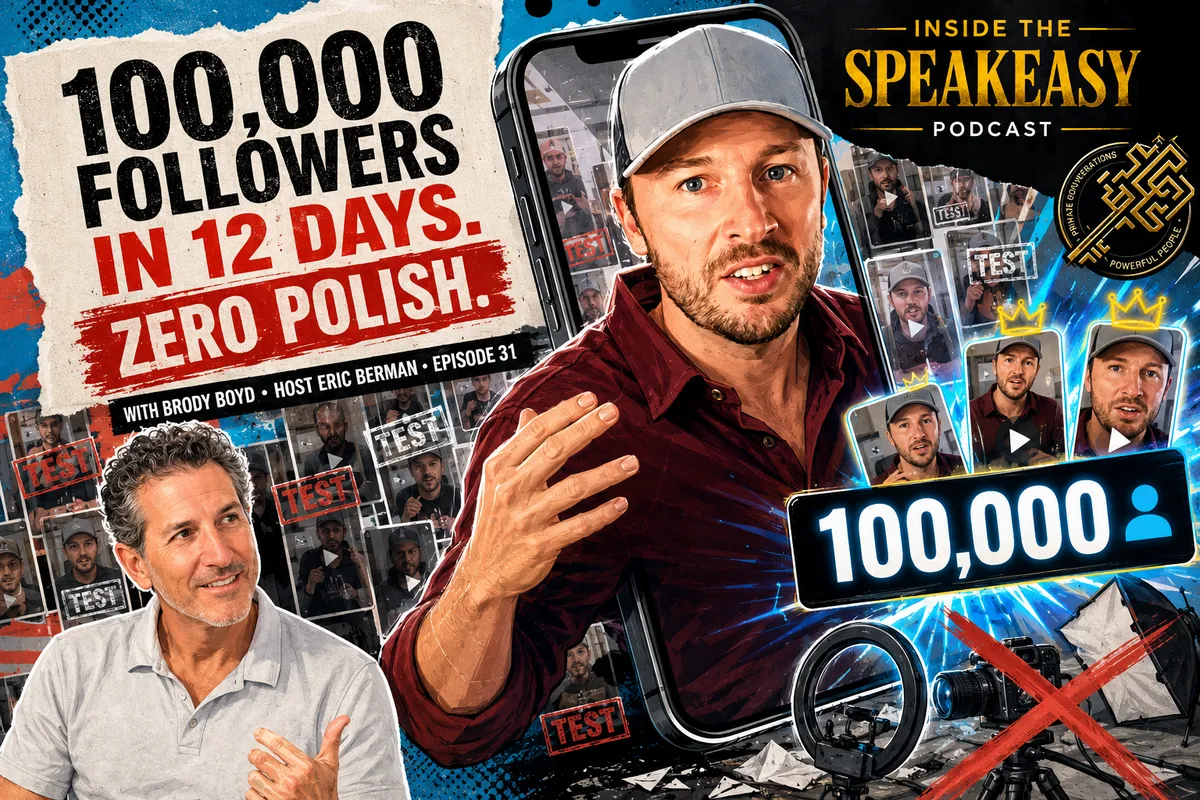
Brody Boyd struggled so much with dating as a teenager that he started reading Speed Seduction at 16, and that frustration eventually became a career as a relationship coach. In this conversation with host Eric Berman, Brody explains how he moved past pickup-artist gimmicks to focus on who he was being as a man, how he met his wife at a Waikiki meetup group, and why he and Antia now teach women the law of polarity and magnetic feminine communication. Then the conversation turns to marketing. Brody walks through the research-driven short-form video system that took the couple's Instagram account to 100,000 followers in 12 days, from ranking the top experts and videos in a niche on YouTube to testing up to 12 videos a day on TikTok. He also explains why rough, unpolished videos outperformed high-production content, where AI genuinely helps, and why the willingness to grind through 90 days of consistent posting is what separates success from failure.
In this episode, you'll discover:
- Why Brody believes attraction has less to do with lines and techniques and more to do with who you are being, and how the law of polarity applies to relationships and to attracting clients
- The step-by-step research process Brody uses to find the top experts and most-viewed YouTube videos in a niche and turn those titles into short-form videos
- Why TikTok makes the best testing ground for new content, and how to move only your proven winners to Instagram, YouTube Shorts, and Facebook
- Why Brody's rough, phone-shot videos outperformed his high-production videos, and the two ways he recommends using AI without losing authenticity
- How a library of about 20 videos with more than a million views each became an evergreen source of reach and clients through simple reposting
Episode Summary
Brody Boyd traces his career back to a teenage struggle. At 16 he was reading Speed Seduction by Ross Jeffries, then moved on to Eben Pagan's Double Your Dating and the broader self-help world, which also introduced him to internet marketing. In 2010 he began making YouTube videos about what he was learning, spent $3,000 on a weekend boot camp with a dating coach, and started selling ebooks and later video courses. He says he was sharing ideas he had not yet fully mastered, simply because he was passionate about them and had learned that teaching something helps you learn it more deeply. Even in college, he hosted small seminars on books such as The 48 Laws of Power and Think and Grow Rich.
Brody says the pickup-artist world felt like a lot of men standing on tiptoe, performing tricks and lines that felt manipulative. The real turning point came when he realized dating success was less about what he said and more about who he was being as a man. That led him to study masculinity, the difference between masculine and feminine energy, and the law of polarity, which holds that opposite energies attract. He met his wife, Antia, at a self-development meetup group that gathered at a Unity church in Waikiki. She had been running soulmate support groups and studying many of the same books, and Brody told her on their first night together that she matched the ideal woman he had written about in his own law of attraction process.
Today the couple works primarily with women, most of whom are not purely single but are dealing with a man who is pulling away, will not commit, or does not treat them as a priority. Brody describes two areas of focus: magnetic feminine polarity, which is how a woman shows up energetically, and magnetic feminine communication, which is how she speaks from that place. That includes allowing a man to give, asking for help, using I statements, and asking rather than telling. When Eric asks about the cultural impact of feminism, Brody argues that messages telling women not to rely on men can leave healthy men feeling unneeded, and that a man who does not feel valued may lose his connection to his masculine core or walk away.
The business side of the story began with a setback. Meetup.com stopped allowing speed dating, dating coaching, and matchmaking, which shut down the couple's Bay Area singles groups and nearly killed the business overnight. They moved to San Diego, where they have now lived for about eight years, and went virtual, first through other people's online summits and then their own. When running summits became too much work, they doubled down on organic content. Brody admits he once thought TikTok was only dance videos, but a friend and a JV partner showed him that educational creators were doing well there by turning top-performing YouTube titles into short videos with a call to action.
Brody and his wife took that idea further, posting at least three videos each every weekday and sometimes up to 12 a day, with minimal editing, around the end of 2020 and into 2021. Videos began reaching a million views, and when they moved their best TikToks to Instagram, the account gained 100,000 followers in 12 days. Brody's system starts with your niche, then ranks the top experts on YouTube in a spreadsheet, ranks their most-viewed videos in a second spreadsheet, and turns those titles into short videos with a strong hook. He recommends a 90-day challenge, posting at least one and ideally three videos a day, using TikTok as the testing ground before moving winners to other platforms.
On AI, Brody cautions against automating the research entirely, because doing it manually helps you understand what the audience actually wants. He says his rough, phone-shot videos have always outperformed his high-production videos, so he recommends using AI mainly for idea generation and occasional experiments, such as a HeyGen avatar or the Love Guru Jesus character the couple once tested. The real difference, he says, is the willingness to grind through the work, supported by accountability and help with internal resistance, including Steven Pressfield's The War of Art. The payoff is an evergreen library of about 20 videos with more than a million views each that the couple still reposts to bring in clients. Brody closes by describing the monthly touch point he values in Speakeasy's San Diego chapter.
Big Ideas Discussed
Market Research Is the Shortcut to Viral Hooks
Brody's system does not start with creativity. It starts with research. After identifying a niche, he lists the top experts in that niche on YouTube in a spreadsheet and ranks them by following and views. Then he pulls the top videos from those experts into a second spreadsheet and ranks those by views. The result is a list of what he calls what the audience is hungry for, at least on YouTube, and those titles become the topics for short-form videos.
The reason this works, Brody explains, is the hook. In the educational space, he says, the hook is what makes a video go viral, much like a headline in marketing or a pickup line in dating. Borrowing proven topics gives each video a strong starting point, and he recommends delivering your best content in 90 seconds or less. He also suggests repeating the research every six months to a year, because topics change and new experts emerge, giving you fresh ideas to put your own spin on.
Let TikTok Be the Testing Ground
Brody recommends testing new content on TikTok first rather than posting everything everywhere. He explains that TikTok tends to show videos primarily to new people rather than to an existing audience, so a creator can experiment, make mistakes, and post a high volume of content without wearing out followers. When a video performs well, it reaches both the existing audience and a wider group of new viewers.
Once a video proves itself, he moves it to Instagram, YouTube Shorts, Facebook, or anywhere else. That is how the couple protected their Instagram audience while still posting heavily, and it is how a few TikTok winners helped the Instagram account gain 100,000 followers in 12 days. Brody says that, at their peak, he and his wife posted at least three videos each every weekday and sometimes as many as 12 a day, letting the algorithm and the audience decide what was good rather than trying to predict it themselves.
Raw and Real Beats Polished
Many marketers assume better production leads to better results, but Brody's experience was the opposite. The videos that went viral were shot on his phone with very little editing, and the couple's high-production videos never performed as well. He connects this to the same principle behind dating: people want to connect authentically, bypass formality, and feel your heart. Rough videos give viewers that human connection faster.
That is also why Brody is cautious about letting AI do everything. He suggests using ChatGPT or a custom GPT trained on your best trainings to generate ideas for what to say on a topic, which can help you get past resistance. He is open to experimenting with AI video too, but notes that the couple's AI avatar, Love Guru Jesus, never performed at the level of their normal videos. Eric adds that the temptation to let AI handle everything may cause marketers to miss the nuances they would otherwise pick up by doing the work themselves.
The Grind Creates an Evergreen Asset
Brody believes the real dividing line is not strategy but willingness to do the work. He recommends committing to 90 days of consistent posting, ideally three videos a day, and says that once the process is dialed in, filming and posting three videos can take as little as 20 to 30 minutes a day. The harder part is the internal battle with resistance, doubt, and the fatigue of repeating the same ideas, which is why he recommends accountability, coaching, and The War of Art by Steven Pressfield.
The reward comes after the grind. Brody says he has barely made new reels in the past year because the couple has a collection of about 20 viral videos with more than a million views each across multiple platforms. They simply repost those videos, which still earn views and bring in clients. He compares it to spinning the wheel at the casino enough times to know your winners and then playing them again and again. Eric notes his surprise that reposting months-old content still works so well.
Questions We Answer in This Episode
How did Brody Boyd get 100,000 Instagram followers in 12 days?
Brody Boyd and his wife posted a high volume of short, lightly edited videos on TikTok, sometimes up to 12 a day, based on topics from top-performing YouTube videos in their niche. They then moved only their best-performing TikTok videos to Instagram. A couple of those videos went viral, and the Instagram account gained 100,000 followers in 12 days.
What is Brody Boyd's short-form video research process?
Brody Boyd starts by identifying the niche, then lists the top experts in that niche on YouTube in a spreadsheet and ranks them by following and views. Next, he ranks those experts' most-viewed videos in a second spreadsheet. Those titles become the topics for short-form videos, which he keeps to about 90 seconds or less with a strong hook.
Why does Brody Boyd recommend testing content on TikTok first?
Brody Boyd says TikTok tends to show videos to new people first rather than to a creator's existing audience. That lets creators experiment and post heavily without burning out their followers. Once a video performs well on TikTok, he recommends moving it to Instagram, YouTube Shorts, Facebook, or other platforms.
How should marketers use AI for short-form video, according to Brody Boyd?
Brody Boyd recommends using AI mainly for idea generation, such as asking a custom GPT trained on your trainings what to say about a topic. He cautions against automating market research completely, because doing it manually helps you understand what your audience wants. He says his raw, phone-shot videos consistently outperformed polished and AI-generated content.
How long should you commit to posting short-form videos?
Brody Boyd suggests a 90-day challenge, posting at least one video a day and ideally three. He says results will not come right away, but consistency teaches the algorithm and builds a basic following until something hits. Once the process is dialed in, he says three videos can be filmed and posted in about 20 to 30 minutes a day.
What is the law of polarity in relationships?
Brody Boyd describes the law of polarity as the principle that opposite energies attract. The more connected a woman is to her feminine energy, the more healthy masculine energy she will attract, and it works the same way for men. He compares it to a tango and says it also applies in business when you step into the energy your clients need.
What is magnetic feminine communication?
Magnetic feminine communication is how Brody Boyd and his wife, Antia, describe speaking from a woman's feminine core. Examples include asking for help in a way that makes a man want to give it, sharing feelings with I statements, and using permissive phrases such as may I ask or could you. One principle they teach is to ask a man rather than tell him what to do.
Full Episode Transcript
Read the Full Episode Transcript
Welcome to Inside the Speakeasy Podcast
Eric Berman: Welcome to Inside the Speakeasy Podcast, the private room where today's sharpest founders, innovators and renegade thinkers come to trade the ideas that move industries. This show is brought to you by HighLevel, the AI driven business operating system trusted by over 2 million businesses to help automate, scale and create real leverage. HighLevel isn't just a tool, it's the engine behind some of the most agile and high performing teams on the planet. If you're ready to streamline everything, amplify your reach, and actually build a business that works for you, you're in the right place. Visit www.gohighlevel.com/speakeasy-mastermind-promo to get an exclusive 30 day trial for being a listener of the Inside the Speakeasy Podcast. Enjoy the show. So how would you like to get 100,000 followers in 12 days and as a bonus, a relationship of your dreams? Well, just gotta listen to today's episode of Inside the Speakeasy Podcast where Brody Boyd from San Diego is going to share all the incredible credible tips he's learned to crush it on relationships as a relationship coach and how he was able to absolutely dominate on short viral videos and get it in huge, huge reach through his audience. Welcome Brody Boyd.
Brody Boyd: Thanks Eric. Excited to be here.
From Struggling With Dating to Relationship Coach
Eric Berman: Let's go a little bit into the dating side and for those of you that are not the single females, hang in there just a few minutes because we're not going to spend too much time because I want to get into the juice, which is the how we can all get some short form viral videos going. But you got to hear the backstory on how we got there. So how the hell did you get into, you know, relationship advice and tell me a little bit about what's going on outside of your business.
Brody Boyd: Yeah, totally. And as many of us know, relationships, dating, marketing, sales, they're all very closely related to very similar principles. And this is actually beneficial to men as well because in my journey of becoming a relationship coach where I struggled with my dating when I was 16 and I started reading Speed Seduction by Ross Jeffries on my computer as a teenager. And then I got into Eben Pagan and Double Your Dating and so many other things in the self help world, actually that led me into also Internet marketing and I started making YouTube videos back in 2010, sharing some of the things I was learning in my dating journey, trying to master it for myself because I had struggled so much with meeting women, talking to women, attracting them, not understanding these dynamics that I became so passionate about it. So I ended up hiring my own dating coach as well. Spent $3,000 for a weekend sort of boot camp with me and two other guys. And I was just like, this is my path. And so I started sharing what I was learning on YouTube, building a bit of an audience, even though I didn't really know what I was doing. Learned Internet marketing a bit more, mostly from Eben, and started putting out some ebooks, selling those online, and then video courses later on. And it actually wasn't until I met my wife in Honolulu that, or actually Waikiki, that we started. Once we got married, we started doing it together. She had been a love coach on her own before she met me. Helping women she was passionate about just as much as I was. She had struggled with dating. And then, so when me and Antia got married, she started helping women, I was helping men. We did that for a while and. And she also introduced me to her best friend who was a business coach. And we really built it into an actual business. Started doing live events in the Bay Area, some of the biggest singles groups that we had there, workshops, and then eventually started moving things online. And so we started doing a lot of social media and online summits and whatnot. So that was basically the journey that led me to where we are today.
Eric Berman: Wow, there is so much I want to unpack there. You know, first of all, you're out there, you're learning, and you know, for those of you who can't see, I mean, you know, Brody's a good looking guy out there. So I mean, talk to me through first. Like, you know, what was the biggest thing? And you know, it's a two part question, you know, what was the biggest thing you learned? I'd say one or two takeaways in your journey of trying to, you know, get when you're single. And then what sort of got you to think, wow, I'm learning this stuff, but I want to share it online as I'm kind of going through this journey. That's interesting.
Brody Boyd: Yeah, yeah.
Who You Are Being as a Man and the Law of Polarity
Brody Boyd: For me, what really connected the dots was because I, like I said, I started reading these books, Speed Seduction and going into the pickup artist world. And it was interesting. There were some interesting principles. But even back then, being new to all of it, I still thought it was a little strange and a little bit weird and manipulative. You know, in the Dao de Jing, there's a verse that I love, which is, he who stands on tiptoe is not steady. And what it felt to me going through that world was there was a lot of guys standing on their tiptoes, like performing, learning magic tricks, pick up lines, how to neg women and subtly insult them, and cocky comedy and all these different things. And I thought it was a lot of it was kind of a gimmick. You just learn these sexy techniques. And that's where guys started getting obsessed about it and getting into their heads and nerding out about it, which was really detrimental, I think, ultimately to me and to a lot of other guys. But through that, what I said, the gift was it led me to the world of self improvement, that actually I can become better. I could learn how to attract women better. I could become a better man. And that was really the key for me was when I understood that this actually wasn't so much about what I was saying and how to meet women and approaching and the routines and all the different steps and strategies. It was more about who I was being as a man, which meant, oh, I had to learn how to be a better man. And I started studying. That's when things really started picking up for me as far as my own love life and my own social journey. Self development journey was learning about masculinity, learning about what makes a man a man. What are the stages of masculine development, such as the initiation rites we used to have when we were living back in caveman times that no longer exist today. That that was part of the reason why I was struggling, I realized was why I was struggling. I didn't know what it meant to be a man. I didn't connect to my own masculine core. And so I had to go through a journey of discovering that what it means. What is the difference between masculine energy and feminine energy? What does it mean to be a masculine connected man versus a feminine connected woman? And how do these energies dance together, like in a tango dance creates attraction and as a metaphor for relationships. And that's what I dove into a lot more as my career evolved and started teaching that more. And one of the things I'm most passionate about, that we now teach with women primarily, is that polarity, the law of polarity, which states that opposite energies attract. And the more feminine you are as a woman, the more feminine connected you are, the more healthy masculine energy you're going to attract and vice versa. So it works the same with the man. And it's also a business principle as well, potentially with attracting clients when you are stepping into the energy of what they need. But yeah, so that was a big part of the. The journey for me.
Eric Berman: Wow, interesting. And so along the way, you Just decided to share. You thought it was so interesting. You're like, let me just start sharing that and doing YouTube. I mean, how do you.
Brody Boyd: Yeah, so that's what led me into it was I just thought this was so fascinating for me. I was like, this is. This is something so interesting. And I became so passionate about it that I couldn't help but, like, want to share. I had also learned this principle at some point that you learn something deeper when you teach it. Yeah. So I really took that on and I started doing. When I was in college, I started putting on a little seminars where I would talk about some of my favorite books. Like, I think the first one I did was a seminar on the book The 48 Laws of Power by Robert Greene, which I thought was a very fascinating book. And then I did Think and Grow Rich by Napoleon Hill and Mastery by George Leonard. So I did these little seminars there. I'd have like four or five people show up and we'd talk about the book and I'd kind of start teaching. And I was. I think that was even before I started doing YouTube videos. So I was already like, on this path of like, I just want to share this. I just want to talk about it with other people. And then so YouTube was a natural evolution of that because I would be at home in my apartment and I would just be thinking about. I would actually be writing for myself in my journal. And I was like, well, I could put this on a blog. I could also talk about it on a video. And I started making these videos and it was really my way of deepening my own journey of deepening my own growth, which I think is a powerful way and an important way for most people to start their social media marketing journey of actually putting out organic content. Is what are you so passionate about that you can't even help yourself from talking about it? You almost want to just talk about it as a way to clarify your own thoughts as well, to have engagement with an audience, to attract similar people who are passionate about it. And it sort of builds organically from there. So that was a big reason why I started wanting to put this out there into the world. What I was learning.
Eric Berman: I love it. Little did you know this would lead to the short viral, you know, the short form video that you're eventually going to. We're going to talk about. But, you know, are you sharing any of the success stories you're having along the way in your dating journey or is it just more the principles?
Brody Boyd: You know, it's funny because actually More often, what I would do with my success stories is there was, I told you, this dating coach that I had hired, part of his program is he had like a private forum and this was back in like 2010 and it was just some WordPress site that he had set up just for his members. And that's where I primarily would share my success stories was in this group. And there was kind of, you know, guys, we all kind of try to one up each other and share the craziest stories. And this is what happened. And most of the guys would just be like, oh, I wish that was me or I want. And so it kind of like this jockeying for status in a way. But it was good because it encouraged everyone to like try to be better. Although some people were stretching the truth often likely, and in what their success actually was. And there was part of that where I would share it there. And that was kind of also my foray into sharing and teaching and coaching what I was learning. But then, yeah, when I was online and YouTube, I would be talking about the principles and there would be, yes, searcher, certain success stories I would go through. And this is what I did, this is what happened. But like I said, I think at the beginning for me it was more about just the ideas. Like some of the things I was teaching I didn't even have fully mastered for myself. But I loved like talking about the ideas and solidifying it for myself. A lot of it was what I read from books or got from my dating coach or I was going into like some ancient like spiritual texts and things and just getting gold nuggets and then wanting to share that gold nugget because I was just like, wow, this is such a cool idea. I just want to talk about it. Yeah. And then the success stories would kind.
Meeting His Wife at a Waikiki Meetup
Eric Berman: Of evolve later and then I'm going to flip it over to the female side, but as I transition there, you know. How did you meet your wife?
Brody Boyd: Yeah, so we had met at a workshop at a church. It was like a sort of a non denominational, it was called Unity. And they did these, they had these meetup groups that were being hosted there. So it was actually more through Meetup.com I had been going out to workshops and events and groups. And this was part of my strategy that I learned of how to meet women. Because of course I like to go out to bars and I would go to karaoke and do that. But I realized for more quality women and also for my own personal growth, I wanted to go to more like workshops, events, seminars, and so I'd been going to this group for a while called New Mind. New Reality is a meetup group that I liked. I just been in Waikiki for a couple months and we would have these discussions about spiritual self development concepts. And then one day my wife came in and I saw it right away. I'm like, wow, she's. That's my type. I mean, she's very interesting to me. And then she, you know, sat in and we had sort of this conversation, the group conversation. We bounced ideas off each other. And then after the event, I talked to her and realized we had read a lot of the same books, studied David Deida and Polarity and Relationship. She had also been doing her soulmate support groups. And it was just like so much alignment. And so this is what I teach a lot of people also. When, you know you found the right person is when you feel you're connected on multiple levels. It's like the physical, the mental, emotional and the spiritual. Even where you feel like, wow, did God bring us together? Like, there's something bigger here. And I told her the night that we met because I invited her out on a date, you know, going to the beach that day after we met in the evening. And I told her that evening, I said, wow, you're like the girl from my story. And what I meant by that is I'd written my story, my sort of law of attraction process of like creating my reality. And I'd written my ideal woman in there. And she was like, exactly what I had written down. And so I told her that I was just like, wow, this is really interesting. And then I even told her also that night I said, I said, I feel we have a big responsibility to humanity because I got this sense that was where like the spiritual connection was coming in. Where I had, was, I had like this sense that I think us coming together is for a bigger purpose. I think we're going to do something bigger in the world. And I had kind of foreseen, and.
Eric Berman: I haven't heard that pickup line before, but that's, that's a good one. I like that.
Brody Boyd: Yeah. Which is funny because that was not something I had learned. That was not something I would teach any guy of what to say to a woman. The only reason I said it is because I was at kind of at the place where I didn't care anymore. I did want a longer term relationship with a woman. And I gotten to a point where like, you know, I could see myself like wanting a longer term relationship. And I just, I felt It. It was just like this hit, and I just, like, I had to put it out there because I just thought it was really like, wow, this is different than any situation I had before. And she didn't know what to make of that either. She thought it was like something she'd never heard before from a guy and thought it was interesting. But, you know, she was also, like, still on board with it as far as we were. Both felt that connection, and we just kept dating and eventually got into exclusive relationship and got married.
Eric Berman: So let's make some impact together. I'm down. All right. I like it. Yes. Okay.
Magnetic Feminine Polarity and Magnetic Feminine Communication
Eric Berman: So moving over to the other side of the coin, you guys do a lot of coaching and teaching, and you have amazing, amazing workshops that I've seen you work on. What are the top couple tips for if anybody is listening or they have friends? And you said this could work for both sides, but, you know, for the single ladies out there, what are some takeaways?
Brody Boyd: Yeah, and we don't necessarily work just with single women. I mean, it's actually a very small percentage of women who come to us are single. A lot of the women who come to us, they're struggling with. They're attracted to a guy. Usually they have a guy in mind. I don't believe any woman is typically just purely single. There's some guy she's talking to or an ex that's coming back in the picture or some guy at work or somebody who she's interested in. And the problem is she doesn't know how to get that guy to approach her or she doesn't know how. More often she has some kind of relationship with him, but he's not committing or he's not really treating her as a priority. He's not chasing her or pursuing her in the way that she wants. It may even be pulling away and losing interest. So that's where, like, where the pain comes in. Like, I don't want him to pull away. I'm tired of this, and I'm scared I'm going to lose him. And can you please help me? And that opens up the gateway to where now we get to look at, well, how are you actually showing up in your relationships with men in general, also your life in general? And do you know what it means to be feminine and to operate from your feminine core? And so that's really where the work goes into. And that's what we help the women with primarily is. And I'm most passionate about that, is what does it mean as a woman to really be Connected to your feminine core. And it shows up in two ways, which is primarily magnetic feminine polarity, as we call it, which is the energetics of it. It's her actions, how she shows up in the world. But the other huge component of this, because we know how important communication is in any relationship, is magnetic feminine communication. So being connected to your feminine as a woman, how do you actually communicate from that place? What do the words sound like? How do you speak differently and authentically? Because we're not changing who they are. We're actually bringing them back to who they actually were when they were first born. Before all the trauma, the wounds, the bad societal programming that taught them that they have to be some strong, independent boss babe that don't need no man. Well, that's actually putting up an armor and putting up a shield. And especially if they've had trauma where there's like a block there, it's hard for a man to actually feel their heart. It's hard for a man to actually feel their feminine core. And so they attract guys who are non committal, who only see them as like a friends with benefits situation, but not anything really serious. And they're not falling deeply in love with these women. So we help them to crack open that core, take off the armor and to expose that vulnerability and to be trusting, to be open, to be receiving from a man, to be respectful in their communication, to allow a man actually to become their hero and want to help them and give to them. And that's a huge principle of feminine energy, is that the feminine receives the masculine is giving. And a lot of these women, when they come to us, they're primarily giving. They're like, I'm the strong one, I'm giving to the guys, I'm paying for things, I'm buying things. And we've had crazy stories of women buying guys houses basically all the way up to that extreme. And so we have to help them to stop, to stop the madness and actually allow a man to start giving to them, which is really hard because it feels good. Sometimes when you're driving the car, you feel like you're in control, you have the power, you're leading the ship. But when you let go of the steering wheel and you allow a man to actually take that steering wheel and take care of you and drive you and make the decisions himself and plan the dates and buy things for you and cherish you, that can feel vulnerable. It could feel like, well, now you have to really surrender. You have to trust. And for a lot of the inner Aspects, the challenges come out. But then also, like, how do you communicate from that place? Like, are you good at actually asking for help? How do you ask for help properly from your feminine to where a man wants to give it to you? How do you share your feelings from your feminine? Like, for example, using I statements or using permissives like may I ask? Or can I? Or could you, rather than just telling a man what to do. That's one thing we always say is never tell a man what to do, always ask. Because when you ask, you're in your feminine, you're open to receive, and then he can guide, he can be the one leading. So there's so many principles that go along with that, but that's some of the basics of what we really focus on.
How Cultural Messages Disrupt Polarity in Relationships
Eric Berman: Wow, that is quite fascinating. And it sounds like, and I'm not just asking questions, not taking any sides and that kind of stuff, but it sounds like what I'm hearing you say is the movement, let's just say, of female power, feminist, what do you want to call it? Over the last, you know, you would argue, from what I'm hearing you, is that actually could have caused. On one hand there was some upside, but at the downside is psychologically, this is pulling away some of the feminine power. What'd you call the polarity, the feminine magnetism. You're saying that actually you'd argue that did some damage in some instances from taking away what people naturally could be.
Brody Boyd: Yeah, totally. In so many different levels. Because for one, it's. It comes along with this belief that a woman should not rely on a man. But the problem with that is men at their core, if a man is connected to his masculine core a deep way and he's not broken, because there is a percentage of men who are deeply broken who can't cherish or devote himself to a woman no matter what she does. But for most healthy men, they need to feel needed. Like, if a man doesn't feel that he can provide for a woman in some way, that he can't take care of her, he can't protect her, he's not valued, he's not respected or admired or revered or honored in some way, eventually he's going to feel like, why am I here? Why do you need me? You don't need me. And most men will become then depressed in a way. They'll lose their connection to their masculine core. They'll become more feminine, or they will become a shell of a man, or they just won't put up with it and they'll just walk away and leave. But ultimately what ends up happening is a man doesn't feel that he can devote himself to her. And, you know, a man cares about a woman. He wants her to be happy. So if he doesn't feel like he can make her happy, he'll often say, well, you should probably be with somebody else, somebody who can provide for you. I don't know who that is, but it seems like it's not me. So men won't be able to devote themselves fully because they won't feel that sense of purpose and meaning in the relationship. Like a warrior, like a king. A man needs to feel a mission in his life. And a woman can become that sense of a mission that he has somebody that he's providing for, somebody who values him in this world, and he gets a sense of purpose and meaning from that. And if a woman doesn't allow that because she's blocked off and she doesn't want to receive and she doesn't trust the man and she resents men and she's been hurt before and she doesn't want to make herself vulnerable again. So she won't rely on him, she won't ask for help, she won't share in the right way. Instead, she'll tell a man what to do or complain or criticize or try to change him or treat him like a child. Then that destroys the polarity. And it goes both ways, of course, because broken men will attract this kind of behavior as well. But that's. Yeah, exactly it. These societal messages, the cultural shifts that we've seen, cause so many of these issues in relationships for men and women because we're detached from our natural cores.
Losing the Meetup Groups and Taking the Business Virtual
Eric Berman: I could spend the whole podcast going down this, and I appreciate all this, but I mean, I know this is almost two killer topics we're going to get into today. I could get with you on the rabbit hole. When I'm looking at the time, I'm like, damn, let's turn the page a little bit. And I think anybody listening this is like, okay, I get it. Hopefully get. I really, really sparked some curiosity and I totally understand what you're saying. And I think there's more for anybody interested, obviously could reach out to you and go deeper. You've now and I've witnessed it, you showed us a little bit of a playbook. And through your growth as a relationship coach and your wife's growth as a relationship coaches, you've been able to leverage some organic and do some incredible things with short form video. And that's been A huge success. So much, in fact, that now you're out there, you're consulting, you're teaching others how to do that. Let's get into that a little bit. So what is the. Give us the macro, a little bit overview and maybe taste of some suggestions of what we could be doing.
Brody Boyd: Yeah. So basically our organic journey when I left off was basically we had been doing workshops. Meetup.com changed their policies. They no longer allowed speed dating, dating, coaching or matchmaking on their platform. So they shut down a lot of our singles groups that we had in the Bay Area and basically almost killed our business overnight. But then we said the beauty of that is allowed us to go virtual. And we're like, we're just going to go virtual. We don't need to be here in the Bay Area anymore. So we moved down to beautiful San Diego that we love. And we've been down here for, you know, like eight years now. And so basically that allowed us, it really forced us to go virtual with our business. And so we started with online summits because we had people who are inviting us to summits. And we started attracting high-ticket clients through that. And then we started doing our own summits. Like, well, we can do this. We hired a summit expert. We started doing online summits and that was really great for a while and grow our business. But then we realized, well, summits is a lot of work and we kind of, we have to continue doing it. And you know, it was like wrangling in all the JV partners and it was becoming a bit of a hassle for me. I had to do most of the logistics for that. And so I said, why don't we just focus more? We have our YouTube channel. We've been doing organic content. Like, what if we just stopped doing the summits and just went all in on organic content. So for a while we just doubled down on our long form content, which was still doing pretty well.
Discovering TikTok and the YouTube Research Shortcut
Brody Boyd: And I had some hangups around TikTok because I always thought TikTok was like dance videos, stupid stuff like that. But I had a friend who said, no, you should really check out TikTok. Like there's a lot of like coaches and educators and educational content on there. And I know because I get a lot of myself, I'm like listening to bitcoin experts and investing and all kinds of people on there. So I started checking out TikTok and I'm like, wow, this is actually pretty cool. So then we started putting out some videos and then I had a friend I Had a JV partner and we also had a colleague. They were together doing a lot more stuff on TikTok than I was doing and they'd kind of cracked a little bit of the code. So what they were doing that he told me about was very interesting to me where my colleague, working with our JV partner, our mutual friend, had started getting some videos that were going pretty viral. And then my mutual friend told me how he did and he said, well, basically what we're doing is we're going into YouTube and we're finding some of the top performing videos in the niche and the titles and then we're just doing short videos about that and we're giving a little call to action at the end, directing them to the link in the bio and we're making good sales from that. And so the sales was interesting as well as the virality. And I'm like, yeah, we can build our audience. And so. But my friend wasn't really taking it to the next level. He's kind of, I guess in a way maybe he wasn't as driven as I was and he was just kind of like sort of dabbling with it.
Going All In: Up to 12 Videos a Day and 100,000 Followers in 12 Days
Brody Boyd: But then I, that concept, I said, well, what if we went really hard on this? Like, what if we just focused on TikTok for the next like three, four months and just did this strategy where we took the best top videos on YouTube, used those topics, started making these short form videos and just pump them out. And so we started doing that, me and my wife. And we were at the peak, I believe we were doing about like six, six videos a day, sometimes 12 videos a day. It depend on how much we were doing. But basically every day, every weekday we were like at least doing three videos each and then we would have very little editing done with those videos and just putting them on the TikTok. And because we realized that with TikTok it was really a quantity game rather than a quality game and the algorithm would pick up what was good and we just tried to do our best, but it let the algorithm let the audience decide what was good. And because they weren't really punishing us for putting out so much content. And this was around 20, the end of 2020, more like 2021, when TikTok was also starting to become pretty big. And so things started catching, some videos started going viral. We're getting a million views here, a million views there, and we started building our following. And then so our TikTok started growing and then I said, well, why don't we take Our best videos, because we didn't want to also burn out our Instagram audience. We couldn't do this as much as we were doing on TikTok on Instagram. So we said, let's take our best videos from TikTok, post them on Instagram. And that started working really well. And through that strategy, that's how we got a hundred thousand Instagram followers within 12 days, which is like the stat that I was most shocked by. We were growing on all platforms at that point because even the YouTube shorts were doing well. Our Facebook page was blowing up, our TikTok was blowing up, of course. But then the Instagram was just like a couple videos went super viral and just went. So that was basically how that went down.
The Step-by-Step Short-Form Video System
Eric Berman: Wow. So the strategy to refresh, to summarize, in a sense, because again, you showed us is research. You went into YouTube, you research what out there first, actually understand your niche, your avatar and what you want to go after within that niche. You're able to research the top titles of other videos that were getting really viral. You would take that title and you just crank out a ton of content and then TikTok take the best of those and put it on Instagram. And that was the flow.
Brody Boyd: Yeah, it was three main steps. The first step is actually identifying your niche, which most people know what their niche is. Yeah. But then step two would be to research, do market research on YouTube, to look at who are all the top experts in your niche on YouTube. And I would just add them to a spreadsheet. That's what we did. We added them to. And that's what I mean, when I took it to the next levels, we designed like a whole system around it where then we started putting them into the spreadsheet and categorizing the experts and ranking them based on who had the biggest followings and were getting the most views. And then the third stage, the third step is to take the top videos from all of those top experts, put those into a separate spreadsheet and categorize those videos as well by top viewership, and basically get a list of all the top videos that the niche wants, at least on YouTube. It's a great measurement of what the audience is hungry for. And then we would have a list, we would have a list basically of what that would lead into step four, which would be okay now taking those titles and making short form videos based on those titles. Because here's the thing with TikTok, with Instagram, that's still true to this day. What makes a video go viral primarily in the educational space that I've seen is the hook. We all know this as marketers. The hook is so important. It's like the headline. It's like the pickup line. You want to have a great hook and that's what reels them in, so to speak. It reels them in, in that first couple seconds when they stumble upon your video, which hopefully the algorithm will put your video in front of some of the right people and then that gives you an access to now give them some great content. And really what I believe is you should just put out your best content. A lot of marketers talk about this, but just put out your best, absolute best content in as short a period of time as possible. So we keep the reels to around. Now you can do about 90 seconds or less. Before we used to do it 60 seconds or less. And that's it. That was the main idea behind it and that was the main strategy behind it. But then what comes into play after that is okay. Now there's actually some work involved here. Now it's actually about doing that consistently for multiple days, ideally for multiple months. And we probably did it for like four or five months, hardcore. But I recommend, I don't think most people need to do that. I would say just give it 90 days, the 90 days, 90 day TikTok challenge, you can call it, and do that for 90 days consistently. Least putting out, I'd say a bare minimum putting out one video a day, but ideally putting out three videos a day would be great and you'll start to see some results over time. It's not going to click right away, but you're teaching the algorithm, you're starting to build a basic following and then eventually that allows the space for something to really hit.
Why TikTok Should Be Your Testing Ground
Eric Berman: And then what platforms do you recommend? First on the posting of all that.
Brody Boyd: And all three or no first TikTok, I would say you don't want to burn out your Instagram. You don't want to burn out. You can maybe do this on your Facebook page. I wouldn't do it on YouTube, but TikTok is great because like I said, the algorithm's a little different for TikTok and it's always changing, but it's still, for the most part is the same where they tend to show your videos first and primarily to new people rather than your existing audience. So what the benefit of that is it doesn't allow you to burn out your audience with a bunch of crap content. So you have more license with TikTok to be experimental to try things to mess up and your audience isn't going to leave you for that. Or they may not even know about it, probably. But then when something does perform well, it's going to go out to your followers and it's going to go out to a bunch of new people when the audience really likes it. And so that's why I recommend let TikTok be your testing ground and then take the top results from there. And then let's go to Instagram, YouTube, Shorts, Facebook page and wherever else you want to put it as the best approach for that.
Where AI Fits and Why Raw Videos Win
Eric Berman: I love it. I love it. And now you did this back pre AI craziness. How would you, knowing you know now about AI, how would you use AI to make this your workflow? Much easier.
Brody Boyd: Yeah, it's very interesting. So for one, AI can definitely help with the market research process. And I've seen some advanced stuff from Sammy and Brad who are finding ways to put this into workflows with AI agents that can help you with the market research primarily, although I even caution them against this because I believe you should. The reason why this works, it's because it is so manual. And I'll explain why. I believe you can offshoot a lot of this, offload a lot of this to AI, but there's a lot of value in doing it manually, especially in the beginning, because that market research, you start to doing that market research manually, helps you to start getting it into your bones, what the audience actually wants from a mass market perspective. Because when you're going through YouTube, you're seeing what's actually some of the most viral videos and you start to understand the psychology behind why certain videos are getting clicked on. And so for you to get your hands dirty and really dig into it manually, there's a lot of benefit to that as you seep it into your subconscious. Now, also with the reels itself, putting out the content manually. The big benefit for that rather than AI is, and I believe the reason why so many of our videos went viral is not because they were super polished. It's not because that every word was perfect and the editing was great and the music was great and it was all perfect. It was actually because it was raw and authentic and real. And I'm sure if you go through your own timeline after this interview and you look at what videos seem to be getting shown to you and getting the most views, they're not often the super heavy AI videos or the super polished videos. They're actually just people usually holding their camera just Talking about some powerful concept or what they're doing, maybe a little bit more polished than that nowadays, but I think there's a lot of value in actually the rough edits. And that's why all of our videos that went viral, they were just my phone and me and very little editing. And I think the reason why, and we've done a lot of high value production videos and they still haven't ever performed as well as those rough videos. And I think it's because of that. The psychology of just like in dating, people want to authentically connect. They want to bypass a lot of the superficiality, the formality, and they want to feel your heart, they want to feel your core. And so the sooner you can give them that, they have that human connection. And so what I will say is with AI, AI can help you with content. Idea generation. That's a great use of AI is like so you got these great topics, but now what are you going to talk about in the video? We'll ask ChatGPT create a custom GPT with some of your best trainings and, and ask it, what do you think I should talk about for this topic? Like what's the best idea? And it'll give you some ideas and you can use that so that you can get over some of the hump of resistance that you don't know what to talk about or you don't want to talk about anything. Well, use it for idea generation, something that seems exciting to you and then just talk about that. So I think that's a good use case for it idea generation. And you can experiment with occasionally putting out an AI video or two. Like hey, let's say you got HeyGen set up. Let's say you have an AI avatar. Like go ahead and put a couple of those videos out. Use the same format, but have it be totally AI generated script, AI generated video and just see if it goes viral. You know, there's always a chance that something could still take off. And that's why I like TikTok, is you can experiment with that. And we tried a lot of that, even back before AI got too advanced. You would have these like still images that you can get to like talk. We would do that with the viral voice that was off of ElevenLabs. I don't remember. We created like an avatar called Love Guru Jesus. It like looked like a handsome sexy Jesus and he would like give love advice. It did okay, but it never performed at the level of our normal videos, so. But it was fun to test out.
Eric Berman: Yep. That's interesting. And I think there's going to be a tendency. I think it's reiterate what you said because there's going to be a definite tendency for all us marketing folk and other to leverage AI, say, wow, let's just do AI. Let's just, you know, the law of expediency is going to force us into that. That flow. So I want to reiterate that point and I like what you said. I mean, I think there's something to laziness factor that'll happen because it got us done quicker, allows you not to really consume and get a feel for things and pick up a little nuances that you're reading. So, you know, critical step that might be missed by a lot of people going through this. So I think hopefully those that are watching and listening can think through that a little bit. I like how you brought up Brad and Sammy's name. For those that don't know, those are. I assume you're meaning Brad Costanzo and Sammy Taggett over in San Diego. We have a very vibrant group out there that is a. I love to take action this, you know, you do it and already you're forming ideas and companies. And I feel like every time we have a meeting there's like a satellite sort of new company being formed off of in partnerships, which is great.
Brody Boyd: Yeah, they're like getting investors and putting together the plan.
Eric Berman: Yeah, that's fun.
The 90-Day Grind, Evergreen Reposting, and Beating Resistance
Eric Berman: What else am I missing in the flow? Any other suggestions you have?
Brody Boyd: Yeah, well, it's an important part. I didn't give this enough weight, I think, on the last talk that I did at our chapter meeting on this. But it really is, I think, the difference that's going to make the difference for the people who succeed with this strategy I'm teaching here versus the ones who don't is actually the willingness to put in the work and to be willing to go through a phase of sort of a grind of putting out that amount of content and doing it in a sort of a non AI, non automatic type of way. But the beauty of it is. So you go through that process for 90 days, but then when you have these videos, you'll get a handful of videos that perform very well. You can continue to repurpose those. And that's like the phase two that I'm in where I haven't even really made reels for like the last year. I still occasionally put some out and I may be going through another phase where I go hard on it again. But I've just basically Been living off of the fruits of that phase that we went through where we have this collection of like 20 viral videos that have gotten over a million views on multiple platforms and we basically just repost them. Now, if you go to any of our social medias, Magnetize Your Man is our handle on all these channels. You can go to our website, magnetizeyourman.com. You can contact us there or DM us through Instagram or whatever. But if you have questions, but basically that's what we do. We just repost on our channels those same videos and they still get views, they still continue to bring in clients. And it's this nice evergreen mechanism. Once you've really tested, you've spin the wheel enough times at the casino and you know your winners and you can just keep playing them over and over again. So that's really a beauty of it. But a lot of people aren't willing to go through that phase in order to get there, which is, I think, the biggest challenge most people are going to have with this.
Eric Berman: No, but I appreciate the upfront. You know, two things to comment on and reiterate is a. When you said that the first time, I was shocked that you could just fire off the same post that was there, you know, three, four months ago or six months ago. And that's great to know. And it's like, hey, we keep squeezing juice out of this one. I think you're right. I think the message is clear what you're saying. This is not a get rich quick, AKA a get users quick scheme. You could get to your 100,000 in 12 days, like Brody, but it's going to take effort and outside the research. Let's say you do that research and you plan and then you're doing your six videos a day. All I heard is 90 days. I mean, how much time on each day would you dedicate if you're mentally preparing for this?
Brody Boyd: Not that much. I mean, when I was doing it, once you got things dialed in, you can film three videos. You can have them posted potentially within 30 minutes. You know, within 30 minutes you can be sitting down at your desk and totally done with it for the day. And maybe even quicker once you're really into it. Because what I'd recommend is there's a process of like editing the videos in a basic way that I would recommend on how to have them put out there and then the call to action at the end and how it all flows together. But basically you can have that all done within, you know, 20, 30 minutes. And then that's it for the day then it's just about the repetition, getting in the habit of that. Whether you start that first thing in. Like I have a friend, actually the same partner we had back in the day, he does that now every morning. So he's building up an investing brand and he just does it first thing every morning. He puts out his films and puts out his shorts, his reels. Yeah. So you just get into the flow with it. And the other thing is having structure around you, having some maybe accountability and potentially some coaching around it. Just getting someone who supports you on the journey. Like it's more of a battle internally, I would say, of battling with your own resistance. At least that's what it was for me. I was just so hungry to like make that happen that I just did it in that phase. And of course it was. It helped that it was kind of during COVID and post Covid, so there wasn't really much else to do during that time, as we all know, except just kind of grind things out. At least that what it was like for us. And then. Yeah. So basically being willing to go through that process and grind it out. Oh yeah. Having the structure around it, the accountability, that's a big piece of it. That'll make it easier. Oh yeah. The internal resistance and your doubting voice. And also that you get tired of maybe having to say the same things over and over again. That's where AI can come in and help you get some variety on your content. And that's where I am actually now, where I. After doing this for so long, I got to the point where I was just. I can't say the same thing over and over and again. I'm just kind of done with it. And now we're focusing more on live streaming and whatnot. But I'm going to go back into it again because your content also evolves over time and the topics evolve over time. What's hot in the market evolves. And do your whole market research phase again a year later or six months later, and you'll find new topics, you'll find new experts that have popped up all of a sudden that are becoming big. And then you can model them and you can learn and you can put your own spin on it with new content, new fresh perspectives that you have. And so you can keep renewing it that way. And that helps with the internal resistance, which is maybe the biggest battle. A great book, by the way, that can help with this is The War of Art by Steven Pressfield. To deal with that inner demon of like, oh, the procrastination, the imposter syndrome and whatnot. Like, that's going to be a big part of it, I think for most people too, to get over.
Eric Berman: Love it.
What Brody Values Most About Speakeasy
Eric Berman: So as we wrap, I'm going to kind of just turn one final question. You've been so stoked to have you in our San Diego community. You've been in our chapter for about a year and a half. What have you enjoyed the most out of Speakeasy?
Brody Boyd: Yeah, I just love, you know, the standard probably thing most people say is I love the community and the level of diversity of perspectives and background that most of us in the group being marketers have from different industries and different phases of our careers that we've gone through and what are different ages. So I really love that. And just the topics that we go into and the networking that happens there and the sense of camaraderie and community, that is very helpful. It's like that. It's nice to have that monthly touch point where no matter what happened that month, whether you had a really great month or a really bad month, you can come together and hear other people's journeys and kind of go back into the war room, go back into the tribal hut where you kind of re strategize what's the next plan for this next month and just kind of get your morale back, lick your wounds maybe, or celebrate and then get back out there and go to it. So that's a great. I love the structure of it as well as the community. I say the big two things.
Eric Berman: Love it. Well, appreciate that. And we appreciate having you in both San Diego and now. Hopefully everybody else can see why. We appreciate you having you in the community. Great addition. So much value and I hope everybody gets an opportunity to connect with you. And thanks for sharing today.
Brody Boyd: Yeah, you're welcome, Eric.
Eric Berman: And that's a wrap from the Speakeasy Podcast. If something sparked for you, don't keep it to yourself. Share it, review it and pass it to the one person who needs to hear this right now. Want in on the real mastermind? Tap the link in the show notes to apply until next time. Keep scaling, stay sharp and don't be the smartest one in the room.
About The Guest
Brody Boyd
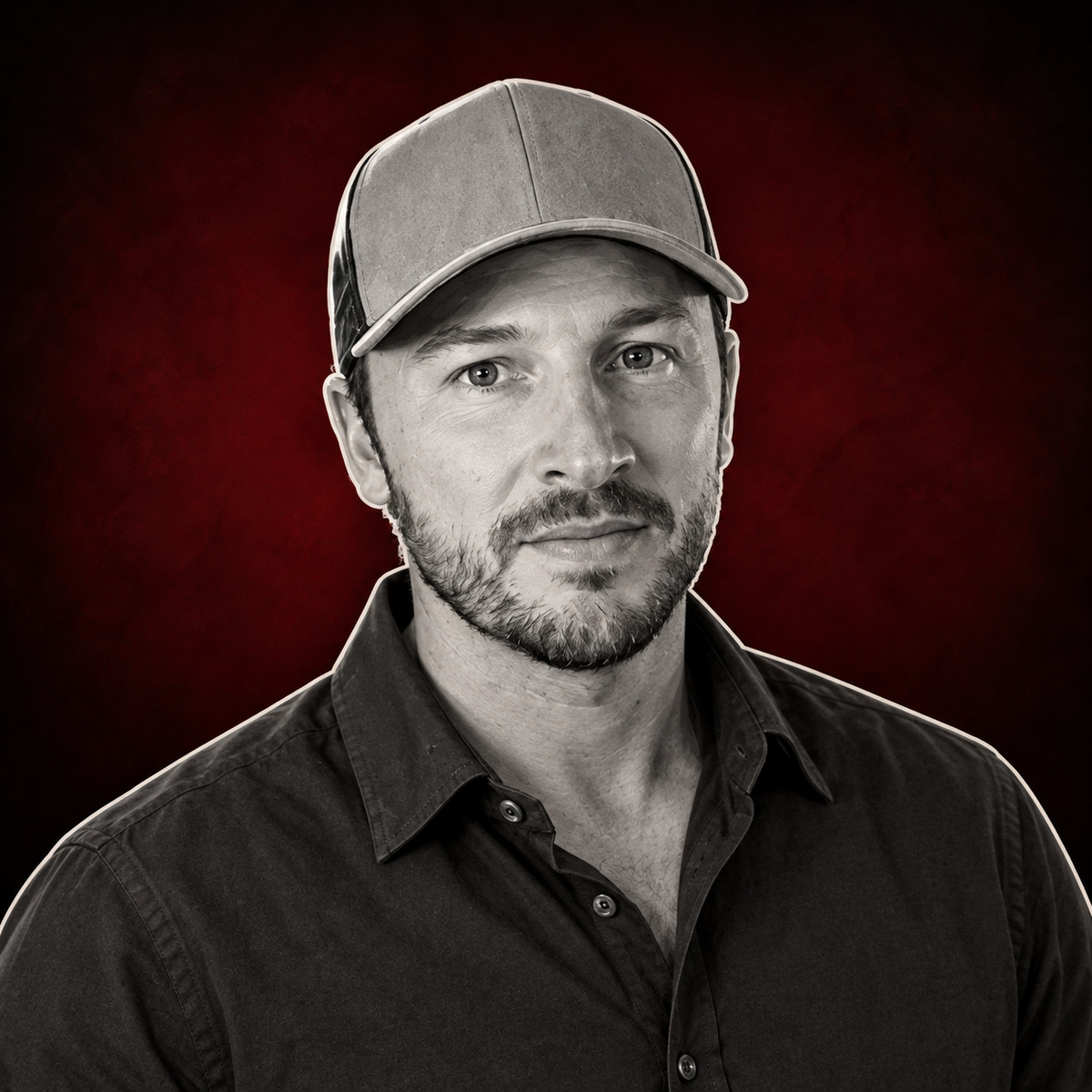
Brody Boyd is a relationship coach who, with his wife Antia Boyd, runs Magnetize Your Man, a coaching business that helps women build committed relationships through the principles of polarity and what the couple calls magnetic feminine communication. Brody began studying dating and self-development as a teenager and started publishing YouTube videos on the subject in 2010. He and Antia met at a meetup group in Waikiki, built their business through live workshops and singles groups in the Bay Area, and later took it online through summits and organic content. After relocating to San Diego, the couple grew their Instagram account by 100,000 followers in 12 days using a research-driven short-form video strategy, and Brody now teaches that approach to other marketers. They also host the Magnetize Your Man with Brody & Antia podcast. Brody is a member of the Speakeasy Mastermind San Diego chapter.



