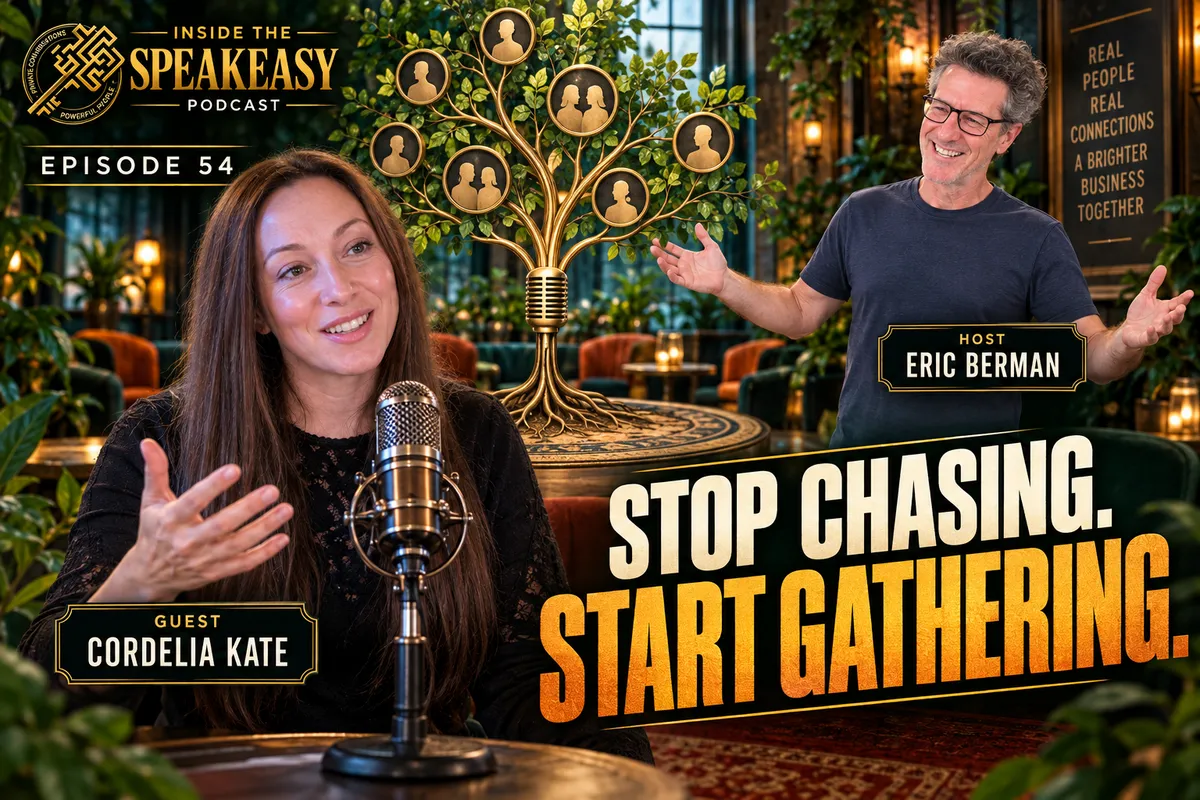
Cordelia Kate, founder of The Rebellious Business Network and LivePod, argues that most new business owners chase leads in the wrong order. Instead of paying an agency for cold Facebook campaigns or buying lists, she builds warm audiences through live events first and opens a community only once momentum arrives. Cordelia knows the stakes personally. A former emergency nurse, she spent six weeks in a small caravan with three young children and later ran out of credit entirely, then started hosting free online events when COVID lockdown shut down in-person networking. Those weekly sessions became Rebellious and a group program that, by her account, reached six figures in nine months. In this conversation with host Eric Berman, Cordelia breaks down the Cleanup Network launch she helped a client build, her one-live-show-a-week content system, the warm-versus-cold conversion gap she sees, and how she uses Claude and live transcripts to keep AI-assisted marketing sounding human.
In this episode, you'll discover:
- Why Cordelia Kate says new business owners should build warm relationships through live events before spending hundreds of pounds on cold ad campaigns or purchased lists
- How a business coach for cleaning companies used weekly Cleanup Network trainings to warm up an audience and generate 28 grand from his first mastermind launch
- What a one-live-show-a-week strategy looks like, from promoting the session twice to repurposing the recording into clips, podcasts, and YouTube videos
- The case for launching content first and community second, and when Cordelia recommends starting a community free before turning it into a paid space
- Why Cordelia is building an email list of buyers through a $4-a-month membership instead of growing a larger list of passive leads
Episode Summary
Cordelia Kate's central argument is that lead generation should start with human connection, not automation. She describes one of the most depressing things she sees: a new business owner who decides they need more people, hands money to an agency for a cold Facebook campaign that does not work, or buys a list that never converts. Her position is that entrepreneurs should automate human connection only once they can no longer handle it at scale. Before that, she says, they should be learning to sell and market in the trenches, through real conversations with real people.
Her perspective comes from a hard road. Cordelia was homeless at 15, went into nursing without her GCSEs, and qualified with three children and a distinction. While nursing, she ran an e-commerce business selling ride-on toy cars, which taught her that competing on price alone was a dead end. She then found affiliate marketing, started in September 2017, made her first 10K sale by December, and says she replaced her nursing income within six months. Her mentor Stuart Ross, of The Six Figure Mentors, pushed her to change her surroundings at a retreat in the Dominican Republic, and she left a difficult relationship, living for six weeks with her three children in a small caravan her stepdad had bought. A car accident followed, along with rent and Christmas presents on credit cards, until her sister arrived with a car full of groceries.
The turning point came during COVID lockdown. With networking events shut down, Cordelia started bringing people together online every week. The events grew, drew press coverage, and revealed that many attendees needed help running their businesses online. She launched a group program that she says did six figures in nine months, and within a couple of years she had cleared her debt. That weekly event became The Rebellious Business Network. Cordelia credits the community that supported her in the caravan, including a GoFundMe that raised about four grand for a new laptop, with teaching her that a platform such as a Facebook group is just a cardboard box. What matters is the culture inside it.
Her method today puts content before community. Cordelia recommends one live show per week, promoted 24 hours ahead and again 15 minutes before going live, with no worry about attendance. The show serves the replay crew who discover you on episode 50, creates accountability, and produces a highly human transcript that AI can turn into clips, podcasts, YouTube videos, and social posts. She cites client Jamie Wilcox, who struggled to sell a mastermind through LinkedIn DMs until he ran weekly Cleanup Network trainings and, she says, generated 28 grand from his first launch. Her own YouTube channel, started in late December, has produced more than 10,000 pounds, about 13,000 US dollars, in sales she can trace directly to it. She also cites conversion of 7% to 10% from a warm audience versus about 0.5% from a cold one.
Eric Berman and Cordelia also work through how to structure a community once traction arrives. Cordelia says there is no single answer: for one brand-new client, she suggests starting free and moving to paid once the space has energy, because five to ten people rarely feel like a community without dependable chatty members. Eric adds his own view that even a free community should carry a stated value so early members feel the reciprocity of a gift. Cordelia's current focus is a list of buyers rather than leads, built through a $4-a-month membership tied to LivePod, because entering card details signals real interest. She contrasts that with the 10,000-person Rebellious list, which still produces sales but is less engaged than she would like.
The conversation closes on AI. Cordelia wants entrepreneurs to use AI fully but to feed it highly human inputs, such as transcripts and knowledge files, instead of letting a tool flatten their brand. As vibe coding and AI content become available to everyone, she believes the lasting advantage is a personal brand people genuinely connect with. Taken together, the episode offers a practical sequence for founders: show up live, earn trust, then automate and monetize.
Big Ideas Discussed
Earn Warm Attention Before Paying for Cold Traffic
Cordelia Kate believes new business owners often reach for automation before they have earned it. She describes watching people spend hundreds of pounds on agency-run cold Facebook campaigns or purchased lists that do not convert, and compares it to forcing a horse to water. Her rule is that human connection should be automated only once a business can no longer handle the scale of it by hand.
Her reasoning is partly about skill and partly about math. Newer entrepreneurs, she says, do not yet know how to sell or market, and they learn those skills through live conversations with people. On the numbers, Cordelia cites conversion rates of 7% to 10% from a warm audience compared with roughly 0.5% from a super cold one, meaning a founder may need 200 cold leads to land a single customer. For a business owner with a limited budget, that gap explains why so many paid campaigns crash and burn, and why building a warm audience first can be the faster path to revenue.
Use a Weekly Live Show as Your Content Engine
Cordelia's core recommendation is to simplify content into one live event a week, not a pre-recorded podcast or video. Pick a topic, show up, and teach, keeping talking-head content front and center so the show demonstrates your expertise. She suggests promoting the session 24 hours ahead, promoting it again 15 minutes before, and then going live without worrying about who attends.
The audience in the room is not the point. Cordelia says the first reason is the hashtag replay crew, the future client who discovers you on episode 50 and only finds you because episodes 1 through 49 exist. The second is accountability: a fixed weekly slot means the content actually gets made. The payoff is a highly human transcript that can be cut into clips, edited into YouTube videos, turned into a podcast, and fed into AI systems. She points to StreamYard, Riverside, or Restream (her own choice) to stream, Descript for editing, and Claude and Airtable to turn the process into a repeatable system. She credits that live element with her YouTube channel growing, by her account, three to five times faster than the average strong channel.
Treat Community as the Next Step, Not the Starting Point
One of Cordelia's sharpest lessons is that a community platform is just a cardboard box. Starting a Skool group or Facebook group does not create a community. Culture, expectations, and people showing up to help each other do. She learned this from the online community that supported her during her hardest years and later built it into The Rebellious Business Network.
Her approach has also evolved. Cordelia says she used to bottleneck all her content inside a community, which limited her following and meant her own promotion was the only reason anyone joined. Now she builds traction with public live content first and opens a community once momentum arrives. Her upcoming Strategy Geeks community follows that model, with resources and a biweekly Strategy Geek Out where members share tools, strategies, and AI methods. She sees it as both lead generation and a way to learn who is actually buying from her. On pricing, Cordelia says it depends on audience size, often starting free until the space has dependable chatty members.
Build a List of Buyers, Not Just Leads
Cordelia is shifting her focus from collecting leads to collecting buyers. Her Rebellious email list has around 10,000 people and still produces sales, but she says many of those subscribers probably do not remember signing up. Instead, she wants to nurture people who have given her what she calls a loud, hard yes.
Her mechanism is a low-ticket membership. Under her company Connection Marketing, which houses her live show marketing system LivePod, Cordelia runs a prototype membership at $4 a month with a seven-day free trial. She says the act of entering credit card details adds friction that filters out freebie seekers and signals genuine interest. Eric Berman agrees, noting that people who have paid something tend to invest more time. For founders whose large lists have gone quiet, the idea is that a smaller list of paying customers can be more valuable to nurture than a bigger list of passive sign-ups.
Questions We Answer in This Episode
Why does Cordelia Kate advise new business owners against starting with cold Facebook ads?
Cordelia Kate says new business owners often do not yet know how to sell or market, and cold campaigns rarely convert well enough to teach them or pay off. She has watched people spend hundreds of pounds on agency-run campaigns or purchased lists that failed. She cites conversion of 7% to 10% from a warm audience versus about 0.5% from a cold one, and recommends building relationships through live events first, automating connection only once there is too much demand to handle personally.
How do you start a weekly live show to generate leads, according to Cordelia Kate?
Cordelia Kate recommends running one live event a week on a set topic, with yourself as the talking head so your expertise shows. Promote the session 24 hours in advance and again 15 minutes before going live, then go live whether or not anyone attends. She says the real audience is the replay crew who will find you later, and the fixed weekly slot creates accountability. After the session, the recording can be repurposed into clips, YouTube videos, podcasts, and social posts.
What tools does Cordelia Kate use to run and repurpose a live show?
Cordelia Kate says StreamYard, Restream, or Riverside can stream and record to multiple places at once, and she personally uses Restream. After the show, she suggests Descript for editing recordings into clips and long-form video. The bigger change for her has been building AI systems around the process using Claude, with Airtable to organize the workflow. She also says her YouTube channel has a video that walks through her entire live show strategy for people who want to build it themselves.
How did Jamie Wilcox use live events to sell a mastermind?
Jamie Wilcox, a business coach for cleaning companies, had sold one-to-one coaching well through LinkedIn DMs but struggled to sell a mastermind the same way, according to Cordelia Kate. With her help, he launched the Cleanup Network, holding trainings every Tuesday where people could learn from him and meet each other. Cordelia says this built a warm audience that knew, liked, and trusted him, and his first mastermind launch generated 28 grand in sales.
Should a new online community be free or paid?
Cordelia Kate says it depends on the business's priorities and audience size. For a brand-new client launching a live show, she suggests starting the community free and converting it to paid once it has some energy, because five to ten people rarely feel like a community without reliable chatty members. Eric Berman adds that even a free community should carry a stated value, framed as a gift to early adopters, to create a sense of reciprocity.
Why is Cordelia Kate building an email list of buyers instead of leads?
Cordelia Kate wants to nurture people who have already said a loud, hard yes by paying for something. She says her 10,000-person Rebellious list still generates sales, but many subscribers likely do not remember signing up. Her alternative is a $4-a-month membership with a seven-day free trial, tied to her LivePod live show system. She says entering card details adds friction that filters out freebie seekers and signals that members are genuinely interested.
How can entrepreneurs use AI in marketing without losing their voice?
Cordelia Kate says the key is giving AI a highly human input. She feeds Claude knowledge files and hundreds of transcripts of herself talking so it can write in her voice. One example she shared captures client praise: screenshot a message, add a few words in a form, and Claude turns it into a social post. She warns against flattening a brand with generic ChatGPT output and believes a genuine personal brand is the advantage as AI tools become available to everyone.
Full Episode Transcript
Read the Full Episode Transcript
Cold Open and a Welcome From the London Chapter
Cordelia Kate: One of the most depressing things is when I see a new business owner thinking, oh, I need to go and find more people. I should run Facebook ads. So they go to an agency who sets up a cold campaign for them that doesn't really work, and they spend hundreds and hundreds and hundreds of pounds on doing that.
Eric Berman: Hello, I've been noticing you've been following along to Inside the Speakeasy podcast, and if the conversations I'm having out there resonate with you, then I'd like to invite you to apply to learn more about becoming a member of Speakeasy. I am so excited for today's guest at Inside the Speakeasy podcast, because we're all out there trying to find more ways to bring in new customers and doing it in a non-sleazy, fun, fulfilling way. And going across the pond, as we say sometimes out in the States, we're going all the way to London. I'm stoked to bring in a member from our London chapter. And Cordelia Kate's going to talk about ways that we can use our networks to generate more paying clients, and also how to start creating online live events as a way to really get more organic marketing coming your way. And just awesome stuff: lead gen, networking, how to do it the right way, the non-sleazy way, all the way from the Rebellious Business Network. Welcome, Cordelia Kate from London.
Cordelia Kate: Awesome. Thank you so much for having me. I'm so excited to be part of the new chapter forming in London. It's a lot of fun, and it's just great to be a part of this world of yours. So thank you very much for having me on all fronts.
Eric Berman: Yeah, no, I'm stoked. I mean, it'll always be special in our hearts, being the first sort of chapter out in Europe and the UK. Everybody in that group is such all-stars, and I know there's some such smarts out there. But I love the stuff you're going to be talking about today, because it's close to my heart, close to the book I just wrote, which we talked a lot about. So clearly, you know, I think we probably think in similar ways, but I love hearing different angles. And I think it's such an important thing that if people do it the right way, it's a great way to bring in new customers. And so I want to dig into that. And before we go there, I'd love to hear a little bit about your past. Like, how did you get in this crazy world of marketing, and what angles and pivots did you make? You know, it's almost like we all have that struggle along the road. What did you find to land where you are today?
From Homeless at 15 to Nurse and E-Commerce Founder
Cordelia Kate: Well, it's a bit random. I actually was a nurse. I went into nursing after, like, being completely off the rails. I was homeless at 15. I had a really rocky start, and I ended up going into nursing having not got any of my GCSEs. During my nursing degree, by the way, I started my first business, right at the end of that. So I started my nursing training with no kids, and I wasn't married. I was with a man that I'd been with since I was 15. We ended up having three children during that nurse training, and I finished, I qualified with three kids and a ring on my finger. Somehow, through the blood, sweat and tears, managed to get a distinction as well, which was just like the cherry on the cake. So I was nursing, and I'd literally just become a qualified nurse. I decided to start an e-commerce business. I don't know why, really, apart from just something to do. I'd been selling bits and pieces on eBay. And I ran this company, it was called Toy Ride, for a couple of years. And it got to the point where I was like, I've either got to get a big warehouse so I can undercut everyone on eBay, or I've got to find some way of getting cheaper stock. This is just not working. Because what I didn't realise then is what I was doing was trying to beat my competition through pricing and making things as cheap as possible, and I didn't have a clue about branding at that point. So when I shut that business down, because I was like, it was a love-hate relationship, there were a couple of things that I loved, and one of them was I just love tinkering about online. I like the creative side of things. I really enjoyed...
Eric Berman: What are you doing? Well, you're doing nursing at this time too, though. You're doing both?
Cordelia Kate: Yeah, yeah. And I had three kids under the age of four.
Eric Berman: I mean, this is just, I've got to take a time-out for a second, because my wife's a nurse practitioner as well, and she does not have the entrepreneurial brain. No disrespect. I love you, Ariel. She knows this. Me entrepreneur brain, she not. And it's like, that's like opposite. Like, the entrepreneurs don't do nurses. So it's just weird. You probably were, like, feeling this mismatch, you know, as a nurse, like having this entrepreneurial, you know, bones inside of you.
Cordelia Kate: I don't know. I think the great thing about nursing, right, was that I love the people. Most of them. There were some people I did not love, don't get me wrong. I loved looking after people. I loved seeing the difference I was making in their lives, and that was quite minimal, to be honest. Like, you'd have good days, but it was like a conveyor belt. You know, you'd go in, you'd spend a day looking after someone, and then you'd never see them again. Like, I worked in emergency nursing. You don't want to see them again. Like, go home, be okay. It just means that you don't really get to build deep relationships with people that you're looking after, and it can get quite exhausting. The most creative you can be is to get freaky with a bit of bandaging, right? There's limits. You've still got to be able to bandage well.
Eric Berman: Yeah, you have to have [unclear] thinking. And by the way, no disrespect to the amazing nurses out there through these comments. I'm just saying, and typically the personality type. But yeah, you're just sitting there saying, I'm going to do these things.
Finding Affiliate Marketing and the Mentors Behind It
Cordelia Kate: Yeah. So I could think, you know, that business, it gave me a bit of creative outlet, but the bit that was lacking was the people. The most interesting conversation I was having was, what's the dimensions of this car? Or, does it come with number plates? Because I was selling ride-on toy cars. It was just boring. And so I went back to the drawing board, and I was like, I really like those elements that I like, but I don't like waiting for the postman. I don't like the boxes. I don't like the shipping freight nonsense. I can't stand all of that. And I was like, what can I be? What can I do? And I was thinking, like, web designer, business coach, how do you even get into something like that? And then I ended up stumbling across an affiliate marketing thing. And I'd actually seen this ad so many times that I ended up watching it this time, and I was like, hmm, this actually sounds good. I know I've dismissed this 50 times, that sounded scammy as fuck, but it actually sounds really good. So I clicked into it, and I became obsessed. Like, I fell down this rabbit hole of just learning and learning and learning and learning and learning. Within a few months, I made my first 10K commission.
Eric Berman: Oh, so who were you learning from?
Cordelia Kate: Stuart Ross and Jay Kubassek from The Six Figure Mentors, which is now called Launch U. And Stuart Ross is [unclear]. He's just such a good guy. Like, he's such a lovely guy. He doesn't have, like, a very public figure. Like, he's quite interested in making a difference, and he's such a fantastic mentor to have had the opportunity to work with.
Eric Berman: Okay. So you're making 10K, you're out there and just like, oh my gosh.
Cordelia Kate: Yeah, yeah, it was cool. Made it quite quickly. And I think they say, you know, if you want something done, give it to a busy person. I remember giving up two things so I could fit this in. I used to cook, like, restaurant-quality dinners every night. Like, I would go to town and make the best food, because I love food, right? And I'd also watch this really trashy soap opera that we have in the UK called EastEnders.
Eric Berman: Okay.
Cordelia Kate: Those are the two things I decided I was going to give up if I was going to build.
Eric Berman: Which was harder to give up, the cooking or the soap opera?
Cordelia Kate: Both. Oh, which was harder? Oh, the cooking. It was a good soap opera. I had to let go of that. I had to feel like I wasn't, like, yeah, I had to let go of that bit, because it's a bit of a people-pleasing thing, you know, wanting to cook the best food.
Eric Berman: And you're, gosh, three kids at this time? You're a busy mom. Okay, so that's, I mean, good for you. I mean, I know how it is being a mom.
Cordelia Kate: Not to mention the fact that there were problems in that relationship. It was tough. It was really tough. I'm not going to go into it. Like, it was a really hard place. Like, I was struggling as well, emotionally. And this affiliate marketing business, there was a part of me where I was like, this is going to be my ticket out of here. I'm going to do well, and I'm going to leave. But that was a scary sentiment, right? I ended up replacing my nursing income within six months. So it was September that I started, September 2017. By December, I'd made that first 10K sale. Come, like, March, I was doing pretty well, and I started to actually just generate an income from other things. Like, I started to do social media management from the skills that I was learning. I started to build websites. I just started to find, like, things that I could sell to generate an income.
Eric Berman: Hustling.
Leaving Home, Living in a Caravan, and Running Out of Credit
Cordelia Kate: Yeah, yeah. And then I went to a retreat in the Dominican Republic, and it was life-changing. Stuart, that mentor of mine, he made me realise that in order to achieve what I want to achieve, I have to change my surroundings. And I came back knowing that I wanted to leave, and I did. I had quit nursing by this point, or I hadn't fully quit, but I'd gone on to bank and whittled my hours down. And my stepdad had just bought a caravan, and I moved into that caravan with my three children. One was two, the other one was three, the other one was five. It was April. It was fairly cold here. And we had a caravan that didn't have electricity. It had gas for a fire at night. And we were across the river from my mum's house, because she lived on the other side of the river. There was no car access to the house, so we had to cross the bridge to get to her house. We were, like, in the car park of her house, basically. And we were there for six weeks, waiting for a house to come up.
Eric Berman: So a caravan would be like an RV for us, is that what we're talking about? For us American folks?
Cordelia Kate: Small. Like one that you hitch on to a car. Tiny, tiny.
Eric Berman: I got it. Okay. So you're just living in there, and, oh man. Okay.
Cordelia Kate: And at this point, you know, I'm still at the beginning days of this affiliate marketing business. It's now 2018. I've been doing it for about a year. We're doing all right, but it's up and down. These 10K, 10 grand commissions, they come in and they're amazing, but then you don't get one for another couple of months. It obviously got harder, because I was now on my own, responsible for all my bills and everything, very minimal support from my ex-husband. And I ended up having a major car accident. I'm now living in this house, paying rent, raising three kids, laptop smashed up in the car, and I end up putting rent on credit cards, Christmas presents on credit cards. I'm putting everything on credit cards. And I remember one day there was no more credit left, and I rang my sister, and I didn't have money for food. And she turned up in her car, and she just bought me a car full of food shopping, and I just was so grateful to her for that.
Eric Berman: Yeah. Wow. Wow.
Lockdown Networking Events and the Birth of Rebellious
Cordelia Kate: So then along came lockdown. And whilst I was surviving, and it was very paycheck to paycheck, and a lot of putting stuff on credit cards, but, you know, managing to pay things off and just about keeping my head above water, I had this amazing idea. I think I saw someone do something. And I also felt the guilt of not being able to go be on the front line, because I'd come off the nursing register now. I wasn't a nurse anymore. I had this idea. I was like, I can just start online events. I can just bring everyone together, and we can just hang out, and it'll be lovely, and it'll be fine. And we'll do that instead of networking, because all the networking events are shut down. And I did that, and the first event happened, and it was a hit. And then the second one happened, and the third one happened, and the fourth one happened. And before you know it, like, this thing was growing. It was in the newspaper. It was getting featured in magazines. Like, we ended up just getting really, really awesome reviews and everything. And I did my first launch for a product, because I realised these guys, they had no idea about online marketing, a lot of them. They were sort of new to that. How do we run our businesses online? So I was like, giving them everything I've got and teaching, teaching, teaching. And then I launched my first group program. We went on to do six figures in nine months. In a couple of years, I had cleared all my debt.
Eric Berman: Wow.
Cordelia Kate: And yeah, we were just living a completely different life, really.
Eric Berman: Amazing. What an amazing story, and thank you for sharing that. I can't imagine what you went through on that. And then COVID hit, and you're like, what are we going to do? But you turned that into such a positive. And we do hear some great stories of people that actually were able to take that crazy time. We're going through that time right now, and I think we're feeling a lot of this AI world and people shutting down and restarting. What are they going to do? And a lot of that happened in COVID, this major life pivot. But it worked out well for you, clearly. And is that really where initially Rebellious was started? Or what was the company? What did you learn? What were you teaching? Yeah, talk me through that.
Cordelia Kate: Prior to it being called Rebellious, it was Cordelia Kate Limited. That was my affiliate marketing company that just turned into this consulting thing that I had started around 2019. And then when COVID hit, you know, and I was doing that weekly event, what happened was that I'd already seen what happens when you're a part of an incredible community. I got my love of communities. I was held through that period in the caravan. I had people come visit me when I had my car accident. They did a GoFundMe, and they raised, like, four grand for me to get a new laptop. They were amazing. Like, they were so supportive. And for the first time in my life, I really felt like I belonged somewhere, like I was part of something really cool. That unlocked for me the sort of understanding of online communities and how powerful they can really be. And I think that Stuart Ross was a genius. I was like, oh my God, this man is a genius. How do you create a community that good? Like, how do you do it? And I realised, when I created my own, that it was through creating culture, and by just demonstrating how you want people to behave, and bringing people together, and creating this really awesome environment where people feel like they are supported by others and everyone's showing up to help each other. And so that formula that I put together turned into something that I started teaching as my signature strategy. And so I started teaching other people how to run live events that become communities. Because a lot of people will go, I'm going to start a community. Okay, I'm going to put a Skool community together. I'm going to go and start a Facebook group. What I didn't realise is that's just a cardboard box. Really, what you need is to create something in the cardboard box that people want to be a part of. And so I started teaching that as a philosophy for building communities.
Eric Berman: And that's a lot of what you're doing now. That's how Rebellious started?
Cordelia Kate: Yeah. The Rebellious Business Network was where that strategy was born.
Live Events as Lead Generation: The Cleanup Network Case Study
Eric Berman: What's an example of a client in Rebellious? Like you said, people throw the word community around a lot, not quite understanding all the things that go into community. You and I, both understanding community a little bit, it's not that simple. But take an average, give me an average case study that you would see. Like, I have an audience, I did a live event, and I think I'm doing community. You just said something, that it's not just a box. What is a good community? What are some strategies?
Cordelia Kate: What we're doing is, like, using the live event as a lead generation strategy. So you promote it and get people to come along, get free tickets to it, et cetera. Or if it's just a live stream, that's a kind of different strategy. But for this live event strategy that builds a community, you'd have a live event, you invite people to it, and that's their initiation ceremony. Like, they're now part of it. And they come back, and it ends up becoming a community, and they feel like they're a part of it. One example outside of Rebellious is Jamie Wilcox. He is a business coach for cleaning companies, and he was selling his cleaning company program one-to-one, and selling that really well, just through LinkedIn DMs. But then he wanted to sell a mastermind, and he was really struggling with selling that in the same way that he'd been selling one-to-one. So he put together a live event with my help and then built this thing called the Cleanup Network, where every Tuesday he did Cleanup Network trainings, which were never an acronym, for obvious reasons.
Eric Berman: Yeah.
Cordelia Kate: And then people would come along to it and learn from him. And it's just talking-head content that is interactive, about his expertise. And so he's positioning himself as an authority, but he's also giving people a space to not only meet him and connect with him, but also meet and connect with each other. And so it starts to form this kind of, what feels like a community. And then when he went to do his launch for his mastermind, he's now got a launch-ready audience that are warm, that know him, that like him, that trust him, that feel safe in that space, that know each other. And he did 28 grand in sales off the back of his first launch.
Eric Berman: Wow. Wow. Interesting. So he invited everybody, had live calls. He's teaching already. So rather than just being the one-to-one, or go buy my course, it's let's teach together, let's stay involved, let's stay engaged. And is there, like, a strategy? Like, what community platform do you recommend with your clients? And then, like, how often does he engage with his community?
Content First, Community Second, and Strategy Geeks
Cordelia Kate: It really depends. The platform, like I say, it's a cardboard box. It really doesn't matter. And actually, the community isn't even necessary these days, in terms of, like, we're normally thinking about a community later. If you start with the community, it can be a little bit disheartening, because it can sometimes take a bit of time to build. My recommendation these days, and how we do things now, is that instead of focusing on building a community, we focus on content that interacts with people and builds strong connections with your audience. And then when it feels like you're getting that traction and getting that momentum, a community is the next logical step from there. And you've sort of then got this audience that you can say, hey guys, I'm doing this thing where I'm opening the doors on this space where we can all hang out. So for instance, I have a community that I'm going to be launching soon. It's called Strategy Geeks. It doesn't exist yet, but it's coming very soon. And the purpose of Strategy Geeks is going to be lead generation for me and a really good way for me to build connections with the people in my audience. Because right now, I've got a live YouTube show that's getting traction, and I've got people buying PDFs and resources off the back of that, but I don't know who these people are. I wouldn't know until I go on a sales call with them and they're like, Cordelia, I want my own live show, and we have a conversation about that. But I don't know who they are until that point. So the bit that's coming next is that, now I'm getting traction with the live show, I am going to open the doors on Strategy Geeks. And Strategy Geeks is going to be a place where you've got resources, but then every other week there's a Strategy Geek Out, where we all get together and share one thing that is just really cool in your world right now, in terms of a tool you're using, a strategy, some kind of AI method, something that we can just all geek out on together. And we just have a bit of a geeky networking event about it. It just enables people to build that relationship with you, so that really you can work smarter rather than harder. I think one of the most depressing things is when I see a new business owner thinking, I need to go and find more people, I should run Facebook ads. So they go to an agency who sets up a cold campaign for them that doesn't really work, and they spend hundreds and hundreds and hundreds of pounds on doing that. Or they think, oh, I've got to go and get people from somewhere, and they go buy a list, and then it doesn't convert. And it's like, we shouldn't be automating human connection. We should be automating human connection only when it gets to the point where we can't handle the scale of it. And I feel that that is something that...
Eric Berman: You're saying people are trying to build the automation out of the gates, and it's almost like they haven't earned that right to automate yet. You've got to build your community first and build that trust, and try to do live events to engage. Is that what I'm hearing?
Announcer: Welcome to Inside the Speakeasy podcast, the private room where today's sharpest founders, innovators, and renegade thinkers come to trade the ideas that move industries. This show is brought to you by HighLevel, the AI-driven business operating system trusted by over 2 million businesses to help automate, scale, and create real leverage. HighLevel isn't just a tool. It's the engine behind some of the most agile and high-performing teams on the planet. If you're ready to streamline everything, amplify your reach, and actually build a business that works for you, you're in the right place. Visit www.GoHighLevel.com/Speakeasy-Mastermind-Promo to get an exclusive 30-day trial for being a listener of the Inside the Speakeasy podcast. Enjoy the show.
Cordelia Kate: I feel like, of course, they've got the right to do that, but it's going to be like trying to force a horse to water, especially if you're a newbie, because you don't really know how to sell. You don't really know how to market. You learn this stuff in the trenches, with the people, through the conversations. And so if you come into this game and you're like, I'm going to get a Billy Gene course and I'm going to learn his amazing funnel. And his funnel is great. I'm sure he's got an amazing funnel. But you've got to build your community around you first if you want to be able to get great results. We're talking conversion rates. Like, you can convert between 7% and 10% if you have a warm audience. And if you have a super cold audience, it's like 0.5%. Well, no wonder people crash and burn, because trying to get 200 people so you can get one customer when you're just starting out is, like, really, really tough. Like, your first 200 leads on your email list. Do you remember how hard that was?
Eric Berman: Oh, yeah.
Running One Live Show a Week for the Replay Crew
Eric Berman: So what is the first step? So for our listeners that are just like, okay, I'm feeling this. This is great. This sounds exciting. How do I do my first online live event? How do I even get people there? Are they going to like me? What's going to motivate them to take their busy time and jump on a call?
Cordelia Kate: My recommendation would be: simplify your content strategy into just running one live event a week. Not a pre-recorded podcast, not a pre-recorded video of any kind. A live video where you pick a topic and you're like, right, I'm going to show up and teach people this, or I'm going to talk about this. And it could be an interview, but definitely don't write yourself out of your own show. Talking-head content from you, because that is what's going to demonstrate your expertise. Do that, and don't worry about whether anyone's going to show up. Like, promote it and do it, but you're not doing it for the people that are on the live. You're doing it for two reasons. Three reasons. Oh my God, I can think of more already. Reason number one, you're doing it for the hashtag replay crew. You're doing it for the people that are going to discover you on episode 50. If you don't get episodes 1 to 49 recorded, you're never going to do episode 50. And Sheila, she was going to discover you on episode 50, and she was going to be your best client yet. She really was. So we don't discover great things on episode one very often. We discover them when they're getting traction. And so we have to start somewhere with no traction. So you're doing it for the hashtag replay crew, and that's great. Pressure's off. You don't have to perform in front of loads of people. Easy peasy. Number two...
Eric Berman: Hashtag replay, meaning what? So walk people through that.
Cordelia Kate: So when you're doing a live stream, everyone always says, put a hashtag replay in the chat if you're watching it on replay. And it's just a way of getting comments on your content. So you get people that are watching the replay, and they put hashtag replaying, and the comments just help drive the traffic.
Eric Berman: Great.
Cordelia Kate: So you're doing it for those guys. And then the second reason why you're doing it is accountability. Because if you put it in the diary that Tuesday at 10 a.m. is your slot for producing this content, then you're going to do it. And that's going to give you a highly human input that you can plug into AI and get it to create something that's actually awesome, because it came from you, in the form of a transcript. You're going to be able to take that video, cut it into clips, and populate your social media with it. You're going to be able to take that video, turn it into a podcast. You can edit it down and turn it into a YouTube video and get absolutely everything you need from it. Meanwhile, you're going to be building a following, and you're also going to be building your personal brand, and you're going to stand out in a sea of AI-generated content with your human-sounding outputs, because you had a highly human input.
Live Show Tools, AI Systems, and YouTube Growth Results
Eric Berman: Right. And then what tools do you recommend these days, again, for those that are not doing this? You just said you put it out there. So where are people recording it? What are they doing to produce the clips? What do you like these days for all the things, if somebody's going to be [unclear] doing this themselves?
Cordelia Kate: Yeah, so you can use something like StreamYard, or I use Restream.
Eric Berman: Restream, StreamYard.
Cordelia Kate: Or you can use Riverside, which we're recording on right now. And there's plenty of software options out there for streaming online and recording at the same time, for multiple different places. So my recommendation would be: promote that you're going to go live 24 hours before you do, then promote that you're going live again 15 minutes before you do, then go live. If people show up, great. If they don't show up, don't sweat it. Hashtag replay crew. Do that via that live streaming software. And then after you've gone live, take that recording, and you can use something like Descript to edit it into clips and edit it into a nice long-form video. And really, the thing that's changed the game for me is building out AI systems that just turn that into a process. So I use Claude for that, and also Airtable for then building a system with it. I actually have, Eric, if anyone's interested in the live show systems, I have a video where I just give my entire strategy away on that video.
Eric Berman: Well, you're getting to my next question. People want to, like, they could do that, or they could probably learn from you. How do they learn from you in these systems? Do they go to your site, or what's the best place to find this stuff?
Cordelia Kate: Yeah, so my YouTube channel. I have a video that's like how to build your own live show, and I walk through the entire strategy from start to finish and just show you how you could totally take that strategy and just DIY it off the back of watching that. The thing that I do with people is I build out the systems and the research method and kind of, like, AI brain. And we build a whole kind of content system that's a bit like a live show machine. So you just drop your title and your rough sketch into the machine, and it generates all the bits that you need off the back of it. So yeah, that's kind of how I work.
Eric Berman: I love it. So, like, so many of us feel like we have stuff to say, and we have things that are knowledgeable to others. And even if we do have imposter syndrome, you know, there's people out there that can learn from every one of us. Everyone listening to the show has knowledge that they could be sharing with others. The question is, how do you get it out there in a world of lots of people, lots of noise? How do you get attention? And you're saying, look, just follow the system. It works. It takes time. But you do that, you can promote it to your social following. And even if it's not a huge social following, people might pick it up. And then I assume at some point you're plugging in AI SEO or other things to hopefully get found over time.
Cordelia Kate: Well, the great thing about YouTube is every time you publish a video on YouTube, it tests it in front of an organic audience. And if it does well, it keeps pushing it out and testing it. So you can actually, my channel is small, it's new, it's a prototype for my live show system, but it is currently growing three to five times faster than the average strong channel.
Eric Berman: Wow.
Cordelia Kate: And it's got something to do with that live element, that connecting with people. It's really powerful.
Eric Berman: So you're going on, and then sometimes, like, I think, and I want to reiterate what you said earlier, you know, you may not have a huge audience initially, but eventually you just go on live, people just join [unclear], they just start having conversations. You teach, and then you can interact with the audience.
Cordelia Kate: Yeah, yeah. So this channel started on the 26th, 27th of December. I published the first video, I had 35 or 39 views. And since then, my highest video's had 2,400 views, and I've done in excess of 10,000 pounds, about 13,000 US dollars, as a direct result of that YouTube channel that I can quantify it to. So yeah.
Community as the Next Step and Seeding a Free Community
Eric Berman: This is good. I mean, you got me thinking, even of some of the brands I work with, and even our community. I like the strategy. I mean, you're out there, you're talking, you get on there and just start talking to people. Build it and they will come, right? You just do it consistently. And then ultimately, like, now I see your path. So okay, you do that, you get more and more people on there. They show up on the replays. At some point, when the audience is big enough, you would do the invitation to, hey, do you want to have this thing where we'll be more intimate, more interactions, more consistency with me and other people that believe in the same things we're talking about?
Cordelia Kate: Yeah, absolutely. And that's why the community becomes the next step. Because the way I used to do it, and it was effective, but I had this realisation that I was bottlenecking all my content inside a community, and that was preventing me from building a bigger following. And it was also, like, the only thing that was getting people into that community was me promoting that this was going to happen in the community, which is fine. But it just wasn't as good as what it was when I finally opened it up and started going live outside of the community, and then had another reason for people to join the community. It just changed the game. So yeah, community is definitely worth doing and investing in, for sure. It's like, it should be the backbone of everything you do. You need a community of peers. You need a community for your clients. You need a community for your leads. Three types of community that we need.
Eric Berman: And so let's dig into that as we kind of round through this conversation. So you're building communities. Maybe some of us are fortunate. We have a big following, and we could do the more live calls and start to engage and then build a community. Or you're starting from scratch. Either way, you get to that point, that magical point. You're saying, okay, I'm ready to start building. Tell me a little bit about your preferred structures. Is it sort of a freemium model? Hey, everybody could join for free, but if you want to do more, there's a pay point. Or is it like, no, you should be charging out of the gates to do something?
Cordelia Kate: Well, this is where it gets fun, because it just really depends on what the priorities are, what the size is, what's going on right now. I wouldn't say there is one way for everyone. There are different points at which you'd be like, okay, definitely. So I've got one client who's, like, brand new. We're launching his live show, and, you know, I'm suggesting to him, let's start your community as a free community, and once you've got some vibes going on in there, then we'll turn it into a paid community. Because it's quite hard with a small audience to get that community vibe going with, like, five to 10 people. If you, you know, do a good job of opening the doors and selling it, it doesn't feel like a community really, unless they're definitely showing up, and it's really difficult to get people to definitely show up. So you need your Chatty Cathies. You need the Chatty Cathies in there.
Eric Berman: And I'll just add to that, because I know the world too. I mean, I think really we're talking about seeding. I think it's important, if anything, try to seed with a good base of people that will be the chatty ones that will help carry the culture and the brand. And be careful to, at least my learnings here would be, I think still have a value on it. At least from my experiences, even if you're giving it away free, I think you still maybe put a price on it and say, look, I'm going to gift this to you because you're an early adopter. And there's that feeling of reciprocity to a degree. At least that's what I found.
Building an Email List of Buyers With a Low-Ticket Membership
Cordelia Kate: That's where my focus is right now. It's building, actually, an email list of buyers rather than an email list of leads. Because I feel like I'm then nurturing people on my email list that have given me a loud, hard yes to something, rather than just signing up for something they don't know. In Rebellious, we've got a list of 10,000 people, and I know what it's like to have a list that is, you know, not as alive as I would like it to be. Like, it's not dead. We make sales from it all the time. But a lot of those people probably don't remember signing up for it, or they don't know what it is. So I feel like if you have a list of buyers, you've got a better chance of having a better result off the back of that. And we've done really well with Rebellious because of the community, but my new thinking is just, what I want is a list of buyers rather than a list of leads.
Eric Berman: A list of buyers that you had from Rebellious, or from the community that you're building?
Cordelia Kate: Low-ticket offers. I've got two companies, so it's a bit confusing. I've got Rebellious, which is the networking company, and then I have another company called Connection Marketing, which houses what I call LivePod. LivePod is my live show system, live show marketing system. And so with my prototype that sits underneath that umbrella, it's a low-ticket membership. So I've got a membership that's $4 a month.
Eric Berman: Wow, okay.
Cordelia Kate: So yeah, so, like, everybody that comes in and spends $4 a month, even if, like, it has a free trial at the beginning. It was a seven-day free trial, then $4 a month. But they're putting down their credit card details, which is higher friction, and it just means that they're more interested.
Eric Berman: That's right. They're not a freebie seeker. They're an actual customer, and they're going to spend more time, you know, because they at least spent something. They're putting money in. I love it.
Keeping AI Marketing Human and the Speakeasy London Chapter
Eric Berman: Well, this has been really helpful, and I've learned a lot. So if people want to learn more from you, what is it that you're most passionate about? How can the audience get to do more, other than look at your YouTube channel and watch that video? What are you looking for that people might be interested in, that you're excited about?
Cordelia Kate: The main thing that I'm teaching right now is definitely about having that highly human input with AI. And we want to be using AI in marketing. Like, why wouldn't you? You get given an incredible tool, and then you don't want to use it because you're, like, you know, too proud to? Like, let's use it well, right? It's an amazing tool that really benefits from having a very highly human input. And so transcripts is the perfect one. And so there's so many benefits to having your own live show, but then there's also so many things you can do with it once you've got that transcript. And so one of my passions is that I just love little strategies. Like, I like putting little strategies together. And yesterday on my show, I put together a strategy that just captures moments on the go. So, like, a client texts you and says, oh, this was a great session today, thank you so much. You screenshot it. You put a little bit of verbiage into a form along with the screenshot, and then Claude takes it and turns it into an incredible post that you can put out on social media, because it's got your, like, knowledge files about who you are, your voice profile. It's got hundreds of transcripts of you talking and can write like you really, really well. So what I'm really passionate about right now is helping people to not flip and whitewash their brand. Don't take a steamroller called ChatGPT and, like, just turn it into some flat, boring, dull thing. Actually, there's a really good way that you can get AI to really elevate the humanness in your marketing and be even more human than you can. Okay, that's a whole statement. I take it back.
Eric Berman: No, but I understand. I mean, we've got to keep it real. We've got to be you, get authentic. How do we do that?
Cordelia Kate: Yep.
Eric Berman: And not wash it, not muddle who you really are.
Cordelia Kate: Yeah.
Eric Berman: But use the tools of AI to be efficient, to get more done.
Cordelia Kate: This is so important. Like, we're getting into a space where, yeah, everyone's excited to be vibe coding, producing all this great stuff, but everyone's going to be able to do it. My nan is going to be able to vibe code a new piece of software soon. Like, learning how to use the tools is incredible, but what we really need to learn how to do now, more than ever before, like, it is imperative, it is critical, we really, really need to double down on being ourselves and building a personal brand that people will connect with. And if you start now, you're going to be 10 steps ahead of everyone else.
Eric Berman: I love it. Well said. And we talked a little bit earlier about the London chapter being a few months in, and your experience so far with this community. Tell me what you've enjoyed about the Speakeasy community.
Cordelia Kate: It's been so much fun to connect with some new people that are, like, in another country, to start off with. I've gone full circle in a way, because when I was in that affiliate marketing company, I was coming to the US. I was going to Traffic and Conversion Summit. I was connecting with a lot of people in the States. And then I've been very focused on what's happening here in the UK. And it's really nice to have that foot back in the other side of the pond again and just be making some new connections. So it's really cool. I had someone reach out to me on LinkedIn the other day and was like, I'm coming to London, it would be great to meet up. And just to have that kind of way of connecting again with people is just so much fun. Not to mention, really, the thing that blew me away the most so far has been the quality of the conversations in those online masterclass sessions you run in Global. Molly Mahoney put fire under my ass one day. I don't think I stopped running for, like, three weeks after watching that. So good.
Eric Berman: Oh, wonderful. Well, thank you so much for coming in and getting a chance to chat today. I know it's late. You are a busy entrepreneur and busy mom, so congrats on doing it all, and you're very inspiring with your stories and what you've learned.
Cordelia Kate: Thank you. Thank you for having me.
Eric Berman: Everything you hear on this show comes back to one idea: proximity. I wrote the book on it, literally. Proximity Pays, my bestselling book, available now at proximitypays.com.
Announcer: And that's a wrap from the Speakeasy Podcast. If something sparked for you, don't keep it to yourself. Share it, review it, and pass it to the one person who needs to hear this right now. Want in on the real mastermind? Tap the link in the show notes to apply. Until next time, keep scaling, stay sharp, and don't be the smartest one in the room.
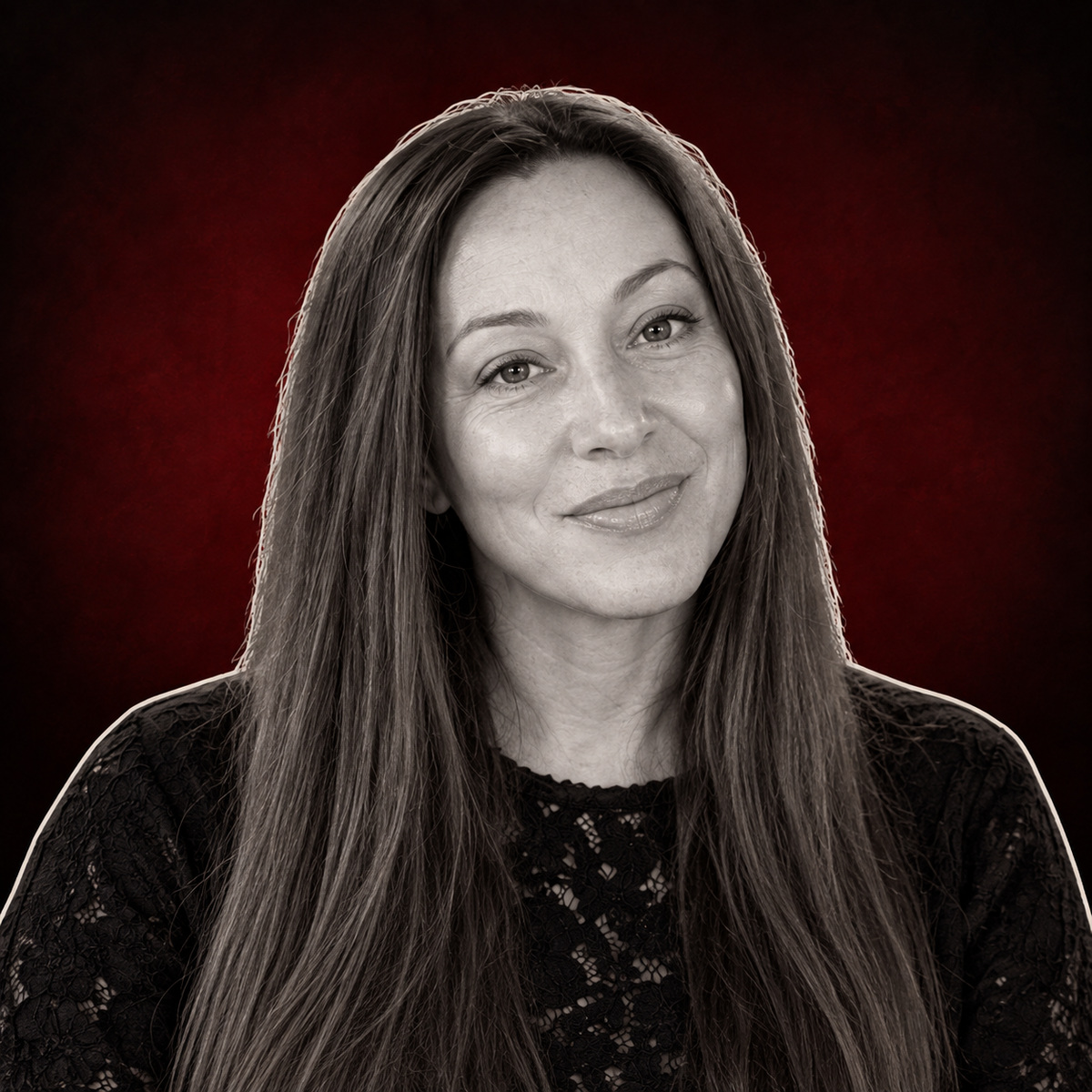
About The Guest
Cordelia Kate
Cordelia Kate is the founder of The Rebellious Business Network and LivePod, a live show marketing system that sits under her company Connection Marketing. Based in the UK, she teaches entrepreneurs how to use live events and live shows for lead generation, building warm audiences and communities instead of relying on cold traffic. A former NHS nurse who worked in emergency nursing, Cordelia built an affiliate marketing business that she says replaced her nursing income within six months. During the 2020 lockdown she started hosting weekly online networking events, which grew into a community of entrepreneurs that her website puts at more than 5,000 business owners. She now hosts The Solopreneur Show, a weekly live show on YouTube, and builds AI-assisted content systems with Claude and Airtable for clients. She is a member of the Speakeasy London chapter.