
Damian Reid, a Toronto-based entrepreneur, bestselling author, and business mentor who has been running ventures since age 13, names a trap many founders walk straight into: building a business for freedom that ends up taking the freedom away. After three burnouts by age 35, Damian set out to understand why some entrepreneurs fail while others succeed, and he distilled what he learned into the 7 Steps to Your Freedom Lifestyle. In this conversation with host Eric Berman, he walks through all seven steps, from assess to ascend, explains why he anchors planning to a 10-year vision across 12 key life areas, and describes how an AI agent he calls Faye now acts as his chief of staff. He also shares why he set aside his plans for a digital nomad life to move home and support his 91-year-old mother. The result is a grounded look at how ambitious owners can keep growing without letting the game own them.
In this episode, you'll discover:
- How the 7 Steps to Your Freedom Lifestyle, from assess and analyze to adapt and ascend, help founders grow without letting the business take over their life
- Why Damian Reid starts with a 10-year vision and works backward to five-year, three-year, and one-year milestones in each of his 12 key life areas
- What a weekly review scored by percentages looks like, including what worked, what didn't, and what to start and stop next week
- How Damian uses Kolbe profiles and an AI chief of staff named Faye to build structures that keep him working in his zone of genius
- Why three burnouts by 35 convinced Damian that no habit is neutral and every daily choice moves an entrepreneur closer to or further from freedom
- The personal decision to set aside a digital nomad plan and move home to support his 91-year-old mother, made possible by the freedom he built
Episode Summary
Damian Reid frames the episode around a tension many successful founders recognize: you can build a business for freedom, and that same business can become the thing that takes the freedom away. Host Eric Berman opens with a line Damian wrote, that the real entrepreneurial challenge isn't choosing between ambition and freedom but learning to build a bigger game without letting the game own you. Eric admits he has been guilty of exactly that, wanting more freedom and feeling stuck.
Damian's perspective comes from a long and varied path. Born in Guyana, he moved to Toronto at 10, and by 13 he was playing music at friends' house parties. Over roughly seven years, that side business grew into stage shows with pyrotechnics and lighting, competing with a large Toronto radio station's roadshow for high school and college dances. After leaving pre-med, he built a corporate career in telecommunications sales and marketing, then alternated between corporate, agency, and entrepreneurial stints before leading top leadership programs for an international training company. He says he has now been fully on his own for about 15 years.
The turning point was burnout. Damian says he had three burnouts by the time he was 35, and he learned that working through the night can produce results at a steep cost. When he left corporate for the last time, he studied why some entrepreneurs fail and others succeed, then wrote a first book built around 52 habits. Its premise is that no habit is neutral: drinking enough water, sleeping, eating well, and choosing the people around you either move you closer to your own definition of freedom or further from it. As he worked with more clients, he noticed a second common problem, information overload from podcasts, books, YouTube, social media, and AI outputs that often contradict one another. The 7 Steps to Your Freedom Lifestyle was his attempt to synthesize all of it down to the essentials, and he says he structured access in three tiers: private work, a group option, and a book with a free workbook.
Damian walks Eric through the alliterative sequence. Assess clarifies values, mission or purpose, and vision, and he stresses that it is about your life rather than your business. Analyze checks reality across 12 key life areas, such as family, social life, and well-being, and identifies which of the Six Stages of Business Mastery the company is in. Architect works backward from a 10-year vision to five-year, three-year, and one-year milestones in every life area. Actualize turns those milestones into annual goals, quarterly priorities, and steps, drawing on his Full Focus training. Align builds structures that keep you in your zone of genius, adapt adds weekly and quarterly reviews, and ascend loops back to assess roughly once a year.
Throughout, Damian insists the formula should fit the person. He uses an AI agent named Faye as a chief of staff coordinating five or six business streams, favors Kolbe assessments to understand how he operates, and feeds personality data into AI when drafting proposals for clients. Eric adds that the biggest mistake he sees is entrepreneurs failing to delegate because ego gets in the way. Asked how people stay on track, Damian says discipline is a choice: entrepreneurs already apply it to their businesses, and the same discipline is needed for sleep, health, and relationships. He credits the Speakeasy community with constantly challenging him to raise his standards.
The most personal moment comes near the end. Damian had organized his life and businesses to run from a backpack and was training a long-coat German Shepherd named T'Challa as his service animal. He speaks openly about living with mental health issues since his teens and says he is starting a nonprofit for entrepreneurs who face them. Just before launching that nomadic life, he moved back into his childhood home to help his mother, now 91, age in place. His point is that a freedom business does not remove responsibilities, and that the freedom he built is what let him make that choice freely. In Damian's telling, that is the real purpose of building a bigger game.
Big Ideas Discussed
Why a Business Built for Freedom Can Quietly Take It Away
Damian Reid's central warning is that entrepreneurs often build a company to win freedom, only to find the company has become the thing taking that freedom away. Many people build bigger businesses, he says, but that does not mean they have the life they want. That is why the subtitle of his framework is Design and Live Your Ideal Life, and why he asks people to picture the life they would want regardless of whether the business was funding it or whether they had the time.
The idea echoes a line Eric Berman reads from Damian's own writing: the challenge isn't choosing between ambition and freedom, but building a bigger game without letting the game own you. Damian learned it through three burnouts by 35, after long nights that produced results at a high cost. For founders, the practical takeaway is to define the life first and treat the business as one area that serves it, rather than letting growth targets quietly set the terms for everything else.
Plan Backward From a 10-Year Vision Across 12 Life Areas
Damian's planning method starts far out and works back. He recommends a 10-year vision because it is distant enough to be aspirational but close enough that it does not feel absurd. In the architect step, you assume you will hit that vision and ask what you will have done by five years, three years, and one year out, and you do it for each of the 12 key life areas rather than for the business alone. Damian says this gets your limbic system and subconscious clear about what needs to happen.
Before setting milestones, he asks people to analyze where they stand today. That means rating areas such as family, social life, and well-being, which might reveal five areas working well, five that are okay, and two that, in his words, really suck. It also means identifying which of his Six Stages of Business Mastery the company is in, noting that a business plan does not need to be a 25-page document for the bank. The combination gives a founder an honest baseline and what Eric describes as multi-dimensional goal setting.
Build Structures Around How You Actually Operate
In the actualize and align steps, Damian moves from planning to execution, and he is explicit that there is no single right formula. He turns one-year milestones into annual goals, quarterly priorities, and steps using what he learned as a Full Focus Planner certified pro. For coordination, he relies on an AI agent he calls Faye, who acts as his chief of staff across five or six business streams. Others, he says, might rely on a person or simply sit down and plan.
Align is about structures that maximize time in your zone of genius through delegation, outsourcing, AI, and support tools. To design them, Damian recommends learning how you operate with whatever assessment you prefer; he favors Kolbe, while others use DISC or human design. He even uses a client's Kolbe profile when drafting proposals with AI, keeping messages brief for someone who leads with Quick Start. Eric adds that ego often stops founders from admitting what they dislike and delegating it. Damian agrees that AI agents leave little excuse because the cost factor goes way down, and calls himself AI-first, with human oversight.
Weekly Reviews and an Annual Reset Keep the Plan Honest
Damian expects any plan to need correction. In the adapt step, he reviews each week what he wanted to accomplish and how much got done, scoring his top three priorities by percentage and asking what worked, what didn't, and what to start and stop. He follows the Full Focus rhythm of weekly and quarterly previews, and he warns against getting so comfortable with a process that you stop challenging the assumptions made when the plan was first architected.
Ascend closes the loop by sending you back to assess, roughly once a year during annual planning. That is when he rechecks whether his vision is still current, his values are the same, and his commitments still hold. Damian gives a personal example: after getting married in the last year, he dropped something from his 10-year vision that he had wanted as a single man, and he says changing the plan is okay. For entrepreneurs, the lesson is that a freedom plan is a living cycle, with quarterly adaptation and smaller weekly adjustments, not a document written once.
Questions We Answer in This Episode
What are Damian Reid's 7 Steps to Your Freedom Lifestyle?
The 7 Steps to Your Freedom Lifestyle are assess, analyze, architect, actualize, align, adapt, and ascend. Damian Reid created the framework to cut through information overload and give entrepreneurs the essentials for designing and living their ideal life. Assess clarifies values, purpose, and vision; analyze reviews 12 key life areas and the business stage; architect sets milestones; actualize turns them into goals and actions; align builds supporting structures; adapt adds regular reviews; and ascend loops back to assess.
How can a business built for freedom end up taking freedom away?
Damian Reid says many entrepreneurs build bigger businesses that still do not give them the life they want, so the business meant to create freedom becomes the thing consuming it. He experienced this himself through three burnouts by age 35. His approach is to first define the life you would want regardless of whether the business was funding it or you had the time, then plan all 12 life areas, not just the business, around that picture.
Why does Damian Reid recommend starting with a 10-year vision?
Damian Reid recommends a 10-year vision because it is far enough out to feel aspirational, yet not so distant that it seems absurd. From that vision, he works backward to five-year, three-year, and one-year milestones in each of the 12 key life areas. He says this helps your limbic system and subconscious get clear about what needs to be accomplished, and the one-year milestones then become annual goals and quarterly priorities.
How does Damian Reid use an AI agent as his chief of staff?
Damian Reid uses an AI agent named Faye as his chief of staff. He says Faye manages five or six different business streams he is involved with, acting as traffic control and helping roll out his plan. He also feeds personality profiles such as Kolbe scores into AI when drafting pitches, proposals, or emails for clients and prospects. Damian describes himself as AI-first with human oversight, and says some people will use a person or simple planning instead.
How should entrepreneurs run a weekly review of their goals?
Damian Reid recommends a weekly review that compares what you planned to accomplish with what you actually did. He scores his top three priorities by the percentage completed, then asks what worked, what didn't, and what he will start and stop. He also does quarterly planning, following the Full Focus approach of weekly and quarterly previews, and revisits his full vision annually. He says building adaptation into the system keeps you from getting too comfortable with the original plan.
Why does Damian Reid say no habit is neutral for entrepreneurs?
In his first book, Cure 'Entrepreneurialitis': 52 Habits to Earn the FREEDOM You Deserve, Damian Reid argued that every habit either moves you closer to freedom or further from it, however you define freedom. His simple example is drinking water: staying hydrated helps your brain function and produce better work, while dehydration puts you in a detrimental state. He says the same logic applies to sleep, food, and the people you spend time with.
How do busy entrepreneurs stay disciplined with a whole-life planning system?
Damian Reid says discipline is a matter of choice. Entrepreneurs already apply discipline to their businesses, or they would not be successful, but many will work until midnight and still skip the gym or sleep. He prefers working with people who are willing to identify the work and do it. He also credits community, saying people in Speakeasy constantly challenge him, and he recently launched a group option for accountability.
Full Episode Transcript
Read the Full Episode Transcript
Cold Open and Introducing Damian Reid, the Simplifier
Announcer: Welcome to Inside the Speakeasy podcast, the private room where today's sharpest founders, innovators, and renegade thinkers come to trade the ideas that move industries. This show is brought to you by HighLevel, the AI-driven business operating system trusted by over 2 million businesses to help automate, scale, and create real leverage. HighLevel isn't just a tool, it's the engine behind some of the most agile and high-performing teams on the planet. If you're ready to streamline everything, amplify your reach, and actually build a business that works for you, you're in the right place. Visit www.GoHighLevel.com/Speakeasy-Mastermind-Promo to get an exclusive 30-day trial for being a listener of the Inside the Speakeasy podcast. Enjoy the show.
Damian Reid: The subtitle for the 7 Steps to the Freedom Lifestyle is Design and Live Your Ideal Life. So when I talk about your life, I want you to think about, you know, what's the life that you would have, regardless of whether or not your business was funding it or that you have the time. This is where that trap happens, where you can build a business for freedom, but that business can become the thing that's actually taking the freedom away. So a lot of people build these bigger businesses, but it doesn't necessarily mean that they have the life that they want. So how do you do both?
Eric Berman: If you're like many of us, your life, your world, the things in front of you is absolute chaos. And I'm so excited today because I'm bringing in somebody who's known as the simplify guy. He helps turn chaos into palatable action. Palatable, meaning action steps that you're actually going to enjoy consuming. I love that. And Damian Reid, all the way from Toronto, amazing, amazing individual. He's an international bestselling author, entrepreneur, and strategic advisor with over 40 years of experience building and scaling service-based businesses, an entrepreneur since the age of 13. Can't wait to hear that story. He combines deep entrepreneurial experience with senior corporate leadership and more than a decade of transformational training and leadership development work. He is the creator of the Six Stages of Business Mastery, the Seven Steps to Your Freedom Lifestyle, and the 12 Key Life Areas frameworks, and we know we're going to hit some frameworks today, all designed to support sustainable growth and long-term performance. He's a Full Focus Planner certified pro, has delivered training to tens of thousands of people across North America, and actively contributes as a facilitator and coach with ACCESS, Access Community [unclear]. And [unclear], he also held board-level roles earlier in his career. So excited.
Damian Reid: That was a good one, Eric.
Eric Berman: Welcome, Damian.
Damian Reid: Thank you, Eric.
Eric Berman: I love it. I was reading your bio earlier. I was seeing all these frameworks with the TMs. I'm like, all right, I know it's going to be a systems conversation. And Damian happens to be a city leader of our Toronto chapter of Speakeasy Mastermind, and part of us talking in advance, I was just loving the fact that he was really organized, had great systems, and that actually makes him an incredible leader in his own right within our community. So excited to get the chance to selfishly know you better after all you've done for the community. Welcome, welcome.
Damian Reid: Thank you. It's so great to be here, and we're excited to have the conversation.
Eric Berman: Nice, nice. All right. I've got a quote here that I want to say at the beginning, so we're going to thread through this, that you wrote. It says that the real entrepreneurial challenge isn't choosing between ambition and freedom. It's learning how to build a bigger game without letting the game own you. Let me say that again. The entrepreneurial challenge isn't choosing between ambition and freedom. It's learning how to build a bigger game without letting the game own you. And that's a big quote that I know you live by and you teach.
Damian Reid: Yeah.
Eric Berman: So I want to break that down as well, and I'm just kind of planting that seed. But I want to go back, because you talked a lot in the bio and the notes before the call about how you started your entrepreneurial journey at 13. Let's go back in time. You know, where was Damian born? Where'd you grow up? Where'd you start this journey?
Growing Up in Guyana and Moving to Toronto at Age 10
Damian Reid: So Damian was born in South America. Damian... I started talking to myself in the third person. That's never a good sign. Yeah, I was born in South America in a tiny country called Guyana, which most people hadn't heard of until very recently, when it came into a lot of oil off the coast. So now it's one of the oil-producing nations.
Eric Berman: Wait, what's the country? I didn't catch that.
Damian Reid: Guyana. That's in South America. It's in South America. It's a very interesting country, because it's located geographically in South America, but its culture is Caribbean.
Eric Berman: Okay.
Damian Reid: So it's got a lot more in common with Trinidad and Jamaica and Barbados than it does with the other countries that are in South America.
Eric Berman: Is it an island out there?
Damian Reid: It's east of Venezuela, west of Suriname, and north of Brazil.
Eric Berman: Wow, all right. Well, I've got some map research after this. I'll check that out. I imagine not a huge population there.
Damian Reid: No, about 95% of the population lives within a mile or two of the coast. The rest of it is all jungle.
Eric Berman: My goodness. Wow, what a journey. So when did you come to the States?
Damian Reid: Well, Canada was where I came. I had a lot of relatives in the States, but my mom chose to follow the family that came to Canada. And I was 10 when I came to Toronto.
Eric Berman: Okay. So you're 10, you make it out there, and you go to this whole new world and the eyes open up, and you're like, oh my gosh, big city compared to where you were.
Damian Reid: Yeah, they picked winter to move us, which was...
Eric Berman: Talk about [unclear]. Yeah, where you were, it was nice and sunny all the time.
Damian Reid: Yeah, we're pretty close to the equator, so pretty warm.
Eric Berman: What, the snow?
Damian Reid: Fortunately, I had traveled fairly often to New York, because we had a lot of family in New York.
Eric Berman: Okay.
Damian Reid: And as a kid, I'd gone there a fair bit. But yeah, I was not a big fan of the snow and trying to fit in as a newcomer into Toronto and that whole world.
A Teenage DJ Business and the Detour From Pre-Med
Eric Berman: Yeah. Wow. Wow. Okay. So now let's fast forward three years. You're 13. You have your first entrepreneurial journey. What was that all about?
Damian Reid: So little Damian is in his basement, and he loves music. And I used to periodically have little house parties, and I would play music. And my friends wanted to have their own house parties, and I guess I was pretty good at playing music, so they started hiring me to play music at their house parties. And that went on for about seven years.
Eric Berman: Okay.
Damian Reid: Just until just before I went off to college or university. And by that time, I was competing with... MuchMusic had a video road show. So we were putting on stage shows with music and pyrotechnics and lighting and so forth that was at that level. And then there was a radio station in Toronto, a fairly large radio station, that was also doing these road shows. So we were competing against them for the high school dances and the university and college dances at the time.
Eric Berman: Wow. So, I mean, obviously your craft got better. You were just deep all through high school. You were popular.
Damian Reid: It was a lot of fun. It was a lot of fun.
Eric Berman: I could imagine. I could imagine. Wow. Okay. Then what? You go off to school?
Damian Reid: Yeah. My school journey was a little fragmented, because for most of my life, I thought I was going to be a doctor. And I went off to school for pre-med, and something happened during one of my labs, and I made a decision and connected dots that really weren't connected in reality. And I thought I'd never be a trauma surgeon, based on what I made that mean. And so I left school and I went into the business world, and I started my corporate career, which was the last thing in the world I ever thought I would do, working in an office. And I was fairly successful at that. I worked in telecommunications, in the sales and marketing area, and climbed the corporate ladder, if you will, for several years. And while I was doing that, I went back to school to do my business administration.
Eric Berman: Yeah.
Damian Reid: And then the rest of my career is a seesaw. So I had corporate time, entrepreneur time, corporate time, entrepreneur time.
Seesawing Between Corporate, Agency, and Entrepreneurship
Eric Berman: How do you do both? I mean, I feel like once you sort of get that entrepreneurial sniff, like, in all these conversations I'm having, us entrepreneurs are like misfits when we're doing the non-entrepreneur thing.
Damian Reid: Yes, yes.
Eric Berman: When you're [unclear], and all of a sudden you're like, what the heck am I doing? I've got to live on this side of the island. So were you kind of juggling, and all of a sudden...
Damian Reid: I felt it right from the time I started work, because what happened when I went into the corporate space was I tried to run my departments like my own business, right up until the point I started butting heads, because I was in a corporation, right? So then, you know, you can imagine how that... you know how that unrolls, right? We don't need to get into how that turns out.
Eric Berman: Yeah. You're like, are you [unclear] for my job here? Like, yeah.
Damian Reid: I'd say there's like three corporate sections. There was telecommunications, and then I was doing my thing, and then I went back into corporate, and I went into agency side. So I worked agency side for a while with a major telecommunications client. And then I went and did my entrepreneur thing. And then I did personal development. So I was doing training and development for an international training and development company, leading their top leadership programs and seminars and so forth. And that's where I honed some of those leadership and training and development skills that I was building while I was in the previous corporate roles, and also sort of dabbling with and experimenting with when I was doing those stints on my own. And then once I left that space, there was no going back. And that's where I'm at. It's been 15 years now, I think, straight.
Eric Berman: You found the lane, you found the love.
Damian Reid: Yeah.
Eric Berman: Okay, this is the world.
Three Burnouts by 35 and a Book of 52 Freedom Habits
Eric Berman: Okay, so let's get into some of the big lessons you learned, the big thing you're talking about. I mentioned that quote you said earlier, and you obviously learned the hard way, and I know there's a story in there about some big decisions you've made along your life, especially coming back and giving up a lot just to take care of your mom back in Toronto. Walk me through a little bit about what you learned.
Damian Reid: So I had three burnouts by the time I was 35.
Eric Berman: Okay.
Damian Reid: And I learned the hard way what staying up all night and working... and, you know, yes, it can produce results, but at what cost?
Eric Berman: Right.
Damian Reid: When I last left corporate, at first I wasn't clear about what I was going to do. And the more and more I thought about it, I started looking at why were some entrepreneurs failing and why were some succeeding. And we all know the stats of why entrepreneurs fail and how many fail. And I said, there's got to be another way.
Eric Berman: Right.
Damian Reid: There's got to be another way. So the first book that I wrote was all about habits. Like you said, I'm kind of a systems person. So maths and sciences were my majors. So I was like, okay, let's look at this. Break it down. So I broke it down. I looked at 52 habits. The concept of the book was 52 habits where you can earn this freedom that you want to have as an entrepreneur. And the premise of the book was there's no habit that we have in life that's neutral. So we're either moving ourselves closer to freedom or further away from freedom. However you define freedom. We could have a whole conversation on the podcast about freedom and the definition of freedom, but people define that in different ways. So whatever it is in your mind that you define as freedom. So take something very simple, like drinking water. If you're going to drink the right amount of water, then your brain has the hydration that it needs to function properly, and you are going to be able to produce better quality work, and that's an action that's going to move you closer to the kind of freedom that you want. If you starve your body of water and you're dehydrated, then you're operating in a detrimental state, and that moves you further away.
Eric Berman: Or if you're drinking alcohol, [unclear] probably the wrong direction.
Damian Reid: Yeah, exactly. Right? So you could apply that to sleep. You could apply that to food. You could apply that to the people that you hang around with. There's lots of different things. This book looked at... I just gathered 52 habits that most entrepreneurs are playing with and dabbling with. That's where I got started in this thought of, how do we do this?
Information Overload and Making the Framework Accessible to Everyone
Damian Reid: Then the further and further I got, and the more that I worked with clients, and the more success I was having, I started to realize that most of my clients were dealing with a pretty common issue, which was this information overload. I think it's worse now than when I started to create the frameworks, but if you think about the number of podcasts we consume, the number of books that we read, the YouTube videos, the social media that we get, the AI outputs that we get, and quite often there's contradictory information in that. How do I sort this out? How do I actually make sure that I can move from point A to point B and accomplish what I want to accomplish? And that's where the Seven Steps to the Freedom Lifestyle framework began. It was like, I'm going to take all of this learning that's out there in the world, and I'm going to synthesize it down to just the core important things. If you know what you're... Let's start with the fundamentals. What's your purpose? So these...
Eric Berman: Are you giving me the steps now?
Damian Reid: No, I haven't started giving you the steps. The first step is actually getting clear about who you are. So we're going to get clear about your passion, your purpose, your vision, right? And we've got it. That's the foundation of who's Eric, who's this guy that we're actually dealing with. And so I'm not going to go through all the steps right now. We're going to get back to that. But it's synthesized from there to say, okay, if I'm only going to do these things at the base, what do I need to do to actually make sure that I'm successful? And I wanted to create it in such a way that... you know, there's that parable of teaching a person to fish rather than giving them a fish. I wanted it to be self-sustaining, and I wanted it to be something that people could take as a system and a structure and walk away and not need me again. And so about a year ago, I endeavored to build this in a particular way. I said, no entrepreneur will ever not be able to access this. I decided to do it in three stages. One was, if people wanted to work with me individually, they could always work with me privately, which is a piece of cake. We know how that model works. Second was, if people can't afford to work with me privately, then they can work with me in a group setting, and they still get every single thing. And then I was like, okay, and now I'm going to put this thing into a book. So if you have $25, and the book is going to come out in November, you've got $25, you can buy the book. You can download a free workbook, and you can get it so that nobody has to not have access to the process to be able to do this. I spent probably about four or five years building this in a way so that people could plug it. If you want to plug other things in and add things to it, great. But you don't need to. It's enough to have you get clear about, where do you want to go? What do you want to accomplish? How big do you want it to be? It includes all the different areas of your life, so it's not just business.
Eric Berman: So there's a whole book, step one of the seven steps of freedom that you have, all about helping you get clarity, and that's what the book is on?
Damian Reid: The book is about all seven steps.
Eric Berman: All seven steps.
Damian Reid: Yeah. It includes the full seven steps. It includes the Six Stages of Business Mastery. And tied into that is the 12 Key Life Areas framework.
Eric Berman: What's it going to be called? Do you have the title?
Damian Reid: I have a working title for it. I don't know if I love the working title. I've got to tell you, let me look up the working title. It's literally sitting on my capture pad.
Eric Berman: Well, I'll ask people to comment if they like the title or not.
Damian Reid: Yeah, tell me if you like the title. So right now the working title is Seven Simple Steps to Your Freedom Lifestyle: How to Design and Live Your Ideal Life as a Passionate, Mission-Driven Entrepreneur.
Eric Berman: All right. So it's the title and the subtitle there. I like it. Not bad. I'm sure you've played with AI and try to continue to refine it.
Damian Reid: That one, actually, interestingly enough, is the one thing I haven't been playing with AI on. That one's been sitting. But I've been, you know, I'm in process of writing a book. I always write the title last, like when I wrote the book. When did you write the title for your book, Eric?
Eric Berman: It continued to get refined towards the end too. Like, I had some ideas, and then the title... Actually, I think the main title was kind of locked in, although my advisors along the way, because I had professional book coaches, and then I also had, you know, the AI to give me feedback.
Damian Reid: Yeah.
Eric Berman: It was toggling between Proximity Pays and then stuff around isolation tax, which was another... it was a concept I had.
Damian Reid: Okay.
Eric Berman: My AI agents had a debate on Proximity Pays.
Damian Reid: When the agents are having their own debates.
Eric Berman: Yeah, they were having their own debate. So, but okay. So now I'm intrigued, for those listening. You have a lot of frameworks here. Let's take one of them, if it's the one, and let's break it down.
Assess, Analyze, and Architect: Vision, 12 Life Areas, and Milestones
Damian Reid: Sure. Okay. Yeah, we can do that. Why don't we do the seven steps? Okay, so that's probably... because everything else sort of feeds from the seven steps. So when we start with the seven steps, I like alliteration. So I'll give you the seven steps, and then we'll talk about what each one of the steps looks like. So the first one is assess.
Eric Berman: Assess, okay.
Damian Reid: The second is analyze. The third is architect. The fourth is actualize. The fifth is align. The sixth is adapt. And the seventh is ascend.
Eric Berman: All right. Okay. So assess, analyze, architect, actualize, align, adapt, and ascend.
Damian Reid: Ascend, yeah. So I already talked a little bit about assess. So assess is getting clear about the core elements, the things that are important to you. So those things are your values, your mission or purpose, and your vision.
Eric Berman: Okay. And when I'm doing this, thinking about this, the seven steps to freedom, do I do it from the sake of my business, or do I do it as me?
Damian Reid: This is you, your whole life.
Eric Berman: Love it.
Damian Reid: Yeah. So the subtitle for the Seven Steps to the Freedom Lifestyle is Design and Live Your Ideal Life. So when I talk about your life, I want you to think about what's the life that you would have regardless of whether or not your business was funding it or that you had the time. This is where that trap happens, where you can build a business for freedom, but that business can become the thing that's actually taking the freedom away. So a lot of people build these bigger businesses, but it doesn't necessarily mean that they have the life that they want.
Eric Berman: That's right.
Damian Reid: So how do you do both?
Eric Berman: Yeah. I've been guilty of that, and sitting here right now, having wanted more freedom, and I'm stuck. So yeah.
Damian Reid: Yeah.
Eric Berman: Everything you hear on this show comes back to one idea: proximity. I wrote the book on it. Literally. Proximity Pays, my bestselling book, available now at proximitypays.com.
Damian Reid: All right. So second one, analyze. Analyze is really about getting clear about what's the reality. So the first step is like, where do I want to go? I suggest people set out a 10-year vision, because 10 years is far enough out that your mind can still create it as... gosh, the word just went out of my head. Aspirational was the word I'm looking for. You can still create an aspirational outlook, but it's not so far away that it's absurd. And we can work backwards to a five-year milestone, a three-year milestone, a one-year milestone, which is a later part of the system. So get yourself clear about where you're going and what matters. Now, step two, we're going to find out what the heck is actually going on. So we want to know, when we look at those 12 key life areas, how are you doing across those 12 key life areas? How are you doing with your family? How are you doing in your social area? How are you doing with your wealth management? How are you doing with your well-being? So all of these different areas of life, we want to get a check-in on, how am I doing? And maybe you say, out of the 12 areas of life, five of them are working great, five of them are okay, two of them really suck. All right. So now we're clear about where things are. And we also want to get clear about where our business is. And so that's where the Six Stages of Business Mastery come in. And I could deviate, but we're not going to go over there right now. But each of those Six Stages of Business Mastery are designed to say, okay, if your business is at a particular stage... let's say your business is at formulation, which is stage one. Do you have an actual plan for your business, or are you just flying by the seat of your pants? And a plan doesn't need to be a 25-page document that goes to the bank. You could have a one-page business plan. But what's the plan? And then from there, you move to the next stage, next stage, next stage. But if we have time, we can go back to that. So you know how the business is doing, you know how you're doing. That is step two. So we're already on to step three. So in step three, we're actually going to create the plan. So we're going to work backwards from that 10-year vision in each of the 12 key areas of life and identify what the milestones look like. So if I assume that I will hit the 10 years, what will I have done by five years out? Very simple.
Eric Berman: You do that in each of the 12 areas.
Damian Reid: Yep. And you do that at the five-year milestone, the three-year milestone, and then, how far will I be one year from now? What you're doing is you're starting to get your limbic system and your subconscious very clear about what it needs to accomplish in the next 12 months in order to keep you on track. Now, some people will come to me right away and say, oh, you know, life changes and things happen. And I go, yes, it does, but then your plan will flex. It's like an airplane trying to fly on a path with autopilot. It course corrects hundreds of times in a minute, but it knows where it's going, so you can bring yourself back to that.
Eric Berman: Okay.
Actualize: An AI Chief of Staff, Full Focus Planning, and Kolbe Scores
Damian Reid: So now you've got the plan. All right. So step four, which is actualize, is to start to roll that plan out. That might mean that you need to look at how you're going to accomplish those things. I've got myself really deep now into AI agents. I have an AI agent called Faye who's my chief of staff, and she is managing five or six different streams of businesses and business things that I'm involved with, and is kind of the traffic control and, you know, rolling out that plan. So for some people, it's AI. For some people, it's an assistant. For some people, it's just sitting down and planning it out.
Eric Berman: It's almost like the architect was working backwards 10 years to present. Now you're going forward and saying, okay, now that I know what to do, what are the first actions and steps I'm doing?
Damian Reid: Yeah, yeah. How do I do that? And that's where my training in that Full Focus system came in really handy, because what it does is you could take those one-year milestones. You turn them into annual goals. You break them down into steps. What are you working on each quarter? What are you working on each year? Again, I'm not reinventing the wheel here. I've just given people, like I said earlier, early on, what's the bare minimum to actually accomplish your life? This is it. It's not overcomplicated. One of the other things that I should have mentioned when we talked about analyze is that it's also important for you to get a sense of who you are, using whatever system you're comfortable with. So I tend to favor the Kolbe system. Some people use DISC. Others use... I know Heather was on for an interview with you recently, and she uses...
Eric Berman: Human design.
Damian Reid: Yeah, human design. I don't care what it is. Just find out what you're all about. And when you're going in to do the work for actualize and align, which is the next step, build the structures that support how you operate as a human being.
Eric Berman: And I'd say now with AI, being able to, once you have your scores, or using AI to get your scores, I think it's just so powerful. I think everybody should be taking their personality tests and feeding the AI to help them.
Damian Reid: Absolutely.
Eric Berman: Whatever you're doing. I was just using the human design [unclear] that I did with my family, and then, like, really, how do I work with my son and my wife and my daughter? It was just quite interesting. And then I used to... at my company, we were a Myers-Briggs shop for a little bit, and, okay, how do we work with each other based on our letters?
Damian Reid: When I know that for my clients or for prospects, I plug it in all the time and say, if I'm using AI to help me create a pitch or a proposal or an email or something, I always use that, like, use this to help me write the approach and the pitch. I have a client who, in Kolbe, leads with Quick Start. So if I ever give her an excessive amount of detail... like, she's the person who sends back two-line emails. She doesn't even bother really with saying hi.
Eric Berman: Yeah. What are your numbers?
Damian Reid: I'm a 64... I just had... 6472 or 6473.
Eric Berman: Okay. I also lead with Quick Start. I'm a 3783.
Damian Reid: 83.
Eric Berman: Which one's the Quick Start? Is that the...
Damian Reid: Quick Start's the third one.
Eric Berman: I thought that was the [unclear]. Yeah, I did say 6473?
Damian Reid: 6473 is accurate.
Eric Berman: I'm a super fast Quick Start and a low Fact Finder. You're at least mid on Fact Finder.
Damian Reid: Yeah, I need a little bit of information before I go.
Align, Adapt, and Ascend: Zone of Genius and Weekly Reviews
Damian Reid: Okay, so five is align. And I sort of touched on that, which is you're putting in these customized structures that maximize the time that you spend in your zone of genius. So the idea here is to spend your time doing the work that you're good at: delegate, outsource, AI, support tools. Some of this is ideas of how you want to do it. There's no right formula. The formula is what's right for you that actually helps you do that.
Eric Berman: Yeah, and I think the biggest mistake I've seen others make: there's such a disease of people not being able to delegate correctly as entrepreneurs, number one. And number two, I think the faster you know your weaknesses and identify them, and get your ego out of the way to admit that you don't like these areas and you can replace yourself, it is such a win for yourself. You don't even realize it, because you're going to be able to stay in your area of genius way more, doing things you love to do versus the stuff that's dragging you down. And you've got to get the ego away and say, yes, well, I have to delegate that off. I've got to take a step back to get others to do that, or get my AI agents, or whatever we're doing.
Damian Reid: Yeah, no, I'm glad you touched on that one. Hey, with AI agents being able to do so much, you really don't have an excuse, because the cost factor goes way down. I mean, I'm still an AI-first, like AI with human oversight, kind of person. I don't think, you know... anyway, but that's a whole different conversation. Okay. Six is adapt. Okay. So the system's not going to work right the first time. The structures aren't going to deliver everything. You need to actually be monitoring, doing check-ins. I'm a big fan of the Full Focus system. They talk about weekly previews, quarterly previews. Doing quarterly planning, doing weekly planning, and being critical about what's working and what's not working, so that every single week you look at, what did I want to accomplish this week? Did I accomplish it? I do it based on percentages. What were the three things that I said were the major three things I wanted to accomplish this week? What percentage of those things did I do? What worked? What didn't work? What am I going to start? What am I going to stop? And you're updating and adapting that behavior consistently. And sometimes we get so comfortable in 'this is the way that we do it' that we don't challenge the premise that we started with, when we were back in the actualize and the architect and we built out the system. So build adaptation into your systems.
Eric Berman: Yep. And then now, once you [unclear], it's time to ascend.
Damian Reid: It's time to ascend. So that has you go all the way back. So you draw a circle: ascend brings you back to assess. So you now look at what's next for mastery, and then commit to it as an ongoing excellence cycle. So you go back to assess. You're looking again at your vision. Is my vision still current? Are my values still the same? Am I committed to what I said I'm still committed to? And it's okay to say, you know what, I had a chance to think about this thing that I put into my 10-year vision, and that's not quite what I want. Like, in the last year I got married, and so this thing that I thought I wanted to do as a single guy, because I was a single guy, I don't really want to do that anymore, because now I have a partner, and some other things are more important to me. So I'm going to change that, and that's okay. And then the process repeats itself. So if you think about that cycle, the natural kind of timing for the full cycle to go is about a year. When you do your annual plan is when you would come back and look at your vision as a whole, but you're doing that adaptation stage at least once a quarter.
Eric Berman: Got it.
Damian Reid: And you've got mini adaptation going on every week.
Eric Berman: So I can see why you are the simplify-the-chaos-into-palatable-action guy. I can see you made it palatable, because you're trying to get people to take steps on things they love to do.
Damian Reid: Yeah.
Eric Berman: Love the system. I look at this as almost like goal setting, multi-dimensional, especially when you take the 12 different areas that you're analyzing.
Discipline, Accountability, and Being Challenged by Community
Eric Berman: Now, I imagine the biggest issue is people staying on pace, like staying on rhythm. It just seems like you need almost like an accountability coach for the average lackadaisical entrepreneur who can't stay focused. How do people stay on track with this kind of thing?
Damian Reid: Look, there's no shortage of discipline in the entrepreneur world. You know, we have discipline for the things that really matter to us. How I deal with it is that I really only want to work with people that are willing to identify the work that there is to do and are willing to do the work. Some of us are willing to do the work, others are not willing to do the work. Some of us are willing to do work until midnight, but we're not willing to do the work to actually get up and go to the gym and manage our well-being. This is a whole-life system. So back to the first book I wrote, which was all about the habits, right? You've just got to stop and get, like, if you don't sleep, you don't function. If you don't eat, you don't function. If you don't surround yourself with the people who have lives and things and aspire to the things that you want, you don't grow, you don't elevate. This is one of the things about Speakeasy that I love, is that I'm constantly challenged by the people that are in this community. It's like, okay, well, that person's doing this, or this person's doing that. Okay, well, why am I not doing that? And what do I need to do to actually bring that up? So just this community alone is so powerful in creating that space that is a challenge. And we all have discipline in our businesses, or we wouldn't be successful. We wouldn't be in this particular community. And I know I'm speaking just to the folks in this community, right, when I say that, but in the world in general, successful entrepreneurs have discipline. So this is a matter of choice. And if you want to have the life that you say you want to have, then it is going to require the same discipline that it takes for you to have the things in your life that you actually have now, because you applied that discipline. And it's not complicated. It's just that simple.
Eric Berman: You just have to follow the formula. And the formula you laid out, I think, is beautiful. You had a story that we didn't get to share yet, but I want to talk a little bit about it. You've had a lot of successes, and you've learned some tough lessons as well, and you've made some choices. And let's go back to maybe the story you shared in the pre-work, if you will, that we had, about your mom and heading back to Toronto.
Damian Reid: Yeah. Wow. I just got emotional when you said that.
Choosing Family: A Service Dog and Caring for His Mother
Damian Reid: So I decided several years ago that I would set up my life so that I could live a digital nomadic lifestyle. I wanted my life to be run in a backpack, and I built my businesses and things that I was involved with with that in mind. And then, just as I was about to go and launch into that, I decided that I would get a dog and I would take on training this dog. His name is T'Challa, as my service animal, and he would travel with me. Since I was a teen, I have dealt with mental health issues. I'm quite public about it. And I'm also in the process of starting a nonprofit to support entrepreneurs who deal with that. So, yeah, [unclear]. For anybody who is listening to this and is thinking about training a service animal by yourself and privately, I suggest you think again, because it's not as easy as one might imagine.
Eric Berman: So, legit, sort of an animal... legit, not a fake service dog.
Damian Reid: No, no, no. The kind that costs $20,000 to train, kind of thing. He's in that process right now. Our trainer feels that T'Challa could do anything. It's just now a matter of me having the discipline to make sure that he gets what he needs in order to be able to pass the assessment. He's a long-coat German Shepherd.
Eric Berman: Yeah.
Damian Reid: So just think German Shepherd with a shag. So he's pretty cute. Yeah. So that was all set to go. And as I was sort of putting that plan in motion, I realized that my mom was not really okay on her own. And so I moved back to my childhood home so that I could support my mom in aging in place and staying there as long as she wanted to stay. And we're just at the point...
Eric Berman: Take your time.
Damian Reid: This morning, she was in a lot of pain. My mom's 91, and she's dealing with, like, severe back pain and sciatica pain. And you know, she told my brother about a month ago that 91 is a lot harder for her than 90. She really feels it. You know, a couple of months ago, she finally decided that she would go and look at some retirement homes, because, you know, the things with the mobility that I could see, that kept me there, she's starting to feel it now. I could see it before, but my mom's really proud. I was raised by a proud Caribbean single mother who is the strongest woman in the world I know. Strongest woman in the world I know. So seeing her this way is really challenging. But, you know, as I said to my brother, we're both alive. She didn't kill us. She did her job. So it's our turn. And I know that's not always a popular opinion, but that's how I felt about it. And so, you know, I think just because we create a freedom business, or a business that gives us access to freedom, doesn't remove responsibilities from our lives. And sometimes making the right choice means choosing the thing that is important and that matters. What I love about the ability to do that is I had the ability to choose that freely because of the freedom that I built.
Eric Berman: You had the ability to make that decision and go back where others may not have. And that's also part of the goal and the freedom you strive for.
Damian Reid: Yeah. You know, and I think one of the happy points in my mom's day is to interact with T'Challa. He's got her wrapped around his finger. He does this thing, you know, where he goes, he sits down beside her, he backs up to her, and then he waits. And if she doesn't rub him fast enough, he talks to her over his shoulder.
Eric Berman: [unclear] getting my butt rubbed.
Damian Reid: Yeah, yeah, exactly.
The November Book, a New Group Option, and Closing
Eric Berman: So I love it. Well, thank you for sharing that and being a little vulnerable with us, and all the lessons here. I know we've got to wrap in a minute here. When's the book come out again? November?
Damian Reid: November, yeah.
Eric Berman: All right, so keep us posted. We'll post about it when it comes out, and hopefully those listening can be some of your first buyers and support. I'm excited about this framework. I think anybody could use it. A lot of us need good systems. Good entrepreneurs oftentimes are all over the place, whackadoodle, and need a good structure and system going. And I imagine if anybody's interested in working with you to help them with the accountability or the one-on-one, we'll have your information down below.
Damian Reid: Yeah, absolutely.
Eric Berman: Anything else that I didn't get to cover that we wish we talked about?
Damian Reid: Nothing that's specific, but on the accountability side, I just launched that group option. So people can reach out if they're interested in the group option or the private options. So yeah, sometimes what you need... and when I built out the system for this group system, sometimes what you need is that community. I've really gotten clear on that. Well, a lot of us entrepreneurs, we tend to be little loners sometimes, right? But I have really enjoyed being together in the Speakeasy community, and it inspired me to tweak. I was going to launch a particular kind of program, and then I was like, no, no, no, I really want to launch something that has more community in it, even though, you know, it's going to deliver accountability. It'll deliver the framework and all of that. But I want people to feel like they're doing this journey, this freedom journey, this freedom lifestyle journey, with other people in community. So I'm really excited about that. But yeah.
Eric Berman: Yeah, and folks, feel free to reach out and connect.
Damian Reid: And happy to chat with folks about whatever they might be struggling with.
Eric Berman: Awesome. Well, appreciate it. Thanks for bringing it today. It's great to get to know you personally better. Send Mom some love, and give the dog a butt scratch for me.
Damian Reid: Thank you.
Eric Berman: And we'll chat soon.
Damian Reid: Thank you so much.
Eric Berman: Yeah.
Damian Reid: Thank you, Eric.
Eric Berman: Appreciate it.
Announcer: And that's a wrap from the Speakeasy Podcast. If something sparked for you, don't keep it to yourself. Share it, review it, and pass it to the one person who needs to hear this right now. Want in on the real mastermind? Tap the link in the show notes to apply. Until next time, keep scaling, stay sharp, and don't be the smartest one in the room.
Eric Berman: Hello. I've been noticing you've been following along to the Inside the Speakeasy podcast, and if the conversations I'm having out there resonate with you, then I'd like to invite you to apply to learn more about becoming a member of Speakeasy.
About The Guest
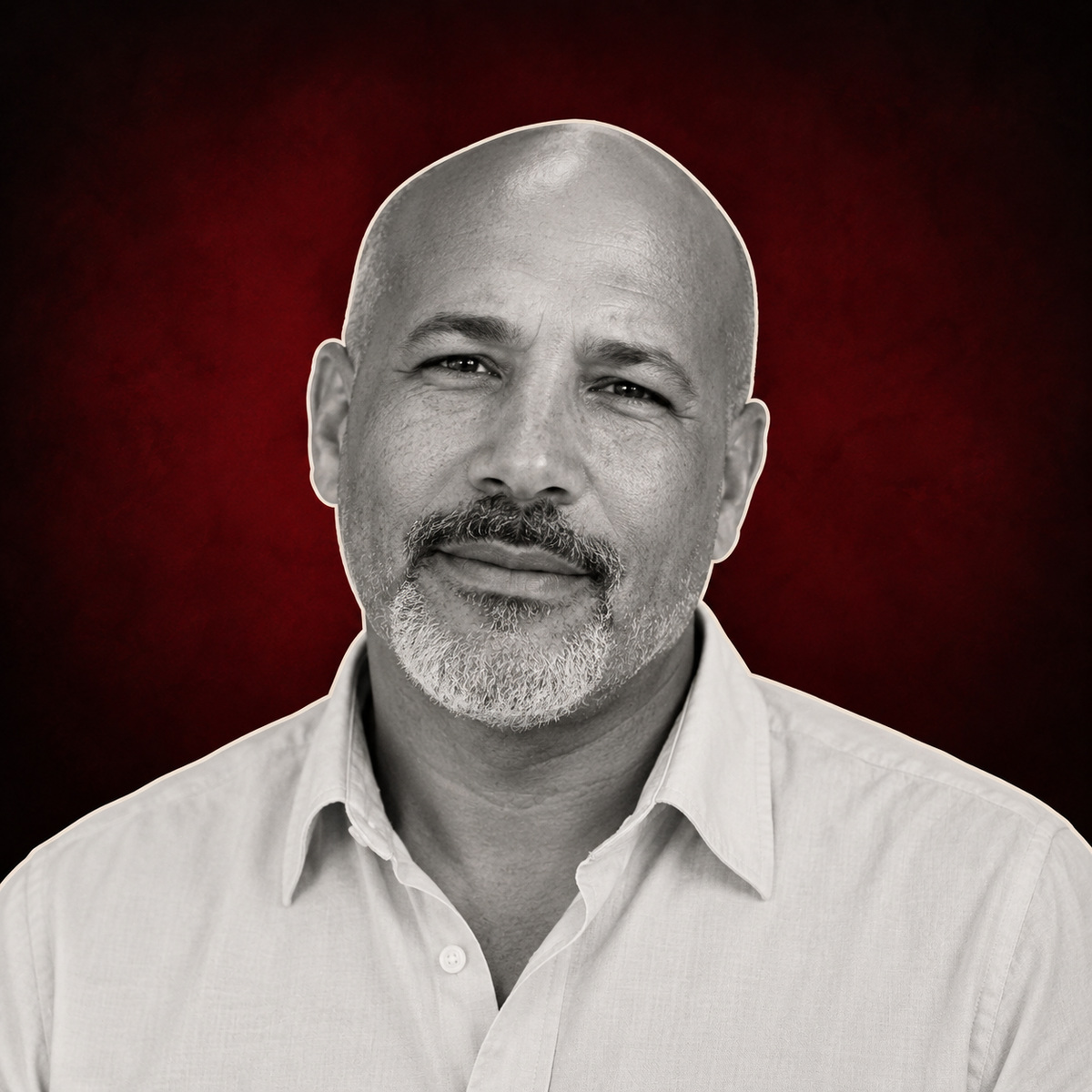
Damian Reid
Damian Reid is an entrepreneur, bestselling author, speaker, and business mentor based in Toronto, where he is a city leader of the Speakeasy Mastermind Toronto chapter. An entrepreneur since age 13, when he began playing music at house parties that grew into stage shows, he combines that experience with senior corporate leadership in telecommunications sales and marketing and more than a decade of transformational training and leadership development work, including leading top leadership programs for an international training company. He is the creator of the 6 Stages of Business Mastery, the 7 Steps to Your Freedom Lifestyle, and the 12 Key Life Areas, and a Full Focus Planner certified pro who has delivered training to tens of thousands of people across North America. His first book, Cure 'Entrepreneurialitis': 52 Habits to Earn the FREEDOM You Deserve, is listed on his website as an Amazon international bestseller, and he said his upcoming book on the seven steps was expected in November. Born in Guyana, Damian moved to Toronto at age 10.