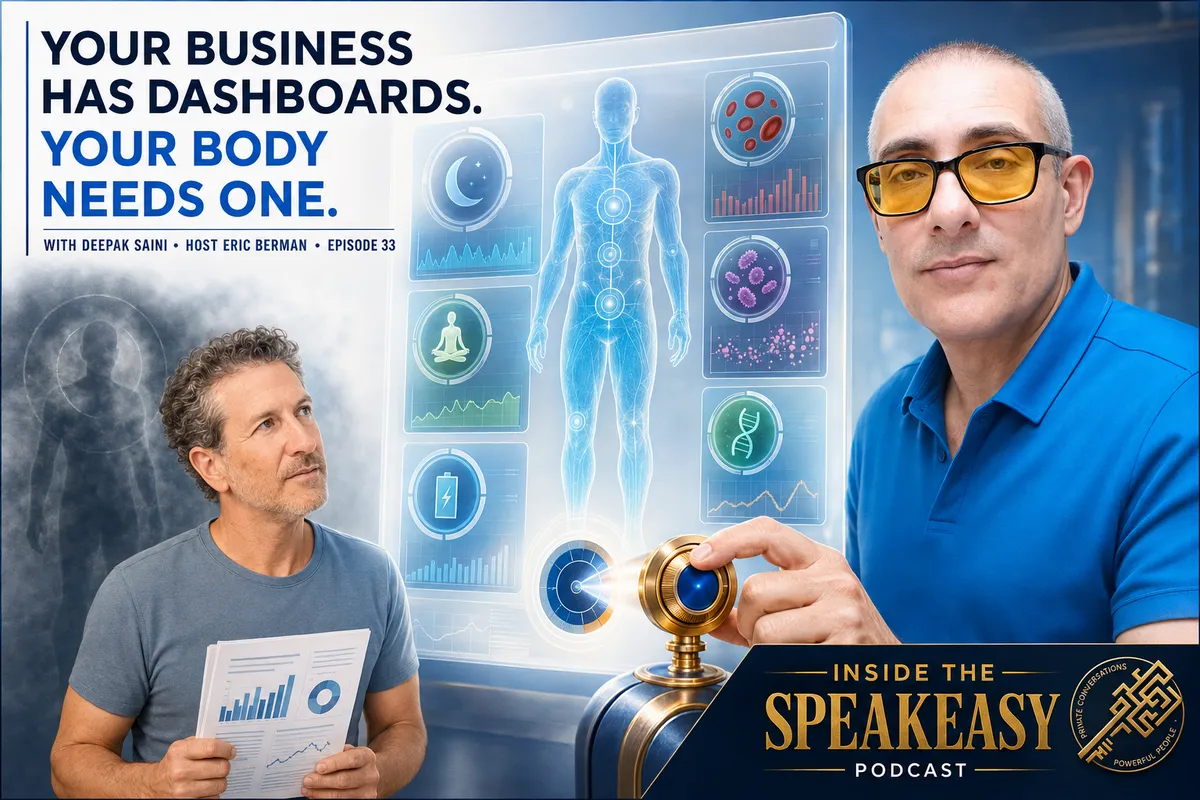
Deepak Saini, a health optimization and longevity coach and member of the Speakeasy Calgary chapter, was chronically sick as a child, morbidly obese by 18, and struggling with a back injury in his mid-30s that made it painful to put on his shoes. In this conversation with host Eric Berman, Deepak shares how lifestyle changes helped him lose the last 60 of 100 pounds, why he says entrepreneurs who track every ad metric rarely track their own health, and how his TIIME methodology starts with testing and inner game work before any tactics. He explains which tests he prioritizes, what four years of tracking his sleep with an Oura Ring showed him, and the simple longevity markers he watches, from balance to grip strength. Deepak, who is clear that he is not a doctor, also shares his views on GLP-1s, peptide sourcing, and the limits of feeding lab results into ChatGPT.
In this episode, you'll discover:
- Why Deepak Saini says entrepreneurs who scrutinize their ad spend and ROI rarely apply the same thinking to their own health data
- The order in which Deepak prioritizes testing, starting with basic blood work and moving to microbiome, metabolites, and DNA
- How four years of tracking sleep variables with an Oura Ring helped Deepak find his personal sleep window of 6:45 to 7:15
- The simple strength and balance checks Deepak uses as longevity markers, including farmer's carries, hangs, and standing on one leg
- Why Deepak cautions that ChatGPT works from standard reference ranges, and how he ranks supplement recommendations so clients actually stick with them
Episode Summary
Eric Berman opens the episode by arguing that entrepreneurs spend enormous time optimizing their businesses but not their biology. Deepak Saini, a Speakeasy member from Calgary, agrees, saying that busy founders and corporate leaders, and men in particular, tend to take time from their sleep, self-care, and families to build the business they believe will give back to those families. In his view, the priorities are often mismatched.
Deepak's own story started with constant illness. He describes chronic bronchitis and ear infections as a child, being classified as morbidly obese by 18 at 100 pounds heavier than he is today, and a back injury in 2014 that left him unable to bend at the waist while raising a three-year-old and a baby. He says the western medical system did him no favors, so he found an alternative modality for his back, used PRP, and changed his nutrition, sleep, hydration, and sunlight habits. He reports that the last 60 pounds came off in five or six months, that an undiagnosed autoimmune condition went into remission, and that he has essentially not been sick for 10 years. When colleagues began asking for his advice, he saw a bigger purpose in the work.
Today Deepak coaches entrepreneurs and corporate leaders through a methodology he calls TIIME: testing, inner game, implementation, a mastermind component covering advanced options such as peptides, stem cells, and exosomes, and re-evaluation. He starts with testing because, as he puts it, tests don't guess. He says many entrepreneurs either rely on gut feel or lean entirely on a standard medical system where general practitioners are not trained in optimization. He encourages people to find doctors who are open to being questioned, and says that if someone does only one thing, it should be blood work. For his own clients he adds microbiome and metabolite testing, then DNA, with biological age as a more trackable but less essential metric.
Deepak shares how his own data changed his decisions. He says testing showed he is highly sensitive to oxalates, which led him to drop the raw spinach and kale he had been eating, and that he carries an APOE variant he associates with a higher Alzheimer's risk. When a metabolites test showed his body was not producing GABA, which he links to Parkinson's, he began supplementing. Eric adds his own experience: an antioxidant test pointed him to a few inexpensive supplements, and he says he rarely gets sick now. Eric also frames testing as a business decision, comparing a $500 custom blood test to a $500 ad test, and Deepak, a former CPA, notes that some clients treat health spending as a business expense while making clear he is not giving tax advice.
On weight loss, Deepak says the first 40 pounds took about 15 years of what he calls blunt force, while the last 60 came mostly from changing the composition of his diet: less alcohol, deep-fried food, and industrial seed oils, more fruits and vegetables, and eating slowly and intentionally. He says it took him years of coaching to realize that clients who fell off a plan were not lacking discipline; they were carrying deep-rooted emotional issues and limiting beliefs. That is why his clients do inner game work while waiting for test results. On GLP-1s, Deepak believes they suit some people but not others, citing reports of bone density and muscle loss and a family member he describes as a shell of himself, and he urges people to ask their doctors more pointed questions. He calls peptides such as BPC-157 revolutionary but stresses that sourcing matters most in a fast-growing market.
The second half turns practical. Deepak tracked sleep, HRV, body temperature, and recovery scores with an Oura Ring for four years and says his optimal actual sleep time is 6:45 to 7:15. He uses a low recovery score to dial back a planned workout, considers wearable VO2 max scores only directional, and suggests a clinic test about once a year for most entrepreneurs. He spends more time on balance and mobility than strength or cardio, pointing to falls as a major risk for older adults, and he stacks habits: brushing his teeth on one leg, taking calls while walking outside, and meditating and journaling in his infrared sauna. He also explains why he wears blue-light-blocking glasses. Before closing, Deepak warns that ChatGPT relies on standard reference ranges rather than optimal ones, and says he ranks supplement recommendations so clients can build habits gradually. He shares that he enjoys the Speakeasy community and plans to visit other chapters.
Big Ideas Discussed
Treat Your Health Data Like Your Business Data
Deepak's central argument is that entrepreneurs already know how to make decisions with data. They watch Facebook ad spend, return on investment, and dozens of other metrics, yet most never look at their health the same way. Without real data, he says, people default to gut feel, which is clouded by diet trends, influencer claims, and outdated advice, or they rely on a standard physical that was never designed for optimization.
Eric sharpens the point with a comparison every marketer will recognize. Founders will spend $500 on an ad test just to see whether a campaign breaks even, but hesitate to spend $500 on a custom blood test that could inform decisions for years. Eric believes the hesitation comes from expecting insurance to cover health costs. Deepak's advice is to start with basic blood work if nothing else, then build from there, and to look for a doctor who is open to being questioned when the results raise new questions.
Personal Data Can Overrule Popular Advice
Deepak is supportive of experimentation, but he says popular approaches can work on one metric while working against someone's body on others. His own example is oxalates: testing showed he was highly sensitive to them, which led him to stop the raw spinach and kale smoothies and salads he had believed were healthy. He says that change and a few other tweaks made a noticeable difference to his digestion.
He applies the same logic to long-term risk. Deepak says he carries an APOE variant he associates with a higher risk of Alzheimer's, which also runs in his family, and that a metabolites test showed his body was not producing GABA. Based on that data, he chose to supplement while working on his gut health. He stresses that a genetic result is not a life sentence, but information that shapes lifestyle choices. His larger point is that these nuanced decisions only become possible once the data exists.
Inner Game Work Comes Before Tactics
Deepak says he lost his weight through what he calls blunt force: discipline with exercise and nutrition. When he began coaching people with the same struggles, he noticed that some succeeded while many fell off, and for years he assumed the problem was discipline, the same trap he says many trainers and online gurus fall into.
His conclusion was that many people, himself included, carry deep-rooted emotional issues and limiting beliefs, and that tactical changes work far better once those are addressed. That is why inner game work sits near the front of his TIIME methodology, running while clients wait for their test results. Eric connects this to the pain and pleasure principle, noting that real change often begins with a decision that staying the same has become more painful. For entrepreneurs who have tried and abandoned plans before, the episode reframes the issue as something other than willpower.
Small Stacked Habits Beat Heroic Routines
Much of Deepak's practical advice is about fitting health into a schedule that is already full. He brushes his top teeth standing on one leg and his bottom teeth on the other, takes phone calls while walking outside, and meditates and writes in his gratitude journal during daily sessions in his infrared sauna. He suggests walking or standing meetings with teams and encourages listeners to look for activities they already do that could carry a second habit.
He also offers simple ways to gauge progress without expensive equipment. Deepak points to balance, grip strength, farmer's carries, and how long someone can hang as markers he associates with overall strength and longevity, and he says he spends more time on balance and mobility than on strength or cardio because of his back history. On steps, he believes the 10,000 figure is partly a marketing number and suggests people start from their own baseline and work upward.
Questions We Answer in This Episode
What is Deepak Saini's TIIME methodology?
TIIME is the health optimization methodology Deepak Saini uses with entrepreneurs and corporate leaders. It stands for testing, inner game, implementation, mastermind, and evaluate. Deepak says clients begin with testing and inner game work, then optimize areas such as nutrition, sleep, and environment, explore advanced options in the mastermind component, and re-test to measure progress.
Which health tests does Deepak Saini prioritize?
Deepak Saini says that if someone does only one thing, it should be basic blood work, which many people can access through their regular care. With his own clients, he adds microbiome and metabolite testing, followed by DNA testing. He considers biological age more of a vanity metric, though he still tracks it because it can improve over time.
Why does Deepak Saini say a standard physical isn't enough?
Deepak Saini says a standard physical is not enough for people who want to optimize their health, because general practitioners are typically not trained in optimization. He recommends looking for a doctor who is open to being questioned, or working with functional medicine or anti-aging practitioners. Deepak is clear that he is a coach, not a doctor.
How does Deepak Saini use an Oura Ring to track sleep?
Deepak Saini tracked sleep with an Oura Ring for four years while logging variables such as alcohol, meal timing, and meal composition. He found that his optimal actual sleep time, not time in bed, was 6:45 to 7:15. He also watched HRV, body temperature, and recovery scores, and says a low recovery score prompts him to choose a lighter workout.
What does Deepak Saini think about GLP-1 medications?
Deepak Saini believes GLP-1 medications can play a role for some people but not for everyone, depending on factors such as genetics. He cites emerging reports of bone density and muscle mass loss, and describes a family member who lost weight but seemed far less healthy. He encourages people to ask their doctors more pointed questions before deciding.
What simple longevity habits does Deepak Saini recommend?
Deepak Saini is a big believer in habit stacking. He stands on one leg while brushing his teeth, takes calls while walking outside, and meditates and journals in his infrared sauna. He also points to balance, grip strength, farmer's carries, and hanging as simple markers he associates with overall strength and longevity.
Can ChatGPT build a health plan from lab results?
Deepak Saini calls uploading test data to ChatGPT a good step, and more than most people do. However, he says it typically relies on standard reference ranges designed for average people rather than optimal ranges, which could compound a problem as more data is added. He also ranks supplement recommendations for clients so they can build habits gradually instead of starting dozens at once.
Full Episode Transcript
Read the Full Episode Transcript
Why Entrepreneurs Neglect Their Health
Eric Berman: This show is brought to you by HighLevel, the AI driven business operating system trusted by over 2 million businesses to help automate, scale and create real leverage. HighLevel isn't just a tool. It's the engine behind some of the most agile and high performing teams on the planet. If you're ready to streamline everything, amplify your reach, and actually build a business that works for you, you're in the right place. Visit www.gohighlevel.com/speakeasy-mastermind-promo to get an exclusive 30 day trial for being a listener of the Inside the Speakeasy Podcast. Enjoy the show. Welcome to Inside the Speakeasy Podcast. And today we're going deep, deep on health optimization, biohacking, and I tell you, as an entrepreneur, we spend a lot of time focusing our business, but we are not spending enough time working on our health. And today's episode, I'm going to bring in Deepak, one of our premium incredible members on the health side, all the way up from Calgary, and we are going to cover about 20 different hacks, tips, cheats, systems. I don't even call them cheats, just things we can all be doing immediately to start focusing on optimizing our health. I mean, gosh, we just spend four to five hours a week optimizing our biology. We're going to be so much more productive and Deepak is going to show us why. Deepak, welcome to the show.
Deepak Saini: Yeah, thanks, Eric. It's a pleasure to be here. I'm really looking forward to our conversation.
Eric Berman: Yeah, no, I'm stoked because, you know, we talk obviously a lot about scaling our businesses and business growth and all that. And you know, I mean, I love this concept of just the ROI on ourselves and being more productive because we tend to ignore. I know I do. I mean, all those crazy entrepreneurs, go, go, go, go, go. And we all understand the value of health, but gee, it's easy to get caught in the entrepreneurs hamster wheel and just, you know, not necessarily do the things we could do. But we, we're not functioning at our, at our peaks. I mean, is that, tell me a little bit of background. What are you seeing out there from us entrepreneurs? And let's get into it.
Deepak Saini: Yeah, absolutely. You know, I'm going to talk broad strokes here, but, you know, and maybe not to pick on men, but, you know, men are even worse than women. Entrepreneurs, right. Like they're not even going to the doctor to, you know, like they have to be like on their deathbed or whatever. I'm exaggerating a little bit, but even go to the doctor and you know, or their wives are dragging them, but, you know, speaking entrepreneurs. Right. Like we're so he, myself included. Right. We're so busy. We're doing this, we're leading our teams, we're going to events, we're, you know, business building. And it's like, oh, where's the time? And where does it usually. Where do we take it, the time from? We take it from our sleep. We take it from our own self care, whatever that looks like for you. Exercise, nutrition. And our families. Right. The time with our families and our personal relationships. I'll get to that.
Eric Berman: I'll get to that.
Deepak Saini: You know, and I see this with CEOs, corporations too. They don't have to be entrepreneurs. We rob from ourselves and our, the ones closest to us to build the thing that we think is going to give back to them. And it does. But sometimes the priorities are a little mismatched.
Eric Berman: That's right along the way, we're sort of missing things. I feel it. I think about it all the time. So we're going to get into today. You got some really cool tips for all of us, three or four kind of life hacks, things we should all be doing on a regular, consistent basis. And obviously, I know you teach so much more. I mean, to even get there. I mean, you and I have talked a few times. I've really enjoyed our conversations. You're such a great member in our community. You're always there to help serve others, others.
Deepak's 100-Pound Turnaround and Autoimmune Recovery
Eric Berman: But life wasn't so easy for you. I know back in the day, I remember you telling me some, some crazy stories of, you know, you were in the big corporate world and you had a massive autoimmune condition. You, I mean, you're such a skinny guy now. You look so healthy. You're obese, you had back injuries. I mean, give me a little of the backstory.
Deepak Saini: I'd like to think I'm well toned. Eric. I don't know if I'm skinny. I'm well toned. But I was always chronically sick as a kid. Chronic bronchitis, ear infections, the whole deal. I get sick for three or four, three to four times per year for weeks at a time. That's no way. Wow. To live. That's certainly no way to grow up and certainly not no way to start to raise your family and like, try and build your career in the corporate world again. I was always a chubby kid. By 18 years old, I'd been classified as morbidly obese, a hundred pounds heavier than I am now. So that I always. Joint pain, aches, and all that sort of thing. But in 2014, when my youngest daughter was just a baby, I hurt my back. I had no flexion. I couldn't bend over at the waist, so I couldn't do like anything. Even putting on my shoes and socks, it's painful. And getting in and out of a chair, which includes the toilet, that was painful. That was finally the impetus for me to like, try and figure things out.
Eric Berman: Wait, when did you say this was? You were how old?
Deepak Saini: 2014. So.
Eric Berman: Oh, in 2014.
Deepak Saini: Okay. So I'm like in my mid-30s. We're starting our family. You know, I have a three year old and a baby at home. I could barely get to work. And it was super painful. But, you know, it couldn't be the father can be the husband that I wanted to be. So, yeah, I live up here in Canada, you know, like you said, Calgary chapter. I like to say the western medical system did me no favors, certainly not here where I live. So I took matters into my own hands, found an alternative modality to heal my back. That's all he was trying to do, was heal my back so I could play with my kids. But in conjunction with, I made some lifestyle changes. You know, nutrition. I was always doing a ton of exercising and actually over training was actually part of the reason I hurt my back in the first place. But primarily through nutrition and other lifestyle factors. Proper sleep, you know, hydrating that, you know, proper sunlight, all these types of things. The last 60 of the a hundred pounds I lost melted away in just a matter of like five, six months. And I never really looked back. So, you know, they diagnosed me with degenerative disc disease, but using PRP, that helped my back and the weight went away. And lo and behold, that autoimmune condition undiagnosed, the last thing they thought I had was leukemia. Thankfully, I didn't have that. But there was a part of me, and maybe some people can relate. You're actually hoping they have an answer for you because then at least you can put a label on it and you're like, you have something. And anyway, they never did diagnose me, but lo and behold, it just went into remission. I essentially haven't been sick for 10 years. That's all through Covid and everything. Just by making these lifestyle changes. And that was my kind of aha moment. And then colleagues and business associates started asking me for advice and guiding them. And I was like, I kind of. I think I have a bigger purpose here, to serve a mission. So that eventually led me to doing what I'm today. To make the story a little bit shorter.
Inside the TIIME Methodology
Deepak Saini: Yeah.
Eric Berman: And then today, just as a quick overview, let's talk about real fast what you do today. And then I want to get into, you know, some of. Some of the tactics we can. Strategies.
Deepak Saini: Yeah, absolutely. So I've developed a methodology. It's called TIIME, T, I, I, M, E. This community will appreciate that the M stands for mastermind, and that's a very cool component. But essentially, I work with entrepreneurs and corporate leaders, really deep dive into their health. It starts with testing, inner game work. Really get into the emotional root cause of so many things. And clearing that up early on in the process also helps anything tactically. We do the implementation, which is the second I again, we optimize nutrition, sleep, you know, nervous system, everything in your environment, in your home, in your business place, Optimize everything. And then we, you know, there's a mastermind component. We do some really cool advanced things that we may talk about today, like peptides or stem cells and exosomes, these types of things. And then we reevaluate. And, you know, you do the work, you follow the process, follow the methodology. You know, you'll be at least 10 years younger biologically, because we test that as well at the end of the year. I love it.
Eric Berman: Okay, so it's a great system. You go through all that. I know your clients because I've heard stories they do, you know, they love the program, that stuff you're doing. So for those of us listening and hopping in, I mean, I'm just putting my own sort of entrepreneur hat. Like, again, intuitively, I get it. Trying to get. Get my exercise in, trying to eat right so hard. Back to the juggling. And you got the family, all that. What are some of the biggest sort of. What are the most common mistakes, common things that you're seeing with most of your clients that are just like, all right, everybody's doing this one thing that maybe here's the first thing you would sort of think about doing it. Is it the testing or, you know, back to your time or.
Tests Don't Guess: Why Data Beats Gut Feel
Deepak Saini: Yeah, so I like to start with the testing because, you know, like, tests don't guess. One of the big mistakes I see with entrepreneurs, you know, again, we are typically, you know, a type. We're in charge. Right. We got into the doing or running our business or start business because we wanted to be in control of our own destiny. And we're also well aware of like where we need help and deficiencies. Right. So how that typically looks like is, you know, an entrepreneur knows there's something off, there's something's not quite right. I can't put a finger on it. And either a, I'm just going to like trust my gut because it's got me where it's gotten me in business.
Eric Berman: Yep.
Deepak Saini: And you can't really always rely on your gut, that gut feel per se. And typically it is your gut that is an issue for a lot, a lot of people.
Eric Berman: Yeah.
Deepak Saini: Because you just don't know. And we've been, you know, this, you know, mass psychosis of society with, you know, all these myths of about health and this influencer saying this and something we read or our doctor says something that's, you know, 20 years outdated, you know, so we can't really rely on our gut instincts with all that filter and all that noise or we go to a regular GP who's actually not trained in any of this type of stuff. They're like, I'll be honest, or just, you know, write a prescription is really what they're trained. Very few go that next level to get a functional medicine doctor. And we have some great and great people in our community who, you know, who do do these types things. But like really, either the big mistake is leaning too heavy into the current medical system and we all understand the flaws of that, or I'm just going to rely on myself because I just have this feeling. But they don't actually know because if you don't actually get real data, the people, entrepreneurs in this community or otherwise, like you're looking at your Facebook ad, spend your return on this, your return on that and these metrics and. But you never look at that way at your health or most people don't.
Eric Berman: So what, I mean, what do you recommend? Like what are the first test markers that you know, you want your clients and people to go through?
Deepak Saini: Yeah, like so if someone works with me, we do DNA, microbiome, metabolites, biology age and then your comprehensive blood work, that that's what work with me. Someone's just starting out on their own. At least get your blood work done. And many people don't even do that. Right. Again, like I said earlier, their wives are dragging them to the doctor. At least get that done and at least gives you a rough idea.
Annual Physicals Versus Functional Medicine
Eric Berman: So now, again, so let's just say I'm the average listener here running around, I go get my blood work done and the old school way, or the common way is you go, you get your annual physical, they do the typical blood write up and they say, hey, your cholesterol, here's your this, you're fine, you're not fine. They look at your PSAs for, you know, any kind of issues and then that's it. And like I remember last time I did physical, I even hinted at like, hey, I'm going to go more advanced test. And it's like almost like she was annoyed that I was even bringing it up. Like, oh, that why are you even doing that? Like, like they're so like thinking they're the only way. And I feel like subconsciously they're probably getting frustrated with this functional medicine world because it sort of undoes what they've been taught in school. Like, is that what you're kind of sensing and feeling?
Deepak Saini: I think one, if you're looking for a doctor and they play a role, don't get me wrong, right? No, you want someone who's open to being questioned and challenged with like new ideas. And hey, I did this research, so that's one thing. But yeah, you're absolutely right, Eric. A lot of doctors, I see this, I have friends that are doctors. I know people, I went to high school with, their doctors. Now we still, you know, they have this, that doctor's, you know, complex, you know, like I am the authority and many of them go and get other trainings and you know, functional medicine or anti aging and all these different things they can get and that's fantastic. But most don't. And so we do need to be the best advocate for our own health or for our families as well. And I love that. Like, hey, this is great, I'm gonna go get some more or hey, you need to be on a statin or whatever that they prescribe. It's like, whoa, wait, wait, I'm just, I'm going to do a little bit more research and get maybe a second opinion. You know, that sort of thing is a huge next step that one could do because the blood work is again, it's just, it's like a snapshot in time and it's gives us some ideas of just some questions to ask. Where should we go next?
Eric Berman: Okay, got it. So I mean what I'm hearing and I don't know if it's different in Canada and us. I know us physical, they have their basic set of stuff that the insurance will cover and pay for on the blood. They look at it and you're done. So one take a look at it and you're saying, do your own analysis. Number one, don't just trust, you know what they say, which is a hard thing because we're, you know, we're brought up to assume you go to the doctor, they know what's best. Why are you questioning the doctor? And then number two, are you suggesting that we all maybe go invest in a functional health med, you know, doctor, some sort to do a deeper blood analysis, that it's just not good enough what you get at your annual physicals,.
Deepak Saini: I would 100% say it's not good enough what you're getting. If you really want to optimize again, functional medicine. Doctors, anti aging doctors, you know, all these clinics, again, there's members in our community here, that's one avenue. You know, someone like myself who's, I'm not a doctor, full disclosure. Right. But like, you know, been trained in this as more of a coach, let's say. Or you know, there's a lot of third party companies that are just selling tests and they provide analysis and those analysis is a good direction as well. They're not always as comprehensive as what maybe someone actually needs. But you know, you know, just even going and get one of these tests, you know, off the shelf, so to speak, yourself even that is like moving you further and further along on the journey to optimization. Yeah.
Eric Berman: And I'm sort of saying this and leading the conversation to where like I've done that and I've become a big believer last two, three years just on the data I've learned from my deeper blood tests and a few tests and I'm just blown away. And I think we are entering this very interesting time where we are undoing the habits. You know, like I think we've all opened our eyes a little bit to, you know, follow the money. Right. And the money goes to the pharmaceuticals who are, you know, you know, behind the scenes, the doctors who, the doctors can only say so much and they're going to only get what the health care, what the insurances are going to cover and you know, who's paying who and you tell me, but my gut says to some degree, you know, my opinion, is there such a hold on where the dollars and purse strings. There's a lot of control on what's going on out there, on what we can or can't do. And now I think there's this movement of people out there questioning health, questioning what's out there. And I think it's exciting because the people are getting more data out there and starting to realize that like you said, it's not just what, you know, it's not exactly what you think it is or it might be a lot more.
Deepak Saini: Yeah. You know, Eric, can I share a quick story? I think this kind of hits the point of hope. So this is, this was during 2020, Covid, you know, the vaccine started to roll out. You know, I did my own research, which many people did, I'm sure many in this community did, but I had data on myself, I had my DNA data and everything. So I actually, you know, booked a call with my GP and again, he's someone who's a little bit more advanced, a little bit more open minded, didn't mind the back and forth in the challenge. So I again, look for someone like that if you can. And I said, hey, you know, like based on what I'm seeing, based on my genetics, if I get the vaccine, this could harm me on these factors. Alternatively, if I don't get the vaccine and I should get Covid or one of the serious strains of COVID because of these other genetic factors, this might harm me. So I'm like, I don't know where, you know, I'm getting conflicting data here. Like what, you know, I was looking for recommendation and he's like, Deepak, you have way more knowledge in this area than I do. Like, I can't really advise you. I'm like, wow, okay, well, I appreciate the honesty. That was refreshing. But you can really help me. So. Okay, great. So I'll have to kind of go figure it out on my own. So, you know, I think that just goes to the limitations that many doctors have, even ones that are really open and that do a lot of continuing education. But yeah, there's absolutely, you know, the system has been built and designed a certain way. That's right. You could say follow the money, but yeah, that's it's been designed a certain.
Eric Berman: Way and there, there's guidelines and boxes they have to play under, which is interesting.
Health Testing as an ROI Decision
Eric Berman: Okay. And you just have another analogy I'm going to bring up because I think it was really interesting the way you send it. You know, as business owners, it's funny how sometimes we hesitate to spend money on certain health things when you wouldn't even blink to spend, let's say to spend $500 on a custom blood test. You're like, but look at all the data you're going to get which can, you know, lead to x Y and Z. And you would drop 500 to run an ads test on a program to sell a product just to see if you're going to break even. And when you actually put it in that context, you're like, what the hell are we thinking? Like, that goes away in a second. A test on a marketing campaign versus your health. You can learn one little thing that can add X number of years to your life. I mean, I mean, you're putting that.
Deepak Saini: X years to your life. Faster reaction time, better decision making, all these sorts of things. And, you know, here's another crazy thing, Eric. I get this with my clients all the time. Like, oh, that's deductible. Like, I'm not giving tax advice here. I was a CPA before. I'm not giving advice. But like, this is a business expense. And like, oh, I can write this off. Yes, absolutely. Just like a bunch of other stuff that you're, like, you said, are spending money on. So I think, I'm surprised, like, more people don't understand this.
Eric Berman: Well, because I think we're so used to the health insurance covers it. Therefore, no big deal. Oh, my God, I got to go out of pocket for something. There's that immediate hesitancy that insurance won't cover. Therefore, I just. I'll not do it. And it's weird when you put that context. We've been so trained to think about, you know, insurance covering, therefore. You know, it's just interesting when you really think about. And I love how you painted that business analytic picture. Again, sound like insurance is covering your. Your $500 paid media campaign that I mentioned. You know, you're not getting that back. There's no coverage, and you're just getting data. Let's get some real data that matters.
Personal Data, Priority Tests, and Targeted Supplements
Eric Berman: Okay, so let's take it a little bit more. So you talk first about the testing of a lot of things. Blood, biome, all the other kind of stuff, those markers to get the data. What else do you see as sort of top things we need to do or pivots or major changes we should be considering to get back optimized?
Deepak Saini: I think one thing that the data gives us, many people have a notion of, again, through media or just experience. And some people did elimination diets or whatever, or they're just following the latest thing like, oh, keto, that's. I see people online losing, my friend lost weight on keto, whatever, and all these sorts of things. And that. That's great. I'm all about experimentation and trying to move your life in a better direction. That's all great, but sometimes when you actually get the data, it's like, look, this thing. And like, yeah, maybe you lost some weight. I'm just gonna pick on weight. Maybe you lost some weight doing this thing or following this diet. But the data is actually showing this is actually harming your gut. This is actually going against your genetics. There's a different approach. So, yeah, you've lost weight as one metric, and it happened. We're all going to have our own choices and goals. But, you know, for me, it's not necessarily about weight. I mean, that's part of being healthy. And longevity is like having the right body composition and lean muscle mass and all that. But, like, I also want to live a long time and be healthy for a long time. So I don't want to be going against my genetics because I'm eating spinach and kale. I'll use myself example. I am super sensitive to oxalates, which are very high in raw spinach and raw kale. So, like, and I used to do this, the green smoothies and the big salads. And still I got the data. I was like, oh, maybe that's why I'm run to the bathroom four times. And no matter what I try and do for my microbiome, I'm still running to the bathroom four times a day. Oh, okay, let's get rid of that. Oh, lo and behold, that and a few other little tweaks made a difference. So I think we can get really nuanced with the testing. Where are we deficient? I never would. I'll use myself an example. So I've been very open about this. Nothing to hide here. I have one of the variants of the APOE gene that makes me about, you know, 10, 50% more susceptible to Alzheimer's. I have Alzheimer's in my family. I have family members of the past. This is a concern to me. Many of my decisions are based on that. The last time I did my metabolites test, I realized my body is not producing GABA. Key neurotransmitter. Lack of GABA or deficiency in GABA is related to Parkinson's. Now, Parkinson's and Alzheimer's, two different diseases, but they're on that same spectrum here. Okay, well, I'm a higher risk for this. I know this from data and family history. I need to optimize for this. While I'm trying to figure out my gut issues to produce GABA endogenously, I'm going to supplement with GABA. I would never know this if I didn't do these testing. So I'm working on something that's hopefully 40 years out in the future. But I have hard data so I'm going to do it now. These are the kind of the nuanced decisions we can make once we have the data.
Eric Berman: Got it. And then so I'm going to jump back in. Blood. Blood testing is one. What would be your second. You know, what's sort of the next most important or just as important if.
Deepak Saini: You're only going to do one thing, get your blood test.
Eric Berman: Okay.
Deepak Saini: For sure. That's pretty, pretty simple. Most people are gonna have that covered regardless of where you live, at least some level of that. The additional tests I do microbiome probably number 1 or number 2, 1A, 1B microbiome and metabolites. The metabolites is the end process of everything that you've eaten, drinking your supplements, your medications, alcohol, food, what's left in your bloodstream effort. And that's where I found out like I'm deficient in GABA. So no matter what I'm eating, do nothing. Prior to that point I wasn't supplementing that point. I'm not making GABA. There's no GABA showing up in the end process. So metabolites and or microbiome again it's going to depend on the symptoms that somebody has. Would be 1A, 1B. I really like throwing DNA on top of that. And we're not talking heredity and what's my family ancestor. We're talking like what is it passed down to you for generations from your family that you should. And again, whatever shows up, you have this genie of that gene. That's not a life sentence. It's just influences, you know, our lifestyle decisions to turn those, you know, those switches on or off, so to speak. So that, that's like right. Number two behind biology age is cool to know. And you learn some data from that as well. That's be a little bit less important. That's maybe a little bit more of a vanity metric. But it is something that I use again because you can track it and we can actually improve that through implementation of lifestyle factors. So yes, basic blood work. If that's the only thing you're going to do if you're going to need a little bit more microbiome or metabolites as 1A, 1B.
Eric Berman: Got it.
Deepak Saini: Got it.
Eric Berman: I recently did some kind of cellular assay test to help me understand my antioxidants and other type of minerals and all that stuff. And my personal experience, one of my favorite stories I, I share is that it must have been the metabolite test that I took that actually informed me, and I never knew this, that there's about, you know, 40 or 50 antioxidants that work in our body. And everybody assumes, you know, the big heroes tend to be, is it vitamin C? Echinacea, acai berry, you know, blueberry. And my score. And all those were. Those didn't really do much for my body. What did well for my body. And it was four that scored off the charts. Grapeseed, moringa, [unclear], or some weird, you know, simple plant stuff. Like, nothing that, that's exciting. That's a literally like a $20 supplement on Amazon ever since. And I've been taking these for two years now, these supplements, every, like, morning and night ever since then. Like, if I even have a inkling of a cold coming on, it doesn't last. It's gone within. Like, I rarely got sick and I used to get sick all the time.
Deepak Saini: Yeah.
Eric Berman: And so, like, I guess I'm just sort of validating what you've said. You know, combination of me having taken a blood test and some antioxidant and other these things I've now supplemented just on that. And before having kids, I'd get colds all the time. Like, maybe like you. I mean, not to the level you were talking about. Easily, you know, three, four times a year. I'd be down for three, four days. I can't remember the last time. And I got two little kids that are running home, coming back, getting sick all the time. And I'm now the healthiest in the family, which is just weird. And it's because of simple little things.
Deepak Saini: Like you just said.
Eric Berman: So I'm just validating what you're using.
Deepak Saini: Yeah. When you have that data, you might be like, hey, I'm a. I'm just going to make something up. Someone's a huge vitamin C proponent, which is great. I love vitamin C. But, you know, the testing shows, like, that's great, but actually, like, glutathione will be a better bang for your buck. Or acai berry or whatever that is, is actually okay. And then you can make the conscious decision to swap it up. Or in addition to, you know, I don't mind having very expensive pee. Right. So it's like if, like, I'm going to take my. What I'm going to take, and that's changed over time as well. And if my body doesn't need it, it comes out my urine. If it's you know, water soluble and that's fine. Right. But again, I'd rather not be on my ass like I used to be for weeks at a time before.
How Deepak Lost the Last 60 Pounds
Eric Berman: Let's talk about the weight loss. And first I want to hear, and I know obviously it's different for everybody, as you alluded to earlier. What was the thing you did that you dropped weight? So it's gonna be a two part question. What'd you do to drop the weight? And obviously I want to get into the GLP-1 discussions and your thoughts behind all that since, you know, from your perspective.
Deepak Saini: Yeah, so for me, I mean the first 40 pounds that I lost took like, I don't know, 20 years or so. No, not that long. Fifteen years of, you know, and that was like a roller coaster ride as well. Slowly, slowly down. Right. Just blunt force work. Right. Type of thing. The last 60 was all almost. I'm going to attribute all. I mean there was other lifestyle things like sleep and stuff like I mentioned earlier, but mostly all nutrition. And it was really not even changing the amount of calories. Like I'm not one to super diligent. Maybe my calorie consumption went down a little bit, but it was really a composition. Right. So stop eating the crappy foods like you know, alcohols, you know, and there's an alcohol that has a role and has a place for sure. But like just overall consumption that went down. Anything deep fried, you know, all. Anything that's. We're getting these industrial seed oils, vegetable oils, canola oil, that sort of thing. Drop down more fruits and vegetables, you know, having the big ass salad like I mentioned earlier, although that caused other problems. Right. Having the raw kale and spinach so over, you know, over time that got refined and just being more mindful, being more, you know, and I think we can't discount this as just, you know, not hurrying. You know, sometimes as entrepreneurs you would just like eat on the go or whatever, you know, we're working or like eating our sandwich or hamburger or you know, ruling our worlds, you know, type of thing. Just being intentional with our food and taking the time and chewing properly, you know, all these sorts of things. We can't discount those things as well. So, so. But it was really just changing up the composition of what I was eating that really brought the weight loss down. It was so funny because it came so fast and always being someone who struggled with weight and never really wanting to step on the scale like I would once in a while, but it really came. This is a funny story. It really came to a head. You know, he had a young family. Well, I still do, but even younger at that time. Get a little behind on the. Doing the laundry, that sort of thing. I just need a pair of pants. You grab, you know, sort of your c pair of pants out of the back of the closet type of thing. And like, oh, these are really big. And I go to my wife, I'm like, I think I might have lost some weight. These pants are really big. She's like, are you an idiot? Like, you can tell in your face and everything you've lost weight. I was like, oh, okay. You know, get the scale out of the back of the closet and, you know, blow the dust off of it because it's been a while. Step on like, holy crap, I did lose a bunch of weight. You know, we're just. Sometimes we're just in our own. We have this own fantasy of what our body looks like or doesn't look like type thing until you actually, you know, concrete can happen. It's like, oh, okay. Yeah. So really, I just contributed mostly all to nutrition changes.
The Inner Game Behind Lasting Change
Deepak Saini: I love it.
Eric Berman: And just, I mean, yeah, just fundamental stuff. The things we all kind of know. But back to the I, I think the inner game, a lot of it was mentally saying, I'm going to make a decision here. And they say pain and pleasure. Right. You know, you wanted. You said, okay, I'm going to have more pain going down this path. I have to make a change here. So I'm going to do the. What initially probably was painful of saying, okay, less fried food, less donuts, less sugar, you know, the simple things. We all know. You're saying you just did that and stuck to it. Stuck to it, yeah.
Deepak Saini: Eric, I'm glad you brought up the I, because I did it through, you know, let's call it blunt force. You know, the exercise, the discipline for the nutrition, you know, and that all plays a role. But when I started doing this work early on, again, I started working with people who were like me. Weight loss, back pain, that's, you know, and it's evolved, obviously, over time. But why did some people have that success? And why do so many people, like, fall off? It took me years to figure out that, you know, like, they're not disciplined or they're not following the plan. You know, I fall in the same trap that many people, you know, personal trainers, online gurus, influencers, whatever, until I, like, realize it's like, no. Many of us, myself included, we have these deep rooted. And I don't want to throw the word lightly around, traumas, whatever that is for someone. Some people have much more severe things than I ever had. But until you get to those root causes and release those negative emotions, those limiting beliefs we have around those issues, then it's like, what? Anything we do tactically afterwards, health or otherwise, works so much better. Now, that's why I said earlier, it's upfront. We do testing, and while we're waiting for the test results, we work on that inner game. Got it? That leave me negative emotions. So then anything we do tactically, once we have the data works so much better. We're not. We don't have these chains waiting around our neck of these negative emotions and limiting beliefs.
Eric Berman: That's really profound. I mean, you're right. Some of it is you just unlock one part of the inner game and everything just changes off of that. You wouldn't even think that was what it was.
Deepak Saini: And now, all of a sudden, you're.
Eric Berman: Free to go down that path. Love it.
GLP-1s, Peptides, and Why Sourcing Matters
Eric Berman: What about the GLP-1s? What's your take on all that? The shortcut, the cheat, the. Whatever you want to call it?
Deepak Saini: Yeah, I mean, there's a lot of literature out there, and it's becoming more and more so. I think any medication, drug, you know, has a role to play for some people. Now, going back to, you know, genetics, some people genetically, like a GLP-1 will be perfect for them. Other people, it's, yeah, you'll lose weight, but there's gonna be other consequences. And we're starting to see that now in some of the data. Right. Loss of bone density, loss of muscle mass. You know, I have a family member was on one, and the last time, not this past Christmas, before, he was one of the early adopters, at least here in Canada, of being on those type of drugs. And it was like a shell of himself. And, like, yeah, you lost the weight, but you don't. You hardly look healthy. Droopy skin, pale skin, like, lack of energy, and, you know, barely avid golfer. Like, I bet if he was honest with stuff, he'd rather go back to being overweight and, like, loving golfing, you know, six rounds a week, versus, like, having to, like, psych himself up and be mentally and physically just to get to two or three rounds a week. Like, he probably would swap back if he could if he was really honest with himself. So they play a role. But I think we need to be. And our doctors, in conjunction with our doctors, we need to ask more pointed questions. Is this truly right for us? Is this actually the best decision? And I think there's a lot of things people can do, weight loss or otherwise, that should be looked at before taking the cheat, so to speak. Got it.
Eric Berman: Or, and I assume again, this is probably different for everybody. If you are going down that path, there's probably something else you might want to take to help, you know, ensure you are balancing and whether it's making sure you're doing a workout routine, building muscle, backbones, whatever, some kind of something in there to make it work. While we're on that topic, what about peptides in general? The whole revolution coming out there. What's your.
Deepak Saini: Yeah, it's fascinating. I haven't used every single one, but, you know, for my purposes, you know, BPC-157 is the very first one. You know, obviously for someone with the back. I was well past my back injury, but like, as a maintenance type of thing, as a making sure we don't go back there, I think it's revolutionary. Very powerful stuff amongst, you know, stem cells, exosomes, everything. The one big caution. I was just talking to someone earlier this week who's like, prescribe me some peptides. Well, first of all, I don't prescribe anything. I'm not a doctor. I can help you with sourcing, but that's the most important thing, sourcing, like anything else, like vitamin C or anything else, right? There's quality and then there's like somebody trying to make a quick buck. So I would just caution anyone to really know the sourcing. Not everyone's going to be Deepak, who's going to, like, insist on, you know, talking to, you know, the founding chemist or the CEO of the company. You know, I'll usually get them on my podcast as a way to, like, get an introduction or whatever, you know, type of thing. No one's going to go to that extreme, but, like, find the people that you can trust, whether they actually be the influencers or the, you know, the leaders of the industry or your coach or your doctor, whoever that is that you trust and see who, what do they recommend? Sourcing is very important. Anything that's new and we've had peptides for a while, but it is, like you said, Eric, just, yeah, blowing up. When things tend to blow up, shortcuts tend to happen with new entrants and people just trying to make a quick buck. So, yeah, just be careful is what I'm saying.
Eric Berman: That's what I'm hearing as well from, you know, we have some, you know, yourself and a few others that are really, you know, cutting edge in our community and others is just. That's exactly. It is, is like any other business. Everybody's going to go out there and try to make quick buck and sell their version of something. Is it cut the same way? And definitely they're not. They're all different. So you want to make sure you're going to get the good stuff, talk to the right people. But yeah, no, I'm a believer as well. I've been playing and testing and doing different things there, and I've enjoyed the benefits so far.
Using Wearables for Sleep, HRV, and Recovery
Eric Berman: All right, so we talked a little about weight loss. We talked a little bit about the blood work, the different testing. You know, what else are you seeing as major sort of. I mean, let's hit the. I mean, the obvious category of sleep. You hear how important that is from your perspective. How important is it? What happens if we're not getting sleep? How much sleep should we have?
Deepak Saini: Yeah, great question. I'm really big, you know, if it's not apparent on quantification, and I don't think we have to do it like the nth degree for the rest of our lives on any metric, but I think it is important to quantify certain things. So whether it be an Oura Ring or a Whoop or even your Apple Watch, like, the algorithms are getting better. And even if they're like not, you know, 20% off of what a clinical study would be for, like, let's say sleep we're talking about here, at least directionally it's going to be right. Right track for some period of time, get to know how different variables so no one has to do what Deepak does. I tracked using an Oura Ring four years of every variable.
Eric Berman: What tracker are you using and how do you use it? But. So keep going.
Deepak Saini: Yeah, so Oura Ring. I don't wear it anymore. I feel like I have that data. I use the Oura Ring, You know, cannabis use, you know, high THC or more cbd. You know, red wine, white wine, beer spirits, two glasses, one glass. You know, how many hours of sleep did I have? A heavy meal, maybe, you know, you're on the go and you do have that pizza. You know, the type of meal, the type, the composition of the meal, timing of the last meal in relation to when I went to sleep, all these variables and, you know, basically what I found and how much, you know, how much sleep. And I was tracking deep sleep. You know, all the data gave me deep sleep, REM sleep, how many times I was awake or, you know, had a disturbance in my sleep, all these variables. What I came to realize is for me to be optimal from a time in. This is actual sleep, not time in bed. Those are two different things. 6:45 to 7:15 was my sweet spot. Any less than that, it affected me. Any more than that, it affected me. So if you need more sleep and is your baseline or that you're ready for that probably is an indicator that something is not right. Maybe a cold is coming on or something like that. I know a lot of trackers do, so I know the Oura does does your body temperature. That was like without fail 100% accurate. As that started my baseline, as my temperature started to go up by 0.1, 0.2 degree above my baseline, something's coming on. You gotta pop the extra vitamin C. You gotta dial back the workout. This today HRV super important.
Eric Berman: So I love it. So, so let's keep go deeper because for a lot of us that are on these trackers, self included, I'm only let's say four months in the Oura Ring and I'm looking at the sleep. How do we use these trackers in a way that makes sense? So one is find the sleep pattern that's optimal. How do you know what the optimal pattern. How'd you know it was 6:45 to 7:15 for you?
Deepak Saini: I knew that because that was the amount of time that I was actually asleep. So that takes in you know, total sleep time, takes all the disturbance, everything. So that actual again in you know, the tracker either gives you that or I calculate that. I can't remember now. So that was the actual window when I had the highest, you know, HRV. You know, body temperature was good. The recovery score. I mean that's just an algorithm. But you know, all whatever variables you choose and it's like to optimize these, this is the time that I need. And you know, just so you kind of. It's a big spreadsheet basically. A big spreadsheet right to like and then you just you know, build some formulas in there and you like calculator. All right.
Eric Berman: I'm trying to dummy it down for some of us that aren't going to be that sophisticated. HRV, remind me of that again.
Deepak Saini: That's heart rate variability. The variation between successive heartbeats when we're like in sync. That's actually our body saying we are under stress. We the proverbial tiger might jump out anytime and we need to be ready to run. We won't actually want a greater HRV. We want you know, 0.89 per beat. Then the next successive beat is 1.01. Like, we want a greater variation that actually shows that our nervous system, both parts of our nervous system, our parasympathetic and our sympathetic nervous system are in balance. Particularly our parasympathetic, our rest and digest. So HRV, or optimizing for a higher HRV is one way. So we want.
Eric Berman: So you want more variation between your. In your HRV, you want a bigger spread? Is that what you're saying?
Deepak Saini: We want a bigger spread between successive heartbeats. So as a score, as most trackers are going to give you, just a score, you want a higher score? Higher score. Okay.
Eric Berman: So that's a data point. Like, if you're to look at two or three data points of whatever device, sleep score, HRV, any other ones that you think are the top ones.
Deepak Saini: I mean, recovery score, to some degree, it's going to depend on the device and the algorithm. But I think as a good. I, you know, gauge recovery scores. Like, okay, I was gonna, you know, do a heavy leg day. Oh, geez. My recovery score is crap. What happened? Oh, yeah, I was out at a client meeting or something and I had an extra glass of wine. Whatever. It's like, you know what? Maybe I don't do. Maybe I just do some walking today or I do yoga or I will do legs. But I'm gonna. I'm not gonna go for a new maximum on squats today. Like, you know, you can intuitively gauge some of these things. Got it.
Eric Berman: So that's like next day. So if you have a crappy recovery score today, you're saying tomorrow it may go a little bit lighter.
Deepak Saini: Well, typically, you're checking that morning, right? Like, you know, if you're wearing your wearable at night, you're checking. Okay. Where it's basically a gauge of what happened yesterday. So how am I feeling today based on what happened yesterday? Oh, my recovery score is low. Or I had poor sleep or whatever metric you're choosing. HRV is really low. Hey, it was leg day. I'm gonna choose to do yoga today or something or dial it back a little bit.
Eric Berman: Got it. Okay. That's helpful. See, like, I mean, I appreciate. I don't even. I'm just the dude that got the ring. And I'm like, oh, I'll just play around with the data. But I don't really know how to leverage, you know, use the data properly. What about this? I see a lot of people talking about the VO2 Max. What is it? VO2 something.
Deepak Saini: Yeah, VO2 Max, like your capacity for using oxygen in your thing, that's a little bit more tricky. That is a very important metric for longevity. That's a little bit harder to get, I honestly think, and happy to anyone to disagree with me. I think any VO2 max score you get off of a wearable is algorithmic based and is just a best guess. I think to really get a true VO2 max score, you literally need to be doing exercise with a mask on your face, exhaling and inhaling through that to get, like proper data. So that means you're gonna have to go to a clinic or, you know, some, some physical location to get that done, to really get a sense. Anything that's come up wearable is directionally good. You know, if you're doing improvements, I'm gonna start doing more things and you're seeing improvement. That's awesome. But to, like, really get a real score, I don't think we're quite there yet with wearables.
Eric Berman: If people are going to take that step and go do official, how often should they test for that?
Deepak Saini: Oh, once a year is probably more than enough. Unless you're an elite athlete and you're training, then you're probably doing this like monthly or quarterly. But if you know the average entrepreneur, even if you're like really into physical exercise, once a year is probably more than enough.
Eric Berman: Got it.
Balance, Grip Strength, and Simple Longevity Markers
Eric Berman: Okay. And then is there any other key tracking things that you think as we're working on longevity we should be looking at?
Deepak Saini: Well, there's a lot of, you know, things, little things that are totally fly under the radar that people don't typically think about, like balance. How well is your balance? Can you stand on one leg and close your eyes for like a minute or 30 seconds? You know, grip strength, high correlation to longevity, grip strength. You know, farmers carry. Like, can you carry? A man should be able to carry their body weight between both hands for a minute. Most people can't do that. How long can you hang? So very simple things you can do in your gym as a gauge of like, overall strength and longevity that they kind of correlate to. Yeah, your overall health. You don't have to get all fancy with stuff. These are simple things we can just do at the gym. I love it.
Eric Berman: Great segue. Right into sort of as we wind down. I mean, I was going to say, what's a good routine for us to be thinking about for longevity? So you just said that. So exercises for grip strength, hanging, farmer's carry.
Deepak Saini: [unclear] Deepak does, I spend more time. And again, keep in mind, I came from, you know, back injury and so, you know, keeping, you know, my back healthy, my core healthy and limber and flexible and all that's very important to me. I spend more time in a week doing balance work and flexibility and mobility, if you want to call it mobility work, than I spend strength training or cardio. I spend more time on doing that because my goals and concern, my history, that's important for me.
Eric Berman: Why is balance more important than the others?
Deepak Saini: Well, I'm saying balance and mobility, there's all kind of, for me, in my mind, that's one. I mean, they are separate things. Balance, exercise, mobility, you know, like, they're different things. I do it as one part of my routine at the end, all that together. So I view that as one balance, like falling. Like, number one cause of death for people over 65 is falls. Right. So that balance comes in there and then also not having lean muscle mass. Right. So they fall, they're brittle, then they get, you know, break their hip, then they go to the hospital, and then they get some. Some infection at the hospital, they get staphed at the hospital, and that's what actually kills them. But it was the fall that got them in the hospital in the first place. So, you know, we want to have lean muscle mass number one. That's, you know, great metric for healthy aging, and we want to, you know, have balance. Like, I live here in Canada. Many of our members live in states that get snow. I do work specific, like a special. I can't demonstrate because I'm sitting here, but a specific exercise for balance. Because when you slip, you never just slip straight back, you slip and you twist and you're trying to, like, get your balance before you actually fall. So I actually do a specific exercise that sort of works those body parts, you know, your obliques and everything, for that exact reason. Because, yeah, like, I fell last year on my drive, drive it running after my dog because it's snowy out. Right.
Eric Berman: So, wow, that's really cool. So just adding a few of these small things at the end of your workouts or whatever you're doing.
Deepak Saini: Yeah, I mean, like, I say this to people all the time. Like, I'm going to assume you, Eric, and most of our members, we have high quality members here in the Speakeasy. So I'm sure everyone brushes their teeth at least once a day. Yeah. So stand on one leg and brush your top row, and then stand on the other leg and brush your bottom. Simple. You're done. Like, I do more than that, obviously. But that's a simple way to get some balance into an activity you're already doing. I'm huge on habit stacking, so.
Habit Stacking, Daily Steps, and Blue Light
Eric Berman: All right, so let's, let's go down that path. So that's one habit if nothing else. Take away. You could do a small thing. What are other small little habits that are just easy for us to get? Momentum that you teach or you can share?
Deepak Saini: Yeah, kind of things I do. So calls meeting that are on the phone. Walk around, get some movement. Hey, depending where you live time of year, go outside and do that. Get some sunshine, get some fresh air. Oh, you're already on the grass. Nice, you know, nice grass over. Take your shoes off. Now you're grounding yourself. You're grounding yourself. You're getting sunshine, you're getting fresh air, you're doing your business call and you're moving. Look, we did five things in once. Doing one activity. I'm fortunate enough that I have a full spectrum infrared sauna in my house. I do it every day that I'm home. I do my meditation there. I do my gratitude journal in there. Stacking three things at one time in that time, that in there. So just find out, you know, for. I encourage anyone, like, what are some of the things you're already doing that you could do something else at the same time? And you'll find, if you really think about it, there's multitudes. They're coming in your life and your day all the time. Implement walking meetings with your staff or your team, or at least standing, at least right.
Eric Berman: As much as possible. No, I love that as well. How many steps should we be hitting a day?
Deepak Saini: I think it depends on your goal. I used to track that like diligently again, you know, kind of my accounting background, spreadsheet background. I used to track that diligently for like probably 20 years. Like I was like early adopter on this step thing. And you know, 10 that does actually doesn't really matter. That's all a marketing thing. But if I had to guess right now, just based on the amount of movement and it's going to vary day to day. Today as an example, need a little bit more of a content creation. Doing this, you know, this interview with you, et cetera, more of a sitting day, I'll probably hit 10 if I'm lucky. Other days definitely get. Take my dog for a longer walk. I'm doing more things. I'm probably hitting 15. So I'm in that 10 to 15, you know, and I would aim for people to, you know, try and get 10 plus 10 12. But wherever your baseline is, right, if you're at 2000 now, you're really 8. Just try and get to. For trying to get a vi and like work your way up. She's up. I love it.
Eric Berman: See, last one I noticed you have the. Is it the blue blocker glasses, the yellow lens? Tell me about that.
Deepak Saini: I have clear ones, I have these ones and I have red ones. So it kind of depends on the time of day. I'm all. And most of us are right, we have junk light in our homes, right, because we all went into LEDs, certainly in our office buildings or any sort of industrial setting, the mall, et cetera. You can't even get incandescent anymore. Although they're making a resurgence, I think. But. And I'm always in front of a computer screen all the. So I'm trying to protect, you know, my eyes with blue blocking glasses. And again, I sometimes I just wear the clear ones. First thing in the morning though is there's important, you know, light and sun that go together first thing in the morning. And again, it's going to depend on time of year and where you live. Try and get some natural sunlight in your eyes. So I will like literally go outside as soon as the sun comes up. I'm usually taking my dog out and I'll just like, you know, drop them down, make sure I get some sun in my eyes, look at the sun, you know, do sun gazing, all these sorts of things because we want to set our circadian rhythm them. But every other time I'm pretty much in front of a computer, I want to protect my eyes from blue light and you know, and this device and everything, all these things giving blue light. So I want to protect my eyes. It's funny, I've been wearing blue blocking glasses for like eight years and I thought I was like kind of the crazy one. Only the biohackers, only that, you know, some of my mentors, the Ben Greenfields, the Dave Aspreys, they're the only people talking about it. I'm like, well, I'm going to try this because I have a longevity goal. I go to my eye doctor and so hey, like this is kind of what I heard and is this something you guys offer? She's like, oh yeah. Like if when I'm not wearing my contacts, I have blue blocking glasses at home. Every single person at my eye doctor, you know, because they have the front, they have the retail store in the front and then like the you know the optometrist in the back, every single person, even the people in the front all have blue light blocking glasses. I'm like, do you sell them here? Oh no, there's no demand for them so we don't sell them. I'm like, are you kidding me? Every single person who works at the optometrist office wears blue light block glass at least some part of the day and you don't sell them. So I had to go, do you.
Eric Berman: Actually have prescription or you just wear them on top of your regular, your normal.
Deepak Saini: These are actually prescription ones. I have pretty terrible eyesight, I gotta get em.
Eric Berman: I've noticed personally, God, about six months ago actually I got some new glasses, new triple layer, whatever the bifocal. But when I come back in after playing with the kids and it's like the 8:39, I'm getting back on to finish the day. About 30 minutes in, my eyes were so strained, like 30 minutes an hour. And I've noticed that more so now than ever. And it's, you know, it's gotta be attributed to that and other stuff. I mean eye strain's killing me right now.
Deepak Saini: Yeah, I'll send you a link for this brand because they have tons of different styles and they do prescription as well. Love it.
Eric Berman: Well, this has been awesome. God, we've almost 50 minutes in just you've been dropping tons of nuggets and shares and hope everybody that's been listening has enjoyed anything. I didn't ask that. I should have asked one thing like.
AI Limits, Supplement Overload, and the Speakeasy Community
Deepak Saini: Just really quick because I know this has come up in our community before. Obviously very accomplished people, very smart people in this community. You know, some people will take just grabs a bunch of test data like I'm going to throw it in ChatGPT and like boom, that's my plan, go forward type of thing. I'm like that's a great like step. I think that's more than most people are doing. So I totally encourage and like I said earlier to be a good advocate for yourself. That being said, I think there's still some limitations there. One being I know I've shared this to you privately Eric, is that if you're taking your just use blood work, basic blood work as an example and you have your reference ranges, your chat is just going to go from the, you know, the data that's out there, the standard of care now I want to be an optimizer. Most of the people in this community want to optimize at least their businesses, hopefully their health as well. You can't go with the standard of care or the standard reference range for many metrics. You know, cholesterol is one example. You know, blood sugar is another example. You don't want to be average, right? These stand, these reference ranges are for average people. None of us want to be average, right. So you need to optimize and sometimes that means you need a higher number outside that reference range or a lower number depending on what we're, we're talking about here. So and if you don't have that context of, to provide your chat, then you're actually missing, there's an opportunity miss there now you're ahead of many people, don't get me wrong. And that's fantastic, right. But there, there is some, something that's a little bit missing there. And then the more data you aggregate and throw in with that same problem, you potentially could be heading down a wrong path. More than likely you're still in a better off than if you did nothing. But potentially there's also like you're actually could be compounding a problem even faster. So I just want to make people be aware of like the technology AI can play a role in our health, but it's not the panacea yet.
Eric Berman: Yeah, no, that's a good point. Don't assume that you've now gotten 100% stamp of approval. This is what your body needs. It's a good guide guide. But you definitely, if you really want to optimize, you know, people should come talk to you or you know, others obviously that you know, at your level.
Deepak Saini: Going back to like the testing we talked about earlier, you know, if you do the testing, like I see this with my clients all the time, they'll get like, because, because deficiencies are shown and it's like, well here's like 40 things you should take take. It's like, well that's great. Not everyone's going to take 40 things at once. If they're taking nothing or they're taking 10 and to go to 40, you know, adherence and building a habit, right. So I rank them, it's like, look, I don't care. This is what the data says. You have the data too. My personal opinion, based on what I know about you and that you know, a vast huge intake process, these are the 5, 5, 4, 5, whatever that you should take first. And once we become, you know, get into the habitat, let's layer in these two and then this three because like most people are not going to do go from 0 or 10 to 40 at once just because it was recommended.
Eric Berman: That's such a great point. You're right. Here's a bunch of data. But do this. You're like, okay, well how much, how often? One, one a day, nighttime, daytime. Like there's so many different variables and like you said, start with these, add more. That's a really good point on that. As I wind, I'm just going to change the subject real fast, sort of last question. You know, Calgary's off. It's growing. I know, we're doing it. We're adding some great additional people there. How have you enjoyed just Speakeasy in general as a whole?
Deepak Saini: Oh yeah, no, it's been fantastic. I've slowly gotten through the community, mostly online at this point. I've got to meet some fantastic people in different chapters. I'm gonna. I don't know when this is gonna air, but I'm planning to visit personally some of the other chapters in the US at least. Can't wait to go. I would love that. London just launched. I'm gonna be in London like next year. So I'm gonna reach out to them and see if we just can't, you know, maybe I can influence them when they have their meetings so I can drop into London. But yeah, the community's been fantastic. Obviously the local community, great people here. We hang out and yeah, I'm looking forward and meeting even more people in person. Yeah, great.
Eric Berman: Well you've been a great member and thank you so much for dropping all your knowledge today and taking your time. And you and I stealing an hour of non sunlight right now so we both have to go make it up later in the day. At least I'm more motivated now to do so.
Deepak Saini: So I appreciate you. Thank you. Appreciate the opportunity.
Eric Berman: And that's a wrap from the Speakeasy Podcast. If something sparked for you, don't keep it to yourself. Share it, review it and pass it to the one person who needs to hear this us right now. Want in on the real mastermind? Tap the link in the show notes to apply until next time. Keep scaling, stay sharp and don't be the smartest one in the room.
About The Guest
Deepak Saini
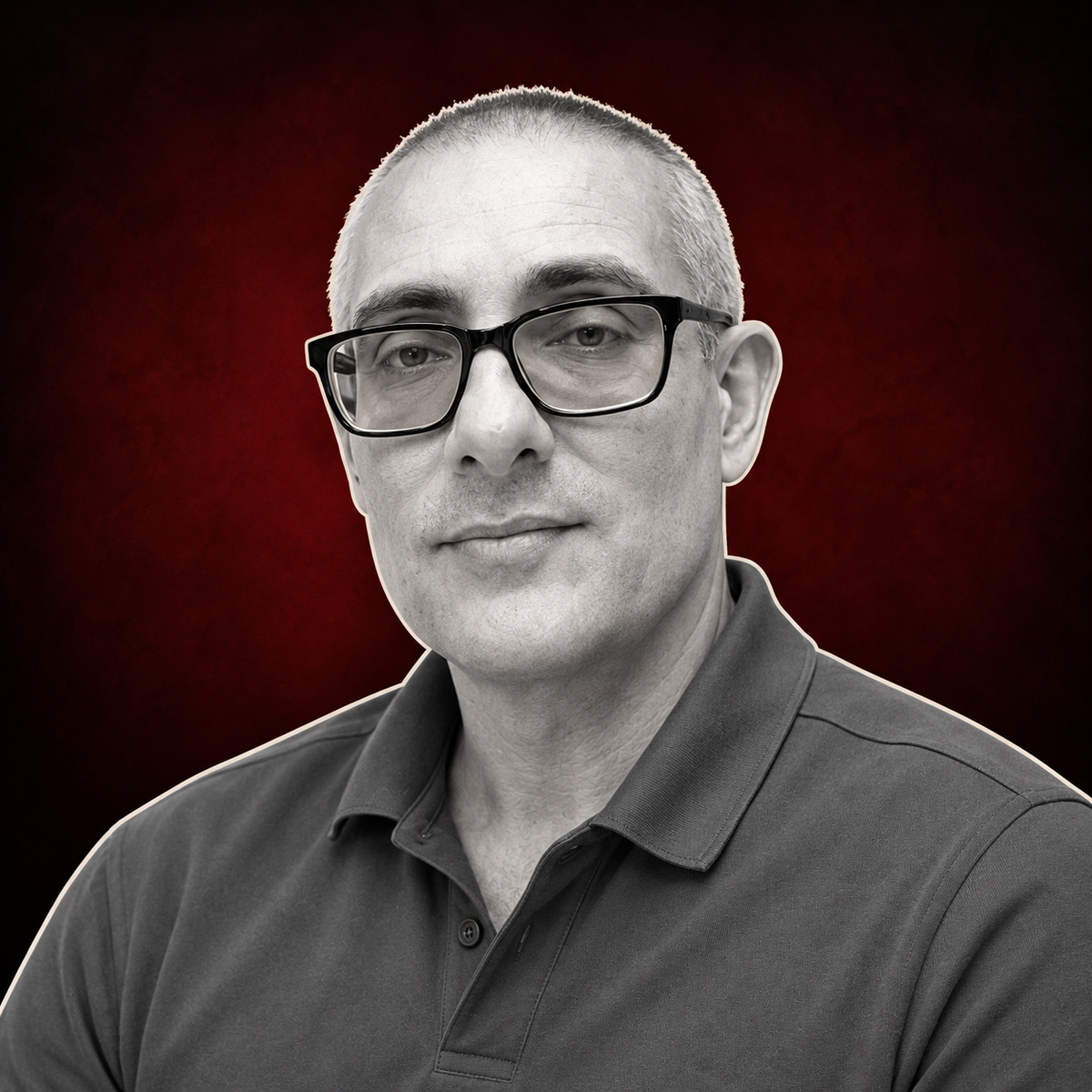
Deepak Saini is a health optimization and longevity coach and the founder of Deepak Saini Health, based in Calgary, Canada, where he is a member of the Speakeasy Mastermind Calgary chapter. A former CPA who built his career in the corporate world, he turned to health coaching after his own transformation, which he describes as losing 100 pounds, recovering from a back injury, and seeing an undiagnosed autoimmune condition go into remission through lifestyle changes. Deepak works with entrepreneurs and corporate leaders through his TIIME methodology, which combines testing, inner game work, implementation, a mastermind component, and re-evaluation. He is open that he is not a medical doctor and positions his work as coaching, with a focus on data from blood work, microbiome, metabolite, and DNA testing. Deepak also hosts a podcast where he interviews health industry leaders.