
Dr. Sam Shay, a functional medicine practitioner and stand-up comedian, argues that health is the fifth freedom entrepreneurs forget to protect. Building on Dan Sullivan's four freedoms of time, money, association, and purpose, he explains how founders lose their health by a thousand small cuts: later bedtimes, extra coffee, faster food, and skipped social time. His remedy is a mindset shift most business owners already understand. Budget for your health the way you budget for a fractional CFO, and work with a numbers-driven practitioner. Sam lays out where to start, beginning with a one-time genetics test that delivers data for life, then a lifestyle review built on his 10 pillars of health, then gut testing. He also walks host Eric Berman through his own Oura Ring to show which numbers matter, and shares why a gene result explained the chronic illness he developed as a kid. For founders who have been putting their health off until later, the conversation offers a practical order of operations.
In this episode, you'll discover:
- Why Dr. Sam Shay calls health the fifth freedom and says founders should budget for it like they budget for a fractional CFO
- How a one-time genetics test costing a couple hundred dollars can reveal your best-fit diet, caffeine sensitivity, and food vulnerabilities for life
- The layered testing roadmap Sam recommends, moving from genetics to gut testing before hormones, mitochondria, and environmental toxins
- What Oura Ring users should actually check, including real time asleep instead of the sleep score, oxygen saturation, and daily step count
- How Sam's 10 pillars of health, from brain and hormones to bedtime and sleep, help prioritize lifestyle changes for busy entrepreneurs
Episode Summary
Dr. Sam Shay opens with a problem most entrepreneurs will recognize. Founders start out hustling through 10-, 12-, and 14-hour days, then hire, then manage growing complexity, and somewhere along the way they quietly trade away their own health. Sam describes it as death by a thousand cuts: going to bed five minutes later, then 20, then 30; adding another half cup of coffee; cutting one workout; upgrading to slightly better fast food. Sleep is usually the first casualty, followed by social time, which he argues is a nutrient just like food and water. Sam is clear that he speaks as an entrepreneur who has made the same trade, not from an academic distance.
His central frame borrows from Dan Sullivan's four freedoms of time, money, association, and purpose. Sam adds a fifth, the freedom of health, and argues that without it, founders struggle to build the other four sustainably and struggle to enjoy them once they arrive. He cites Joe Polish's line that when you have your health, you have a thousand priorities, and when you don't, you have one. Host Eric Berman adds why founders delay: they spend on things with visible ROI, while health improvements, like the slow damage before them, are hard to see in real time. Eric also points to entrepreneurs who finally reach success in their fifties and sixties with their health too damaged to enjoy it.
Sam's most practical advice is to budget for health the way a business budgets for accounting. Just as most companies rely on a bookkeeper, CFO, or fractional CFO who reviews the numbers monthly, he suggests working with a numbers-driven health practitioner and treating the cost as a recurring line item with an initial onboarding outlay. Sam says effective diagnostics and tracking have become affordable at nearly every level, and that there are low-cost strategies for founders who are still financially stretched. He also distinguishes Western medicine, which he describes as built for emergency and crisis care, from functional medicine, which combines Western diagnostics with diet, nutrition, and lifestyle interventions to move people from chronic to normal and normal to optimal.
From there, Sam lays out a sequence. He recommends starting with a genetics test, usually a cheek swab, because for a couple hundred dollars you get data that will not change. He says it can show whether you are better suited to keto, paleo, Mediterranean, or high-carb eating, and whether you carry genes tied to caffeine-induced anxiety, sugar cravings, or sensitivities to alcohol, gluten, and dairy. His own story makes the point. Sam says he has two copies of the AMY1 amylase gene out of a possible 20, yet his parents, both psychiatrists, put him on a high-carb, low-fat diet at age six, which he links to the chronic illness that eventually led him to functional medicine.
Next comes lifestyle analysis, which Sam compares to the business rhythms founders learn in groups like EO. His framework is 10 pillars that all begin with B, ranging from brain and hormones and bowels and digestion to bugs and bedtime. He says bedtime and sleep is usually a top-three priority for entrepreneurs. For labs, Sam names five categories: genetics, gut, hormones, mitochondria, and what he calls the weird stuff, such as metals, mold, and hidden infections. He usually recommends a broad-spectrum gut test after genetics, which he says screens for around 40 hidden infections, beneficial bacteria, digestion, inflammation, and intestinal permeability.
The final stretch gets hands-on. Sam walks Eric through his Oura Ring, telling him to ignore the sleep score and check when he actually fell asleep, noting that people misjudge their bedtime by about 40 to 45 minutes on average by his calculation. He recommends a pulse oximeter for more precise overnight oxygen data and treats daily steps as the simplest movement metric, adding that movement is literally a nutrient for the brain. Eric shares that blood-test-based supplements turned him from the sickest person in his house into the least sick. The episode closes with Sam's clean, observational comedy about life on the spectrum and his view that Speakeasy helps entrepreneurs stay current and less isolated. Taken together, the conversation gives founders a practical, prioritized way to treat health as a business asset.
Big Ideas Discussed
Budget for Your Health the Way You Budget for a CFO
Dr. Sam Shay's core argument is that founders already know how to protect something valuable: they hire accountants, bookkeepers, and fractional CFOs who review the numbers, spot trends, and make projections. He wants entrepreneurs to apply the same logic to their bodies by hiring a numbers-driven practitioner and treating health as a monthly budget line, with an upfront onboarding cost followed by ongoing maintenance. Framed that way, Sam says, health stops feeling like one more burden on the to-do list and becomes an investment that fits the entrepreneurial mindset.
The stakes come from what he calls the fifth freedom. Sam extends Dan Sullivan's four freedoms of time, money, association, and purpose by adding health, arguing that it is both a prerequisite for building the business sustainably and a requirement for enjoying what you built. Eric Berman names the trap that keeps founders from acting: health gains are rarely visible right away, so waiting a little longer feels safe until it becomes a crisis.
Start With a Genetics Test Because the Data Lasts for Life
When Eric asks where to begin, Sam's answer is a genetics test. He explains that for a couple hundred dollars, usually through a cheek swab, you get data that never changes, which makes it a one-time investment rather than a recurring expense. Sam says the results can indicate which diet suits you best among keto, paleo, Mediterranean, or high-carb, and flag genetic tendencies around caffeine, alcohol, gluten, dairy, sugar cravings, and even avoiding green vegetables. He adds that genetics can inform supplement choices, whether you are suited to fast-twitch or slow-twitch exercise, and whether weaker collagen genes mean you should prioritize recovery.
Sam's own result shows why he takes this seriously. He describes the AMY1 gene, which makes the carb-digesting enzyme amylase, as cannons lining a fort against charging carbohydrates. People can have up to about 20 copies; Sam says he has two. As a child he was put on grains, boxed cereals, and skim milk, which he calls the exact opposite of what he needed. His point for founders is practical: caffeine-driven anxiety or an ill-suited diet may be dragging performance down in ways no business fix will solve.
Pair a Lifestyle Framework With a Layered Lab Roadmap
Sam describes holistic care as combining two views: lifestyle analysis, which looks at you from the outside in, and lab testing, which looks from the inside out. For lifestyle, he insists on working with someone who uses a real framework, much like a business coach or an EO forum. His own is 10 pillars that all start with B: brain and hormones, bowels and digestion, body structure, burst exercise, biotoxins and inflammation, bio-nutrients, breakfast and routines, bothers and unresolved trauma, bugs and hidden infections, and bedtime and sleep. Sam says he asks about 20 questions per pillar, then prioritizes based on each client, and that sleep usually lands in the top three for entrepreneurs.
For labs, Sam names five categories: genetics, gut, hormones, mitochondria and metabolism, and the weird stuff such as metals, mold, and environmental toxins. After genetics, he usually recommends a broad-spectrum gut test, because if you cannot absorb your food, even excellent nutrition will not help. From there, he says symptoms guide the next step, such as a mitochondria test for constant fatigue and sugar cravings.
Read Your Wearable for Real Bedtime and Steps, Not the Score
Many founders own an Oura Ring or Whoop and rarely use the data. Sam's advice is to skip the sleep score entirely and look at when you actually fell asleep, along with total sleep compared with time in bed. He says that by his own calculation, people overestimate how early they go to bed by roughly 40 to 45 minutes on average, a gap he calls cartoonish self-deception. He also notes that wearable sleep data may not match across devices but tends to stay proportional within each device, so trends are still useful. For overnight oxygen, he suggests a pulse oximeter of around $50 as a more precise option than a ring.
On activity, Sam separates exercise from movement and says daily steps are the best place to start. His two easiest strategies are getting a pedometer, which a ring already provides, or getting a dog. He walks his French bulldog for at least half an hour each morning. Drawing on his nine years as a functional neurologist, Sam describes movement as a literal nutrient for the brain, which he calls an entrepreneur's most important asset.
Questions We Answer in This Episode
What is the fifth freedom Dr. Sam Shay says entrepreneurs overlook?
Dr. Sam Shay calls health the fifth freedom. He builds on Dan Sullivan's four freedoms that draw people to entrepreneurship: freedom of time, money, association, and purpose. Sam argues that without the freedom of health, it is hard to build a business sustainably enough to earn the other four, and hard to enjoy them once you have them. He says founders usually lose it gradually through later bedtimes, extra caffeine, skipped workouts, faster food, and less social time.
Why does Dr. Sam Shay say founders should budget for their health?
Dr. Sam Shay says budgeting for health turns it from an afterthought into an investment that fits how entrepreneurs already think. Just as businesses rely on accountants, bookkeepers, or fractional CFOs who review numbers and make projections, he recommends working with a numbers-driven health practitioner. Sam suggests treating it as a monthly line item, with an initial outlay for analysis and onboarding followed by ongoing maintenance, rather than viewing it as money thrown away.
How is functional medicine different from Western medicine, according to Dr. Sam Shay?
Dr. Sam Shay describes Western medicine as designed for emergency and crisis care, moving people from crisis to stability. Functional medicine, as he defines it, combines the best of Western diagnostics with natural medicine's diet, nutrition, and lifestyle interventions, using lifestyle changes rather than drugs and surgery as the solutions. Sam says the goal is not only prevention but restoration and optimization, moving people from chronic to normal and from normal to optimal.
Why does Dr. Sam Shay recommend a genetics test as the first health test?
Dr. Sam Shay recommends starting with a genetics test because it is a one-time investment that gives you data for life. He says it typically costs a couple hundred dollars and is often done with a cheek swab. According to Sam, results can suggest whether keto, paleo, Mediterranean, or high-carb eating suits you, flag genetic sensitivities to caffeine, alcohol, gluten, or dairy, and identify vulnerabilities such as sugar cravings or weaker collagen genes that affect injury risk.
What are Dr. Sam Shay's 10 pillars of health?
Dr. Sam Shay's 10 pillars of health all begin with the letter B: brain and hormones, bowels and digestion, body structure, burst exercise and movement, biotoxins and inflammation, bio-nutrients, breakfast and routines, bothers such as stressors and unresolved trauma, bugs such as hidden infections and mold, and bedtime and sleep. Sam says he asks about 20 questions per pillar and prioritizes them for each person, and that sleep is usually a top-three priority for entrepreneurs.
Which lab test should entrepreneurs consider after a genetics test?
Dr. Sam Shay says the next step after genetics is usually a broad-spectrum gut test, though not always. He contrasts it with a standard gastroenterology test that checks for 10 to 12 infections, saying a thorough gut test screens for about 40 or more hidden infections, roughly a dozen beneficial bacteria, digestion, gut inflammation, gluten antibodies, and intestinal permeability. Sam's reasoning is that if you cannot absorb your food, even high-quality nutrition will not deliver its full benefit.
What should Oura Ring users look at instead of the sleep score?
Dr. Sam Shay tells Oura Ring users to ignore the sleep score and look at the time they actually fell asleep, plus total sleep compared with time in bed. He says that by his calculation, people misjudge their bedtime by about 40 to 45 minutes on average. Sam also suggests checking average oxygen saturation, though he considers a roughly $50 finger pulse oximeter more precise overnight, and he names daily steps as the simplest activity metric to track.
How does Dr. Sam Shay suggest busy entrepreneurs get more movement?
Dr. Sam Shay suggests tracking daily steps and building in small habits rather than relying only on workouts. His two easiest strategies are wearing a pedometer, which an Oura Ring already provides, or getting a dog to walk. He also mentions desk treadmills costing roughly $50 to $300, micro walks, and parking farther away. Sam, who says he was a functional neurologist for nine years, describes movement as a literal nutrient for the brain.
Full Episode Transcript
Read the Full Episode Transcript
Death by a Thousand Cuts and the Fifth Freedom of Health
Announcer: Welcome to Inside the Speakeasy podcast, the private room where today's sharpest founders, innovators, and renegade thinkers come to trade the ideas that move industries. This show is brought to you by HighLevel, the AI-driven business operating system trusted by over 2 million businesses to help automate, scale, and create real leverage. HighLevel isn't just a tool. It's the engine behind some of the most agile and high-performing teams on the planet. If you're ready to streamline everything, amplify your reach, and actually build a business that works for you, you're in the right place. Visit www.GoHighLevel.com/Speakeasy-Mastermind-Promo to get an exclusive 30-day trial for being a listener of the Inside the Speakeasy podcast. Enjoy the show.
Dr. Sam Shay: When you have your health, you can have a thousand priorities. When you have poor health, you have one priority.
Eric Berman: Entrepreneurs spend half of their health to gain wealth and then spend half of their wealth just to get back their health. And it's just so crazy. We don't have to be doing this if you just follow a proper health blueprint. And I'm so, so excited to bring on my good friend, all the way out from a place that I'm starting to fall in love with, Denver, Colorado. Boulder, Denver, Colorado. We're going to bring on Dr. Sam Shay, DC, FMCP. He is a functional medicine expert, speaker, and stand-up comic who helps people get out of survival mode and reclaim their energy, focus, and vitality through personalized functional lab testing and his signature Neuro-Harmony Model and genetics testing. This is some cool stuff. I love this topic because I'm in the grind. I'm not focused on my health as much as I should be, and I know I'm feeling it. And I know so many of my friends and colleagues in the entrepreneurial world follow the same model, and we need to level this crap up. So excited. Thank you so much for coming on, Dr. Sam.
Dr. Sam Shay: Thanks, Eric. It's good to see you.
Eric Berman: All right. Well, that statement, which obviously I didn't come up with myself, you helped me craft that opening line over there about spending half of the health to generate wealth and then spending half of the wealth to get back their health. I mean, let's lean into that for a minute.
Dr. Sam Shay: So entrepreneurs have a unique health... they have an extra special variable when it comes to their health and their longevity and their well-being and their performance. So on the one hand, entrepreneurs usually start out with hustle, and we work the 10-, 12-, 14-hour days, and there's a lot of motivation, perhaps some desperation, to try to make all the connections, do all the things in the business. And then when we do all the things and we get to the place where we can hire, then we're now doing less of the things, but we're managing more people. And then as there's scaling and complexity increases, we may be trying to handle the complexity with better systems and more people, but it's still a thing that we're navigating. And usually, whatever happens is that we are the ones that sacrifice our own health. And it could just be by a thousand cuts. So going to bed five minutes later, then five minutes later again, then 20 minutes later again, then 30 minutes later again. And then it's like, you know what, I'll just have an extra half cup of coffee in the morning. I'll just be able to work it out. Or I'll work out one thing less. I need fast food right now, or I just need faster food. And if I just upgrade from these food bars up to elk jerky sticks, it's still fine because it's now high-quality fast. Usually sleep is the first thing to go. Then it's social time. We're so busy, we kind of forget that socialization is a nutrient, just like water and food and sleep. And the big theme is that there's this constant kind of eroding away over time in the name of creating and then maintaining and expanding and optimizing the business. And the optimization of the business usually comes at the devolution of one's self-care. And one of the greatest entrepreneur coaches alive, Dan Sullivan, came up with the four freedoms, why people become an entrepreneur, the four reasons why. The four freedoms: freedom of time, freedom of money, freedom of association, and freedom of purpose. However, there is a fifth freedom, and that is the freedom of health. And without that freedom of health, number one, it's hard to create the business over the long term in a sustainable way to create those other four freedoms. And when you do finally achieve a place in your business where you have those four freedoms, if you're lacking the fifth freedom, it's hard to enjoy...
Eric Berman: Right.
Dr. Sam Shay: ...the four freedoms you worked so hard for. So it's hard to have time, purpose, association, and finances when you're struggling with health. His primary colleague, Joe Polish, says, when you have your health, you can have a thousand priorities. When you have poor health, you have one priority. It's something equivalent to that. What I want to... look, I'm an entrepreneur myself. I'm not saying this from an academic standpoint or some top-down, judgey way. I have done this, ironically enough, as someone in the natural, holistic, functional health space. I deeply understand this impulse to self-sacrifice in the name of the business, to just keep throwing my own time and vitality into the endless, bottomless maw of running a business.
Budgeting for Your Health Like a Fractional CFO
Dr. Sam Shay: My one framework I want to offer to people who are entrepreneurs listening to this is not, oh God, now I have to add more health biohacky stuff to the other laundry list of running my business, like it's a burden or it's an afterthought. I want to change that mindset. This is probably one of the most practical things you can walk away with if you're listening to this, and we're barely five minutes into it. So the most practical framework and mindset to approach your health is budget for your health. And you want to go based on the numbers. Like you hire accountants, bookkeepers, CFOs, fractional CFOs, whatever. A fractional CFO will do amazing things for you. Even if it's just once a month, you're checking in and looking at the data, looking at the numbers, making future projections, whatever it might be. What you want to have is a practitioner that is also numbers-driven.
Eric Berman: Right.
Dr. Sam Shay: Just like your accountant, just like your CFO. And you need to have someone... yes, some people can do this without a CFO. They can run their business. That's rare.
Eric Berman: Right.
Dr. Sam Shay: It's really rare.
Eric Berman: Well, I mean, you call it CFO. Any level of accounting, right? Bookkeeping.
Dr. Sam Shay: Any level. These people usually have a massive background, or they are the rare people who are just numbers-talented. And those people exist, and they may be the exceptions, and they may get up on a TED Talk and pound their chest about how amazing they are and blah, blah, blah, whatever. That's not the norm. What I would say is think of your health as a budget item that you allocate on a monthly basis. Obviously, if you're going to hire us, you've got the monthly maintenance thing, but then you've got this initial kind of outlay to get all the analysis in, the initial time, the onboarding, all the rest of it. And just think of it like that. And suddenly it fits within the entrepreneurial mindset of, okay, it's not an expense, like, oh, I'm just throwing money away. No, you're investing in yourself. Literally, the point of being an entrepreneur is to invest in yourself and your freedom, your time, your association, your purpose, all that.
Eric Berman: I'm going to re-emphasize some things you said that hit hard for me as you're talking. A couple of things I love that you said earlier, and I'm trying to relate to this as an entrepreneur and what gets in the way. First of all, I love your analogy of death by a thousand cuts on the health side. And you're right, little things kind of add up and you don't notice them. And it kind of goes with my second point: a lot of the things we're used to as entrepreneurs, and where we invest money, tend to be the stuff with visible ROI. I do these things and I get a return. I hire an accountant and I get to see the books. Even if you're hiring and doing functional medicine and all that, you are seeing results and data and numbers, because you're seeing blood tests and all that kind of stuff. But where I think I, just using me as an example, and I imagine others, get held up is it's hard to see the progress visibly made sometimes. Or people don't realize that you are making progress, because just like you don't see the death by a thousand cuts on the negative side, sometimes you don't see the positive right away, although you will, I assume, in due time. Therefore, it's hard to mentally make that leap. You say, wait a second, there's no stress, it'll be okay if I wait a little bit longer. And a little bit longer tends to continue to go longer, longer, longer, and then now you're in a bad situation. And the other thing I love that you said too: I hear so many people that have the stories of grinding, grinding, grinding. Now they're in their fifties and sixties, and they had a big success story. They finally made it, and all of a sudden, like you're alluding to, after all that work to get there, their health is shit, and therefore they never even get to enjoy it. What a tragedy. You work your ass off and you can't even enjoy the stuff you did.
Dr. Sam Shay: Yeah. I mean, Steve Jobs being one of the ultimate examples of that, and many, many others, and the cliche of having the heart attack at 54 or whatever it might be. And the good news is that right now we're in a really good space where really effective diagnostics and tracking and communication have been demonetized and democratized enough that it's highly affordable to entrepreneurs at basically every level. And for people that are really, truly struggling financially as an entrepreneur, and they're in that very uncomfortable space of, I'm going to sacrifice my business to try to keep my health up, but I want to invest in my business, but then if I don't, my health... it's kind of a real uncanny valley of what to do. The good news is that there are a lot of strategies you can employ that are very low cost. And then for people who are able to invest more, they're able to get easier and easier number metrics to then optimize in an easier and easier way. So for people that...
Eric Berman: Yeah, let's dig in, Dr. Sam. I'm glad you're saying that, because maybe let's talk through some levels. I really appreciate that. So where would you start, and how would you level it up?
Western, Natural, and Functional Medicine Defined
Dr. Sam Shay: Sure. I'm going to start with the definitions. There's Western medicine, there's natural medicine, and there's functional medicine. The philosophy of Western medicine was created out of the emergency care and triage of World War I, whether you're missing an eye or a limb or you're bleeding out. And you didn't have missing eye syndrome or bleeding arm disease. The symptom was the problem. It was an emergency.
Eric Berman: Right.
Dr. Sam Shay: And so philosophically, Western medicine is there to get people from crisis to stability, and that's very needed in an emergency situation.
Eric Berman: Correct.
Dr. Sam Shay: Natural medicine is more like getting people from chronic to normal and then normal to optimal. It's not emergency care. Functional medicine is utilizing the best of Western medicine lab diagnostics with the best of natural medicine's lifestyle, diet, and nutrition interventions. So we're leveraging the technology, but our solutions are not drugs and surgery. Our solutions are lifestyle changes prioritized according to the data. That's the difference.
Eric Berman: That's the key word, right? Preventative health, right? That's a lot of what I hear.
Dr. Sam Shay: Well, it's not even just preventative health. It's actually restorative and optimization. That's the difference, because some people are already worn down after 10, 20, 30 years of being an entrepreneur. And if you have an eye towards prevention, you're still in this mindset of Western medicine, that the disease is forthcoming, better brace for it. You're creating a bit of psychological learned helplessness, that you are anticipating something awful. It doesn't mean people aren't going to die eventually. Obviously, there is a light at the end of the tunnel, and eventually it's going to be a train. But they've changed the definition of blood sugar so that what used to be called normal is now called prediabetic. You see how sinister that is? They've changed the physiology to, you're pre-diseased, aren't you happy? So if you're working within a disease model, that's Western medicine, which makes sense in an emergency care situation. But from a functional standpoint, we're looking at going from chronic to normal, normal to optimal, and you can be anywhere on that continuum. The good news is that we have the testing, the data, the numbers to figure out where you're at. If you're starting out, there's a couple of ways to get numbers. Again, if you're going to be an entrepreneur, you want to make data-informed decisions.
Eric Berman: Right.
Why a Genetics Test Comes First: Data for Life
Dr. Sam Shay: You really start there. The simplest way to start out, if you're looking at functional testing, is to do a genetics test to identify the genetics of your optimal diet and the genetics of health and longevity. The reason why I say genetics first is because if you spend a couple hundred bucks, you get the genetic data for life. For life. And it's a one-time investment. It's not changing. This is you. This is who you are. Now, how you live is interpreted through your genetics, and the real health expression will change. You can have twins with identical genetics who have completely opposite lifestyles, and they'll have different health outcomes.
Eric Berman: Of course, yeah.
Dr. Sam Shay: The genetics are the same. But at least if you know what your genetics are, you know how you can live optimally and also where the weak points are in your genetic chain that may break if you yank on that chain long enough.
Eric Berman: Love it. So start with the genetics test. Blood test?
Dr. Sam Shay: It's not necessarily blood. It's more cheek swab. I mean, there are some blood genetics tests, but in functional medicine, there are multiple different tissue samples. You can do blood testing, which is one window into the body. Different tissue samples are like different ways to analyze your business.
Eric Berman: Got it.
Dr. Sam Shay: So some people will look at cash flow. Other people will look at inventory turnover. And you can have like 10 different ways you measure the health of your business. And so the same thing with your health. You can have blood tests that are one window. You have genetics testing through cheek swab, which is another window. Urine testing is another. Blood is like the fuel in the car; urine is the emissions test. Blood is the quality of the fuel; urine is what was used.
Eric Berman: Got it. Like the emissions test.
Dr. Sam Shay: Some tests combine blood and urine, like mitochondria testing, to check: do you have the nutrition going into your factory to generate energy, and then how is that factory operating, because we're checking the smokestack out of that factory.
Eric Berman: Right.
Dr. Sam Shay: And that smokestack is your urine. And then you've got hair analysis. I usually check just for specific heavy metals. You've got stool testing to look at gut absorption, gut inflammation, gut infections, gut beneficial bacteria. You can also have saliva testing to check for cortisol, hormones, et cetera, et cetera. So like having multiple different analyses available for your business, functional testing provides an array of different windows into the business of your body, so to speak. So if you're going to start... when someone's new in business and they hit a certain plateau, I don't know, 50K, 75K, 100K, it's now complex enough that you really need someone to look at it. So you start out ideally with a genetics test because you get the data for life. And I'll just give some examples of what you can learn from it. You can now learn genetically, are you best suited for keto, paleo, Mediterranean, or high-carb?
Eric Berman: Wow.
Dr. Sam Shay: You can now test for this. You can also test for your food triggers. Are you sensitive to... and I'm risking losing people by saying this... are you sensitive to caffeine?
Eric Berman: Right, right.
Dr. Sam Shay: So people can have, like me, caffeine-induced anxiety and depression. That's genetic.
Eric Berman: Wow.
Dr. Sam Shay: I just recorded an hour-plus podcast on the three genes that control people's caffeine-induced anxiety and depression. And some people in business are like, I run on caffeine. Yeah, you may run on it, but you also may be really winding up your anxiety and your depression. And that's caffeine. It's not necessarily your business that's spiking your anxiety levels. It may be your caffeine. That'd be important to know, if you have caffeine sensitivity. Other examples are your genetic relationship to alcohol, your genetic relationship to gluten, to dairy, to food allergens. Also, are you genetically vulnerable to overeating, over-craving sugar, over-consuming sugar? And are you genetically vulnerable to avoiding bitter foods, which means you may be avoiding healthy green vegetables? And so all of these things, all of these genes that you can test for, are practical. If someone has a gene that means...
Eric Berman: Dr. Sam, as you started saying this, it's just... thank you. It's so interesting. You look back on life in the Western culture, as you said. And I imagine, I mean, you're such a pioneer and you're so into this world, an ultimate goal for you and people in your space is, this is the stuff that should be mandatory. Like for kids. This data is arguably more important than any other data that we have, yet insurance ain't paying for it. It's just so backwards. And I look and think, well, why would insurance companies want to pay for it? It's counterintuitive to the industries that make money off you being sick when you're essentially trying to optimize health for people. And as for my kids, right now five and three, I'm like, damn, I want to go get them genetic tested right now, because I can make their lives better their whole entire life. I can steer them in the right direction early.
A Two-Copy Carb Gene and a Childhood Diet Gone Wrong
Dr. Sam Shay: If I had done the genetics tests that I do with people now when I was five, my entire life and health and height and well-being would be completely different. In fact, my next comedy show is about what it was like growing up in the '80s as a child on a terrible diet and becoming chronically ill. How I became a functional medicine practitioner was because of that trajectory. My parents put me on the exact worst diet I should be on based on my genetics. In your body you have a gene called the AMY1 gene, which makes the enzyme called amylase that breaks down carbohydrates in your saliva when carbs first contact your saliva. It's a special gene analysis where you look not at the version of the gene but at the number of duplicates of it. So the best analogy I can come up with: imagine your gut is a fort, and the carbs charging the fort are Vikings. They're the Vikings in the analogy charging the fort. The number of copies of this gene that makes the enzyme is the number of cannons lining the fort. The more cannons you have, the more enzyme you make to mow down these carbs. Now, you can have up to about 20 copies of this gene, so you can have up to 20 cannons lining the fort. And it's additive. So someone with five cannons makes approximately half as much as someone with 10 cannons, which is half as much as someone with 20 cannons, which is 20x someone with one cannon, or like someone with two cannons. So the number of cannons matters more than the version of the cannon, which is what the other gene tests check for: the version of the gene, not the duplicates. When I tested my carb tolerance, out of 20 gene copies I had a grand total of two. Second lowest possible. And my parents put me on a high-carb, low-fat diet at age six because they thought my cholesterol was too high at age six. And they put me on, you know, just grains, breads, boxed cereals, skim milk, I Can't Believe It's Not Butter, ramen noodles, SpaghettiOs, and all that stuff.
Eric Berman: Exact opposite of what you needed.
Dr. Sam Shay: Exact opposite of what I needed. And, you know, in their defense, my parents didn't know anything about nutrition, because after all, they were both medical doctors.
Eric Berman: Wow.
Dr. Sam Shay: Even better: psychiatrists. I can't make that up.
Eric Berman: So back to my point, though. I mean, did I hit on it? If people understood this, why is this just not mandatory? Okay, I'm going to go in and get my child a vaccine... and we don't want to go down that rabbit hole. But why isn't it just, hey, let's just get every child a genetics test at the age of X, so you put them on the right path?
Insurance Incentives, Cheap Calories, and Bread and Circuses
Dr. Sam Shay: Well, one of the reasons why entrepreneurs really understand and push the world forward is because we understand human incentive structures. The thing that certain people with certain philosophical and political dispositions don't understand is human incentives. Human incentives drive everything. And so if you create an incentive structure where you increase your power, your profit, your prestige by making and keeping people sick, whether intentionally or unintentionally, then you don't do things in order to empower people to stay well. There are certain insurance companies that have realized that there are two models of health insurance. One is, we want to keep you alive for 80 to 100 years, and you keep paying us for 80 to 100 years, and we'll do everything we can to ensure that you have the information to stay as healthy as possible, because we want you as a low-cost, month-over-month paying client over decades. That's one model. The other model is, we will charge you as much as possible, and we won't give you any information, and then when you get really sick and break down, as soon as you need our help, we're going to gaslight you and deny you and make it difficult for you to claim, because we're interested in short-term extraction as opposed to long-term mutual benefit. So there are different insurance models out there. And depending on what insurance model you're in... Dan Sullivan talks about this. He has an insurance company, I don't know which one it is, where they want you to have all the genetics testing and the functional testing and all the rest of it, because they know they want you around for decades.
Eric Berman: Right.
Dr. Sam Shay: Then there are just the sheer incentives, that they're externalizing the costs but internalizing the profits. We really want to make sure that food is really, really cheap and available, and calories are cheap and abundant, which makes sense, especially since post-World War II, when there was food rationing and all the rest of it. The fear of starvation was really real. So then you have this explosion of the fertilizer industry, and then dwarf wheat was developed, for which there was a Nobel Prize given out, where now you can have all of these calories through grains. So you prevent acute starvation, but you now create all this chronic disease from people having emptier and emptier calories.
Eric Berman: Right.
Dr. Sam Shay: And then you want to prevent your citizenry from revolting, so you provide bread and circuses, which is a sinister term from the Roman era. You just have to keep the populace entertained and full, and they won't revolt. So you give everyone TV and lots of grains that are cheap, and noodles and cereals, so no one is starving and everyone is endlessly entertained.
Eric Berman: Right.
Dr. Sam Shay: And there is a perverse logic to that. But again, health is not the objective. Maintaining order is. Maintaining order and profits and all that kind of stuff. So I don't want to necessarily continue down this direct conversation, because it gets pretty dark pretty quick. But...
Eric Berman: Yeah, I know. I get it. I'm with you on a lot of these things, and it's sad. I think, fortunately, I definitely am seeing a movement. The circles you and I are in, and Speakeasy and others, I think you have a lot of people that think more cutting-edge. I just feel like there's the light starting to shine, the movement starting to happen, where I think people's eyes are opening up to this whole other world, being with people like you and seeing people like you make a big impact in their lives. And I think you're helping point out the difference and the importance of that.
Eric Berman: Everything you hear on this show comes back to one idea: proximity. I wrote the book on it, literally. Proximity Pays, my bestselling book, available now at proximitypays.com.
Lifestyle Analysis and the 10 Pillars of Health
Eric Berman: I want to talk more about the layers of what people can do with an increasing amount of investment.
Dr. Sam Shay: Cool.
Eric Berman: So there's the genetic testing, layer one, and then...
Dr. Sam Shay: So there's genetic testing, and then there's lifestyle analysis. So in lifestyle... there are numbers in your business; that's like testing. So there's genetic testing, then there are layers of testing, but I want to pause on testing and just quickly pivot to lifestyle analysis. So lifestyle analysis is like, okay, what are your habits in your business? Do you block time? How do you think about it? If anyone's in EO or EOA, you've got your quarterly things, your weekly things, your daily things. What's your rhythm? What's your lifestyle? What are your habits that are promoting and supporting the growth of your business without burning out something else in the background or in the foreground? The same thing applies also to your health. Do you have a methodology for lifestyle analysis? Do you have a blueprint, a framework for lifestyle analysis, so that your habits are congruent with your health goals? Ideally, you have someone who's more expert analyze your business. I mean, that's why if you're in EO or EOA, you go to the quarterly things and you talk to your peers and you hire a coach and all these other things. So in health, it's no different. You want to have someone that has a framework for analyzing your lifestyle, just like in business you need a coach that has a framework for analyzing your business.
Eric Berman: Right.
Dr. Sam Shay: In the health space, there are many different frameworks. There's the triangle of health, the four steps of this, the pyramid of that, the inverted hypotenuse of wellness. I don't care. It's some framework. Mine personally is called the 10 pillars of health. And I picked 10 simply because I met a guy who had 37, and I said, good luck with that, but no one can learn it. And then people say, oh, there are only four pillars of health: it's sleep, stress, exercise, and diet. And I'm like, yeah, you're missing six others. I mean, it's a good place to start. Those four are great, but there are six others. Ten was a number people could rock. It's not too big and it's not too simplistic. Whether it's 10 of this or seven of that or four of this, just make sure you go to someone that has a framework, a structure. My 10 pillars in brief: it's brain and... one, brain and hormones. They all begin with a B. Brain and hormones, that's one. Pillar two is bowels and digestion, and it's pillar number two for a reason, because that's my subtle sense of humor. Pillar number three is body structure: untreated injuries, head trauma, and bad dental work. It's the physical body. Bad dental work will ruin anyone's day. Just ask anyone who's had it. That's pillar three, the physical body. Pillar four is burst: exercise, movement, and recovery. Burst is the only exercise-related word I could come up with that starts with a B, so forgive me there. It's exercise, movement, recovery. That's the fourth pillar. The fifth pillar is biotoxins and inflammation, anything toxic that weakens you. Pillar six is bio-nutrients: diet and nutrition. Pillar seven is breakfast and routines, morning and evening routines. That pillar came out of working with night shift nurses. They were some of the sickest people I've ever worked with.
Eric Berman: Wow.
Dr. Sam Shay: Because of the human Tetris the hospitals would put them through, their routines were just all over the place. So your morning and evening routines, that's the seventh pillar. Pillar eight is bothers: stressors and unresolved traumas. Pillar nine is bugs: infections and mold.
Eric Berman: Okay.
Dr. Sam Shay: Pillar 10 is bedtime and sleep.
Eric Berman: Got it.
Dr. Sam Shay: Ten pillars. Now, in my practice, I've got 20-odd questions per pillar, and then we organize and prioritize the pillars based on what you uniquely need. Pillar 10 is bedtime for teaching purposes, but it's usually priority one, two, or three, especially for entrepreneurs.
Eric Berman: Yep, yep. I hear that a lot.
Dr. Sam Shay: Yep. So the big picture is: have a coach that has a framework for lifestyle. Lifestyle is looking at you from the outside in. And then a framework for labs, which is looking at you from the inside out. You combine both of those together. Now that's holistic medicine: labs and lifestyle, from the inside out and from the outside in. That is holism. And we have that available today, because the inside-out stuff was a little tricky before Western medical lab technology.
Eric Berman: Right.
Gut Testing and the Five Types of Functional Labs
Dr. Sam Shay: So that's the lifestyle piece. I just want to pause there, if you have any things you want to discuss. So we've got genetics, we've got lifestyle, and then we're going to hop back over to labs. Okay, so then what are the next layers of labs? Ideally, you have someone that has a framework for both, and they can tell you, after talking with you, okay, these are the priorities for your labs, and looking at your lifestyle, these are the priorities for your lifestyle. But in a generic sense, if we're talking about increasing investment, what's the next step after a genetics test? Usually, not always, usually the place to go is checking your gut health. In the framework for labs, there are five types of labs. There's genetics, there are gut labs, there are hormone labs, there are mitochondrial metabolism labs, and then there's the weird stuff. The weird stuff being metals, mold, environmental toxins, hidden infections, viruses, things you don't want.
Eric Berman: Okay.
Dr. Sam Shay: Mitochondria and metabolism, that's looking at your nutritional status, your blood sugar, your mineral status, fatty acid status, amino acids, vitamins, nutrients, how well you're handling your blood sugars, liver health, et cetera. Your mitochondria, which is how well you generate energy from eating food. And if you don't do it well, then you get super tired really easily and don't recover easily. So that's mitochondrial metabolism. Hormones: there are adrenal hormones for stress and stress management, thyroid hormones for energy, [unclear], and longevity. Then there are sex hormones, and then there's melatonin for sleep. And then for gut health, you've got three types of gut tests. You've got the SIBO, which is small intestinal bacterial overgrowth. That's more of a breath test, if people get super bloated from eating anything or they're not feeling like they're absorbing their nutrients. Then there's food intolerance testing among your gut tests. The most important one of the gut tests is a broad-spectrum gut test. This is different from a Western medicine gastroenterology test, where they usually check for 10 to 12 infections, if you went abroad on vacation and got food poisoning. That's checking for only 10 to 12 really bad critters. A really good gut test checks for about 40 or so or more hidden infections, checks for about a dozen or so beneficial bacteria, like probiotics, checks whether you are digesting your foods, looking at your pancreas, your gallbladder, and it looks at gut inflammation, the gut immune system. Do you have gluten antibodies? Are you eating too much gluten and having an immune response? It looks at... the original term was leaky gut, but that term has been blackballed, and it's now called intestinal permeability. Do you have holes in your gut that are then creating absorption issues and potential autoimmune reactions? That's gut testing. Usually that's the next easiest step that's going to give you the most valuable information, because if you can't absorb your food, or you've got hidden infections in your gut, or you've got a leaky gut, then even the best-quality organic food and supplements are going to be less effective.
Eric Berman: Got it. Got it.
Dr. Sam Shay: Most of the neurotransmitters for your brain are made in your gut. In 2017 I went to a three-day conference on the gut and brain in Australia. There were some luminaries in the room from the gut-brain world. Those three days were nothing but mind-numbing science on the connection of gut and brain.
Eric Berman: Yeah, I'm hearing more and more about the gut stuff. I mean, I'm a believer for sure.
Dr. Sam Shay: Totally. So you have testing of the genetics, then gut, and then from there, it's really like, where are people at? Again, I'm speaking generically. People may have other higher priorities based on their individual situation, but generically, it's like, where are people at? Do they know they got exposed to mold or Lyme or some weird metal? Then maybe they need to go down the weird-stuff pathway and check for all the toxic stuff. Or they know their hormones are out to lunch, because they've got problems with libido or bizarre weight gain, or they've got signs of thyroid issues, like they're feeling cold all the time, or they're losing the outside third of their eyebrows. Or they're just feeling slow and tired throughout the day, or they're lacking energy and brain focus, and they're just constantly craving sugar all the time. Maybe it's a mitochondrial metabolism test. You can actually triage based off of that. Ideally, you have a professional triaging with you to figure out what the next highest priority is. I would say that from a functional testing standpoint, if you were to start anywhere, it would be genetics, then gut, in that order. Those first two things.
Reading Oura Ring Data: Real Bedtime, Oxygen, and Steps
Dr. Sam Shay: And then if you're needing other ways to track, I mean, there are so many biometric devices out there, whether it's Oura Ring or Whoop. There are like 10 other competitors out there, all with their pluses and minuses. And some people may say, well, that data isn't always accurate, and all that. Well, you know what? I have three separate ways I track sleep, and they do not track evenly against each other. They track proportionally within themselves. So one may say I got an hour and 45 minutes of REM sleep, and one may say I got 45 minutes of REM sleep. But on the days that I got, according to one, only an hour of REM sleep, it usually shows up that I had like 20 minutes of REM sleep in the other. So the ratio's about the same.
Eric Berman: So I'm an Oura Ring guy, and I have it, but I rarely look at the data. So what data should I be looking at? And I want to go back to the testing in a minute. But what data do you recommend for those that have, let's say, an Oura Ring?
Dr. Sam Shay: Oh, easy. That is so easy to share.
Eric Berman: Okay.
Dr. Sam Shay: The number one thing to look at with the Oura Ring is the time you actually go to bed, not the time you think you go to bed.
Eric Berman: Okay.
Dr. Sam Shay: And if you're hearing a little bit of intensity in my voice, that's on purpose, because the level of self-gaslighting and self-deception that people have over their self-concept of when they go to bed is cartoonish. I have actually calculated this. It is an average of between 40 and 44 minutes that people self-deceive.
Eric Berman: Wow.
Dr. Sam Shay: On average, when they write and report what time they think they went to bed versus what their Oura Ring says, it is about 40 to 45 minutes off on average.
Eric Berman: Okay.
Dr. Sam Shay: That is a level of self-deception that is just so bizarre.
Eric Berman: Sleep score, if I'm looking at it...
Dr. Sam Shay: Not the score. Not the score. No, no, no, no. Don't look at the score. Look at the time to bed, the time you fell asleep.
Eric Berman: Time to bed. Okay. I'm looking at it. I use the ring.
Dr. Sam Shay: Okay. So what you want is, you've got to scroll down. The things to look at are total sleep under key metrics, time in bed, and then you want to look at the bar at the bottom that says time asleep. And it shows you when you started and when you woke up. It's the one with the white bars, the light blue, the medium blue, and the dark blue.
Eric Berman: Yeah. Okay. It's movement, that one? The awake, REM.
Dr. Sam Shay: It's time asleep. It's under detail.
Eric Berman: Yeah. And it's like a bar graph. It goes up and down.
Dr. Sam Shay: Yeah. It's right above the average oxygen saturation. So when you look at that, that's where to look at what time you actually went to bed, and how much. And then you want to look at total sleep, how much time you were asleep versus time in bed. And then other things that are useful to look at are average oxygen saturation. Now, ideally, if you want to get your true oxygen saturation, you get a USB or battery-powered pulse oximeter you put on your finger that Bluetooths to your phone to track your oxygen saturation, like second to second, over the night.
Eric Berman: I think the Oura Ring checks it maybe once every five minutes or something.
Dr. Sam Shay: Yep. The Oura Ring is an approximation. Because if you're having too much of a drop in your oxygen, you're having apnea. So the Oura Ring... it's not the best device for it. It's really not. You can get a $50 USB rechargeable pulse oximeter that kind of straps to your finger and then wires all the info to your phone at night.
Eric Berman: Nice.
Dr. Sam Shay: That's better. That's a better one just for that thing. But if you are dropping in oxygen, your brain is suffering. That's bad.
Eric Berman: I think I have a good score there, so I'm all right. I'll be okay. I'm at 95% there, and I had a good sleep score yesterday. I knew I had a podcast with you today, Sam, so I made sure I had at least a good one.
Dr. Sam Shay: Okay, I'm glad you're not pandering to your guests. The next thing is, go back out of the sleep score and go to your activity.
Eric Berman: Yep. Oh, boy.
Dr. Sam Shay: The most important thing to look for in activity, for people to get started, is simply number of steps.
Eric Berman: Okay.
Dr. Sam Shay: Like, if you were to start somewhere... other people look at, rightly, zone one, zone two, zone three, and all that. But if you're going to start somewhere... I make a distinction between exercise and movement. That's a really important distinction. Exercise, you look at your weightlifting, sprinting...
Eric Berman: I am the patient that you'd say, Eric, take some calls, walk around the neighborhood. You're sitting at your desk too long.
Dr. Sam Shay: Yeah. Or take the calls while you're walking around the neighborhood, and just train your clients to do that. Or you get a walking desk.
Eric Berman: That's what I need to do.
Dr. Sam Shay: You can buy a little desk treadmill for anywhere from $50 to $300 these days. I mean, when COVID hit, the desk treadmill industry exploded. The number one number to look at out of all of that is steps, as a general metric for movement. Now, the two best ways to increase your movement: number one, get a pedometer. The Oura Ring functions as one. Or number two, get a pedigree. A dog.
Eric Berman: Walk your dog. Yeah.
Dr. Sam Shay: Okay. Get a ring or get a dog. Those are the ways to increase your steps.
Eric Berman: Okay. I like it.
Dr. Sam Shay: My little Frenchie, for so many reasons, she's been one of the most wonderful additions to my life. One of them is that I'm healthier with her, because I walk in the morning with her for at least a half hour, and we get our movement in. Now, is that 10,000 steps? No, but it's certainly a big chunk of it.
Eric Berman: Yeah.
Dr. Sam Shay: And getting it in is really critical, because movement is not just about, oh, it's blood circulation or whatever. No, movement is a nutrient to the brain. I'm not being hyperbolic or metaphorical. I'm being quite literal. Movement is a nutrient. Proprioception feeds the brain. Proprioception... I used to be a functional neurologist for nine years. This was before I switched to 100% virtual concierge care. You can't do neurology over Zoom. I'm sorry, it's just not a thing. So you need to have movement to feed your brain. If you're an entrepreneur, your brain is your most important asset. So movement is a nutrient, just like oxygen, just like nutrition, just like stimulation. So when you get an Oura Ring, look at the steps as a generalized metric for movement, and then work in strategies to walk, to include micro walks. And even something as silly as parking farther away in the parking lot, to force you to get an extra 100 steps there and 100 steps back. Little things add up.
Eric Berman: I love that analogy, Dr. Sam. I think that's actually even just a psychological thing. Stop getting frustrated that you have to park so far. You should actually be happy about that, because you're going to get an opportunity to take care of your body.
Dr. Sam Shay: Totally, in a very real sense. My father is now dying of dementia. And this man abhorred exercise. Hated it. Hated it with every fiber of his body. And I look at him as a cautionary tale in what's happened to him health-wise. I used to be annoyed every time I forgot something and had to go back up the stairs to get it. Now I'm like, cool. I am happily getting any extra exercise.
Blood Work, Custom Supplements, and Genetic Solutions
Eric Berman: A couple more things. I know I've taken a lot of your time. One is, I don't know if I did this out of order or not, but I'm just thinking of my experience, and I know others have done similar. I didn't follow your advice necessarily. I did get a test, and my early approach was I just did some blood testing to figure out how my body reacts, like what supplements I need and what antioxidants work better for me. And then I was able to get custom supplements based on the blood test. Where does that fall? Because I didn't hear you say that in your five. But was I just...
Dr. Sam Shay: So it did, in certain places, but there's a difference. So you're conflating, and it's not your fault. You're in the lay public. You're not in the medical world necessarily. You're conflating blood tests with metabolism, as if that's the only thing blood does. And that's not necessarily so. You can get blood tests for Lyme disease and infections. Blood is a tissue type from which you can get different types of data. Just like when you go into QuickBooks, you can get lots of data from the same data set, lots of analysis. So blood is a tissue type that is really good for specific types of information, like hormones, CBC, anemia, iron, et cetera. And so blood is very useful for a certain swath of types of testing. A urine test is ideal for certain things and not ideal for others. A cheek swab is ideal for some things, not for others.
Eric Berman: So me getting a blood test to then adjust the supplements I'm taking, not necessarily a bad thing...
Dr. Sam Shay: It's not necessarily a bad thing. It just depends on what the blood tests were testing for, was the analysis accurate, and then were the solutions offered from that analysis correct for your current situation and your health goals?
Eric Berman: Yeah, yeah. And I'm just saying, I feel like that is a small piece of what you teach, because you're opening my eyes up to so much more. And you've inspired me, because I just did that one thing, and just doing that one small thing, with somebody that gave me the data and read my data and gave me recommendations, has completely turned around how much I used to get sick. I was always the sickest person in my house, and I have two little kids, and now I'm the least sick, which is crazy, thinking about how many times they come home with stuff they bring back from school. And I'm rarely sick anymore. And I've done a whole customized supplement plan based on my blood work.
Dr. Sam Shay: Yeah, and you can do that with genetics also. You can do that with gut testing also. So with the solutions: blood testing is great if it's the right things for the right person and the right solutions are offered. Genetics is great if you're testing the right genetics with the right analysis and the right solutions are offered. Changes in diet, changes in supplements, changes in exercise. With genetics, you can get a very clear readout of, here's my ideal genetic diet. Here are the top five ideal genetic-based supplements, because genetically you're more likely to be deficient in these particular things, so here are the supplements you need to shore up your genetic weaknesses. And then from an exercise standpoint, you can genetically determine: are you fast-twitch, slow-twitch, intermediate-twitch, meaning what type of exercise is better suited for you. You can genetically determine if your collagen genes are weaker, so you're more prone to injury. So then, if you're more prone to injury genetically, it doesn't mean don't exercise. It means you must prioritize recovery and safety as much as you do the exercise itself. And then for gut testing, you can analyze, okay, do I have any specific gut infections interfering with all of my metabolism and absorption? Do I have the right beneficial bacteria balance to make all the neurotransmitters? Do I have genuine issues with gluten that I need to be honest with myself about, to get rid of it? How is the inflammation in my gut, which will then create inflammation everywhere in the body? Taking an anti-inflammatory may be really useful, but why do you need the anti-inflammatory in the first place?
Eric Berman: Yeah. Yeah. Okay. No, I love that.
Comedy, Life on the Spectrum, and Edutainment
Eric Berman: I'm just looking at the clock here, because I do want to hit the last thing before we go: stand-up comic. I mean, we have all this amazing genius coming out of Dr. Sam here, as we can hear, and at the same time, he's got the comical side. How did that even come about? Can you share a little bit of that side of you?
Dr. Sam Shay: I got into comedy the unusual way: through tragedy. It was actually the same thing, growing up in the '80s. I was so unwell and had such a hard time in school, being on the spectrum and having, shall we say, not very attuned and attentive parents. I retreated to watching sitcoms growing up. Now, sitcom literally means situational comedy, right? Where you have the same cast of characters with the same personalities thrown into different situations every week. That's The Simpsons. That's Family Matters, with Carl Winslow and Urkel. Even though he's now a deeply, deeply problematic figure, that was The Cosby Show. That's Al Bundy. The sitcoms were... it's just like music. If you are exposed to music deeply when you're younger, you have the rhythm ingrained in you. I was exposed to comedy deeply and formatively when I was younger, and that continued. So it became a part of me. And so comedy right now is my advocacy work. People can go on YouTube and put in Dr. Sam Shay, NeuroSpicy, all one word, NeuroSpicy, and you will find my free one-hour comedy show called NeuroSpicy: Love, Life, and Comedy on the Spectrum, because it's the one hour I wish I had 40 years ago, to share with myself and my family and the school and doctors and other gatekeepers in the community, to explain how my brain works and how I can better adapt to the normie world. And my next comedy show I'm writing is on what it was like growing up with chronic illness and all the terrible food I grew up with, and why I got into functional medicine, because it's the same hour I wish I had 40 years ago, to help explain why what happens with our diet and lifestyle and so on has such long-term ramifications for our health, and then practical things to do based on that. My comedy is clean and observational. There's no politics. There's no cursing. There are no gratuitous body fluid jokes. It was designed to bring people together. It's my advocacy and my educational work. I even did my one-hour show at the American Academy of Therapeutic Humor as a 2025 keynote. Same stage Patch Adams spoke at years ago. And this is for anyone listening that wants a really hilarious and educational keynote for your stage or your conference or your seminar. You can also reach out to me for that, because who would you rather have: a domain expert on stage, or a domain expert who's also a comedian?
Eric Berman: Edutain. We call it edutaining.
Dr. Sam Shay: Edutaining. Exactly. So comedy is education. It's also personally deeply therapeutic, because to really do really good comedy... a really good comic can summarize 10 years of experience into two sentences. The level of precision and concision required in excellent, excellent comedy can be mind-blowing. Like describing the '80s as equal parts nostalgic and sinister.
Eric Berman: You've got to go check out Dr. Sam's stuff online and get some good laughs.
Dr. Sam Shay: Yeah. There's a 12-minute highlight reel. If you want an easy version, I have a 12-minute highlight reel of my hour comedy show, NeuroSpicy. People can just start with that. That's a good way to sample it.
Speakeasy Community, Hot Seats, and Learning AEO
Eric Berman: Cool. And then my last question for you, and thank you so much for your time: you've been one of our leaders since the beginning of the amazing Denver Boulder chapter of Speakeasy. Just share what you've enjoyed about Speakeasy so far, for listeners who may not know about Speakeasy.
Dr. Sam Shay: So what Speakeasy has done is it's combined the social element that a lot of entrepreneurs are missing. We're kind of like lone wolves, or in our own little entrepreneurial ivory towers. And it's really healthy and nourishing and even fun to get together once a month with our colleagues who genuinely want to help each other. Entrepreneurs live a different life. And that's not a brag, that's not a better-than, that's just a reality. We have a different life we're leading as entrepreneurs, and we are better understood by fellow entrepreneurs, because there are things that we have to deal with that non-entrepreneurs simply do not deal with. And it's a lonely world as an entrepreneur. And not only does Speakeasy help with the isolation, it helps tactically. You now have this hive-mind opportunity when we do hot seats that really can help bust through a different layer, to help deal with the problem. And additionally, we've got an educational component that really keeps us on the forefront. The thing that's nice about Speakeasy is that we've got some true world experts in the field that are happily sharing their expertise, people you don't really get to hear unless you know the three podcasts these people are hidden away on. And we are staying up to date and staying current, because being an entrepreneur today is so overwhelming, with the level of shifting technology, that we need a community to keep each other current. It's not possible for one entrepreneur to stay current on their own. Literally two days ago was our monthly meeting, where we brought in a gentleman named Nick Morgan, who talked about the difference between AEO and SEO. AEO today is where SEO was 25 years ago: if you knew about it, you shot ahead. If you didn't, you got lapped. AEO is now where SEO was then. So if you know about AEO and you action it, now suddenly you can show up in the AI model summaries, because the clickable links are going away.
Eric Berman: That's right.
Dr. Sam Shay: So I didn't know what that meant. I hadn't even heard of AEO until I went to the Speakeasy Annual Conference in April, which was like a month ago. And so now it's like, okay, we're bringing in the AEO guy and we're learning.
Eric Berman: Love it. Love it. Well, I appreciate that, and on that point, thank you so much for all you've given to the community, and even to the podcast, sharing, just like you mentioned, some of your expertise and nuggets. I certainly got a lot of value from this, took notes, and I can't wait to get back with my family and probably be calling you to do some stuff. So thank you so much, Dr. Sam, and I look forward to talking to you again soon.
Dr. Sam Shay: Thanks, Eric.
Announcer: And that's a wrap from the Speakeasy Podcast. If something sparked for you, don't keep it to yourself. Share it, review it, and pass it to the one person who needs to hear this right now. Want in on the real mastermind? Tap the link in the show notes to apply. Until next time, keep scaling, stay sharp, and don't be the smartest one in the room.
Eric Berman: Hello. I've been noticing you've been following along to the Inside the Speakeasy podcast, and if the conversations I'm having out there resonate with you, then I'd like to invite you to apply to learn more about becoming a member of Speakeasy.
About The Guest
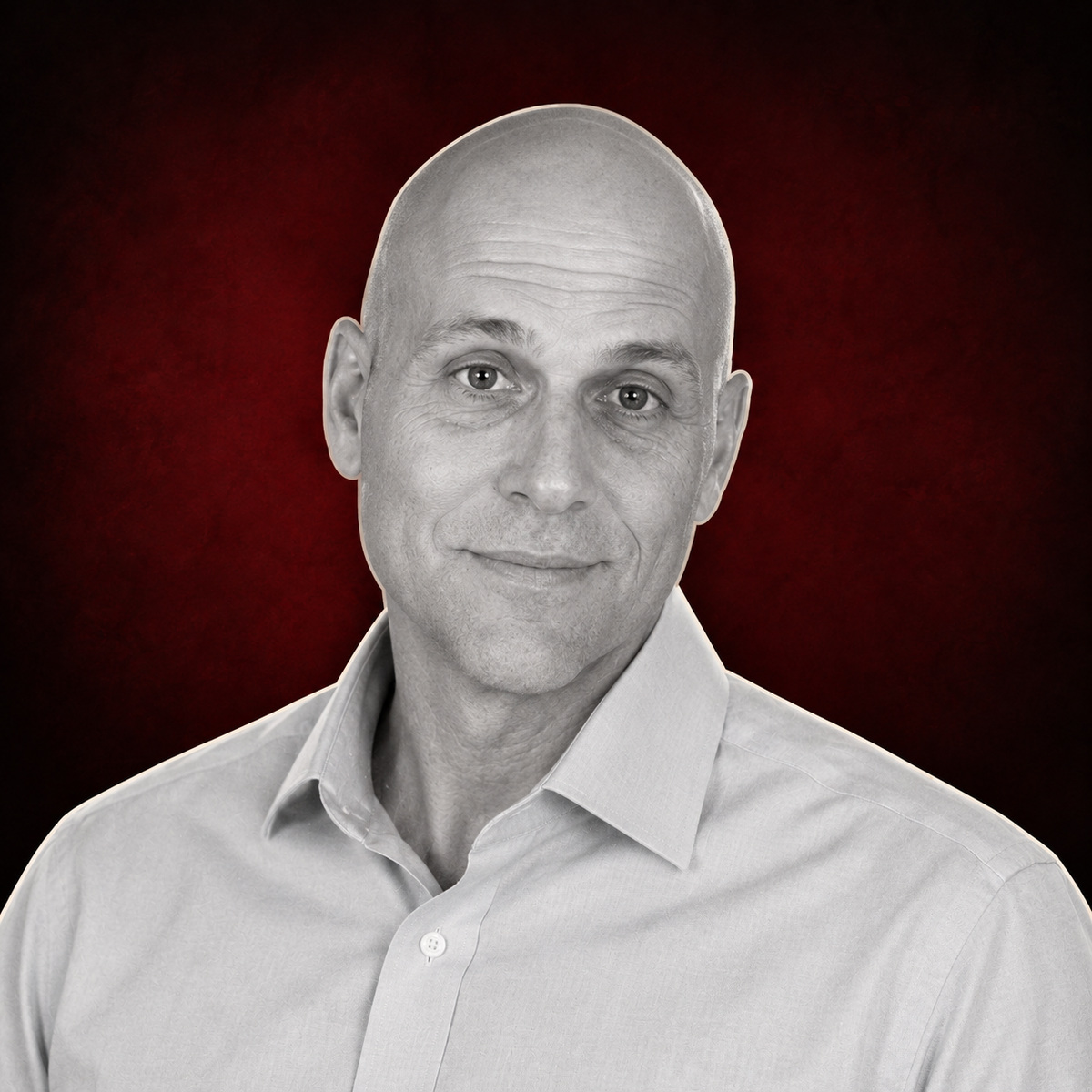
Dr. Sam Shay
Dr. Sam Shay, DC, FMCP, is a functional medicine practitioner, speaker, and stand-up comedian who helps people move beyond survival mode and reclaim their energy, focus, and vitality. His work centers on personalized functional lab and genetic testing, along with his signature Neuro-Harmony Model, and he says he now practices through 100% virtual concierge care after nine years as a functional neurologist. Sam organizes lifestyle care around his 10 pillars of health and treats clients' health the way a CFO treats a company's numbers. As a comedian, he created NeuroSpicy: Love, Life, and Comedy on the Spectrum, a free one-hour comedy show, and delivered it as a keynote at the American Academy of Therapeutic Humor's 2025 conference. He describes his comedy as clean, observational advocacy and education. Sam is based in the Denver and Boulder area of Colorado, where he has been a leader in the Speakeasy chapter since its beginning.