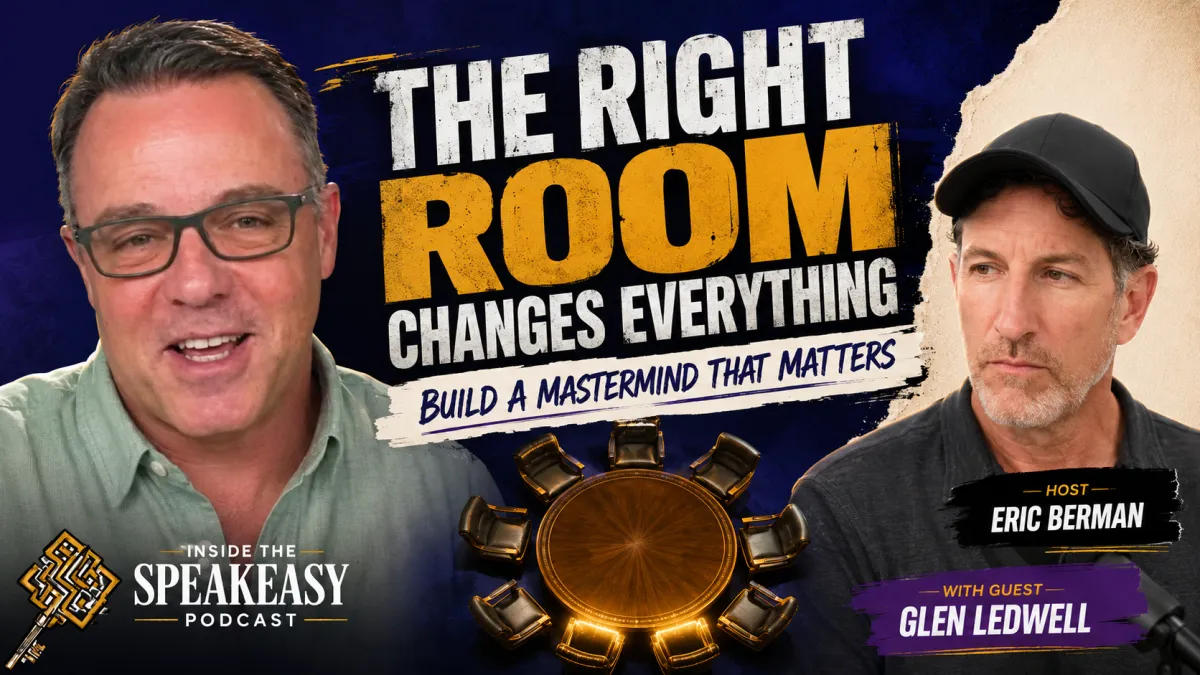
Glen Ledwell, founder of Mind Movies and the Flight Club mastermind, nearly never started Flight Club. In this conversation with host Eric Berman, Glen explains how a career built on joint ventures turned him into a self-described mastermind junkie, and why the fear of asking his own peers for money held him back until Tellman Knudson called his bluff. He breaks down the design choices behind Flight Club, from capping the room at roughly 60 people to engineering what he calls deliberate fun, and why he believes members pay as much for who is kept out as for who is in the room. Glen also shares the stage fright that once kept him from giving a wedding speech, the disastrous and hilarious keynote that cured it, and the hard lesson he learned about removing members who damage a community.
In this episode, you'll discover:
- Why roughly 60 members is the sweet spot for a mastermind: big enough to keep meeting new people, small enough to leave every event with real friends
- The one question from Tellman Knudson that finally got Glen past the fear of charging his own peers to join a mastermind
- How Glen screens every Flight Club applicant on a video call and why the "cool person" standard matters more than revenue
- What Glen learned from removing two members in the same year after a decade of never kicking anyone out
- How a fear of public speaking, a vodka-fueled first talk, and a quick fix from Michael Bernoff led to a rock-star stage at Underground
Episode Summary
Glen Ledwell came online about 18 years ago as what he calls a complete technophobe who still cannot type. What he discovered early was that technical skill was not what made money online; marketing was. At Mind Movies, the law-of-attraction company behind a digital vision board product that originally sold for around $100, Glen leaned into the skill that came most naturally to him: joint ventures. He credits years of running a nightclub and an events company in Australia with teaching him how people and egos actually behave, and says that understanding helped Mind Movies reach roughly $6 million in volume by its third year, driven largely by affiliate partners.
That joint-venture career turned Glen into a mastermind junkie. He joined Frank Kern's first mastermind as a newcomer and, by the time he launched his own group, was paying for four masterminds while attending about a dozen more each year. The return, he explains, rarely came from the agenda. It came from casual conversations with peers and top affiliates that could turn into a seven-figure opportunity within months. Still, he resisted starting his own group because he felt uncomfortable asking peers he respected for money. Roland Frazier, Mark Anthony Bates, and Tellman Knudson all pushed him, and Tellman finally settled it by asking whether Glen would pay Tellman to be in a mastermind, then saying he would pay Glen too, and would start one himself if Glen did not.
Flight Club launched about 11 years ago with roughly 60 percent of its early members drawn from Glen's top affiliates. He designed it as the mastermind he wanted to attend: the tactics and strategy he valued in one group, the fun and connection he enjoyed in another, and a more intimate format built around peers rather than a guru. Years later, Alex Mandossian described the result back to him almost exactly that way. Glen presents perhaps once a year and sees himself as a facilitator. After running groups of 20 to 100 people, he settled on about 60 as the sweet spot, arguing that larger groups lose intimacy while smaller ones lose energy and repeat the same faces.
The conversation turns personal when Eric asks about stage fright. Glen describes shaking through a speech at his own wedding and avoiding the stage for years until he realized it was hurting his business. His first talk, alongside business partner Natalie at Awesomeness Fest in Maui, required half to three-quarters of a bottle of vodka. When Yanik Silver then booked him for Underground, Michael Bernoff helped him with an NLP process and presentation tips. On stage, the slides failed, and Glen rescued the moment with a spy-themed "phone a friend" flask of tequila. Eric shares that he also froze once in front of new trainees and once opted out of presenting at a Brian Tracy event, and says he and Glen now act as each other's wingmen on stage.
The pair then explain how Speakeasy complements Flight Club. Flight Club is an intensive three-day format capped at about 60 people with no local meetup, while Speakeasy adds local chapters with slightly broader criteria: members must be savvy, marketing-centric entrepreneurs who can contribute, but they do not need to be doing millions of dollars. Glen says about half of Speakeasy's chapter captains are Flight Club members, and that Speakeasy was launched at a Flight Club event. Both stress curation. Glen interviews every Flight Club applicant by video call, says members are paying as much for who is not in the room as for who is, and recently removed two members after 11 years of never removing anyone. Eric adds that Speakeasy deliberately paused growth to protect quality.
For anyone building a community, Glen's advice is to stop making every decision about money, because one or two wrong members can sink renewals and the group itself. Eric argues that real community and peer relationships matter even more as AI reshapes business, and both close with the same message: if you are not in a mastermind, join one, and if you start one, build the group you wish existed and fill it with smart, successful, genuinely good people.
Big Ideas Discussed
Why 60 People Is the Mastermind Sweet Spot
Glen has run groups as small as 20 or 30 and as large as 80 or 100, and he has landed on about 60 as the ideal size, with 50 to 70 as the workable range. In his experience, groups above that start to feel like a small seminar, while groups below roughly 40 lose energy and leave members seeing the same faces at every event.
The reasoning is practical. A room of about 60 is big enough that a long-time member still meets around 20 new people at each gathering, yet small enough that, with deliberate curation and planned social time, a first-time attendee can leave with 20 to 50 new friends. Glen contrasts this with many larger high-end masterminds that offer dinner and drinks but no deliberate structure for helping people connect, which he believes is the biggest thing most groups miss. For an entrepreneur choosing a mastermind, his framework is a useful filter: the size of the room shapes the relationships you can realistically build.
Members Pay for Who Isn't in the Room
One of Glen's sharpest points is that people in a high-end group are "not always paying for people who were there, they're paying for who's not there." He argues that almost every expensive mastermind lets in a few successful but self-serving show-offs and takers simply because they qualify on paper, and that those few people quietly drain value from everyone else.
His safeguard is simple and labor-intensive: Glen does a video call with every Flight Club applicant and applies what he calls the "cool person" test. Eric describes how Glen frames it: would you want to spend three hours in conversation with this person, and will they contribute rather than only take? Speakeasy applies the same principle with broader entry criteria, and Eric notes that the team recently paused growth specifically to protect quality. Glen admits he was still nervous about removing two members last year, the first in 11 years, but he believes most group owners would keep them for the money and damage the community as a result.
The Question That Ended Glen's Fear of Charging Peers
Despite years of credibility and a strong network, Glen describes real imposter syndrome about charging the people he considered his peers, some of whom he thought were smarter than he was. Several well-known marketers had urged him to start a mastermind, but he kept hesitating. Tellman Knudson ended the debate by asking whether Glen would pay Tellman to be in a mastermind. When Glen said yes, Tellman replied that he would pay Glen too, and added that if Glen didn't start one, he would.
Glen says the reframe helped him recognize that the group served everyone, including himself. He was not trying to get rich from the mastermind; he wanted to be in front of his top affiliates three or four more times a year, and about 60 percent of early Flight Club members came from that circle. Even so, getting comfortable with pricing took him years. Eric relates closely, admitting he still avoids pricing conversations with friends and lets others handle them. For founders who resist charging peers, the episode offers a useful reminder that a group can create value for everyone in it.
Stage Fright Is Common, Even Among Confident Leaders
Few people who see Glen on stage would guess that he once shook through a speech at his own wedding. For years he told people he simply did not present, until he realized the fear was limiting his business while his company was encouraging customers to get out of their own way. He told friends who would hold him accountable that he would say yes the next time he was asked to speak.
The results were imperfect and memorable. His first talk took half to three-quarters of a bottle of vodka. Before his Underground keynote in front of five or six hundred peers, he met with Michael Bernoff in Scottsdale for help, and when the slides failed mid-presentation, a planned tequila flask joke saved the moment. Eric shares his own history of freezing and opting out of a Brian Tracy presentation, and both describe how having a trusted partner beside them on stage makes it easier. The lesson is less about technique than about deciding the fear is costing too much to keep.
Questions We Answer in This Episode
How many members should a mastermind have?
Glen Ledwell says about 60 members is the sweet spot for a mastermind, with 50 to 70 as a workable range. Around 80 or more starts to feel like a seminar, while 40 or fewer loses energy. At about 60, long-time members still meet roughly 20 new people per event, while newcomers can leave with 20 to 50 new friends.
Why did Glen Ledwell start the Flight Club mastermind?
Glen started Flight Club because he noticed that casual conversations with peers and top affiliates often produced major business opportunities. He wanted to bring those peers together several more times each year. He was not trying to profit from the mastermind itself, and about 60 percent of early members were his top Mind Movies affiliates.
How did Glen Ledwell get over his fear of charging peers for a mastermind?
Tellman Knudson asked Glen whether he would pay Tellman to be in a mastermind. When Glen said yes, Tellman said he would pay Glen too, and that he would start one himself if Glen did not. Glen says that exchange pushed him to launch Flight Club, although getting fully comfortable with pricing still took him years.
What does "paying for who's not in the room" mean in a mastermind?
Glen Ledwell believes members of a high-end group pay as much for the people kept out as for the people in it. Many expensive groups admit a few successful but self-serving takers who drain value from everyone else. Glen prevents that by interviewing every Flight Club applicant on a video call and applying a "cool person" standard.
What should a mastermind owner do when the wrong member gets in?
Glen Ledwell's advice is to remove them immediately, even though it is hard. He says one or two wrong people can ruin the group, hurt renewals, and cost more than their membership fees. After 11 years without removing anyone, he removed two Flight Club members last year, and Eric Berman says the community respected the decision.
How is Speakeasy different from Flight Club?
Flight Club is an intensive three-day mastermind capped at about 60 people with no local meetups. Speakeasy adds local chapters and broader entry criteria: members must be savvy, marketing-centric entrepreneurs who can contribute, but they do not need to be doing millions of dollars. Glen says about half of Speakeasy's chapter captains are Flight Club members.
How did Glen Ledwell overcome his fear of public speaking?
Glen committed to accountability partners that he would say yes the next time he was asked to speak. His first talk, at Awesomeness Fest in Maui, took half to three-quarters of a bottle of vodka. Before speaking at Yanik Silver's Underground, Michael Bernoff helped him through an NLP process, and Glen says he has largely overcome the fear since then.
Full Episode Transcript
Read the Full Episode Transcript
A Cold Open and a 15-Year Friendship
Glen Ledwell: I had all this fear around it. How can I ask peers for money? Everyone's got a bit of imposter syndrome. I'm like, all right. And Tellman Knudson, God love him, he was at one of my masterminds anyway. But Tellman, I said, man, look, I got to be honest with you. Like, I got the problem with asking his friends money. And he just looked me right in the eye and he said, well, would you pay me money to be in a mastermind? I said, yeah, absolutely. He goes, well, I'd pay you too. He goes, if you don't do it, I'm going to do it.
Eric Berman: Welcome to the Speakeasy podcast, where the real conversations happen behind closed doors with the boldest entrepreneurs, creators, and growth minds in the game. No fluff, no filters, just the raw strategies, personal stories, and mental models that move the needle. I'm Eric Berman. Now let's get into it. In today's episode, I'm so excited to have a conversation with my partner at Speakeasy mastermind, Mr. Glen Ledwell. And today we're going to cover, really, how Glen has built a over 10 year, extremely successful mastermind, all the things he learned about masterminds, what's worked, what hasn't worked, what makes his mastermind formula unique for success, and how it's actually woven into what you see at Speakeasy Mastermind today. And we're also going to cover some interesting things you may not know about Glen, including how he actually had fear of public speaking and, and it was quite a story and how he got over it. And I'm going to share some of my stories in the same area as well. So excited today, and let's get started. All right. Glen Ledwell, my partner in crime. I'm so pumped to have you on today's podcast. Probably should have had you first, but, you know, I didn't want to practice on you, Glen. I want. I need to impress you because, yeah, I didn't want you to be saying, like, what are we doing this podcast for? So I had a little bit of experience under my belt. So good to see you today, mate.
Glen Ledwell: You too, brother.
Eric Berman: Wow. So we have a lot. So many cool things we can get into today. And I think certainly with you and I riffing, we're definitely going to be hitting a lot of stuff around masterminds and networking and building communities because that, you know, you and I are so in it right now between Speakeasy and Flight Club. And for those of you that are listening for the first time. Yes. Glen is one of my partners here at Speakeasy and he's been a brother from another. Another mother side of Australia, other side of the world. We've been buddies for probably what now 20, how many years now, Glen?
Glen Ledwell: Oh, 15. Mate, look. Yeah, 15.
Eric Berman: Travel the world together, had some fun and for a long time now let's just actually do a quick history less and then we're going to get into some good stuff here. Because Glen, you know, I met you back in San Diego. You lived in San Diego for a while. You had your company you're running for a while at Mind Movies was headquartered out of San Diego. And when we started our first before it was a worldwide thing of Speakeasy and we had just our local San Diego meetups with ASRF and Kings and a bunch of others. You were core part of that group. When we had our monthly meetups in.
Glen Ledwell: Pre-Speakeasy, it was called the San Diego Downtown Mastermind.
Eric Berman: Remember all of us marketers and that was the best name. So. So talk me through. You know, we went there and you were doing first of all just a little background because people that don't know you, you're one of the top marketers out there. You've been in the world of marketing forever and you built up a really killer business, been around for years. Mind Movies before. Just talk a little bit about that, what you're doing there and some of the core things you've been able to learn from that.
Building Mind Movies on Joint Ventures
Glen Ledwell: Yeah, I think from the beginning of Mind Movies, I mean that was 18 years ago. I got online 18 years ago and really not knowing anything like complete technophobe know. I mean literally I'm still the least technical person in the world but what I realized very quickly was that it was really you didn't have to be a technical genius, you know, you needed no marketing. They were the people making the real money. And you know, I did but again I didn't. I couldn't even type. I still can't type like so getting to how we ended up both of us as mastermind junkies, what did I just naturally gravitate to was JVs so much. So I ended up setting criteria that are still people still go by the personal development field because it was the wild west back then, man. Like yeah. The good and the bad thing was it was hardly any smart marketers. So I could be king. That was cool. But there was only a handful of real business savvy marketers in the personal development space, so. But I got very good at Joint ventures. I realized, you know, that's kind of my personality. So positioning yourself as the expert, you know, being the leader in a group, I naturally gravitated to that. You know, the first product launch and whatnot. I, you know, got a lot of affiliates. I've always understood that relationship, what we get out of relationships, it's all about relationships. We hear it over and over again. But I guess I didn't even realize how much I knew, you know, because I'm like, I'm the new guy. But you know, fast forward a couple of years where we had massive success. I mean we, in our first three years, I think the, the third year we did 6 million in volume, you know, from the get go like. And it was all affiliate crazy. When you think of those who don't.
Eric Berman: know about Mind Movies, what are you selling there? Just real quick.
Glen Ledwell: Mind Movies is a personal development company, very law of attraction based direct to consumer. Our first product was called Mind Movies. That's why the company is called Mind Movies, which is video creation software, basically a digital vision board. So you drag and drop positive present tense affirmations, music, and you make this little video of your perfect life. From then of course, we've got dozens and dozens of programs now. We have certification program, we have everything now because it's been 18 years. Way back then we had one product that we're selling for 100. Oh by the way, when we're doing that kind of money, there was a hundred dollar program.
Eric Berman: Oh my gosh, you're selling some serious volume there. A lot of it was just from the JV land and that was just great, 90% of it. I remember back in that day, I mean JVs were just kind of like becoming the thing within the personal development. I think even us at Brian Tracy, we were probably one of your earlier partners. And what's interesting again because you and are so similar in so many ways, like you probably look back and realize that prior to this work and being a professional in the world of marketing, in the world we play in, you had natural instincts of being a good, a charismatic good communicator. You love networking, you love being, you know, you're extroverted being around people. Even back in the days of going all the way back, Glen, and I'm sort of cheating and sharing of running a club out there. Back in the day in Australia, I think it was.
Glen Ledwell: Yeah.
Eric Berman: So I mean you were a people person, right?
Glen Ledwell: Yeah. And you know, it's funny, like when I was in that nightclub for years and I had an events company as well like, and believe me, the worst business business in the world. But I didn't realize how much I was learning about human behavior all that time and so many things in my first few years in this world when I actually, I realized I'm actually a pretty good marketer naturally. What does that mean? I think it's because I understand people, I understand human behavior. Where did I get all that? Dealing with all the different personalities in the nightclub, you know, all the egos and like unbelievable lessons there. You never know what you're learning, how much it's going to benefit you down the track. But it really did.
Eric Berman: And that was just natural for you because it became easy because you were good at it. And you look in hindsight and you're all of a sudden realizing why are we doing all this JV stuff? And it's just as you're good at it. I mean, and you didn't let you look back and say that was a natural skill that was better than a lot of others at the time. And so therefore you took advantage of that and got some success.
Becoming a Mastermind Junkie
Eric Berman: So now you're doing Mind Movies for a while. And I remember this because you started this incredible high level marketing mastermind. And I remember you, you talking to those years ago and it invited me to the first one and, and looking back, I think what's 11 years now, Flight Club Masterminds was birthed back in the day and I remember you started doing that. I've been an OG there forever. So walk me through you go from Mind Movies and obviously you got this JV skill that's tremendous. So how do you decide to go launch a mastermind?
Glen Ledwell: Well, the thing was I was a junkie from the beginning. I, Frank Kern, his very first mastermind, might have even be his only mastermind actually he ever did. I joined when I was a dead set newbie and I saw the value in that, you know, being around people lift, elevating your game. There's a lot of things we can get into to do with that. Geez, we're paying all this money that we can't afford. We better damn make sure it's, you know, better make sure it's worth it. Yeah, but elevating. So I was all I was right from the get go, I was okay, masterminds all the way. Now fast forward what, five, six years and you know I got a lot of reach and a lot of credibility mainly through joint ventures. Right. I really become a mastermind junkie. Like I mean I think when I started Flight Club. I was in four. Four paid ones. I used to go to another dozen or so a year.
Eric Berman: I mean, let's talk about that before I started to cut you off. But that's scary. You're spending. I mean, I remember going through that and I'm sitting there saying, there's like a 25k mastermind 50. So you said, I'm going all in on that. You leaned into it and you had success. How did you. How do you know you had success? Like, how are you measuring the ROI to do that?
Glen Ledwell: Yeah, I mean, because every time you'd be, you know, with peers, oh, what are you doing? Oh, doing this amazing thing. The thing I really realized, like, this is kind of leading up to why did I start one? I wasn't interested in starting one. I just love going to them. I wish I could go to my own now. It's very different running it, but. But I saw the need where even though I was going to these masterminds, what I realized, my own peers. Who was that? They were my top affiliates. Right. Who I was good friends with. A lot of them. Right. A lot of them. I'd realize every time we'd get together socially, once a year or whatever, we'd just have a conversation and something that might make us a million bucks that next few months, like, it was just insane. So I realized making myself be in front of my peers is going to really help my business. Apart from all the other milestones in learning all this other cool stuff, Keeping up the date, I thought, I need to bring my peers to me or I need to go to them.
The Push That Finally Launched Flight Club
Glen Ledwell: So that was the first idea. Why did I start one? I was reluctant to start one. I had all this fear around it. How can I ask peers for money? Like, it was crazy. I'd been around a while, I was pretty well known, I had a lot of credibility. But you still don't back yourself. Right. Everyone's got a bit of imposter syndrome. I'm like, oh, I'm spending all this money. Like, what if I do that? And how am I going to ask people for money? Like, how am I going to ask people I think are smarter than me? And Tellman Knudson, God love him, he was at one of my masterminds. I used to do this one a year for like an affiliate prize. And I never forget it. This is just before I started it. And he goes, why don't a few people. Roland Frazier used to say to me, why don't you start one? Mark Anthony Bates Tellman Knudson And a few of these people are pretty big names anyway. But Tellman, I said, man, look, I gotta be honest with you. Like, I got the problem with asking peers, friends, money. And he just looked me right in the eye and he said, well, would you pay me money to being a mastermind? I said, yeah, absolutely. He goes, well, I'd pay you too. He goes, if you don't do it, I'm going to do it standing and everything, right? And I went, all right.
Eric Berman: He knew how to get you going all right. So that. Yeah, he did.
Glen Ledwell: He did. And I guess I'll be the first one to join. Blah, blah, blah, blah, blah. So I put the wheels in motion. So I had bit of pressure, to be honest, knowing that it would be good for me, like, good for my business. I wasn't doing it to make a lot of money out of the actual mastermind. I still don't. But I saw the other benefits of having peers together. So in the beginning, probably 60% of Flight Club was all my top, top affiliates. So, I mean, talk about win, win, win, win, win.
Eric Berman: Got it.
Glen Ledwell: You know, making a bit of money to bring all my absolute peers to be in front of me three or four times more a year. I mean, it was a slam dunk, no brainer, now that I look back on it. But at the time, that was frightening, you know, Absolutely frightening.
Eric Berman: Yeah, I can imagine. And it's funny you say that, because one of the lessons I learned when I was, you know, running the agency for a while was I actually I could totally relate to that pricing thing. I still get scared because part of being that JV Biz Dev is all relationships, right? So how do you act like it's almost that weirdness to ask your friends for money? I sort of combated that because I fired myself out of pricing. Even today, like, I'm like, I don't know, like, no matter what, I'm like, I talked to somebody else, you know, even, you know, Speakeasy. It's Glen's fault, you know, it's pride. I don't. You know, I blame you, you know, when you're not on the call, it's.
Glen Ledwell: Good having a partner.
Eric Berman: I'm never. I try to get out of all pricing conversations because you're right. It's a weird feeling.
Glen Ledwell: Yeah. It took me a long time, like, a long time to get comfortable with it. It really did. It really did. Like, I'm talking years and years, you know?
Designing the Ultimate Mastermind
Eric Berman: All right, so I want to go back again. I want. I want to take me back to you know, 11 years ago, you're doing your first one and, you know, what's the vision like? What do you see? As you've been to all these masterminds, you're spending a lot of money a year going, what do you see as. Other than these benefits for you to bring in these people? But what about the world of. Because a lot of what we want to cover today is just the world of masterminds. Like, what's out there, what's different? What did you see? What did you want to bring to the table to make Flight Club what it is even today? You know, being a success 11 years later?
Glen Ledwell: Yeah, well, you know, the idea was, I'll do this, I'll do a test, but if I do it, I want it to be what I consider the ultimate mastermind, a real mastermind. I'm going to explain what I mean by that. But. And what I did, I basically, I was in a few different ones, like I said. And I can say this now because Alex Mandossian, about six years ago, when he joined Flight Club, I mean, he's the godfather of masterminds, right?
Eric Berman: Yeah.
Glen Ledwell: He said to me, Glen, you know what you've done here? You've got the tactics and strategies of War Room, the fun and the, you know, all that, you know, connection of Mavericks, which I was in both those and the networking of Genius. Now, I hadn't been in Genius, but I kind of got what he meant. And I went, you're not going to believe, when I started Flight Club, this is exactly what I thought, but I didn't tell anyone. The tactics of strategies of War Room, the fun, all the fun connection stuff we do Mavericks. Yep. But I want it more intimate. I want to focus more on connection. That's exactly what I thought to do. And I thought, okay, so it's so funny when Alex repeated that back to me five or six years later, but that's, again, what I thought. Okay, so I got to bring the right people. And again, this is no judgment to any mastermind, but I think most of the really good ones, not all, but most, I think they're all a little bit big. I think they're more like a little seminar than a mastermind. Again, no judgment. I used to get value still to get value out of all kinds of masterminds. But I'm just saying, in my opinion, what I thought they were lacking, I think they're all a little bit big. None of them focus on connection. Like, they'll do the social stuff is like, oh, a dinner and drinks. But there's no deliberate, you know, I call it deliberate fun about getting people together. So it's very difficult to meet people. I think that's the biggest thing that most of them miss.
Eric Berman: Yeah.
Glen Ledwell: You know, you might have one that's, you know, lots of connection and fun, but then there's no tactics, there's no strategies. Right.
Eric Berman: Yeah.
Glen Ledwell: So to me, again, what I like, tactics, strategies, let's connect. Because the most value in my opinion in being in a mastermind, a real mastermind with high level people. Not some high level people, some medium level people, some. No, again, that's the guru model. Right. That's not. If it's all peers. And to be completely honest, I wanted it so I didn't have to be killing myself creating content too.
Eric Berman: Yeah.
Glen Ledwell: I want it to be peers.
Eric Berman: Yep.
Glen Ledwell: Because the mastermind I want. And let's be honest, it'll be easy for me too. You want to learn? I present maybe once a year, sometimes not even.
Eric Berman: Right.
Glen Ledwell: It's not about that, you know, it's not. I never wanted it to be about a guru or about the particular. I'm the facilitator. So I wanted. That's what I saw. There was a room for a group like that, which is obviously what I did my best to create more intimate. 60 people, I found is the absolute sweet spot. 50 to 70, 80 is too many. 40 is not enough. Why? If it's bigger than that, you lose something. I've done 80, 100, you know, I've done 20, 30. You lose something small, you lose energy. If it's too small, you lose. It's the same people every time. That 50, 60 amount, it's enough. It's big enough. Where you've got 20 new people, you can be a member for 10 years. But it's small enough after you come to one event because the way we curate it, you walk away with 20, 30, 40, 50 new friends.
What Real Mastermind Access Is Worth
Eric Berman: Yeah, it's hard. It's hard. I mean, let me just comment in there as somebody who's been there forever and this is why I love you as a partner, even at Speakeasy, because you and I are so aligned in like kind of what we see as benefits of masterminds. All those things you said. And you can obviously the threads of that, you know, as we evolved, even Speakeasy and talk about. Oh, totally, yeah. Is the same thing, you know, where, you know, the local meetups, being intimate, you know, it's exact same stuff. And I love the fact, and I always. And people question. I've seen you turn people away because you're like, nope. You know, once we hit that peak, it's there for those reasons you want to keep that quality. And, you know, as a. And I don't know if even know if I've, you know, told you this, you know, but a lot of times, you know, I'll go. And every time you go, it's like, you know, every time I go to event, it's like, okay, you know, I gotta. I'm so busy. I gotta shut down the momentum I have right now. I gotta go, is it worth it? In my head, you know, was it worth it? You know, I spent the money, the time. You know, some of it's the money. A lot of it's the time, right? You know, getting out to these groups and like, sure enough, every time you come back, you're like, fuck, I'm glad I went. Like, you know, if nothing else, having the, you know, the access, right, the access to a community where, you know, you could call on people. And the answer is yes, the answer is these are people who normally would not take a call. We'll take a call from people in a community, a good community that you curate. And how do you describe value to that? It's so hard to. And then when you do it, like in Flight Club, when you've done it for, you know, the kind of people you've done over the years and keeping at that, and just knowing I had that group of people really special and knowing they're the caliber that you're able to curate. So, I mean, you've obviously nailed it. I mean, I'll definitely congrats on that and continue to go in strong, which is amazing. And hopefully we'll see more and more amazing people continue to go into there, into Flight Club and just. Yeah, just the strategies, as you said that I'm again, I'm thinking about, you know, a little bit of the diff of what we've done in Speakeasy because we don't have this global. We have those intimates in the locals. We have still the tactics and yeah, some fun. So, you know, same concept, but just done a different way, taking it on some different term.
Stage Fright, a Bottle of Vodka, and the Underground Stage
Eric Berman: One thing I want to kind of talk about is I try to bring out some vulnerability on some of these calls. And I know because I've heard you say this, but I want to dig into this for a second. Glen, you've had. Okay. And people may not know this, and I've had too. You've had a little bit of A stage fright out there. Like you're running these events. God, talk to me about that. I mean. I mean, nobody. You're so confident, Glen. You're out there. You're the man. You're.
Glen Ledwell: I mean, like 14 years ago, I think it is. Until then, I couldn't do a speech at a wedding. I was, what, petrified my own wedding. I remember I was shaking to do a speech to my friends that I knew everyone. I would freeze up. I'd have notes I couldn't read, couldn't think. It was crazy, this unbelievable fear. So I can even tell the look on someone's face because I know the feeling so well. Yeah, right. But I told myself all the first five. What, I'm in the business. Oh, I don't. I don't present. Because I kept getting asked, right? I'm not the face of Mind Movies. I'm behind the scenes. And then I started to realize this is affecting my business. And here we are out there telling people to get out of their own way, take a step, and I'm like, I've got this fear. So, anyway, long story short, I said it to a few friends I knew would hold me accountable. If I get asked, I'm going to speak. So then the crunch happens. I met, I think it was the second ever Awesomeness fest in Maui. Alex Cotoni was running the event. I remember that. And Vishen asked Natalie and I to speak. Natalie, my business partner. Natalie. Mindset and business. So I'm like, oh, all right. It's the two of us. Maybe I'll be able to do that. Anyway, the long story short to this is I knew this stuff inside out. It was joint venture stuff, which I know inside out. Leading up before the presentation, I was frozen. Anyway, again, the long story short, I drunk about half, three quarters of a bottle of vodka. Like, I kept a bit, come back a bit, come back. I'd go back, and Natalie goes, you just kept going. Like, I'd look, do the slides make sense? No. I'd go back, then I'd come back. This went on for like an hour. Apparently, it went all right. So anyway, at that event, I met Yanik Silver. And he's like, you know, remember underground? I mean, underground was the big event. That was the event of peers. And he goes, oh, man, you should speak at the next Underground. And I don't really speak. Even though I said that I won't say no. He goes, well, you're speaking here. And I went, oh, yeah. Anyway, again, long story short, I was sick in the stomach when they emailed me, told me, I remember where I was sitting. I was sick. Oh my God. How am I going to do again? Long story short, I get introduced the week before. I don't know, how am I going to do this? This is a big production. Spy themes like unbelievable, right?
Eric Berman: Did you ask for a bottle of vodka? And the writer.
Glen Ledwell: Well, now I can tell you. I can tell you what actually that story too. So anyway, I met a who's amazing friend of ours, Michael Bernoff. Obviously he's in Speakeasy in Scottsdale. That's how I met him. I got introduced. Real friend flew out to Scottsdale on a Saturday morning. He did this process, an NLP process, boom. And fixed it. Then gave me some tips on presenting. The next week I walk out five or six hundred peers on this rock star stage. And it was funny. I said, what am I going to do if I shit the bed? Like what am I going to do? I said this to Michael and he goes, oh well, we'll come up with something funny, you know, would you phone a friend? And I go oh, I've got this old 80s style phone, but it's a hip flask, right? Yeah, I'll put some tequila in it, right. So anyway, I was going to tell the story and oh, I've got this phone a friend. But in this I was going to do this but I forgot because I was still nervous. Anyway, what happens? The slides just completely like. And I see Natalie running around to out the back. I would have had to just walk off the stage. I would have been, I just would have been devastated, right? And then I remembered, oh, when I was, I was telling you about Michael when I, when I was doing, I said what if this happens and it's happened. So he said, well Glen, you just gotta take a second and phone a friend, right? Try to do. And I go, I don't know if you notice this 80s style phone here for the spy theme, but I go in Australia we don't phone a friend. We have a drink and you know, and I tequila. You reckon anyone remembers anything else about that presentation except that the funniest part about that was when Yanik come on stage, he goes, so what is that? I go Clase Azul. He goes, I got a trot. So he goes, oh, okay. He thought it wasn't real. Yeah. So anyway, from then I got over it. I do get a little bit nervous sometimes still, but I mean it's years and years I couldn't do anything I've done in the Last decade, none of it.
Eric Berman's Own Freeze and Why Every Speaker Needs a Wingman
Eric Berman: Well, now that was terrible. I mean, Glen, I think I shared that we have a similar thread in that even with Bernoff and I told you, I like, you know, because I had a. Back in my first company, I had a moment where I froze. I was doing orientation with a group of new trainees at my first company many, many years ago and out of nowhere I just froze. And ever since then, that's been in the back of my mind that I've been afraid. Like even with Brian Tracy, I was going to go on stage. Same, same exact thing. Dude, you and I are like mirrored. I'd be like, why don't you come on and present. I literally like got scared. Sweaty. I opted out. I'm like, nope, too scared. I literally had somebody else do the presentation and then I called Bernoff and you know, Michael, you know, definitely helped me as well and to some degree. But same thing. Like you and I even talk about it, it's like, you know, you guys see Glen and I on stages in at our annual event. It's almost like we know we have each other as wingmen.
Glen Ledwell: So one of us, it makes it easier. You're right.
Why Speakeasy Complements Flight Club
Eric Berman: Let's progress forward a little bit because I also want to talk about just, you know, communities today, where they're at. You know, you and I were, you know, like I said fast forward a lot of years. You know, you're still running Flight Club. And then, you know, I had this, we had this dinner group that you knew about in San Diego and Speakeasy and what became Speakeasy. You and I came together and said, hey, let's do something, you know, bigger, different or actually bigger in addition to let's go broad, you know, walk me through from your perspective a little bit of like, you know, you know, what you saw there and what's got you excited and in the form of just building community like today and what you're.
Glen Ledwell: looking for?. Yeah, I mean, obviously I remember that conversation. I remember just saying you. So, okay, so we're talking about a worldwide thing. We're talking about a local meetup, like something like a bi, you know, eo, whatever style. I remember talking about that and that, that really excited me because, well, you know, I love masterminds. And the thing is, you know, Flight Club, you know, is this very intensive three day thing. But what it doesn't have is a local meetup and it has a cap of 60 people. So I'm limited in that way. We don't have a local meetup. So I'm like this is the perfect complement for Flight Club or andor and as you know like half the captains are Flight Club members. We launched it at Flight Club Speakeasy. So it is a perfect, it really is a perfect compliment to anyone that's in Flight Club and vice versa, you know. So I remember thinking that and I like remember the questions I asked you. Like and this is a bit of a share just generally with masterminds I go, okay. So as you know Eric, like with Flight Club it's not always paying for people who were there, they're paying for who's not there. People don't get that. Like I'm sure everyone can relate to all the high end. No matter how high end something is, there's always a couple of those douchey show off taker people and they're allowed in the group because they're smart and successful. Right. And you know, with Flight Club never, they would never get I do a video call with every single person before.
Eric Berman: It's so funny. We've seen so much of it now. You and I kind of give each other the Lincoln nod. When we sense it, we look, we're like I'm feeling it too. And it's the same thing we already know.
Glen Ledwell: So that I just call it be a cool person thing. And I kind of, I joke about it but I remember I go obviously Speakeasy, yeah, sure, it's going to be a bit broader. Doesn't have to be as high in it. I mean Flight Clubs, you know, kind of this level, you know, big easy Speakeasy, you know, as you know, still got to be a savvy entrepreneur, savvy business person. You've got to be able to contribute. You don't have to be doing millions of dollars and being, you know, been around for five, 10 years. It's not as specific like Flight Club which I like too. Flight Club's very specific and intimate. On the online marketing realm. I like the other part. I like with Speakeasy, [unclear] but it's a bit broader. Yeah, you know, it's a little, the criteria is a little easier to bring people in because they don't have to be this level online marketers, you know, at that level as long as they're marketing centric. So I love the broadness, the little bit. I shouldn't say it's not broad but I do like that it's a little.
Protecting Quality With the "Cool Person" Standard
Eric Berman: Bit broader and you know, still ensuring and one thing, you know, obviously are just beating the drum on as we Go out to different leaders, is making sure that quality isn't all about quality. And, you know, we got good feedback or even a recent event about, you know, people showing up and being so excited about the quality remaining high. And, you know, for those of you who don't know, you know, we had a quick start and we kind of did a little bit of a pause recently just because we're like, we gotta look at quality control. We gotta make sure this thing doesn't get out of hand and we just throw anybody in this thing. We got to really make sure we're finding people. I like the way you position. And Glen, you always talk about how, like, you know, is this something that you're going to want to spend three hours having a conversation, learning from, you know, or Asraf talks about this a lot, you know, you know, going to events and feeling like you just sat there and got the energy drained out of you because people are just, you know, asking you questions and pelting you versus you being able to, like, reciprocate and say, well, you know, what can you share with me? You know, that's, you know, high value and quality, and that's something we continue to look for.
Glen Ledwell: That's really the thing, too. I mean, it's the kind of. That's the thing that we've really come through. From Flight Club into Speakeasy. Yeah, okay. It's a little bit different person, but the cool person part is key. And what do people. And I know this from Flight Club all these years, people go, oh, the tactics, amazing. But generally it always comes down to the people, the people. People are amazing. People are amazing. People are amazing. Connections, amazing. Now, remember when we started Speakeasy, we didn't know for sure we'd achieved that. We didn't know everyone in the group. We're not, you know, interviewing every single person for every single chapter. I mean, it's impossible. But I remember our first big event that we did last year. I remember on the first day going that, sure, it was a bigger event and not as intimate, but I remember feeling and thinking that we were able to achieve the cool person part. Oh, yeah, because people kept raving. I've never met so many people. I've never met some. Yeah, sure. That's the curation that obviously we took from all the success in Flight Club, but the bigger part, the people, the people. We've been able to transfer the type of people to our leaders. We were obvious. We knew that last year that we achieved that, and this year, even better,.
Eric Berman: You know, it's funny because we can't position that. It's hard to position that as a first, you know, Flight Club, Speakeasy, or anybody else out there looking to build a community. It's hard to go out there and say, hey, we're gonna build something, that you're gonna have new friendships and relationships. But ultimately that's like what ends up happening. And that's one of the stickiest things is, you know, you and I are looking around some of these groups out that we have out there, and you look at Flight Club and all that and the kind of friendships that are formed, I'm sure you feel the same way I do. That's actually one of the things that I get the most joy from. I mean, yes, the learning and all that. And there's the business side, but when I see when I get a phone call that like, hey, Eric, and you know, you introduced me to this person. I met him through this and now we're doing this. Thank you for that. Making that happen.
Glen Ledwell: Yeah.
Eric Berman: That's what we're doing this for at the end of the day. Right.
Glen Ledwell: That's the best joy, let's be honest. Right. It's strategic partnerships, which is great.
Eric Berman: That's right.
Glen Ledwell: As long as it's cool. People, they happen to have similar interests. Being business, it's amazing. I mean, nearly all my friends. Nearly all my friends are in our point of business, you know.
Eric Berman: Yeah. Right.
Advice for Building a Community: People Before Money
Eric Berman: As, I guess as we wind up a little bit, for anybody out there who's got. Got members, has got an audience, has got a niche, you know, is thinking about the worlds of masterminds, building a community. What do you say? What feedback or advice do you have?
Glen Ledwell: Yeah, I think focus on. I'm going to say what not to do. What everyone does. Everyone. And there's again, no judgment. I understand it. Primary business, it's all about the money. All about the money. Now, when it's all about money, it's very difficult to make the same decisions when it's not about the money. Right. When I started Flight Club, I didn't even need the money. So whether someone joined for 20 or 30 grand or didn't, it didn't change my bottom line that month ever. So it was very easy for me to make those decisions. Other people maybe don't have that luxury. But getting to the point, if you're starting a master as best you can, think about the people. Because you let one or two of those people you shouldn't have let in, they can ruin the entire group and then you'll make no money because your renewals won't work and your group will fall apart. I can't stress this enough. And it's the hardest part of running any group. And if you do let one of them in and you realize you've got to get rid of them immediately, and that's that.
Eric Berman: Very hard.
Glen Ledwell: I'd never kicked anyone out in 11 years in Flight Club, and I had to kick two people out last year within a few minutes of each other. One was brand new, more now I just found out they weren't in integrity. So I'm like. And people are like, oh, my God, I can't believe you kicked them out. See, because most people would, oh, no, I want the money. They wouldn't think big picture. But this is going to destroy the community.
Eric Berman: Yeah. And I remember the feedback and the respect that you got, Glen, when you did that and announced it. Community came to your rescue. And I think that just bought a lot of credibility from you. I thought that, but I was still.
Glen Ledwell: Scared to do it.
Eric Berman: Yeah. You know, yeah. That's amazing. And I agree. Like, you know, you and I are obviously bullish on the world of community and masterminds. And I look even today as we all are running scared to some degree and the fear of unknown in the world of AI, and I'm constantly asking myself, what business am I in and how AI proof is it's. And hopefully people are thinking about that question too. And, you know, as we look at building community, I get excited. I actually say, not only AI, well, I guess everything could be replaced by the AI bots in the world of, you know, the avatars and robots. But I don't know what kind of community you really want to build. That might be way into the future, but who the hell knows? Maybe that's next year. But I think, you know, us building community and real relationships and masterminding with people is arguably more important today than it's ever been. So, you know, I encourage anybody listening, you know, two things. One is, you know, find your tribe, your community, slash communities. You know, it could be more than one. Those that you can learn from, get support from, you know, grow together. It's lonely, clearly, to, you know, go, especially as entrepreneurs, because you can't necessarily go to your staff to ask the right questions. There's a lot of like, you know, am I doing the right thing? And, you know, just having a peer is so important. And if you're ever thinking about, you know, another revenue, you know, part of your own business, then certainly you know, look towards building community or masterminds within your own niche. There might be something there. You know, Glen and I'd be happy to, you know, chat with you about that if you ever wanted to get some advice or just run ideas by us. Love to hear on that. But yeah, I know I'm pretty pumped about our future and you know, it's been great working with you, Glen and we're excited where we're going to be headed in this world and hopefully we get to serve lots more people and pumped after our call. Prior to this we were talking to a group in the outside of us and hopefully we'll get that going. Love seeing the international chapters come together.
Final Words of Wisdom on Masterminds
Eric Berman: Any sort of final words of wisdom you want to share today?
Glen Ledwell: Yeah, I think just on that, like you hit the nail on the head. If you're not in a mastermind, get in one. Whether it's one of ours, that's great. If not, you'd got to surround yourself with like minded people and you hear it all the time. Well, that's because it's true, right? There's nothing more powerful. We're living proof of this. So if you're not in one, get in one. And as you said, if you are thinking about starting one, just think about, okay, what's the group that I want to be in? That's what I did. What's the group that doesn't exist? What's just don't do another group the same as someone else. Like I said, I'm going to stress it again. The people not just smart, not just at a decent level, but cool, nice people. I can't stress that enough. If you do that, if you put and even you screw up everything else, you put the right people in a room, you'll be successful, you know, you'll have a good mastermind, you know.
Eric Berman: Love it, love it. Well, thank you so much Glen for your time today and I know you and I'll be chatting a lot more this week as we always do and appreciate everybody for listening in today.
Glen Ledwell: Cheers, brother. Good to be here, man.
Eric Berman: Cheers. And that's a wrap from the Speakeasy podcast. If something sparked for you, don't keep it to yourself, share it, review it and pass it to the one person who needs to hear this right now. Want in on the real mastermind? Tap the link in the show notes to apply until next time. Keep scaling, stay sharp and don't be the smartest one in the room.
About The Guest
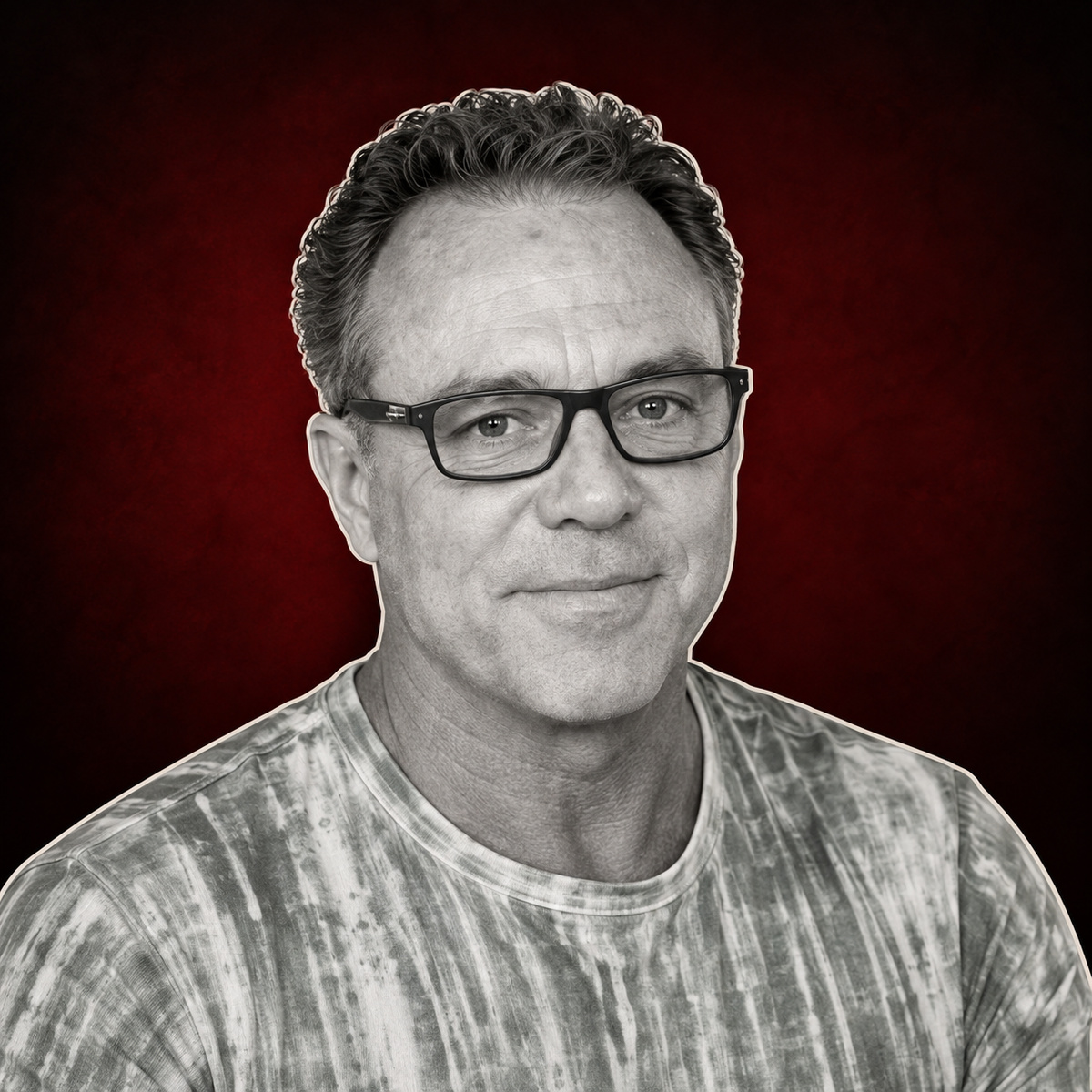
Glen Ledwell
Glen Ledwell is the founder and CEO of Mind Movies, the personal development company he launched in 2007 around a digital vision board product, and the founder of the Flight Club mastermind for online marketers. Known for his joint-venture and affiliate strategy, Glen helped Mind Movies reach roughly $6 million in volume by its third year, largely through affiliate partnerships. Before entering online marketing, he ran a nightclub and an events company in Australia, experiences he credits with teaching him how people really behave. He has run Flight Club for more than a decade, interviews every prospective member personally, and limits each group to about 60 people to keep it intimate. Glen is also a partner in Speakeasy Mastermind alongside Eric Berman, where he helps shape the community's emphasis on curation, connection, and quality.



