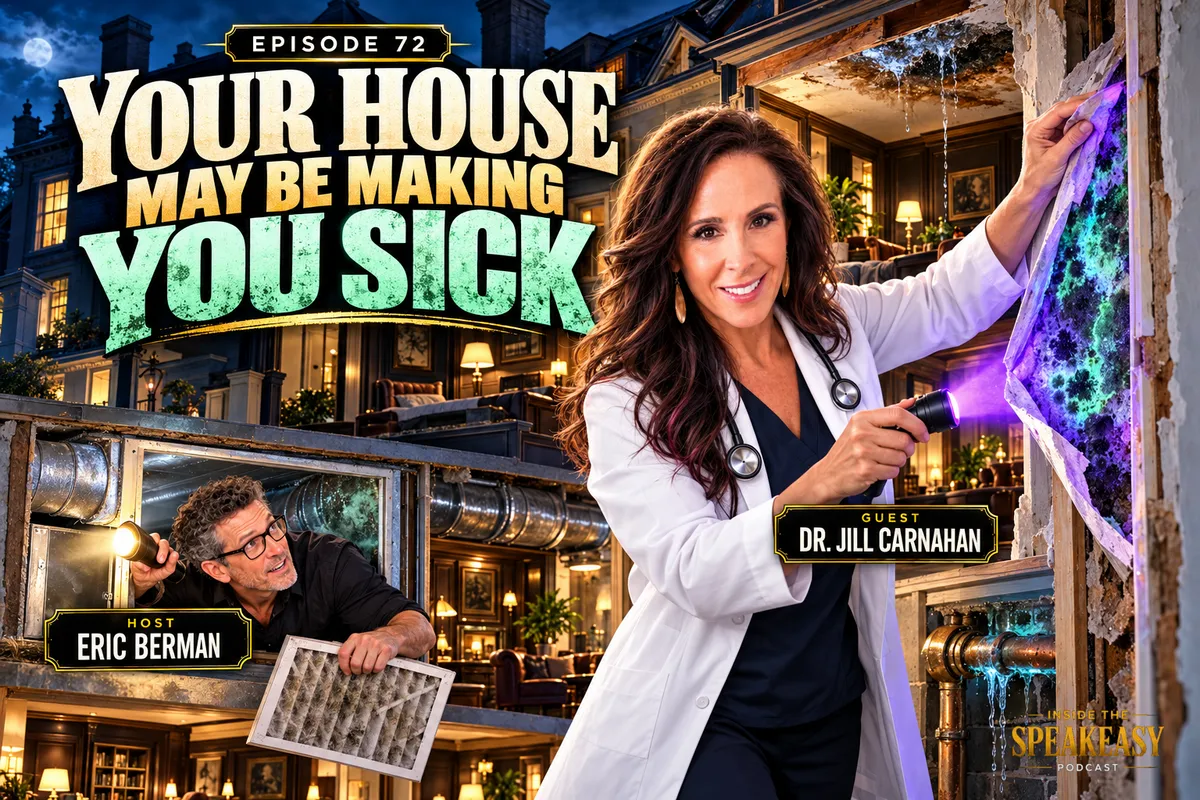
Dr. Jill Carnahan, the functional medicine physician who founded Flatiron Functional Medicine in Boulder, makes the case that grit and a refusal to live in regret can turn the hardest seasons of life into a business asset. She was a third-year medical student when an aggressive breast cancer diagnosis arrived at 25, and she responded by researching the options and building her own treatment plan. Crohn's disease followed within a year, and severe mold illness a decade later. In this conversation with host Eric Berman, Jill explains the decision rule she now teaches patients facing any high-stakes choice, why she sent both her memoir and her documentary back to the drawing board close to deadline, and how a sole investor protected the film's creative freedom. She also gets practical about the hidden toxins in homes and offices, from ERMI dust tests to air filtration, and closes with why she trusts gut instinct over clout when choosing partners.
In this episode, you'll discover:
- How Dr. Jill Carnahan makes high-stakes decisions: gather every available fact, commit to a clear plan, and refuse to second-guess the choice afterward
- Why Jill sent both her bestselling memoir and her Doctor/Patient documentary back for major rework despite looming deadlines, and what the new versions gained
- What a sole, mission-aligned investor made possible for the documentary, including full creative control and no product placement or commercial agenda
- How mold, poor air quality, and water damage can quietly cause brain fog and fatigue, plus the ERMI dust test Jill uses before buying any home
- Why Jill trusts gut instinct over money and clout when choosing partners, and how holding space for patients sharpens that intuition
Episode Summary
Dr. Jill Carnahan describes her life as a series of devastating diagnoses that she chose to turn into purpose. Raised on a farm in Central Illinois as the oldest girl of five children, she entered medical school already convinced that lifestyle, diet, and nutrition mattered more than conventional medicine acknowledged. In her third year of training at Loyola University, a week after turning 25, she learned she had aggressive breast cancer and, as she recalls her surgeon telling her, was the youngest woman the school had ever diagnosed. Jill says she researched the data herself, chose different chemotherapy drugs and a different type of radiation than first proposed, and is still here more than 20 years later.
The decision-making lesson she draws from that experience is the core of the episode. Jill says she did not know her plan would work; she embraced uncertainty, kept a crystal-clear vision of surviving, and let go of the how and the timeline. Once she committed, she promised herself never to ask what if, even though the treatment left her with immune deficiency. She now teaches patients facing a divorce, a financial collapse, or a life-threatening choice to gather the information available, make the decision that brings the most peace and clarity, and refuse the regret cycle. She credits faith, research, and the example of Viktor Frankl for helping her give suffering meaning rather than letting it take her down.
Grit, in Jill's telling, also built her businesses. After reversing Crohn's disease and earning her first reputation as a gut expert, she moved to Boulder in 2010 and founded Flatiron Functional Medicine, adding mid-level providers, a physical therapist, a chiropractor, a plasma exchange program, and an in-house retail store for quality supplements. Publishers told her an unknown doctor could not sell a memoir, so she wrote a prescriptive memoir that blends her story, patient vignettes, and how-to guidance; she says it became a bestseller. When she worried that no one would read books during COVID, she followed a flash of insight to make a documentary and says she had a producer and director within 10 days and a $1 million sole investor within three months.
Two production lessons stand out. Jill sent both the book and the film back for major rework close to deadline because they did not feel authentically her, and she says the re-edited versions were far better. The recut film added a raw, unscripted scene of her breaking down in her former medical school, which she says is the scene audiences remember. She also stresses that a mission-aligned sole investor gave the team full creative control with no product placement, though in hindsight she probably would have released the film straight to a streaming platform instead of the festival circuit.
The second half turns to environmental health, which Jill attributes to her own mold illness. She says many chronic patients have real symptoms but normal-looking labs, and that toxic load plus latent infections such as Epstein-Barr can resurface when mold in a water-damaged home weakens the immune system. Her own house hunt involved more than 40 homes and five contracts, with about 80% showing mold, radon, or air-quality problems by her count. She walks through ERMI dust testing, the two black molds she treats as deal breakers, remediation followed by fogging and cleaning, frequent high-MERV filter changes, HEPA and carbon air purifiers, mineral-preserving water filtration, and food choices. These are her clinical views, not general medical advice.
Jill closes on intuition. Trained in a medical culture that discouraged empathy, she relearned how to hold space for patients, and she says her best insights, clinically and in business, arrive as gut instinct when she listens closely. Her advice to entrepreneurs is to trust that first read on a partner over a more impressive résumé, and to build a business around the things that feel easy and joyful, as her interview-driven YouTube channel and podcast did.
Big Ideas Discussed
Decide With the Best Information, Then Refuse to Look Back
Dr. Jill Carnahan's most transferable lesson is a decision rule she built while facing cancer at 25: gather every piece of information available in the moment, put together a clear plan, commit to it before knowing the outcome, and never second-guess it. She chose her own chemotherapy drugs and radiation approach against her oncologist's initial recommendations, and she says she has never once asked what if, even though the treatment left her with immune deficiency.
Jill argues that the regret cycle destroys people if they let it, and she now applies the same rule to patients facing a divorce, a financial collapse, or a life-threatening choice. For founders, the parallel is direct. Major business decisions are almost always made with incomplete information, and Jill frames comfort with uncertainty as one of her biggest strengths rather than a weakness. Her method pairs a crystal-clear vision of the outcome with a willingness to let go of the how and the timeline, which frees leaders to act decisively without burning energy on rumination after the call is made.
Send the Work Back When It Isn't Authentically Yours
Twice, Jill Carnahan sent a nearly finished project back to the drawing board under deadline pressure. Her memoir was in final edits when she realized it did not sound like her, so she re-edited the entire book. Her documentary was ready for film festivals when she, her producer, and her director agreed the story was not quite right; the recut added two deeply personal scenes, including an unscripted moment of Jill breaking down in her former medical school.
Jill says that scene is the one people remember, because everyone has a younger self they wish they could reassure. Her point for entrepreneurs is that the mind will always argue that there is no time to go back, while the heart knows when something is off. In her experience, honoring that signal produced work she is proud of instead of a first draft she would have regretted. She frames it as a profound lesson for anyone launching a product, book, or brand asset on a deadline.
Your Home or Office May Be Draining Your Focus
Jill Carnahan believes many high performers blame workload or stress for brain fog, fatigue, and lost drive when the real culprit may be their environment. She says 80% of toxic load comes from the air we breathe, and that mold from water damage can suppress the immune system enough for latent infections such as Epstein-Barr, chickenpox, or Lyme disease to resurface. Her clinical pattern: patients feel fine, move into a new home, and start declining.
Her practical starting point is an ERMI dust test, which analyzes mold DNA in household dust; she treats Chaetomium and Stachybotrys as automatic red flags and tests each level of a house separately, especially basements. If a problem turns up, she recommends an inspector, proper remediation, and then fogging and thorough cleaning to remove mycotoxins. Jill pairs that with monthly high-MERV furnace filters, HEPA and carbon purifiers, and water filtration that preserves minerals. These are her views as a physician, offered as a reason to investigate, not as medical advice.
Trust Gut Instinct Over Money and Clout When Choosing Partners
Jill Carnahan says her best decisions, clinical and commercial, come from intuition rather than analysis alone. Trained in a medical culture she says discouraged empathy, she relearned how to hold space for patients, and she finds that when she listens fully, a clear sense of direction arrives as an instantaneous gut feeling. She then checks it against the science, but she leans toward that first knowing.
She applies the same principle to business. When choosing among potential partners, Jill says her first reaction is usually right, and that every time she overrode it to work with someone who had more money, clout, or prestige, she made a bad decision. Her related advice is to build around whatever feels joyful and natural. Her YouTube channel and podcast grew from a pandemic experiment in deep, unscripted conversations, and she now looks for guests by their mission rather than their follower count.
Questions We Answer in This Episode
How does Dr. Jill Carnahan recommend making a high-stakes decision under uncertainty?
Dr. Jill Carnahan recommends gathering all the information available in the moment, choosing the option that brings the most peace and clarity, and then committing without second-guessing. She used this approach when she designed her own breast cancer treatment at 25, and she says she has never asked what if since. Jill tells patients facing divorce, financial collapse, or medical choices that the regret cycle will destroy them if they let it.
Why did Jill Carnahan rework her memoir and documentary right before deadlines?
Jill Carnahan says both projects did not feel authentically like her, so she chose to go back to the drawing board despite deadline pressure. She re-edited the entire book, and the film team recut the documentary to include two of its most personal scenes, including an unscripted breakdown in her former medical school. Jill says the reworked versions were far better and that the added scene is the one audiences remember most.
How did Jill Carnahan fund her documentary Doctor/Patient?
Jill Carnahan says she found a sole investor who provided $1 million within about three months of deciding to make the film. She chose that route over product placement deals so the team kept full editorial control, and she says the investor had no commercial interest in the movie. Her advice to creators is that a single investor whose heart aligns with the mission makes all the difference. In hindsight, she says she might have released it directly to a streaming platform.
What is an ERMI test and why does Jill Carnahan recommend it?
An ERMI test, as Jill Carnahan describes it, is a dust sample analyzed for mold DNA using QPCR, which acts like a fingerprint of what has been in a home. She recommends it as the first step for anyone buying a home or wondering whether a house or office is safe. She ordered one for nearly every home she considered and treats Chaetomium or Stachybotrys in the results as a red flag.
What should you do if a home already had a leak or mold remediation?
Jill Carnahan says remediation alone may not be enough, because mycotoxins can spread through a home like smoke from a fire. Her recommended sequence is to find the source with an inspector, do proper remediation, then fog to bring particles down to surfaces and finish with a very thorough cleaning. She also warns that any past leak, from a sink, refrigerator, ice maker, or dishwasher, might still leave residual mold under floors or in walls.
Which air and water upgrades does Jill Carnahan use in her own home?
Jill Carnahan says she changes her furnace filters monthly and uses a higher MERV rating, such as 13 instead of 8 or 10. She runs freestanding air purifiers with both HEPA and carbon VOC filters, naming IQAir, Austin Air, and Brio 650 as options. For water, she uses a filtration system that she says keeps minerals in, cautions that reverse osmosis strips minerals, and uses a Moen Flo device to monitor leaks.
How did Jill Carnahan grow her YouTube channel and podcast?
Jill Carnahan says her YouTube channel and podcast began during COVID, when she was bored and decided to interview interesting people over Zoom. She leaned into what she loves, deep, unscripted conversations, and chose guests for their mission rather than their follower count. Her takeaway for entrepreneurs is that something you enjoy doing purely for its own sake is probably a good business venture, even if you cannot yet see where it leads.
Full Episode Transcript
Read the Full Episode Transcript
A Medical Detective's Cancer Diagnosis at 25
Announcer: Welcome to Inside the Speakeasy Podcast, the private room where today's sharpest founders, innovators, and renegade thinkers come to trade the ideas that move industries. This show is brought to you by HighLevel, the AI-driven business operating system trusted by over 2 million businesses to help automate, scale, and create real leverage. HighLevel isn't just a tool, it's the engine behind some of the most agile and high-performing teams on the planet. If you're ready to streamline everything, amplify your reach, and actually build a business that works for you, you're in the right place. Visit www.GoHighLevel.com/Speakeasy-Mastermind-Promo to get an exclusive 30-day trial for being a listener of the Inside the Speakeasy Podcast. Enjoy the show.
Dr. Jill Carnahan: I am nothing special, but I have a great faith, a great curiosity, and a great grit. And I just, you know, like what I see every day in my heart, I'm like, wow. Like, I literally am so in awe of what happens because I know who I am. I really am nothing special, but I know I believe in great things, and I think that's the power.
Eric Berman: Welcome to Inside the Speakeasy Podcast, and I'm so excited for today's guest. You are going to learn from the absolute incredible, astonishing medical detective who is in today's episode. We're going to learn some incredible things about, like, what's going on in your house. She's going to detect what's going on in the water you're drinking, what's going on in your body. She is sought after by people around the world. She's got documentaries, books, YouTube following over a million people. You're going to learn all sorts of incredible things. Welcome to the show, Dr. Jill Carnahan.
Dr. Jill Carnahan: Thank you, Eric. I am so excited to be here, and love your group, love the work that you're doing as well.
Eric Berman: I really appreciate that. All right, so for those that don't know you, and now you just have a brand new beautiful home just outside of Boulder. Anybody going out there should definitely reach out. It is a castle, super sweet. At least that's what we talked about, the dream castle we've finally been looking for. Not quite a castle, but it feels that way. And you talk about environments, and I know you worked hard to find this perfect house for you, so congratulations on that. You're an internationally recognized leader in functional and precision medicine, known for transforming complex science into powerful pathways for healing. A physician and a survivor of breast cancer, Crohn's disease, a mold-related illness. And I know you have amazing, amazing insights from all sorts of things you've been through. And you're a best-selling author of Unexpected, executive producer of the award-winning documentary Doctor/Patient, and host of Resiliency Radio. And wow, it goes on and on and on. I mean, let's get into this. For me, I'm just a chronological logic guy. And I know we're going to talk about, because we talked in the green room about the whole left brain, right brain too. And so you got to listen to that, stick around, because we're going to talk about the balance that we all need. But I like to start, my left brain likes to take me into chronological of how it all began, because you do have a crazy story, and you were diagnosed with breast cancer at 25 and have been through that and so much other trauma, and here you are having learned and shared, and it's so incredible. All right, so are we allowed to start there?
Dr. Jill Carnahan: Yeah, so this is a great story, and story always drives everything. I had no idea when I was 25 that this story would literally drive my business. But I grew up on a farm in Central Illinois. I was one of five children. I was the oldest girl, so hard worker, Midwestern, pull up by the bootstraps, you know, all that kind of strength. And it helped me through all of the difficulties of my life, for sure. But I was a very, like, strong, dissociated kind of person until my 40s. So it got me through there, but didn't get me to where I'm at now, and we can talk about that later. But what happened was I was in medical school. I was the only one in my family pursuing medicine. My mother was a nurse, but no doctors in the family. And as I was looking for healing professions, I was like, well, why not try medicine? I started applying to medical schools, getting accepted, and I was like, okay, here we go. But I went into medicine with a very different outlook. I grew up with an organic farm garden and things that were, like, holistic and natural. So I had a very much predetermined way of looking at medicine. And I knew that that was the best reimbursed system in our US economy, but I didn't believe in everything. And it wasn't that medicines were bad. It wasn't that my mother didn't take me to the pediatrician, but I knew that there was more: the lifestyle, the diet, the nutrition. So I went into medicine, into medical school, knowing I was going to hopefully infiltrate and actually transform the way things are done. And now, decades later, I can see that happening. But I did not know that within my third year of medical training, I would find a lump on my breast. And within two weeks, I would be rushed into surgery for an aggressive breast cancer diagnosis. And I'll never forget that. You know, when you're 20, I had just turned 25 about a week prior, just hit my 25th birthday, get a call from the surgeon from the biopsy, and with her voice shaking, because she's my teacher, not just my physician, because in this medical school, you know all the faculty. She called and she said, "Jill, I don't know how to tell you this. You have aggressive breast cancer. Here at Loyola University, you are the youngest woman we have ever diagnosed." Now, since then there's been more, but at that time, in 2001, I was a statistic. I had just won the lottery, and not a great lottery, right? And I was a statistic of someone who should never have had cancer. And it began my journey, number one, to realize, okay, this sucks. I do not want to go through this. I lost all my hair. It was brutal, the treatment I went through. But in that, in the midst of the depth of suffering, I found something so priceless, and that was the fact that if I could change that story and take that suffering and use it for good, either for my learning, for my transformation, for my growth, or for my future patients. And the moment I grabbed onto purpose and meaning in suffering, it changed everything. I began to ravenously read and understand and try to figure out. I literally created my own treatment plan. Like, my oncologist said, do this, do this. I'm like, no, here's what I'm going to do. Everything I did in my chemo, I chose different drugs, I chose a different type of radiation. And here I am, 20-plus years later, totally having survived, because I took the initiative and I said, I'm going to take this thing. And then that's been the pattern of my life, is taking something really devastating and brutal and difficult and saying, okay, there's something here that's good. How do we transform the meaning of suffering and take it and make it into something that actually is our biggest asset?
Grit, Curiosity, and Getting Comfortable With Uncertainty
Eric Berman: Wow. Okay, there's so much unraveling there. That's powerful. So here you are, this 25-year-old with this confidence to go against the norm, and that alone, it's scary. You're doing a lot of scary stuff. And, like, what do you have inside of you? I mean, you probably reflect now, where you are today. I mean, it's funny, because on these podcasts I talk a lot about, none of us realize we're an entrepreneur until, like, years later, but you have these entrepreneurial instincts. Like, your instincts at that point were to do things that were, you know, not the norm, and to go against the grain. And we're scared to make these decisions, where you're just so confident. And do you feel like, if you didn't do that, would there be a different Dr. Jill today, or would we be talking to you today?
Dr. Jill Carnahan: Great question, Eric, because there's one word. It's grit. And many people have written about that. That is the ability to, like, go deep and go to difficult things and actually [unclear] them and really unearth them and look underneath the rocks, right? And say, what's going on? And then on this side was pattern recognition. And I didn't know that. Just like you said, many people don't really know they're entrepreneurial, but they have that skill set inside of them. And I think as a physician, the medical detective part comes from, I can see patterns among complex puzzles. I look at a puzzle, and it could be my life, but it could be a patient's life, and I can see patterns, and I can see things that I'm like, oh yeah, this pattern I've seen before. I know what the outcome is going to be. I know what the interventions are going to be. And I started that process in my bioengineering undergraduate degree. But then as a patient, same thing, I started unearthing and seeing patterns and saying, well, what if this? What if this? So grit and curiosity, I think, are at the root of that outcome.
Eric Berman: Wow. So, I mean, really, and back to my second question, do you think if you followed the normal protocols, would it have been a different outcome? Or are you just, I mean, what's your belief on that?
Dr. Jill Carnahan: Well, okay, this is worth saying, because I say it to my patients all the time now, and it's relevant, I'm sure, to your listeners. Number one thing was, I looked at all the data, all the research, and put together what I thought was the best option. But in that moment, I didn't know. I didn't know at all for sure. There was a lot of uncertainty. And if we're going to move forward as great entrepreneurs and business people, we have to get freaking very comfortable with uncertainty. So for me, remaining curious and being very comfortable with uncertainty, being okay with it, actually embracing it as an asset, is one of my biggest strengths, because I can hold, as a Gemini too, I can hold multiple things at one time and say, well, this could happen or this could happen. And as we talk about vision, we'll maybe go more into that. But I think one of my biggest successful traits is I have a clear vision. It is crystal clear, but the how and the timeline and the why and all the pieces, I let go to chance and to the divine and to other things. So we can have that clear vision. And so in this, I knew within two weeks I was going to survive. 100%, I knew in my heart I was going to survive. I didn't know how. I didn't know what it would take. I didn't know how painful it would be. But I knew somewhere, and I think that's the grit part, that I was going to freaking beat this thing.
Giving Suffering Purpose and Refusing to Live in Regret
Eric Berman: Oh my goodness. Fantastic. And good on you. I mean, you just, that's a skill that I think a lot of us are afraid of, and you just went out there with the grit skill. You just said, you know what, I'm going to research and figure this out. And then the medical detective, and you look back on life, and that was, like, one of the first mysteries you solved, was yourself. Almost having to solve it yourself. And then along the way, you just had more and more confidence, I imagine, for the next set of things you found.
Dr. Jill Carnahan: Yeah. And as you mentioned in my history, I mean, my pattern was overcoming breast cancer, and then a year later, Crohn's disease, and then a decade later, severe mold-related illness. And each of those opportunities, they were hard, and I could be still suffering from any one of those conditions. But I was bound and determined to save my own life, and not only do that, but then take it and translate it into the lives of my patients. And so I had a really great motive, like Viktor Frankl. You know, you can take difficult, he's to me the epitome of suffering and how he transformed his life. Of course, many, you know, Man's Search for Meaning. But in that, I just love him as an example, because my life didn't compare to his suffering, but the same principles were there, and anyone out there listening can take, no matter how big or large or small their suffering is, we can all use those principles of giving meaning or purpose to suffering, or transforming it. And when we give it the power to take us down, it will take us down. And when we don't give it the power, and we transform it into something better, it will allow us to go in that place.
Eric Berman: I think that's such an important message. I'm glad you said that. I'm going to reemphasize it for listeners today. That's going to stick with me. The purpose: there was a negative situation, and we all have the ability to decide what we're going to do with a negative situation. You've had these negative situations early on. You said, I'm going to set a goal. I don't know how I'm going to get there, and I'm going to have purpose towards this. And you ultimately did that. You've experienced it, and I think that's important for anybody who's suffering or has loved ones that do. You get to decide how you want to handle that situation.
Dr. Jill Carnahan: And it wasn't just to sound trite. It wasn't just wishful thinking, like, oh, I'm just going to pray and be happy. And it was, I did have a strong faith, for sure. I believe in a higher power, and for me, that was very important as part of the story. But the other side of that was I did the work. I did the research. I did the, and the other thing I was going to say, that I tell patients nowadays, is that as they're facing a life-threatening decision, a financial collapse, a divorce, some difficult situation, what we do is we take all the information that's available to us in that moment. And I did that with my chemotherapy, my radiation, and all of that. And I put together a clear plan. And then I decided in that moment, before I knew the outcome, that I was going to stick with that plan and not second-guess myself or regret my choices ever, ever, ever in my life. Now, I am living because of that, but I also have, I have immune deficiency because of that. But never once since that day have I said, what if I would have not done chemo? What if I would have? Because I feel like that regret cycle will destroy us if we let it. So I feel like the person right now facing a decision in business, in their marriage, in their life, in their work, in their children's lives, whatever it is, you take the information. You make the best decision that gives you the most joy and peace and clarity. And then you move forward without question, never looking back. Because when you look back, that's when you get burned, right? That's when you get in the cycles of rumination or what-ifs. I never allowed myself to go there. And so I tell my patients, as we're just, you know, making those decisions, you get to decide right now, and I want you to, you know, don't ever look back, because that will destroy what happened.
Reversing Crohn's Disease and Becoming the Gut Expert
Eric Berman: That's right. And thank you for that lesson, for all of us, no matter what we're doing. I always say, what's the point of that? It's only negative energy. All you can do is look forward and say, everything is a learning towards the next thing. So even if things didn't go perfectly smooth, you've grown, because you now are taking that issue, and it's not going to happen again, whether it's yourself or somebody else. And yeah, it doesn't make sense to look backwards. I'm going to go back for a second. You talked about Crohn's disease, mold-related. I mean, my God, you just get through cancer, and now you have Crohn's disease. The medical detective all of a sudden reappeared again, and in the cape, that you didn't know you were this medical detective. What happened?
Dr. Jill Carnahan: It had to, Eric. And again, back then, I just didn't know anything about, as a healer and entrepreneur, who I really was. I just muddled through it, but the cancer got through it. And if you could picture me then, I had no hair. I was completely, there's a name for that. It's glabrous, which is hairless. It sounds much better than bald, but I was hairless, and I was bald, and I was weak, and I was exhausted. And I went back to medical training, because again, according to my farm family, you don't complain. You buck up, you get right back in the fray. And so I did. And looking back at that young girl, I would have said, like, sweetheart, take your time. Like, be kind to yourself. I didn't know that back then, but I did. So I went right back to work, and within three months, I was having cyclical fevers. One day I was in the emergency room taking a patient's blood pressure, and I literally passed out cold on the floor, was rushed in to figure out what was going on, and a few hours later, I was diagnosed with an abscess that got me into surgery. Next day, the surgeon comes in and said, "Jill, you have Crohn's disease." So once again, the story there is, I was like, what in the world? You know, in the same year. Now, there's a backstory physiologically of why that was connected to the cancer that we don't necessarily have to go through. But when I had the diagnosis, then I had to learn gut microbiome, gut health, all of that. I became, that was my first title, was the gut expert back in the day, because I literally reversed, within two years, completely reversed, not remission. I no longer have Crohn's disease.
Building a Practice, a Memoir, and a Documentary
Eric Berman: Wow. And again, for those that are listening, my limited knowledge of Crohn's disease, it's not something that just goes away. People have it forever once they're diagnosed with it, unless they see you and learn from you and do the things that you did. So let's kind of move a little bit more to, as you progressed through your career, your incredible career. Tell us a little bit about what you're teaching now.
Dr. Jill Carnahan: Yeah. So, um, moved to Boulder in 2010, so it's been about 15 years that I've been in the practice now. And I founded Flatiron Functional Medicine, which is a medical practice. I was a solo provider, and over the 15 years since then, I've brought on two mid-level providers. I have a physical therapist that does Counterstrain therapy. I have a chiropractor, and we house MD Lifespan, which is a plasma exchange program for toxicity and cancer and aging and all of that. So all of that is now in my office, and I still practice two and a half days a week. But what I've done is become more the trainer to the trainees and the teacher to the teachers, and to multiply those skills. I try to really be the teacher and try to bring those people up that are in the office. And again, I still see patients. But so that's the medical practice. And we realized early on that if we wanted to create healthy people, we needed to provide healthy, quality supplements and retail products. So we also created a retail store within that same practice. So those are my two first businesses, a medical practice and a retail store. And those two, you know, both kind of grew, and we can talk a little bit about strategy and stuff. And then while I was in those, in the last five years, I wrote a book. And that was interesting, because I was not one of those people who was like, I always want to be an author or that. I was on a retreat, probably now 10 years ago, and I kind of felt a divine calling, like, you need to really tell your story. And it was all about story. And at that time, there was autoimmune cure and all kinds of books on the brain. There was lots of how-to manuals, and even now, in our world of your Speakeasy members, which I'm a part of, and all of the health entrepreneurs that we both know very well, there's so many incredible how-to books, right? I was called to write a memoir, which is very different. And every publisher told me, you'll never get sold. You're not Obama. You're not Michelle. You're not, you know, these people that have, a Brene Brown. Of course they can write a memoir. You, Jill Carnahan, cannot. But I knew that the story drives everything, and I knew that I had a profound story. And back to the meaning and purpose, I was like, this story is my whole life, and it tells the rest of teaching people what to do in those situations. So I knew I had to write. So I ended up doing a prescriptive memoir, which is kind of a combination of a true story with patient vignettes, but also within that was very much a how-to. And it was, like, the combination. So it was kind of unique, and I finally found an incredible publisher that supported me the whole way, and we ended up being a bestseller. And then, as I was writing the book, getting ready to release it, so this is January, right after COVID, we're all sitting in our homes. And I had this, again, some of the things that I feel like are great business decisions were flashes of insight that I followed. And the flash of insight was, all of a sudden everybody's on Netflix, right? And I'm like, does anybody even read books anymore? And as I realized that, I'm like, my book's coming out. Is anyone going to read it? And I thought, I need to be on screens. I don't know what I'm doing, but I feel like I should be doing exactly that, because the way to reach people, and for me, it's not about fame or fortune, it's about the fact that I wanted to bring inspiration and insight into patients' lives. So literally that week, I was like, okay, and just like everything for me, I had this vision, it was clear. And if it's supposed to happen, I'll walk forward and I'll have the people. Within 10 days, Eric, I had a producer, a director, an executive assistant, and within three months, I had a sole investor that gave us $1 million to do the project.
Eric Berman: Whoa. I mean, you call it grit, I call it tenacity, either way. And I see it in you, Dr. Jill. I mean, that's crazy. I mean, you got this vision, I'm going to go get it, and you just find a way, and, listen, this is inspiring. Anybody out there listening and wondering, can they do something? Just listen to the story. I mean, we're talking about somebody who's on the medical side saying, I want to document.
Dr. Jill Carnahan: I didn't know what I was doing. I was, I mean, I was executive producer, but I had no background in making movies. And just to emphasize too, for your listeners, I am nothing special, but I have a great faith, a great curiosity, and a great grit. And I just, you know, like what I see every day in my heart, I'm like, wow. Like, I literally am so in awe of what happens because I know who I am. I really am nothing special, but I know I believe in great things, and I think that's the power.
Going Back to the Drawing Board on the Book and Film
Eric Berman: Well, I mean, now you got an open loop here for me. So you make this documentary, and your platform is growing. I mean, I know you got a million followers on YouTube and all that. I mean, is this the start of the following? I mean, what happened with the book? What happened to the documentary? What did you learn from that?
Dr. Jill Carnahan: Yeah, so the book was a lot harder than I ever thought, and I'm sure most authors will say that. But in the end, I think a couple lessons. One was, as the editor, we were getting the final edits, it was getting ready to be published, and I looked at it. And I had had some, obviously, editorial help and all that. And this was before AI, so there was no AI involved at all, which I now would probably do differently. But at that time, I looked at it, I'm like, there's something not right. This also happened with the movie. So this is actually probably a profound lesson for your entrepreneurs. If in your heart you're like, that's not quite right, that's not me, but your mind will tell you, oh, you can't go back to the drawing board. They need this in two weeks. They need this in two weeks. It's supposed to be out at the theaters in two weeks, whatever. Both of those projects, I went back to the drawing board, because I knew it wasn't quite right. And the book, I totally re-edited. And the thing that came out of that was so much better, so much more pure, so much more authentically me, than the first draft. And had I done the first draft, I wouldn't have been proud of it. I'd have been like, oh, that's just not quite right, right? We know in our heart what's right. The movie, same thing. We had an edit. We were getting ready to be in film festivals. We had deadlines, and all of us, my producer, my director, and my, we knew the story. Like, this is not quite right. And they said, "Jill, can we go back to the editing room," the cutting floor, as I call it, "and can we re-edit this?" And you know what they did, Eric? They took two scenes that were the most personal, devastating, vulnerable scenes in the movie that we had not put in there. One was me walking into my former medical school, and this is in real time, not planned, not scripted. And I fell apart in that medical room, looking at where I'd gotten breast cancer, and looking back at that young girl who had gone through such suffering and completely then dissociated because of her upbringing. And I cried and I wept, because I thought, how many other medical professionals are pushing through, or entrepreneurs are pushing through, and they have lost the heart of what they're doing, and they haven't really grieved. And in that moment, in that scene, I am literally, like, I'm gasping and crying, ugly cry. We put it in the movie, and you know, that is the scene that people remember, because every person has that story where they look back at their younger self and they say, sweetheart, you were beautiful, you were good, you were powerful, and you didn't even know it. And you were trying to be good enough, and you were trying to show up, and you were trying to, all the things we do that aren't the true self. And I saw that younger version of myself, and I just wanted to be like, oh my gosh, if I knew now what I knew then, you know, or knew then what I know now.
Eric Berman: Wow. Wow. Amazing. It's the same pattern, so great job. You feel it, you go for it, you change it. So the movie was out, you were proud of it, and how did it do, the documentary? What did you learn through that experience? I mean, for those of us that are like, how do I do a documentary? Everything you hear on this show comes back to one idea: proximity. I wrote the book on it, literally. Proximity Pays, my best-selling book, available now at proximitypays.com.
Dr. Jill Carnahan: My goodness, it's like, and one thing I will say is that we had an investor, and in this, we knew we could have gotten a ton of companies that would have sponsored product placement, whatever. We wanted it to be so pure that we had editorial, like, I ultimately had the editorial check mark, yes or no, and my team as well. And we found an investor that believed in us enough to really give us creative freedom and not intervene. As far as, he might have had ideas that we took, but he did not, you know, and he had no commercial interest that was in the movie in a deliberate way. To me, that was so powerful, because we got to produce what was really beautiful and right and good, and not just a commercial endeavor. And I would say, wait for, if you can get a sole investor, and if you can get someone with a heart that really aligns with your mission, it makes all the difference. And so that was a good lesson. And then we did film festivals. We won some awards. In hindsight, I probably would have released it straight to, like, Netflix or one of the platforms. Now we're on Amazon Prime. But we learned a lot in that process on, like, how to do a movie. And now it is on Amazon Prime.
Eric Berman: So, and the documentary, for those listening, is called what?
Dr. Jill Carnahan: Doctor slash Patient. Doctor slash Patient. And at doctorpatientmovie.com, you can see the trailer and everything.
Eric Berman: What? Say it again for the movie.
Dr. Jill Carnahan: It's, it's doctor, doctorpatientmovie.com.
Toxic Load, Hidden Infections, and the Home Environment
Eric Berman: Doctorpatientmovie.com. Okay, so go check out that documentary if you're inspired. Okay. You're seeing a lot of patients right now. You're teaching others how to fish, I guess, you know, as they say. You're teaching others how to do it, which is amazing, because you obviously have a big heart and want to connect and reach as many people as possible, but you're limited by how many you can see. So thank you for doing that. What is the main thing that people are coming to you for? I know you're talking about gut health and functional health, and there's a lot of words that we're all hearing now, but what's your sort of thing that you're like, this is kind of what I look at, and what I'm noticing right now?
Dr. Jill Carnahan: Yeah. So I always say functional medicine can sound nebulous and kind of complex, but at the core, pretty much every complex chronic patient I treat, number one, they've been kind of dismissed by the medical system, because they have real symptoms and real problems, but their labs look pretty good, you know, those kinds of patients. But they really might even be disabled. Like, they really are not functioning well. But at the core is typically toxic load of some sort. I ended up becoming an environmental expert, environmental medicine expert, because with my mold journey, I realized, oh, the environment makes a difference. So some of you, if you go to your office or your workplace, or you're in your home office, and you notice you always have brain fog and you're always tired afterwards, it might be more than just your workload. It might be actually something in your air. 80% of the toxic load that we get is the air quality, the air that we breathe. So if you're not thinking ahead for your health, like having an air filtration system in your house, water filtration, I would say clean air, clean water, clean food is the foundation of what I do, and knowing how to do that in your home. So toxic load plus infectious burden. So this is where also people aren't really thinking. But most of us had, I'd had shingles, not shingles, but chickenpox, which is the childhood disease that creates shingles, or Epstein-Barr when we were 19, a sore throat in college. And so we have these latent infections, and those viruses stay in our system forever, and they shouldn't pop their heads up and bother us. And then another large subset of people have been bit by a tick or a spider or a flea or some sort of vector-borne, we call them, and have Babesia, Bartonella, Borrelia, Ehrlichia. I could name a thousand of them. And these are infections that, again, in the healthy immune system, lie dormant. For example, many of my patients were going along fine. They buy a new house, they move into a new home, and all of a sudden, they're starting to go downhill. They're starting to have brain fog and fatigue and trouble concentrating and trouble with executive function, planning. They're like, what is going on? Oh, I'm just working too hard. I'm stressed. But the truth is, they moved into a home that had water damage in the basement or in the attic or some issue. There's mold growing in their home, and they are going down. What happens is that mold compromises the immune system. Old things like chickenpox or Epstein-Barr or Lyme disease that weren't bothering them start to pop their heads up, because their immune system became weakened by the environmental contaminants. And they don't know any of this. They just know they're not themselves. They've lost their drive. They've lost their energy. They're taking naps in the afternoon. And it's always after they are in a certain room or a certain house, or after a move. So I'm the detective putting together the story as far as environment. So toxic load, infectious burden, and then it all interplays with inflammation and immune dysfunction. And what happened is we threw gas on the fire after COVID, because COVID happens to be a very immunosuppressive virus. So many people, post-viral, for six months or so, are having this crash in immune system and experiencing some of the same symptoms.
Eric Berman: Wow. So the COVID, that made it worse. It took anything and just...
Dr. Jill Carnahan: Yeah. And not everybody, but I would say a large percentage, probably over 50%, are in some way affected short-term post-COVID with immune dysfunction.
Testing for Mold and Remediating a Home Properly
Eric Berman: Got it. Wow. Okay, so that was a lot. I really liked it. You said the air, water, food.
Dr. Jill Carnahan: Yeah.
Eric Berman: How do we know that there's maybe something off? Are there mechanisms you suggest and recommend we do? Are there air purifiers or water?
Dr. Jill Carnahan: Okay. And I told you before we came on, in the green room, it was worth sharing. So I just bought this house about four months ago, and in my journey, it was over 18 months, and really 12 months of looking at over 40 homes. And I'm in Colorado, which is kind of a dry state, and not as bad for mold as, say, Miami or, you know, some other humid climate. And 40 homes, I made 10 offers on homes, and I was under contract five times. And the reason for all of that was because every time, I'd take an investigator and I'd look at the air quality, I'd do some testing. And I would say of the homes I saw, which were nice homes in Longmont, Boulder, and Niwot, Colorado, about 80% had a significant air quality mold issue or some radon issue, some issue that was not safe for me to purchase. And most people who are looking for a home have no idea. So let's start off with what to do. So the very basics, if you're looking for a home, or if you're in your home and you're like, is it safe? Is my office safe? I always recommend patients start with an ERMI, E-R-M-I, which is also known as QPCR. That means qualitative PCR. It's a dust sample. It's quite simple. There's a couple of companies that do it, EnviroBiomics and The Dust Test and Mycometrics. I think those are the big three. And you can go online and order a dust kit. So when I was looking for homes, I probably went through 20, 30, 40 dust kits, because when I'd look at a home, I'd get a dust kit.
Eric Berman: It's called a dust kit?
Dr. Jill Carnahan: Yeah, it's called ERMI. ERMI is the name. Now, if you look at ERMI, ERMI was based on HUD housing, you know, 20 years ago. It's not very validated. People still call it ERMI. But if you look at ERMI data, I don't like that term, but technically, if you just Google ERMI test, E-R-M-I, you'll get what I'm talking about. Underneath that, the way they test is, literally, they take dust on a Swiffer cloth, they look for DNA of mold on that sample, and then they say, here's what's in your environment. And the reason that's good is it's like a fingerprint of what's been in that home. Now, you could have had a home that had mold three years ago, was remediated, but they never cleaned well, and your dust sample would be high. So it doesn't always mean that there's a problem. But for me, as a physician, I have patients do this all the time. They bring it in, and I look for the level of mold that gives you, like, I don't know, 20, 30 different forms of mold. And particularly, you want to look at two that are black toxic molds. One is called Chaetomium. It looks like chaetomium, with a C-H. And the other is called Stachybotrys. So if you see any of those in your dust sample, that's a red flag, because those are neurotoxins, they're immunosuppressants. They're nasty, nasty molds. You do not want those in your environment. So for me, buying homes, when I saw Chaetomium or Stachy, that was an absolute no. And so you can start with a dust sample. And then what you can do when you get in your home is you can check window wells. You can check, make sure your windows are good. For me, I have a stucco house. Make sure the stucco's secure.
Eric Berman: So when you do the dust samples, is it just, like, all over the place? You do one sample or many throughout the house?
Dr. Jill Carnahan: Yes. So if you have a big house like I do, I would do one in each level. So my upper level, my main level, my basement would be one, two, three. You don't include the garage. If you have a budget and you can't do all that, you can do one sample for the whole house. You just won't have a differential of where there might be more issues. And I usually recommend at least basements separate from the rest of the house, because there's usually more intrusion issues, like a sump pump or a window well or whatever the plumbing is. Basements are more likely, crawl spaces. Those are all places where you might have water intrusion. And if you just think about it, the house is a building envelope. Anything that penetrates that envelope, or anything that leaks, a kitchen sink, a refrigerator, an ice maker, a dishwasher, anytime you've ever had a leak in your house, if you didn't properly fix it within 48 hours or take care of a mold growth issue, you might still have residual mold under your floor, in your wall.
Eric Berman: Interesting. Interesting. I'm sitting here thinking, I remember the old owners, this house did have a huge leak. They redid the, you know, before we got it, we heard the story, they redid the kitchen and the upstairs and all that. And I'm like, oh, I wonder if they really cleaned up the water leakage very good. I better go do one of these tests. All right, so now you got me thinking.
Dr. Jill Carnahan: So yeah, and I can give you guys links, so you'll have it in the show notes too.
Eric Berman: Fantastic. And then, uh, so that's air. So you should test air, and if it's there, obviously, like, okay, we're all not going to just move. So, yeah, what do you do?
Dr. Jill Carnahan: Okay. So [unclear] QPCR, you can get that online. Anyone can order it. If you find high levels, the next step is getting an inspector, someone who can walk through and know what to look for. If you're really good, you can look yourself. You can look under things, look under, you know, but you really want an inspector, because you want to pinpoint where is the problem. And then, say you find, I found in this house, the window wells had mulch in them. They had water next to the foundation. I had to take out that mulch, replace it with rock, and fix the window wells. Easy. And, you know, a few thousand dollars, but it was better than having mold. But in that, you want to find the problem and do a proper remediation. But to your point, someone that you bought the house from did a remediation. So what often happens is you take out the drywall, you do the cuts, you repair it, you do everything right, you get the damaged material out. But think about this. If you had a fire in your living room, you're like, oh no, the carpet's on fire. You put it out, and then you tear out the carpet, you fix the carpet. But while that fire was burning, there was smoke going into your curtains and your mattresses and your books. And so in a mold situation, there's mycotoxins that are less than 2.5 microns, which is smaller than viruses, that are being exuded through the walls, through the floors. Those are the things that cause illness in humans. They're nephrotoxic to the kidneys, toxic to the lungs, toxic to the brain. So if you had a mold issue that was taken care of, but this smoke example from the fire, which is the mycotoxins, were permeating your home, then you really need to do a fog, which brings those particulates down to surfaces, and then a very thorough clean, in order to get safety. So typically it's remediation and then fog and clean. And that's, like, the thorough process for someone who wants a safe home.
Eric Berman: Got it. All right. Good. Thank you for that.
Air Filters, Water Systems, and Cleaner Food Choices
Dr. Jill Carnahan: More than you ever wanted to know about mold, right?
Eric Berman: No, but it's important, because I do believe, I understand where it all leads to. It's like, there's probably so many of us that are sitting there, and then it affects the gut, the immunity, and all these other things that are causing problems for us.
Dr. Jill Carnahan: Yes. So many people come to my clinic with, you know, brain fog, fatigue, early cognitive decline. I worked with Dale Bredesen, and we both talked about this years ago. We said, one out of three, 30% of patients with Alzheimer's that are young have mold. And he's now said, I think it's more like two out of three, Jill, like 50s, 60s. So it's a big deal for cognition.
Eric Berman: Wow. Okay. What about the water?
Dr. Jill Carnahan: Okay. So clean air, and really quick, what can you do? Your furnace filter should be replaced probably every month. You want to replace them very frequently. You want to get a higher MERV. The furnace filters, any sort of HVAC system that has filters, at least every three months, and I do mine every month. And you want a higher MERV rating, which means there's more filtration surface. So, like, you could get a 13 instead of a 10, or a 13 instead of an 8. So the higher the MERV rating. And then I have freestanding air filters in all of my rooms in my house. Like, I have two on the main level, two upstairs. And what you want is you want a good HEPA filter, but also a VOC filter. So brands: IQAir, Austin Air, Brio 650. There's quite a few different good brands. And what they do is they have that particulate filter, but remember we talked about the smoke from the fire? That is filtered by a VOC filter, which means a carbon core, and so that'll pull out smoke and formaldehyde and mycotoxins. So air filtration, changing your air filters, getting your HVAC cleaned before you move in, those are all, like, the basics. Water: RO is kind of standard and probably the most common thing people do, but that depletes minerals. So if you're doing an RO system in your house and that's your drinking water, you need to add minerals back to your water or take minerals, because you're drinking a very acidic product that's depleted of minerals. But right now, none of us should be drinking tap water. If you look at Tap, I think it's tapscore.com, you can look at your zip code and find out what things are in your drinking water. And you'll probably be shocked to find out there's quite a bit of contaminants, even in commercial drinking water.
Eric Berman: Wow. So what's the filter that you like in the house?
Dr. Jill Carnahan: I have HealthyExposure, which is a whole different system that keeps the minerals in. In fact, I just got it installed. It's spectacular. You can also, this is another level too, Moen Flo makes this device that tracks your water usage, and it has little, basically, sensors under every single sink. So on my phone right now, I could look at the 15 places where there's water in my home, see what the humidity is, if there's been any leaks, and if there's any excessive water usage, it automatically shuts off the water in my house.
Eric Berman: Wow. Pretty cool. All right. I love it. So, and then the food. I mean, what are the most common things you're seeing as the red flags for people?
Dr. Jill Carnahan: Yeah, the basics are probably things everybody knows: highly processed foods. It's just so toxic. There's no reason to have it. And I've been, because of my Crohn's, gluten-free, dairy-free, egg-free, basically grain-free for 20 years. But what you find is it's so worth, people think, like, oh my gosh, I'm going to miss that or that. It's so worth it to have great brain function, great gut function. And so it's up to you, obviously. Most people in my practice are gluten-free, because in the US it's so highly contaminated with glyphosate, and it's also very high gluten, because they breed it to make more gluten, because it makes a more sticky product for bread. So as many people know, they can go to Europe and eat wheat, and here in the US, they have sensitivity. But I often take people off gluten just because of that, often high contamination. And then, wherever you can, organic, non-GMO is just crucial nowadays. And I would rather have you go to the local farmers market and get fresh food from a farmer that doesn't use chemicals but is not certified organic than to fly your blueberries from California and get them at the grocery store organic, because the fresh matters too, for nutrient density.
Eric Berman: I love this. How do we find more of this? Do you have some cool stuff on your website? These are some cool tips.
Dr. Jill Carnahan: I do. Oh my gosh, I have all kinds of free guides, and I can send you a link to get those if you want. And then I have 15 years of weekly blogs, so there is loads. It's JillCarnahan.com. They're all free. And then the podcast, we have about 350 episodes that are on all topics, from neuroinflammation to environmental toxicity to Epstein-Barr reactivation to mast cell activation syndrome or anything else.
Growing a YouTube Channel by Doing What Comes Naturally
Eric Berman: Wow. Okay. And then the YouTube. I mean, is this part of what people are finding, a million views? I see the nice beautiful gold YouTube plaque behind you. Not everybody gets one of those. So what are people finding on your YouTube? Why are they going? What's happening over there? How'd you grow it?
Dr. Jill Carnahan: Well, I think it's funny, because this also happened during COVID. I was just sitting there going, you know what, I'm kind of bored. I bet I could just talk to people on Zoom, and it'd be interesting for me to learn. So I did it more, like, out of, and I think this is a good little business principle too. If there's something you love to do, that you just love to do just for the sake of doing it, it's probably a good business venture, and you may not even know what that's going to be, because that's what happened to me. I was like, I love talking to people and getting to know them, and I'm the person who hates small talk at a business convention. Like, I hate shallow. I love to sit with one person, like you here, and go deep and, like, get to know you. And I want to know what makes you tick, what makes you joyful, what makes you sad, what makes you. So I use those skills in the interviews, and it's really very, like, unscripted. It's very raw and real. And what I wanted to do is bring some of the greatest minds in medicine and health and biohacking that weren't getting publicity. So I don't look at how many followers you have, for a guest. I look at, what are you doing in the world? Do you have a heart for changing the world? And are you a brilliant person who needs a platform? I want to bring those people on and highlight them.
Eric Berman: Right. That's amazing. And it resonated, what you just said a few minutes ago, because it took me 50 years, not to date myself, to actually just say, I say that now, exactly what you said. Building community was always easy for me. If I look back, I was, in a weird way, I was always doing stuff like that and wrangling people. And I just, it was a skill that came natural. And then ultimately, like, when it took enough people to say, Eric, why aren't you doing this as a business?
Dr. Jill Carnahan: Yeah.
Eric Berman: Oh, wait a second. But do people really need that? It seemed just, it's like, come on, that's not that hard. And then it's like, no, it's not easy to do what you're doing. Like, oh, okay. You know, kind of what you just said there. So it resonated with me on that one.
Dr. Jill Carnahan: Yeah. It's always the lane of our influence. It's like the thing that's like, really? This isn't a skill, because it's so natural, right?
Eric Berman: Yeah. I mean, now I lean into that. I talk about that a lot. I always say, you know, what is the thing that you just get the most joy from, that's easy and natural? And ultimately, that's a lane you might be thinking about playing in.
Balancing Left-Brain Science With Right-Brain Intuition
Eric Berman: Well, one other thing we talked about in the, quote, green room, and that I was fascinated with, that I'd love for you to share, is this concept of, you really have an amazing gift to help people balance that left brain, the right brain. All of us have this thing going on in our heads. You know, walk me through that a little bit more, what you were explaining earlier.
Dr. Jill Carnahan: So I came from a German, stoic, Swiss, like, super precise engineering kind of family, right? They're farmers, but they're, like, brilliant engineers of the soil. So I came out of that. I went into bioengineering, went into medical school, very masculine, analytical, driven. And I love that part of my brain and of the science of medicine. But what was taught in medical school was, you can't trust intuition. You don't dare cry in front of a patient. You don't dare, that empathy is your most dangerous thing. Like, don't you dare empathize, because they might die. Like, these things, that those aren't real in medicine. And that's why we're having such a catastrophe in our medical system, is because doctors were taught to dismiss empathy, which is, I think, one of the core healing principles, right? So I had to relearn that, and relearn, especially as a woman, that compassion and that empathy. And when I sit with a patient and create a space, my definition of healing and love is creating a space for the optimal transformation of another human being. And when I really have that intention, walking into the room where I'm just holding space, things come out. They'll share things they've never shared with someone else. And if I'm just listening and holding that space, yeah, the left brain is going to say, I need to do this test. I think it's this diagnosis. I think this is going on. That's true. But on this right brain, I'll have the intuition to ask the hard questions. Have you ever thought about forgiveness? Have you ever dealt with your trauma from childhood? How is your relationship with your parents? Like, those aren't medical questions. But what happens is we get this whole picture of that human that came with that illness. Somebody will say, what is that illness serving for you? What purpose is it? And they'll look at me, but they'll realize, oh yeah, because it's serving X, Y, or Z in my life, I'm going to keep that until I get over that hump, right? So that intuition comes when you're really listening and holding space for someone. And then what happens is I'll have a very clear knowing of what direction to go, and it doesn't come from my left brain. It comes from just, like, an instantaneous gut feeling. And as an entrepreneur, those are our best decisions, the gut decisions. We actually have science now to back that up, but we weren't taught that in medical school. And then what you do is you take the science, and you do the studies, and you do the, you know, you investigate still, you balance it out. But what I've learned is to lean towards that intuitive sense of creating that space and then listening carefully, because all of my brilliant ahas about what's happening come from that curiosity and that intuitive space, which is the gut feeling. And again, even you guys as entrepreneurs, you're in a room and you have, like, three decisions on someone to partner with. And that first reaction, I like this person, that's probably the right one. And you might then later meet this guy who has way more money, way more clout, way more, but you're like, ah, something's off. I just say, trust that, because that's that same intuition that guides me as a physician to know who to partner with, what communities to make, what business decisions to make. And every time I've trusted that gut instinct about what's right, even if the whole world told me you're crazy, it was right on. And every time I thought, oh, this guy has more money, more clout, he's more impressive, I should go with them, I made many bad business decisions by going with what should be the right thing. And my gut was like, there's something not right. So trust that, right?
Unconditional Love as the Secret Sauce
Eric Berman: I love it. Well said. I'm so impressed by your background, and thank you so much for sharing the, I mean, you consistently went, and were a disruptor in your world. You went against the grain quite a bit. The grit, like you said, the tenacity, and it's continued to be obviously well served. And you're such a leader based on what you've done. And I hope our listeners get a chance to know you better and watch your content. You have such a huge platform, what you've been able to grow. And I've learned so much from you. Is there anything I didn't get a chance to ask you that I wish I did ask you, or I'm going to regret? Not that we have regrets.
Dr. Jill Carnahan: Not that we have regrets. No, you're right. You're right. You're right. You're right. No, you are so fun to talk to, and such a brilliant leader, and I admire you so much in the space and what you've created, and you are clearly doing your passion. I think the last thing that I would just leave people with is there's a secret sauce in my clinic and everything I do. And I mentioned the holding space, but truly, at the core of that, this may sound really fluffy, but it's unconditional love and this, like, positive regard for all humanity, no matter who it is or what their viewpoint is. When you create that space, magic happens. It's still true. People will notice that, because their intuition says something's magical about this thing, this person, this whatever it is I'm a part of. And it's because of that. It's because of the love.
Eric Berman: So thank you so much today for your time. And I look forward to getting to know you more, and I'm excited to look up some of these things you talked about today and learn myself. So thank you so much.
Dr. Jill Carnahan: Thank you, Eric.
Announcer: And that's a wrap from the Speakeasy Podcast. If something sparked for you, don't keep it to yourself. Share it, review it, and pass it to the one person who needs to hear this right now. Want in on the real mastermind? Tap the link in the show notes to apply. Until next time, keep scaling, stay sharp, and don't be the smartest one in the room.
Eric Berman: Hello. I hope you've been following along to Inside the Speakeasy Podcast. And if the conversations I'm having out there resonate with you, then I'd like to invite you to apply to learn more about becoming a member of Speakeasy.
About The Guest
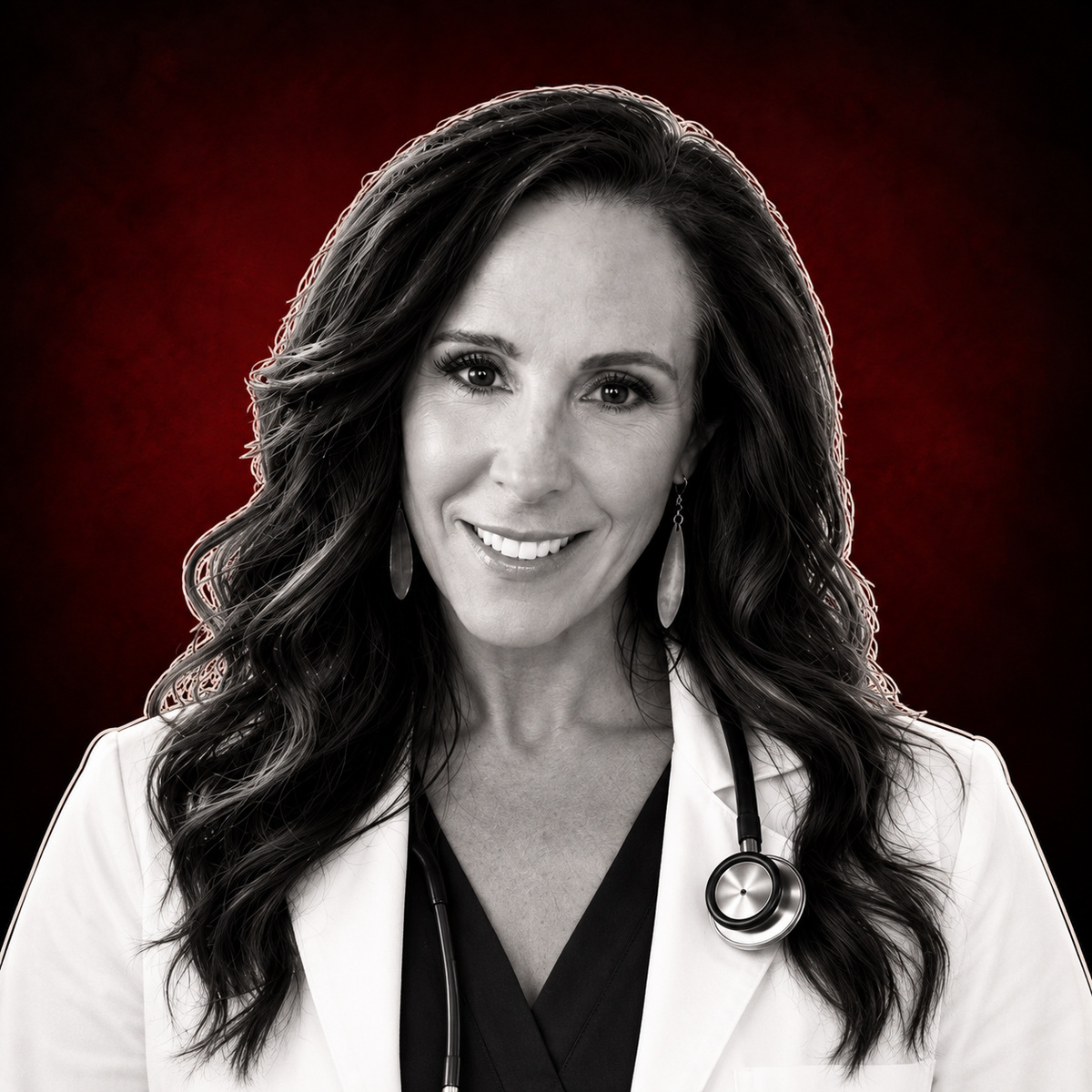
Dr. Jill Carnahan
Dr. Jill Carnahan, MD, is a functional medicine physician and the founder of Flatiron Functional Medicine, which she opened in Boulder, Colorado, in 2010 and which now operates in nearby Louisville. A graduate of Loyola University Stritch School of Medicine, she holds ABIHM, ABoIM, and IFMCP credentials in integrative and functional medicine. Her practice brings together mid-level providers, a physical therapist, a chiropractor, the MD Lifespan plasma exchange program, and an in-house retail store for supplements, and she still sees patients two and a half days a week while training her team. Jill is a survivor of breast cancer, diagnosed at 25 during medical school, as well as Crohn's disease and mold-related illness, experiences that shaped her focus on gut health and environmental medicine. She is the author of the bestselling prescriptive memoir Unexpected, executive producer of the documentary Doctor/Patient, and host of the Resiliency Radio podcast, and she is a member of Speakeasy.
Website LinkedIn Instagram Facebook YouTube Doctor/Patient Documentary