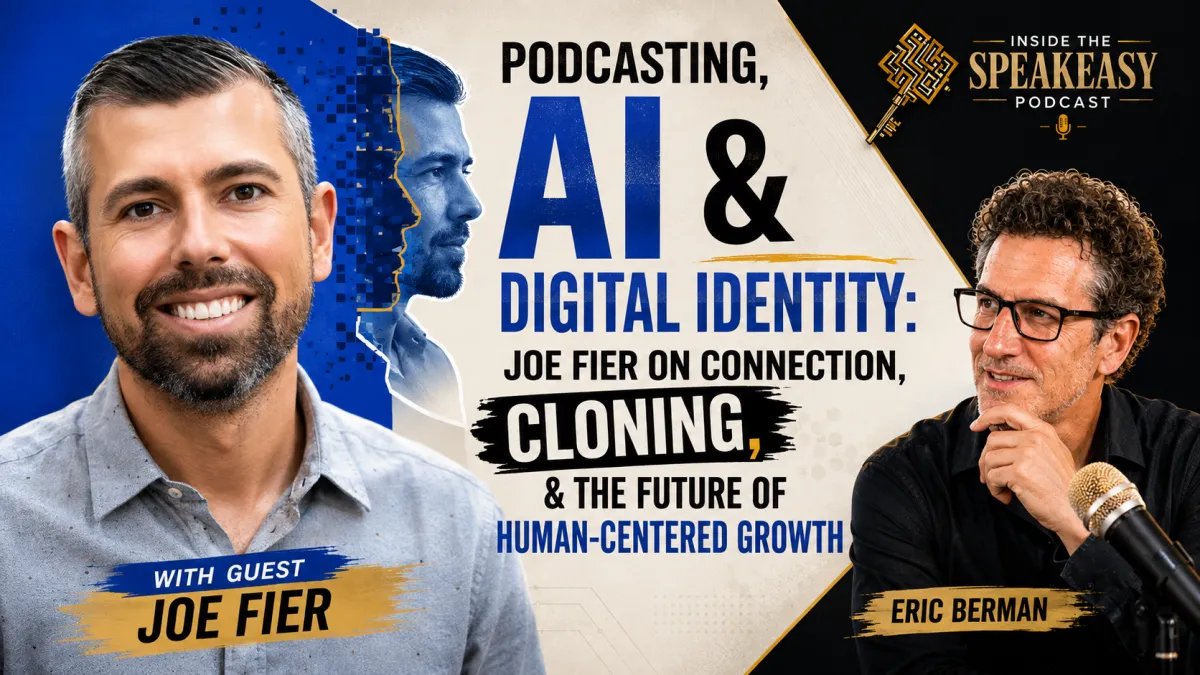
In this episode, Joe Fier, host of the Hustle & Flowchart podcast and Co-Founder of Evergreen Profits, reveals how a chance encounter with an AI "digital cloning" tool called Delphi turned into an advisor role, an equity stake, and a second career implementing AI clones for entrepreneurs and their communities. You'll hear the decisions, strategies, and hard-won lessons behind building a digital version of yourself that can answer questions and share your knowledge around the clock, including how to turn a simple habit of following up after every conversation into lasting partnerships, avoid the costly mistake of building your show around someone else's voice instead of your own, and recognize the opportunity sitting inside years of podcast episodes, books, and content that most people never think to put to work.
In this episode, you'll discover:
- What a "digital clone" actually is, how it's trained on your content, and why it's fundamentally different from a generic chatbot like ChatGPT
- The simple, one-minute follow-up habit Joe uses after every podcast interview to turn guests into real business partnerships
- How giving unsolicited, specific feedback to a startup founder turned into an advisor role and equity stake, without ever asking for either
- The three main ways businesses are actually using digital clones today — lead generation, customer support, and internal knowledge management
- How Joe kept showing up for his podcast through the sudden loss of his father and the birth of his daughter two weeks apart
Episode Summary
Joe Fier has spent the better part of a decade building relationships on and off the microphone, and in this episode he traces the winding path that took him from co-hosting the Hustle & Flowchart podcast to becoming one of the most trusted implementers of AI "digital cloning" technology for entrepreneurs and communities. He and Eric Berman, longtime friends from the San Diego business scene, dig into what it actually took to find his own voice after his podcast partnership with Matt Wolf ended, how podcasting became a stage for connection rather than just content, and the follow-up habits — like sending a quick Loom video after every interview — that turned casual guest relationships into long-term partnerships and joint ventures.
The conversation takes a candid turn as Joe opens up about a brutal stretch of life: within the same short window, he and Matt ended their decade-long business partnership, Joe's wife gave birth to their daughter, and just two weeks before that birth, Joe's father died by suicide. Joe describes the disconnection he felt from his dad, the anger and grief that followed, and how — rather than stepping away — his podcast became one of the few constants that helped him process it all. It's a raw, honest look at how creators keep showing up for an audience while quietly rebuilding themselves behind the scenes.
From there, the episode shifts into the technical and business story that's defined Joe's last two years: discovering Delphi, a platform for building AI "digital twins" trained on a person's books, podcasts, videos, blogs, and other content. Joe explains how a digital clone differs from a typical chatbot — it isn't scraping the open internet, it's a private, controlled model built entirely from what you feed it, capable of holding a real conversation across voice, text, or video. After trying roughly twenty inferior tools, Joe found Delphi, became its first paying customer, and impressed co-founder Dara enough with unsolicited product feedback (delivered, fittingly, via Loom video) that he was eventually invited to become an official advisor and equity holder in the company, without ever pitching for either.
Eric and Joe then walk through how this technology is showing up in Eric's own client work — including a Delphi clone built for longtime business partner Brian Tracy, as well as clones for clients like Natalie Jill and golf pro Erica Larkin — and the three primary use cases Joe sees repeatedly: a public-facing clone for lead generation and customer support, a gated clone offered as a premium perk to paying customers or members, and an internal clone that helps a team access company knowledge and generate on-brand content. The two also discuss a first-of-its-kind project: building a shared "community clone" for the Speakeasy mastermind itself, trained on the collective knowledge of its members and chapters, so anyone in the community can ask a question and get pointed toward the right person, resource, or past conversation instantly.
The episode closes on a personal note, with Joe describing how he protects his time as a father of two young daughters — time-blocking Brazilian Jiu-Jitsu three mornings a week, keeping mornings and early evenings for family, and batch-recording his podcast so the rest of his week stays flexible. Listeners walk away with both a clear-eyed introduction to what digital cloning can do for a business today and a reminder that even the most future-facing entrepreneurs are, underneath it all, trying to stay human, connected, and present for the people who matter most.
Big Ideas Discussed
Podcasting as a Relationship Engine, Not Just a Content Channel
Joe frames his podcast, Hustle & Flowchart, less as a content marketing exercise and more as a stage he built to invite interesting people into his world. He points out that hosting isn't just about the recorded conversation — it's the pre-show rapport, the post-show buffer time he intentionally builds in, and the follow-up afterward that actually create the relationship. Guesting on other people's shows works the same way in reverse: you get to borrow someone else's stage and audience without doing the heavy lifting of building your own.
He's specific about the mechanics: he always asks a guest when their hard stop is, then privately gives himself a buffer beyond the recorded interview so there's unscripted time to actually connect. That habit, repeated over hundreds of episodes, is what turned podcasting from a marketing channel into the foundation of his network — and eventually, into the very thing that led him to Delphi.
The Simple Follow-Up Habit Almost Nobody Actually Does
After nearly every interview, Joe records a quick, casual Loom video — often walking outside into his backyard — thanking the guest by name, referencing something specific from the conversation, and often making a direct ask or offer. It's unpolished and personal by design, and he argues most people skip this exact step, effectively "taking the ball to the three-yard line" and never scoring.
Eric picks up on how rare real follow-through is, noting that even in a world obsessed with networking advice, simple consistent follow-up is the piece almost everyone drops. Joe's takeaway is that it doesn't need to be complicated or automated with elaborate systems — AI tools and a supportive team can help, but the habit itself, done consistently, is what compounds into real partnerships over time.
Digital Cloning: Turning a Lifetime of Content Into an Interactive "Digital Twin"
Joe describes digital cloning as building a "digital twin" of yourself — loading your books, podcast episodes, YouTube videos, blogs, emails, even voice diaries into a private, protected database that you control. Unlike a general-purpose chatbot, the clone only knows what you've fed it, and it's built to serve up that knowledge the way people actually want to receive it, whether through text, voice, or video. Joe's own clone is trained on almost three million words of his own content; some of Delphi's larger clients have fed in over fifty million words.
He describes the effect as "connecting the dots" between everything a person has ever said or written and the exact question someone is asking right now — something Eric has witnessed firsthand watching clients like Brian Tracy interact with their own cloned voice and knowledge for the first time.
Value-First Networking: How Feedback Became an Advisor Role and Equity
Joe's origin story with Delphi is a case study in giving before asking. After finding the tool and becoming its first paying user, he tracked down co-founder Dara's contact information and sent him detailed, specific feedback — including a suggestion to sync new podcast episodes directly into a clone's training data. Dara welcomed the feedback and kept asking for more, and Joe kept delivering it, eventually pointing Delphi's marketing efforts toward audiences and communities the company hadn't yet tapped.
None of this was angled toward a formal ask. The advisor role and equity came later, offered by Dara as a thank-you Joe wasn't expecting. The lesson Eric draws out is that consistent, specific, low-ego value delivered over time — without demanding anything back — is what actually built trust deep enough to lead to a real ownership stake.
Grief, New Fatherhood, and Showing Up Anyway
Joe is candid about one of the hardest stretches of his life: ending his business partnership with longtime co-host Matt Wolf after roughly six years together, becoming a first-time father, and losing his father to suicide just two weeks before his daughter was born. He describes the disconnection he felt from his dad in the months before, the anger that followed the loss, and the disorientation of trying to figure out who he was professionally and personally at the same time.
What stands out is that the podcast didn't stop. Joe describes it as one of the few constants that gave him a reason to keep talking, keep reflecting, and keep showing up, even while he was quietly rebuilding his sense of identity and direction over the following couple of years.
Questions We Answer in This Episode
What is a "digital clone," and how is it different from a chatbot like ChatGPT?
A digital clone is a private, protected "digital twin" built entirely from a person's own content — books, podcasts, videos, blogs, and more — rather than the open internet. It's trained to represent that person's actual knowledge and voice, and the owner controls exactly how it's used and who can access it.
How much does it actually cost to build and run a digital clone?
Joe notes that entry-level access through Delphi can run as low as roughly $19 a month when paid annually, with higher tiers available depending on features and scale — a price point Eric points out is surprisingly inexpensive relative to the value it delivers.
What are the main ways businesses are actually using digital clones today?
Joe outlines three primary use cases: a public, front-end clone used for lead generation and customer support; a gated clone offered as a premium perk behind a paywall or membership; and an internal clone that helps a team access company knowledge, standard operating procedures, and brand-aligned content without pulling the founder into every question.
How did Joe go from being a customer to becoming an official advisor and equity holder at Delphi?
He tracked down co-founder Dara directly, offered specific, unsolicited feedback on the product (including feature requests that were later built), and kept the feedback coming consistently. He also brought marketing ideas about which audiences and communities Delphi should be reaching. The advisor role and equity were offered to him later as a thank-you, not something he pitched for.
What's the follow-up habit Joe uses after every podcast interview?
He records a short, casual Loom video shortly after each conversation — often from his backyard — thanking the guest, referencing something specific they discussed, and often including a direct ask or offer to help. He treats this as a non-negotiable step that most people skip.
How did Joe keep his podcast going through his father's death and his daughter's birth two weeks apart?
He describes leaning into self-reflection and being kind to himself through a difficult couple of years, with support from his former co-host Matt Wolf. Rather than stepping away, he kept recording — the show gave him a reason to keep talking and processing what he was going through.
What makes the Speakeasy community clone different from other Delphi clones?
Most Delphi clones are built around a single person. The Speakeasy project, developed with Joe, is one of the first built around an entire community and its collective knowledge — including podcast content like this very episode — so members can ask a question and get pointed to the right person, chapter discussion, or resource instantly.
How does Joe balance running multiple ventures with being a present father?
He time-blocks Brazilian Jiu-Jitsu three mornings a week, keeps mornings free for his family until roughly 9am, works from home with flexible breaks throughout the day, and tries to wrap up by 4 or 4:30pm — while batch-recording podcast interviews so his schedule doesn't get fragmented.
Full Episode Transcript
Read the Full Episode Transcript
Welcome to the Show
Eric Berman: Welcome to the Speakeasy Podcast, where the real conversations happen behind closed doors with the boldest entrepreneurs, creators, and growth minds in the game. No fluff, no filters — just the raw strategies, personal stories, and mental models that move the needle. I'm Eric Berman. In today's episode, we're going to meet Joe Fier, and I'm pumped, because if you're interested in learning about the world of clones — AI clones, how you can replicate yourself and get your own clone — you're going to learn from one of the biggest experts we have. He's been consulting with the biggest company in that space and has become the go-to guy implementing clones across many of my clients and many people in Speakeasy. You're also going to hear an amazing journey of a podcasting guru: how Joe went from podcasting to tracking down the guy who built this incredible tech, to now consulting for them, and how he survived some incredible family tragedies along the way. So today, I'm excited to welcome Joe Fier.
Joe Fier: Awesome — well, we got my "limp microphone" problem out of the way, so that's a good way to introduce me to everybody.
Eric Berman: I'm excited, because I'm a guy who's been running podcast shows and teaching people to do podcasts, so it's a little intimidating for me to be on the other side of this, but I'm going to try to get through it. And yeah, we're doing some exciting things in Speakeasy too, so we'll talk about that a bit and also dig into clones, Delphi, and that whole world — we're actually working with several clones through the project you're building at Delphi. But you've got a real journey, man. We've known each other in San Diego for what, twelve-plus years now?
Joe Fier: Probably that, yeah — I think I've been in Speakeasy for five years or more. I've honestly stopped counting. San Diego's been amazing.
From Co-Hosting Hustle & Flowchart to Finding His Own Voice
Eric Berman: You've been such a great member, and I've always known you as sort of "the podcast guy" — who do you talk to when you have podcasting questions? And now it's more "the AI guy." I want to hear about that journey. Let's go back to the beginning, hear some nuggets from the world of podcasting, and then we'll transition into Delphi.
Joe Fier: It all connects, man. Podcasting came first — back in 2017, my show, Hustle & Flowchart, got established. I still have the old neon light on my wall. That was with my old co-host, Matt Wolf, still my best friend — he's now the AI news guru guy you've probably seen on YouTube. I took over the show after we split, which was probably three and a half years ago now, after doing it together for five or six years. The reason I love podcasting is that you get to connect with anyone — it's like having your own stage and inviting people in. Guesting on other shows is cool too, because you get to hang out on someone else's stage without having to do all the work.
Eric Berman: A lot of us ADHD folks find that podcasting forces us to actually pay attention — you can't multitask, you're having a real conversation with a human, and that's great.
Joe Fier: Teleprompters help too, when you want to look right into the lens — that's my newest addition. But my journey really comes down to loving people and loving to connect. I think this is such a cool way to do that at scale, sharing conversations. Matt and I started our show because we were "the dumb guys in the room" who wanted to learn from the best, and we had a good network at the time. I've always lived through my network — connecting people, giving value, just because I want to help and learn new stuff. That's basically life for me, which is why I have a lot of spinning plates. But the podcast has always been the consistent thing.
Eric Berman: What was the peak, and where's it at now? What were you actually doing in the podcast world?
Joe Fier: It naturally evolved — I used to run programs teaching podcasting, still consult on it, and I actually just launched a new podcast with a doctor client of mine. I'm not a doctor, but I can talk the talk and connect the dots for people. It's evolved from teaching, to partnering, always while keeping my own show going. Podcasting itself has changed a lot too — I feel like it's in a real resurgence right now, way more video-driven. YouTube is actually the number one platform for podcasts now, which I only learned recently from my producer, who's been with me for six years. If you're going to do your own podcast, have a team — shoutout to my producer, Sammy.
Eric Berman: How has podcasting really helped your career? What's the honest "why," given that it's a real commitment?
Joe Fier: I always tell people to guest on someone else's show before starting your own, just to get a taste of it and understand what your agenda is — don't just guest to talk. For me, it stirred a ton of connection. You spend thirty or forty-five minutes with someone, you become friends, and if you leave a buffer at the end — even ten minutes — you get real time to just talk. I always ask a guest when their cutoff is, and in my head I build in extra buffer beyond that. That's when new opportunities, JVs, or someone wanting a Delphi clone come up. It's partnerships at the core.
Eric Berman: That reminds me of an old lesson from "How to Win Friends and Influence People" — if you just let somebody talk ninety percent of the time and actively listen, they want to be your best friend. You're describing the same principle in a different form, and then that natural buffer you leave is where the real relationship-building happens.
Joe Fier: Exactly, and then I double that by always following up afterward. I love Loom — I'll grab my phone, go out to my backyard, away from the studio, and record a quick one-minute video: "Hey, it was awesome chatting with you yesterday, Eric — here's something we talked about, here's a connection I can make for you." Just genuinely follow up and maybe make an ask.
Eric Berman: What you're saying seems so fundamentally obvious, but I bet most people don't do it — it's like moving the ball to the three-yard line and never scoring. I'm constantly amazed at how many people don't follow up properly or have a system for it, and how many missed opportunities that creates.
Grief, a New Daughter, and Losing His Father to Suicide
Eric Berman: So you're doing this for a while, helping people — you mentioned some stories about how it's helped you and others beyond that. Take me on that journey.
Joe Fier: With my show, I had a co-host originally, Matt — we're like brothers from other mothers, we can still finish each other's sentences. When I took the show over after five or six years together, that was different — I had to figure out what my own voice was, what my own take on things was, and that was a journey of bobbing and weaving without really knowing. I didn't have a North Star at the time. That was a rough gap. Not only did Matt and I stop doing the show together and stop our business together after a decade-plus, but right before that I'd had a daughter, which was great — except literally two weeks before that, I lost my dad to suicide. So this was a crazy era of figuring out who the hell I was, navigating the business side and the personal side, with a new daughter two weeks in.
Eric Berman: I'm so sorry to hear that. Three major life events at once — how did you get through it, if you're willing to share?
Joe Fier: I'm totally open about it. At first I was guilting my dad, because I felt like he was disconnected — which, looking back, connects to where I'm at now, because I was disconnected from him too, and I think a lot of people are disconnected in their own way and just don't talk. Whatever he was going through, I still don't fully know, but it happened fast — literally two weeks before my daughter arrived. So I went from the lowest point I'd ever felt to, weeks later, the highest point. The way I got through it was a lot of reflection time — really digging into what I believe, who I am at the core, going back to my darkest points. That took a couple of years. I tried to be kind to myself, because I did get angry for a while after losing him, on top of sleepless nights with a newborn, business, and marriage all at once.
Eric Berman: It sounds like the podcast almost became part of the cure — something familiar and comfortable while you were navigating life without your dad.
Joe Fier: Absolutely. Matt was still hanging around during that period and was super supportive — he knew my dad too, so he told me to do what I needed to do and said he'd carry the weight as much as he could. But honestly, the podcast didn't stop. I wanted to keep talking. That's the crazy thing.
What Digital Cloning Actually Means
Joe Fier: It wasn't until I found this whole interaction-and-connection idea — which brings it back to Delphi — that things clicked. It was almost exactly two years ago that I found this service. Before I even knew about Delphi, I had the podcast, and I wanted an interactive way for people to engage — not just listen — with me and with all the episodes I'd already recorded, which at the time was around five hundred, now almost seven hundred. I tried maybe twenty different chatbots, right as AI was starting to pick up, and they were all "dumb bots" — very vanilla question-and-answer tools. Then I found Delphi on Twitter, tried it, and thought, "holy shit, this thing actually has logic behind it, has a brain, is actually following up with me." So I signed up, paid for it, and reached out to co-founder Dara directly — I found his email on Twitter.
Eric Berman: You stalked him down. For those who don't know Delphi yet — we've talked a bit about cloning, but let's properly define digital cloning, since that's really your world now.
Joe Fier: This whole concept of cloning, or a digital twin, is basically putting all of your knowledge — your books, podcasts, YouTube videos, blogs, emails, even voice diaries or written work — into a protected, private database that you control. It's not like ChatGPT training on the open internet; people interact with it through text, voice, or video, and it serves up your knowledge the way people actually want to receive it. Mine is almost three million words at this point, and I've seen clones with up to fifty million words loaded in. It's connecting the dots between everything you've ever put out, however long ago, and relating it directly to whatever question someone asks.
Eric Berman: That's the most impressive part I've seen firsthand — we're working with you and Delphi on the Brian Tracy clone and a few other clients, and it's mind-blowing, from the voice to the way it answers questions. It was so fun watching Brian Tracy interact with his own bot.
How Unsolicited Feedback Turned Into an Advisor Role — and Equity
Eric Berman: I want to share this because it also touches on something we've learned from people like Roland Frazier — the idea of "consulting for equity." You went from stalking a founder to becoming, essentially, the go-to implementation agency for their top clients. How did that happen?
Joe Fier: I think I'm allowed to talk about it — I put it on my LinkedIn that I'm an advisor, so it's public. Dara, the co-founder, is actually in Speakeasy too, as a global member. My timeline was: I found the tool, thought it was smart, reached out to Dara, and told him honestly that I'd tried twenty of these things and his was the only one that didn't suck — but there were a few features I'd love to see. He got back to me, and I gave him video feedback, Loom-style again, on features I wanted — like a podcast sync, so that when I release an episode it automatically syncs with the digital brain. He loved the idea, they built it, and I just kept sending feedback. I even asked him at one point if I was bugging him too much, and he said "keep them coming." Then my marketing brain kicked in, and I started suggesting which groups and audiences they should be reaching. I'm not going to take credit for everything, but things picked up a lot on the marketing side, and I just kept giving feedback.
Eric Berman: For anyone building their career, the lesson is that you were passionate and weren't afraid to keep offering value even when you might have assumed nobody wanted to hear from you. Dara did the right thing a good leader does — he said "give me more," instead of "don't bother me" — and you kept showing up, which turned into real relationship and eventually into becoming a consultant and getting equity.
Joe Fier: I was having a lot more casual chats with Dara at the time; now he's a much busier guy, though he still responds. Honestly, they've built a solid roadmap and team, and it's grown tremendously. He offered me the advisor role almost as a thank-you — that's really what I remember of it. It was a "holy shit" moment, because I wasn't looking for it at all. I just genuinely thought the tool was cool and that other people would too, and I still feel that way — I don't see any real comparison out there. It's connection at scale, and it keeps getting better; even today they rolled out something I wasn't expecting and I have to relearn the tool all over again.
Inside Delphi's San Francisco Office
Eric Berman: So what percentage of your time now is podcasting versus the clone world?
Joe Fier: Clone work has ramped up a lot because of onboarding their top-level clients, so podcasting is maybe twenty percent of my time now, since I have a team that handles the rest. I show up for my own show — maybe one interview a week — and for the doctor's podcast we just launched, maybe once a week as well. It's all usually batch-recorded so my schedule doesn't get fragmented. My team pulls everything from Riverside, edits in Descript, uses Opus Pro for clips, and even follows up with guests. I'd never do it without a team.
Eric Berman: And it's still providing the same relationship value the podcasting always did, while you get to be passionate about the AI side and act as the head consultant and implementer on a product you genuinely love.
Joe Fier: Strategist, marketing mind — yeah. I actually didn't realize until I visited Delphi's office in San Francisco for the first time and met the team that I was their first paying user. They told me I'd basically walk in like a celebrity, since everyone there knew who I was.
Eric Berman: It's funny — San Diego has its own energy, and other cities like Austin or Boise have theirs, but San Francisco is a completely different world.
Joe Fier: I like it — it's a whole different level, with a real "everyone wants to change the world" mission energy. I don't know if I could do that vibe every day, but tapping into it once a month or so, I really enjoy it.
Bringing Digital Clones to the Speakeasy Community
Eric Berman: Let's talk about what we're doing together in Speakeasy with Delphi — we're about to launch, or will have launched by the time this airs, a community clone project.
Joe Fier: You came to me with this vision — you've got chapters across the country and now internationally, and a community hub in Circle that's really starting to pop off. The idea is: how do we take all of that collective knowledge and make it real-time and interactive, so someone in one chapter can instantly see what another chapter discussed about, say, AI tools, or ask who can help with paid ads on LinkedIn — and the system pulls up the best resources or distills the best notes for that person.
Eric Berman: That's exactly right — and I don't think Delphi has done this before, since most of their clones are built around individual people. Are we one of the first projects built around an entire community instead of a single person?
Joe Fier: Yes — there are "resource companion" type clones, but this is the only mastermind I know of doing this. Delphi itself tends to be more person-based; the co-founder actually built the very first version of the tool to represent his grandfather, a successful businessman he wanted to be able to communicate with after he passed. So the whole concept is rooted in an individual person rather than a brand or group, which is part of why building a community-wide clone has taken some extra time on the back end.
Eric Berman: We're grateful you helped push them down a slightly different path for us. I think we're seeing user behavior shift toward wanting fast, efficient answers from whatever tool people favor that day — so replicating that inside our own community, where people can just ask a question of "our own people," is genuinely exciting.
Joe Fier: There are so many use cases. You can have it write content for you if you prompt it correctly, since it's trained on all that community knowledge — though I'd have to adjust the instructions on the back end for that specific behavior. With the Speakeasy clone, you can get information, ask for advice, or consult it through an issue you're working through — it's basically mentors in a box, drawn straight from Speakeasy. And this very podcast episode will live in there too, automatically, once it's recorded.
Front-End Lead Gen vs. the Gated "Mentor in a Box"
Eric Berman: Let me take a stab at how people might use this. You have what I think of as two big instances: one is a "legion" style, gated front door — say, wanting to talk to golf pro Erica Larkin's clone, where you give your email to access it, which we're actually testing with paid ads this week to see how lead generation performs. The other is more behind a paywall — if you've bought a digital product, you get twenty-four-seven access to that person's clone, so instead of searching through a course lesson for an answer, you can just ask the clone directly in real time. Did I get that right?
Joe Fier: Yes, those are some of the most common setups — front-end lead gen or customer service, where the clone gives people that public profile experience and can even guide them toward calls to action, like a freebie landing page, based on what they're asking about. And the one people often forget is an internal version for your own team, so they can go to the clone with questions instead of coming to you directly — all your SOPs and best practices live in there — and it can double as a content creator, generating blog posts, emails, newsletters, scripts, and social posts, because it knows more about you and your brand than a generic tool like ChatGPT ever could.
Family, Jiu-Jitsu, and Protecting Personal Time
Eric Berman: Tell us about the personal side of Joe — you've got a beautiful family, right?
Joe Fier: Two daughters and a beautiful wife — I was actually the Easter Bunny at their school right before this recording, sweaty and all. My oldest is five and a half, my youngest is almost a year and a half, so there are a lot of sleepless nights and getting sick often. The thing that's kept me sane over the last nine months is Brazilian Jiu-Jitsu — you might notice some choke marks on my neck, but it's genuinely one of the best things I've done in a long time for grounding myself, humbling me, and putting me in the best shape of my life.
Eric Berman: How do you fit that in? What's the routine?
Joe Fier: I time-block it on my calendar now — three days a week, 10am Tuesday and Thursday, and 6am on Fridays. Family time is always the morning, blocked off until about 9am, even though it feels fast because things are always going. I work from home, so I'm dipping in and out throughout the day, maybe thirty minutes here and there, and I try to wrap up work by 4 or 4:30pm.
Eric Berman: Anything else you want to share today? This was great catching up, and I always love getting your wisdom.
Joe Fier: I just want to give appreciation to you for doing this show, and to Sammy for putting so much together — Speakeasy in general, I just love the community. San Diego is rock solid, but the fact that you have this whole network now, and how fast it's growing, blows my mind. I talk to people all the time and show them the map on the website — "look, that's a new dot."
Eric Berman: Thank you so much for the kind words, and thanks for the time. Anybody who wants to reach out to Joe, get your own clone, or learn about podcasting — feel free to connect, and we'll see you next time. And that's a wrap from the Speakeasy podcast. If something sparked for you, don't keep it to yourself — share it, review it, and pass it to the one person who needs to hear this right now. Want in on the real mastermind? Tap the link in the show notes to apply. Until next time, keep scaling, stay sharp, and don't be the smartest one in the room.
About The Guest
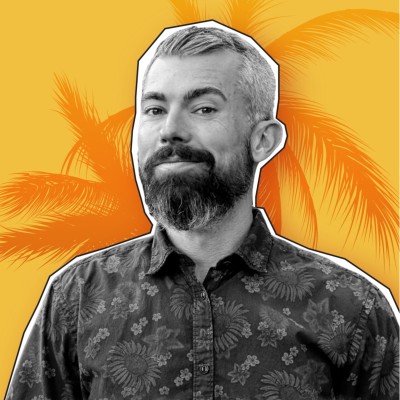
Joe Fier
Joe Fier is the host of the Hustle & Flowchart podcast, established in 2017, and Co-Founder of Evergreen Profits. After building the show for years alongside original co-host Matt Wolf, Joe took it over solo and has continued using it as a platform to connect with entrepreneurs, marketers, and builders across industries. Roughly two years ago, Joe discovered the AI "digital cloning" platform Delphi, became its first paying customer, and — through consistent, unsolicited product feedback to co-founder Dara — was eventually invited to become an official advisor and equity holder in the company. He is now one of Delphi's top implementers, helping onboard and consult with the platform's highest-level clients on building digital twins for lead generation, customer support, internal knowledge management, and content creation. Joe lives with his wife and two daughters, balances multiple ventures with a batch-recording workflow and a lean team, and credits Brazilian Jiu-Jitsu with keeping him grounded through the demands of entrepreneurship and fatherhood.