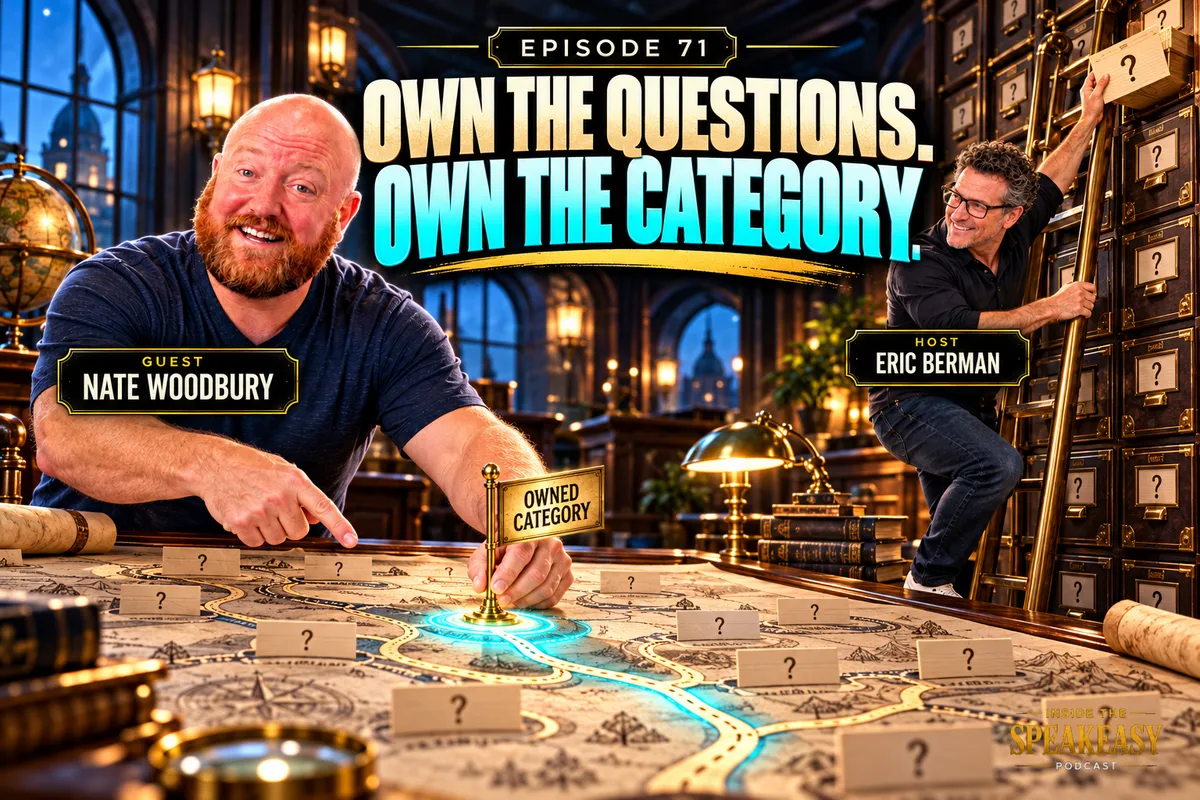
Nate Woodbury, CEO of Be The Hero Studios, argues that the most reliable way for an expert to win clients online is to own a category in search on YouTube, Google, and AI tools like ChatGPT, rather than chase viral reach. His approach began in 2013, when he noticed a YouTube video embedded on one of his number-one Google pages was getting 50 times the views of the page itself. In this conversation with host Eric Berman, Nate explains why he now hunts for long, specific questions of 10 words or more instead of keywords, why most social posting is nurturing rather than marketing, and how a value-only video with no self-promotion can send prospects to your website already trusting you. He also lays out the three levels of expertise he believes you need before positioning yourself as a thought leader, and shares the $97 offer that filters his own pipeline. For founders who sell expertise, it is a practical map for turning search into referral-quality leads.
In this episode, you'll discover:
- How Nate Woodbury uses a tree analogy of trunk, branches, and leaves to pick one ownable category and map the questions your dream clients are asking
- Why long, specific questions with only a handful of monthly searches can add up to owning an entire category, even against names like Simon Sinek
- Why most social media posting is nurturing rather than marketing, and why search is the channel that puts you in front of people who have never heard of you
- How a two-step funnel keeps YouTube videos promotion-free and saves testimonials and sales content for your website, so prospects arrive curious instead of defensive
- The three levels of expertise Nate describes, and how he turned two free pilot clients into the track record that let him charge for his service
Episode Summary
Nate Woodbury's central claim is simple: if people search online and find your video as the answer to their question, you are reaching dream clients who have never heard of you, and in his experience that is the best form of marketing there is. The rest of the conversation with host Eric Berman explains how Nate turns that idea into a repeatable system for owning a category on YouTube, Google, and AI answer tools.
The strategy started with an observation. Back in 2013, Nate was running a custom web design and SEO business with pages ranking number one on Google. Looking at the analytics, he saw that a YouTube video embedded on one of those pages was getting 50 times the views of the page's own Google traffic. He kept finding examples of single pieces of video content outperforming top-ranked pages, so he shifted his focus. His view now is that Google behaves less like a search engine and more like an answer or content engine, and that the same logic carries over to ChatGPT and other AI platforms. Nate says the growth since AI took off has been steady rather than exponential, but the strategy has become clearer and easier, and he says algorithm changes have only brought positive bumps because those changes aim to match questions with answers.
The method replaces keywords with questions. Nate starts with a broad topic, then uses tools such as Semrush or Ahrefs to switch on question filters and raise the word count, often to 10 words or more. Using a tree analogy, he treats the industry as the trunk, categories as branches, and individual questions as leaves. Because long questions reveal who is asking and what problem they have, an expert can compare branches and choose the one whose audience is most likely to hire them. His leadership-style example makes the point: Simon Sinek tops YouTube for that phrase, yet Nate found 30 long questions in the category and Simon ranked for only three. A question with 10 monthly searches is just a trickle, he says, but each trickle brings viewers who watch to the end, and enough of them add up to owning the category.
Platform choice and funnel design follow from that. Nate starts clients on YouTube because it transcribes and indexes every spoken word, while organic posts on Facebook, Instagram, and Twitter rarely get found through search. Turning each video into a blog post with the video embedded, he says, also lifts Google traffic, and he is currently testing LinkedIn articles built from YouTube transcripts. When Eric describes his own habit of shooting quick reels on trending topics, Nate reframes it as nurturing an existing audience rather than marketing. For marketing, he tells experts to set aside what they want to talk about and let audience questions dictate the content. The videos themselves should skip credentials and self-promotion, answer the question fully, and end with a call to action that still serves the viewer, such as a free resource or another relevant video, leaving sales pages and testimonials for the website.
Nate is candid about who the approach fits and where his own marketing struggled. He describes three levels of expertise: knowing the material, applying it successfully yourself, and helping others get results. He believes only a level-three expert should step into thought leadership, and he admits he could not sell his own service, even at cost, until he gave it free to two clients whose success created his track record. He also spent years making videos on YouTube SEO and views, topics he could never own against bigger creators, before shifting to thought leadership and personal branding, where he says his channel now leads. An ads experiment ran for six months without profit, but it produced a $97 competitive analysis that he says filters in prospects who understand the value of the work.
The final stretch covers operations and proof. Nate runs filming teams in Utah and Florida, where clients can record 20 episodes in a day, and a team in the Philippines that has handled editing, thumbnails, and channel management, with some members working with him for 16 years. He explains that in-person filming days create forced discipline, which is why he says remote do-it-yourself success is rare, and he names clients across peptides, construction, politics, and parenting who he says now own their categories. The takeaway for entrepreneurs is that search-based authority is built question by question, and it rewards experts who can prove results and stay consistent.
Big Ideas Discussed
Trade Keywords for Long, Specific Questions Your Buyers Ask
Nate Woodbury's paradigm shift is that the gold in search is no longer the keyword but the question. He starts with ordinary keyword research to find a category, then filters out everything that is not a question and turns up the word count. It used to be eight words or longer; now that people type far more detailed prompts into AI tools, he says a single narrow topic can surface dozens of 10-word questions.
The length is the point. Nate says the number of words matters less than how specific the question is, because few creators have published content matching that exact phrase. A long question also tells you who is asking and what they need, which lets an expert judge whether that audience is likely to hire them before filming anything. Even a question averaging 10 searches a month is worth answering, in his view, because those 10 people are searching for exactly what you do and will watch to the end. For an entrepreneur with limited production time, this turns content planning from guessing about trends into answering demand that already exists.
Use the Tree Analogy to Pick One Category You Can Own
Nate describes an industry as a tree. The trunk is your broad topic, the branches are categories within it, and the leaves are the individual questions people are asking. Rather than trying to dominate the whole tree, he looks at dozens of branches, asks which audience is most likely to become clients, and picks the one branch worth owning right now. Once that choice is made, he says the content strategy becomes fairly obvious.
His leadership-style example shows why a crowded-looking category may not be crowded at all. Searching that phrase on YouTube puts Simon Sinek at the top, which might convince most experts the category is taken. Nate found 30 questions of eight to 10 words about leadership style, from the leadership style of Nelson Mandela to the right style during a transition, and Simon ranked for only three of them. Brian Tracy, whom Eric Berman notes is his partner, also appeared. Nate's conclusion is that anyone who systematically answers those questions could own the category, one video at a time.
Separate Nurturing Content From Content That Actually Markets
One of the most useful reframes in the episode is Nate's claim that most of what entrepreneurs call marketing is really nurturing. Posts on social media mostly reach friends and existing connections, email reaches people already on your list, and subscriber-focused YouTube channels, like MrBeast's, are built to keep the same audience coming back. Even going viral, Nate argues, does not generate leads because the people who see it are not your target buyers.
Marketing, in Nate's definition, means getting in front of new people who have never heard of you, and he sees two main routes: paid traffic or search. When Eric describes shooting 90-second reels on topics like community building, Nate tells him that is good nurturing, but if he wants it to market, he needs to forget what he is excited to talk about and let his dream audience's questions dictate the content. He admits that is hard to do. For founders who post consistently but see few new leads, the distinction explains why activity is not translating into pipeline.
Keep Promotion Off YouTube and Earn Trust Before the Sales Call
Nate structures the funnel in two steps. The website holds landing pages, testimonials, and promotional videos. The YouTube video is a prospect's first exposure, so it should not promote at all. Viewers arrive in a what's-in-it-for-me mindset, and he says opening with credentials and client success stories makes them put up their defenses, while simply answering their question keeps them watching to the end.
He also discourages the standard closing requests to like, subscribe, and comment, because they flip the focus from the viewer back to the creator. Instead, he recommends one of two calls to action: a free resource that helps the viewer implement what they just learned, or another video that goes deeper. When viewers then reach the website, Nate says they are curious rather than irritated and explore the promotional content on their own. The payoff shows up on sales calls, where trust has already been built, so less time goes to overcoming concerns. Eric connects this to the give, give, give approach his team uses with thought leader clients.
Questions We Answer in This Episode
How does Nate Woodbury help experts own a category on YouTube and Google?
Nate Woodbury helps experts own a category by finding the long, specific questions their dream clients search for and answering each one with a dedicated video. He picks one category, or branch, with the most promising audience, publishes videos titled with those questions on YouTube, and turns each video into a blog post with the video embedded to lift Google traffic. Over time, he says, these small streams of search traffic add up until the expert owns the whole category.
Why does Nate Woodbury focus on questions instead of keywords?
Nate Woodbury focuses on questions because long, specific questions show exactly who is searching and what problem they have. He uses tools like Semrush or Ahrefs, filters for questions, and raises the word count, often to 10 words or more. Few creators have content matching those exact phrases, which makes them easier to rank for, and people now type more detailed questions because of AI tools.
Why should experts start on YouTube instead of Facebook or Instagram?
Nate Woodbury starts clients on YouTube because it is searchable. YouTube transcribes every word spoken in a video and indexes it, so a video titled with a real audience question can rank without much attention to tags or descriptions. In his experience, organic posts on Facebook, Instagram, and Twitter rarely get found by people searching for expertise, although he calls Facebook a great place for paid ads and is testing LinkedIn articles.
What is the difference between nurturing content and marketing content?
Nurturing content reaches people who already know you, while marketing content reaches people who have never heard of you, according to Nate Woodbury. He puts most social posts, email newsletters, and subscriber-focused YouTube channels in the nurturing group. For marketing, he sees paid traffic and search as the real options, and he considers search the best because it puts your answer in front of dream clients exactly when they need it.
What call to action should end a YouTube video for lead generation?
Nate Woodbury recommends ending with a call to action that keeps the focus on the viewer rather than asking them to like, subscribe, or comment. He suggests one of two options: offering a free resource that helps them implement what the video taught, or pointing them to another video that goes further on the topic. He keeps sales and testimonials on the website so viewers arrive curious instead of defensive.
What are the three levels of expertise Nate Woodbury describes?
Nate Woodbury describes three levels of expertise. Level one is knowing the material, perhaps through a degree or training. Level two is applying it successfully yourself and adjusting what does not work. Level three is helping other people achieve results despite their different strengths, weaknesses, and industries. He believes only level-three experts should position themselves as thought leaders, because people looking for an expert want someone who can help them succeed.
How did Nate Woodbury build a track record when he couldn't sell his service?
Nate Woodbury built his track record by working for free. When he first packaged his thought leadership service, he could not sell it even at cost because he had no proof it worked. He found two people willing to take the service for free in exchange for a future partnership. Both became big successes, and within a couple of years other prospects were asking for the same results, which let him charge for his services.
Full Episode Transcript
Read the Full Episode Transcript
From Website SEO to Owning Categories on YouTube and AI
Announcer: Welcome to Inside the Speakeasy podcast, the private room where today's sharpest founders, innovators, and renegade thinkers come to trade the ideas that move industries. This show is brought to you by HighLevel, the AI-driven business operating system trusted by over 2 million businesses to help automate, scale, and create real leverage. HighLevel isn't just a tool. It's the engine behind some of the most agile and high-performing teams on the planet. If you're ready to streamline everything, amplify your reach, and actually build a business that works for you, you're in the right place. Visit www.GoHighLevel.com/Speakeasy-Mastermind-Promo to get an exclusive 30-day trial for being a listener of the Inside the Speakeasy podcast. Enjoy the show.
Nate Woodbury: If people search online and they find your video as an answer to their question or their problem, you're getting in front of your dream clients, and that's somebody who's never heard of you before. So that, in my experience, is the best form of marketing.
Eric Berman: How would you like to be ranked number one in your category in YouTube, Google, ChatGPT, and a lot more? I bet a lot of us. You are in for a serious, serious treat today as I bring in a special guest from just outside of Salt Lake City. We got Nate Woodbury here. Nate is the CEO of Be The Hero Studios, and he helps experts, thought leaders, become the go-to thought leader in their industries. He's guided clients to top positioning in their space, transforming their expertise into category-defining authority that sets them apart and keeps them in demand through his work with more than 60 successful channels and brands. Nate focuses on one outcome: helping clients dominate their topic and become the trusted name people recognize, remember, and choose. His strategies have helped coaches, speakers, consultants, and business leaders turn their knowledge into consistent influence, high-quality opportunities, and lasting market authority. He's got a team of 35 experts, and he and his company create scalable content strategies to help clients, thought leaders, et cetera, rise above the noise, attract the right audience, and build a powerful reputation in their niche. He's got some serious cool stuff. He's got the leaf strategy we're going to hear about. He's done things like, he's helped people earn $10,000 just from 100 YouTube views. Whoa, can't wait to get into that. So much more. Love the bio. Welcome. Thanks for coming on the show today.
Nate Woodbury: Yeah, awesome. I'm excited to be here.
Eric Berman: All right, Nate, let's jump into this. Like I always say, I like to hear a little bit of the backstory. I know you don't wake up one morning and get out of whatever school you're in and say, hey, I'm going to be this online marketing genius and come up with a system that's just blowing everybody away, which is what you're doing right now. How did you get into what you're doing right now?
Nate Woodbury: Yeah, for a long time, I've kind of been going the opposite direction of a lot of marketing advice. So if we were to wind clear back to 2013, I had a custom web design service. I was doing SEO. We were doing well. We had web pages ranking number one on Google. And so I noticed something. I was looking at the analytics, seeing the traffic, and I noticed that a YouTube video that we had embedded on this page ranking number one on Google, over on YouTube, that video was getting 50 times the views than traffic from ranking number one on Google. That surprised me. I looked at other examples, and I kept finding example after example of just one piece of content totally outperforming these pages ranking number one on Google. So I started to shift my perspective and really focus more on getting content ranked instead of getting a website ranked. And I mean, that proved to be a very valuable choice, because Google is not really a search engine anymore. It's more of a kind of an answer engine or a content engine.
Eric Berman: Yeah.
Nate Woodbury: So that's where the strategy began. And then I've just evolved it and improved it and developed it over the last decade plus since, to where now we know completely how to get you to own your category on YouTube, on Google, on these AI platforms, so that it can be a massive lead generation of, like, referral-quality leads. So that's where we're at.
The Tree Analogy: Trunk, Branches, and Question Leaves
Eric Berman: I mean, that's impressive. That's a big statement. I wanted to dig in. I mean, let's talk about categories. You say own your category. I mean, you could say, bold, say, hey, I want to be the number one sales coach. Like, is it now like, you know, the whole game when you go to Amazon bestselling books? Like, yeah, there's like category, subcategory. I mean, first, like, let's figure out what niche we can get you to win at. Is it a little bit, start there?
Nate Woodbury: Yeah. So first I'll start with a little bit of a paradigm shift. In times past, we would focus on keywords.
Eric Berman: Okay.
Nate Woodbury: Today, the goal is if you focus on the questions. So if you know your topic, you mentioned sales, right? So you can start doing the old-fashioned type of keyword research, but once you find the category of keywords, then I want you to turn off everything that's not a question, and I want you to turn up the word count filter. So essentially, we're looking for really long, specific questions. It used to be I'd find questions that are eight words or longer. Now that we have AI tools, people are being way more specific in their questions. And so typically, in one topic, really specific topic, you can find dozens and dozens of 10-word questions. And so what you do when we're talking about owning a category is we find, okay, here's a category. I use a tree analogy, so I'll kind of get into that now. Like, the trunk of your tree would be your broad topic or your industry. And then the branches are all these different categories, and the leaves represent these questions. So in this category, we find a branch and we see all the questions on it. And because we're given so much information, they've typed in so many words, we know who they are, and we know what their problem is, and we know what help they're looking for. So when you look at one category, you can say, is this my target audience? How likely are they to hire me? What about this branch? What about this branch over here? And after looking at dozens of branches, you can find the one that's, this is the one I want to own right now. And just by focusing on that category, it becomes pretty clear what the strategy is and how you can own it.
Eric Berman: So you're finding out, it's really, it feels like one subcategory of the bigger category, and then tons of content and questions you build out towards that. I mean, obviously there's a lot more science into that, but that's kind of what you're saying there. Let's go deep in there.
Leadership Style, Simon Sinek, and Finding Wide-Open Questions
Nate Woodbury: Yeah, I'll give you a quick example. Now, I work with a lot of leadership experts, and so I was preparing a presentation, and I thought of the category leadership style. There's leadership development, leadership, dozens of different categories. So I'll just give you this one example with leadership style. If you go to YouTube right now and you type in leadership style, Simon Sinek is ranking at the top. And so you and me, we might look at that and say, okay, this category is already taken. We've got a real...
Eric Berman: How are we going to beat Simon?
Nate Woodbury: Yeah, exactly. However, I pulled back the curtain, and I found 30 questions that are 10 words or, you know, eight, nine, or 10 words long, all about leadership style. There were questions like, and I'm just going to kind of paraphrase here, but what is the leadership style of Nelson Mandela, and what's the leadership style that you should have when transitioning in whatever. So I found 30 different questions. Simon had a video ranking at the top for three. And there were, Brian Tracy showed up there. It's wide open, actually. If anyone wants to own leadership style, with this being systematic and answering these questions in content, you could own that category.
Eric Berman: I don't even know if you know this, but Brian Tracy is my partner.
Nate Woodbury: Okay. Very cool.
Eric Berman: Brian Tracy, he's ranked?
Nate Woodbury: There's like, there's Simon Sinek, another channel, and then Brian Tracy.
Eric Berman: So I love it. Good job. All right, so we're doing something over there. That's good to know. But so, okay, well, I'm going to dig in a little bit. You said there's questions, 10 words. Is there like a formula, like 10 words, 12 words? Like, how do you even come up with a quote? I feel like there's this huge transition from SEO to AEO, and that's part of the formula, is finding the right questions. Is 10 the number, and how do you come up with the questions based on, once you find that branch, if you will?
Nate Woodbury: Yeah. So there's two tools out there that I know that can do this, that will start with keywords, but then find you thousands of questions, and then you can narrow it down by word count and whatnot. One is Semrush.com, and the other is Ahrefs. I'm more familiar with Semrush, but both of them seem to do the job. So you type in your topic, and then you turn on the questions button, and then under the filters, you can turn on a word count filter. And so my default is typically 10. I'll start at 10 and just see what's there, because if there's a lot of 10-word questions, the number isn't really what matters, but what does matter is that it's really, really specific. And the more words actually gives you an advantage, because how many other people that have put content on YouTube or Google are using that same exact phrase? And so even though a question might only have 10 searches per month on average, that's a trickle of gold, because it's 10 people that you know are searching for this exact topic. They find your video, they're going to watch it to the end. You put out another one that brings in another trickle, and another trickle. So you're just slowly starting to build this momentum to where you get to a point where eventually you'll own the entire category just by going after these little trickles.
Has AI Changed the Game? Steady Growth Over Algorithm Chasing
Eric Berman: Interesting. And so now, is this, a lot of this has evolved, and have you seen your business, and what you're doing, really skyrocket with AI kind of over the last, I mean, obviously you were early on, and I'm assuming, being, you know, just in talking to you, but has it gotten, like, more important, and all of a sudden this is like, really, opportunity's grown for you because of this?
Nate Woodbury: I would say it's not been exponential. The growth has been pretty consistent. And then I'd just say the strategy became both more clear and easier in the last couple of years since ChatGPT's become real popular.
Eric Berman: But this was working before with YouTube is what you're saying, because you've been in YouTube for years, crushing there. So it's the same concept. It's just working better now with AI to some degree.
Nate Woodbury: Well, the crazy thing to understand is a lot of people will chase an algorithm, like I did back in the day with website SEO, or with YouTube, with a lot of social media stars wanting to build viral attention. The algorithms always change, and so you have to pivot and adjust. You'll have growth, and then you'll drop. When you focus on search traffic, where you're focused on the person that's asking the question instead of focusing on the platform, by focusing on the person, you don't have to worry about algorithm changes, because hopefully the algorithm changes are working to make that connection better. Somebody has a question, you have the answer, and that's what these tools do, is match that together. So I've seen steady growth. We don't plan on our videos going viral, but when there's an algorithm change, I've only seen positive bumps. So yeah, it's been great.
Why YouTube Comes First, Plus Blogs and LinkedIn Articles
Eric Berman: Okay, and do you find yourself playing more, I mean, out of all the different, there's obviously big platforms, Google, GPT, and I'm not going to get into GPT in a second, but I mean, Google, YouTube, let's just start there. I mean, when you work with your clients, is it more like, hey, we're just going to figure out that lane, let's get your branch, let's nail it, and then we're going to hit them all? Or is it like, let's just go on and focus on YouTube for starters, and that'll help get your Google going?
Nate Woodbury: Yeah, great question. So the reason that we start with YouTube is we want to put content somewhere that is indexed and searchable. LinkedIn, we could have another side conversation about, because LinkedIn's been bad for so many years. They kind of buried articles and just made it, they just wanted to compete with Facebook, I'm guessing. But we'll just use Facebook. I'll pick on Facebook for a minute. So Facebook is a great place to do paid ads. But if you're posting organic content there that you're hoping people can find your expertise through searching that topic, it's just not going to happen. Instagram, Twitter, LinkedIn, for the most part, it just doesn't work. And so, but when you put content on YouTube, you don't even have to put in the tags. You don't have to worry about your description. YouTube transcribes every single word that you say, and it's indexed, and it's searchable extremely well. So if all you did was find a question that your target audience is asking online, make a video with that question as your title, obviously your video would do a good job of answering the question, you post it to YouTube, and then the next day people search for that, they'd find your video at the top. Google owns YouTube, and so without doing anything else, your videos will start ranking at the top of YouTube search. If you turn your YouTube video into a blog post and embed your video on that blog page, that will actually increase your Google traffic. So we love doing that. And then just one side note about LinkedIn. I am experimenting with LinkedIn right now, because apparently LinkedIn, now that we're in this AI era, they're like, oh, we want to have our content showing up in ChatGPT specifically. So apparently they've reworked it, and the judgment is still out. I'm seeing if, okay, if we take a YouTube video transcript, rewrite it as a LinkedIn article, and LinkedIn articles, now they've made it so when you post an article, you then share it as a post to your connections. What I'm curious to see, though, is if we start getting search traffic. LinkedIn analytics is kind of hard to see where the views come from, where the reads come from.
Nurturing Versus Marketing: Let Audience Questions Pick Topics
Eric Berman: So this is so fascinating. And I imagine, you know, I'm sitting there looking at myself, and let me just tell you, this is pretty mirrored by a lot of people who are thought leaders or a lot of stuff. You know, I'm sitting there like, okay, team, give me some topics, or I'm just going to riff a 90-second reel about some topic, right? Community building, networking, whatever. Shoot a video on my phone. They put it on Instagram, Facebook. It maybe pops up on LinkedIn. I ain't doing anything on YouTube. Which now you're going to say, Eric, smack, smack, smack, smack. I have a feeling I'm going to answer my own question here. You're going to say, no, you idiot. You'll say, no, Eric, start with YouTube first, and then splice it out, and then put it across all the other channels. Would that be correct, based on what I'm hearing?
Nate Woodbury: Kind of. Kind of. So start with another kind of paradigm. So a lot of times we think when we post content that we're marketing, but the majority of our content posting is actually nurturing. So if we post it to social media, our friends and our connections are the people who are going to see that. If it's shared and it goes viral, we kind of are excited about that, but that's not really our target audience, and so we're typically not generating leads. So when we send out anything through email, we're nurturing our email list. Now, YouTube can be used for either nurturing or marketing. Most channels that we see, they're asking you to subscribe. They want you to keep coming back. I'm a subscriber to MrBeast. Every video he puts out, he wants his subscriber base to love it, to like it, to watch it, and keep coming back. So it's 100% nurturing there. So what I'm talking about is marketing, where you're getting in front of new people who have never heard of you before. So you can do that through paid traffic. You can do that through going viral, but you're not going to generate any leads. It's kind of the worst type of marketing. Or you can do that through search. If people search online and they find your videos as an answer to their question or their problem, you're getting in front of your dream clients, and that's somebody who's never heard of you before. So that, in my experience, is the best form of marketing. So in your case, you've been doing a good job. It sounds like, from what you described, you've been doing a really good job of nurturing your connections and your friends. And if you come up with, like, trending topics or something that you're really excited to talk about, that's some of the funnest content to create, and it's really nurturing. But if you want it to be marketing, not only would I suggest, yeah, let's include YouTube, but I would forget about what you want to talk about. And that's hard to do.
Eric Berman: Yeah.
Nate Woodbury: If you're excited about something, I'm telling you to forget about it. But search and find, okay, what is your audience asking? People who've never heard of you before, your dream audience. What questions are they asking? Let that dictate what content you create, put that on YouTube, and now you actually have content that's marketing.
Eric Berman: I love it. In this game, ultimately, that's better, what I'm looking for anyway. You're doing all this nurturing, nurturing, nurturing, hoping to get a lead. Now you're like, yeah, you could just shortcut it if you just hit YouTube, find the right questions and what your audience wants, and just shoot content on that and go in there. Now, my next thought, and I'm sure I'm probably the avatar of a lot of people listening today, is, all right, well, I got a bunch of reels on my Instagram, or maybe I've done some stuff, or some people listening have nothing yet. They create a YouTube channel, and it's kind of naked, you know, initially. Like, do these videos become the first videos, or do you say, look, have a base of videos in there where you're teaching a bunch of stuff? Like, how do you deal with that with your new clients?
Eric Berman: Everything you hear on this show comes back to one idea: proximity. I wrote the book on it. Proximity Pays, my bestselling book, available now at proximitypays.com.
A Two-Step Funnel: Value-Only Videos and Viewer-First Calls to Action
Nate Woodbury: Yeah, good question. So I wouldn't worry so much about the channel itself and having that base of videos. I mean, it might help a little percentage improvement here or there, but I would look at kind of the funnel as having two main steps. So let's keep the sales and the promotion on your website. You're going to have your landing pages, you'll have your testimonials, you'll have your sales and promotional videos on your website. The videos that I'm talking about, that we put on YouTube first, that's people's first exposure to you, and we're not going to promote. All right? So they have this question. They're in a what's-in-it-for-me mindset. And when they click on the video and they're seeing you, they're kind of like, okay, what is this video? Is this really what I'm hoping for? I'll give you two ways we could go. One, we could start saying, hey, I'm Nate. This is what I do. My credentials. This is why you should listen to me. And here's all my clients that have stories. They're going to put up their defenses. If we instead don't mention anything about us, just focus on them and give, answer their question, give value, you know, and don't promote at all, they're not going to have to put up their defenses. They're going to be like, oh yeah, this is helpful. This is what I came for. They'll watch the episode to the end. And at the end, don't turn it around and say, okay, can you help me out? Will you subscribe? Will you like the video? Will you comment below? Because we turned it away from focusing on them to now focus on me. I would say still keep the focus on them. And you could give them one of two main calls to action. One would be, hey, if you found value in this video, I've got a free resource that's going to help you implement it, so you can go to this link and that'll help you out even further. Or the other would be, hey, if you found value in this video, there's another episode titled blank, that if you watch that video, you're going to learn this, this, and this. So you can go watch that video now. All right, so it's all focused on them. When they go to your website, their defenses haven't been put up. They're not annoyed, they're not irritated. They're curious. They explore around. They're going to watch your promotional content and everything. And it's a way of generating referral-quality leads, as opposed to leads that you have to overcome tons of objections and stuff.
Eric Berman: Yeah, I mean, ultimately, as you're talking through that, I'm just imagining, you're right, and it's fundamental. So when we teach this, I mean, we do this with our thought leader clients, with Brian and Jack Canfield and others, it's like, you know, deposit, deposit, deposit, just keep giving, giving, giving, and then maybe a withdrawal. In this case, you're just like, hey, look, just keep giving deposits. At the end of the day, they like what you're going to give. They're going to find you. It's not hard to find you, right? Even if you're branding, every YouTube has your company name on it, or, like, they're going to go to your website and subscribe and find you, if that's what they really like. That's what you're saying, I assume, right?
Nate Woodbury: Yeah. I mean, I love to be strategic with the call to action, but my focus in the first step is let's build a relationship, because then if they have the interaction with your promotional content, or if you're on a Zoom call with them, let's say you're having a strategy session with them, if you've already built trust first, then you don't have to take that time to build trust in the conversation and overcome their concerns. It's a much better experience.
Three Levels of Expertise and Who This Strategy Fits
Eric Berman: Got it. All right, I'm going to talk about this in your business, because you're obviously a brilliant marketer, and this was very helpful. Thank you. So is this a matter of, you call Nate, he does the background, figures out the branches and the leaves and all that stuff, you follow his formula, is it like, boom, 100% success rate? Or, as you're going to say, answering the questions that your perfect customer has in the right way, that it has value. So let's get past that and assume that your client is somewhat competent, answers good questions, and solves a problem, scratches the itch of the prospect. Always successful? Or is there a time that it doesn't work?
Nate Woodbury: Yeah, we've gotten to the point where it's very, very predictable. You know, most strategies base a lot of the outcome on luck, right? They're hoping something goes viral, or hoping something will work without actually knowing. But we're so tactical, and we can look at, you know, what's the competitive landscape look like, that we can, you know, I can guarantee anybody, yeah, we'll make you the owner of a category. And to talk about, you know, your qualifiers there, I'm very clear on the qualifiers of what expertise you have. I kind of break it down into three different levels of expertise. So a level one expert would be somebody who knows all the knowledge. They might have a degree or, you know, all this training. Level two means they've gone out and applied it successfully. So they've taken all that knowledge, turned it into wisdom, figured out, okay, well, in application, that actually doesn't quite work. I've pivoted, I've adjusted. So level two means you've figured it out and actually been successful at it. I don't think that's where you should start with thought leadership yet, either. I think you need to go one more level. Level three means you've been able to take somebody else by the hand and help them get results. They've achieved success. Because my strengths and weaknesses are going to be different from yours, and your industry might be different, there's going to be a whole bunch of different roadblocks and obstacles that, if I can help people successfully navigate that, now you're in a position where you can ethically position yourself as a subject matter expert, because that's what people want. If they're looking for an expert, they're looking for somebody who can help them succeed. And so, okay, for anybody who is a level three expert, you've been able to successfully help people get results, okay, perfect, you're the person for this strategy. Because then, if we just get clear before we turn on the camera, just to put pause on those things for a minute, let's find out what questions are your dream clients asking. And do you have clarity on the outcome that you provide? Like, I could talk about my leaf strategy, and I used to mistakenly market that all the time. I help people grow on YouTube. I'm a leaf strategy expert. No one knows what that is. But if I tell people, I build thought leadership, I help you own your category, I help you generate referral-quality leads as a consultant, people understand that. And so if a level three expert has clarity on the outcome that they get, the transformation that they create, and they know exactly who their dream clients are, then we can find the questions and find the branch that they want to dominate, and give us a few months, and we'll own that branch.
Eric Berman: Got it. So that was really helpful. I like that, and to me there's a second lesson that you just taught in there, so I appreciate that, is almost asking, for those of us who think we're thought leaders or want to be, is what level are we really at? Are you just somebody that read a book and, you know, or are you somebody that has done it? Great, that's a lot of us, probably at level two. But are we actually out there having taught it and gotten somebody else to also become really proficient at the things? That's great. And so what if you're level two? Is it still work to some degree, or not always? It's just harder?
Nate Woodbury: Well, you know, I would say back when I was a level two with this strategy, I put together a service. I saw these little individual success stories, but I thought, okay, what if I were to build a thought leader using this strategy? So I put together a package. I tried selling it at cost, no profit to me, but I couldn't sell it, because I didn't have this track record of success with this idea. So I reached out to a handful of people and found two people that would allow me to give my service to them for free in exchange for, like, future partnership, right? Those two clients, huge success. Like, and so people would just, a couple years later, people are like, oh, wow, I've seen what you did for Chris. I saw what you did for Paul. I want you to do the same thing for me. And then I could charge for my services. So what that did for me is it took me from this level one, one and a half, two, somewhere in there, expertise, but I was able to turn that into a level three, so that I could really successfully market myself. Because if people look deeply, and they're looking for an expert or a thought leader, they want to really know, like, who have they helped? What results did they get? You know, how many people have they helped with this? Like, if I were a therapist and somebody came to me with arachnophobia, they'd want to know, like, okay, how many people have had arachnophobia that you've helped cure? I'm just making up an example. But if I said, oh yeah, I've helped 500 people overcome arachnophobia, they'd be like, okay, you're the person for me, right? So that's why I focus so much on that level three.
Nate's Own Marketing and the $97 Competitive Analysis Offer
Eric Berman: I love it. Okay. And so you talked a little bit about strategies before, you know, as a, now as a consultant in this space. Let's talk a little bit about your own marketing strategies. Now, I assume you're drinking your Kool-Aid to some degree and have your own channel, doing the things to be one of the leading authorities on what we're teaching. Are you just pretty much following your formula to ultimately get leads, or to work with you? Is there, like, a tripwire, like a small product price tag? Like, how does your marketing work that you've seen be successful to get a client?
Nate Woodbury: Yeah, a couple things, and I'll even be vulnerable on one thing. So I get lots of clients through referral and word of mouth, getting lots of clients from search. I love it when people tell me, yeah, I was asking Perplexity, and your name came up. And obviously I'm getting a lot, as my main focus on YouTube is search traffic, not going viral. The vulnerable part is this. For a long time, I've made hundreds and hundreds of videos on the topic of YouTube SEO or YouTube views, and it's just not ownable. It's not ownable because my channels, my videos, don't go viral. And if MrBeast talks about how to get a lot of views, you know, all the other millions of influencers, their videos are going to rank above mine on that subject. But when I started, my channel is the strongest on topics about thought leadership, about personal branding, about subject matter expert, about evergreen content. I own those. A couple of those I own, a couple of them I'm the strongest and close to owning. So that's been fun. It's fun to figure that out, because I got more clarity on my own kind of messaging, you know, and having that clarity allowed me, because I'd had for a long time many clients that are eight-figure earners just from them owning their category, and yet I hadn't owned my category yet. So it's fun to own some categories now.
Eric Berman: Nice.
Nate Woodbury: And then the other thing that I'm doing, I always experiment. I hired an ads team to help me figure out my funnel, and in over six months, didn't make any profit, but I really figured out my funnel. And then finally, at the end, I tested an offer where I would, for $97, do a competitive analysis. So people who fill out a form, we'd search their category and find all these questions. And then I created this software that uses the data from Semrush, and then I give it to this tool, and the tool will then scrape all the data from YouTube and find the top 50 competitors and show you who you're up against and if there's gaps and whatnot. So that's been really effective, offering a competitive analysis. And it's, you know, it's not a profitable thing, just charging $97, but it filters in the right people who value, who understand the value of what that is. And then we get to have a conversation and, you know, explore what it's like to work together. So that's what's been working really well.
Eric Berman: Love it. Yeah, weeding out. So I'm thinking of throwing you my 97 bucks right after this call. So, like, at the end of that, I get an analysis, but does it tell me, like, what the opportunities are at the end of the day? Like, what am I going to receive other than, yeah, I got a bunch of competitors?
Nate Woodbury: Yeah. So you would fill out a form and really tell me a lot about your dream clients, the outcome that you provide them. So that gives us some direction on what branches we should look at. And we dig, and we find some branches that we think are pretty valuable, that are ownable. And then we do that competitive analysis to show if you happen to be ranking at all, or who are the top channels, and where the gaps are. And so then we jump on Zoom and just go over it. And usually it's just a step. Sometimes you could just walk away from that, go start filming those videos, and you'd have the clear path to owning that. Other times, it's like, okay, well, this is a good step, but I want to explore some more branches as well. So yeah, that's what it looks like.
Building a 35-Person Team and Hiring in the Philippines
Eric Berman: I love it. All right, well, count me in. And then, I know I'm kind of turning subjects a little bit. You have, it says you work with a dedicated team of 35 experts. Tell me a little bit more about that. I mean, is your team 35? You have 35 consultants overseas? Like, what does that mean exactly?
Nate Woodbury: Yeah, so just here, I've got two filming teams, one here in Utah, one in Florida. So my clients, you know, depending on where they are and what's closest, they'll travel either to Utah or Florida, and we'll film 20 episodes in a day. And then I have a significant team in the Philippines. They do all my editing, customer service, thumbnail design, YouTube management, blog management. So yeah, it's a team that, I've really systematized this process, and everyone has their specialty. I mean, I could just, thumbnail design is like the most crazy thing, and we're using AI tools. And so I've got, like, AI specialists, you know, a team of four different AI thumbnail specialists. So it's been great. I've been hiring people in the Philippines now for 16 years. Some people have been with me that entire time. I've been there a couple of times. It's just a wonderful place to hire people.
Eric Berman: That'd be a fun title. Like, my title, my resume is thumbnail specialist. That'd be a fun one. But I'm going to go back to a question I thought of in a second, but quick tip on Philippine hiring. Like, what do you, clearly you're a fan, but what's the number one thing, maybe tip you have on that?
Nate Woodbury: So I was introduced to the Philippines by a guy who's become my friend now. His name's John Jonas, and he created a website called OnlineJobs. Now, I am an affiliate. So what's my affiliate? It's virtualassistanttool.com. Get a free trial, I think. But he pointed me to the Philippines because their main language is English. So they're taught English in school. It's still their second language, but, like, all the signage, everything is very Americanized English. And so there's not a communication barrier. No offense to anyone else around the world. I'll just bring up India. India is a great place to hire people, but there's often a lot of communication barriers, because what I say, they hear, but they don't necessarily understand. The Philippines is a developing country, and so they are often really, really grateful if they can have a steady income of, like, $500 a month. They have internet, they have computers, they're very educated with technology. And so when you're looking for designers, looking for any tasks that's on a computer, any research or marketing tasks.
Eric Berman: Yeah. I'm a fan too. I have some great teammates that are overseas, and my own biggest tip's always been, like anything, you got to be patient. You got to do proper training. And if you do the proper training...
Nate Woodbury: Absolutely. Yeah.
Eric Berman: I mean, sometimes we take it for granted. A lot of times you're just like, okay, here's the job, difficult, figure it out. And then it's like, no, you got to really do the proper communication.
Nate Woodbury: If I were hiring somebody that's like an editing expert, great, they know how to edit, but I need them to edit in a specific way, and I've got to train them on my system.
Remote Clients, Filming Days, and the Power of Forced Discipline
Eric Berman: Your system, yeah. I mentioned something earlier. I want to make sure, for those listening, we don't lose potential people that might be interested in working with you. You said you have video teams in Utah and Florida. Well, what if somebody doesn't want to travel to Utah or Florida? Are they able to still work with you, and you just coach them on how to do it at their own home offices, or just with your guidance?
Nate Woodbury: Yeah. So I do have a consulting that I offer, and I'll tell you a quick story about Kerry, who's in New Zealand. So Kerry learned about the strategy. She was a perfect fit for it. And I said, you know what? Obviously you're not going to want to travel to the USA all the time, but would you be willing to come once? In her case, the answer was yes. It might not always be. In her case, so she and her husband flew to Florida. They did a day of filming, 20 episodes. They vacationed for a few days, and then they filmed a second day, another 20. That was at the beginning of the year. And since then, she's got a local videographer that I had a Zoom call with just to kind of key in on some parts of our system, but now she's been doing her own filming, and we still do the editing and whatnot. And my role is always the strategy, just making sure that their rankings are going up, that they're owning more and more branches. So yeah.
Eric Berman: So let me dig in the question. So that's what they did. Do you have clients that never travel to you and still are successful? Or is it kind of like, no, if I'm going to take you in my way and do it, you're going to need to invest that one time to come out and learn from how we do it?
Nate Woodbury: I'll admit, I'll admit it's rare. So years ago, I used to put on retreats where, three days, we'd come, we'd all stay in this cabin, I'd train, I'd teach my strategy. People would say, this was great, be sure to let me know when your next one is. But I would look at their results, and nothing. They weren't even trying. So I'm just like, I'm going to stop doing all this, this event. I'm going to take people by the hand and lead them to the results. So I do have the rare few people that just take my consulting and they succeed with it. Who was it? I just had, who was it? It was just the other day. A client was telling me the biggest reason that I work with you, because he was telling me, I have a filming team, I have an editing team, but I need the forced discipline. And so I come to you every time. So that's just being honest. Yes, you could succeed if you had the discipline and you did it on your own. We don't have a monopoly on videographers. There's so many videographers that can make you look great. I guess one tip that I would give is, if you're going to do it on your own, I would actually schedule an Airbnb and then have a videographer come and meet you there, so that you have to, you have that forced discipline. So yeah, that's what I'd recommend.
Client Category Wins and Where to Find Nate Woodbury
Eric Berman: I love it. That's an honest answer. That's good. I think that's great. So those that are serious, myself included, if they want to see some of the results, and obviously I want to be relatable to your success stories, where you took somebody who wasn't a huge name, and all of a sudden now they're owning a category. Is there a couple quick examples, or just go to your website? You have a lot of your case studies on there.
Nate Woodbury: Yeah. So I can tell you some examples now, and I do demonstrate a lot of these on different videos on my channel, but you can look at Regan Archibald.
Eric Berman: I know Regan. Well, he's one of our members and sponsors of our Speakeasy.
Nate Woodbury: Very cool. So you can ask him. I wouldn't even have to say anything. He's the [unclear] refers a lot of people to him. I've worked with him for about a year and a half now. A year and a half ago, very successful business, lots of, you know, referrals and word-of-mouth type clients. Now he owns so many categories. Tesamorelin is, I don't know a lot of the peptides, but I remember that name. We started in April, a year and a half ago. He had no traction, and now he completely owns that and many other peptide topics. So if you go to YouTube, type in Tesamorelin, and you'll find Regan right there. There's Jason Schroeder in the construction industry. He provides consulting to the construction world. There's Jay Townsend. He is a politician coach, helping you win an election. There's Dr. Kerry-Anne Perkins. She's an OB-GYN. There's Nicholeen Peck. She's a parenting expert. So there's a lot of examples.
Eric Berman: Wonderful. How fun. Well, cool. As we kind of wind down, is there any, any questions I didn't get a chance to ask that you wish I had?
Nate Woodbury: You know, I think you've asked some great questions. This has been a very fun conversation. If anyone is interested in doing the competitor analysis, you can go to Thought Leader, what is it? ThoughtLeaderDominance.com. It's a $97 offer, and no pressure. It's only if you feel like that would be a great fit.
Eric Berman: And then if they just want to look at your videos and YouTube and all that, I know, I'm sure it'll be down on the listing. What's the best way for them to find you in general, though?
Nate Woodbury: Yeah, either search for Nate Woodbury, or I have another channel called The Leaf Strategy.
Eric Berman: The Leaf Strategy. Welcome. Well, thank you so much for joining us on Inside the Speakeasy podcast. It was an absolute pleasure. I learned a ton from you. I'm excited. I'm probably going to be one of your clients. So thank you so much.
Nate Woodbury: Yeah, you bet.
Announcer: And that's a wrap from the Speakeasy Podcast. If something sparked for you, don't keep it to yourself. Share it, review it, and pass it to the one person who needs to hear this right now. Want in on the real mastermind? Tap the link in the show notes to apply. Until next time, keep scaling, stay sharp, and don't be the smartest one in the room.
Eric Berman: Hello, I've been noticing you've been following along to Inside the Speakeasy podcast, and the conversations I'm having out there resonate with you. Then I'd like to invite you to apply to learn more about becoming a member of Speakeasy.
About The Guest
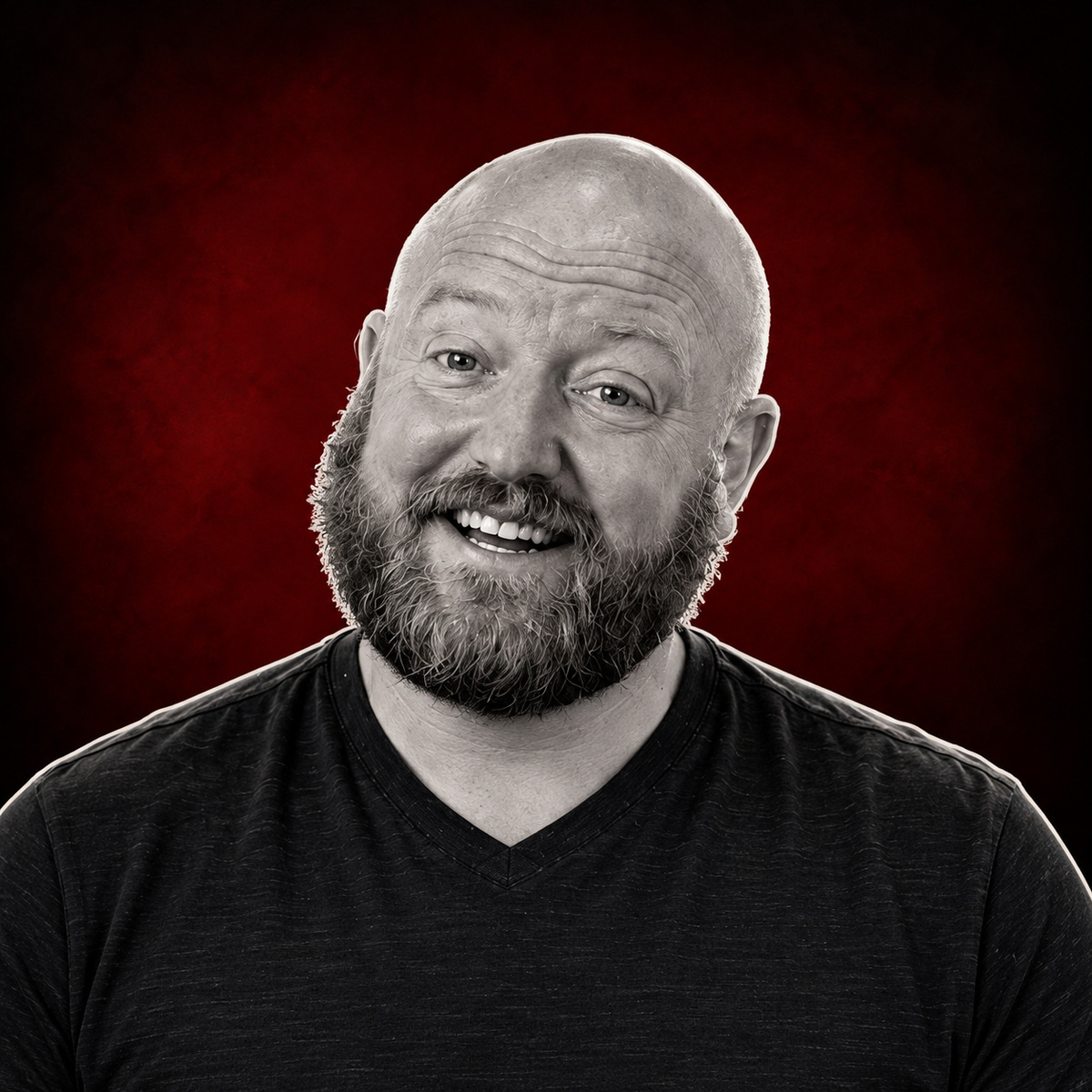
Nate Woodbury
Nate Woodbury is the CEO of Be The Hero Studios, a YouTube and search strategy firm that helps experts become the go-to thought leaders in their industries by owning specific categories through searchable content. He began in 2013 running a custom web design and SEO service, where he noticed YouTube videos outperforming top-ranked Google pages, and has spent more than a decade developing the system he calls the leaf strategy. Host Eric Berman introduced him as having worked with more than 60 channels and brands, and Nate leads a team of 35, including filming teams in Utah and Florida and a team in the Philippines that handles editing, thumbnail design, and channel and blog management. His clients include coaches, speakers, consultants, and business leaders, and his own YouTube channel focuses on thought leadership, personal branding, and evergreen content. He is based outside Salt Lake City.