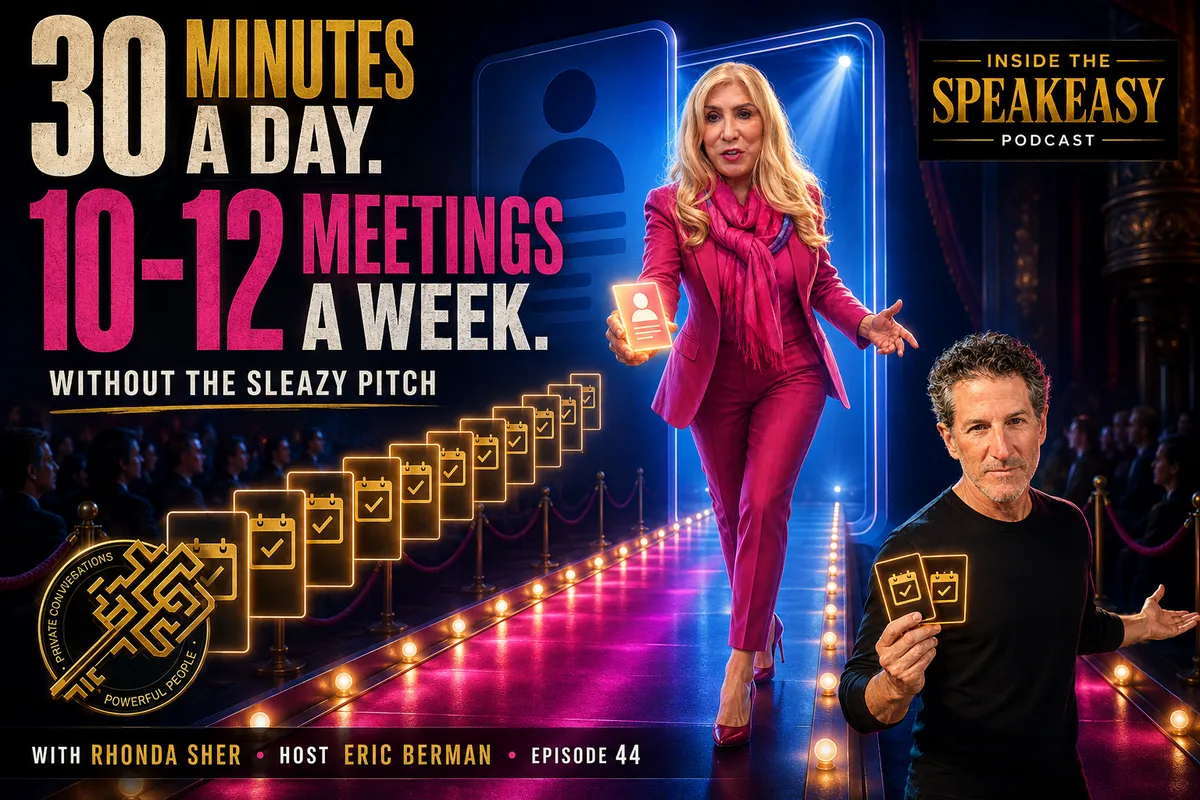
Rhonda Sher, LinkedIn strategist and creator of the Sher Method, joins host Eric Berman to explain why your LinkedIn profile is often the first thing people find when they search your name, and how to turn it into a steady source of conversations. Rhonda walks through the profile basics most people skip, from the banner and a real headshot to a results-focused headline and contact details that are actually reachable. She then shares the outreach habits behind her approach: connecting with people from shared communities, commenting on the posts of people who already serve your ideal client, and messaging everyone who views your profile with a personal, referral-first note. She also covers how to prove you are not a bot, which AI tools she relies on, how often to post, and why commenting should come before posting. The episode closes with a look at Know Your Prospect, Rhonda's new face-reading tool for building rapport on sales calls.
In this episode, you'll discover:
- Why Rhonda says a LinkedIn profile has a 70 percent or better chance of showing up on the first page of Google when someone searches your name
- The five-second headline test: show your profile to someone who doesn't know you and ask if they can tell what you do
- The connection message Rhonda says gets people to book on her calendar about 70 percent of the time
- How to message every person who views your profile, and why a short video through Dubb stands out
- Rhonda's minimum posting rhythm of three times a week, and why commenting on other people's posts has to come first
Episode Summary
Rhonda Sher is a LinkedIn strategist, speaker, and the creator of the Sher Method, a three-step system Eric Berman describes as helping speakers, coaches, and business owners turn connections into clients, get booked on stages, and keep their calendars full of appointments. Eric, who lives a few miles from Rhonda in San Diego, introduces her as his own LinkedIn strategist.
Rhonda opens with the case for taking LinkedIn seriously. If you have a LinkedIn profile, she says there is a 70 percent or better chance it appears on the first page of Google when someone searches your name, and about 70 to 80 percent if your name is not a common one. People, she adds, are two times more likely to believe what they see on LinkedIn than on any other platform. Google shows the profile whether it is good or bad, so a polished website paired with a neglected profile creates a disconnect. Her experience is that AI tools like ChatGPT are following the same pattern because LinkedIn is so established.
From there, Rhonda lays out the non-negotiables. Use the banner as prime visual real estate that matches your brand and reads well on a phone. Use a real photo rather than an AI headshot. Write a headline that says what results you deliver and for whom instead of a bare job title, and test it by asking someone whether they could tell what you do and how to refer you. Keep contact information current, and use an office line, Google Voice, Grasshopper, or a Calendly link instead of a personal cell number. Write the about section in first person, make its first two or three lines count, and focus the featured section on its first three items.
Recommendations come next. Because recommendations can only come from first-degree connections, Rhonda says visitors can click through and verify the person, and she sometimes contacts recommenders before making a sizable hire. She encourages people to give recommendations generously, comparing an unexpected one to finding a $100 bill, and suggests Speakeasy members write them after a fellow member presents or takes a hot seat.
For outreach, Rhonda describes several approaches: connecting with people from organizations you already share, commenting on 10 or 20 posts a day from people who serve your ideal client, and reaching out to the people who engage with those posts. After a connection is accepted, she sends a friendly message offering a call and an introduction to a group, and says people book on her calendar about 70 percent of the time. With a premium account, she checks who viewed her profile every day and messages them, often with a video through Dubb. Eric highlights her refer-first mindset, and Rhonda shares the story of a man who viewed her profile by mistake, then hired her after she called him.
Rhonda also recommends a 30- to 60-day test drive of Sales Navigator, mastering two or three AI tools rather than chasing every new one, and posting at least three times a week while commenting before posting. She uses evyAI, Stanley, ChatGPT, and Manus, and is starting a partnership with Orchestrate. The episode ends with Know Your Prospect, a self-directed course and photo-upload tool that reads facial features to suggest how a prospect processes information. Rhonda says it is pretty close to 90 percent accurate, that a Speakeasy member is helping her build it, and that a dating version is also on the way.
Big Ideas Discussed
Your LinkedIn Profile Is Already Your First Impression
Rhonda's starting point is that people are already finding your LinkedIn profile, whether you maintain it or not. She says that if you have a profile, there is a 70 percent or better chance it shows up on the first page of Google when someone searches your name, and that people are two times more likely to believe what they read on LinkedIn than on other platforms. Google does not judge whether the profile is good, so an empty or outdated one can sit right next to a polished website.
Her fix starts with the basics: an eye-catching banner consistent with your brand, a real photo instead of an AI headshot, a headline that names the client and the result rather than just a title like CEO, and contact information that lets people reach you. She compares a confusing headline to her husband's dump cake, where everything goes in and nobody can tell the ingredients. The test she suggests is simple: show your headline to someone and ask whether they know what you do and how to refer you.
Comment and Connect Where Your Clients Already Are
Rather than waiting for people to find you, Rhonda looks for people who already have your ideal client as their audience without competing with you. She suggests commenting on 10 or 20 of their posts a day, because people who see your comments often click through to your profile. The people liking and commenting on those posts are also potential connections, and she suggests sending them a connection request that mentions the post you both engaged with.
The quality of the comment matters. Rhonda warns against generic replies like "nice post, thanks for sharing" and instead adds a personal detail a bot would never write, such as a "P.S. Red Sox fan" when she sees someone is from Boston, where she grew up, or a joke about her kitchen sign. She also suggests mixing your worlds by connecting on LinkedIn with members of organizations you already belong to, such as Speakeasy, and mentioning that shared community in the request.
Message Everyone Who Views Your Profile
Rhonda calls LinkedIn a pay-to-play platform and recommends at least the premium version, because you cannot reach out to people if you do not know who is looking at your profile. Every day she checks her profile viewers. For existing connections, she sends a personal note asking what caught their eye and whether a call makes sense. For people she is not connected to, she filters out the sellers and sends a connection request that mentions something from their about section.
Once they accept, her secret weapon is a short personal video, usually sent through Dubb, which she says shows when the video was watched and integrates with LinkedIn. Her messages often offer an introduction to a great group or some AI tools rather than a pitch. Eric points out that this refer-first approach wins either way: even if the conversation never turns into business, being a good referral partner tends to come back around. Rhonda adds that Speakeasy members can invite new connections to visit a meeting as their guest.
Use AI to Improve Your Work, Not Replace Your Voice
Rhonda is enthusiastic about AI tools but selective about how she uses them. Because new tools appear every day, she recommends mastering two or three so the AI learns how you work. She uses AI to improve posts and clean up profile copy, but she does not use it to write a profile from scratch or to comment, because she says it cannot capture your voice. A well-trained virtual assistant, in her view, can handle commenting and outreach in about 30 to 45 minutes a day.
Her current tools include evyAI, Stanley, ChatGPT, and Manus, along with Perplexity and Canva, and she is starting a partnership with Orchestrate. She also tells AI not to make anything up. Her newest project applies technology to the sales call itself: Know Your Prospect reads facial features to suggest how someone processes information, which Rhonda says helps build rapport. She is also developing a dating version.
Questions We Answer in This Episode
Why does a LinkedIn profile matter if people can just visit your website?
Rhonda Sher says that if you have a LinkedIn profile, there is a 70 percent or better chance it appears on the first page of Google when someone searches your name. She adds that people are two times more likely to believe what they see on LinkedIn than on other platforms. If your website is polished but your profile is neglected, prospects notice the disconnect.
What should every LinkedIn profile include?
Rhonda Sher's non-negotiables are a branded banner that reads well on a phone, a real headshot rather than an AI photo, and a headline that names who you serve and the result you deliver. She also stresses current contact information, a first-person about section with strong opening lines, and a featured section whose first three items do the heavy lifting.
Should you put your personal cell phone number on LinkedIn?
Rhonda Sher advises against it. She says a long-held personal number can let strangers look up where you live and how much you paid for your house. She prefers an office number, Google Voice, Grasshopper, or a Calendly link so people can still reach you easily.
How do you turn a LinkedIn connection into a booked call?
After someone accepts a connection request, Rhonda Sher sends a short audio, video, or text message thanking them, suggesting a quick call, promising she is not selling anything, and mentioning a group they might want an introduction to. She drops a link to her calendar or invites them to send theirs. Rhonda says people book on her calendar about 70 percent of the time.
What should you do when someone views your LinkedIn profile?
Rhonda Sher recommends a premium account so you can see who viewed your profile, and she checks it every day. She messages existing connections to ask what caught their eye, and sends people she is not yet connected to a personal connection request that references their profile. Once they accept, she often follows up with a short personal video through Dubb.
How often should you post on LinkedIn?
Rhonda Sher recommends posting at a minimum of three times a week, ideally in the morning, though she says consistency matters more than timing. LinkedIn lets you schedule posts on the platform. She stresses that commenting on other people's posts should come before your own posting.
What is Know Your Prospect?
Know Your Prospect is Rhonda Sher's new program for building rapport on calls by reading facial features to understand how someone processes information. It includes a self-directed course and a tool where you can upload a photo and ask questions about how to approach that person. Rhonda says it is pretty close to 90 percent accurate, and she is also creating a version for dating.
Full Episode Transcript
Read the Full Episode Transcript
Welcome Rhonda Sher and the Sher Method
Eric Berman: This show is brought to you by HighLevel, the AI driven business operating system trusted by over 2 million businesses to help automate, scale and create real leverage. HighLevel isn't just a tool, it's the engine behind some of the most agile and high performing teams on the planet. If you're ready to streamline everything, amplify your reach and actually build a business that works for you, you're in the right place. Visit www.gohighlevel.com/Speakeasy-mastermind-promo to get an exclusive 30 day trial for being a listener of the Inside the Speakeasy Podcast. Enjoy the show. Today you're going to learn three things that you need to know to go from invisible to to irresistible on LinkedIn. And you're going to also learn how to stay top of mind on LinkedIn, be positioned as the go to authority and generate 10 to 12 appointments a week without being salesy. I'm so excited for today's Inside the Speakeasy Podcast to welcome my good friend out of San Diego, Rhonda Sher. Welcome, Rhonda.
Rhonda Sher: Hey, thanks Eric. I so happy to be here.
Eric Berman: This is so, so good to have you. And for those who don't know you, I mean, you are first of all my LinkedIn strategist. You are my. So everybody goes to my LinkedIn. I get people all the time who did your LinkedIn and of course I always have to brag about you, but you're really, you know, LinkedIn strategist speaker. You're creator of what we call the, what's called the Sher Method. Your last name. Sher. The Sher Method. And it's a proven three step system that helps speakers, coaches and business owners turn connections into clients and get booked on live and virtual stages and keep their calendar filled with appointments. You've taught business owners and entrepreneurs how to go from overlooked to fully booked, spoken on hundreds of stages, appeared on hundreds of podcasts, taught thousands how to create, influence, impact income by using LinkedIn the right way. And you essentially just cracked the code. And I'm also totally pumped because you said in the green room we get to talk about this new, exciting, secret project you're doing, which is really the next evolution, you know, once you're found, how are you gonna, what's gonna happen when you get on the phone with these amazing new prospects? So we'll talk about that as well. So again, so much to get into. Thanks for hopping on. I know you've been, you've been running around, you've been super busy. We were able to finally tag grab you and get on calendar despite us living only a few miles away from each other here in San Diego. Once again, welcome.
Rhonda Sher: So happy to be here.
Eric Berman: Let's get into it.
Why Your LinkedIn Profile Shows Up on Google
Eric Berman: So like, like duh, like, I hope everybody on this, first of all, listening has a LinkedIn. Now whether they have a LinkedIn, like maybe a LinkedIn slash their name and it's sort of empty and they're embarrassed or not. I mean, let's just start. I mean, first of all, we all talk about the why and let's not spend too much time talking the why because. But just to kind of re. Maybe just give us a little bit more like get us re motivated on why. Not only obviously to have one, but why to make sure it's looking great, it's top notch.
Rhonda Sher: That's one of my favorite questions, Eric. And I'll tell you why. Have you ever googled yourself? Right, well, when you go and Google yourself, I don't care Whether you're using ChatGPT these days, people still do Google. If you Google yourself and you have a LinkedIn profile, there is a 70% or better chance that your profile is going to show up on the first page of Google. Okay? Now if you combine that with the fact that people are two times more likely to believe what they see on LinkedIn than any other platform, why would you ignore it? Why would you put yourself into the LinkedIn Witness Protection Program where nobody can find you? That's really truly the why. And I remember many years ago when my daughters were really young and I was doing all the speaking and every time you spoke, it was on Google. They thought it would be really fun to go Google all the moms. So they googled all the moms and they came back to my daughters and they went, there's like 10 pages on your mom. Is she famous or something? And you know what my daughter said? My mom doesn't even have a job. She just talks. Because every time I spoke, it showed up on Google. So you can't ignore it. That's really the truth.
Eric Berman: Okay, so two questions within that you kind of want to run through. Now you said you'd be found on Google. Now. Now is the statistics show that, you know, an average page or empty, you know, very few on there versus a really well done page will show up better on Google if it's more decked out.
Rhonda Sher: No, it doesn't that's a great question because here's the reality. If you have a LinkedIn profile and you don't like you have a fairly common name, right?
Eric Berman: Yep.
Rhonda Sher: But if you don't have a common name and somebody Googles you, there is about a 70 to 80% chance that your LinkedIn profile is going to show up on the first page.
Eric Berman: No matter how good or bad it is, you're going to be.
Rhonda Sher: Doesn't matter how good or bad. Google doesn't really make judgments. They just kind of put it up there. So what do you want people to see? Because you might have this killer website and then they come over and they look at your LinkedIn and there's a major disconnect there. So are you dressed for the party or are you like what I call going to a black tie event and you're running clothes, you know you need to really be dressed for the party on LinkedIn.
Eric Berman: Yeah. And then you something else you said is so what are you noticing so far? Maybe the data's too early on those that are using GPT like how is the SEO within the GPT land responding to LinkedIn profiles?
Rhonda Sher: It's following along. My experience has been that it's actually following along because LinkedIn is so established it's owned by Microsoft that when you put somebody's name in and I say hey tell me about Eric Berman with Brandetize. [unclear] is going to come up.
Eric Berman: Right? Right. I love it. All right, so I'm convinced.
Profile Non-Negotiables: Banner, Photo, Headline, and Contact Info
Eric Berman: Let's get my LinkedIn in order as you and I talked about a little while ago and we got my food together. What are you finding? Or I should say let's just start with and I know there's a lot of things you're going to share but like what is the absolute. You got to put this down and we're going to talk about some hacks because I know you love hacks but what are some just things you have? Like just there's non negotiable if you're going to get started and you don't have a lot of time.
Rhonda Sher: So first of all have a banner. Okay. You know what if you have that the prime real estate is right there in the banner because we're all visuals. That's really what we are. First thing I see is look right behind you. You have the Speakeasy cool hat. Right. You're a visual. You have a great background. So use that banner. Okay. And use it wisely because we're visual so make sure you can see it on phone, make sure it has, you know, your, it's consistent with your brand and your messaging. It's eye catching. The second thing that I would say is have a real picture, not an AI photo for your headshot, you know, really. And then the other thing is the headline. So your headline is where you get to tell people you know, what results you deliver, not your job title. If the job title just says CEO. CEO of what? Right. So you want to make sure you have a really powerful headline that like for example, with you. Right. We work with, you know, hundreds of companies have hired us too. So you want to be able to let people know who's the client, what's the result that you get in a way that it's not confusing because confused buying never makes a decision.
Eric Berman: Is that one of the most common mistakes you're finding or what else do you see as people missing that have some basic stuff in there?
Rhonda Sher: What I see very often is that it's just confusing. So it's kind of like they, they just do. My husband makes this thing called a dump cake and he just dumps everything in. Right, but. And it tastes pretty good. But at the end you have no idea what the ingredients are. Well, what if you just put all these words on there? A speaker, business owner, consultant, podcast guest, all these different things. But guess what, I have really no idea what you do. So it really needs to speak to who you want to be looking at your profile. That's one of the biggest mistakes is, you know, the headlines are confusing. Be really specific. And I would invite people to go out and show your headline to somebody else and say, hey, based on reading this, do you know what I do?
Eric Berman: Right?
Rhonda Sher: Do you know how to refer to me?
Eric Berman: Right. That's great. I mean, I mean that is such a simple test we don't think about. It's just show your LinkedIn to somebody who has no idea who you are and ask them if they know what you do in two seconds. Really in less than five seconds. Right. Like, you know, you don't much time to think about this.
Rhonda Sher: Exactly, exactly. And the other little thing, this is something that gets overlooked quite a bit and that is your contact information. So now somebody says, okay, great, I need to reach out to Eric. Right. There's no email, there's no website, there's no phone number, there's no Calendly. How the heck am I going to find you? Because people are really lazy and they're just going to go to the next thing. So make sure Your contact information is current, is there and that you are accessible. And if you want to put a phone number, either make it an office number or put a Calendly link or use a Google Voice. But if you're using your personal cell phone number. Okay. Keep in mind that our good friend Google, if you've had that number a long time, will not just give you the name of the person. They'll tell you where they live, how much they paid for their house, all the information you don't want all these strangers to have. So be careful about what you put for a phone number. I'm just a big fan of using an office number or a Google Voice or Grasshopper type thing.
Eric Berman: Got it. Very smart. Okay, so I mean some of the basics for a lot of those that are a little more like, okay, I have my poopoo together. Yeah, this is some, you know, 101 stuff for me and for others this is like, oh, I gotta get, I gotta make this my one on one stuff. Let's go to the next layer of. And I don't know if I'm jumping ahead of the, you know, again, I have this note of three things that you, that, yeah, you know, you'd really help. But maybe there's three things and maybe there's some other sort of like some simple things before you get into three things. But I don't know, you tell me, what else do you do?
Making the About and Featured Sections Work
Rhonda Sher: So you know the profile, you know, there's that old story, where's enough place to hide a dead body? Page two of Google, nobody goes there, right? Yep, yep. So you look at a LinkedIn profile and the one thing that you really want to focus on is your about section. So your first two or three lines of that about section are really critical. And the reason is that's all that shows up until you see these little two words, see more. Because you want somebody to click to keep reading. So you want to write a very powerful about section and you want to make sure you have a featured section because many people don't have a featured section. And the featured section can have like on yours you have a fabulous interview, right, with Glen where you talk about the Speakeasy Mastermind so people can actually get to know who you are. They get to know what it is. Another thing that you could put, there are case studies, you could put testimonials, you could put a link for people to sign up for your newsletter or maybe if you are more direct and you want people to just book, book time with you and your time is valuable and you pay for it. Right. You could literally have a box there. That's. Okay, great. I want to buy an hour of Eric's time. So you could put up to 15 things here. But what you really want to focus on are the first three because nobody is really going to click and go see what else is there. So that featured section and the about section are really the most important. And the last thing that I'll say about the about section, write it in first person, don't write it in third person.
Eric Berman: Okay? So really, that's a big difference. I can't say. It's like almost like somebody's talking about you. You just wanted to be.
Rhonda Sher: Yeah, but we're on a relationship driven site who talks about ourselves in third person.
Eric Berman: Right, right, right. Got it. Okay, so now. So the about section sort of next. And then what would you say after that? You should really.
Why Giving Recommendations Pays Off
Rhonda Sher: Well, then you. The main thing that I would say is make sure that you have your recommendations on there. You're going to put your experience and you get to fill in all the other stuff, projects and all that fun stuff. But here's the deal. With recommendations, you can only give one or get one from somebody. That's a first degree connection, right? So when somebody has a recommendation on the profile, you can click right over to that person's profile so you can actually look and see are they a real person. And I will tell you that even in my world, when I've invested with somebody that I want to hire, I go look and see what other people said about them. And then if I, you know, if it's a pretty sizable investment, I may reach out to somebody and I'll say, hey, I noticed you wrote a recommendation for so and so. I'm thinking about hiring them. I'm just curious, could you tell me a little bit about your experience? And because you found them on LinkedIn and they wrote it, they're going to give you the real scoop. So it's a good way to reinforce yourself. Right. And also, here's just a little tip. When you give somebody a recommendation, all right, most people don't expect it and most people don't ask. So when you give somebody a recommendation, guess what it's like walking out of your car and finding $100 bill on the ground. So if you've had an amazing event, like after I get off of this, I have an amazing podcast with you, I'm going to go write a recommendation. Why? Because I want you to attract all kinds of other amazing guests to come On. And I want them to know about Speakeasy. Right. It's really just about being proactive and giving recommendations as well, because you want to have a balance there. And it shouldn't be, well, I gave you one, you gave me one. It should be, I'm giving you one because I saw, I found so much value from you.
Eric Berman: Right. And that doesn't also invoke the law of reciprocity, too. I mean, not that you're expecting wide return, but would be scenarios. Yeah, yeah. So you just get a lot, and then people want to return the favor, and that adds more and more, and all of a sudden you're like, gosh, got 30 people making recommendations for me kind of thing.
Rhonda Sher: Yeah. And especially in the Speakeasy community, you know, think about it. You know, one of the things that's so amazing about this community is the generosity of the people that are in here and the sense of community. So after one of the Speakeasy meetings, when somebody does a presentation or they have a hot seat or whatever, you could write a recommendation. Right. Because everybody walks away learning something, and that just reinforces it costs you nothing.
Eric Berman: Right.
Rhonda Sher: But it's worth so much.
Eric Berman: Right, Right. Love it. Love it. Okay, so what about.
Connecting Through Communities and Other People's Posts
Eric Berman: So the profile's getting together. You know, this is some good tips on here. Some things that I may have missed. And, you know, I gotta get my boot together and get my LinkedIn going. So how do I now leverage LinkedIn? You know, obviously, step one is you gotta have the house in order. And so if people find you, you look the part and you don't have the running suit after the ball, as you say, or at the gym, clothes. And now what's next?
Rhonda Sher: So the next step is you can do it a number of different ways. Okay. One of the ways, and this is probably the most obvious and the most elusive. So let's use Speakeasy as an example. Okay. People that are part of the Speakeasy are part of a community. Correct. Why wouldn't you go into the Speakeasy membership, look at the people that you want to meet, and send them a LinkedIn connection request and say, hey, we're both part of Speakeasy. I found you in the Speakeasy community. I'd love to connect with you and learn how we could support each other. So part of it is mixing your worlds, Right. Whatever organizations you're in and LinkedIn so that you now are connected with the people in your outside world on LinkedIn. That's one way. Another way is you can use the power of posting. So imagine that it's not your post, but you know who has your ideal client, right? They're not necessarily competing with you, but they have your client go and start interacting with their post. Start commenting on a regular basis, comment on 10 or 20 posts a day. Well, when you comment on somebody's post, guess what? They're going to go look at your profile. And so when that happens and you're using the paid version and you can see who looked at your profile, it gives you a reason to reach out.
Eric Berman: So let me walk through that again. So. So if I'm trying to find, let's say, you know, somebody else is. Let's say, if you're saying somebody else is managing a community, let's say a competitor to Speakeasy or something, you know, and I'm watching the CEO doing their. You're saying I could read their posts and commenting on their posts. Is that what you're saying? Okay, or. And then what? So the people that are commenting on the post of somebody I want to.
Rhonda Sher: Do business with say that you look and this person has quite a bit of activity. There's a lot of commenting, there's a lot of likes on their posts. Now that's your audience, right? These are people that also potentially could be working with you as well as working with that person. Right? So if they're not connected to you, and most likely they're not going to be, what you would do is send them a connection request and say, hey, Rhonda, I saw that you also liked the post with xyz, whatever that post was about, and made a comment about it on Eric Berman's or whatever it is. Right? Looks like we share some common connections. Would it make sense for us to connect? Because the reality is you never would have found that person if they hadn't either done a like or a comment on a post. Right? So once they accept the connection request, because now they've looked at your profile, they go, oh, okay, this is a real person. This is the real deal. What I recommend that you do is not let it die there because it's not going to do anything I say. Send an audio message, send a video message, or just type a message and say, hey, Eric, thanks so much for accepting my connection request. I would love to see how we could create some magic together. Would it make sense for us to jump on a quick call? I promise I'm not selling anything. In fact, I know of a cool group that you might want an introduction to. Now, I'm not saying what it Is. But I got to curiosity. Right?
Eric Berman: Right.
Rhonda Sher: So then I'll say I'll drop a link to my calendar or if it's easier, just send me yours. Either way, I look forward to meeting you and seeing what magic can happen.
Eric Berman: Right.
Rhonda Sher: 70% of the time, they will book on your calendar.
Eric Berman: Wow, that's a huge number. Okay, so that's. So that's one of your little, little tricks, little hacks that you get to get to get phone calls with people and then from there, you take it from there. And so for my.
Proving You're Not a Bot With Personalized Comments
Eric Berman: Now I wear my hat and I just hop in my LinkedIn every couple days. You know, I'm just assuming at this point everybody's a bot. Like, I don't even know who's real anymore. How do you differentiate here? What's like. Because it feels like a lot of people are playing some kind of AI version of this game or what. They are.
Rhonda Sher: They are. But you can also tell who's real. Okay. And part of what I do when I comment or I write something is I let them know I've seen their profile. So, for example, if I see that they're from Boston, for example. Right. I grew up in Boston. I'll just say, P.S. Red Sox fan. Right. And all of a sudden, you know, I'm not a bot. A bot is not going to say, are you a Red Sox fan? In my commenting. This is another really good point. So never just say, oh, nice post. Thanks for sharing. Like, who cares? That's what I'm saying. You look nice. Right.
Eric Berman: It could be AI too.
Rhonda Sher: Right? Exactly. So what I do is I personalize the comment. Right. So oftentimes you'll see in post, people give you, oh, these are the five steps to xyz. Right. You see, that's kind of a common one. So I'll write, wow, I love these steps. I'm the person that literally has the kitchen, the sign in the kitchen that says the kitchen came with the house. I can follow a recipe, but I can't do it on my own. So these steps really make sense to me. A bot is not going to say, I own a sign that said the kitchen came with a house. Right.
Eric Berman: Yeah.
Rhonda Sher: You infuse your personality with it a little bit so that they know and you can tell what is an AI response. It's like, oh, so it's so obvious.
Eric Berman: Yeah, I mean, that's so mean. Those are good sort of ideas. You're right. Because I think we do need to more and more really let somebody know this is a real person. And that might even get people more interested in talking because like, oh, wow, I do have a real person here. Maybe I should take this seriously. They're going out of the way to talk to me versus an AI kind of thing.
Can an Assistant Handle Your LinkedIn Outreach?
Eric Berman: What do you recommend when it comes to. Again, a lot of us, especially on watching, you know, or listening to this podcast, probably or may not have the time because there's not their core business, the LinkedIn world, to be playing in this commenting, doing all this stuff you said, you know, spend, you know, reach out to 15, 20 and then maybe some it is because maybe this is a better lead source for them. What is the best strategy? Do you recommend when people offload it to somebody in their teams, whether that's overseas or somebody else, does that still work just as effectively? Or, you know, how are they going to understand and pull out the personality.
Rhonda Sher: Side like you talked about, if they really know you? Because we all know ChatGPT knows us, right? You've shown me some cool prompts that you could use with ChatGPT. If your assistant really can know your voice, right? And you train your assistant correctly, they can do that. They really can. It's really about the training. But the truth is that if you do it correctly, you won't spend more than 30 or 45 minutes a day to do it. You really won't.
Eric Berman: Right. So the whole. Okay, all right, so let's jump in what other sort of hacks or ideas you have, whether it's, I mean, we talked a little bit about the getting it ready, you know, getting your site up and then we talked about reaching out. What other neat ideas do you have?
Messaging Everyone Who Views Your Profile
Rhonda Sher: Okay, so LinkedIn is a profit platform, right? It's really pay to play these days. So I, I recommend that you get at least the premium version because if you do not know who's looking at your profile, how can you reach out to them? So it used to be they gave you free three free people. Like they would give you the first three people. So every single day, religiously, I look at who looked at my profile because sometimes they look but they haven't connected or they're a first level connection and you haven't talked to that person in how long. So here's what I do. I send them a personal message and I'll say, hey Eric, thanks for viewing my profile. Gosh, it's been a minute. What have you been up to? I'm curious, what caught your eye, that caused you to look? Would it make sense for us to jump on a call? And then I just Put. I found this amazing group that you might be interested in learning about. I'm happy to share. Right. So I'm just talking about Speakeasy, really. But they don't know that.
Eric Berman: Yeah.
Rhonda Sher: So that's what I would do if I'm connected. Now imagine I'm not connected because a lot of the people that are going to look at your profile are not your first level.
Eric Berman: Well, step one's interesting in itself because you're saying something that's right in front of our faces that most of us probably aren't doing, which is, hey, go look to see who's even looking at you. Yeah. I think we all intuitively know that there's a tool to do that, but how many of us actually go back there and utilize this tool? Okay, so I have this tool. Most of us don't know what's in our pocket. We go there and say, it's right in front of you. Go click on it. See who's looking at you. Especially, I mean, they're at least someone interested. They, like, knock on your door and they're sniffing around, if you will. So now, okay, that made sense. Now the people who aren't connected to you keep going.
Rhonda Sher: So now they're not connected to you. Right. So you look and you say, okay. And you're going to discriminate because, yes, there are a lot of people that just want to sell you stuff. Right. So we call that noise. Okay. But then you look and you go, okay, well, this person looks really promising. This person looks like somebody I want to know. Now, I may not want to know them because I want them as client. I may want to know them because I know somebody that I can introduce them to. Right. Because it's always giver's gain. So I'll reach out and I will send them a connection message and I will say, hey, Eric, noticed you viewed my profile. Curious what caught your eye. I see that you and whatever it is that I noticed about your profile that kind of catches. And a lot of times what I'll do is I'll go into the about section and I'll see something they wrote. Right. And I'll mention that and I'll say, love to learn more. Would it make sense for us to connect? Looking forward to next steps. Then they will accept. Why? Because they already took the time to look at my profile. I already know that. Right, right. And then I just go into the next step.
Video Messages and a Refer-First Mindset
Rhonda Sher: And my little secret weapon that I use is video. I use Dubb. You can use anything. You can use Loom. You can use your phone. I like Dubb because Dubb allows you to see when they watched it, and it allows them to actually create a video to come back to you. And it integrates with LinkedIn. Dubb. Yeah. And so Dubb is really cool because they're not expecting to see a video. It pops, it stands out. And a lot of times what I'll do. And this is the exact background you can see. I'm not using a green screen. This is really my little picture that I have behind me. So I would say, hey, Eric, it's Rhonda. This is not my bot. This is not. This is really me. See, I'm like pulling my hair out. I just wanted to say a personal hello and thank you for, you know, viewing, for accepting my connection request. It would be cool to get to know you. I think I have a really great organization that you might want to learn about and maybe some cool AI tools I could share with you. I promise I'm not going to sell you anything. Even if you want me to. I'll drop a link to my calendar. Hey, let's see what kind of magic we can do. Make. That's it, right?
Eric Berman: I think the key there, if I'm listening to that, is you have a referral for them, whatever it is. I mean, whether it's an organization or a client, you're coming in there with the mindset of biz dev to say, like, look, if I could give them something. And everybody wants referrals. Of course, if you can give them something. Look, I'll give you. I have somebody that might be interested in collaborating with you. It's almost not even you. So it's like, wow, after looking at this, then they're like, oh, what do you do? Like, oh, you know, I'm not even sure if you're interested in this. This is what I do, but I wasn't calling for that. And they're like. And then it gets them to ask about. Actually, I'm interested in LinkedIn, in your example.
Rhonda Sher: I'll tell you, this is a funny story, but one time I remember, I always. I've been doing this for years, looking at who looks at my profile, right? So I see this guy who looked at my profile. Don't know who he is, but it also tells you when they look. So this was like six minutes before, right? So I look at his profile. No idea who this guy is. He's interesting. And he has his cell phone number on there. So I call him and I go, hey, it's Rhonda. I noticed you just looked at my profile. And he goes, oh, my God, I'm so embarrassed. I said, what do you mean? He goes, I was looking for a different Rhonda. And I was like, oh, no worries. He goes, well, wait a minute. If you took the time to call me, let me just go. And he looks at my profile and he said, I don't think there are any accidents in life. You know what? I have been looking for somebody to actually take me to the next level on LinkedIn. Can we actually schedule a call? I'd really like to work with you. And I was like, oh, my God. And he did not mean to find me. He was looking for another Rhonda.
Eric Berman: Yeah, yeah. Well, that's great. I mean, [unclear], he's like, okay, well, she knew how to use it enough to call me randomly five minutes later. That's. She must know something. No, that's great. But again, I want to go back to, I think, a key thing, which is great. I mean, you have such an amazing biz dev refer-first mindset, which is another type that you're not even saying. But I just know this about you. I mean, you've already referred me a bunch of people, and that's just your great generosity. But you live by the law of reciprocity. Like, even that angle, I think, is such a good one. Because if nothing else, and you truly have a referral for somebody, hey, you're being a good referral partner for people, which is going to indirectly, you know, we all know where that goes. If you refer business to whoever you're going to get, you know, business that way. So it's almost a double win whether you actually truly got nothing out of the lead other than you referred them to somebody that could use them. That's a win for them. And then ultimately that's going to come back to you at some point.
Rhonda Sher: And everybody in the Speakeasy community, Eric, has a secret weapon because most people have not heard of Speakeasy. So you could actually say, I am part of this incredible community mastermind that is growing. And I don't know if you're looking to grow your business, but if you're looking to grow your business with people that are very of a generous mind, super smart and really fun, you can come and visit as my guest, whether you want to come virtually or, or you happen to be in the city that I'm in, come to one of the meetings, I love it.
Eric Berman: This is, that's the, what we call the unsolicited bonus tip where you leverage Speakeasy as your intro into these new connections. So thank you for that. You're right. I mean, it's pretty, pretty easy to leverage that for sure. Yes, I am biased on that, but I do agree with you what you're saying.
Rhonda Sher: We're all raving fans. We wouldn't be part of this community if we didn't love it.
Eric Berman: Oh, well, thank you. Appreciate that.
Test-Driving Sales Navigator
Eric Berman: Okay, before we turn into some new cool stuff, anything else that we didn't cover on the whole LinkedIn side? Cause I know we can go. You and I could spend hours talking about this. And I know it's also hard. We don't have the benefit of visually going through trying to make this easy. But what else did I miss?
Rhonda Sher: So the last thing that I would say is take a test drive of Sales Nav. Okay. And when you see a gold button on a LinkedIn profile that tells you that person is using a paid version of LinkedIn and people who pay pay attention so you have a much better chance of that person responding. But you don't have to be paying $99 a month for an entire year on Sales Nav. But what you can do is you can use it to, number one, sort, sift and separate your own connections. Right. And secondly, create some lists and then keep it for about 30, 60 days and then keep the premium so you know who's looking at you and you have the ability to do some of the stuff premium gives you. But I would invite everybody to say once that profile is done, take a test drive of Sales Nav because it's really pretty magical.
Eric Berman: Nice. Nice. Okay, I guess the last question before I move on, I wanted to ask you was.
The AI Tools Rhonda Uses
Eric Berman: I mean, I'm asking this almost all of my conversations is AI. Yeah, we talked about it already throughout this and we did into what's going on out there. And you know, seems like every now new cold email, LinkedIn email outreach company is now leveraging AI to the ability to. How do you see this affecting the industry you're in? You know, being, you know, LinkedIn guru and how could we, you know, what should we be doing to prepare ourselves and. Or take advantage of it?
Rhonda Sher: You know, the tools are good. They are really good out there. And every day there are new ones all the time. You can't keep up. It's just impossible. I would say master two or three of them, get really, really good at using two or three AI tools so that the AI knows you right? And you know, it's all in the prompting and use it to improve what you're already doing so for your posts. For example, use it. Right? To improve the post. The commenting, not so much because honestly, it just can't get your voice. But a virtual assistant can, right? So I wouldn't necessarily use AI to write your profile because it doesn't know you. It really doesn't. I would use it to clean it up. Right. To make it a little better. Don't be afraid of it because it isn't going anywhere. I promise. It's only going to keep going and going, but find your favorites, master them, stay on top of it and use them. You know it, but use it responsibly.
Eric Berman: Yeah, right.
Rhonda Sher: You know, I always say, AI, please don't make anything up. Do not hallucinate.
Eric Berman: Hallucinate. Yeah. What are some of your favorite tools that you like using? Go-tos?
Rhonda Sher: I do like evyAI, which I use a lot. I'm playing with a new one that I am absolutely head over heels in love with called Stanley. For all the expensive side, it's about 100 bucks a month, but it's worth it. You know, it's, you know when you test drive a car and you go in and then they go, well, let me show you the Lexus. You'll never go back to driving a Hyundai after you drove the Lexus.
Eric Berman: Right. Stanley's the Lexus, what's it do?
Rhonda Sher: The question is more like, what does it not do? Right. It's just so smart. So, you know, of course, ChatGPT. Right. And I'm a big fan of Manus. Manus is awesome. So I use ChatGPT, I use Stanley, I use Manus. And then there's another one out there that I'm starting to create a partnership with called Orchestrate. And in a couple weeks that's having some really cool stuff happen with that.
Eric Berman: Nice.
Rhonda Sher: And yeah, I mean, you know, and then of course, there's always Perplexity and Canva and all that stuff. Right?
Eric Berman: Yep, yep.
How Often to Post and Why Commenting Comes First
Eric Berman: So, so I guess, last question, because I keep thinking of as we're talking is how important is it for us to do our own posts in LinkedIn content posts and how often? What's the strategy behind that?
Rhonda Sher: So it doesn't necessarily have to be you doing it. You could have a virtual assistant. Okay. And if you're using one of the really cool tools out there, you don't have to really do it, you know, again, it's kind of like you can't much pay for it kind of thing. Right. So I recommend at a minimum, and I do mean a minimum three times A week.
Eric Berman: Okay.
Rhonda Sher: The best time to post is in the morning. But I kind of make the analogy. It's like the gym. Okay. If you're not a morning person, then you're never going to go to the gym in the morning. But if you go to the gym three times a week, you're going to get results.
Eric Berman: Yeah.
Rhonda Sher: So, you know, just do it. Right. Whatever works for you. But here's the cool part. LinkedIn actually allows you to schedule right on their platform. So you can do it at three in the morning if you're a night owl and just set it to post at 7:00am yeah, yeah, right. But more importantly, the commenting has to come before the posting. That's the thing that's interesting. Comments.
Eric Berman: Just staying on top of the comments and commenting on others before you. Other people's posts. And then post yourself. Yeah. And then if people start posting on your. Okay, interesting. All right, well, I got some work to do. Thank you for all those great tips.
Know Your Prospect: Reading Faces to Build Rapport
Eric Berman: Okay, so let's jump into. You have some really cool magic gifts that not many of us know about. I know. Cause I'm lucky to see you once a month when you're in town. Really cool. And you're actually looking at a brand new, exciting project. So tell us a little bit about what you're up to and the importance of this for all of us.
Rhonda Sher: Okay. So it's a program called Know Your Prospect. And if you think about LinkedIn, it's always changing. The algorithm changes, the rules change, everything changes. But at the end of the day, you're on there because you want to create relationships. Right. You want to meet with people. And for the most part, we're meeting with people on Zoom or Google Meet or wherever. So once you've got that meeting, what happens is you need to be able to create rapport with the person you're meeting with. Now you can go and look at a LinkedIn profile and read it and learn a whole lot about somebody. Okay. You can learn what organizations they belong to. You might even learn about where they went to school. You find commonality. But what if you could look at their face, simply read their face and know how they process information? Right. So you know whether, like here's an example. Have you ever met somebody and it's somebody who has these really low, low, thick eyebrows, almost like a unibrow? Right. We've met those people.
Eric Berman: Yeah.
Rhonda Sher: Their brains never turn off. They're so highly intelligent that their brains turn off. That is not somebody you're going to want to do small talk With, I'm not. You're not going to say to that person, oh, Eric, your kids are so cute. Tell me about your daughters. No, they don't want to know about that. They're, bottom line people. Their brains are just going this fast. So you already know that just by looking at them. Or maybe they smile and guess what? They have that Michael Strahan space in the front of their teeth. Right. What does that tell you? Well, most of the time when somebody has a space in the front of their teeth, it says they're a risk taker. Now do I know if they're going to go buy Bitcoin or they're going to jump out of an airplane? No, but I know they're a risk taker. Really? See somebody with dimples, like you have dimples, huh? Yeah. So the dimples on what side? It's on your left side, right? Both sides? Kind of.
Eric Berman: Yeah, a little bit.
Rhonda Sher: So somebody that has a dimple has a playful side to them. So the left side of your face is your private life. The right side of your face is your public life. Left side is private, always with the wedding ring. Right side is public. Okay, okay. Our faces aren't symmetrical. But what it allows you to do is see how somebody processes information. And if you know how they process information, you can create rapport with that person. You can have so much fun, so you can tell so much about them. So what I've created is two things. Number one, it's a self directed course. You go on, you do it at your own rate and you learn. Because you don't need to know everything, you just need to know the basics. Right? So, and then what if you're kind of like me, all right? I have literally no sense of direction. Eric, my husband says I could get lost in a two car garage. He's not kidding. So no matter whether I go to the same place every single time or whatever, I still use my GPS. Right? Because I don't want to think about it. I just want to listen to the lady say, go left, go right, whatever. And what if you could upload a photo and it could tell you exactly how to approach that person. It could tell you what their features mean. And let's go one better. You could ask it questions. You could actually say, hey, what should I avoid? My pitch to sell. So and so it's going to tell you, right? Right.
Eric Berman: Kind of accuracy.
Rhonda Sher: This has got pretty close to 90%.
Eric Berman: Really?
Rhonda Sher: It's very accurate.
Eric Berman: So it could be like back to the unibrow guy you can be like, hey, look. And I get the sense you're a straight shooter. Like, you just want to get to the bottom line. So I'm just going to tell you right away, you know, boom.
Rhonda Sher: And they're just like, what exactly? Or you see somebody who has very angled eyebrows, right? You go, hey, what's your angle? They have an angle. Okay. Whether you like Trump or you don't like Trump, doesn't make any difference to me. But if you look at Trump, he's got wide jaws, right? And a very square chin. When you see that, you know what that says? It's my way of the highway. He doesn't have a round chin. Jay Leno. Okay, what's the first feature you think about when you see Jay Leno?
Eric Berman: Big long chin.
Rhonda Sher: Yeah, yeah.
Eric Berman: Chin and the big face. Big head.
Rhonda Sher: Yeah, right. But the long chin. So when somebody has a chin that's so long like that, typically, you know what, they like to have the last word. But what does he do for a living? He's a comic. He wants the last word. Yeah, he's kind of. But he's got this really long chin. When I learned this, I remember I was in Dallas. I went three times to Dallas to study this. And we went out to lunch and there was a waiter, and the waiter had these ears that stuck way out, right? And so, you know, here I am just learning this and I just said, hey, can I ask you a question? He goes, yeah, sure, whatever. He was hoping for a big tip, I'm sure. And I said, are you a guy that will literally always color outside the lines? And he's. And he rolls up his sleeves and the guy has tattoos everywhere. And he goes, I have never followed a rule in my life. And he goes, are you lady, Are you, like, kind of weird? You know, like, how do you know this? Because that's. It just means you. You kind of go to your own drummer. And here's the proof that's in the pudding. You're going to really get a kick out of this. Okay, So I have two daughters, and both of my girls just don't even believe in any of this. They just think there's a bunch of. And my 34 year old has been dating this amazing guy. Like, what a sweetheart. Really. He's just wonderful. And so she said to me, hey, mom, will you run his picture through the software? And I was like, okay.
Eric Berman: Oh, are you sure you want to know about this?
Rhonda Sher: Yeah. And I did, and I sent it to her. Now, mind you, I know nothing about him at this point. Right. And she goes, oh, my God, you hit the nail on the head. This is unbelievable. He was, like, blown away. And she was. And the next thing she does is she sends me three more pictures of her friends. Like, this was the biggest skeptic in the world. And it was right on the money. Because when I did meet him, you'll find this out. Your girls are really little. Right. But when he came to meet my husband and me, he plopped me flowers. I'm like, God, somebody trained this guy. Right?
Eric Berman: Yeah.
Rhonda Sher: You know, you're coming to meet mom and you brought flowers.
Eric Berman: Yeah.
Rhonda Sher: Okay. You know, Love it. And so it really is.
Eric Berman: It's just.
Rhonda Sher: It's kind of an icebreaker, you know? And wherever I go, you just kind of do it naturally, because we always just look at faces, kind of what we do. But, like, I could look at you, and the one thing that kind of jumps out at me is you don't like it if somebody stands over you and tells you what to do. You're a very independent thinker. Is it true?
Eric Berman: Yeah.
Rhonda Sher: Yeah. You don't want to be micromanaged. You don't need to be. And you don't like it.
Eric Berman: Right.
Rhonda Sher: I'm looking at your nose. If somebody stood over you, you're not going to like it if they're trying to micromanage you. Right, Right. So, you know, when you go to hire somebody, for example, maybe you're hiring a VA or something. Right. You want to look at the features that are going to say, this person's a team player. They're going to work hard. Right.
Eric Berman: I love it. So we have a fun story on this, and obviously you're passionate about this. Exciting. So first of all, when is this going to be live?
Rhonda Sher: Let's jump into the Speakeasy community, right?
Eric Berman: Yeah. Yeah. You needed help building the software.
Rhonda Sher: I needed help, and I went into the community and I just hired the most amazing member. So we're, like, looking at six weeks out.
Eric Berman: Yeah. Cool. So maybe that means. So I just wanted to hear that number. So that means probably when this podcast is live, you have to go check to take a look at Rhonda's bio and see if it's up and live and you can reach out to her. So if this kind of stuff is. Seems cool and you want to be cutting edge and you're talking to lots of prospects, get with Rhonda on that, obviously, plus LinkedIn, everything else. But we can all kind of maybe help Rhonda sort of kick the tires of this Maybe do some betas or.
Rhonda Sher: Probably take test drive. Yeah, I'd love you guys. Test drive for me.
Eric Berman: Yeah. Well, yeah, we'll post about it in the offers and launches section when we get this going.
Rhonda Sher: Well, cool.
Eric Berman: We'll run it. I know we're taking a lot of your time today. What? Is there anything. Didn't ask that maybe I should have.
Rhonda Sher: No, I think you kind of covered everything. And I think the thing that I would say is, you know, how can I help to grow Speakeasy because it's such an amazing community of people, of who you attract and how everybody helps each other. And, you know, it really is this giver's gain. So, you know, just your whole generosity and giving spirit there's really. You didn't miss anything. Anybody that really wants to reach out to me, that wants to, you know, kind of get a checkup on your LinkedIn or is curious about this because here's the other part that I didn't mention, which I'm super excited about. Not only is this app going to be helpful for business, but I'm also creating another one for dating.
Eric Berman: Dating. All right. You single. Any single people out there, you're going to want this one?
Rhonda Sher: You betcha.
Eric Berman: I know we talked to one of.
Rhonda Sher: [unclear] because remember, I was the one that married the same guy twice, right? So I had six years of dating. Boy, I wish I knew this when I was dating. Let me tell you.
Eric Berman: Yeah, I know. No kidding. All right, well, on that note, we'll leave that as a cliffhanger. So any single people definitely want to reach out to Rhonda and get the. Get the inside cheat. That was sort of last of the. Of the call, but thank you so much, Rhonda, for coming in today and I look forward to seeing you soon. We'll be connecting and yeah, thanks for. And we'll talk later.
Rhonda Sher: Sounds great. Thanks, Eric.
Eric Berman: And that's a wrap from the Speakeasy Podcast. If something sparked for you, don't keep it to yourself. Share it, review it, and pass it to the one person who needs to hear this right now. Want in on the real Mastermind? Tap the link in the show notes to apply until next time. Keep scaling, stay sharp, and don't be the smartest one in the room.
About The Guest
Rhonda Sher
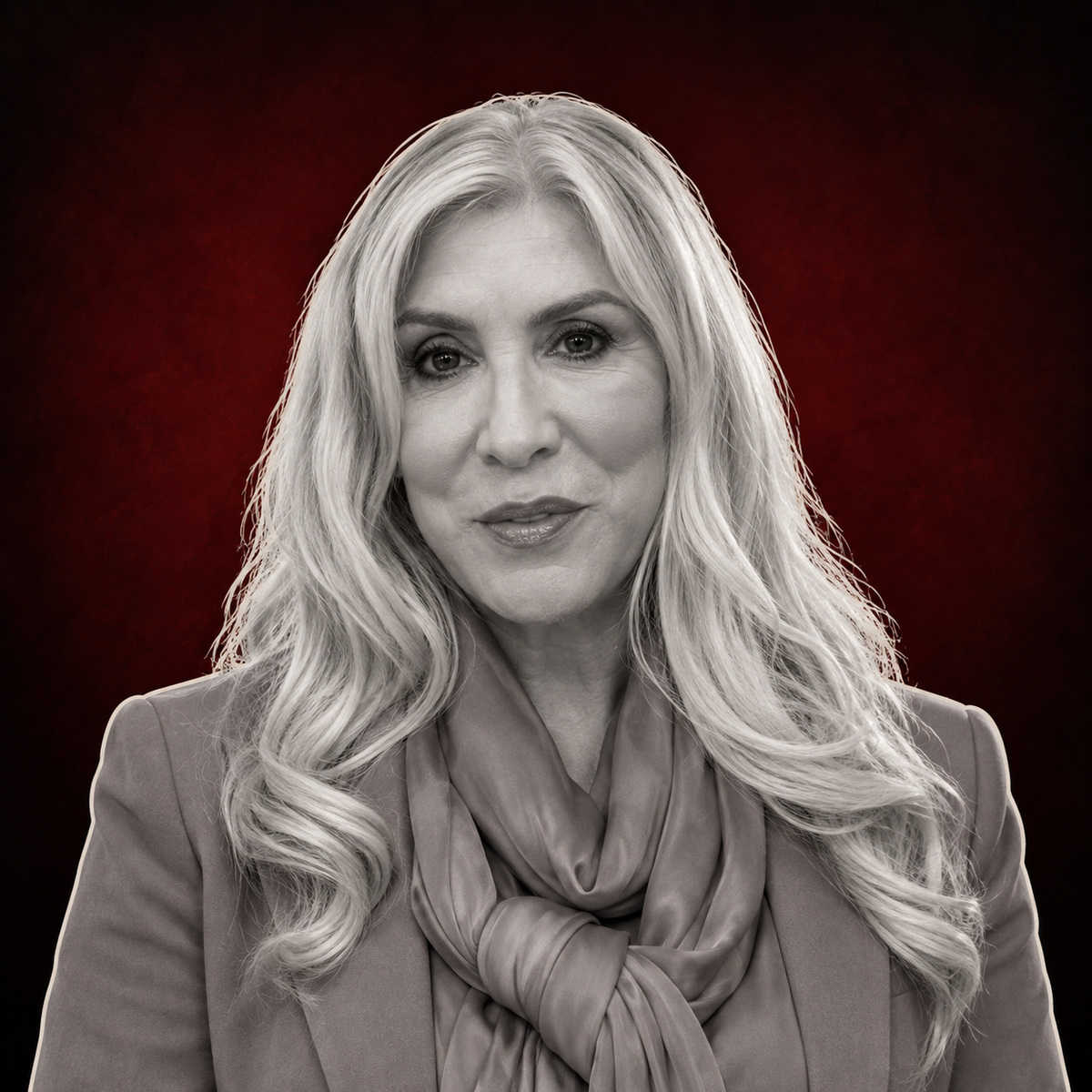
Rhonda Sher is a LinkedIn strategist, speaker, and the creator of the Sher Method, a three-step system that helps speakers, coaches, and business owners turn LinkedIn connections into clients, get booked on live and virtual stages, and keep their calendars full of appointments. She has spoken on hundreds of stages, appeared on hundreds of podcasts, and taught thousands of people how to use LinkedIn to build influence and income. Through the Sher Method, she helps relationship-driven professionals, including consultants, coaches, advisors, attorneys, and real estate professionals, become easier to find on LinkedIn through profile audits and lead-generation strategy. A Boston native based in San Diego, Rhonda has written five books and has more than 15 years of experience in the work. She is also developing Know Your Prospect, a face-reading course and tool designed to help people build rapport with prospects, and she is a member of the Speakeasy Mastermind community.