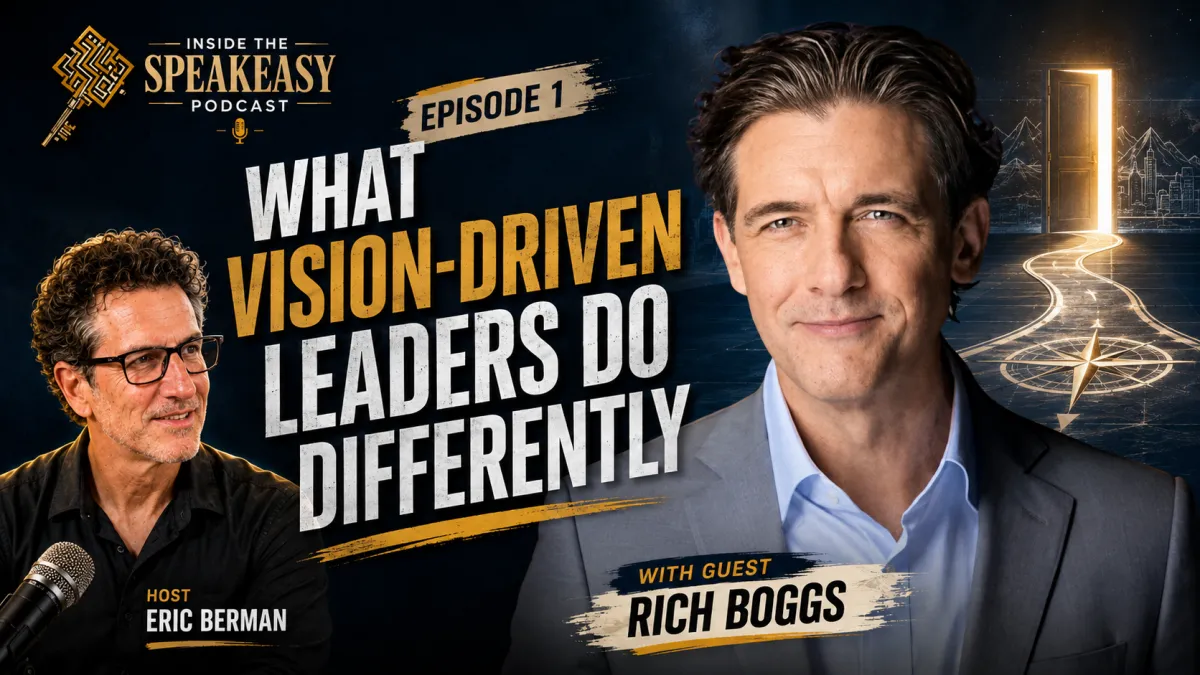
The Vision-Driven Sales Wheel with Rich Boggs | Speakeasy Podcast
Episode 1 - Featuring Rich Boggs - Hosted by Eric Berman - 46 minutes
Rich Boggs, sales director and co-founder of the Brave Thinking Institute, has spent thirteen years turning selling into something entrepreneurs do not have to feel icky about. In this episode, he breaks down the vision-driven “Conversations to Close” system his family built to scale Brave Thinking Institute from $400,000 to $40 million a year, including why he splits appointment-setters from closers, why $5,000 is the price point where a business needs its first dedicated closer, and how a pandemic shutdown turned into the company's two most profitable years once live events moved onto Zoom. Rich also traces the philosophy back to selling World Book Encyclopedias door-to-door as a stuttering kid, and explains how leading Brave Thinking Institute alongside his mother and two siblings has stayed close instead of turning toxic.
In this episode, you'll discover:
How Rich's father used a memorized World Book Encyclopedia sales pitch to help cure his childhood stutter
The seven-step Conversations to Close framework Rich's team uses to close high-ticket deals without feeling pushy
Why Brave Thinking Institute recites five core values at the start of every meeting to keep a family business from turning toxic
How a 2020 shutdown turned into two of the company's most profitable years after live events moved onto Zoom
The $5,000 price point Rich uses to decide exactly when a business needs its first dedicated high-ticket closer
Episode Summary
Rich Boggs did not set out to become a sales trainer. He grew up watching his grandmother run a real estate company and his father sell World Book Encyclopedias door-to-door, both trained in the classic Zig Ziglar and Earl Nightingale style that treats selling as serving. That belief was so central that when Rich developed a severe, unexplained stutter at age seven, his father's solution was to push him in front of a customer's door and let him deliver the memorized encyclopedia pitch himself. Rich delivered it stutter-free, and the experience anchored a philosophy he still teaches today: find a real problem, solve it honestly, and never sell someone something not worth more than what they pay for it.
Before sales became his full-time craft, Rich spent roughly a decade as a working actor under the stage name Richard Cody, including a role as Paul Rudd's roommate in Overnight Delivery and parts in Charmed and Diagnosis Murder. He eventually built and sold a commercial real estate leasing company and two financial services firms, the second of which handled tax resolution work for roughly a thousand family-owned businesses over eight years. That experience taught him a blunt lesson: about ninety percent of the family businesses he worked with were consumed by toxicity and infighting, while the other ten percent were, in his words, “the dream.”
That lesson mattered in 2012, when his younger brother Matt and mother, globally known spiritual teacher Mary Morrissey, asked Rich to join Brave Thinking Institute as sales director. He initially said no, worried about mixing family and business, until his mother reframed the question: instead of asking whether it would avoid becoming toxic, what if working together made the family closer than ever? Rich joined on a six-month contract that turned into thirteen years, eventually pulling in his sister Jennifer, whose own sales techniques still underpin the company's training, and his older brother John as CEO. The family holds itself together partly through FENO, a homegrown acronym for “feel invited, not obligated,” and through five core values recited at the start of every meeting, from believing in people to believing in growth.
Rich walks through the “Conversations to Close” framework in detail: a seven-step wheel that starts with genuine connection, moves through surfacing a client's vision and the painful gap between where they are and where they want to be, and only reaches a specific offer once the prospect has said, unprompted, that they would love help. Eighty percent of that offer conversation is about the result the client wants, not program mechanics, and price is never discussed until the prospect agrees the program sounds like it would work. Rich argues this order is what lets the team close high-ticket deals without ever feeling like they are pushing.
The conversation also covers Brave Thinking Institute's response to COVID-19, when the leadership team refused to let a canceled event calendar shut them down. Leaning on the mindset from the book Beautiful Constraint, they built a professional Zoom broadcast studio, rebuilt an in-person coaching certification for a virtual format, and took what would have been a roughly 1,000-person live event and delivered it to 6,000 people online. That pivot did not just save the business; 2020 and 2021 became Brave Thinking Institute's two most profitable years, driven partly by international clients in places like Shanghai, Sydney, and Tokyo who would never have flown in for the in-person version.
Rich closes with the operational lesson he considers most responsible for scaling the sales team from two part-time reps to forty-two people: separating appointment-setters from closers into two distinct roles and skill sets, a change he made in 2015. He also shares a simple rule of thumb for when a business needs its first dedicated high-ticket closer, roughly $5,000 in price, and describes how he now consults with a small number of outside clients building their own sales teams, drawing on what he calls “tens of millions of dollars” worth of trial and error.
Big Ideas Discussed
Selling as Serving: The Encyclopedia Pitch That Cured a Childhood Stutter
Rich's entire sales philosophy traces back to a single childhood moment. He grew up memorizing his father's door-to-door pitch for World Book Encyclopedias, trained in a school of selling built on one idea: find a problem, fix a problem, and if what you are offering is not worth more than what someone is paying, pull back and do not sell it. At age seven, Rich developed a severe stutter with no clear cause. Nothing fixed it, not speech therapy, not time. One day, going door-to-door with his father, his dad pushed him in front of a customer and let him deliver the pitch himself. Rich recited the memorized script, problem-first and pressure-free, and did not stutter once.
His father's takeaway was not that Rich had gotten lucky, but that a genuinely good script built around solving a real problem removes the anxiety that makes selling feel pushy or slimy in the first place. Rich carried that lesson through a sales-bro phase in his own financial services firms and eventually back to a more values-driven approach, one built on under-promising by a small margin so he can consistently over-deliver. For any entrepreneur who dreads the sales conversation, Rich's point is that the discomfort usually is not about selling itself, it is about pitching something that is not genuinely worth the price.
The Conversations to Close Framework: A Seven-Step Vision-Driven Sales Wheel
Rich calls the sales system Brave Thinking Institute trains its team on, and now licenses to thousands of certified life coaches, “Conversations to Close.” It is built as a seven-step wheel rather than a straight line, because Rich frames closing a deal as simply closing a loop the client opened. The steps run: connection, surfacing the client's vision alongside the pain of their current situation, revealing the gap between the two, asking whether they would love help, confirming it is a good fit, making the offer, and closing.
Two details make the framework distinct. First, several steps are deliberately built as rhetorical stop signs. If a prospect does not say they would love help, or does not agree it is a good fit, the call stops there rather than pushing forward. Second, the offer itself is engineered so that roughly eighty percent of the conversation covers the result the client wants and only twenty percent covers program mechanics, and price is withheld until the client has already agreed, unprompted, that the program sounds like it will meet their needs. Rich says this sequencing is precisely why his team converts more prospects at this stage than in any other sales training his sales team has used, and why the process rarely feels salesy even at high price points.
Running a Family Business Without It Becoming Toxic
Rich is candid that working with family is not automatically a risk, it can just as easily be the best decision a founder makes. That view comes from experience: during eight years running a financial services firm that handled tax resolution work for roughly a thousand family businesses, he saw that about ninety percent were consumed by toxicity and dysfunction, while the remaining ten percent were, in his words, the dream. That split was on his mind when his brother Matt and mother Mary Morrissey asked him to join Brave Thinking Institute, which is why he initially said no.
What changed his mind was his mother reframing the question: instead of asking whether working together would avoid becoming toxic, she asked what if it turned out amazing, and made the family even closer. Rich points to two habits that keep that promise real: FENO, a family acronym for “feel invited, not obligated,” used for everything from holiday plans to the invitation that first brought him into the company, and reciting five core values, from believing in people to believing in growth, at the start of every meeting. For entrepreneurs weighing whether to bring family into the business, the deciding factor is not the relationship itself, but whether the business has values and structures strong enough to protect it.
Turning a Pandemic Shutdown Into Two Record-Profit Years
In February 2020, Brave Thinking Institute had just wrapped its Dream Builder Live event in Los Angeles and had a full calendar of in-person events booked for the rest of the year when COVID-19 shut down live gatherings entirely. Rather than treat the shutdown as a reason to pull back, the leadership team leaned on the framing from the book Beautiful Constraint, repeatedly asking “we could, if…,” and decided the company's mission mattered too much to pause.
That question led them to rebuild their in-person coaching certification for Zoom, using breakout rooms to preserve the interactivity of an in-person event, and to invest a seven-figure sum in a professional broadcast studio in Orange County. The bet paid off directly: Dream Builder Live, originally planned as a roughly 1,000-person in-person event in Washington, D.C., that May, instead drew 6,000 attendees online. The virtual format also opened the company to life coaches and VIP clients in cities like Shanghai, Sydney, Tokyo, and Quebec City who would never have flown in for the in-person version. Rich says 2020 and 2021 became Brave Thinking Institute's two most profitable years to date, a direct result of choosing reinvention over retreat during the hardest stretch the business had faced.
The $5,000 Threshold: When a Business Needs Its First Dedicated Closer
Rich offers a specific, practical answer to a question a lot of business owners struggle with: when does a business actually need a dedicated high-ticket sales hire, rather than a founder handling every strategy session personally? His rule of thumb is price, not revenue or headcount. Below roughly $5,000 per program, he has found a marketing team, direct video sales letters, opt-ins, and basic customer service can convert $2,000 to $3,000 offers without a dedicated closer. Once a price crosses about $5,000, Rich says a business is not fully serving its own clients if it lacks a vision-driven sales process running consistently in the background.
The other structural change Rich credits most for Brave Thinking Institute's growth came in 2015, when he split appointment-setting and closing into two separate roles with different personalities and skill sets, rather than asking one person to do both. Pairing a dedicated setter, who warms up and pre-qualifies a prospect, with a dedicated closer who walks them through the full seven-step process, at least tripled conversion once the company crossed that $5,000 price point. For founders unsure whether to build a sales team in-house, hire outside help, or keep handling sales personally, Rich's answer is to watch the price point of the offer as the clearest signal.
Questions We Answer in This Episode
What is “vision-driven selling,” and how is it different from typical high-ticket sales training?
Vision-driven selling, as Rich Boggs defines it, is a sales approach built around surfacing a client's own vision and the gap between where they are and where they want to be, rather than pushing features or applying pressure. Brave Thinking Institute trains its sales team and certified life coaches in a seven-step version of this process called Conversations to Close, where the client, not the salesperson, arrives at the decision to move forward.
How much does it cost before a business needs a dedicated high-ticket sales closer?
Rich Boggs uses roughly $5,000 as the threshold. Below that price, he has found that a marketing team, video sales letters, opt-ins, and customer service can typically convert $2,000 to $3,000 offers on their own. Once a program crosses about $5,000, he says conversion at least triples once a business adds a dedicated closer running a structured sales process.
What is the difference between an appointment setter and a closer, and why does it matter?
Rich Boggs separated these into two distinct roles at Brave Thinking Institute in 2015, each requiring a different personality and skill set. An appointment setter warms up and pre-qualifies a prospect before handing them to a dedicated closer, who runs the full sales conversation. Rich credits this single structural change with helping the sales team scale to forty-two people.
How did Brave Thinking Institute grow from $400,000 to $40 million a year?
Rich Boggs joined Brave Thinking Institute as sales director in 2012, when the company was earning about $400,000 a year with a team of six. Over thirteen years, by building a repeatable vision-driven sales framework, splitting appointment-setting from closing, and pivoting live events online during the pandemic, the company scaled its sales team to forty-two people and now does roughly $40 million a year.
How did Brave Thinking Institute turn a pandemic shutdown into its most profitable years?
When COVID-19 canceled Brave Thinking Institute's full calendar of in-person events in 2020, the leadership team invested a seven-figure sum in a professional broadcast studio and rebuilt its coaching certification and Dream Builder Live event for Zoom. A planned 1,000-person live event drew 6,000 attendees online instead, and Rich Boggs says 2020 and 2021 became the company's two most profitable years to date.
What is the FENO philosophy Rich Boggs uses to keep his family business healthy?
FENO stands for “feel invited, not obligated,” a phrase Rich Boggs' family uses for everything from holiday gatherings to the original invitation that brought him into Brave Thinking Institute. He credits it, along with five core values recited at the start of every meeting, with keeping a business run by four siblings and their mother from turning toxic.
Why does Rich Boggs wait until the end of the sales call to discuss price?
In the Conversations to Close framework, roughly eighty percent of the offer conversation covers the result a client wants, with only twenty percent spent on program mechanics, and price is withheld until the client has already agreed the program sounds like it will meet their needs. Rich Boggs says this order helps the team close more deals than any other sales training he has used, without the conversation feeling pushy.
How did a childhood stutter shape Rich Boggs' approach to selling?
Rich Boggs developed an unexplained stutter at age seven. His father, who sold World Book Encyclopedias door-to-door, pushed him to deliver the memorized sales pitch himself at a customer's door, and Rich recited it stutter-free. The experience shaped his lifelong belief that a script built around genuinely solving a problem removes the pressure that makes selling feel forced.
Read the Full Episode Transcript
Read the Full Episode Transcript
Welcome to the Show
Rich Boggs: Part of the difference with me is I grew up with a grandmother and a dad that were consummate Zig Ziglar, Earl Nightingale, trained salespeople. And they believed one thing first and foremost, that selling is serving. Find a problem, fix a problem. And if you can't fix a problem for somebody where what they're investing is worth less to them than the value that you're bringing, pull back and don't sell them anything. It's not about you. You know, you're the message. Like a missionary.
Eric Berman: Welcome to the Speakeasy podcast, where the real conversations happen behind closed doors with the boldest entrepreneurs, creators, and growth minds in the game. No fluff, no filters. Just the raw strategies, personal stories, and mental models that move the needle. I'm Eric Berman. Now let's get into it. All right, what is going on, Rich? I'm so pumped. We're gonna have some fun.
Rich Boggs: Good to see you, brother.
Eric Berman: You as well. You as well. We got a lot to talk about today because, I mean, you're covering a category that somehow, you know, the sales, you know, has sometimes it has this connotation of, ooh, icky. And I don't want to be sales. I'm an entrepreneur. And sometimes it's the hard thing. And you have created an incredible system. And you guys, you, especially you and the team, you've gone from 40,000 to 40 million, built several multimillion dollar organizations on the sales side. And I want to get into that and talk about some of the things you've done there. And, you know, you've dropped some amazing sales nuggets, our Mastermind in San Diego, because you are in our San Diego Mastermind group. Go Team San Diego. But before we do that, Mr. Boggs, one of four siblings we're going to talk about as well. I want to do a little backstory. And before we get into that today, does that sound good?
Rich Boggs: Sure.
Eric Berman: Because a lot of people don't know. So when I first really got a chance to talk to Rich was on a bus, the old school bus back in the day. And we got to hang out a little bit. An event we were at. And you were sharing with me that before you were mister, like, sales genius guy, you actually were on television. And you are this. I mean. Cause you are a beautiful guy. I mean, so, I mean, let's look at this here. You got that handsome face all the more. But, yeah, you're on TV with that mug, and you did some cool stuff, and I know you did some acting. And I want to hear a Quick story on that. Like how'd you go from that? And then how the hell you go from that into the world you're playing now?
From Door-to-Door Sales to a Decade in Hollywood
Rich Boggs: That's a really good question. My wife of 31 years will tell you that I'm a sales guy and I sold my way into an entrepreneurial experience with different companies and I sold my way into a 10 year acting career as well. I'm really just a sales guy. I grew up with a grandmother that ran a real estate company in Beaverton, Oregon. And my dad, her son was a consummate, well trained door to door sales professional. So grew up with sales, went to business school at Portland State University after almost flunking out of San Diego State my freshman year. Moved down to San Diego. Yeah, almost flunked out of school. All I remember 1986 is a blur of Corona beer jet, skiing in the reservoirs of Palm Springs and just a lot of partying. So went back to Portland with my tail between my legs, went to Portland State and I wanted to start my own advertising agency. That was the dream back in the day. I got an intern at Wieden and Kennedy during the summer where they came up with Just do it for the Nike account. Oh wow. Over a long weekend. And so that was the dream, you know, kind of Mad men in the 80s.
Eric Berman: Oh yeah.
Rich Boggs: And I started doing some Shakespeare in college just to satisfy my arts credits. And that rolled into doing some theater in Portland and getting an agent in Portland and I was Dennis Quaid stand in for a movie he did called Come See the Paradise.
Eric Berman: Okay.
Rich Boggs: About the Japanese internment camps after World War II. I'm making like a hundred bucks a day as Dennis Quaid stand in. I read for a small role as a soldier and got it. But I'm the same size as that guy. And so they gave me this two month gig and I just caught the bug of wow, this movie making thing is really cool. And I got a sitcom on tape. My agent submitted me for a sitcom and I got it. And so I moved to LA in 1990 with the sitcom which got canceled immediately. And so I never wanted to be a starving actor. I had a lot of really great friends still to this day that kind of make ends meet in between acting gigs. And that's not much of a life. And I'm a business guy and a sales guy. So I started a little real estate commercial leasing company in Santa Monica, California, 1991, with two friends and we just matched up business owners with office space. That's all we did. And it exploded. We got very lucky, built that up, sold it. Started a financial services firm in my 30s, which we had a rocket for about two years, and then it totally crashed and burned. I have a great failure story about that experience. And I started a third company in 2003, financial services firm, ran it up for eight years, sold it in 2011. And then Matt Boggs called Brave Thinking Institute with our mom, with Mary Morrissey. And I had never worked with my mother before. I would always, you know, I've always been, you know, very interested in what she has done in her, you know, 40 years of being a globally renowned spiritual speaker, teacher, coach. And so this version of her work, she launched with Matt doing all the marketing back in 2008, 2009. And they had leads coming in. So Matt's like, he.
Eric Berman: So hold on, hold on, hold on. You're jumping too fast for me because I think you're not really taking care of the listeners here because you're skipping some juicy stuff.
Rich Boggs: I. Skippy. Acting stuff.
Eric Berman: Well, I mean, let's just get. I mean, because, you know, we all get excited by the celebrity side. At least a lot of us do. So who did you. You said you did some virtual green room here.
Rich Boggs: I played Paul Rudd's roommate. So I did a lot of small parts in some big movies. I did some big parts in some really. Some great films. I did some big parts in some really shitty movies. Most of my work was in some stuff that went right to DVD at the time. But Paul Rudd did a movie with Reese Witherspoon called Overnight Delivery, and I played Paul Rudd's roommate in that movie.
Eric Berman: So you can see that that's where we might see you for that one.
Rich Boggs: When I joined SAG back in 1990, there was already a Rich Boggs. And back then, you couldn't have the same name. And another last name in our family is Cody. So if you look up Richard Cody on IMDb, you can see all the stuff I did. I was in the show Charmed with Shannon Doherty. I was in Diagnosis Murder with Dick Van Dyke.
Eric Berman: Okay?
Rich Boggs: They played a great senator's assistant in Silk Stockings. I got to murder a bunch of people in Silk Stockings. I played the bad guy in that.
Eric Berman: And do you take any of those, like, murdering skills into the like. Like, why wouldn't call murder? But, like, if somebody just needs to get off the sales ladder, like, you.
Rich Boggs: Know, anyway, I know how to take care of business. Let me tell you. I learned that as an actor.
Eric Berman: That's right. Well, out of those. And we'll get off the acting a second because I know, you know, but just curious of the big names, the big sort of celebrity names, who did you find that was actually legitimately behind the scenes a cool guy or gal like was Paul Rudd, you know, like, you know, the.
Rich Boggs: Paul's great. Paul and I were fast friends on the set. Paul's the real deal. As nice as he seems in person, he was very much like that behind the scenes and in front of the camera. Very generous actor. You know, you're off camera for most of the work you're doing on the set, giving the other actor the line readings they need. And Paul was a very, very generous guy. Got it. I'll say that I. Of all the actors I got to know Tom Hanks. And I had kids at the same school for about five years in a row. So I didn't work with Tom, but I got to hang out as a fellow dad with Tom for a whole bunch of time over the years. And that guy is so nice. You almost wish because he's a two time Oscar winner, he would be a little bit more, you know, of a cocky kind of, you know, what you would expect that kind of a lister to be. And Tom remembers your kids names, what your kids are doing, what you're doing for a living, all of those things.
Eric Berman: That's really cool.
Rich Boggs: And I found in the industry, this was my experience, the higher up you were able to reach out and meet people at the highest levels, the nicer they were.
Eric Berman: Interesting. Interesting. That's good. Probably. I mean, I'm sure there's a lot of things you learned there that even took into your other career. And one more thing before we go into sales, I know this. You talked about, you said Matt Boggs. Now here you are entering a call from your brother. You got mom. Okay. Instantly, you know, the spidey senses go up and say, wait a second, you're going into business with mom? Brother. I know, your other brother, your sister. I mean, I know we haven't gotten there yet, but I know all the siblings are involved. All four of you plus mom. Talk us through that. Because there's probably people that are very nervous. I mean, yes, you heard the stories. Business with your spouse, but we're talking about family members now and the warning signs of that. How's that going? And then I really want to jump into what you really crushed in sales and what we can teach some of the audience here.
Joining the Family Business at Brave Thinking Institute
Rich Boggs: Well, thank you for bringing up the fact that the family business I have found can be the best or the worst. Okay. In my third company, the financial services, we did a lot of tax work and tax resolution work for small businesses. So we probably helped about a thousand family businesses over eight years as part of our clientele. And 90% of those family businesses that we got in and got in with their finances to help them, you learn, you know, the nitty gritty, the skeletons in the closet, financially, you learn all that. And 90% of those clients were just a nightmare. The levels of toxicity and arguing and bickering to try to help them to weed through. One of the reasons I sold that business was because we were working with so many small companies and family businesses that were no fun to work with, but 10% of those family businesses were the best.
Eric Berman: Wow.
Rich Boggs: Like the dream. And so when Matt called and said, hey, you know, come into business with us, help us run BTI and you can head up the sales team, we need a sales team. We just, they had like two part time salespeople in 2011. I said no at first. I said, I said, I'm good, you guys are great. We love each other, man. And I'm not looking to test it, you know, know, I'm not looking to butt heads. And I was going to go start my fourth company, which was a smaller kind of boutique financial services outfit. But we kept the conversation going and I felt the pull when Mary finally called and said we had sort of the heart to heart where she said, look, Rich, not only what if, not only is it not toxic. I think that's a pretty low bar for us. What if it's amazing? What if by working together, not only do we build something with the Brave Thinking Institute that may be our grandchildren's grandchildren could be a part of if they want a legacy piece, but what if as adults in business together that are also related, what if it's amazing? What if we grow even closer? What if things get even deeper? What if we work toward that? And how can you say no to that? Especially when it's, you know, your mother, you know, the first salesperson I learned from.
Eric Berman: Yeah.
Rich Boggs: Talk about vision driven selling, which is our brand of selling. That's Mary Morrissey.
Eric Berman: Right.
Rich Boggs: So I came in as a sales director on a six month contract and this everyday visualize.
Eric Berman: Now. Matt's your younger brother, right?
Rich Boggs: Matt's my younger brother. Matt's 10 years my junior.
Eric Berman: So he's the youngest. So young brother comes calling like to.
Rich Boggs: Older, young brother with mom on speakerphone, they come calling. My younger sister was part of that too. Jennifer was actually the one that first was the One that told Matt and Mary, because Jennifer had worked for my third company. Jennifer was our number one salesperson for like five years. My little sister is a monster salesperson. And so some of the systems we use to this day are all grounded in her original steps that she used to sell financial services for my company. So when we talked early on, Jennifer was off doing her own. She's a health and well being expert in her own right, has her own work in the world, and she was doing that. John was the sales director of a huge hospitality company in Mexico that he had built up to 60 million a year. He had a 20 year career down in Cabo. So he was working with us just as a consultant at the time.
Eric Berman: Okay. John's the oldest brother, John's the older brother.
Rich Boggs: So John's a couple years older than I am. So it was Matt and myself and Mary in 2012 and six other people running BTI, mostly doing live events in person. You know, all the meetings were on Skype at the time. Okay, maybe Omnovia, we kind of graduated to Omnovia for a little bit.
Eric Berman: But bti, just for everyone listening, is called Brave Thinking Institute.
Rich Boggs: Mary Thinking Institute.
Eric Berman: For those that don't know the amazing Mary Morrissey, your mom tell us, just take a minute to talk about that and we can get back into just. I want to make sure everybody understands who we're talking about here.
Rich Boggs: Yeah. Mary Morrissey has been a globally renowned spiritual teacher for over 40 years. She started this work in the 70s when we were little. She got interested in transformation when she had a kidney transplant. She survived basically a death sentence, nephritis, back when she was 17 years old.
Eric Berman: Wow.
Rich Boggs: And it was a chaplain praying over her before her surgery that taught her the power of her thinking in one moment at 3am that led her on this adventure of initially healing from fatal kidney disease to then getting everything she can get her hands on in regards to transformation. And so she became a minister, a teaching transformation, spiritual principles. Because back in the 70s, that was one of the only paths. There was no coaching industry back then. You asked, you know, you told someone you were a coach back then, they would say, what sport?
Eric Berman: That was it. Yeah.
Rich Boggs: And so she's had a few different works in the world, but she's written five bestselling books. She facilitated three week long meetings with the Dalai Lama in, you know, healing the globe. And she's that kind of person. And so she started this version, the professional speaking, teaching, coaching version of her work back in 2008.
Recruiting Three Siblings and the FENO Philosophy
Eric Berman: Okay, thanks for taking Me down that path. Now we come back to Matt, your sister. You guys get this going. The team was six. You started building it. Six.
Rich Boggs: Six people. Then Jennifer came back in full time. We recruited my older brother to be our CEO. At the time, we laughed like we really rec. Recruiting our big brother to be our boss. Yes, we are.
Eric Berman: Because now you have more siblings on the call to make that phone call. One, one more.
Rich Boggs: So we're recruiting, you know, and it was always an invitation. It was. There's something in our family called fino that's a personal acronym that means Feel invited not obligated. Because we have a big family. So whenever there's a barbecue or a fourth of July or you know, something that's not like a wedding or you know, like a 70th birthday, but something that's, you know, all my kids are in the school play this weekend. It goes out in a text that's titled Feno. Feel invited, not obligated.
Eric Berman: Amazing. That's cool.
Rich Boggs: And so you all can borrow that if you want. It really helps family, right? Like no guilt trip. And you got to mean it. Feel invited, not obligated.
Eric Berman: Small but genius. I like it.
Rich Boggs: Feno. And so that those. That was the invitation from Originality with Matt and him calling me. He said, feel invited, not obligated. If you would love to come work with us. And so I came in on the six month contract and now it's been 13 years and time flies. Same invitation for Jennifer, same invitation for John. And we both have, you know, we all have other work in the world, so this is really a fun time where we're all working together full time. We have no plans to go anywhere else. But you know, time is limited, so who knows how much longer it's going to be this way. But right now it's been a dream. And to build this up. When I came in, the company did about 400,000 that first year.
Eric Berman: Okay.
Rich Boggs: Six people and a lot of live in person events. And these days we're doing 40, 45 million a year. Wow.
Surviving Covid: Turning 1,000 Attendees Into 6,000 on Zoom
Eric Berman: You went from 40,000 to 45 million?
Rich Boggs: We went from 400,000 to 40 million last year.
Eric Berman: Jesus. Okay. Wow. Okay.
Rich Boggs: It's been slow, steady growth, except for when Covid hit. One of the hardest times in Brave Thinking Institute's history is when we're. We have a coach training coming up March 2020. We just finished Dream Builder Live, which is our big in person public event that we did three times a year. We did LA in January, we did DC, Washington D.C. in May. And then October in Dallas every year, three dream builder lives a year. A thousand people in the ballroom and Mary Morrissey in the faculty teaching the art and science of building a dream. The Dream Builder program is our flagship digital program and Dream Builder Live is the flagship event.
Eric Berman: Okay.
Rich Boggs: We certify about 500 life coaches a year in our Dream Builder coaching program. And that was also in person over six days at the LAX Marriott. So we just finished Dream Builder live in LA. It's February 2020. Covid hits and we have a whole calendar of hotels booked and live events booked for the rest of the year. And we're finding out all that shut down and other personal development companies are already kind of signaling they're probably going to go out of business.
Eric Berman: Right.
Rich Boggs: Because they're heavy live in person events.
Eric Berman: Oh yeah, I remember that vividly. Yes.
Rich Boggs: And so, yeah, we were all in this boat together. And so we got together as a leadership team and made a decision that the mission and the message is more important to us than anything else. And how could we. There's a great book called Beautiful Constraint and it teaches you in these moments when you're feeling like this can't be done. The questions are, we could, if. Okay, we could if. And so we leaned into that question. Well, we could if put on a coaching certification that's just as powerful as the in person coaching certification if we could do it on Zoom and if we could create these breakout rooms where we could make it highly interactive for these coaches to learn the same things they're learning if we were in person in a ballroom.
Eric Berman: Right.
Rich Boggs: And so that started a really wonderful. We didn't really realize at the time, but a reinvention for us and going from this in person live event company to a virtual live event and coaching certification company.
Eric Berman: Amazing.
Rich Boggs: And so we revamped the coaching certification, put it up on Zoom. We built, we spent a seven figure sum to build a professional studio in Orange county where we could broadcast kind of our own Zoom Zilla where you could broadcast these Zoom events from.
Eric Berman: That's interesting. Okay. Because you're facing a spiral, a downward spiral and you're saying let's go virtual. And on top of that, not only, you know, I like the question you're asking, but then you're saying we're going to double down and invest millions of dollars. Like at what point? Like what was the company doing? Like, were you already getting some success or did you guys have just faith that this would actually work? Let's actually double down and put money.
Rich Boggs: Into a studio at in that moment, Eric, we had almost no experience other than running company meetings on Zoom. We had never done a live event on Zoom, and we had to learn from scratch. And so we're big proponents of the book Think and Grow Rich by Napoleon Hill. And in Think and Grow Rich, Napoleon Hill is repeating the power of the mastermind and the power of specialized knowledge. You don't have to know everything. You bring in the experts. And so we hired people to come in that had already been doing events on Zoom, pre Pandemic to come in and teach us. Here's how you do this. Here's the platform you need. Here's all the Zoom rooms you need. Here's how you hook them all together. It's not rocket science. Here's how you test it before you go live. Here's the tech you need on the back end. And then we also had other experts come in and teach us how to run the sales on Zoom, how to run back of the room sales virtually.
Eric Berman: Interesting. Okay.
Rich Boggs: It wasn't perfect the first time we did it for our coaching certification, we had some bugs that we fixed, but we fixed a lot of those bugs. And when May Dream Builder Live came around and we weren't going to do it in D.C. like normal, we were going to do it on Zoom. Instead of having a thousand people in the ballroom, we had 6,000 people on Zoom.
Eric Berman: Oh, my God. Yeah. Wow. We have ourselves a business here.
Rich Boggs: We were so excited at the cost savings of not flying our team out to D.C. and then just the consulting bill for Dream Builder Live. We spent the money, you know, we invested in that studio and that consulting team to help us build this thing and build it right as right as we could, the first time, leveraging all that expertise that was already out there. But the coolest thing about that reinvention is today we have life coaches and we have VIP clients that are in Shanghai and Sydney, Australia, and Tokyo, you know, and Quebec. They would have never flown to LA for our coaching certification or somewhere for Dream Builder Live, but because we were, you know, basically put our money where our mouth was, built the studio, and brought in the experts, 2020 and 2021 were our two most profitable years to date.
Eric Berman: Wow. So, I mean, I mean, really, the takeaway there, too, like I was saying earlier, is that you guys, rather than a lot of companies, were feeling defeated, didn't know what to do, and you just said, we believe. And not only that, we're going to put our money where their mouth is. Like you said, we're going to double down we know our mission and our message, and our product is so valuable to anybody. We have to stay. We have to keep going and do whatever it takes. And you guys did it. And it's incredible.
The Five Core Values Behind Every Meeting
Rich Boggs: On that comes from having a meeting format where the beginning of every meeting, Eric. And all throughout the day, if we're on Zoom and three or more people are in the meeting, we start with our core values, and we have five core values that we recite at the beginning of every meeting. They're not core values on some plaque in someone's desk, but they're core values that if you're an employee of Brave Thinking Institute, you have to memorize our core values within 30 days of being an employee. And when we speak them, core value number one is one person. And then they throw it to another person in the meeting for core value number 2, 3, 4, and 5. And then we ground the meeting with that mission, you know, okay, so now.
Eric Berman: I'm gonna, you know, die to know and share, because this is something that's clearly got your company from, you know, where it's go and that plus the sales stuff we're going to get into next. I mean, what are the core values?
Rich Boggs: So we start right now with our purpose, vision, and mission. And so the purpose of Brave Thinking Institute is that we empower people to create and live lives they love living. Our mission is we are the world's premier center for transformational training and coaching. And that's our vision. Our mission is one billion dreams achieved. We remind each other we don't have to know how we do these things to know that we are the company doing these things. And then we just focus on the next step. What's the step we can take today to move in that direction? And so we do this work with five core values. Core value number one is we believe in people. We know that each one of us is far more powerful and contains more potential than any circumstance, situation, or condition. Core value number two is we believe in love and care. We bring sincere love and care to every interaction. We delight and surprise each other and our clients by anticipating wants and seeking to exceed expectations. Core value number three is we believe in integrity. We live what we teach, deliver what we promise. Number four is we believe in fun. We create joy, laughter, and fun in all aspects of our work. Nice and corval. Number five is we believe in growth. We grow by achieving our goals and exceeding our best.
Eric Berman: Love it.
Rich Boggs: And then we finish it by saying, and so it is.
Eric Berman: So it is.
Rich Boggs: Send it off to the universe.
Eric Berman: Let's go. I love it. Love it. Okay, I'm going to talk now about some stuff that you teach and you drop some nuggets in our San Diego meetups quite a bit. And in fact I remember even just Orange county, we had you up. We did a special launch of the Orange county chapter. He came up and presented these things and I was sitting there watching like some ballers being that room, just so impressed. They're all like, oh my God, this is amazing. They're all hitting you up and wanted to talk to you afterwards. For their organizations. We had Kevin and Garrett and some great people out there. So you guys have coined something called you're taking the ickiness out of sales. Right? Everybody's like, sales, who can. I'm afraid to do it and you know, oh my God, you know, do I want to pick up the call? But you've really coined figured out a way to make it feel more heart centered by having something called vision driven selling. And that's something you guys have now looked back and said, wow, we really do have a system here for vision drilling driven selling. And now you're going to sell that system as well, which is amazing. But you know, please share, like tell me more about it. What kind of nuggets or systems parts that can you share today?
Why Rich Values Being in the Speakeasy Mastermind
Rich Boggs: Sure, I share all of it. Eric, let me just say that it's been a real tangible value piece for us to be in the Speakeasy mastermind and we're in lots of extra minds. You know, John and I right now as CEO and chief sales officer and co founders, we make the time to be in several masterminds because they bring so much value. And at the top of that list is speakeasy.
Eric Berman: Oh, I appreciate that. Thank you.
Rich Boggs: And it's so much fun to show up where you know that you're sharing some gold nuggets because you're receiving 10 times that every single month that we show up. And I mean that just the AI stuff alone in the past six months has been, you know, a game changer for business. Yeah, but not just that. You know, someone will share a new recruiting platform that they're using to keep track of their recruiting. Someone will share a new virtual assistant company that they're using. That's just crushing it for them. So I mean, every month people are coming in with real world tried and true answers for their businesses that they discovered through trial and error so that you don't have to spend so much time and money figuring that out. And a lot of masterminds Promise that. But Speakeasy has been the place where it over delivers every single month, so.
Eric Berman: Oh, awesome.
Rich Boggs: I'm really honored to be a long term member of the San Diego. It's been great and I love seeing it. Just makes my heart sing, man. To see this is, you know, one of your dreams. And so to see Austin and you know, St. Petersburg and these la, these chapters start to pop, you know, 20, 24, 2025, maybe earlier than that. But you know, every time I see a new chapter doing well, you know, excuse my French, but I'm like, fuck, yeah. You know, that's awesome. Because they need it in Austin, they need it in, you know, Tampa, they need it in Portland, everywhere.
Eric Berman: Yeah, thank you.
Rich Boggs: Yeah, we need. It doesn't matter where you are or.
Eric Berman: Dream building ourselves over here. That's right. Big time.
Rich Boggs: Yeah, big time.
Eric Berman: Thank you for that, but yeah, I appreciate that.
Selling as Serving: The World Book Encyclopedia Story
Rich Boggs: I'll talk about selling. Part of the difference with me is I grew up with a grandmother and a dad that were consummate Zig Ziglar, Earl Nightingale trained salespeople. And they believed one thing first and foremost, that selling is serving number one. Find a problem, fix a problem. And if you can't fix a problem for somebody where what they're investing is worth less to them than the value that you're bringing, pull back and don't sell them anything. It's not about you, you know, you're the message. It's like a missionary.
Eric Berman: Yep.
Rich Boggs: And so that's the way my dad was trained when he sold World Book Encyclopedia door to door. That was one of the first global trainings where they taught the salespeople this value based on selling. The conversation is all about what are your biggest challenges right now in the house? And can World book encyclopedias be 10x? You know, the value that you'd be spending to have us at a World Book in the house. And so I memorized my dad's pitch going door to door when I was little. And when I was seven years old, somehow I developed a debilitating stutter. And to this day, no one knows where it came from. Nothing happened, you know, in my personal life. I just came out with this stutter and I could barely talk. It was sort of this spiral of a lack of confidence as a seven year old and speech therapists couldn't fix it. And all the things my folks tried weren't making it any better. And so on weekends, John, my older brother and I would rotate going door to door with dad to sell World Book. And this is in the suburbs of Portland, Oregon, in the late 70s, early 80s. And so it's, like, raining half the time we're out there, you know, and one day my dad knocked on the door and then pushed me in front of the door and said, this one's yours. And he knew I had memorized the pitch, and I think something intuitively new. He knew this would help me, and he's willing to burn a few leads to help his kid overcome whatever it was in me. He just, as a dad, he knew I was ready for this. Looking back now, of course, at the time, I'm petrified. And so I'm standing in front of the door. I'm like 8 years old. This guy opens the door, you know, and it just came out. I said, hey, my name is Richie Boggs, and this is my dad, Haven Boggs, and we're official World Book Encyclopedia representatives. And have you ever been dreaming, you know, or wanting more information about a famous sports figure or an exotic animal or a foreign country, and you don't have any of that information at home and you don't want to leave the house, and you're super frustrated because it's 1981 and Google hasn't been invented yet?
Eric Berman: Yeah.
Rich Boggs: Is that you? Yeah. And that guy didn't buy, but he was very gracious and he was impressed, and he shut the door, and we're walking to the second house, and my dad grabbed my collar, I remember, and he kneeled down and he said, hey, you didn't stutter. And I didn't realize that I hadn't stuttered. And it's about the power of having a really good script and knowing these words work to help solve a problem. If you've got these challenges, you need to set a World Book encyclopedia.
Eric Berman: Yeah.
Rich Boggs: And so when that's the way you approach it, there's never a feeling of pushy or slimy or salesy. And you're talking to a guy that grew up in the 80s. So I left, you know, when I started my companies, I am guilty of being a sales bro. I grew up watching Wall street and, you know, all the movies, Boiler Room. And so my financial services firms were. We were aggressive. You know, we were pushy when needed. But I learned over the years that there's a way to do this work that is of high integrity, and there's a way to do this work that is easier on the skillset and harder to sleep at night.
Eric Berman: Yep.
Rich Boggs: There's different ways to do it. And one way leaves you really feeling like you're Changing the world.
Eric Berman: Right.
Rich Boggs: It's harder. It takes a more advanced skillset to sell in a way that is vision driven where you're selling them a vision. You know, people want results, they don't want the product you're selling anyway.
Eric Berman: Right.
Rich Boggs: They want the result. And so there's a way to sell the result that's authentic and honest where you're really making a connection and solving a problem and over delivering to every customer. Which means you've got to figure out a way to under promise, even by a little under promise what you're going to deliver so that you can over deliver on that.
Eric Berman: So that's part of the step. So I like the selling of serving and now you have the under even a little bit.
Rich Boggs: And there's lots of vision driven trainings that we give our sales team and the first one is it begins and ends with them. Right. Be the client you want to attract is the most important thing. And the first thing we teach all of our new salespeople, be the client you want to attract. Here we're selling personal development and so we require all of our team members to go through a certain amount of personal development training with us every month as a company. And we encourage each sales team member to invest in their own personal development outside of bti.
Eric Berman: Interesting.
Rich Boggs: In ways that really serve them. What other masterminds are they in? What other events are they going to where they can say to every client they're speaking with when they say how powerful it is to invest in yourself? It falls pretty flat. You know, if you're saying that to people all day long for a living but you're not actually doing it. Right. Right. Versus being a person of integrity. When you can say I've been to this seminar. Here's the stack of books that I've read this year that really helped me show up as the best version of myself today.
Eric Berman: Right.
Rich Boggs: And so ways that we can be, you know, the type of client that we're looking to attract is one of the most important things that we teach.
Eric Berman: Love it. Cool. Tell me more. Keep going. So that part of is like a formula like what can we share today that gives a few nuggets or a couple takeaways?
Inside the Conversations to Close Framework
Rich Boggs: I mean I can pull the curtain way back and just show you. This is conversations to close.
Eric Berman: Okay.
Rich Boggs: So this is the program that we teach any heart centered entrepreneur who's selling high ticket or any business owner that has high ticket products they're selling. This is what our sales team trains in.
Eric Berman: I love it.
Rich Boggs: This is the same Program that we give, we've certified 6,000 life coaches and so we give the life coaches this digital program that teaches that up.
Eric Berman: So for those that can't see, it's a wheel and we have seven parts. We have one. Connection. Two. Pain, Pleasure. Three, reveal the gap. Four, Yes, I need help. Five, Good fit revealed with a. And there's a couple stop signs in there. And then stop to wait to prom. Sure, you'll tell me about that in a second. Six, the offer and then seven, the close. So that's the wheel they go through and your stop signs in there I assume is have stop, wait for them to respond and see if they're interested.
Rich Boggs: Or things that are vision driven processes that get baked into this cake so that you're never in a position where it feels like you're pushing someone to do something that they didn't tell you was going to lead them to where they wanted to go.
Eric Berman: Got it.
Rich Boggs: And you were pushing something on someone where they're like, this guy's just trying to sell me. But we start with connecting with the client, finding common ground. We immediately then go into what's the vision? What's the goal? What do they really want? And ways to help them really open up and really reveal with you what it is they really want. What's the problem we're looking to fix because we're looking to get here. What's the vision? And then the contrast. What would you change first if you could that's going to move you in that direction? Problem we're solving solution problem. Helping them get emotional about both love it. And helping them really imagine if this vision had come true today. What does it feel like? What does it look like?
Eric Berman: Oh, I love it.
Rich Boggs: So we spend a lot of time. This is the heavy lifting in our sales processes.
Eric Berman: Okay.
Rich Boggs: The vision driven piece.
Eric Berman: Yeah. You're putting them, you're trying to get them to visualize a state that they want the desired state and just feel, yeah, that's great.
Rich Boggs: And when this problem is solved, how does it feel? What are you doing? What's the value? What does it lead to next?
Eric Berman: Yep.
Rich Boggs: And then the contrast is, you know, if you could have already done this on your own, you would have already done it. So what's in the way? You know, what would you fix right now if you had a magic wand? That's the pain. And helping them see the contrast between the two. Today here's the pain I'm in. Tomorrow here's the solution I would love they see the contrast. Then that reveals the Gap, which is number three. Naturally, you feel the gap in between the two. And if you could have bridged the gap already, you would have.
Eric Berman: Right.
Rich Boggs: And then number four, automatically in the number four. Would you love some help? This is almost a rhetorical question, right? Would you love to fix this problem? Would you love some help? If you knew help was available, would you love it? You're making it an easy yes. If they don't say, yes, they would love some help, we stop the call.
Eric Berman: Got it?
Rich Boggs: Otherwise, if you move on and you don't get that, it can feel salesy.
Eric Berman: Right, right.
Rich Boggs: So 99.9% of the time they say, yes, I would love some help. And then we get into what we do as a professional, and what they're looking to have done is a good fit.
Eric Berman: Right, Right.
Rich Boggs: It's again, kind of rhetorical, but we're getting this good fit revealed idea out on the table that what I do and what you need are a good fit. So let's move forward. If it's not a good fit, we stop the call. And then only then, yes, I need help. Yes, your vision, what you need and what I do match. Only then do we make the offer.
Eric Berman: Got it.
Rich Boggs: And the offer is very specific. Again, people buy results, not products or services. They're looking for the result. So it's 80% of the offer is conversation about the result, where you're going to be, how it's going to feel. Only 20% is the, you know, the. How many weeks the program is, what are the details, what are the bells and whistles. They don't really care about that. We like to get all, you know, deep into. It's one hour of this, it's 30 minutes. It's all these bills saying such an.
Eric Berman: Obvious thing that we all mess up on. I love it. You're right. It's.
Rich Boggs: Yeah, we care about that. They don't really give a, you know, we just want the result. So they do need to know the basics. So 20% of those basics, 80% on the value. And then we stop and ask a third rhetorical question, which is, does this program just in and of itself sound like something that's going to help you create the result you're looking for. Yeah, but does it sound good? And of course they say, well, how much is it? And we say, besides that, we'll get to that. Besides that, does the program sound like it's going to meet the needs is the value here? They always say yes, and then we move on. Or 99% of the time, if they don't. If they say no, I don't think that program is going to help me meet my needs. And we don't even discuss the price.
Eric Berman: Yeah, exactly.
Rich Boggs: So we save the investment for the very end. Once they say, yeah, the program sounds great, then we reveal the investment and all the ways to pay at that point. We have found with this process, way more people end up just saying yes right here in step six than in any other sales training. But if they don't, then we move into step seven, which are just different ways to help them make a decision on this call. And we teach that closing the deal is simply closing the loop. That's why this is in a circle.
Eric Berman: Okay.
Rich Boggs: Because all you're doing is closing the loop. You're helping them come to a powerful decision. And a powerful decision is, no, I'm not doing it. That's okay.
Scaling to a 42-Person Sales Team and the $5,000 Rule
Eric Berman: I love this. I mean, to me, I just love the fact that you're creating system that feels good, feels right, and it's trainable. And that's really what. And ultimately you attributing you were sort of doing this, you then made it, I mean, you were kind of doing things. Now you actually put. You made it tangible, the system. And is this really the big what you're attributing to how you got to 40 million a big part of this? To see that it's.
Rich Boggs: I would say that it's one of five systems that I implemented over, you know, in the first couple of years that really helped us scale having a system that your salespeople can trust and can rely on, that you can continue to train on. It's a framework where, you know, Bruce Lee said, I'm not scared of the opponent that knows 10,000 moves. I'm scared of the opponent that has done one move 10,000 times. And so we're teaching, you know, sales is a craft and an art and a science like any other. And if you have the ability to make, you know, hundreds of thousands, if not more a year in sales, is it worth really leaning into a system that you know is going to help you do that, where you can get really good at closing high ticket deals in a heart centered, vision driven way?
Eric Berman: I love it. I love it. And I think you've even offered recently in our community. I noticed you did a post about how you're wanting to take people and show them a little of the system and you know, people that are interested, you guys are now starting to take the system. We allow others to kind of check it out. Right. Tell me More about that a little bit.
Rich Boggs: It's really a fun time. We've kept this in house for all these years and just in this last quarter, we've got the sales team. I've got the sales team. It's 42 people strong. Oh, wow. Okay. At a place now where I'm still the godfather over the team, I've got some really wonderful leaders now that are running the day to day, but I've carved out just enough time for the first time to take a handful of clients that want to build a sales team or want to start their sales team and help them do it. You know, you talk about, you know, a learning curve. You know, not only have I spent 13 years in the personal development arena doing this, but we've spent, you know, tens of millions of dollars learning how.
Eric Berman: Jesus. Yeah.
Rich Boggs: What to level up, what not to level up over the years to build the sales team we have now. And so we've got recruiting, vision driven recruiting systems, onboarding systems, training systems, how to run your daily meetings, the strategy session calendar, how to run your calendar, how to overbook your calendar in a heart centered way so that if you have clients that aren't getting a strategy session at their given time, what to do with those people to turn them into paid clients. And maybe the biggest move that we made that helped scale was we separated out the teams so that we have appointment setters, which are a separate onboarding training. It's a separate person and personality and skillset that does the appointment setting versus your top closers that just close deals all day. The separation of those two teams that I did back in 2015 made all the difference.
Eric Berman: It is amazing. So you got a couple thoughts. So first of all, anybody, once again, I've known Rich and his brothers quite a bit. And if you want to talk about anybody who's some of the most kind, generous givers, and that's a big part of the what we attract in our community. You can just hear in his voice and the amount of information that I've seen. Matt share, Rich, share, John, share. I mean, if you're any questions around sales or these systems, please reach out to Rich. I mean, he's got so much info and he's so glad, you know, helpful, wanting to share, as is his brothers. And you know, one question I, I'm thinking about as you're going through this is we have so many members at different stages in the organization. I mean, you say we got 42 salespeople doing this and a lot of people are like, okay, I got three people, I got 10 people and maybe some have zero people and they're trying to make that decision. So kind of a two pronged question is number one and I'll answer them, ask them both, let you answer. One, is your system work for people at all levels? Number one. And number two, for those that are sitting there trying to decide, well, what do I do? Do I build in house? Do I get a team? Do I just pick up the phone and study Rich's program and do it? My, like when do I build a team? Like, do I outsource? Like just how would you answer those questions?
Rich Boggs: That's a great question. You know, you need a sales team when you feel that you've been doing your own strategy sessions or you have, you know, one part time person or one full time person and you know in your bones you're not scaling the way you know you could be scaling if you had a top closer where all they were doing were taking sales calls all day and closing at a level that you were happy with. Anyone that's got high ticket programs, products, services where it's like five grand and up.
Eric Berman: Okay.
Rich Boggs: Where they know that a 30 to 90 minute strategy session would really help them convert more deals, they are not serving their communities by not having a vision driven sales team just running like a Swiss watch.
Eric Berman: And you said five grand, is that a magic number? I mean, you know what, five products that are two, three, four. You think five's the magic number to start?
Rich Boggs: That's a great question. Five is a hundred percent. You need a high ticket sales team number. And then we have found that under five grand we're able to sell two grand and three grand just with a marketing team and with direct, you know, VSLs and opt ins, you know, and some customer service.
Eric Berman: Yep.
Rich Boggs: But once we got to five, we found that the conversion at least tripled. We were able to bring on an appointment setter to warm them up and edify and then a top closer to really take them through the seven steps in a powerful way.
Eric Berman: Love it, love it. Well, fantastic. This has been so helpful. I think anybody again watching, listening and can see, you know, hope it gets frankly excited about selling again and understands that how powerful this could be, have done the right way and a good it could feel because you're ultimately, as you said, selling a serving and we're there to serve others, you know, as part of the process. Is there anything I missed? Anything questions I should, I might have forgotten to ask you.
Staying Vision-Driven and Avoiding Complacency
Rich Boggs: Just one of the things that we talk about as founders of the Brave Thinking Institute is this idea of being vision driven, period.
Eric Berman: Yeah.
Rich Boggs: Right. And you know, yes, it's vision driven selling, which could sound, you know, a little cliche, but at the end of the day, it's about living this life where you're driven by a vision. Yeah. And so it's not just about having a vision driven sales team while the owners over here, you know, living life in another way. Yeah. It's about top to bottom leadership and leading by example. Where the most powerful thing that Mary keeps talking about is she'll, you know, interact with our sales team is it reminds her to be a vision driven leader. And that starts with her selling her again. Today. I've got what it takes. I can do this today. I'm going to make today count. I'm going to build, you know, my dream today and do what I can today from right where I am, with what I have. I'm going to take advantage of today. That each one of us, the first thing we do. Bob Proctor talked about this incessantly. The first thing that we do is we got to sell ourselves.
Eric Berman: You know, it's interesting to say that it's like again, it's fundamentals you guys are doing over and over again. I love it. I mean, I think we all intuitively know as entrepreneurs, like, yeah, we got to share the mission and vision, but like, we do it once or twice and just don't talk about it again. And then there's no way people pick it up. Like I've found so many times in companies I've worked with, it's just like, well, what do you mean that they should know the vision already. I got to say it again. Like, how many times? You just got to say it all the time. And like. And the more you say it, the more people will start to. Yeah, I mean, I love that you're. It's again, it's fundamentals. I forget to do it. I'm sure a lot of people forget to do it. It's genius.
Rich Boggs: It is. It's easy to get complacent. The Napoleon Hill talks about the true experts are students first in students. Always. One of the things that reminds me to avoid or the dangers of getting complacent is I'm a pilot. And so I have my pilot's license. I fly on weekends for fun. We fly to Catalina for lunch and things like that. We fly up to Santa Barbara for ice cream.
Eric Berman: Wow.
Rich Boggs: My wife says that's an expensive ice cream run. It's too much fun. And I had a Dream of flying since I was in high school, a dream I put off for 30 years. And it was when my son was 8 years old, begging me to get my pilot's license because he wanted to be able to fly around in small airplanes, that I got my license. And so today, after flying for 14 years, the most dangerous thing as a pilot, they talk about hazardous attitudes that you literally get trained on as a pilot as part of your ongoing education to stay current. And one of the things they drill in the most is the dangers of complacency.
Eric Berman: Oh, wow.
Rich Boggs: I had great instructors, and I still have great instructors in my pilot hobby. And they'll tell you every single time you fly. You know, if you land at Catalina and just have a burger and you hop back in the plane, if you fly with a pilot that doesn't jump up on the wing and check the oil and check the fuel with his fingers, don't fly with that person, you know, and it's easy to talk yourself out of it. We just landed. We just got a burger. The plane's fine. If.
Eric Berman: Yeah.
Rich Boggs: Jump out of the plane. And I've told myself, son, you know, and my son's a pilot as well now, that if one of us isn't jumping out of the plane to check the oil and the check the fuel with our fingers in the tanks, we shouldn't be flying anymore.
Eric Berman: That's cool. That's cool. I love it. And then on that note, I think hopefully everybody gets a chance to really get to know you and have met you that don't know you. Look, I do. And you can just see just through those stories how amazing Rich is. And I certainly encourage everybody to check out some of the materials, some of the opportunities he's given. Those that want to reach out to him to learn more about selling, reach.
Closing Thoughts and Where to Find Rich
Rich Boggs: Out to me on the Circle app. I'm happy to hop on Zoom with anybody and talk about kind of what we do and how we do it. I was the recipient of so much of this kind of value when I first came into this industry in 2012. Bob Proctor was such. God rest his soul, such an amazing mentor for us and for my mom. And Arash was his sales director for 12 of the years that I was, or maybe 11 of the years that I was sales director here. And they were so generous.
Eric Berman: Wow.
Rich Boggs: Bob just gave you everything he knew, everything he had. And so I feel like me doing that here, Eric, and in the masterminds we're in is me just paying it forward.
Eric Berman: I appreciate that. Well, thanks again for your time. And so cool to connect and share. And I'll see you in a few weeks.
Rich Boggs: Yeah, I'll see you at the Mastermind.
Eric Berman: That's right. All right.
Rich Boggs: All right.
Eric Berman: Have a great day.
Rich Boggs: Thanks, Eric.
Eric Berman: Thanks. And that's a wrap from the Speakeasy podcast. If something sparked for you, don't keep it to yourself. Share it, review it, and pass it to the one person who needs to hear this right now. Want in on the real Mastermind? Tap the link in the show notes to apply until next time. Keep scaling, stay sharp, and don't be the smartest one in the room.
About The Guest
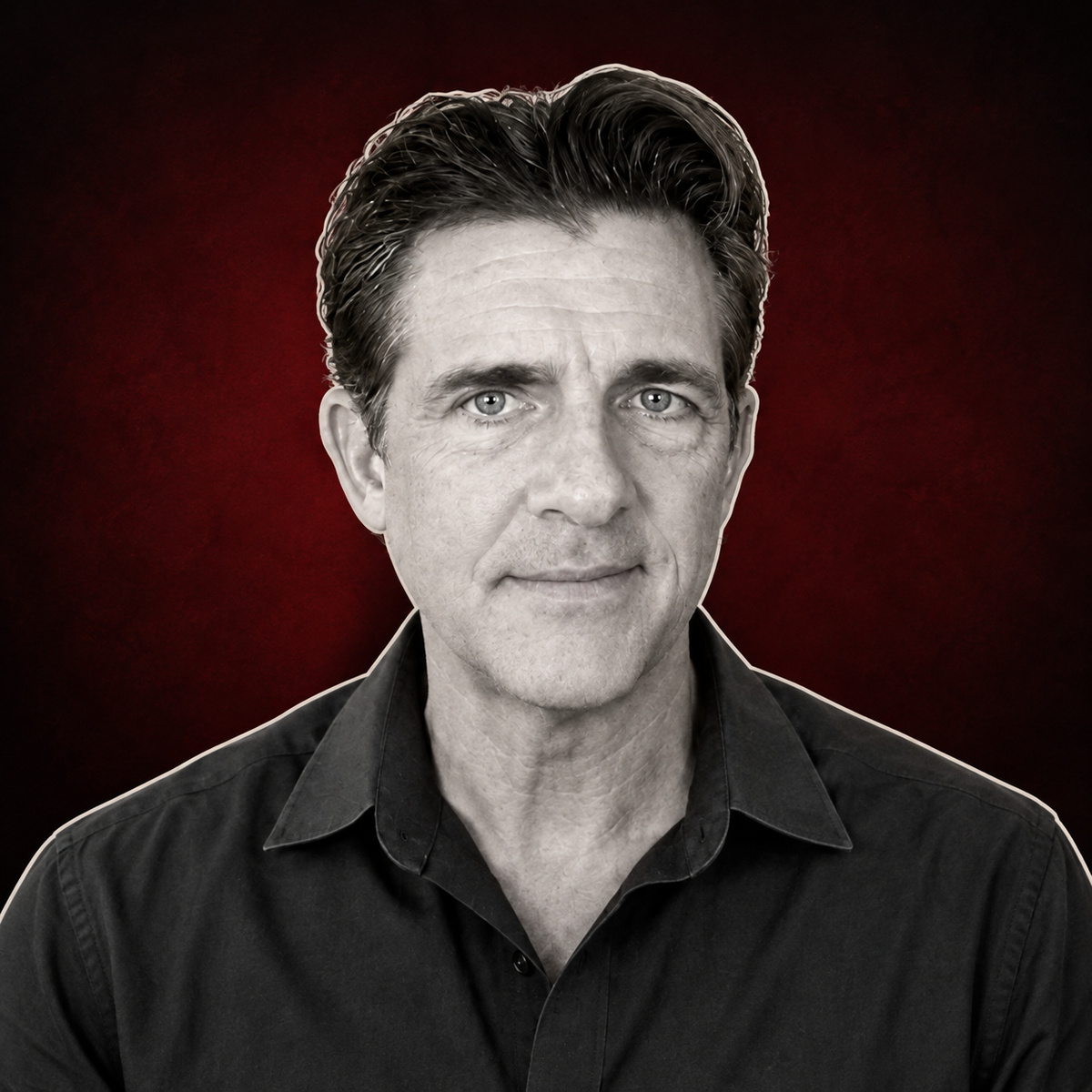
Rich Boggs
Rich Boggs is co-founder and sales director of the Brave Thinking Institute, the personal-development company he joined in 2012 alongside his mother, globally recognized spiritual teacher Mary Morrissey, and his brother Matt Boggs. Over thirteen years, Rich built the company's sales organization from two part-time representatives into a team of forty-two, developing the Conversations to Close framework now taught to Brave Thinking Institute's own sales team and licensed to thousands of certified life coaches. Before moving into sales leadership full time, Rich spent roughly a decade as a working actor under the name Richard Cody, appearing in projects including Overnight Delivery, Charmed, and Diagnosis Murder, and built and sold a commercial real estate leasing company and two financial services firms. He recently began consulting privately with a small number of outside clients on building and scaling their own high-ticket sales teams.
Want to Be Part of
Conversations Like These?
Inside the Speakeasy gives you a glimpse into the candid, practical conversations happening throughout our community. Every month, Speakeasy brings carefully selected founders, CEOs, and business leaders together to solve real challenges, share what is actually working, and help one another make better decisions faster. If you’re an established entrepreneur looking for the right people, perspectives, and opportunities to accelerate your growth, we’d like to learn more about you.
Complete a short application to tell us about your business and the chapter you’re interested in.