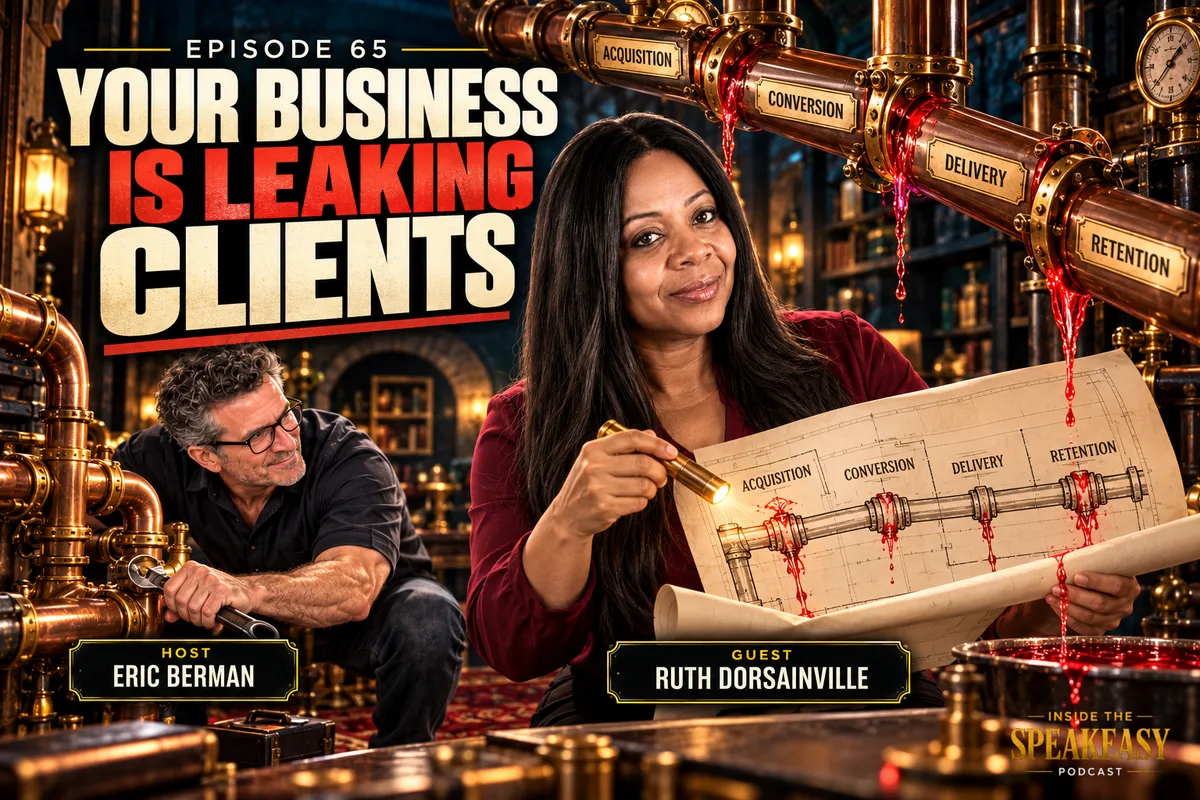
Ruth Dorsainville, the self-described Leak Detective who built and sold a recruitment firm and has been doing marketing for more than 20 years, argues that every business is losing money through leaks its owner has not noticed. Her fix is the DNA Method: diagnose where prospects slip away, nurture the database you already own, and amplify revenue from the clients you already have. In this conversation with host Eric Berman, Ruth explains why replying to a new inquiry within five minutes is the fastest leak to seal, and how her team uses AI to respond in seconds and keep after-hours leads warm. She also makes a blunt case that a business without a recurring model forces its owner to start over every month. Along the way, Ruth shares how a 3 a.m. Tony Robbins infomercial pulled her out of a secure government job, and how a hospital stay during her Wall Street recruiting years forced her to separate her identity from her work.
In this episode, you'll discover:
- Why a slow reply to a new lead is the most common leak Ruth Dorsainville sees, and why she treats five minutes as the outer limit
- How the DNA Method breaks marketing into three moves: diagnose the leak, nurture the database, and amplify revenue from existing clients
- Why owning your own contact list protects you when Instagram, Facebook, or LinkedIn goes down, and how regular education keeps not-yet-ready prospects warm
- How an AI responder can answer inquiries in seconds, hand people to a human on request, and hold real conversations with leads after hours
- Why Ruth believes a business without recurring revenue is not a real business, and how monthly income frees an owner to think creatively
- What a 3 a.m. infomercial and a hospital bed taught Ruth about leaving a secure job, finding mentors, and separating identity from work
Episode Summary
Eric Berman opens with a premise that frames the conversation: every business has leaks, and owners who believe they have none are fooling themselves. Ruth Dorsainville, introduced as the head leak detective of Speakeasy's Ottawa chapter, has built her work around finding those leaks. After more than 20 years in marketing, she now focuses on one thing, which she describes as systems, and she says AI has made automation and time savings more important than ever because time is the only resource everyone has in equal measure.
Ruth's path started far from entrepreneurship. Born in Montreal to parents who immigrated from Haiti, she grew up with the standard advice to go to school, get a degree, and get married. Her father drove a taxi, and her mother raised five children largely on her own after a divorce. Ruth followed the plan and landed a permanent government job at 19, in an office that served Canadian ministers, and says she was making $75,000 a year. Everyone around her called it a dream job, yet she describes feeling depressed and alone and wondering whether she was being ungrateful. A Tony Robbins infomercial she caught at three in the morning asked whether she felt meant for more, and she mailed a check for the program. Eric relates closely, recalling his own mornings with Tony Robbins and Brian Tracy recordings at 21 and saying he wants that kind of material in front of young people because schools do not teach it.
Ruth left the government job without another one lined up, went back to school, and worked a string of jobs, including selling newspapers and knocking on doors. A recruiter who noticed her communication skills and her French asked whether she had ever considered recruitment, and that coffee eventually led Ruth to start and later sell her own recruitment firm, with an office on Wall Street serving large banks and financial firms. Success came at a cost. She says money had become her definition of success and work her entire identity, and she ended up hospitalized from stress while still closing deals from the bed until a client told her to stop calling. At 25, inspired by the movie Eat Pray Love, she moved to Bali, then on four years of full-time travel, and eventually back to Canada during COVID, where she met her husband and settled in Ottawa.
The core of the episode is Ruth's DNA Method. Diagnose means finding where leads slip away, and the most common leak she sees is slow response. Her rule is to reply within five minutes, and she cites a Harvard study she says links that speed to a 400% increase in business. Eric offers a live example: a rare inbound website inquiry he called back immediately was becoming a signed client the day they recorded. Ruth adds that with Meta lead ads, a competitor's ad often appears right after someone fills out your form, and prospects called the next day may not remember opting in. Nurture means owning your database and educating it on a weekly, biweekly, or monthly schedule. Ruth points to an Instagram outage that left creators without a business overnight, and Eric adds his own rule of giving value several times before asking, since a no today often just means not yet.
Amplify carries two meanings in the discussion. Ruth argues that about 80% of the hard work in marketing goes into winning new clients, while about 80% of the revenue sits with the people already in your database, which makes existing clients your best clients and reactivation a priority. She also says that if you do not have a recurring business model, you do not have a real business, because one-time sales force you to start over every month. Eric admits his marketing agency has struggled with exactly that cycle of short projects and constant reselling. Ruth says recurring income pays the bills and gives an owner room to breathe and think creatively about serving clients on a bigger scale.
Ruth closes the practical side by describing how her team uses AI to respond in seconds, route people to a human on request, and carry full after-hours conversations, including one in which a prospect invited the AI to an event. She outlines her DNA Marketing Suite, the DNA Daily Reset mindset program, and a business foundation mastermind that brings in a lawyer, a CFO, and an IT specialist. Her final advice is to get clear on your why and join a community bigger than you, because the entrepreneurial journey is not easy and you become the people you spend time with.
Big Ideas Discussed
The Five-Minute Response Rule Is the Fastest Leak to Seal
Ruth Dorsainville says the most frequent leak she finds is simple: businesses take too long to answer new inquiries. Her rule is to respond within five minutes, and she cites a Harvard study she says shows that responding that quickly can increase business by 400%. Her reasoning is that a prospect who reaches out is usually contacting several companies at once and will keep going until someone answers. Eric Berman describes the prospect as finally sitting down to scratch a big itch and waiting to see who calls first.
Ruth adds a warning for anyone running Meta lead ads. Once someone fills out your form, she says, a competitor's ad is often the next thing they see, and if you call the following day they may not even remember submitting their name. Eric's own example makes the point concrete: a rare inbound website request that he called back right away was turning into a signed client on the day of the recording. For owners who say they lack the time or staff, Ruth's answer is automation. Her team aims for seconds rather than minutes.
Your Database Is an Asset No Platform Can Take Away
Ruth calls the database the currency of a business and an asset in its own right. She points to the day Instagram went down and creators who depended on it had no business, at least for that day. Her conclusion is that Instagram, Facebook, or LinkedIn can disappear at any time, but a list of contacts you own can still be nurtured.
Nurturing, in Ruth's view, does not have to mean selling. Many people are simply not ready yet and need time, so she recommends educating them on a regular rhythm, whether weekly, every two weeks, or monthly, with a focus on why your service matters to them rather than on what you do. Eric reinforces the point with his own practice of making several value deposits before asking for anything, and he admits his team was looking at an old list of past leads and realizing they had not done a good job of staying in touch. When a not-yet buyer suddenly has the need, he says, the business that stayed top of mind gets the call.
Recurring Revenue Is What Separates a Business From a Grind
The amplify stage of Ruth's DNA Method rests on an 80/20 observation she shares: roughly 80% of marketing effort goes into attracting people who do not yet know or trust you, through referrals, speaking, and ads, but roughly 80% of revenue comes from people who are already in your database. Existing clients, she says, have already been through your marketing and chosen to come in, which makes them your best clients and a natural target for reactivation and AI-driven follow-up.
Ruth goes further with a line from her book: if you do not have a recurring business model, you do not have a real business. Without one, she says, you finish each one-time engagement and start hunting for clients all over again. Eric recognizes this in his own marketing agency, where one-month and small projects forced constant reselling. Ruth's argument is that recurring income covers the bills, the payroll, and the lights, and that this stability is what gives an entrepreneur the creative space to find new ways to serve clients instead of grinding month after month.
Building a New Identity Before Building a Bigger Business
Ruth believes business is about 80% psychology and 20% mechanics, and her DNA Daily Reset program studies mindset teachers such as Dr. Joe Dispenza to put that belief into practice. Her example is an owner who has always earned $100,000 a year and wants to earn $100,000 a month. That person, she says, needs to hold a kind of funeral for the old self and develop new feelings, thoughts, behaviors, and actions capable of executing at the new level, supported by education and accountability.
Her own story shows why she takes identity seriously. Ruth says money once defined success for her and work became her whole identity, to the point that she kept closing deals from a hospital bed until a client refused to take her calls. She also credits mentors and coaches with saving her years of trial and error, describing it as sitting on the shoulders of giants. That thinking shapes her business foundation mastermind, where she teaches sales and marketing while a lawyer, a CFO, and an IT specialist cover structure, real profit numbers, and cybersecurity.
Questions We Answer in This Episode
What is Ruth Dorsainville's DNA Method for finding leaks in a business?
The DNA Method is Ruth Dorsainville's three-stage system for plugging the places where a business loses leads and revenue. D stands for diagnose, which means finding the leak, such as slow response to new inquiries, and automating the fix. N stands for nurture, which means regularly educating the contacts in a database you own. A stands for amplify, which focuses on getting more revenue from existing clients through reactivation, AI, and recurring products. Ruth says her book, Marketing for Business Owners, contains many more details beyond this high-level overview.
What is the five-minute rule for responding to new leads?
The five-minute rule is Ruth Dorsainville's standard that a business should respond to every new inquiry within five minutes, or the prospect will move on to a competitor. She cites a Harvard study she says found that responding within five minutes can increase business by 400%. Ruth calls slow response the most common leak she sees and the fastest one to fix. Her own team uses AI to respond within seconds rather than minutes.
Why should business owners build their own database instead of relying on social media?
Ruth Dorsainville says a database you own is an asset that no platform can take away. She points to a time when Instagram went down and creators who relied on it suddenly had no business, at least for that day. Instagram, Facebook, or LinkedIn can shut down, she says, but you can still reach and nurture your own list. Ruth recommends educating that list weekly, every two weeks, or monthly so prospects who are not ready yet stay engaged.
How can AI help a small business respond to sales inquiries faster?
Ruth Dorsainville says AI can answer a new inquiry within seconds, ask how it can help, and connect the person to a human right away if they ask for one. After hours, she says, an AI trained on the business's information can answer questions and keep leads warm. Ruth describes AI holding full conversations with prospects, encouraging them and offering pointers, and one person even invited the AI to an event. Her own platform, the DNA Marketing Suite, costs about $97 a month, she says.
Why does Ruth Dorsainville say a business needs a recurring revenue model?
Ruth Dorsainville argues that if you do not have a recurring business model, you do not have a real business. Without recurring revenue, she says, every one-time sale ends and the owner has to start finding clients all over again each month. Recurring income pays the bills, covers employees, and keeps the lights on, which Ruth says gives the entrepreneur room to breathe and think creatively about serving clients on a bigger scale. Eric Berman says his marketing agency struggled with this cycle of short projects.
Where does most of a business's revenue come from, according to Ruth Dorsainville?
Ruth Dorsainville says roughly 80% of revenue comes from people who are already in your database, even though roughly 80% of marketing effort goes into attracting new people who do not yet know or trust you. Existing clients have already gone through your marketing and chosen to buy something or claim a free offer, so she calls them your best clients. That is why the amplify stage of her DNA Method focuses on nurturing, reactivating, and offering recurring products to the people already in your world.
Why does Ruth Dorsainville recommend mentors and masterminds for new entrepreneurs?
Ruth Dorsainville says entrepreneurship requires much more than being skilled at one thing, including public speaking, legal matters, and finances, so new business owners should surround themselves with mentors and a mastermind. Because of her early Tony Robbins coaching, she relied on coaches she could call for direction. She describes mentorship as sitting on the shoulders of giants and skipping years of their research and headaches. Eric Berman adds that it takes setting your ego aside to see your own blind spots.
Full Episode Transcript
Read the Full Episode Transcript
Why Owning Your Database Protects Your Business
Announcer: Welcome to Inside the Speakeasy podcast, the private room where today's sharpest founders, innovators, and renegade thinkers come to trade the ideas that move industries. This show is brought to you by HighLevel, the AI-driven business operating system trusted by over 2 million businesses to help automate, scale, and create real leverage. HighLevel isn't just a tool, it's the engine behind some of the most agile and high-performing teams on the planet. If you're ready to streamline everything, amplify your reach, and actually build a business that works for you, you're in the right place. Visit www.GoHighLevel.com/Speakeasy-Mastermind-Promo to get an exclusive 30-day trial for being a listener of the Inside the Speakeasy podcast. Enjoy the show.
Ruth Dorsainville: So then there's nurturing. Hopefully everybody understands the power of having a database, right? Database is the currency, database is an asset. Do you remember that one time when Instagram shut down for a little bit? That's when it first came up, and then you had all those Instagram models. So within that one day or whatever, they didn't have a business anymore. But if you had your own database, you know, Instagram can shut down, Facebook can shut down, LinkedIn can shut down. You still have a database that you can nurture.
Meet the Leak Detective and Her Road Back to Ottawa
Eric Berman: Now, we all have a ton of leaks in our business, and if we don't think we have leaks in our business, we are missing and we're fooling ourselves. So assuming that's you, I'm so excited, because today we're bringing on the absolute, one of the top leak detectives. She is known as the Leak Detective, the head leak detective out of our amazing Ottawa chapter. I'm so excited to bring into Inside the Speakeasy podcast Ms. Ruth Dorsainville. And for those of you who don't know her, she's created and sold a company of over $50 million. She was managing over 1,400 people. Her company's DNA Social Media Marketing. She's been mentored by Tony Robbins, John Maxwell, Loral Langemeier, Dr. Joe Dispenza, featured in Forbes, MarketWatch, Disrupt Magazine, New York Weekly Magazine. Wow, wow, wow. Absolute superstar, and I'm so glad I was able to wrangle her to get her on the show today. Welcome, Ruth.
Ruth Dorsainville: Eric, thank you so much for this humble introduction.
Eric Berman: My pleasure, and I know you deserve it, and I probably couldn't speak highly enough, but wow. I mean, first of all, I'm excited. I love having Ottawa out there, some incredible people out in Ottawa. I'm getting to know the city better. And you have quite an interesting background, and I'm very curious about your entrepreneurial journey. You've done quite a bit of things, it seems like, corporate side, all sorts of different sides, recruiting and what have you, to where you are today, being the Leak Detective. So if you listen up, you're going to definitely pick up some things on what you could be doing today to fix some of those leaks. Before we go there, how did it get started? Like, were you born and raised in Ottawa, or how did this journey begin?
Ruth Dorsainville: So fun fact, I used to live in Ottawa when I was a teenager. So I was around 15. But just before Ottawa, I used to live in Vegas. And before Vegas, I used to live in Montreal, which is where I was born. So Ottawa is a government town. It's a government and university town. So coming from Vegas, I was in high school. I remember telling my mom, "Mom, what are you doing? You want to kill me now? Just kill me now. If you're going to put me in a small town, just kill me now," right? So, and it's funny how, you know, the best way to make God laugh is to tell Him your plan, right? So never in a million years would I have thought that I would be in Ottawa. Because when I did leave Ottawa, I left Ottawa four, five years later, and I moved to big towns like Toronto, Miami, Bali, Singapore, Australia, New Zealand. Like, I really got out. And then where do I settle? Right here in Ottawa, right? So it's funny how things just go full circle. So no, I'm not from Ottawa, but now I actually appreciate Ottawa, because now I have a family, and this is what this town is for, right? So now, I'm [unclear] Montreal, and really just wanted to get out there and see what the world was all about, right? So growing up, my parents told me, as most people say, you know what... They came in as immigrants, they came in to work, they worked hard. You know, they came from Haiti, and my dad came here and was a taxi driver. And then my mother raised five kids. At the beginning... and then, of course, well, not of course, but they got a divorce. And because of that, she had to raise five kids on her own with the help of the community. So the good advice is go to school, you know, get a degree, and get married, right? And what happened is that I did do that, and I was actually able to accomplish that at the age of 19. At the age of 19, I went to school and I got a job at the government. So government is like the dream here in Canada, because all you got to do is work there for 20 years. Okay, that's what everybody told me. Just work there for 20 years, you're going to get your pension, and you're going to be all right, right? But the only thing is that, you know, like most people, we do have a voice inside of ourselves that is telling us that, you know what? You're meant for more. And I was privileged to be able to listen to that voice with the help and guidance of coaches, and decided to go the entrepreneurial route.
Leaving a Dream Government Job After a Tony Robbins Infomercial
Eric Berman: It's interesting, because I talk to a lot of entrepreneurs, obviously, on the show, almost all entrepreneurs. It's almost like that moment of discovery, because you're not born an entrepreneur. You don't realize that you certainly have the entrepreneur genes. Something's inside of you, but it doesn't come out until a certain thing happens and until the realization hits, and you're like, wait a second, I'm different than the average, the other people that are around me that are happy in that government job, and they're just, you know, doing it. And something inside of you was craving more, and it wasn't for you. When did you discover that, like, this wasn't me, I have to go a different path?
Ruth Dorsainville: Well, I remember being in a cubicle, right, with that electric fluorescent light that's [unclear] my brain. You know, that bright light that they want you to stay alive. And I was like, wait a minute, it's actually [unclear] my brain right now, right? I'm there and I'm hearing everybody. You know, the thing is that everybody was happy. Some people were happy. Some people, that was their dream. And honestly, looking at the job that I had before, it was actually a dream job. I was making $75,000 a year. That was 20 years ago, right? My job was to work with the ministers of Canada. So when they would come in, you know, they would go to this minister's [unclear] office, and I would be there, but I was focusing more on the accounting component. Back then, at 19 years old, I couldn't care less about the ministers. I didn't even know their names. I didn't want to know their names, you know? And also, part of my job as well was, when I had downtime, to wash the dishes. I wanted to die. Like, once they asked me sometimes to put the dishes into the dishwasher, I'm like, I didn't come here to do dishes, right? What happened is, inside of me... And at that time, I was actually dating a lawyer, right? But then I was complaining, like, I don't want to be here, I feel like I'm dying. And he's like, "You're making more money than me. I don't want to hear any of your complaints." And everybody around me, they're like, "Are you crazy? You want to leave the government? I've been trying to apply for years. I haven't been accepted," right? But I spoke French and English, so not only did I get a job, I got a permanent. So usually people come in on a contract, and after years they become permanent. I came in, got permanent. All I had to do was wait 20 years, right? So I was feeling depressed, and I was feeling alone, because I'm like, okay, am I being ungrateful? Why am I feeling this way? Like, I don't want to be here, and I know it's a good job, it's just not for me. And the days, when I don't want to be somewhere, the days were so long. Like, one minute was like an hour when you're shredding, waiting to leave, and I just felt that it wasn't for me. And then what happened is, at three o'clock in the morning, I actually heard Tony Robbins' infomercial back then.
Eric Berman: Okay.
Ruth Dorsainville: You know? And I'm sleeping, and I hear this infomercial all the time. But that day, that day it spoke to me, right? And as I was waking up, there's always this three o'clock in the morning, you know, inspired inspiration. And I woke up and I saw the commercial, and he was saying, "Do you feel like your life is meant for more?" And I'm like, yes, waking up, yes. "Do you feel like..." and I'm like, yes. You know, and I got in, made my phone call. Back then I had a check, so I wrote the check, you know, and I sent it over. And then I got my first cassette tapes, you know, my CDs, they came in. And that was the beginning of a journey to really listen to ourselves, listen to our soul that's always talking to us. What I realized is that my entire environment... I've ever felt like your environment is not the right one for you, because everybody was nice. They were just not related to the feelings that I had inside of me, right? So throughout this transition, I was able to get the best in the world at that time, Tony Robbins, got the program, got the coaching. And I was able to have just one person, just one person, believe what I believe, you know? And that was the beginning of understanding that, you know what, entrepreneurship could be a lonely journey, but it doesn't have to be, right? That's why I love the masterminds that we have. But listening to your soul, it takes guts. It takes guts.
Eric Berman: I mean, just to interrupt you there, I think I want everybody to remember the feelings they've [unclear] in while you're listening to your story, and it just gives you a sense of the power of Ruth here. I mean, that is lonely. It's tough. You've got the whole world looking at you saying, you've got the dream job. You know, on one side of your shoulder, it's like, shut up, you're crazy, be happy, everybody wants this. You know, the guy you're dating at the time, you know, you're making more than me, you're such a spoiled brat, just do your thing. And then the other side of you is like, yeah, but I'm not happy. And then this Tony comes around, the guy, the man on a cassette. I can relate to that, because I listened to Brian and Tony when I was, you know, 21, right out of college. And it was six to seven every morning with my young startup, breakfast with Tony or Brian Tracy. And ultimately that completely changed my path too. I always say my give back, when I am a lot more successful in the day and have the ability to retire and give back, my give back is exactly what you talked about. We need to get that kind of content in the hands of people at a younger age, in my opinion, because they don't teach you that stuff in school. And the power it gives to people like yourself and others is amazing, because it was able to pull out of you what was inside. And now you have a voice, you have a friend, somebody who can relate to you. And here you are. You didn't feel alone anymore, and you're like, okay, time to go. Congratulations on that. Well done. So now, what's that first step in the entrepreneurial path? You leave your job. Like, how did you start this amazing career?
From Odd Jobs to Building a Recruitment Firm
Ruth Dorsainville: So one of the, I wouldn't say secret, could be secret, but one of the things that I've done was something crazy that most people would not do, right? So I actually left, and I didn't have another job, because I didn't know what I wanted to do, but I knew that I did not want to be that, do that, right? So one of the things that I feel happened is, when I left, I decided, you know what, let me just go to school. So actually, I had enough money. I was making enough money to go to school, right? And I started to do a bunch of different jobs here and there that, maybe, like, they paid... They didn't pay that well, but I was happy. You know what I mean? I was happy. Because I removed the energy that was draining me down, right? Which is what most people... That's what I find is, there's a mental health crisis, because people are stuck in feelings that are making their body, you know, in disease, right? So Bob Proctor talks about that. Like, you know, disease is a body that's not at ease, right? Because I was able to remove that, I created a frequency of attracting abundance. So I did, like, selling newspapers, knocking on doors, commercial, POS, the POS. So I started to do all those jobs until somebody headhunted me. I was doing a contract job as an office manager, and somebody called me, and she says, "Oh, you have great communication skills." And she spoke to me in French. "Oh, you speak French as well." And she said, "Have you ever done recruitment?" I'm like, what is recruitment? I didn't even know what it was. And then she says, "You know what? Let's come and have a coffee." And that was the history of me starting my own recruitment firm, after working with them for a few years, and building and selling a company, right? So who would have thought? Who would have thought, right?
Eric Berman: So you started working a little in the trade, and you're like, wait a second, I could do a better job than these guys. I'm going to do my own. So then you spun out of being an employee slash contractor and said, I'm going to build my own recruitment headhunting job. And that's when you sold your big company.
Ruth Dorsainville: Yes. But let me make sure that anyone that is inspired to do so, that are working at their job, don't make the same mistake that I did. You know, which, of course, in the recruitment, you know, you make a placement, you see the company make a $20,000 check, and then they give you like $200. I'm like, you know, I could do that. However, as you know, when you're in business, it's not just you, right? It's not just recruitment. You also need to be a marketing person. You also need to do, like, you know, public speaking. You also need to look at the legal stuff. You also need to look at the finances, right? So I did that. But again, because I've had Tony Robbins coaching, I knew that I needed to get a coach, right? So in those moments, I had coaches that I would just pick up the phone and call, and I had mentors, and they would tell me what to do. So if you are, so anybody who's listening, if you are looking to leave your job, make sure you get some mentorship, surround yourself with, you know, a mastermind to be able to help you, because, you know, entrepreneurship is much more than just being skilled at one thing.
Mentors, Blind Spots, and Sitting on the Shoulders of Giants
Eric Berman: Well, one of the skills, even on that, and I think you're dead on, and a lot of us that are entrepreneurs and not working for others, it's still... I think what's hidden in there is you being good at putting your ego aside and identifying the blind spots in your own way. Like knowing that, hey, I could either just try to fight through this and figure it out on my own, or I could take a shortcut and spend a little money and invest in a resource that's going to be smarter than me in this one area, so I can go faster and do it the right way and learn that way. And I think that's the path that you constantly, it looks like, decided, which has been working out really well for you. Everything you hear on this show comes back to one idea: proximity. I wrote the book on it, literally. Proximity Pays, my bestselling book, available now at proximitypays.com.
Ruth Dorsainville: I feel that everyone should do it that way. Everything other than that, trying to figure it out by yourself, is just plain [unclear] stupid. Sorry. But if you could actually be sitting on the shoulders of giants, right? So when I'm getting mentors and coaches, I'm removing 20 years of their research, their headaches, right? We have a certain amount of, a little bit of time here on earth. Let's maximize it. Don't try and figure it out. Somebody has already done it. Find out who they are, emulate them, and personalize your journey.
Burnout on Wall Street, Bali, and Starting Over in Ottawa
Eric Berman: Love it. Okay. So now you sell your company, and I'm sure we could do an entire show just on that experience, but you get through it, you have a nice exit. Is this when you went into the world of... I mean, all the things you learned in building it on the marketing side, you have your DNA Legacy Group. Now, I know you've done a lot of things, but ultimately becoming the Leak Detective, walk me through this journey and the path. How'd you get to here, and we'll dig into that a little bit more.
Ruth Dorsainville: So when I sold my company, it was actually... So what happened is, growing up poor, right, my definition of success was money, right? So I worked, and I loved working, and that's all I did. That was my identity. Like, even right now, if you go to my Facebook, it's not even my name. It's actually my old company. I was so attached. We were one, right? And what happened is that I was actually working on Wall Street. So my office was actually on Wall Street, and it was recruitment. We were hiring. We had all the big banks, all the financials, right? And it was, of course, it wasn't of course, but it was toxic, because it was a lot of, you know, Wall Street people that I had to work with. And what happened is that I got sick. I got sick, I got stressed, you know, I ended up in the hospital. And you would think that in the hospital I would relax, but no. While I was in my hospital bed, you know, getting that thing in my vein, I was making phone calls, closing deals, until a client told me, "Ruth, you're in the hospital. Take it easy, relax, and call us back when you get better. We're not answering any more of your phone calls. Get better." Yeah. So that's when I sat down, and I had to sit back with myself and actually ask myself, who am I? And I couldn't even know who I was. My entire identity was work, right? So that led me to a journey of watching the movie Eat Pray Love. And I'm like, you know what, let me do that. And I was 25 at the time. I wasn't ready to get married. Didn't want to settle in that part of my life. So I decided to move to Bali. So my goal was to do just like the movie, go to Bali, India, Italy, but I got such a culture shock. I went from having people as neighbors to cows in Bali. So I'm like, wait a minute, wait a minute. And yeah, the homes in Bali, they don't even have a rooftop. Anybody could just come in. It's mind-blowing. So I was just trying to figure out what the hell I was, and decided to live there for the last two and a half years, then Australia. So I was traveling full time for four years and just enjoying life, enjoying my exit money and all that great stuff. So now, why I'm in Ottawa: because of COVID. So during COVID, I decided to come to Canada to be close to my family. And of course we have great healthcare here, right? So you don't want to be in a bad country during COVID. And that's where I met my husband. I met my husband through online dating. I was in Montreal at the time, you know, staying with my mom, trying to figure out what I wanted to do. And then he was here in Ottawa, and we met on a dating app. And yeah, he was in Ottawa, so we met. And then next thing you know, I'm here in Ottawa, in the town that I never thought I would be in. And yeah, so now, you know, of course, with the marketing, I've been doing marketing since the beginning, throughout, with the recruitment. Now I've expanded it to other businesses as well. So I've been doing it for over 20 years. Yes. So now I've decided, after I got married, to really focus on that one thing, right? That one thing, which is systems. You know, especially nowadays with AI, oh my God, are you kidding me? It's all about systems, all about automating, all about really, again, shrinking the time, because time is the only thing that we have that is equal. And what you do with it is priceless, right? So that's what I specialize in, yeah.
The DNA Method: Diagnosing Leaks and the Five-Minute Rule
Eric Berman: Love it. Okay. So thank you for that. All right, now let's get into it. You've been doing marketing your whole life, you step back, you're on your new journey now since COVID, and you're saying, wait a second, this is an area I've always had this knack for. I've had to do it by brute force my entire career and in all my companies to be successful. And now you're recognizing that others are making some mistakes. So I mean, what's your typical... like, your clients you work with, what are you finding? Tell me a little bit more about the leaks, because I like how we talk about it.
Ruth Dorsainville: Yeah, so I have a new book. It's coming out next week. We have a book launch in person, September 10th, but it's called Marketing for Business Owners, finding the leaks and sealing them, so that you could actually use your own time. So we look at the three methods. It's called the DNA Method. The first is to diagnose, diagnose where the leak is, right? So some of the leaks are something as simple as how soon are you responding to your clients, right? So right now, you know, some people could be spending money on ads or whatever they are, but they're just not nurturing. Or it could be a referral, right? It could be a referral that somebody gave you, right? And we're all busy. So we don't have time to do that. Some people don't have the time. I'm not saying you should not make the time, but sometimes time is basically everything. So one of the things that we do, we diagnose where the issue might be, and we automate the system. We automate the system. We've got a rule of five minutes or less, right, where you have to be able to respond within five minutes. If not, they will go to your other competitors, right?
Eric Berman: Love it. Even that one sounds so simple, but it's just like, how many people don't do a good job of that? I mean, I gave you an example with my last client that we're literally signing today. It was because I did follow your rule. Like, it was just random, a random inbound request from our website. And we rarely get those. Usually they're spam or something. I'm like, actually, this one looks interesting. I was running around, and I literally picked up the phone, and I called the person, and they're, you know, turning into a client because I responded so quickly.
Ruth Dorsainville: Yeah. And what happened is that when you don't respond, this particular person is going to somebody else's website, right? Until the person answers. So yeah, if you want to have more clients... If you respond within five minutes, there's a Harvard study that shows that your business will increase by 400%.
Eric Berman: Wow.
Ruth Dorsainville: So, just a five-minute rule, right?
Eric Berman: You think about the other side, that prospect has a big itch. They're scratching. They're finally sitting down at the computer to look up who I'm going to reach out to. You're not the only person. They went out there and just reached out to a few people.
Ruth Dorsainville: Yeah.
Eric Berman: And now they're waiting. Okay, who's going to call me? I'm ready. Okay. So, I like it. All right.
Ruth Dorsainville: So that's the diagnosis. And again, it could be you, or it could be an assistant, or it could be AI. So AI is the thing that we'll talk about.
Nurture: Educating Your Database and Staying Top of Mind
Ruth Dorsainville: So then there's nurturing, right? So now you've got all... hopefully everybody understands the power of having a database, right? Database is the currency, right? Database is an asset, right? Database is... let's say, for those that don't understand the power of having your own database. Do you remember that one time when Instagram, I think Instagram shut down for a little bit? That's when it first came up. And then you had all those, like, models, Instagram models. So within that one day or whatever, they didn't have a business anymore, right? They didn't have a business anymore, right? But if you had your own database, you know, Instagram can shut down, Facebook can shut down, LinkedIn can shut down. You still have a database that you can nurture, right? Well, again, how do you nurture? It doesn't have to be selling. You could simply educate them, because some people may not be ready right now.
Eric Berman: That's right.
Ruth Dorsainville: You just need more time. So that's what the nurturing is. You educate them. Educate them once a week, once every two weeks, once a month. This is what I learn about what you do, but the importance of them to be able to use your service and product, right? So that's the N.
Eric Berman: And I'll double down on that too, because you're speaking my language, and we always find ourselves missing that. And even again, that's funny, because it's so current to me, because we're looking at our old list and saying, hey, we need to drum up a little more business. What about all these leads we talked to in the past? It's just so obvious. We're not doing a good job. And even cobbler's shoes, we teach this to our clients, like, where's your email list? What are you doing to nurture? Are you giving value? I'm like, make four deposits before you do a withdrawal, meaning give, give, give, then ask. And I'll summarize it saying the same thing you said, which I always say: oftentimes, just because somebody says no today, it doesn't mean it's always a no. They're not ready right now. Then when they are all of a sudden ready, whoever is top of mind and familiar, they're going to reach out and call. If you're nurturing, nurturing, and now they have this need all of a sudden, the person that's nurturing, that's top of mind, is going to get the call. If you're not doing anything, like you said, then you missed out on that opportunity.
Ruth Dorsainville: A thousand percent. It sounds simple, but it's not... people don't do it, right? It sounds simple, but if you put things into place, this can be done for you, automatically.
Eric Berman: Totally.
Amplify: Existing Clients and the Case for Recurring Revenue
Ruth Dorsainville: Exactly. And then the A is called amplify. So a statistic that I actually want to add as well is that 80% of the hard work is to actually get new clients that haven't seen you, they don't know about you, they don't trust you yet, right? So how do you do that? You do referrals, you do speaking events, you do ads, you do all kinds of... that's 80% of trying to get people into your funnel, into your world, into your community, right? So that's 80% of the hard work. However, as soon as they go into your database, that's where 80% of the revenue is, right? And a lot of people feel like they have to go... You don't have to. Of course, you need to have things out there to be able to bring in new leads or new clients, but your existing clients are your best clients. Your existing clients, they already went through all of the marketing that you've tried to bring them in with, and they said, okay, I'm coming in. I would like to either purchase something from you, I would like to get this free e-book from you, I would like to get this free whatever, I would like to get one of those products. So once they're in and you're nurturing them, that's where 80% of the revenue is. So A is to amplify, right? So how can you amplify it? You know, we use, of course, AI as well. We do the reactivation as well, right? And we also believe in creating products and services that are recurring. The thing that I have in my book that I really want to touch on very quickly is that if you don't have a recurring business model, you don't have a real business. And I'm sorry for those who are listening that have a business and they're working hard. But what happens is, if you don't have a recurring business model, every single month you have to start finding new clients again. Whenever you're done with that one-time opportunity, you've got to start all over again, versus creating a product that is recurring by bringing value on a regular basis. So we'll help you to create that, amplify your growth. And that's what the A stands for in the DNA Method.
Eric Berman: Yeah. Well, that was actually a double on that. I mean, [unclear]. It seems like there's two A's within the A. One was to amplify and focus more on your customers versus prospects, because you're going to get a lot more referrals, and those are your best leads, out of your customers. And the other one is to amplify your revenue by not going into the onesies and twosies, and getting into the more... I mean, and again, I can relate so much to what you're saying. It goes from me being a poor agency owner who... you know, my other business I have, before Speakeasy, that I still have, is my marketing agency. And it's very difficult. You're getting these clients on for one month or a small project, and it's like, okay, now you've got to keep reselling and get going, versus a recurring revenue. And I imagine what you would have coached me on earlier, if I'd known you earlier and listened to you earlier, it would have been, "Eric, you know, how do you build a recurring something-something within your agency that your clients can buy, so that you can retain them if you're done with the other side of the business, because you need to keep going with them if they trust and like you."
Ruth Dorsainville: Yeah, obviously. My... [unclear]
Eric Berman: What's that?
Ruth Dorsainville: Sorry. That pays the bills. The recurring pays the bills, to give you space to breathe as an entrepreneur. Do you know what I mean? Because as an entrepreneur, we're grinding, we're hustling, we have to get clients and clients. But when you have a recurring income, money coming [unclear], I can breathe now. And now you could go into a different state of being creative. How else can I serve my clients? But if you're so busy trying to get clients day after day, month after month, you don't have the creativity space, because you're busy just trying to, you know what I mean, get new clients. But once you have your bills paid, your employees are paid, the lights are on, you know, everything's taken care of, and you have enough recurring money, monthly recurring income, you could actually serve on a bigger scale, right?
Eric Berman: Well, yeah, I'm really [unclear] that. Yeah, I love it. So those are the biggest... So ultimately, your leaks... I like it because you have a good system. I mean, your leaks are all... You gave me a big macro of the D and the N and the A, and then I imagine there's 20 things on each of those, the D's and the N's and A's, that you walk through, whether they read your book or work with you, that people are able to detect and help them fix along the way. And I like how you really simplified things. Is that accurate?
Ruth Dorsainville: A hundred percent, a hundred percent. Yes, there is a six step, but yes, there's many more good nuggets in the book, Marketing for Business Owners.
DNA Daily Reset, Mindset, and a Business Foundation Mastermind
Eric Berman: Regarding those, what would you say... and then, so right now, people come to work for you. Do you do, like, one-on-one, or is it your agency? Like, how do you actually serve people?
Ruth Dorsainville: I don't do one-on-one unless, you know, you want to pay me crazy money. And of course, I say yes to money. And most things are automated, and I have communities. So I have a combination of both. So right now, I have DNA Daily Reset, which is a mindset program where we study the best of the best. Right now we're actually studying Dr. Joe Dispenza, because, as you know, as a business owner, it's 80% psychology and 20%, you know, mechanics, right? So we want to really make sure that our psychology is great. And how do we do that? And one of the things that I teach is that in order for you to create a business... let's say right now you've always made $100,000 a year. In order for you to make $100,000 a month, you need to create a new you. Like, you literally need to do a prayer, a funeral, to that person that has $100,000-a-year knowledge, and create a new person with new feelings, new thoughts, new behaviors, new actions, that's going to be able to execute the $100,000 a month. And so that's what we're doing. We're actually creating a new you. We're actually creating... but we're doing it with the science and understanding of the brain, right? Because education is everything. You know, feeding your mind with information is everything. So what we're doing, we're studying from the best of the best on how we're creating a new us, and then to be able to execute. So some accountability there as well. So that's one of the things that I do. And then I do have a system. So if anybody would like to get the automated system, I've actually got a system and people that can help them and teach them. We have daily classes for support. And then I do have a mastermind as well, but the mastermind is very specific. It's intensive for business owners. I would like to go through the 12 steps. So one of the things that I do as well is that I teach mostly sales and marketing, but I have a lawyer who comes in and helps them understand the importance of structuring your business the right way. We also have a CFO that comes in and shows them real numbers. The worst thing that you would want to do is to have a million dollars of revenue and zero profit. We have seen it, by the way. So really understanding your numbers, right? Then we bring in an IT specialist on how to protect your computers, and cybersecurity stuff. So we have specialists coming in to help you to be able to elevate your business. So it's a business foundation mastermind, and that's how I teach them as well. I've got some clients here and there, but I don't promote it. Honestly, of course, if people are ready to pay me a big fee, I'm more than happy to help in that way. But yeah, I usually promote those things first. And once they get the mindset, then by your own means, I'm more than welcome to speak with them one-to-one.
The Most Common Leak and Using AI to Respond in Seconds
Eric Berman: Thank you for that. What are you seeing as... I'm going to go back a little bit to the DNA. What would you say is probably the most frequent leak from a lot of the people you work with?
Ruth Dorsainville: It would be the five minutes, the five-minute rule. I've seen some people do it manually, and, you know, more power to them. Because not just that, but let's say you do ads on Facebook, right? What Meta does is that once somebody has filled out the form, your competitor's ad is literally next, right? And you'll see that if somebody does ads, you'll see when you call them, it could be the next day, they're like, "What? I don't remember putting my name on the form," right? But as you saw today, somebody went onto your website, put their information in, you called them right away, and they became a client. So that's the fastest one to be able to seal. If you could seal that right away, that would be the fastest thing that I would suggest somebody does.
Eric Berman: Thank you for that. And I think now the excuses of, well, the expense and the time... I think with AI, I mean, it seems like that is such a no-brainer, to be able to figure out how to use AI to shore that up a little bit. [unclear]
Ruth Dorsainville: Yeah, of course. AI could respond. First of all, we respond within, like, seconds. So we don't do five minutes, we do seconds. The AI calls and asks, how can we help? And then if the person says they want to be with a person, a human person, they'll get somebody right away. Of course, after hours, the AI has been trained to respond to their questions, you know, just to keep them warm. I've seen AI have a full conversation, full conversation. The person's [unclear] inspired. I'm like, I'm not sure, did they know that it wasn't, like, a real... I'm not sure if they know. But they're, like, showing... like, I've seen some emails as well, they're showing AI what they've been working on, and AI is cheering them on and giving them some pointers. I'm like, this is great. The AI has been working for me while I've been sleeping, coaching my clients, because, of course, we give them the information. But I come in the next day, and the person is so happy, sharing information, inviting the AI to an event that they're doing. Like, they don't have... you know, just giving them a lot of information. So I find that, yes, it does help. You know, it does help. And some people, of course, are not comfortable with AI. And for those people, I say, you know, it's just a matter of time. It's just a matter of time before AI becomes the norm. But what I don't understand, for those people that don't have AI, is that when you call big companies, like a cell phone company, it's the AI that's responding. So why is it okay for those big companies? We're comfortable with that. But when it comes to smaller firms, there's a problem. So definitely AI has been very helpful.
Eric Berman: Is there a go-to tech on the five minute, the thing you're just even talking about, that you've found that you're like, hey, here's a really good AI platform for responding to sales inquiries?
Ruth Dorsainville: I have my own platform. It's called the DNA Marketing Suite. So that's the [unclear] that I would, of course, suggest. And yeah, it's actually pretty cheap. It's like $97 a month, and you're able to get the full DNA system.
Eric Berman: What surprises... she's humble. She's got a great product. She's not even promoting here, so I'm helping to pull it out. So great. So there's the DNA system. And you're dealing with your own cobbler's shoes issue, because you're creating a product that is more than a one-off. You have your recurring product there. I love it.
Ruth Dorsainville: 100%. Yes. I do... I do what I preach. I do what I preach.
Eric Berman: You're going to say you do what you preach here. Yeah, thank you. Wonderful.
Own Your Why and Find a Community Bigger Than You
Eric Berman: Well, as we kind of wind down, I appreciate all this. Are there any other suggestions, tips, things I didn't ask you about that I probably should have?
Ruth Dorsainville: No, no. I would say that the only thing that I would leave for people that are currently watching is to, of course, [unclear] this all the time, but to really hone in on your why, right? Because the entrepreneurial journey is not an easy journey, right? It's not an easy journey. And having a great why, a great community... I would even go [unclear] a why, as well as community, a community that's bigger than you, is so important. It's so important for your growth. And you do become the five people that you hang around with.
Eric Berman: Yep. Yep. Love it. Thank you so much for being on the podcast today, and I can't wait to meet you in person someday soon.
Announcer: And that's a wrap from the Speakeasy podcast. If something sparked for you, don't keep it to yourself. Share it, review it, and pass it to the one person who needs to hear this right now. Want in on the real mastermind? Tap the link in the show notes to apply. Until next time, keep scaling, stay sharp, and don't be the smartest one in the room.
Eric Berman: Hello, I've been noticing you've been following along to Inside the Speakeasy podcast. And the conversations I'm having out there resonate with you, then I'd like to invite you to apply to learn more about becoming a member of Speakeasy.
About The Guest
Ruth Dorsainville
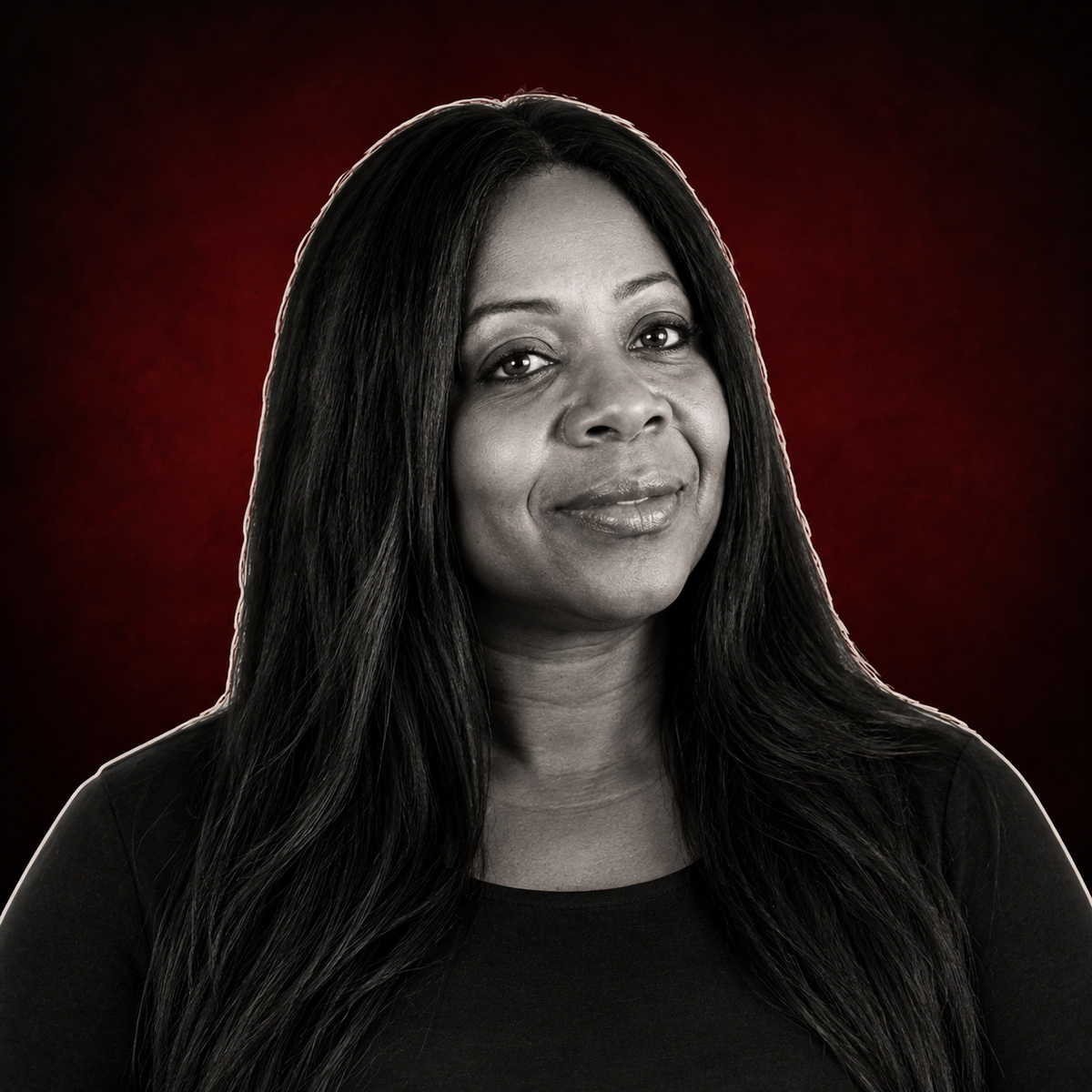
Ruth Dorsainville is a business growth and systems strategist who calls herself the Leak Detective, a name for her work finding where businesses lose leads, clients, and revenue. Through DNA Social Media Marketing, she helps owners automate their marketing around her DNA Method of diagnose, nurture, and amplify, offers the DNA Marketing Suite platform, and leads the DNA Daily Reset mindset program. She is the author of Marketing for Business Owners and describes herself as a Certified Leadership Coach. Before focusing on marketing systems, Ruth built a staffing company that she says grew to more than 1,400 affiliated recruiters worldwide and sold for eight figures; in the episode, she describes running its recruitment office on Wall Street. She has been featured in MarketWatch, Disrupt Magazine, and New York Weekly. Born in Montreal to parents who immigrated from Haiti, Ruth now lives in Ottawa and is part of Speakeasy's Ottawa chapter.