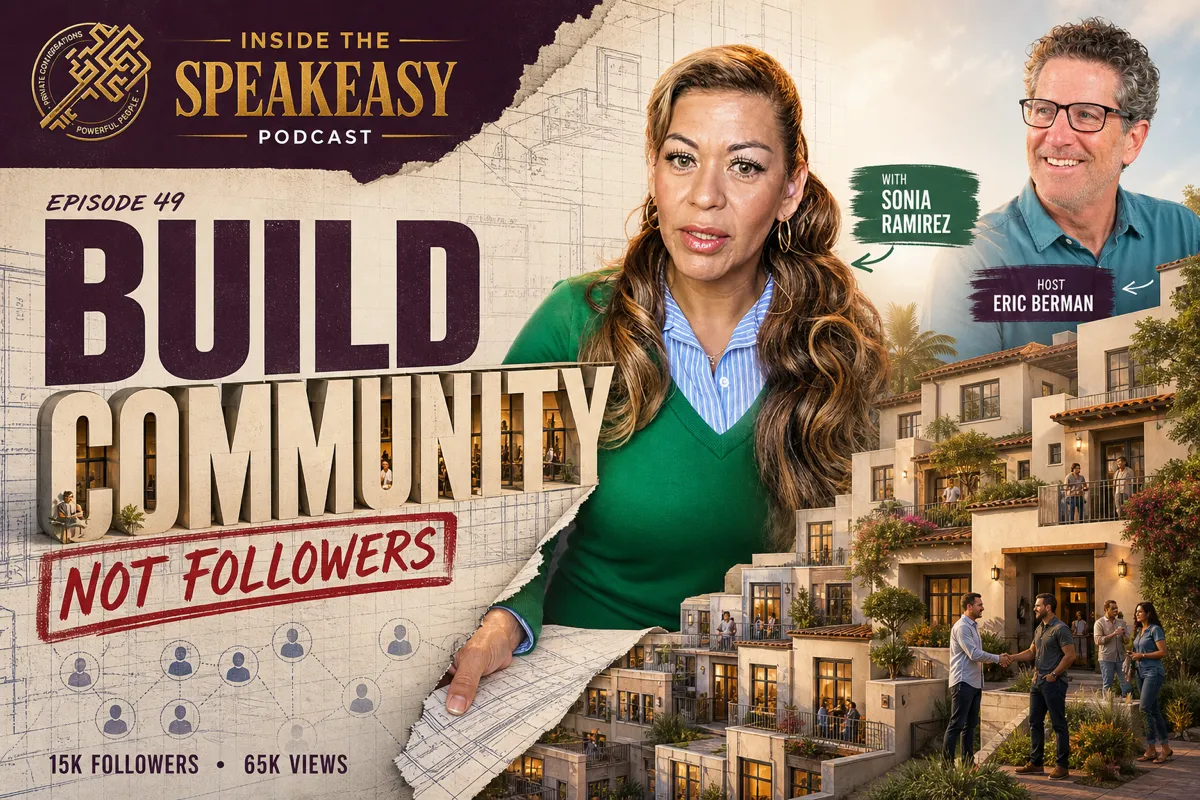
Sonia Ramirez, the real estate developer known online as the Multi-Unit Queen, has fewer than 15,000 followers across her social platforms, yet she says her content regularly reaches 50,000 to 65,000 views in a 30-day period. In this conversation with host Eric Berman, Sonia explains how a fourth career, a $25,000 course, and a chance meeting at a client's restaurant led her into ground-up multi-unit development in Southern California. She breaks down her three pillars of perspective, projects, and partnerships, why she chose to document her everyday life rather than curate polished content, and how that engaged audience became the funnel for her first masterclass. Sonia also shares how she vets partnerships, how she handles being mistaken for the assistant on her own job sites, and why she wants more women to join masterminds.
In this episode, you'll discover:
- Why Sonia Ramirez chose content documentation over content creation, and how sharing good days and bad days built a more engaged audience than many peers with far larger followings
- How the Multi-Unit Queen name was born from a family nickname, then checked against domains, LLC names, and social handles before she committed to it
- Sonia's three pillars of perspective, projects, and partnerships, and how clarity about your objectives makes it easier to say no to the wrong opportunities
- The AI prompt that asked Jim Rohn to advise her business, and how it pushed her to turn years of engagement into a masterclass and community
- How Sonia turns being mistaken for the wife, the assistant, or the designer on her own job sites into conversations instead of conflict
Episode Summary
Sonia Ramirez was born and raised in Orange County, California, and describes herself as an entrepreneur at heart since childhood, when she sold trinkets and, later, essays to pay for a study abroad trip in college. Real estate development is her fourth career. Before it, she ran a marketing company and a health and wellness business and spent 16 years in city government as a parks and recreation supervisor, where she emceed community events for thousands of people and put together partnerships and sponsorships. She credits her first-generation Latina parents for encouraging every idea she had, and says the common thread across every career has been building community and creating the culture around the tribe she wants to attract.
About 10 years ago she moved into real estate. She did not want to be a realtor; she wanted to invest. She spent $25,000 on an online wholesaling course but did not know how to apply it. Then, while doing marketing work, she met a real estate developer at a client's restaurant, told him she had been looking for a mentor, and was in his office two days later. He offered to teach her everything if she handled his marketing, and Sonia says they built over a hundred units together in seven and a half years. She launched her own company about two and a half years ago, focused on ground-up two- to four-unit builds such as duplexes, triplexes, quads, and ADUs, and says she pays investors double-digit returns backed by the real estate she builds and sells.
Sonia runs her business on three pillars: perspective, projects, and partnerships. When she went out on her own, she replaced her old "realtor" handle with Multi-Unit Queen, a name that came from her nephew calling her Auntie Queen. Before committing, she confirmed the website, LLC, and social handles were all available. She also had to decide whether to be the face of her brand, noting that women online face far more judgment about their looks. Sonia says she lost over 180 pounds in the last five years, but that her confidence and online persona predate the weight loss.
Her social strategy started in person. By design, she attends one or two networking events a week and speaks at one event a month, and people who meet her tend to follow her. She later added a CRM and funnel so followers became a community she could stay connected to. With a little under 5,000 followers on Instagram and under 15,000 across platforms, she says peers were surprised by analytics showing posts with 1,000 to 7,000 views and 30-day totals of 50,000 to 65,000. Sonia attributes this to a documentation style: 10 to 15 stories a day showing her drives across Southern California, her projects, her problems, and even her personal views, so followers feel part of her journey.
That engagement became a funnel. After people at her talks kept asking when she would teach, and after asking an AI tool to act as Jim Rohn and advise her business, Sonia ran her first masterclass and planned to beta test a community in April with a larger launch in Q4. On partnerships, she targets one-to-many relationships such as title and escrow companies, realtors, and realtor associations, supports other people's events, and filters every opportunity through clarity, alignment, and vetting, because a partner's bad reputation can cost you brand equity. She says this focus has led to a contributing role in the book Latinas in Construction, Volume 2, a magazine feature, and a documentary invitation.
The conversation closes on women in business. Sonia says she is regularly asked whether she is the wife, the assistant, or the interior designer on her own job sites, and chooses to turn those moments into conversations instead of conflict. Eric connects that to Brian Tracy's idea that you are responsible for how you respond. Sonia argues women too often feel they must build alone, and encourages them to seek out masterminds. She describes her fast start in Speakeasy, from a Christmas party invitation by LA chapter captain Miro to presenting at the February meeting and booking calls from the referral party.
Big Ideas Discussed
Document Your Life Instead of Curating Content
Sonia draws a clear line between content creation, which she describes as curated and focused only on the business, and content documentation, which shows everything. She chose documentation. Her feed includes the behind-the-scenes of raising capital and building projects, but also dates (with permission), long drives in her Jeep between Orange County, Los Angeles, and the Inland Empire, bad days, problems on job sites, and her views on the economy and politics.
She believes this creates a parasocial relationship with her audience: people feel they know her, root for her, and show up to events because she posted about them. One attendee told her that seeing Sonia run between events on a tiring day convinced them they could keep going too. Sonia says that feedback showed her people were watching even when she felt she was posting into the abyss. For entrepreneurs who worry about a small following, her experience suggests that consistent, honest documentation can produce engagement that outpaces audience size.
Build the Brand Before You Need It
When Sonia went out on her own, her handle still described her as a realtor, which did not match her work as a developer. She researched alternatives, ruled out "multifamily" because it usually suggests larger apartment buildings, and landed on Multi-Unit Queen, borrowing "Queen" from a family nickname her nephew gave her. Before committing, she checked that the website, LLC name, and every social handle were available.
She also made a deliberate choice to be the face of the brand rather than letting the projects speak alone, while acknowledging that women face more scrutiny about their appearance online. The payoff, she says, is recognition: people now greet her at events by calling out "Queen." Her approach is a practical checklist for any founder: pick a name that accurately describes what you do, verify it is available everywhere, and decide early how visible you personally want to be.
Partnerships Require Clarity, Alignment, and Vetting
Sonia says more exposure is a double-edged sword: it brings more opportunities, but not all of them are good. Her filter is clarity about her destination. If an opportunity moves the needle on her business objectives, she looks closer; if it does not, she declines politely. She prioritizes natural one-to-many partners in real estate, such as title companies, escrow companies, realtors, and realtor associations, because they give her more reach than one-to-one relationships.
She also leads with value. She attends and promotes other people's events, knowing her posts can bring them a few more attendees, and asks what she brings to a partnership before asking what she gets. Vetting matters too, because attaching your name to someone with a poor reputation can force you to spend brand equity repairing the damage. Eric adds that in an era of AI and low trust, meeting people face to face and serving them first is a major advantage.
Turning Bias Into a Conversation
On construction sites, Sonia says she is routinely asked whether she is the wife, the assistant, or the interior designer, and rarely assumed to be the developer. Rather than getting angry, she treats it as an opportunity to smile, correct the assumption, and shift someone's perspective. She describes this as creating conversations instead of conflict, and sees her feminine energy as an asset rather than a hindrance.
Her broader message to women is that if you are in the room, you are supposed to be there. She refers to her higher power as "Gus," short for God, Universe, and Source. Sonia also argues that women often feel they must build alone, while men more readily seek out like-minded peers. She encourages women to join masterminds and groups where they can contribute, because finding others facing the same challenges makes the entrepreneurial journey less isolating. Eric shares that women in his own EO forum regularly reshape the group's thinking.
Questions We Answer in This Episode
How does Sonia Ramirez get high engagement with a small following?
Sonia Ramirez says she has a little under 5,000 Instagram followers and under 15,000 across platforms, yet her content reaches 50,000 to 65,000 views over 30 days. She attributes this to documenting her everyday life, good days and bad, rather than posting only curated business content. She also meets people at one or two networking events a week and speaks at one event a month.
What is the difference between content creation and content documentation?
Sonia Ramirez describes content creation as curated, niche content focused only on the business. Content documentation shows everyday life, including projects, problems, personal moments, and opinions. Sonia chose documentation, posting 10 to 15 stories a day, and says it makes followers feel part of her community.
What are Sonia Ramirez's three pillars of business?
Sonia Ramirez runs her business on perspective, projects, and partnerships. Perspective includes both what is working in the market and the inner work of addressing limiting beliefs through practices like meditation, prayer, or manifestation. She believes the three pillars apply across industries, not only real estate.
How did Sonia Ramirez get started in real estate development?
About 10 years ago, Sonia Ramirez spent $25,000 on an online wholesaling course but struggled to apply it. While doing marketing work, she met a real estate developer at a client's restaurant and asked him to mentor her. She says they built over a hundred units together in seven and a half years before she launched her own company about two and a half years ago.
Where did the name Multi-Unit Queen come from?
Sonia Ramirez wanted a name that reflected her work as a developer rather than a realtor. She ruled out "multifamily" because it usually implies large apartment buildings, and borrowed "Queen" from the nickname Auntie Queen her nephew gave her. Before committing, she confirmed the website, LLC, and social handles were all available.
How does Sonia Ramirez evaluate partnership opportunities?
Sonia Ramirez filters partnerships through clarity, alignment, and vetting. If an opportunity supports her business objectives, she considers it; if not, she declines. She favors one-to-many partners such as title companies, escrow companies, and realtor associations, and checks reputations carefully because a bad partner can cost brand equity.
Why does Sonia Ramirez encourage women to join masterminds?
Sonia Ramirez says she does not see as many women in masterminds as there should be, and believes women often feel they must build alone. She encourages women to find groups where they can contribute, because seeing others with the same challenges makes entrepreneurship feel less isolating. She joined Speakeasy's LA chapter and presented at a meeting within her first two months.
Full Episode Transcript
Read the Full Episode Transcript
Cold Open: Why Women Shouldn't Build Alone
Sonia Ramirez: As women, we think we have to be in a silo, we have to do it on our own. Not understanding that there's a whole, you know, community, a whole world of women out here waiting for you to come be part of these different groups because we need your voice. I would love to see and encourage more women to seek out groups to be a part of because you feel less isolated, you feel less lonely and then you go, oh, wow, there is other people that are having the same challenges as I am as an entrepreneur.
Welcome Sonia Ramirez, the Multi-Unit Queen
Eric Berman: Welcome to Inside the Speakeasy podcast. And if you're out there with a few thousand followers on your social media and wondering how to get your engagement to be 10x the average person who's got way more followers, you're going to want to listen today. Because today I'm going to be talking to Sonia Ramirez, who is an absolute rock star hustler. Been out there in the grind in Los Angeles and Orange County, California, in a world typically dominated by a lot of men. And she's been able to rise by tweaking her brand and doing a massive engagement with her social media. And she's going to show you some amazing tips on how she's been able to crush, plus some extra partnership secrets and how to get your mindset straight for the world she's playing in. I'm so excited. Welcome Sonia Ramirez, the Multi-Unit Queen.
Sonia Ramirez: Thank you, Eric. It's so great to be here.
Eric Berman: Yeah, well, well, I mean, shoot, I mean, let's just get into some fun things. I mean, I've been hearing such amazing things about you. We're so excited to have you in our LA chapter and, and I mean, you are just a powerhouse coming in, full of energy and you have such great ideas and you are a hustler. I mean, I know that. And you and I were talking in the quote, green room, if you will, and man, some of the things you do are just, I mean, it's, you know, it's so applicable to any one of us that are doing things out there. So just before we get into some of the kind of the tips and tricks of what you're doing and all the lessons you want to teach today, just give me some brief background. I mean, Southern California. Were you always out in SoCal?
Sonia Ramirez: Yeah, born and raised in Orange County. I still live in Orange County actually, but I do most of my business in Los Angeles, so. So I got a chance to visit both the LA chapter and the Orange County chapter. But Miro, my captain out in LA, he's the one that Is like, I gotta go to LA. Like I said, I'm out there probably three or four times a week. But yeah, Born and raised here in Orange County.
Eric Berman: Love it, love it. And then you've been in the real estate game for how long now?
Four Careers and a Lifelong Entrepreneurial Streak
Sonia Ramirez: So it's been a decade now. So it's been 10 years, which I think again, kind of applicable to what we're talking about. This is my fourth career, as you know, in my adult life, really. And I love that because it's never too late to pivot, right. It's never too late to start something else. And so now it's been 10 years as a real estate developer out here in this Southern California market.
Eric Berman: Wow, tough buying. You've done what, over a hundred projects, exited, and you've made lots of monies for your investors, is that right?
Sonia Ramirez: Yeah. So I build them, nor most of the time we do ground up two to four unit builds. Right. So I take a lot, whatever's on it, I knock it down. I build duplexes, triplexes, quads, I add ADUs. I always say my superpower is highest and best use. And then we take on investors and we pay double-digit returns backed by the real estate that we build and that we sell.
Eric Berman: Love it, Love it. Okay, and now I imagine you, I mean, you said you're your fourth major sort of move and you've learned a lot, Right. And there are certain things I've threaded, I imagine, across all four of your different kind of careers. So let's talk about a couple of those. And I'm excited to really get into. You may answer that. And then I want to really jump into. For our listeners, we're going to talk about, you know, no matter where you are in your social media, you know, how you've been really able to crush the engagement side. Not so much the followers. I mean, the followers are still great, but just the engagement. So, you know, I'm kind of planting a seed that we're going to get into that next. But tell me, what else has been threaded through the different, you know, careers you've had?
Sonia Ramirez: Well, I think I've always been an entrepreneur at heart ever since I was a kid. I would, like, sell trinkets and I would, you know, I sold essays to pay for my study abroad in college. There was just always some kind of side hustle always going on right in my brain. And so even being an employee was kind of, this is not going to be for me long term. I knew that. And so, you know, temp jobs that Kind of stuff. What I started off with. And I started off part time in parks and rec and then I had a marketing company, I had a health and wellness store. I, you know, those didn't go anywhere. And then I spent 16 years in city government as a parks and rec supervisor. So again, I was able to kind of implement everything that I've always done. I had always built community. I was always very active in my community, as you know, with city government, I mean, with like student government. Right. With, yeah, just anything. If I was like the host of the talent show and in elementary school, you know what I'm saying? Like, I can trace back all the things that I do now to how I grew up. And with parents, they were really encouraging of like as a first generation Latina Mexican parents, right. Born here. I'm first generation. My brother, my sister was still born in Mexico. You would think that culturally it'd be very like, oh, don't do that. You know, don't make waves, don't be loud, don't. No. They were very encouraging. They're like, I'm the youngest and I think maybe that helped. But they were always very like, what do you want to do? What crazy idea do you have? We're going to be here to support you. And that's great. Yeah. So that just kind of followed me through all my iterations of career that I had. Right. So like I said, I went from 16 years of, of city government, parks and rec. So I was a joiner. Right. I got everybody out into these big community events again. I would emcee thousands of people in the crowd these big events. I had to put together partnerships and sponsorships and do all of the things to connect our community to be successful. So when I left and I started my own marketing company and then my health and wellness club, I took on that same attitude of we have to create community. You have to create a space. Right. Whether it's digitally or. Or whether it's in person, you always have to create the culture around the tribe that you want to attract. And so I've always taken that philosophy across it.
A $25,000 Course and the Mentor Who Changed Everything
Sonia Ramirez: And then 10 years ago, I found real estate. It was something that I had wanted to get into for a very long time. And then I finally had the opportunity. I wasn't tied to a city job. I wasn't tied to a 9 to 5. I had the time, I thought I had the resources and I went, okay, I don't want to get my license. I'm not your realtor, rock star. That's just not Me, I wanted to get into the investment side immediately. And, yeah, so I started through a path of what we call wholesaling, had no idea how to practically apply the course that I took. I spent $25,000 on a course online, right? I just said, okay, I'm burning the boats. I'm taking my retirement and I'm doing this. And then I had no idea how to practically apply what I was doing. And I'm like, okay, I have all this knowledge, don't know how to move forward. I was doing my marketing stuff, met a friend of a marketing client. We hit it off at her restaurant. She's a Persian lady. And we start talking, and he goes, who are you? And I said, I'm Nikki's marketing consultant. And he. I just said, who are you? And he's like, oh, I'm very good friends with Nikki. I'm a real estate developer. And I just went, really? And he said, oh, why are you interested in that? And I said, I've been looking for a mentor. And two days later, I'm in his office, we're talking, and he goes, look, you come do marketing for me. I teach you everything I know. And we built over a hundred units together in seven and a half years. And then two and a half years ago, I launched my own.
Eric Berman: Wow. Good for you. Good for you. Amazing. I love it. I love it. So, okay, so there's a lot of lessons learned in there, and we could jump around. I know we're going to get into some partnerships and your focus on that. I want to jump right into the social media side because, you know, talked earlier and recently, you've learned a lot about the engagement and what you're doing. You know, we were saying that even though your followers might be less than others who have huge following, you're still winning the game because it's about the engagement. As we all know, it doesn't matter how many followers people aren't engaging and talking and all those things. They may not be purchasing and all that. So talk about what you've been doing and how that's actually helped you.
Three Pillars: Perspective, Projects, and Partnerships
Sonia Ramirez: Well, there's kind of three pillars of how I run my business. And like I said, I think they kind of go across everybody's business is that it's perspective, projects and partnerships. Right? So those, my three Ps. Those are my three pillars. And the perspective of what is working in my business changes across industries. Right. But it's also the inner perspective of how are you limiting your own self with limiting beliefs. What are you doing to manifest, to meditate, to pray, however you want to phrase it, right? So perspective is in inward and outward. And so that's huge. When I was online, so in pertain, you know, particular to social media, I knew that I had built community before and so I'm going, okay, I've done that live and in person. How do I now do that digitally? How do I make myself a presence? Because positioning and branding is huge, right? So I just went, okay, I need a name.
How the Multi-Unit Queen Brand Was Born
Sonia Ramirez: So when I started venturing out on my own, people were asking me, I think my handle at that time was your realtor Sonia. And I just went, I'm not really a realtor. Like I did that because of, you know, at least it said real estate. I said, I'm a developer, I know I'm a developer. I don't really like, I hang my license as a side effect. So I really started looking at it, I started researching it, going multifamily. No, it's not really because multifamily is usually bigger. It's apartments, that kind of stuff. So I fell on Multi-Unit Queen. And the Queen comes from my nephew, my nephew from when he was little, when he was three and he's 18 now, he used to call me Auntie Queen and he'd basically call me Auntie Queen of the pot stickers. And I'm like, can we just shorten that to Auntie Queen?
Eric Berman: Yeah, there you go.
Sonia Ramirez: And so that's been my nickname in my family forever. And I said, you know, I'm really going to lean into the, into the identity, right? So Multi-Unit Queen was born self proclaimed, right. I did my research, my due diligence, make sure that the website was available, show that the handle, it's very, you know, recognizable, right. When people see me now at events, they're like, Queen, how you doing? You know, it's amazing. So again, talk about a validation where you're feeling good all the time. Every time you walk into a room and people are calling you Queen, that's amazing, right? So that was kind of a after effect of it. But like I said, I actually researched to make sure name was available, LLC was available, website was available, all the social handles were available. And I went, okay, this is it going forward, right?
Deciding Whether to Be the Face of Your Brand
Sonia Ramirez: And there was a moment, Eric, where I had to decide as a brand, was I going to be a personal brand and I was going to be the face of my brand or was the brand going to be more about the projects and the work behind the scenes and not be the face of the project. And I Think that's a very personal decision that people have to make because some people just are not comfortable in front of the camera or they're too self conscious to understand that you're going to get comments about, especially as women, as women we're going to get comments about our looks, about our body. No matter what industry, you have to be ready that you're going to get a lot more judgment on yourself and your physical appearance as any man would be online. It's just the reality of being a woman in our society. So that's part of the consideration that I had to think about when I said, okay, am I going to be the face or am I not going to be the face? And you know, interestingly enough, I had lost over 180 pounds in the last five years, but my persona online started before that. So it was never this idea of like, oh, if I'm too heavy, I can't do this if I'm. That's never been an issue. The confidence and the level of self love has always been here. So that never was a limiting belief to me. So losing the weight hasn't really affected it one way or the other. I just think it's an interesting thing the way that people react to me now as opposed to them. But I was still doing the same thing, you know.
Eric Berman: Yeah.
Sonia Ramirez: So that's been huge.
Why Engagement Beats Follower Count
Sonia Ramirez: So social media, like we said, is I started really organically building, building, building, Right. And it would be at every single event. I decided that in person, people meeting me would, once they met me, they were very engaged and said, okay, I want to follow her. And so by design, I go to one or two networking events a week in person and then I speak at an event a month. So through that kind of engagement, people will start following me. And at first I was having people just follow me on Instagram, but I didn't have any way to make sure I stay connected to them. So I wasn't really building community, I was building a following. Right. And then I realized that I needed a CRM. I needed to put them into an actual funnel so I can stay connected with them. But what happened with the engagement? Like, I, I think we talked about this on my Instagram, I, I have a little bit less than 5,000. On my Facebook, I think I have another 5,000. And then I'm starting to get up on TikTok. Right. Like I don't post that much on TikTok and LinkedIn, so probably a little bit under 15,000 in general. And I see a lot of my Peers, especially my male peers that have, you know, 20,000, 50,000, a hundred thousand followers. And I'm always just like, wow, how did you guys get there? What do you guys do? But then when they started seeing my analytics, which I'm obsessed with, I love watching my analytics to see what hits, what doesn't. You know, they were like, your engagement is off through the roof. They're like, you know, you have 5,000 followers, but you're getting a thousand, 2,000, 3,000 views, sometimes 7,000 views. You're getting more views and followers. Your engagement is insane. And I hadn't thought about that perspective. I had not thought of that at all. I just thought, oh man, my views are low. But relative to the size of my following, yeah, they get amazing engagement. Yeah. And I think we talked about this. I watched my 30 day view count between my stories, my reels and all this stuff and it's normally 50 to 65,000 is where I've topped out on a 30 day run.
Eric Berman: Got it. So, I mean, a couple things in there. I mean, I love the fact that you are studying the engagement and you're looking at the data to say what's working, what's not, which is just going that extra step. So many of us just post and get on with our day and just do another post and just hope things will happen magically. And you're out there saying, well, let me actually see what's happening in here. You know, I'm also going to reflect that you talked about how you're building more relationships as you get followers too. You're really getting out there and people are seeing you on stages so that you are more credible when they do follow you and so they are more likely to listen when, you know, post. But what else have you been doing to get that engagement? Why is it higher than the average person?
Content Documentation vs. Content Creation
Sonia Ramirez: I think again, I have a different style and again, this is a choice that I made between content creation and content documentation. Right. So when you create content, it's very curated. It's only about whatever your business is. Right. It's very niche to. That's it. That's all I'm going to do. My, my personal life is my personal life. I decided to do the opposite. Right. I document everything. I go on a date, I document it with permission. Right. So it's not just the behind the scenes of my projects and me raising capital and me doing those things. It's my everyday life. And that has created more of a parasocial relationship with my audience because they'll See me go from Orange County up to LA, out to San Bernardino Inland Empire to do another event back down to south Orange County. Like, they'll see me, you know, driving for hours in my Jeep. It's like another character of my story that you see me in my Jeep all the time. And, you know, I'll show up to event not thinking that. I just posted, you know, three videos today and I'll show up the next day to an event and they'll be like, Sonia, you know, I was so tired yesterday and I saw you running around going from this event to that event, and I was like, if Sonia can do it, I can do it. And I'm just like, oh, my gosh, Right? I just went. That's amazing feedback. That means everybody really is watching. Even though you're. You think you're posting into the abyss, right? But I think that's the biggest. I think, honestly, I think that has been the biggest difference is that because I have a documentation style and it's again, authentic bad day, good day. It's not always just, here's the great project that I just finished. Here's all the problems I had with this. Here's the challenges, here's the things that are happening. Being able to pull back the curtain on my business and my life, I think made people feel again, like they're part of my community, they're part of my tribe, because they're either they're crying with me or cheering me on.
Eric Berman: How many times a day are you posting?
Sonia Ramirez: So this is where I was. Not great is that I wasn't posting reels and posts very often. I would be posting 10 to 15 stories probably a day just because again, I document style. Right? I would post one in the morning. This is what's happening depending on the day. And I do like to repost content as well. So I repost content that's relative to the real estate markets, to. Relative to what's going on in the economy. I do get political and I get very. So I was a very social activist growing up. So I do post those things as well because that's part of who I am. And again, I know a lot of people are afraid of cancel culture and, you know, they just, they're like, I'm going to stay away from those topics. And I'm like, no, people who are going to do business with me need to know where I stand on things. And I'm okay with that, you know,.
Eric Berman: So, yeah, no, I mean, it's great. I mean, so it sounds, I mean, really it sounds like, you know, when you start to meet people, you're doing the extra work to continue to post, to continue to talk about stuff. And it's almost like some kind of like, you know, it's an ongoing life. People feel like they have this relationship with you, whether they know you or not. They're like, what's showing you up to what's going on? Oh my God, I can, I almost like they want to root for you now. And I can see how that's happening and why you're getting that engagement. And it didn't come from luck. You're doing the hustle, you're talking the talk, doing the things that it takes. And I imagine this takes work. I mean, you're posting and you're naturally good at it and you're not afraid, like you said, just to let people into my life. This is me, you know, and some people are going to like it and they're going to continue following you. And now those that, that are following you, I imagine now you're building this funnel, right? I mean, this is sort of a different marketing funnel, I imagine. So walk me through that, like what happens as a result of this now.
From an Engaged Audience to a Masterclass Funnel
Eric Berman: Welcome to Inside the Speakeasy Podcast, the private room where today's sharpest founders, innovators and renegade thinkers come to trade the ideas that move industries. This show is brought to you by HighLevel, the AI driven business operating system trusted by over 2 million businesses to help automate, scale and create real leverage. HighLevel isn't just a tool, it's the engine behind some of the most agile and high performing teams on, on the planet. If you're ready to streamline everything, amplify your reach and actually build a business that works for you, you're in the right place. Visit www.gohighlevel.com/speakeasy-mastermind-promo to get an exclusive 30 day trial for being a listener of the Inside the Speakeasy podcast. Enjoy the show?
Sonia Ramirez: Well, yeah, so I put on my first masterclass last year because in my speaking engagements and in person they're like, when are you going to actually teach this and using AI as much as I do as well, right? I use AI, I use chat, I use Gemini primarily and just had this great Speakeasy conversation last week in the group where they blew my mind with how much more AI I could be using. So now I'm deep diving into that. But even just the scratch the surface type of AI that I use, I use it every day and so I would constantly be like, okay, what's the next iteration? Like, what is my next step? One of the really cool tips that I heard probably on a TikTok video was to ask whatever AI you're using to act as someone who you really respect and have them give you advice about your business. And one of the people I thought that was such a cool prompt and I was like, you know what? One of the people that I've always loved, the way he spoke and unfortunately he's passed away is Jim Rohn. You know, and again, this is just a business person, not a real estate person. Right. And I love his cadence, I love his real simplistic way of just putting it out there. And so I had AI act as Jim Rohn and tell me what needed to happen in my business to get it to the next level. And it was mind blowing to me. But one of the things that came out of it was like, it is your time to teach. It is now time to harness the information. What Miro calls my billion dollar brain is like, it is now time to monetize that and to do this in another way. And so that started me down the path of, okay, I have this community, I have this engagement. Let me start putting my masterclass together now, launching the community in April, fully. It has created this amazing funnel where you already have engagement, you already have people that have been waiting for me to do these things. So we're going to start beta testing that in April and then hopefully launching a larger scale, you know, at the end of the year in Q4. So this is an exciting next step that came from doing all the work. Right. So love it.
Eric Berman: I love it.
How to Choose and Vet the Right Partnerships
Eric Berman: Let's talk a little bit about. Because it kind of leads into. One thing you've also noticed is your entire career you've been figuring out ways to find partnerships to grow your business. So again, for all of us listening, I've got some great tips on the social media. I love that. What do you do to build up your business through partnerships? And what are some common, maybe common mistakes you feel like people aren't taking advantage of that we should be, well,.
Sonia Ramirez: With more exposure, become. I think it's a double edged sword. You do get more opportunities, but that doesn't mean all the opportunities are great. Right. So you have to have some discernment when it comes to your partnerships. And again, what does a natural partnership look like for you? Right. Like I said, for real estate, there's very natural partners. There's title companies and escrow companies and other realtors and realtor associations. Like, big on the national level and on the local level. So those are the ones that I target my partnerships with because I understand that the one to one is important, but the one to many is really what's going to get me the exposure that I need to continue the partnerships. Right. So I do a mix. This is why, by design, like I said, in my business, I do the. I go out and I meet everyone at events that are not mine. You know, I hold my own events, but I go to support other people's events for the same reason. Because I'm like, all right, I'm going to come and support. And if I post about it and I say, hey, I'm going to be here, I know that's going to help that event bring in a couple more people. Because again, that's the kind of feedback that I've gotten. Like, hey, Sonny, you posted about it, so I knew you were going to be there. So I went. And so I'm like, oh, that's great. You know, that way I get to support the people that I want to be in partnership with. So it's not just, can we put partners? Is what value am I bringing to the partnership as well? Right. So is it a natural fit? Is it a good opportunity? And when you have clarity around your destination, when you have clarity around your objective as a business, it's very easy to just discern what's a good opportunity, what's not a good opportunity, because it doesn't move the needle for my objectives. Right. So if it's in line, in alignment with my goals for my business, then this is a good opportunity. Let me take a look at it. If it's not, then thank you. Maybe next time. Maybe, you know, when I'm more in that. So I think discernment and clarity and alignment are huge when it comes to partnerships, you know, and as women, I think we do have a lot of intuition. So I think that comes becomes part of it is too. I don't think that should be dismissed. And the biggest part, like I said, is vetting out the people that you want to do business with. You don't want to get into business with somebody who has a horrible reputation or who has scam people or, you know, you have to be, again, as you're growing your audience and you're growing your brand, you have to discern where am I going to attach my name to it? Because you don't want to get into a bad situation where the PR of somebody else affects you and that you have to use your Brand equity to go into your community and say, hey, I screwed up. Right? Which happens. It's going to happen, I think, for everybody. But if you built up enough brand equity, your community, your followers, your, you know, your people, your other partners will go, okay, we know who you are, we get you. You've built up enough brand equity with us. We can dismiss that. The partnerships that I have put out over the years have really, this year started to accelerate everything that I'm doing. Obviously, I'm working with a manifestation coach with Miro. All of those things have helped, but the partnerships. Now I have a book coming out, Latinas in Construction, Volume two. So I'm a contributing editor there. I've been asked to be part of a magazine, the 2026 powerful voices. Last night I just got a call being participating in a movie, documentary style, talking about successful entrepreneurs. And it's like all of these opportunities are coming to fruition because I focus on partnerships and connecting with people in real life and networking. And again, positioning, proximity, power, all of that sphere together has brought these opportunities to my door. And now, again, like we talked about, now it's just discernment. Which one makes sense for me, which, which one aligns the best with my brand and with my business?
Eric Berman: Yep. And I want to go back to something you said earlier. I don't want to. I think it was a key point because you're speaking my language on the partnership side. And even my upcoming book, Proximity Pays, what you're living. And you're going to be a big fan of the stories, I have a feeling. You know, I think you said once you found that partner, you know, you said the magic words. You said, how can I provide value to this partner? First you're looking in there and saying, what can I do to bring them an opportunity to say, wait a second, I can play here. I can be good for you before you really asking for anything from them. You understand that's what you need to do. But I think in the world we're living in, the world of AI and others, I mean, I think partnerships are so critical right now. Going eyeball to eyeball, getting out of our desks and meeting people and serving people and showing them how you can provide value is such a massive advantage for those that do that, in my opinion, because we're finding the trust meter right now is really, you know, is really sketchy. Hard to figure out who to trust. And, you know, you got to get in front of people now these days. So I think I, you know, everything, I love everything you Said, and I think, you know, spot on there. And I hope people really, you know, dig into that a lot more.
Owning the Room in a Male-Dominated Industry
Eric Berman: You know, last thing I want to talk about is, you know, you're passionate about, you know, women being more present in this male dominant space. You know, you obviously know what it's like to be in those shoes and some of the, you know, the challenges that. That some of us men take for granted. You're right. You know, we don't know what it's like to, you know, I certainly wouldn't know what it's like to be in your shoes, but talk to us a little about your passion towards that and maybe advice or encouragement you have for those who might be listening.
Sonia Ramirez: Well, like I said earlier, Eric, you know, heavier Latina, I never in my head said, I don't belong here, right? You want to go hiking? You want to go whitewater rafting? Sure, let's go. You want to travel around the world? Sure, let's go. I never had the limiting belief of I can't because X, Y and Z. And again, I took that attitude into my business. But I understand that's not most people's, unfortunately, experience, right? Their experience is society has told me, I can't, I shouldn't, I'm not good enough. The imposter syndrome is real, right? And I always tell, especially women, like, if you're in the room, it's because you were supposed to be there. You didn't think your way in there, you're supposed to be there. And whether that's to learn to lead, that's up to you, right? But never question where Gus has put you. I said, Gus, we gotta talk about this, Eric. Because some people say God, some people say universe, some people say source. We just call it Gus, God, Universe, and Source. Gus has got my back, right? And so, yeah, I think you're in the room because you're supposed to be there. You're in that location, you're in that business, you're in that trade because you're supposed to be there. And women don't get taught that from early age. You know, they get taught that they have a space that they're supposed to fill. And I mean, I get it, right? I've been on work sites, and I get asked if I'm the wife, I get asked if I'm the assistant, right? I get asked if I'm the interior designer. I've never assumed that I'm the developer, that this is my project, that I own this, right? It's very rare unless they know Me that they're like, oh, it's Sonia. Right. And again, I don't take offense to it. I understand that it's societies. So that's where, even though I'm very proud and I'm very assertive in my nature and in my energy, I don't ever take offense to it because I understand where people are coming from. And it almost is like this cool thing that I get to do to show them that, no, I'm the developer. I'm the owner here. And they're like, oh, right. It creates conversations instead of conflict. And that's where I'm really big on. This is where the feminine energy that comes in is beneficial. Right. It is not a hindrance to us to be able to smile and say, no, I'm the developer. Right. I don't get angry about it. Like I said, I recognize it, and sometimes it's frustrating to me, but I don't get angry about it because I'm going, okay. This is just an opportunity to show somebody something different and to shift their perspective where they never thought about it before. How cool is that?
Eric Berman: Yeah. I mean, I'm a big believer in my. One of my favorite quotes from my mentor business partner still all these years, Brian Tracy, is, you know, I am responsible. And part of that is. Is how you respond to any situation. And I see a lot of that in you. You're saying, look, what am I going to do? This is society. I'm responsible, how I respond to this. Now, I could be angry and frustrated and, you know, angry at all the men that are judging and all that. Or you could say, you know what? I could choose to take a different tact and kind of have fun with it. You know, be the Queen and say, exactly and kind of laugh at it. And actually, you know, and I'm putting myself in that, in the shoes of thinking through that. And actually, it almost elevates you even more, in my opinion, like, wow, she's this. But she must really be a bat. It's almost like it creates this. So I think you're dead on, and I love your angle of that, and it's great. I think it's important for everybody to take that lesson. I mean, just, you know, you're a rock star. That's. I almost look at it. It's like, look, that's their problem. That's their loss that they think that.
Sonia Ramirez: Oh, completely.
Eric Berman: You know, I mean, too bad for them that they have this judgment and maybe someday they'll figure that out and get that fixed and they'll learn their lesson someday. But not my problem. I know who I am, I'm confident and we're going to, you know, and I'm going to, you know, do a great job for this person if that's what they need. And show once again why women are amazing. We have more power. And I'm proud because I, you know, I think probably at least half our members are females and badass entrepreneurs. So, you know, I'm a believer again.
Sonia Ramirez: Like at our last LA meeting, I was the only woman there at our meeting just because some of the ladies couldn't make it that day, right? And I was like, oh, I'm the only lady here today. I thought that was exciting to me. I was just, again, it didn't make me have the sense of like, oh man, should I speak up? Should I not say anything? I was like, great, now they're going to hear my perspective as a female here. So I think again, we lose that opportunity being way too much in our head as women, right? And like I'm reading The Science of Scaling right now and the idea of going really deep on one thing to me is a very male driven concept because women don't think in one dimension, right? If you talk to, I'm not a mom, right? I don't have any kids, but if you talk to any mother, the amount of stuff that they have to handle on a daily basis between work and family and household and everything, it's like the mom brain, I call it mom brain, even though I'm not a mom, like I said, is you don't build a bridge just from A to B with one lane, right? That's how men build bridges. Women build a bridge from A to B with seven lanes across that gets us to the same destination. But we understand all the nuances of the things that have to work together to get us there, right? And so it's, again, it's not good or bad, it's just different. It's different.
Eric Berman: That's right. We're more, you know, you know, binary, you know, and the women are more gray. And I've been blessed in my, my, I'm in EO as well, in my forum. We have women in there and it's like, I've learned so much and I'm like, I could not be in a masterminded group without females because it's like, we're such idiots if we don't. Like, it's like almost like, I mean, I mean, really, because you just, I just learned so much. I mean, it's such a different perspective. It's hilarious when it's like, you'll see the guys like have a debate about something and all of a sudden the woman will speak up and say, you guys have are so wrong. Like you have a dog. Like this is the angle. Especially if they think. Anyway. So we're aligned here.
Why More Women Should Join Masterminds
Sonia Ramirez: Oh, I was going to say you just touched on something that I think is really important is that I don't see the level of women in masterminds that I feel like we should have.
Eric Berman: Yeah.
Sonia Ramirez: And again, I think men seek out community of like minded individuals. Not necessarily other men, but like minded individuals when it comes to business and entrepreneurship. I think they understand that inherently because of sports and conditioning again and everything of I need to find people that think like me. And as women, we think we have to be in a silo, we have to do it on our own. This is the way I think this is, you know, not understanding that there's a whole, you know, community, a whole world of women out here waiting for you to come be part of these different groups because we need your voice. And so, you know, I'm very intentional about the groups that I join. I'm part of two different masterminds. But over the last 10 years I had opportunities to join endless groups and I just didn't feel that there was a lot of value there for me. Right. Speakeasy spoke to me immediately and I was like, there's value here. I want to be part of it. But also because I can contribute. Not just because, you know, I thought there was value. It's like if I can't show up and I can't contribute, then I shouldn't be there. And again, I just, I would love to see and encourage more women to seek out groups to be a part of because you feel less isolated, you feel less lonely. And then you go, oh, wow. There is other people that are having the same challenges as I am as an entrepreneur, you know, so it really helps to us along the journey and the growth as entrepreneurs to find our tribe. For sure.
Eric Berman: I love it.
First Months Inside Speakeasy and Where to Find Sonia
Eric Berman: And you spoke on a little bit and I'd love for you to share. I know it's been. This hasn't been very long you've been in Speakeasy, but so far too. Yeah. And then. And what have you enjoyed so far? Just out of the gates.
Sonia Ramirez: Well, I mean, like I said, out of the gate, I really did find valuable conversation. Right. Because coming from a little bit of a marketing background myself, I was like, oh yes, these are the things that I need to be doing more in my business that I found invaluable because again, it has opened my eyes to things that I hadn't even thought of or that I didn't realize were on the, in the trends and on the, on the horizon. So that has been huge. The resources that everybody wants to share, right. It feels. We call it the go giver kind of energy. Right. Instead of go getter, you're the go giver, right. So you're going to try to give first instead of trying to see what you can get out of it. I look for that energy in groups that I want to be a part of. And I found that in Speakeasy right away with Miro inviting me, I think, to the Christmas party even before I was a member. And then January was the first meeting that I decided to attend. Then I became a member and then February, I spoke at the February event. So it was like, hey, do you want to present at the February meeting? I said, yeah, great, I will be the presenter. And so I jumped right in. I jumped right into participating. And again, to me, that's what's was worth it, right? Because I'm going, I need to bring value. I need to. Not only that, again, you're talking about proximity and positioning and branding it. You know, even though I enjoy giving value, I understand that also puts me in front of a bigger audience. That starts the partnership conversation with everyone. That's why I decided to sign up for the podcast. The same reason, right. I was like, this is my third month as a member. Yeah, let's do the podcast. I went to your. What was it called? The referral party. Right. And again, it was just like, great, referral party, let's go. I've already talked to three members from that and have started making connections just from the referral party that booked one on one calls with me. And I just was like, okay. Again, the intentionality of the group is we are going to connect. And that's. I love that.
Eric Berman: Awesome. Well, thank you. Thank you. Is there anything today that I didn't ask you that maybe I should have or any other last words of wisdom?
Sonia Ramirez: Well, my social medias, right. So again, they can find me everywhere at multiunitqueen. My website is the same thing, multiunitqueen.com if they're looking at just real estate investment or just want to talk shop, I would love to connect with people. What else? I have events. I have an event coming up this Sunday on the 22nd actually, so I have my own event. That I'm speaking in an event next week. So if they want to know where to actually meet me in person, my social media is definitely the best place to find me. So love it.
Eric Berman: Well, love it. Definitely. It's well worth it. Definitely connect with Sonia Ramirez and check, check her out all the amazing things she's doing and really also watch how she's doing it more importantly so you can get some great tips and maybe model things she's up to and you can always reach out to her and share and collaborate. She's such a giver. Thank you so much for coming on the show today.
Sonia Ramirez: Thank you Eric.
Eric Berman: And that's a wrap from the Speakeasy podcast. If something sparked for you, don't keep it to yourself. Share it, review it and pass it to the one person who needs to hear this right now. Want in on the real mastermind? Tap the link in the show notes to apply until next time. Keep scaling, stay sharp and don't be the smartest one in the room.
About The Guest
Sonia Ramirez
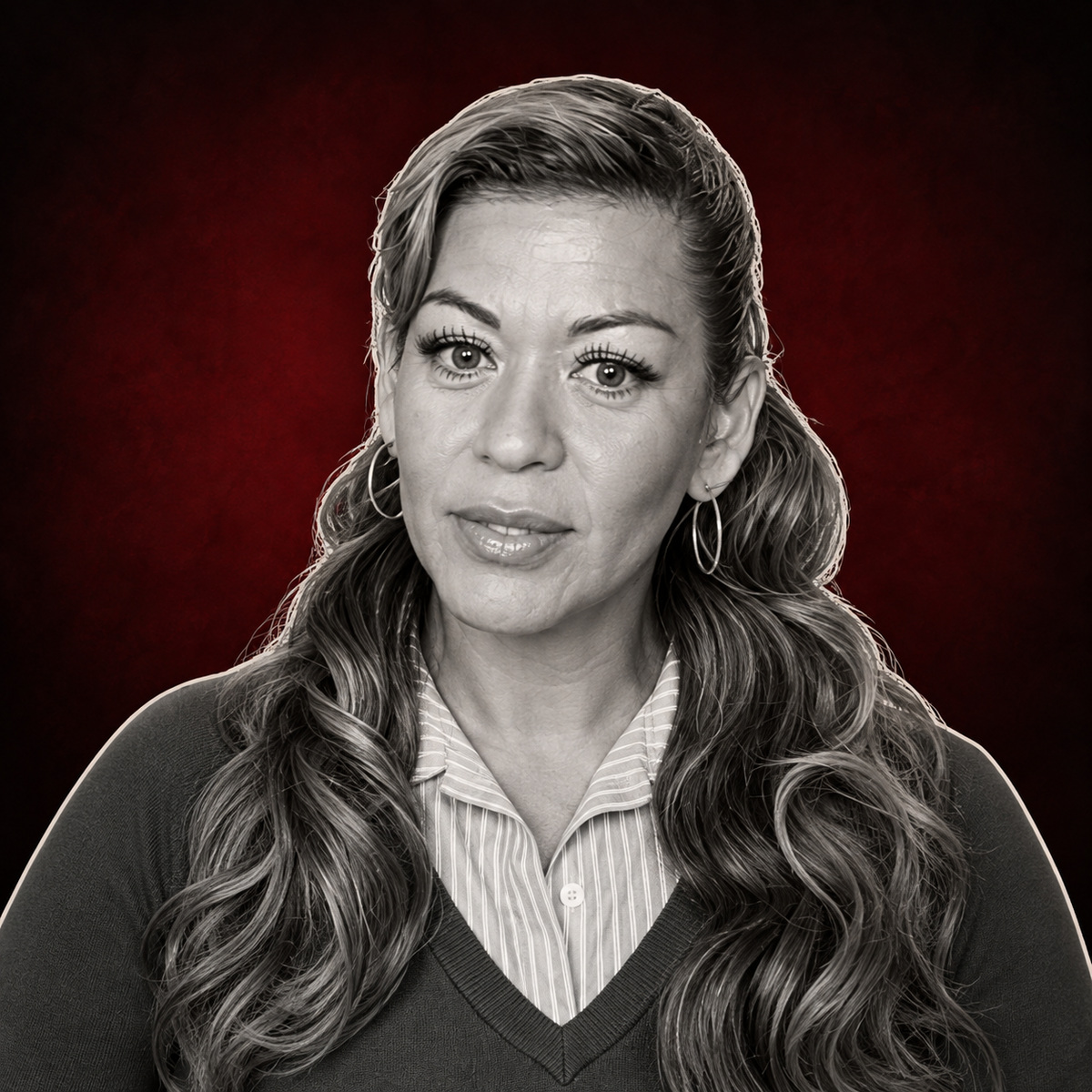
Sonia Ramirez is a Southern California real estate developer known as the Multi-Unit Queen. Born and raised in Orange County, she spent 16 years in city government as a parks and recreation supervisor and ran a marketing company and a health and wellness business before moving into real estate about a decade ago. After learning development under a mentor with whom she says she built over a hundred units in seven and a half years, she launched her own company, MultiUnitQueen Real Estate Development, focused on ground-up two- to four-unit projects such as duplexes, triplexes, quads, and ADUs. Sonia speaks at industry events, documents her projects and daily life on social media, and is a contributor to the book Latinas in Construction, Volume 2. She is a member of Speakeasy Mastermind's Los Angeles chapter and is passionate about encouraging more women to join masterminds and build in male-dominated industries.