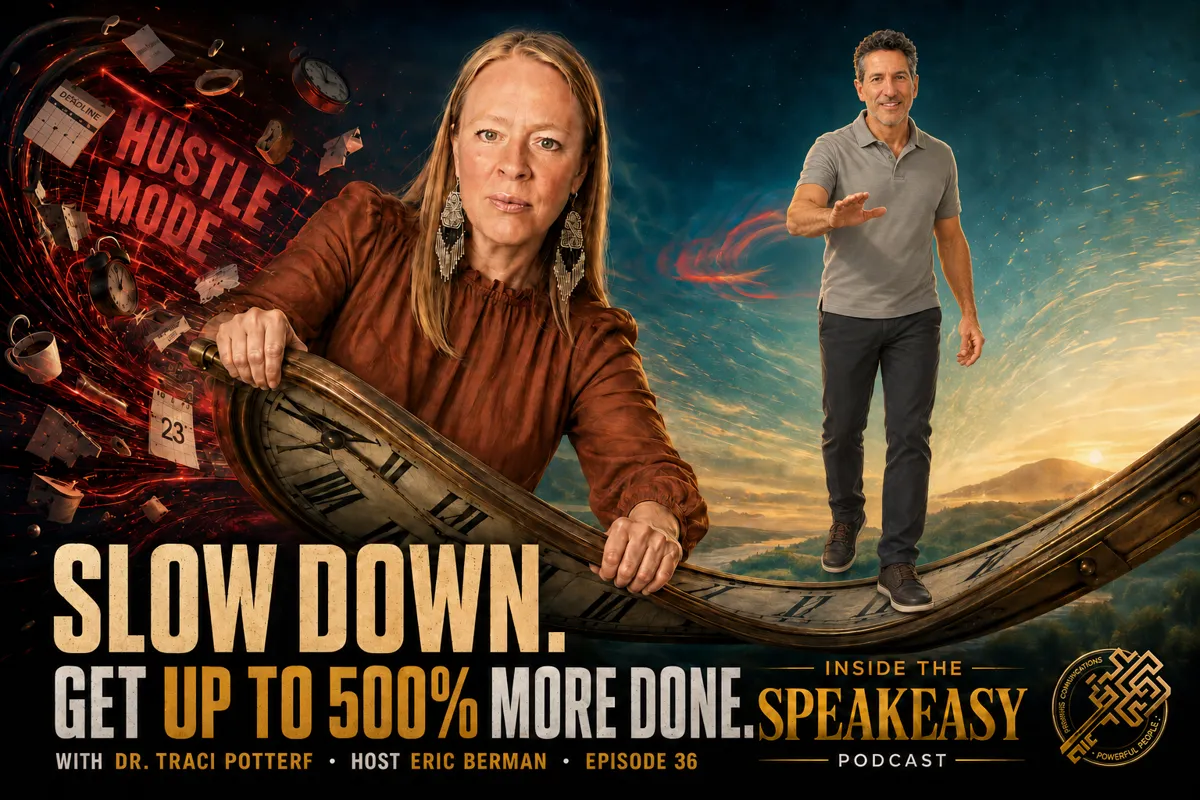
Dr. Traci Potterf, a former medical anthropologist, founder of Inner Genius Health, and member of the Speakeasy Denver chapter, coined the phrase time bending. In this conversation with host Eric Berman, Traci traces her path from working as a teenager in her psychiatrist father's practice to her first panic attack at 19, an accidental 50-pound weight loss while living in Spain, and doctoral fieldwork in Cuba, where she saw how nervios, or nerves, affected people's minds and bodies. She describes helping her mother change her diet after a Crohn's disease diagnosis, and explains why she believes hustle culture is quietly breaking down high achievers. Traci then shares what time bending means to her, why she says regulating your nervous system comes before diet or fitness changes, and simple practices such as a morning ritual, slow breathing, and half speed movement. She also explains her idea of healthy hedonism and why she calls eating the most intimate thing we do.
In this episode, you'll discover:
- What Traci means by time bending, and why she says slowing down helps you get more done rather than less
- Why Traci believes regulating your nervous system comes before diet, fitness, or any other health change
- Healthy hedonism, the term Traci coined for choosing pleasures that also make your future self feel good
- The rule of Chad, and why Traci suggests using just one tank of gas a day instead of grinding until you are toast
- Two simple practices Traci teaches to start: a morning mind-body ritual and half speed movement through the day
Episode Summary
Traci Potterf grew up in San Antonio, Texas, as the daughter of a psychiatrist who had grown up on a farm and expected everyone to help out. While friends worked summer jobs at Taco Bell, Traci filed paperwork in her father's practice and went with him on rounds to hospitals, state hospitals, and nursing homes, something he kept doing even into her 20s. She had her first panic attack at 19. Having been told that anxiety was a genetic chemical imbalance, she says she felt sorry for her father's patients, and then suddenly felt that she was one of them, an identity she did not want.
A turning point came during a study abroad year in Spain, which she extended into a second year. Traci says she accidentally lost 50 pounds without dieting after years of trying low fat diets. Her boyfriend Pablo was a great cook, and she learned to cook and eat real food, walked everywhere, and noticed how connected ordinary Spanish people were to food and where it came from. She had assumed her weight was genetic because almost everyone in her family was overweight, and she says changing her environment, habits, and culture changed her body completely.
Traci went on to study cultural and then medical anthropology, earning the PhD that Eric mentions from Berkeley. She says her studies taught her about the politics of science and medicine, including how the pharmaceutical industry funds medical journals and university programs. She did fieldwork in rural Mexico and doctoral research in Cuba, where people used the word nervios for nerves, anxiety, stress, and overwhelm, and understood that it caused physical symptoms too. She describes Cuba at the time as one of the most emotionally toxic environments she has lived in, and says she saw traditional communities develop chronic disease as they adopted industrialized lifestyles.
When her mother developed Crohn's disease while Traci was in grad school, Traci says her mother nearly died three times, once from the disease and twice from complications of immunosuppressant medication. Following her intuition, and books by people who said they had healed Crohn's disease, Traci helped her mother switch to real food with only a couple of supplements. Traci says her mother has been in remission since 2004, with no relapses, no immunosuppressant drugs, and her colon still intact. Meanwhile, meditation and yoga changed Traci's own life, and after finishing her PhD she moved to Hawaii and moved into functional health and health coaching.
Traci coined the term healthy hedonism after a client said he could not eat healthy because he was a hedonist. Her answer was that she is a better hedonist, because she wants things that feel good now and also make her future self feel good. She explains that chronic stress shifts the brain toward the amygdala, which focuses on surviving and feeling good right now, and away from the hippocampus, which she says looks out for your future self. Regulating the nervous system, she says, is what makes better decisions possible.
That is the heart of time bending. Traci says that when your nervous system is regulated, time feels spacious, and your brain has more room for creativity, intuition, and pattern recognition. She argues that entrepreneurs who skip sleep, meals, and workouts to buy time are dulling their own knife, and that they build systems for everything except themselves. Her starting points are a morning mind-body practice and weaving support through the day with slow breathing, half speed movement, and real food. She closes by calling for a shift from hustle culture to connection culture, and shares how the Speakeasy Denver chapter has become an extended entrepreneurial family for her.
Big Ideas Discussed
Time Bending Starts With Your Nervous System
Traci explains that time is not experienced in a linear way. One minute of heavy squats feels much longer than one minute of listening to a podcast, and a minute of meditating feels different from a minute of eating dinner. In her words, all minutes are not created equal. When you are in a regulated, grounded nervous system state, she says, the present moment stops feeling like something you are rushing to catch up with and starts to feel spacious.
From that state, Traci says, the brain can generate creativity, innovation, and intuitive hits, such as the nudge to show up at an event hosted by someone she met through Speakeasy, which she says led to an NBC interview and stage time at an event for 200 women entrepreneurs. She cites the claim that flow state can increase productivity by 500%, and sums up time bending as slowing down to be more effective and get more done. It is, she says, an inside job.
Healthy Hedonism and the Future Self
Traci rejects the idea that you have to give up pleasure to be healthy. Healthy hedonism, as she describes it, means choosing things that feel good now and also make your future self feel good tomorrow and decades from now, which she calls more total life pleasure and a much higher return. She says she still eats dessert, pizza, hamburgers, and lasagna, but made from good ingredients, the way people might have eaten in France or Italy.
She connects this to brain biology. Under chronic stress, she says, the amygdala gets bigger and the hippocampus shrinks, and the amygdala is focused on feeling safe and getting what it wants right now. That is why she believes people resist self-care advice when they are overwhelmed. Her approach is to lower the overwhelm first, so that health changes start to feel like curiosity and adventure rather than another thing you are doing wrong.
Your Personal SOP
Traci points out that every business has SOPs and systems, yet many entrepreneurs have no system for the thing that matters most, which is themselves. She says she works with brilliant people running six, seven, and eight figure businesses, as well as politicians and public figures, who are being broken down by the same strategies that got them where they are: skipping sleep, skipping workouts, grabbing more coffee, and forgetting to eat.
She compares a worn-down body to a master chef working with a dull, rusty knife. The chef can still cook, but everything takes more work and more time, and grinding does not sharpen the knife. Traci also shares the rule of Chad, from a friend who left venture capital and spent two years traveling on a motorcycle. A fellow biker named Chad told him to use one tank of gas a day, a reminder that a super productive day followed by a burned out day is not sustainable.
From Hustle Culture to Connection Culture
Traci sees hustle culture as a cultural program rather than a fact of life. She traces it to the Protestant work ethic, which she describes as a roughly 500-year-old idea that sacrificing yourself and working hard is a sign of God's favor, and says it spread from northern Europe and early colonial America around the world. As an anthropologist, she argues that because it is cultural, people can change it.
What she wants instead is connection culture, in which people are connected to themselves, to each other, and to nature. That includes treating food as information. Traci says the molecules in food literally become you, so eating is the most intimate thing we do, and she encourages listeners to choose what enters their cellular community as carefully as they would choose a partner. She adds that if people can access flow just 20% more often, it changes their lives, and that they do not need to be perfect to see results.
Questions We Answer in This Episode
What is time bending?
Time bending is a phrase coined by Dr. Traci Potterf, founder of Inner Genius Health. She describes it as slowing down to be more effective and get more done. Traci says that when your nervous system is regulated, time feels more spacious and your brain has more access to creativity, intuition, and pattern recognition, so you accomplish more in less time.
What is healthy hedonism?
Healthy hedonism is a term Traci Potterf coined after a client told her he could not eat healthy because he was a hedonist. Traci says a healthy hedonist chooses things that feel good now and also make their future self feel good. She argues you do not have to give up pleasure to be healthy, and that giving your body what it needs has its own pleasure.
Why does Traci Potterf say hustle culture is harmful?
Traci Potterf says many high achievers buy time by cutting corners, such as skipping sleep, workouts, and meals or relying on more coffee. She believes these strategies dull the body and brain over time and can contribute to anxiety, fatigue, and other health problems. She sees hustle culture as a cultural habit that people can choose to change.
What simple practices does Traci Potterf recommend to start?
Traci Potterf suggests starting the day with a mind-body practice as close to waking as possible, ideally about 15 minutes, though even 10 conscious breaths can be a starting point. Through the day, she recommends what she calls weaving your hammock, including slow breathing, half speed movement, and pausing to breathe before eating.
What is half speed movement?
Half speed movement is a practice Traci Potterf says she learned from a colleague, Beth O'Hara. It simply means moving more slowly, for example sauntering down the hall rather than rushing. Traci explains that people do not move slowly when they are in danger, so slowing your movement and your breathing can help signal safety to your nervous system.
How did Traci Potterf's mother manage her Crohn's disease?
Traci Potterf says her mother nearly died three times while being treated for Crohn's disease, including twice from complications of immunosuppressant medication. Traci helped her switch to eating real food, with only a couple of supplements. According to Traci, her mother has been in remission since 2004, with no relapses, no immunosuppressant drugs, and her colon still intact.
Why does Traci Potterf call eating the most intimate thing we do?
Traci Potterf describes food as information, or molecular data, because the molecules in what you eat become part of you. She says that makes eating more intimate than sex. Her advice is to choose what you bring into your cellular community as carefully as you would choose who you are physically intimate with, and to read labels and favor real food.
Full Episode Transcript
Read the Full Episode Transcript
Welcome and the Idea of Time Bending
Eric Berman: Welcome to Inside the Speakeasy Podcast. The private room where today's sharpest founders, innovators and renegade thinkers come to trade the ideas that move industries. This show is brought to you by HighLevel, the AI driven business operating system trusted by over 2 million businesses to help automate, scale and create real leverage. HighLevel isn't just a tool, it's the engine behind some of the most agile and high performing teams on the planet. If you're ready to streamline everything, amplify your reach and actually build a business that works for you, you're in the right place. Visit www.gohighlevel.com/Speakeasy-mastermind-promo to get an exclusive 30 day trial for being a listener of the Inside the Speakeasy Podcast. Enjoy the show. Most of us vision driven high achievers are absolutely grinding ourselves into the ground. We're working long hours, living on coffee and adrenaline, slowly oftentimes destroying some of our health or ruining our health and our relationships. But the good news is there's got to be a better way and we're going to get way beyond time management today. Way beyond stress management. We're going to get into what is called time bending by the person who coined the phrase time bending. [unclear] the Denver chapter. One of my new really cool friends here who is amazing member of the Speakeasy Mastermind community. Welcome to Inside the Speakeasy Podcast where we have Dr. Traci Potterf.
Traci Potterf: Welcome. Hey, what's up Speakeasy fan?
Eric Berman: What is up? Well, this is really cool. I was reading in the green room and in the bio in our prep sheet. I mean I love this concept of time bending and you're certainly speaking my language as I'm probably the avatar as many of us are. We're all there grinding, you know, you've trying to push our way through success. What is success? It's never good enough. And then meanwhile like tick, tick, tick, life goes away. We're stressed, we're maybe not happy and we're probably hurting ourselves in many other ways than others around us at times. So I'm so excited because I know you're going to teach a couple things today that I'm definitely going to take a turn into practice and others listening today. You've got a lot of cool experience in this. I want to just start before we get into the good stuff or you're going to share some nuggets. I know it because I've heard, you know, heard some of the things you've talked about before your Background's interesting, man. How did you get into this world? So tell me more.
Growing Up in a Psychiatrist's Practice and a First Panic Attack
Traci Potterf: Yeah, I mean, my father's deceased, but yeah. My father was a psychiatrist and grew up on a farm where he. Everyone was supposed to help out. So then he had us helping out in his psychiatric practice. So I had friends that were working, like at Taco Bell over the summer. And I'm in a psychiatrist's office, like, dealing with, you know, filing back on paper was a thing. And this was in San Antonio, Texas. Okay. And he would take me with him to the different hospitals, state hospitals, nursing homes. He didn't take me to the county jail was one place he saw patients. I did not go. Yeah, support kid, I like to say, back before boundaries were a thing. I was an emotional support kid. And he would just take me. I think he wanted to show me what he was doing. And it also would cheer up the people to miss seeing kid or whatever. And even when I was in my 20s, he would still do that, like as an adult, he would still have me go with him to do rounds. So.
Eric Berman: Wow. Wow. Okay, so walk me through a little bit more in the background. So how did you get here? And I know you had some really interesting struggles along in your journey.
Traci Potterf: Yeah. So I had my first panic attack when I was 19. And I had been told up until then that anxiety and any kind of mental health issue was a genetic chemical imbalance. So I just thought, well, you're defective, then you're broken. And I would feel sorry for his patients because they had these genetic chemical imbalances and they were like those people. And then one day I was those people and I didn't want that identity. I didn't want to be this genetically defective person that was going to have to live with this searing anxiety and panic attacks the rest of my life.
Eric Berman: Wow, I can see that growing up, seeing all the people, and you're like, oh, my God, this is like, I'm here, they're there now I'm one of those. Okay, so how do you get through this?
Traci Potterf: So it was a long journey. There are so many parts to it, but I will try not to ramble on.
Losing 50 Pounds in Spain by Eating Real Food
Traci Potterf: One big turnaround was living in Spain when I was in college. It was my junior year study abroad, and I ended up going back and staying another year. His name was Pablo. And I accidentally lost 50 pounds without dieting. Whoa, cow.
Eric Berman: What?
Traci Potterf: And I tried dieting. I tried the low fat diet. That was how I got the biggest. It was on a low fat diet. Low fat cookies, fat free cookies. Fat free bread was Pablo.
Eric Berman: Were you just running around chasing Pablo a lot or what? I mean, this doesn't just.
Traci Potterf: I actually Pablo was a great cook. And I learned to cook. I learned to cook real food. I learned to eat real food. He also was kind of weirded out, like, would go to this store called El Corte Inglés, which was like this department store, the English court, everything for your home anyway, and they would have a section of like American food import. And he would pick up the packages. Like I remember him picking up Oreos and being like. He was like, this is just crap. Like, what is this? And I was like, I don't know, it's Oreos. And so he made me see through new eyes. Like people in Spain, they weren't hippies, they weren't earthy, they were just Spanish people. And they would know like which side of the pig. The leg of serrano, which is like prosciutto, it would be priced differently depending on what side of the pig it came from. Because the pigs would lay on this side and then these would eat truffles, so they'd have a different flavor. People had. The people were in touch with food and land and where it came from. They were at that time weirded out by the weird additives. And so I basically just ate real food, walked everywhere and had a good time. And the weight just came off. And that's when I realized I thought I was overweight because of my genetics, because pretty much everyone in my family, almost everyone in my family was overweight. So I just thought it was the genetic luck of the draw because I was still in that it's genetic thing. And then when I just moved myself to a new environment, a new culture, new habits, a new thought world, my body completely changed. And that was a huge light bulb moment for me.
Medical Anthropology, Cuba, and the Politics of Medicine
Traci Potterf: And then as I continued my studies, and I think I haven't mentioned this yet, I was a medical anthropologist. So I started out in cultural anthropology, got into medical anthropology. So if you don't know what that is, okay, a lot of people don't know. Anthropology is just the study of humans. Cultural anthropology, studying cultures all over the world. It can be anywhere from shamanism to biotech. I had colleagues who were. They were actually anthropologists on the stock exchange floor. It doesn't have to be just indigenous people. It's anywhere there are humans you can study culture, right? And then medical anthropology is how people deal with their health issues from birth to death. So just the fact that we live in a body or conceive of A body. We also learned a lot about the politics of science, the politics of medicine. We learned a lot about how the pharmaceutical industry basically funds all medical journals, funds whole wings of medical schools, of universities. So I started to understand why everything was so pharmaceutical bias. I learned the history of how anything traditional or natural that couldn't be patent was stamped out of modern medicine. But I also learned a lot about traditional medicine and shamanism from cultures all over the world. And I also did field work. I did some field work in rural Mexico and indigenous rural Mexico, really beautiful. I still have such vivid memories of those times. And then I did my doctoral research in Cuba when Castro was dictator. And so there's this term nervios, which is like nerves, anxiety, depression, stress, overwhelm, whatever. There's a lot in nervios in the corporate world too, and in entrepreneurial world. So people would use that term generally. And everyone was sick from nervios. And they understood that nervios didn't just make you affect your mental health, it made you had physical symptoms as well. And I realized I had nervios before I even got there. But then living in a Stalinist dictatorship where there was poverty and where it was set up, where people would inform on each other, so there were trust issues. It really broke down community and it broke down trust. And it was really one of the most toxic, emotionally toxic environments I've ever been in in my life. And it was actually traumatizing to me because I realized I'm very much an empath. I didn't even know that was a thing. I hadn't learned to meditate. I had no mind, body, meditation, breath. I didn't know any of that stuff. I hadn't done personal growth. I barely done a little therapy in my childhood because my father had such trauma. Even though he was a psychiatrist. He was actually very psychologically abusive because he had horrendous unspeakable trauma as a child and also immense poverty. Managed to become a doctor. And that was a huge accomplishment. So I loved him very much, but I also was very traumatized by him. So anyway, all this stuff is like setting me up to understand trauma, to understand our cultural environment. How everything's not just [unclear] calories or you can't just have a pill for every ill, that you can't just fix everything with a pill that there are, that it's complex and layered. So the solutions have to be complex and layered.
Eric Berman: Wow, that's fascinating. I mean there's so many stories I would love to go down down the rabbit holes. But the industry, pharmaceutical industry, scary. If we have more time, we'll talk about that. I mean, the more I hear and talk to people like you and others, just how frightening it really is and how much we are all controlled out.
Traci Potterf: There and manipulation of data, public information. I mean, I know it's trendy right now to call everyone a narcissist if they're selfish or whatever. And, but there are, there's a reason that term exists and there are people who clinically qualify for a diagnosis. But sadly I really, I'm not talking about individual actors, but the whole pharmaceutical industry, if you look at how it tells people, no, we're not the problem, you're problem. No, you're crazy. How it gaslights, how it manipulates, how it has to be perfect and everyone else is the problem. Operates just like an abusive narcissist. And it does that to doctors too. Because doctors, you know, they're very, they're like in a straight jacket in their practice. You can't off the insurance company, cuz like you have to, you have like all. I call it the guns to your head. You have the insurance companies, you have the medical board which is controlled by the pharmaceutical industry, that sets the standards of practice. Then you have, you know, just your reputation, what people think of you. If everyone thinks you're a quack, then, you know, you lose credibility. I mean, and then you're worried about getting sued and so you worry about lawyers. So these poor doctors are just working their butts off. They went through a dehumanizing process of medical school only to be put in this situation where their hands are tied. And now doctors aren't even allowed to practice medicine. The insurance companies practice medicine and doctors do paperwork.
Eric Berman: Very, very scary. And I hope people, and I know people are getting your eyes more open to this. I think certainly the COVID experience and people you know out there, that certainly has opened eyes up a lot of what people are talking about and the doctors and all that. But. And then one more, I want to go back to. What were you doing in Cuba during Fidel's time? Like, what prompted you to want to go there?
Traci Potterf: Nothing. That was like a mature adult decision.
Eric Berman: Nothing.
Traci Potterf: I was so curious. I think it was more of a curiosity. When I was living between San Francisco, Berkeley, I was in the Bay Area for grad school and I kept meeting all these Cubans and all these people who would go to Cuba. And Cuba's so cool and Cuba's so fun and I was so curious, what's behind the Iron Curtain, what's going on in there? What's really happening? And people were just really romanticizing the socialized medical model they have there. Which, by the way, given their limited resources, they actually, what they pulled off for a small amount of money is quite impressive. But you know, there were. If there were petroleum shortages, they didn't run their energy off coal, it was off petroleum. So if there's a petroleum shortage, then you didn't have electricity. And if the backup generator failed because you couldn't get parts because of the embargo, then people on life support.
Eric Berman: Right.
Traci Potterf: So that's. Yeah. So it was heartbreaking. Like they're. Yeah, it was such a mixed experience of really people's resilience, innovation, doing everything. A lo cubano and invento cubano. And invento cubano is just like a Cuban invention. It's just something they make up. Like people make light fixtures out of like soup cans. You know, duct tape was king there.
Eric Berman: I mean, I just remember, I mean, I went there once. It was just so interesting and fascinating after you went. Just to think about this structure where everybody's getting paid the same, more or less, from what I recall. Like, so the doctor surgeon's getting the same as the mechanic working at the gas station.
Traci Potterf: Yeah, it's like 10 to $50 a month. Like, you know, so there's a difference. You might get a hundred a month if you're like a really high power surgeon or something like that. But there were still doctors and surgeons selling socks on the black market to make [unclear].
Eric Berman: No, no. Crazy. But anyway. All right, so you go through that and I know you got your PhD from Berkeley. Impressive. So you go, so continue on this journey here because I want to get into how, like what you're teaching now.
Why Modern Lifestyles Make People Sick
Traci Potterf: So basically I would say my takeaway from grad school is number one. Grad school is also a dehumanizing process. So I really. Anxiety came back with a vengeance there teaching a class. And my arm started going limp. I started having a panic attack. I didn't know what it was. My arm started going limp and I was like, couldn't breathe. And I kind of faked my way through and got out. And then I walked outside. And there was one of someone in my cohort, he was sitting on a bench and I walked up to him and I was about to be like, I'm having a panic attack. And then he looked at me and he goes, I'm having a panic attack. So we just like spent hours together unwinding our panic attacks. Together he ended up dropping out, sadly. But anyway, so. But one of the things I really saw, especially in the medical anthropology environment, a lot of the really good work at UCSF Medical School, the work we were doing over there and the courses there was just seeing how, and this is not surprising just how so many traditional rural communities, indigenous people, they want to be part of the, quote, modern world, which by the way, indigenous people are part of the modern world. But they wanted to be part of industrialized society. They wanted to live like us, be like us. So then they start living like us, being exposed to the chemicals, drinking soda and eating processed foods. And then now they have the mental illness and the chronic disease that we have. And I just, it became so clear, oh, these aren't just genetic chemical imbalances. We're not living how we evolved to live. We're not meeting our basic human needs. We are making our cells feel unsafe with toxins, with not enough nutrition, with nervous system signals of fear and non safety. I say from cell to soul, we don't feel safe. We're not meeting our most basic human needs and sending signals of safety on a cellular level. Love alliteration. It's one of the most fundamental things we need to do to be healthy and to reverse mental and physical illness. And even the fact that I have to say mental and physical illness, mental and physical, they're just, it's, you can't disentangle, you can't even disentangle the nervous system from the immune system because they share structures. The vagus nerve modulates, manages your immune system. It modulates cytokine storms and other immune function, it regulates your immune system, but it's also your nervous system, you know what I'm saying? It's like if you look at the reality of our bodies, we're such magical creatures actually, you know, more microbe cells than human cells, more DNA from microbes than human cells. Like all these things we're starting to learn that I remember when I used to like have to teach people this and now people know this, they've heard it now and it's so cool. Neuroplasticity. You can rewire your brain, you can change. So what's magical about what we are is we're so much more complex and connected and beautiful than we are ever imagine or we ever learned. At least our generation learned in like high school biology. But at the same time, you know, we're living in this world that's everything is so synthetic and plastic and then we're, you know, you know, that great saying about using the same thinking that caused the problem to try to fix it. So using synthetic plastic fake things to fix a world that is sick because of that doesn't make any logical sense.
Eric Berman: And it's very hard to fix things that are backed by people making billions of dollars. Follow the money, right?
Traci Potterf: So even that all about making billion billions of dollars. If you can do it in a way where you're not being an and making people sick and destroying the planet. Like if you can do that, more power to you.
Eric Berman: I mean, going back to your story, the indigenous people, it's interesting. So what you're saying and what I'm taking from that is their body and everything was functioning beautifully because they were doing the natural things that, you know, back to caveman and all that we were doing. And until we got poisoned by the, you know, the big corporate conglomerates that came in and slowly poisoned.
Traci Potterf: I mean some of these people had their whole water supplies contaminated sometimes. Some of it was just lifestyle. And there are certain cases where people were, you know, plantations were like the people just deforestation right by them. And there was blowover of all these pesticides and fertilizers and other chemicals and their water supply being contaminated where people getting cancer just from drinking water that they had for generations. For thousands of years these people had lived on this land and been drinking that water and then suddenly it's causing cancer. So yeah, I mean I could just go on for days about the plight of indigenous people in traditional rural communities on this planet and how they've become invisible and unseen. And we like to think, oh, they're so cute and little and we love them. But oh, tell us about your traditions so we can learn your wise ways. But actually you just, you know, like a lot of them, they feel invisible and like they don't matter in their in anyway. That's a whole other thing. Yeah, but my big takeaway was that was just why we're sick. And I think one of the reasons my clients get better is because I'm coming with this biopsychosocial cultural, the whole hug of humanity of yeah, I can get really down with the super nerdy science and do the precision lab testing. I love peptides and I think stem cells are amazing and I like to work with supplements and that's all great, but that's a supplement that's a little. Gives you an edge and additive advantage. It's like a tow truck that'll help you get out of the hole. But if you keep digging the hole like you know you're never going to have the life, you're never going to get to experience yourself as. I hate to say full potential because it can sound so cheesy and cliche, but really we have immense potential as humans that we are barely tapping the surface of what we're capable of in terms of an internal experience and even the magic and playfulness we can create in the world because we're buying into this stupid hustle culture. I call it rush and grind. Hustle culture, health crisis. But that's like. And we think it's normal and it's cultural. We're making it up. That's the thing I remember. You know, there's that book, My Stroke of Insight by Jill Bolte Taylor. And she. You know, there's this line in the book, I don't know what chapter, but it says, we're all figments of our own imagination. That's what realized having a stroke and not losing her left brain and only having a right brain as a neuroscientist. And I realized that as an anthropologist, we're all figments of our imagination. I learned that as a meditator. I really got into meditation, by the way. Meditation, breath work, mind, brain, body practices. The things we can do to change our neurology, rewire our brain. Also rewires our whole entire biology.
Her Mother's Crohn's Disease and the Real Food Approach
Eric Berman: So let's start getting into some of the stuff. So. So what do we. You had all these amazing experiences. You were teaching, you know, an amazing PhD. What changed? What did you start doing that you figured out that you're now seeing in a lot of us entrepreneurly? Yeah.
Traci Potterf: Yes. And that I still have to stop myself from doing as I'm a human being, too. So first I saw my mom had Crohn's disease when I was in grad school, and she almost died three times. Once was from the Crohn's itself from almost bleeding out. The next two times were from side effects, from medication, from immunosuppressant drugs. And one time was because a doctor, she said, I have a cut in my finger. It really hurts. And she actually ended up with sepsis because she was on an immunosuppressant. And the doctor said, I do colons, not fingers. And they sent her home. And. Yeah, so I do colons, not fingers, neither.
Eric Berman: Yeah. What?
Traci Potterf: So what? And then I just. When my mom had Crohn's, something in me knew. Just something in me knew shutting down her immune system and taking her colon out, that was the solution. Her doctor said, you'll never. I remember to this day, [unclear], you'll never have a normal life unless you get that colon out. And it's not because he was from Texas. That's anyone anywhere, believed that at that time, could have done that with an east coast accent or any accent, Tom Brokaw accent. The point is he really believed that the only way to stop this disease, the only tool in the toolbox, was to take out her colon and suppress her immune system. But what I know how to do is help people modulate, regulate their immune system. Not too much, not too little, like, you know, Goldilocks or what was that, you know, in the third? Not too much, not too little, just right. That's what your immune system needs. And it's tied to your nervous system, like I said, and your gut and your microbiome, it's complex. There are layers. Like I say, people don't want to deal with layers cuz they're overwhelmed. So what I saw with my mom was that I knew she had a lot of trauma, especially from the marriage with my father. And who doesn't these days? And then, you know, was eating complete crap, had an overeating issue, had an obesity issue. So I just figured if we could get her, this woman, to eat food, that she evolved to eat and feel loved and feel cared for and get support, maybe we could move the needle on it. Maybe you could post. I don't even know. I went. Honestly, I went. I followed my heart and I followed my intuition. Something in me just had to try. And I ended up finding books in this health food store called Sun Harvest, which then became Sprouts. And they were written by people who had healed Crohn's disease. Two of them, and one had done it with a macrobiotic diet. The other one was Jordan Rubin, who did the whole Garden of Life, you know, kind of thing. Yeah, Supplement company. Anyway, and so. But reinforced what I already believe, that if we eat real food, our body can heal itself. So I just had my mom eating real food. So long story short, we did only a couple supplements actually. Long story short, she's been quiescent, which is autoimmune talk for in remission since 2004. No relapses, not even one. No immunosuppressant drugs. And she still has her colon intact. It has scarring, but it's there. She still has it.
Eric Berman: Yeah, you. Yay, mom. It's incredible. And I. I wonder what you got to that doctor after all that.
Traci Potterf: Yeah, well, one of the doctors that tried to put her on statins and said she had to be on statins. Died of a heart attack on the statins. Just saying.
Eric Berman: I'm just saying. Anyway.
Traci Potterf: Anyway, so you're getting confidence now, saying,.
Eric Berman: Wait a second, there's something.
Traci Potterf: Now I'm like, wait a minute. How is it that I'm some, like, nerd medical anthropologist who figured out how to heal my mom, get my. I didn't heal her if she healed her. How to get my mom to heal herself from an autoimmune condition that's supposedly incurable and go against everything that the doctor said. Even my own father. Like, I don't know how we got past the gauntlet of my dad, because my dad was, like, not open to any of the stuff that I was into. But anyway, how is it that I figured this out and medical schools and Dr. Well, I knew why. That was a. I really knew why. I knew. I understood enough about the politics of medicine and science that I knew that even though the individual actors are good people, I knew the pharmaceutical rep who brought us fajitas at my dad's office was a good guy, but the system was the problem. And the people really making you had.
Eric Berman: Enough data to essentially question what was going on in front of you. You almost like to say, I don't know if I believe this guy, because I. I know what his motivation got right.
Traci Potterf: Meanwhile, I had lost 50 pounds.
Meditation, Synchronicity, and Healthy Hedonism
Traci Potterf: And then I got into meditation. I got into yoga, that completely my life. Who knew that you could just sit and breathe and feel and it would change your life, that you could start having literally mystical experiences. I used to make fun of the people in Austin by Town Lake that would sit on the hillside and meditate and do yoga. And I was like, oh, my God, they think they're so spiritual. Those people are so annoying. I would judge them, and I would even make fun of feeling at one with the universe. And at some point, I'm sitting here meditating. I'm like, oh, my God. I literally feel at one with the universe. This is the best feeling in the world. This is better than sugar or chocolate or alcohol or, like, all these things. We fetishize all these destructive pleasures trying to feel something. And I really believe we fetishize all these destructive pleasures because we're trying to get these cheap thrills, these cheap dopamine hits, because we want. I think it's a deeper yearning to feel connected to something more. I feel like when we truly take care of ourselves, when we nurture and nourish ourselves, really, we make time for it, then it changes your brain states. You upgrade your brain states, you upgrade your intuition, your problem solving. I hate to say magic and sound like too much like a new age hippie, but magic is what I call when you are in awe of something, it's like a surprise. There's awe. You see connections. Things unfold in ways you could have never imagined. I was having this conversation with a housemate and we're in the kitchen and we were having this conversation about how we're trying to solve our problems based on past experience and existing knowledge. But there's. There really is a field of quantum potential, of untapped potential, of things that. That have not yet manifest. Like, this is like real physics. It's legit, right? It gets tossed it around by super new age people or whatever, but that's actually real. There is a field of quantum potential. And I remember physicists saying in an interview that if the laws of physics allow it, it probably has happened or will happen somewhere in the universe. And so we're having this conversation about this and we're in our kitchen. The door to the outside lanai, this was in Hawaii, the outside terrace or whatever was open. And just as we say this, a bird flies in the wind in the door, never happened before, perches itself on the counter and just sits there and looks at us and doesn't flinch. And it just stayed there and we stayed there and it stayed there and we just sat there and we're breathing and looking at this bird and it was looking at us and it was one of the most. That, to me, that's the magic. That's magic. Oh. And so I've had. I started having experiences as I moved into. Got into functional health. I just started learning about it. I did my PhD. I almost wanted to just drop out, but I didn't. Anyway, I finished my PhD and then I moved to Hawaii, hung out with a bunch of friends who were meditators, opening a yoga studio. And I got really into healing myself and my emotions and my childhood and my body. And like, I really got curious about how good can it get if I really commit to healing myself from the inside out. How good can it get? And the answer is it really, really good, right? And so, and then as I got into functional health, that happened kind of organically and I learned about. I already was into integrative stuff. I was doing health coaching and, you know, teaching people how to cook for themselves and blah, blah, blah, and take care of themselves and all that. And I came up, I coined this term. I love making up terms, by the way. If you'll. You'll notice this. Yeah. I made up a term called healthy hedonism because I had a client that said, well, I can't eat healthy because I'm a hedonist. And I'm like, well, I'm a better hedonist than you want to hear why? And he's like, why? And I was like, because I want things that feel good now, but then make my future self feel good, like tomorrow and the next day and the next day and decades into the future. So future Traci feels good too. That's more total life pleasure. Much higher ROI on the crap you're eating. So this whole idea that we have to give up pleasure to be healthy. Boo. Wrong. Not real. There's an intrinsic pleasure to giving your body what it needs. It feels like being at home in your soul. It feels like you came home to yourself. Like you realize you missed yourself. You didn't even know you missed yourself.
Eric Berman: Okay, let's dig in there because I think you're saying stuff intuitively makes sense. But obviously we're all dealing with the need to get short term pleasure and avoid long term pain, right? So if I could have that sweet. Or just follow the, you know, get the thing I want that's going to give me pleasure versus this thing that requires the work, requires these things you're talking about. With no concrete evidence or clarity to know what that end state is, it's hard for us to make that leap and say, if I just give up the sugar and these things now and eat right, this is what the end state will be. And what I hear you saying is this end state over here is way more beautiful than that quick thing you did today. You just need to understand what you could get. So what does that end state? What does that look like when we get there?
Traci Potterf: So that's such a good question. Good question, Eric. It's like trying to tell someone who's never seen snow what snow is like or tell someone what Paris is like, who's never been there. Tell someone what, like, chocolate tastes like, who's never had it, like, it's hard. It's hard to explain, but if you've ever had a moment of awe, like looking at a beautiful view or the most delicious food, or where you're with someone you love and you just love them so deeply it almost hurts. Yeah, it's like all of that more becoming, more part of your daily life. Also, if you've ever experienced synchronicity, way more of that happening, and which is fun. It makes life Feel like I love that album title, Magical Mystery Tour. I feel like it makes life feel like a magical mystery tour. And sometimes I get sucked into the grind too. Sometimes I skip my practices and I usually will still always eat really well. That's something that's so ingrained in me. I just can't imagine not doing that. I even have so many strategies for travel, for when I go to conferences or speaking engagements or that kind of thing. I have a system and I teach my system to my people. And it's so good. They love it. It's so good. And you, it doesn't. You can't eat out in restaurants. You have to be like this health perfectionist. But it's more about just. You know, there's a moment where I realized I'm made of cells. And I remember learning that cells by themselves, like sell a cell by itself in a petri dish, you know, it actually can live just a single cell. If it has a growth medium or whatever, it'll behave one way. But then when you put cells together like a tissue, they actually will change their behavior to cooperate with each other and look out for each other. Then when you connect them to a brain, to a central nervous system, they behave differently for the good of the entire system. When I realized that we are made of these miraculous intelligent human cells and microbe cells that are working together and changing their behavior in every billionth of a second to try to make my life better and to protect me and to heal me and to look out for me. The least I can do is look.
Eric Berman: Out for them, right? It's almost like we have this amazing set of tools that's automatically, organically, by human nature is going to be give us this amazing thing. But we tend to ruin it and do things along the way.
Stress Biology and Why We Choose Short-Term Pleasure
Traci Potterf: Compassion for why we do it, you know why? Because we have this evolutionary biology and the evolutionary biology is when we are stressed, it's in. Everyone has heard this by now, running from the tiger, the lion or the bear or whatever. We have this biology that when we don't feel safe because of chemicals, because of poor nutrition, because of toxic relationships, because of workaholism, because of fear of failure, because of whatever the thing is, you know, doom scrolling about politics. Whatever the thing is, it doesn't matter. Your body's gonna start changing your biology. Because usually what you've evolved for is your biggest stressors are famine, being chased by predator or immediate danger, or fire or something like that, and being kicked out of the tribe and left to starve alone. So we want love and belonging. We want physical safety, and we want nourishment. Right? So your body has all these biological mechanisms in place for when it. When we're skipping meals because we're too busy, or we're eating crap full of chemicals, but not enough. You can eat food that has hardly any nutrition. It can have calories but not have real nutrients. Right. It can cause inflammation. It can damage your internal organs. Like we're. We've normalized eating food that damages our internal organs. It makes our brains not work that well. That shuts down our energy production in our cells. So what if you think you're a health nut or a weirdo or a freak, if you actually think that's a bad idea and you want to take care of your cells, you want to be like, my cells are taking care of me. I want to take care of them. They're amazing. I love them. Let's go now. You're a weirdo. Now there's something wrong with you. This is a cultural problem. We can all change if Eric stops thinking that. I'm not saying you think that, but if people stop thinking and acting that way collectively, it'll change. It's so much better now. I was just talking to someone recently about how I feel like such a pariah. When I first started, I came back from Spain, I'm like, I'm going to eat real food, and I'm going to eat local, and I'm going to, like, I'm going to buy from farmers, and I'm going to take a bag to the grocery store and I want to recycle and, you know, and people thought I was the biggest weirdo freak in the world, you know, and when I wanted to do natural medicine and I experienced so much rejection because I wanted to make a change, I wanted to be part of a change. I wanted to do things differently. And now all these things that I got made fun of for are becoming mainstream, at least in certain circles. So. Wow, that's super cool.
Eric Berman: It's profound. It's interesting. It's like, imagine a world where if somebody picks up that dessert, they're like, what the hell are they doing? They're a weirdo. Or like, just something that's not good for us.
Traci Potterf: Yeah. Or we just have healthy desserts. I mean, I eat dessert. I totally dessert. I eat pizza, I eat hamburgers. I lasagna. I. I just. The ingredients are good. It's made of good stuff. Like, it's made out of food people would eat back in the day in France. Or Italy or whatever.
What Time Bending Really Means
Eric Berman: So I mean I love the theory of what you're saying. I think you've definitely opened up my eyes and just hearing you. So, so what are the things and maybe that you talked about? Time bending is a big thing. I want to talk about time bending and what you mean by that. And then what are the biggest things you're doing with your clients, people you're talking to, a lot of us listeners that we should be thinking about maybe two or three things we should be doing immediately.
Traci Potterf: Number one, judgment is no good. Judging yourself, judging others. Superiority, arrogance, all that stuff. We all have egos, so our egos do stuff. And people are like, no judgment. I'm like, well then you must be brain dead. Because brains judge. Like that's what they do. We have an ego center of our brain and oh, I just realized I didn't complete a thought earlier. And this will wrap back into what we're saying, but I think this is important to know for time bending is that when our bodies feel unsafe, our nervous systems feel unsafe. The amygdala, there are these two sites, you know, people have heard of it now, I used to have to always teach it, but they're like almond sized parts of our limbic system. The emotional center of our brain is what people say to oversimplify it, to make it palatable anyway, the amygdala. When you don't feel safe, they switch gears. And your brain, actually when you're chronically stressed over time, your amygdala get bigger and your hippocampus, which has memory, it can look out for. Your hippocampus will look out for your future self. That'll shrink. Your amygdala gets bigger. Your amygdala does not look out for your future self. And it often won't even look out for other people, depending on how triggered it is. And the amygdala are, you know, me feel safe now, me get what I want now me survive now, me not die now. You feel good now. And that's, it's very primal, it's very primitive. And so it's not going to think about your future self. It is not going to think about healthy hedonism. So regulating your nervous system so that you're not being run by the two almonds or by the two peanuts is crucial so you can make better decisions. Because if, when someone says to you, like starts talking to you about taking better care of yourself or self care or foundations or whatever, all these things we become numb to that we think we should do. But we want to make fun of or be resentful of because we're like, oh, great, something else I'm not doing right or not good enough. That or something else I need to pile on my play. That, you know, people resent that and they get angry and they get defensive, and I understand why. I get why people feel that way. But the thing is, when you get your head above water, at least get your nose above water, and you can breathe and things calm down and suddenly you feel time differently. We think of time as something we just measure linearly, and it's this linear thing. But one minute of doing squats with really heavy weights will feel a lot longer than one minute of listening to this podcast, right? Or just one minute of meditating will feel different than one minute of eating your dinner, right? So the way we subjectively process information and experience time is not linear. It's not. All minutes are not created equal. So when you are in a regulated, grounded, clear nervous system state, now goes from being this thing that you're rushing to catch up with that's always passing you by, now expands infinitely in every direction. And the reality that there's nothing other than now becomes very obvious. And now you feel spacious, you feel clear. Now, your brain can generate creativity, it can innovate, it can get downloads and intuitive hits. It can say, hey, maybe you should show up for that event that this person you met through Speakeasy is hosting. And then it turns into an NBC interview, It turns into getting invited to an event for 200 women entrepreneurs and getting stage time. It turns into, you know what I'm saying? Like, what I want people to understand is that when we optimize, we recalibrate our nervous system, we evolve our brain states, we elevate our brain states, we optimize our biology, right? So we have energy, we feel calm, our cells are chill, our organs are working. There's flow. You hear about flow state. State increases productivity by 500%. So we can just.
Eric Berman: It's all about bending the time to getting and slowing it down.
Traci Potterf: That's how you bend the time. You change your brain state. You. It's an inside job.
Cutting Corners and the Rule of Chad
Traci Potterf: So what people are doing to get more time is by cutting corners. I'm gonna skip sleep. I'm not going to eat or I'm going to order out crap. I'm going to. A lot of people forget to eat. And by the way, some people don't are cutting corners because they're stressed. And some people are cutting corners because they're doing such Exciting things. And they're so excited about what they're doing, their projects, they forget their bodies.
Eric Berman: Right.
Traci Potterf: And so, so people, yeah, shave off, sleep, skip the workout, grab another cup of coffee, forget to eat or just kind of eat some crap to get through or whatever. And a lot of people don't even know enough about nutrition to know how to feed themselves. And I'm talking about people with. That are brilliant people with six and seven figure businesses and eight figure businesses. People who I've worked with some of the most brilliant. I've worked with politicians, I've worked with entrepreneurs, I've worked with public figures. I've worked with people who are capable of such extraordinary things. But they are destroying themselves with the very strategies that got them where they are destroying them, breaking them down and causing mental and physical illness. They're damaging their relationships. You can only do this for so long and people did it through their twenties and may not have liked it. And then it's like there's a momentum and you don't know how to stop. Wow. And I have this friend, he decided to just go travel for. He's in venture capital. He did a startup, all this stuff. Got out of it, couldn't take the grind anymore. Decides to get on a motorcycle and drive, like to Alaska. Anyway. He has spent two years on a motorcycle, like camping out in the wilderness, like all kinds of stuff. Except for in Alaska. I think he must have stayed someone a little, little warmer.
Eric Berman: Yeah.
Traci Potterf: And he, for months and months, he was already doing this and he still couldn't relax. And he met this guy named Chad. So he calls this the rule of Chad or the law of Chad. He meets this guy, like this other biker named Chad, super chill guy. And he's like, you know, I can't, like, I've been out of corporate, the corporate world, like, and I can't slow down. And I just. And he's like, how many tanks of gas do you go through in a day? And he goes like one and a half, two tank. He goes, one tank of gas a day. And that's the rule of Chad. So if we could just go through one tank of gas a day because people have a super. Have you ever had a super, like productive day where you just get so much done and the next day you're like, toast. You can't do it every day. It's unreasonable. There are other strategies for that. There are other strategies to fix some of that. And I do help people find ways to, you know, get things done more efficiently where they're not spending all day cooking or what? There are solutions for that. I have like a VIP program where I get people chefs and I get people their supplements ordered, and I have all this white gloves set, whatever. I have things where I can take things off people's lap or even if people are doing my mentor program, their.
Eric Berman: Strategies focus more on the thing so you can focus more on the things that really matter to you and yourself. And.
Traci Potterf: But you. Here's the deal.
Building a Personal SOP for Your Nervous System
Traci Potterf: What business doesn't have SOPs? What business does not have systems in place, Right?
Eric Berman: Need them.
Traci Potterf: But all these entrepreneurs, all these incredible people have systems for everything except for the system that matters most, and that's themselves. That's you. Why do you have systems for your business and not for your own biology, for your own nervous system, for your own happiness, for your own joy, right? Or actually, we have systems, but the systems may not be functional, right? Because if it's making you anxious, depressed, overwhelmed, fatigued, if it's affecting your hormones, affecting your sex life, your libido, your sexual function, whatever, all these things I see all the time, your cardiovascular health, you're getting autoimmune. I'm seeing more and more high performers that are getting sick from mold and Lyme and things like that because they don't have the immune system and nervous system resilience to endure the exposure.
Eric Berman: So, okay, so now what are the top, say, two or three things that if we were building our own personal sop, where do we start?
Traci Potterf: Okay, so since we don't have time for the whole thing, what where you start? And I know I sound like a broken record saying nervous system, nervous system, nervous system. So basically for me, time bending is slowing down to be more effective and get more done. When you optimize your biology, when you eat real food and take care of yourself and give yourself the nutrients and the balance of nutrients you need without doing, like radical fad diets, you don't need to do that. It's like a chef. A chef can have a dull knife, A master chef. Imagine a master chef with a dull, rusty knife. That chef can probably still make good food and cut up vegetables. But do you know how much more work it's going to be and you know how much longer it's going to take? So if your brain, if your body is like a dull knife because you've been grinding and grinding and grinding, the grinding doesn't sharpen your knife. This grinding dulls your knife. It's going to take you longer to do everything.
Eric Berman: I'm trying to put it all together. So an example, in that case, slowing down, which seems to be the thing.
The Morning Ritual, Weaving Your Hammock, and Half Speed Movement
Eric Berman: Yeah.
Traci Potterf: Okay, so I'll give you concrete answers. So, okay, there's two things. One is starting your day. Pee, drink water, let your dog out to pee, whatever. As close as to waking up as you can. Have a practice. I have something I call my magical morning sunshine ritual. It's like a. It's like a woven. It's like a lasagna stack or like a tapestry woven. I've managed to work, I think, 15 different somatic and brain retraining practices and emotional practices into one methodology. That can be 15 minutes or 30 minutes. You can expand or contract it. I also give people backups. Like, okay, take one minute. What can take 10 conscious breaths? Do breath work for five minutes. Like, if people are like, really, like, can't seem to carve it out, start with a micro practice and then gradually wedge in more practices. I have a meditation on my website that is. I call it a magic brain trick meditation. You know how I like to use the word magic because it feels like, oh, my God. I just. It's such a cool thing. I'm not going to give it away. It's a surprise, but it's something you can do by closing your eyes. It's. Anyone can do it. Even if you think you suck at meditation or if you think you've done meditation for years, then you're the expert. Whatever. Just. It's good for everybody. Everybody do it. I have a Zen [unclear] monk who did a testimony on my website because he loves this. He loves all this stuff going there.
Eric Berman: I'm getting that.
Traci Potterf: Yep, you do. It's 15 minutes. And not only will it lower anxiety and overwhelm, like in 15 minutes, it also helps with physical pain and it helps with sleep. That was an accidental discovery from clients, and now I use it for that. So if you have trouble falling asleep, it'll knock you out if you wake up in the middle of the night. Now, if you have some neurological or severe hormonal imbalance, that won't fix your sleep. But if you're just stressed and overwhelmed, it'll put you back to sleep. You wake up to pee in the middle of the night and then your mind's racing, you do this. It'll put you back to sleep. So have these practices. I have a whole toolbox I give people and it. To me, it has to be pleasurable. I like things that give you pleasure. Breathwork that makes you, like. I call it healthy ways to get high. If it makes you Feel pleasure. If it makes you euphoric, if it makes you. Yeah, if it makes you feel good. So I want people healthy. Hedonism is about having euphoria, pleasure, yummy taste. It's about filling your life with things that feel good so your body can heal or not get sick in the first place. And you can have optimal longevity. And it takes the same amount of time and energy as destroying yourself. It's just you're doing different things instead. So [unclear] until you experience it. But it's sure. I promise. And so, anyway, so I would say start your day. You can do my brain trick, meditation or whatever works for you. 5, 10, 15. 15'S good. Give yourself 15 minutes. Don't be chintzy. And it could be 30 minutes, whatever. So the point is, start your day with some kind of mind, brain, body. Practice to get in your body, to get. Go inside and be with yourself. It will change your whole day. Okay, second, there's something I call weaving your hammock. So starting your day with a morning ritual, even having a bedtime ritual, people know to do that. But then in the middle, everything goes to chaos. And we know there's gonna be unexpected things. Like, I had some unexpected things today that threw me off. But weaving your hammock is a metaphor. I love metaphors for creating support throughout your day. So I'm Gonna give you two things. I'll least give you one thing. One thing is something I call half speed movement. I got that terminology from a colleague, Beth O'Hara. She's not with us anymore. Yeah. Anyway, half speed movement. And so that's when you just move slower. If you're in danger, you're not gonna move slow, right? So I want you to try something. Okay. This is gonna sound like a weird thing, but I want you to do it. Okay, well, the first thing I want you to know is you can slow down by breathing slow. So just breathe really slow. Like, really slow. Exhale especially. This is so, like, super simple. So you can just breathe slower. Just catch yourself. Take three, five, ten conscious breaths. There's physiological, sigh box breathing, all kinds of things. Now, I want you to take your hand and I want you to move it around really fast in front of your face. Just move it around, move it around. Okay, now I want you to move your hands really slow, like you're tripping on some drug. And you're like, whoa, my hands. I just, like, look at your hands. Like, look at your hands really slow, really slow. Can you feel something changing in your brain when you do that.
Eric Berman: Yeah. No idea. I feel the hands vibrating a little bit. Like I'm more one, two.
Traci Potterf: Yeah, they get a little tingly.
Eric Berman: Yeah.
Traci Potterf: So just slowing your movement. So I used to catch myself. I still do it. I'm gonna go to the bathroom real quick. Well, why do you need to go to the bathroom real quick? Why don't you go to the bathroom? Why don't you saunter to the bathroom? Why don't you just saunter down the hall? Why do you need to go fast? So I'm a very speedy person. That's my personality. That's my. I don't need caffeine. I was born caffeinated. So just slowing down, moving slower half speed movement, breathing slower half speed breathing, slow motion breathing. That's a very simple. These are simple things. Here's the thing people don't understand. The simplest things are the most powerful. We think we need stem cells, which I, by the way, I love stem cells. We need the super high tech, we need the gadgets, we need all the things. Well, you are high tech. You are the gadget. Go buy stuff if you want. PEMF mats are great. Like all these things are fun toys to have. I love saunas, I love red light therapy, I love cold plunge, I love all that. But use your own superpowers. Learn what they are. We are capable of such cool things and we don't even know it. Because we're so focused out here. We don't even know what's in here.
Eric Berman: Yeah, nobody gave us the proper manual on how to use our own body.
Traci Potterf: No one taught us. That's just. I don't blame us. We. How would we know? So anyway, so time bending just to wrap it up is to. When you have practices, when you start your day with these kinds of mind, brain, body practices. Then throughout the day you weave your hammock with good nutrition, with slowing down, with stop and breathe before you eat, things like that. Things I can. They're so simple that don't they take seconds, not hours.
Eric Berman: Right.
Traci Potterf: And then, you know, obviously good sleep and all that, you will, your brain will work differently. Your experience of time will change your access to intuition, innovation, to pattern recognition, to all those things. And creativity will blossom more than before. You're probably already very gifted or you wouldn't be where you are now. But you can be supercharged and super healthy and super happy. And it seems too good to be true. But I'm a yes and gal. I'm not an either or person. I refuse all this either or crap. It's yes. And we can have, I really think we can have it all.
Food as Information and the Shift to Connection Culture
Eric Berman: And as we wrap you, you mentioned a lot on the food and I mean, what's the one takeaway you would have from or suggestion other than that area? You said healthy hedonism obviously been the food choices.
Traci Potterf: Yeah, well, I don't even know. That one's huge. That's such a huge topic. I mean it sounds generic to say eat real food made of real things, read labels, know what you're putting in your body. I will tell you something. There's something I call the invisibles. These are molecules in food we can't see, so we think they're not there. But when you eat food sprayed with pesticides and fertilizers or made people say seed oils, I don't really like that I say refined inflammatory oils because sesame seed oil is not bad for you. But anyway, that's a whole aside. The thing is when you eat good quality fats that are good for your cells, your cell membrane, your hormones, your brain, when you eat food that is from nutrient rich soil from the farmer's market or whatever that hasn't been sprayed with a bunch of crap or even organic from the store you eat. If you eat animals that you know, if you're vegetarian or vegan, you can plug your ears or whatever. But if you eat animals that are wild game, that are pastured, they have completely. They're made of different molecules. Food is information. It's data. It's a molecular data. And the most intimate thing we do isn't sex, even though I think sex is amazing. But the most intimate thing we do is eat. Because the molecules of the food become you. That's the most intimate thing. So if you would choose wisely who you are physically intimate with, then you need to choose wisely what you bring into your cellular community.
Eric Berman: That's a great way. I love that analogy. Thank you for that. Well, perfect. Well, is there anything else? I mean, you gave me so many good things to think about and so many good shares today. And I know everybody's probably buzzing and really thinking, I should say, hopefully taking his breath and bending time and slowing down for a minute too. Anything you didn't throw in today that you want to add that I forgot to ask or talk about?
Traci Potterf: I just want people to know there's more. There are more layers. I want to keep it simple, to not add to the overwhelm. But I want you to know if you just. Literally what I noticed with the people I work with is if they start with the nervous system stuff. And yeah, we can start running your labs and get you on some supplements to support you, just to hold. Get some something holding you so you feel more held. We start getting your nervous system calmed down. Suddenly, dietary change or working out or getting fit or all those things feel doable. Now, the reason if thinking about taking care of yourself feels like, oh, I can't stand it. Go away. I don't, you know, leave me alone. Or you're like, I need sugar all, you know, whatever. You're angry at me for insinuating you should change anything about how you're living. A, it's not coming from judgment, but B, it just means you're very overwhelmed. It's just all it means is you're overwhelmed. So you have to lower the overwhelm. Once you lower the overwhelm, then you have space, you feel spacious, you feel creative, you feel curious, you feel exploratory.
Eric Berman: Right.
Traci Potterf: And then it becomes an adventure and a curiosity. I love curiosity. I love adventure. Because that's way more fun than shoulding all over yourself. Let's not should all over ourselves. Yep. Let's be curious. How good can it get? Not from an overachiever over striving habit, but from like a playful curiosity of a child. We still have that in us. We need to cultivate that. So just know it does. It's not as hard as you think, and it doesn't take as long as you think. People can make really huge changes in relatively small amounts of time, especially if you have support and you're not trying to do it all yourself.
Eric Berman: And I imagine like anything else, just like going to the gym for the first time, you just make those small changes and that momentum is going to get more momentum and you keep going and you're going to.
Traci Potterf: And I'm really big on. Yeah, and I'm really big on helping people find what feels good. So they want. They naturally want to keep doing. One of the things I like to tell people, if you become the artist of your life, you create a life you love that you're in love with. You don't need willpower. No, because people, we don't need willpower to be in love.
Eric Berman: Right.
Traci Potterf: We need willpower to push against ourselves, to push against resistance. But if there is no resistance, then it's smooth sailing. And you really can. If you've ever noticed that there are days where you just get so much done in one hour, you get into a flow state where, like, you can do hours of work and it feels like minutes or Kind of the opposite, where you feel like you did hours of work in one hour, when you are able to do that just 20% more, it changes your life. Oh, yeah. You don't have to be perfect at it. You don't have to be perfect at it. You don't have to do it all the time, but just to do it more and to get to know this. These capacities you have in yourself. And you have more to choose from. And you're not being run by programs. You're mastering your life and your stress response and your biology. You're creating it. You're not being run by some default program that isn't even your idea. You were taught that it comes from the Protestant work ethic. That's a 500-year-old idea that if I sacrifice myself and work really hard and become successful, that means God favors me, and if I fail, then that means I'm damned by God. And literally, that came from northern Europe and early colonial America, has spread all over the planet like a viral cultural disease that's hurting people and killing people. And so we need to take it back. We need to take back our culture and create instead of a culture, hustle culture, we want connection culture where we're connected to ourselves, each other, and nature.
Eric Berman: Love it. Love it.
Traci's Speakeasy Experience and Inner Genius Health
Eric Berman: And my last question, you talked about connections. I'd love to just turn it for a second and say you've been an amazing member since we sort of launched the Denver. How was your experience been? How are you enjoying Speakeasy Mastermind?
Traci Potterf: I love Speakeasy. It's so fun. It's just started. And also I just had moved here when Speakeasy started in this chapter, so I feel like people here have become like extended entrepreneurial family. And also I love the online events where we get to meet people. I just got to meet someone recently who just opened up a whole world of possibility through her community. And she's amazing. And I got to know her sister, who's amazing, and it's just I feel like I want to know who else is there that I have met. So everyone, reach out. Like, I want to know you guys. I want to meet more people. I'm just. There's so many beautiful souls part of this. And, yeah, I'm curious to know who else is here. I definitely was telling someone who visited our chapter last night just how much beauty has come into my life as a result of Speakeasy.
Eric Berman: Well, I appreciate that. And if you're listening, please reach out to Dr. Traci. For all the obvious reasons of listening to the podcast. Plus, she's an amazing soul and she's excited to meet you.
Traci Potterf: Some people think, well, maybe other people can do that, but not me, or other people can have that, but not me, or it's too good to be true. And everybody, you know, my business is Inner Genius Health, and I named it that because I realized nature's genius the more I learn about nature. Nature is genius and we are nature.
Eric Berman: Yep.
Traci Potterf: So that means we have an inner genius that can heal and that can have an amazing life. So everyone has an inner genius. No one got left out. So I love that.
Eric Berman: Well, thank you so much for coming in today. I know you take a lot of your time. Greatly appreciate you, and I look forward to talking to you again soon. And thanks for coming in there.
Traci Potterf: All right, thank you so much, Eric.
Eric Berman: And that's a wrap from the Speakeasy Podcast. If something sparked for you, don't keep it to yourself. Share it, review it, and pass it to the one person who needs to hear this right now. Want in on the real Mastermind? Tap the link in the show notes to apply until next time. Keep scaling, stay sharp, and don't be the smartest one in the room.
About The Guest
Traci Potterf
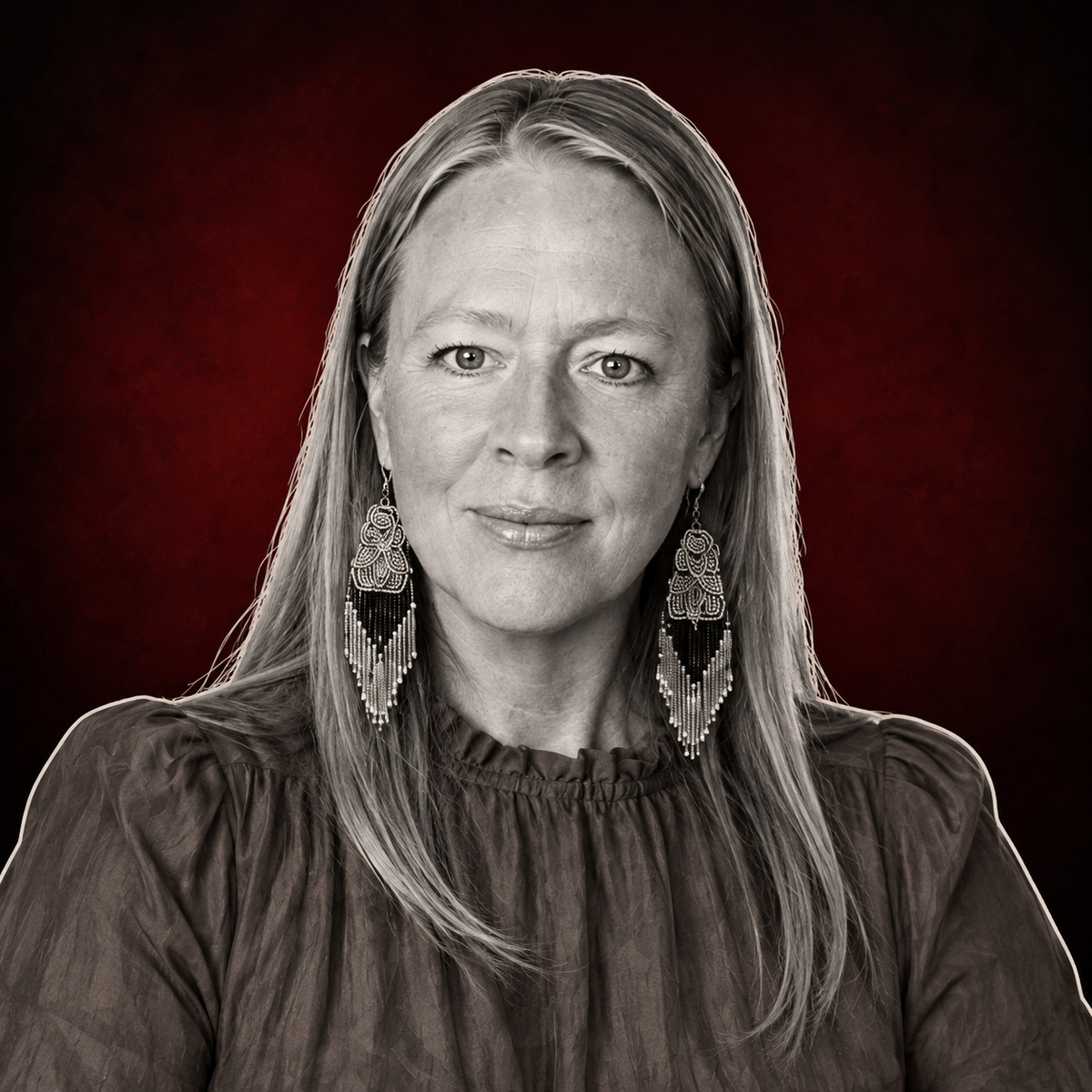
Dr. Traci Potterf, PhD, is the founder of Inner Genius Health and describes herself as an anxiety and mystery illness detective. A former medical anthropologist, she studied cultural and medical anthropology, earned her PhD from Berkeley, and conducted fieldwork in rural Mexico and doctoral research in Cuba. The daughter of a psychiatrist, she grew up in San Antonio, Texas, and overcame her own anxiety and health struggles before moving into functional health and health coaching. Through Inner Genius Health, she works with entrepreneurs, professionals, and public figures on nervous system regulation, functional health, and nutrition, offering one-on-one and group programs, a VIP program, and her Magic Brain Trick Meditation. Traci coined the terms time bending and healthy hedonism and works with clients long distance. She is a member of the Speakeasy Mastermind Denver chapter.



