
Travis Houston, co-founder of Book To Buyer, opens with a claim that will sting a lot of authors: the number one bestseller badge is worthless on its own. After 16 years of scaling online businesses for personal development brands, Travis argues that a book only earns its keep when it becomes a sales asset that feeds a back-end offer, and he is blunt that many chart-toppers simply bought their way to the top for a week. Host Eric Berman, whose book Proximity Pays hit number one with Travis's help, gets him to open up the entire machine: a $9.95 digital book with bonuses, a $37 audiobook bump offer that Travis says converts at about 64%, and a one-time offer built to accelerate the belief the book creates. Travis also explains why he refuses to let authors start writing until their back-end offer exists, how AI interviews authors to sequence their expertise, and why book readers make the best buyers.
In this episode, you'll discover:
- Why Travis Houston calls the number one bestseller badge sugar and carbs, and why he wants a pipeline that sells 200 to 300 copies every month instead
- How a $9.95 book sales funnel stacks a $37 audiobook bump offer and a $495 one-time offer to turn readers into paying customers
- Why a book reader is your best buyer, including the doctor whose book helps sell a $10,000 one-on-one program
- The build-backward approach of starting with Rome, the back-end offer where every client should end up, before writing a single chapter
- How AI that interviews the author, plus a five-day group writing room, helps experts finally finish a book that sequences their expertise
Episode Summary
Travis Houston has engineered number one bestsellers for clients, including host Eric Berman's book Proximity Pays, yet his core message is that the badge itself is worthless. He says plenty of number one authors have paid to buy their own books for a week of rank, effectively renting bestseller status. The real test, in Travis's view, comes in weeks two and three, when the buzz fades, nobody is knocking on the door, and the royalty check is small. He compares chasing the badge to eating nothing but sugar and carbs. What lasts is the protein, salt, and fat of a pipeline: a book turned into a sales asset that can be driven through organic channels, partners, and especially paid traffic.
Travis backs that argument with numbers he cites on the show. He says roughly 4.2 million books received ISBNs in 2025, about 3.5 million of them self-published, and that the average book earns about $2,000 a year. Eric plays devil's advocate, asking whether the badge still helps someone land podcasts and credibility. Travis agrees it can work for authors who keep actively pitching, sending the book out, and talking about it. The problem is that most people treat the badge as the end zone when they are really only on the 20 yard line. He traces the habit to validation and ego, and he redefines the finish line as a book that reliably sells 200 to 300 copies every month.
The heart of the episode is Travis's walkthrough of the funnel underneath the book. He keeps the book on Amazon at $14.95 with 50 to 80 reviews but says he never cares about selling it there. Instead, traffic goes to a book sales page, using his wife Joy Houston's book as the example, where a digital book plus bonuses sells for $9.95. At checkout, a $37 bump offer bundles the audiobook with a digital toolkit, including AI agents, and Travis reports a 64% take rate. The next page presents a $495 one-time offer designed to accelerate results from the belief the book builds. Travis says this front end roughly breaks even on ads, with some days up and some down, and he describes an AI agent connected to Claude through an MCP that checks his Meta ads account daily and suggests optimizations.
The profit, Travis explains, lives in the back end. His team works with health and wellness practitioners, business owners, subject matter experts, and home services companies, and he says prospects who arrive at a discovery call with the book in hand convert at a much higher rate. Eric adds that these buyers are fans, not freebie seekers. Travis describes executives at major companies reaching out after reading Joy's book and saying it felt like talking to a celebrity, plus Dr. Sherry Brewer, whose book Why You Can't Lose Weight helps her attract clients to a $10,000 one-on-one program. His summary is simple: a book is the best passport to credibility, and a book reader is your best buyer.
Travis is equally direct about who should not write a book. He urges listeners not to write one unless they are genuinely an expert who has gotten someone a result and can deliver on a promise. He also warns against writing a book that builds a business you would hate to run, describing a doctor his team redirected for exactly that reason, because people tend to self-sabotage a business they loathe. Eric adds that asking trusted people what you are uniquely good at can help when choosing between topics or wrestling with imposter syndrome.
The final stretch addresses why experts get stuck and how AI fits in. Travis compares authors to racehorses that need blinders, noting that Eric finished his book because the team locked him in a room for five days. Their process places each author in a group of about 12, which Travis connects to sympathetic resonance and Napoleon Hill's definition of a mastermind. On AI, he cautions that generic book-writing apps produce books that are okay but not great. His approach uses AI to interview the author and sequence ideas in the right order, starting from Rome, the back-end offer where every client should end up, so the book becomes one of the roads that leads there.
Big Ideas Discussed
A Book Without a Back End Is a Dead End
Travis Houston's central rule is that the goal of a business book is not to sell the book. He wants readers to reach the back end, the program, service, or community the author actually sells. That is why his team will not let clients write a book until a back-end offer already exists. Travis calls this destination Rome and describes the book as one of many roads that lead there. For Eric Berman, Rome is Speakeasy Mastermind, which existed long before Proximity Pays was written.
This reframes how an entrepreneur should judge a book project. Royalties are a weak scorecard when, by Travis's numbers, the average book earns about $2,000 a year. A better question is whether the book moves the right reader toward the offer that drives the business. Travis points to Dr. Sherry Brewer, who wrote Why You Can't Lose Weight and attracts clients to a $10,000 one-on-one program, some of whom never even read the book. In that model, the book functions as a credibility engine and a front door, and the measure of success is how many qualified buyers walk through it.
The Funnel Math Behind a $9.95 Book Offer
Travis lays out a specific funnel rather than a theory. The book sits on Amazon at $14.95, where he wants 50 to 80 reviews for social proof, but paid traffic goes to a separate book sales page. There, using his wife Joy's book as the example, buyers get the digital book plus bonuses for $9.95. At checkout, a $37 bump offer adds the audiobook and a digital toolkit with AI agents, and Travis says about 64% of buyers take it. A $495 one-time offer follows, built to help readers get results faster from the belief the book establishes.
Travis reports roughly a 14% conversion rate to the book sales page and says the front end basically breaks even on ad spend, sometimes losing money and sometimes making it depending on the algorithm. On the day of recording, he says he spent $300 on ads to a book funnel. The point for business owners is that a self-liquidating front end lets you buy customers at close to zero net cost, which fits Eric's description of Book To Buyer's front-end funnel as one that acquires buyers for free, leaving the back end to generate the profit.
Why Book Readers Convert Better Than Cold Leads
Travis argues that a book reader is your best buyer because reading a book that impacts you turns you into a fan of the author or brand. He says prospects who show up to a sales or discovery call with the book in hand convert at a far higher rate, and Eric adds that these buyers are customers and fans rather than freebie seekers who consume time on pre-sale calls. Travis describes people from major companies reaching out after reading Joy's book and telling them it felt like talking to a celebrity.
Eric extends the idea beyond the book itself. He believes every touchpoint in the process, from the website to the follow-ups and the extras, adds a layer of micro-credibility in the buyer's mind. Travis sums it up by calling a book the best passport to credibility available to an expert. For service businesses, coaches, practitioners, and consultants, the lesson is that a well-positioned book changes the starting point of the sales conversation, because the prospect already trusts the method before the first call begins.
Write the Book for the Business You Actually Want to Run
Travis sets two firm conditions on who should write a book. First, the author must be a genuine expert who has gotten someone a real result and can deliver on a promise. He pleads with listeners not to write a book simply to sell clients something they have never actually delivered. Second, the book must build the business the author wants to run and fulfill on. He describes a doctor who was midway through writing a book that would have built a business he hated, until Travis's team shifted him, because people tend to self-sabotage a business they loathe.
Eric adds a practical step for choosing the right topic. He suggests asking the people around you, those who will tell you what you want and do not want to hear, what you are great at, what makes you different, and what they have learned from you. That outside view can cut through imposter syndrome and the feeling that what comes naturally is not valuable. For an entrepreneur, a book locks in positioning for years, so choosing the topic is a strategic decision, not a writing exercise.
Blinders, Groups, and AI That Interviews the Author
Travis's explanation for unfinished books is focus. Like racehorses that wear blinders to ignore the horses beside them, authors need a structure that keeps shiny objects out of view. Eric finished Proximity Pays, Travis notes, because the team locked him in a room for five days. Their process borrows from group fitness: rather than working out alone and quitting, authors write alongside about 11 others doing the same thing. Travis ties this to sympathetic resonance, where one piano's struck note makes the same string vibrate on another, and to Napoleon Hill's definition of a mastermind.
On AI, Travis warns that apps which write a book from a few chapter titles produce books that are okay, not great. His method uses AI to interview the author, pulling out the right ideas in the right order, which he calls sequencing. He has also built AI tools for front matter, back matter, cover design, spine design, Amazon setup, and ISBNs. Eric says the layers involved convinced him he could never have simply fired off an AI prompt and produced the same result.
Questions We Answer in This Episode
Why does Travis Houston say the number one bestseller badge is worthless?
Travis Houston says the number one bestseller badge is worthless on its own because it is a moment rather than an asset. He says many number one authors paid to buy their own books for a week of rank, effectively renting the status. In weeks two and three, the buzz fades and sales stop. Travis does agree the badge can help authors who keep actively pitching and promoting, but he says most people treat it as the finish line when they are only on the 20 yard line.
What is a book sales funnel and how does Travis Houston structure one?
A book sales funnel is a dedicated sales page that sells the book and then presents additional offers. Travis Houston's example, using his wife Joy's book, sells a digital book plus bonuses for $9.95, adds a $37 audiobook and digital toolkit bump offer at checkout, then presents a $495 one-time offer that helps readers get results faster. Travis keeps the book on Amazon at $14.95 with reviews for credibility but says he never cares about selling it there.
What conversion rates does Travis Houston report on his book funnel?
Travis Houston reports about a 14% conversion rate to the book sales page and roughly a 64% take rate on the $37 audiobook bump offer, which he attributes to buyers wanting the audio version. He says the front end of the funnel basically breaks even on ad spend, with some days profitable and some not depending on the ad algorithm. Travis says clients who follow his templates generally see at least a positive return on ad spend.
Why is a book reader considered the best buyer for a service business?
Travis Houston says a book reader is the best buyer because someone who reads a book that impacts them becomes a fan of the author or brand. He reports much higher conversion when prospects arrive at a discovery call with the book in hand. Eric Berman adds that these prospects are customers and fans rather than freebie seekers. Travis also cites Dr. Sherry Brewer, whose book, Why You Can't Lose Weight, helps her attract clients to a $10,000 one-on-one program.
Who should not write a business book, according to Travis Houston?
Travis Houston says you should not write a book unless you are genuinely an expert who has gotten someone a result and can deliver on a promise. He warns against using a book to sell clients something you have never actually delivered. He also says not to write a book that builds a business you would hate to run, describing a doctor his team redirected for that reason, because people tend to self-sabotage businesses they loathe.
Why do so many experts get stuck writing their book?
Travis Houston believes experts get stuck mainly because of focus. He compares authors to racehorses that need blinders to ignore distractions, and notes that Eric Berman finished his book because the team locked him in a room for five days. Eric adds a confidence issue and a skills gap, not knowing whether you are heading in the right direction. Travis's answer is a group writing environment of about 12 people, modeled on group fitness classes, where everyone works on the same thing together.
How does Travis Houston recommend using AI to write a book?
Travis Houston recommends using AI to interview the author rather than letting an app write the book from a few chapter titles, which he says produces books that are okay but not great. His tools ask questions and pull out ideas in the right order, which he calls sequencing. He pairs that with a proven formula that shifts a reader's belief toward a next step, and he has built AI tools for front matter, back matter, covers, spines, Amazon setup, and ISBNs.
What does building backward from Rome mean for an author's book?
Building backward from Rome is Travis Houston's way of saying the book should be designed around the back-end offer where you want every client to end up. Rome is that destination, and all roads, including the book, should lead there. For Eric Berman, Rome is Speakeasy Mastermind. Travis says his team will not let people write a book until they already have a back-end offer created, so the book can drive readers forward into it.
Full Episode Transcript
Read the Full Episode Transcript
Introducing Travis Houston and the Proximity Pays Launch
Announcer: Welcome to Inside the Speakeasy Podcast, the private room where today's sharpest founders, innovators, and renegade thinkers come to trade the ideas that move industries. This show is brought to you by HighLevel, the AI-driven business operating system trusted by over 2 million businesses to help automate, scale, and create real leverage. HighLevel isn't just a tool, it's the engine behind some of the most agile and high-performing teams on the planet. If you're ready to streamline everything, amplify your reach, and actually build a business that works for you, you're in the right place. Visit www.GoHighLevel.com/Speakeasy-Mastermind-Promo to get an exclusive 30-day trial for being a listener of the Inside the Speakeasy podcast. Enjoy the show.
Travis Houston: Should we just give away the whole secret?
Eric Berman: Let's do it. If you're okay with it.
Travis Houston: I mean, yes, I'm happy to share this. So the whole secret is not to sell the book.
Eric Berman: Okay.
Travis Houston: We wrote the book and the secret isn't like, let's sell the book. Yes, we do want people to get the book, but we more so want people to get the back end. Okay, so a book without a back end is a dead end.
Eric Berman: Welcome to Inside the Speakeasy Podcast. And I've been looking forward to this interview and conversation for so long, which is crazy. One of my closest friends, and it took me forever to get his ass on the podcast, but you are in for a treat today. My boy, my good friend, Travis Houston. I have to say, my coach, Travis Houston will tell you the number one bestseller badge is worthless on its own. Get that again: the number one bestseller badge, that we all think is important, is worthless on its own. He should know, he engineers them. He's a co-founder of Book To Buyer. He builds what sits underneath that badge: a strategically positioned book, a front-end funnel that acquires buyers for free, a partner distribution network, and a launch day playbook that turns attention into customers. Travis has got 16 years of scaling online businesses for leading health and personal development brands, which taught him the lesson most authors learn too late. Some of these people, and he is like, everybody wants to work with Travis. Some of the big names you might have heard of, like John Assaraf, Amy Myers, Dr. Daniel Amen, Metagenics, Les Brown, and the amazing JJ Virgin. He's been by all of their sides, helping them scale. As Travis says, a bestseller badge is a moment, but a buyer pipeline is an asset. Anything related to this topic, you are in for a huge treat. You're going to learn so much stuff today. You're going to learn more from Travis, all things at booktobuyer.com. All that information is going to be here. I'm so pumped. Travis, thank you for finally joining over here.
Travis Houston: I'm so happy to be here, especially after your big win.
Eric Berman: The big win. So yes. So this year, Proximity Pays, my bestselling book with the badge, and we're still working on funnels, which we'll get into on things. Tweaking, tweaking, tweaking. Really, it only happened because of Travis here, who had a vision, understood what I was doing, and felt like, essentially, it's not just me. He's like, Eric, it's not just about getting the book published. He's like, you have so many years of experience and expertise in what you're doing, and what he's seen me doing within Speakeasy Mastermind, because he is an OG of the mastermind out in San Diego. And he said, this is such a big asset. And then he helped me get this book. I went through some coaching with him and his program. And I have to say, you know, I'll be a little emotional. It was one of the first times as an adult, I almost like I had a little bit of tears. I was getting a little verklempt out there, you know, having had that book and hitting the number one. And he was on stage with me at our big event and helping me get copies sold. And we're gonna talk a lot about that process and what really is important through all things. So thanks again, Travis. And I'm excited to get into it.
Tears at Number One and the Gym Workout That Started It All
Travis Houston: Literally the day after we did your bestseller launch, before you showed up to the event that day, you posted on Facebook that it was like, it was one of the first times I've cried as an adult.
Eric Berman: Oh man, did I say that? Shoot. Oh God, embarrassed. Okay, yeah, no, it was good.
Travis Houston: And you posted that on Facebook with a copy of your book and you'd hit number one, and you were like, you woke up in the morning, you checked Amazon, you had the number one bestseller, you posted it online, and you literally posted, this is one of the first times that I've cried as an adult.
Eric Berman: Yeah.
Travis Houston: And I was like, what a special moment to have had.
Eric Berman: Yeah, and you helped make it so tangible. And I think a lot of it, honestly, is just the confidence. For me, it was just confidence knowing that, you know, it's the imposter syndrome, cobbler's shoe, all those things tied in around, like, is what I really know, like, do people care about it? You know, do I have something inside of me that has value to others? It just seems so natural to me, you know. And I think it's getting that out of people, which was really helpful.
Travis Houston: Can I say how freaking cool is it that you and I are sitting here in this conversation, when I don't even know the year that it was, but do you remember when you and I were sitting at the gym?
Eric Berman: Yep.
Travis Houston: Having a conversation around your agency and how frustrated it could be. And we had a conversation around, you were considering maybe...
Eric Berman: Yep, yep. That was 2022. And me with my strengths and weaknesses, my weakness being, on my Kolbe, being a high Quick Start and a low Fact, and with a high Follow Through, I'm just like, let me just run some numbers here. And I'm really calculating on my phone while we're working out. I'm like, wait, this could be kind of an interesting business.
Travis Houston: And then you're like, wait a second. I just talked to Eric at the gym, like three weeks later, he was already like opening some stuff up. So backstory, Eric and I were working out at the gym, and we had Speakeasy, and Speakeasy is Eric's baby. But it was like, I don't know, 14, 15 of us in Speakeasy, 14 or 15 people, badasses, in Speakeasy for years. And then I could just see that it was Eric's calling, like his actual calling in life, to bring the best people together and to help them elevate their business. And he took an idea that we came up with at the gym, and here we are today on the Speakeasy Podcast, and I'm thrilled about that.
Fingerspitzengefühl and Turning Unconscious Competence Into a Book
Eric Berman: Yeah, well, thank you. You've always been such an amazing support to me, and I appreciate you. But I wanna get into some questions I prepared, Travis, for you here. All right, so you helped me turn Proximity Pays here into a published book and number one, three-category number one bestseller. I told you that I got pretty emotional. And why does that moment hit experts so hard?
Travis Houston: How about we start off the podcast with a word in German that's almost impossible to say?
Eric Berman: Okay.
Travis Houston: Well, there's a phrase that I've heard, and I've never found a word in another language like this. In German, it's called Fingerspitzengefühl.
Eric Berman: Oh.
Travis Houston: I want you to say Fingerspitzengefühl.
Eric Berman: Fingerspitzengefühl.
Travis Houston: Okay. That's the exact reason. So in German, it means I have this fingertip feeling. And a fingertip feeling, that's what it means in German, means I have this sense. I have this, that's taken years to get, this like sense for how to do something. And then it just becomes autonomic. It just becomes something that you just do. It becomes unconscious competence. And for you, Eric, I think when you finally got the book out of you, like you had written the book and you'd gotten the book, you maybe got in your first like publisher copy of the book, it's the first time as an adult that you see what you do with unconscious competence, the thing that you do so well naturally, it's the first time you see it as a framework and a system and steps that other people could follow. And so I think there's this moment that you experience, and other authors that we work with experience, when they're like, I can finally express what I do in a way that people understand it and moves them to action.
Eric Berman: And they can't read my mind. You're actually putting into...
Travis Houston: Yeah, you're putting into frameworks.
Eric Berman: And it's there. And I think on top of that, what was so profound to me is the calls that I got from people that I respect. You know, [unclear] people that are like, Eric, I gotta say, I read the book and it was actually quite good. And it's almost like they've just known me forever, where buddies are like, hey, this shit's actually good. I like the way you did it, and it actually got me thinking about some things. And I think you said something important. It's the unconscious competence. The stuff that I thought I was naturally good at, it became natural, and I didn't think it was that valuable to others. And then, having gotten it out there, the frameworks, and hearing that, it was pretty exciting.
Travis Houston: And I think you finally built an asset. You took everything that's in your brain, and it just takes organizing it, or as I call it, sequencing it. It takes sequencing it in the right order to put it into a methodology that then other people can benefit from, because you are unconsciously so good at so many things. But when it comes to networking, you're an absolute genius, but it really takes sitting down. And as they say, it's hard to do surgery on yourself.
Eric Berman: Yeah.
Travis Houston: You needed a process that helped extract that from you and put it into a system that then became the book.
Eric Berman: That's right. That's right. No, it's great.
Travis Houston: And it is such a good book. I mean, just like the isolation tax concept alone, it's like one of the things that's plaguing people is being isolated, and you showing them the way out of that, which is community and network and who you surround yourself with inside of Speakeasy. They're genius concepts.
Why the Number One Bestseller Badge Is Worthless on Its Own
Eric Berman: Yeah. Well, really, it's helping people understand the cost and the amount of money, the tax they're paying for being isolated, how much they're missing out on the dollars. And again, I appreciate it, but less about the book, and thank you for that. But I want to get more about you and what you're teaching. So Travis, I want to go back to something I opened with a little bit. You say that the number one bestseller badge, ouch, you know, it's worthless. You also engineer them for a living. Like, you create the number one, you did that for me. But you say just having the badge, so many people brag about it, but it's worthless. What do you mean by that?
Travis Houston: Hmm. I don't want to offend anybody.
Eric Berman: Well, okay, let's offend some people.
Travis Houston: So a bestseller badge is a moment. A book that has a sales funnel behind it that you can drive traffic to is an asset. And so I really want people to own an asset that they can use over and over and over again. So a lot of people, what they do is they write their book, or they spend hundreds of thousands of dollars using services that go out and like buy their books to get them ranked. There is no Santa Claus, meaning that a lot of bestselling authors, a lot of the number one bestselling authors, have paid to buy the books to get them to that number one spot on Amazon. So they're renting the bestseller status for a week. So my question to you is, what happens in weeks two or three after that's over? Right, when the buzz wears down and everybody goes on their way to do other things, it's like, wait a second, nobody's knocking on my door. What happened? Where's my royalty check? I call it sugar and carbs, sugar and carbs, sugar and carbs. It's just like, imagine that the only thing you ever ate was sugar and carbs, sugar and carbs, sugar and carbs. That's like going for that bestseller moment, which is nice for a minute, but the crash is going to come. I would rather you have protein, salt, and fat, protein, salt, and fat, which is the thing that lasts, which is, I want you to have a pipeline, meaning I want your book to be turned into a sales asset you can drive traffic to, organically, through partners, and especially through paid traffic. I mean, I just looked at my stats today. I spent $300 on ads today to a book funnel, and I made $562.
Eric Berman: Wow. How many days a week would you do that?
Travis Houston: All day, every day.
Eric Berman: Okay.
Travis Houston: How many books do you think were published in 2025? As a whole, how many? And I mean by an ISBN number. So someone went to Bowker, they got an ISBN number in 2025. How many books do you think were published in 2025?
Eric Berman: God, 25,000.
Travis Houston: Great answer. 4.2 million. Okay, so 3.5 million are self-published, which means about 640,000 went through publishers, but 4.2 million books were published in 2025, of which they annualized this for how much a book makes, and a book makes about $2,000 a year. When you just get it out there, you do your bestseller launch, it's hot, it's sugar and carbs for a week or two, you hit your bestseller status, and then...
Eric Berman: Right. Well, let me play devil's advocate. I do agree with what you're saying, and you and I are kind of talking real time, because I'm witnessing it, going through it right now. What about, I mean, is it a myth, or is there any value to somebody saying, I got the badge on the website, I'm going to go get more podcasts now, and I have a credibility sticker, and it's going to get me more stages?
Travis Houston: I do think that works as long as you work the system. So if you are actively sending your book to people that book stages, or you're actively doing outreach, or you're actively doing social media, or you continue to talk about the book. I think what happens is most people get to the book, they get to the bestseller, and that feels like the end zone to them.
Eric Berman: Right. Exactly. You got to do something.
Travis Houston: The reality is it's part of the game. You're only on the first 20 yard line. You started the game. I mean, you're not even at halftime. You're probably at the first quarter. A number one bestseller is not a business.
Validation, Ego, and Selling 200 to 300 Copies a Month
Eric Berman: Yeah. Okay. Well said. Well said. Exactly. Okay. But why do you think most people go this route? Why do they stop?
Travis Houston: Let's talk about why they go this route. Why they go this route is validation.
Eric Berman: Okay.
Travis Houston: What I have to say is worth something. I'm a number one bestseller. Ego, ego, sugar and carbs. Everyone wants that, their 15 minutes of fame. But I don't want to chase the badge. I want to build the book that builds the business.
Eric Berman: Right. Right.
Travis Houston: And so we can chase that moment, which I see so many people, they love that moment, and they think that's the finish line. And it ain't the finish line. The finish line is, how do you get your book to sell 200 or 300 copies every month? There's the secret. The unlock is, yes, have a book, have a book that builds the business, but also build the asset that sells the book every month.
Eric Berman: And then ultimately have it be, you know, stage one of your funnel too. I mean, that's just part of it. I mean, not just making the book. So that gets me to my next question, is walk me through, you know, you talked about, you gave the example of the ads that you ran for your book. You have a good positive ROI, you'll do that all day long, and you have a $10 book as a front end on your funnel. What's actually being built underneath it? Why is that? Walk me through that a little bit.
Inside the Book Sales Funnel: Bump Offers and One-Time Offers
Travis Houston: That's actually the whole secret. Should we just give away the whole secret?
Eric Berman: Let's do it. If you're okay with it.
Travis Houston: I mean, yes, I'm happy to share this. So the whole secret is not to sell the book. We wrote the book, and the secret isn't like, let's sell the book. Yes, we do want people to get the book, but we more so want people to get the back end. Okay, so a book without a back end is a dead end. And I think most people wrote the book... So how we helped engineer your book, Eric, and the other books that we do that build the business, is, I'll just give you all the numbers. Here's how it all breaks down. We like to have a book that's on Amazon, and the book on Amazon is $14.95. Okay, so you wrote your book, you get it up on Amazon. I don't ever care about selling the book on Amazon. I like the book to be on Amazon. I like there to be over 50 to 80 reviews of the book on Amazon, but I never care about selling it there. I want people to go to a book sales funnel. So I'll give you two examples: one, my book, one, my wife's book, and about to be your book. So my book, you can go to turnviewsintoprofit.com, and you can see it on Amazon, and there's reviews on Amazon. But I'd rather you go to, I'd rather you not buy it on Amazon, I'd rather you buy it through the book sales funnel.
Eric Berman: Right. And most people's first response would be, gee, you want to own the buyer. I mean, I think that's the first comment, like, because you want to own it.
Travis Houston: But the real reason, as you know, is how it works. So I'll just use my wife's book that I send a lot of traffic to. So her book is getcashpayclients.com. I send traffic there. So the way that we've worked it is the book is $14.95 on Amazon, or it's $9.95 on the book sales funnel page, but it's the digital book plus some bonuses. So for $9.95, you get the digital book plus some bonuses that go along with that, that make the book so attractive. The bonuses are like, oh yeah, I just want to buy it for the bonuses, but I also get the book. When they click the yes, I want the book, there's what's called a bump offer. And a bump offer happens at the time that they're putting in the credit card information and they're checking out. What we found works the best is the audiobook. So we sell the digital book and some bonuses for $9.95. We then sell the bump offer for $37, and that's the audiobook plus some other like digital toolkit. Like, we have some AI agents and some AI employees that go along with that. So for everyone who buys the book, Eric, we get a 64% take rate on the bump offer.
Eric Berman: Whoa. Okay.
Travis Houston: Which is great, because they want the audiobook version. So they buy the book, they get the bump offer, and then on the next page after they purchase is what's called the one-time offer. So we have an additional offer that people get. For my wife's book, it's a $495 one-time offer, and we're selling the thing that helps them accelerate getting results from the concepts in the book. So just, there is no Santa Claus. I'm going to tell you everything. The book is about shifting a belief. Like in your book, the belief shift is about proximity as power, and proximity pays. Get in the right room, around the right people, your overall business elevates, and you're building that belief in the book. So in my wife's book, she's building a very specific belief. And the one-time offer that goes along with the book accelerates them getting the results related to that belief. Does that make sense?
Eric Berman: Yep. Yep.
Travis Houston: Well, we get about a 14% conversion to the book sales page. Of the people that buy the book, we get about a 64%, 65% conversion to the bump offer. And then the one-time offer at $495 converts about 11. So that means a blended average cart value for us is in the $65 to $85 range. So our average cart value, let's just call it around, let's just call it 70 bucks. So as long as I can acquire a buyer into the book funnel for under $60, I'm winning. Like today, I spent $303 on ads. I just checked. I spent $303 on ads. I made $652 today.
Eric Berman: Jesus. Is that like almost every day you're ahead, or some bad, some good? Have you noticed any trends there? Everything you hear on this show comes back to one idea. Proximity. I wrote the book on it. Literally. Proximity Pays. My bestselling book, available now at proximitypays.com.
Travis Houston: Overall, what's called ROAS, my return on ad spend, is I'm making 1.4%. So I'm just, I'm basically breaking even on the front. Some days I lose money, some days I make money. It kind of depends on the algorithm. But I built an AI agent that's connected from Claude to Meta ads via this thing called an MCP. And now Claude helps me write and manage my ad account, and tweak, and what you need to do, and all that kind of stuff. Every day I can just type into my Claude, and my Claude AI goes and checks my Meta ads account, comes back, and it helps me understand what to optimize and what to do. So I built a whole book advertising AI bot.
Templates, Back-End Offers, and Why Readers Become Buyers
Eric Berman: Love it. Now, well, okay, this one maybe begs the question here. I mean, you know, organic, paid, partner traffic works with this offer, assuming you're really good at scaling. I talked about all the clients you've been with, and you are a machine when it comes to tweaking. As you've taken clients, they're not as skilled, let's say, as somebody like yourself to do this. Are you finding that many of your clients are having that kind of, at least a positive ROAS on that campaign?
Travis Houston: On the ad spend?
Eric Berman: Yeah.
Travis Houston: For the ones that follow the system? Yes.
Eric Berman: Got it.
Travis Houston: So people come through, you know, I like to create templates for everything. When you came through and did your book, I personally helped you set up your book funnels, for your workbook, for your getting Amazon reviews, for your resources, for the book sales funnel. I also have a very specific set of templates that you just fill out the information in the templates, and then it rocks and rolls.
Eric Berman: And I know we're not even at the end of the story, too, because we're just working our way through a positive ROAS, and really the magic happens the next step. And so, you know, the other next step.
Travis Houston: Yeah, so the people, so my favorite thing ever is you sell a back-end program. You've got people joining Speakeasy.
Eric Berman: Yep, yep.
Travis Houston: So we work with health and wellness practitioners and business owners and subject matter experts and home services companies. And the book is just a great front door. So when someone shows up to a sales call or a discovery call and they have the book in their hand, guess what my first like reaction is?
Eric Berman: I mean, they're way, just way higher conversion rate on these people. And as your amazing wife, a lot of these people aren't freebie seekers, as she likes to use. They're not freebie seekers that are taking your time on these pre-sale calls. They're customers and fans. So I think anybody listening clearly knows that the conversion rate is going to be substantially higher versus a rando.
Travis Houston: Okay. Just this month, we're doing the podcast interview, we've had people from major companies, if I said their name, and I just won't right now because we're still in discovery with them, have reached out, and then they get on a call with my wife and I, and they're like, oh my God, I read Joy's book and I feel like I'm talking to a celebrity.
Eric Berman: Nice.
Travis Houston: Because, I mean, when you read a book that impacts you in a special way, you become a fan of that person or brand. So a book reader is your best buyer.
Eric Berman: 100%. I mean, I've had a couple of random calls myself just on this book, and I've barely even got started yet. Or like, there's like, oh my God, I'm actually talking, you know, like they're so like thankful.
Travis Houston: So we want to sell the back end. So the book is the best front end that leads to some sort of a back-end offer. One of our doctors, Sherry, that we work with, she wrote a book called Why You Can't Lose Weight. She has people paying her $10,000 for her one-on-one program that she has, where she works with people who bought the book but never read the book, because they're like, oh, she has a book, I'm gonna go work with her.
Eric Berman: Right. Well, they've seen enough on her website, the book, the follow-ups, the gifts, they're like, she knows her shit, so therefore...
Travis Houston: She's an author, she's an expert.
Eric Berman: She's an expert, yeah, and she is. But I think you gotta get more credit. There's more dimensions to the things following your process. It's not just a book. I mean, because I think a lot of, as you said, there's four point, blah, blah, blah, million books being published. I think just every little step along the way, I feel like, adds this micro-credibility [unclear] in my mind of them just being that more credible. I don't know. For me, I just look at it and say, you're adding this, you're adding this.
Travis Houston: A book is the best passport to credibility.
Eric Berman: Yeah.
Travis Houston: If you want to be more credible and you want to have people see you as more credible, I don't think there's a better passport to credibility than writing a great book.
Who Should Write a Book and Which Business It Should Build
Eric Berman: Got it, love it. All right, I have a couple more questions. You know, one is, who's this actually for? You talk a little bit about anybody who wants to become an expert, and what has to already exist before someone can even use kind of this launch playbook or the formula you're describing?
Travis Houston: Please, Jesus, please, please, [unclear] baby Jesus, please, please don't write a book unless you're actually an expert at something, unless you have gotten someone a result. Please don't write a book because you're trying to just use the book to get clients and sell them something that you haven't actually gotten results for somebody. So who it's for, it's for somebody who's developed a certain amount of expertise in an area, and they have that to give, even if they don't understand how to write the book, even if they've tried and failed at writing the book before. It's the kind of person who provides some sort of a service or some sort of an offer that can actually, for realsies, get someone a result. They can deliver on a promise.
Eric Berman: Got it. So, love it. And I think more than that, they gotta be passionate about that topic. They gotta be an expert. They really gotta show their passion for it, 'cause it's gonna go along through the whole, be threaded through everything. And I mean, that goes without being said. I think people write a book and then it just doesn't do anything for them.
Travis Houston: But our concept is write the book that builds the business. But this is the important part: that builds the business you want to run and fulfill on. We were talking to a doctor just yesterday, and he had two ideas for the book that he wanted to build. And he was writing, he was currently in the process of writing the book that was building a business he hates.
Eric Berman: Yep.
Travis Houston: And so we were just able to shift him. Don't write the book that's gonna build the business that you loathe running, because you'll self-sabotage that business.
Eric Berman: Yep. Well, a couple of thoughts. One is, I was gonna make one more comment on that, is I think that, you know, especially my experience with you, I think sometimes if we're not clear, ask those that we're surrounding ourselves with, those that love us, that we know and trust, that will tell us what we wanna hear and also tell us things we don't wanna hear. More importantly, ask them what we're great at, how we're different. What have you learned from me, kind of thing? Because sometimes we do have that cobbler's shoe, or that, you know, imposter syndrome, that we don't feel like what we're teaching is really that worthy. So I think that's another thing, especially if you're deciding between two topics.
Racehorse Blinders, Group Writing, and Sympathetic Resonance
Eric Berman: I'm gonna pivot to another question, though. Why do we run into so many people, when you say, have you thought about writing a book, or are you writing a book today? Yes, I've been working on this thing, and I've been stuck on it for, I've been working on it for two years. Oh, I've started on it, I just got stuck. Why do people get stuck writing the book? I'm sure there's a lot of reasons for this. Life gets in the way, other things come up, you see a shiny object and you head in that direction.
Travis Houston: I'm gonna say one is a book deserves this. Do you know what this is? And you'll know, you're gonna know this better than anybody, because I always say, why does a racehorse have blinders? Right? You actually own racehorses. So Eric, you're probably the only person who I've ever asked this question to that's actually qualified.
Eric Berman: My dad was a horse trainer. He trained racehorses. I spent more time at Portland Meadows growing up than I probably did at elementary school.
Travis Houston: So why do racehorses have blinders on?
Eric Berman: Yeah, well, I mean, they're distracted from the other horses. They want to stay focused and not get shiny object of the other horses, yeah.
Travis Houston: And do we as adults have a lot of ADHD? I think the reason that we don't finish the book is because a book means we as adults get to put on blinders and finish the damn book. So as you know, the reason you finished the book is because we locked you into a room for five days and made you finish the book.
Eric Berman: Yeah. And I think that's a big part of it. I think there's certainly that. There's the focus. But I think the other part in my mind, as you talk, and I go through, me as, you know, somebody who went through this, is there's a confidence issue. There's a confidence, and again, back to imposter syndrome, and we keep saying it. You know, there's also a lack of, I say there's a confidence issue and there's a skills gap, meaning I don't necessarily know if what I'm doing is the right thing. Am I going the right direction? So there's a lot of hesitancy. What I felt, and as I've talked to people, it's like, I think I'm going right, but it'd be nice to have somebody to review and hold my hand along the way.
Travis Houston: So you ever, like, do you know the Trader Joe's model, where Trader Joe's sells other things, and when they find something that sells really well, they make it a Trader Joe's brand and get rid of the other things? So it's like, so what we did with our book writing process that you went through, and I want to see if this makes sense to you, we took the concept of working out alone versus going to something like Orangetheory or F45 or one of those group workout things, where we created an environment where it's you plus 11 other people in a room, in a suite, in a very specific place, and you're all doing the same thing. So it's like, some people, like, work out on their own, and then they stop working out. Whereas if you have a group where everyone is doing the same thing at the same time, you're almost like, I'm not going to say competing, but you see someone else getting things done. Like, I remember you were the first person to finish the book at that event. And I think it made other people be like, damn it. Shit. Why is Eric on chapter 13 and I'm only on chapter four?
Eric Berman: Right, right. I mean, your process was great, being in a group, not staying focused, having, I mean, there's not only accountability of a coach, but there's the group sort of pressure, as you kind of call it, to feel like I'm not alone.
Travis Houston: There's a term. It's not my term. It's just called sympathetic resonance. And the concept of, if you hit C, the note C on a piano, and there's a piano like 10 or 15 feet away, the C note will vibrate on that piano because you hit this note. So sympathetic resonance is like, there's a certain resonance that happens in a room. I always say there's magic in that room, because we're all vibrating around the same concept at the same time. And Napoleon Hill said a mastermind is where two or more people come together around a similar concept or outcome.
Using AI to Interview Authors and Building Backward From Rome
Eric Berman: No, I love it. All right, so I'm going to go in different directions. You are an AI expert, AI whiz. I've seen the kind of stuff you've done, the kind of great, you know, every meeting you're bringing, you're doing razzle-dazzle for all of us, and I go to you quite a bit. You know, we're surrounded by AI gobbledygook out there, and, you know, some good AI stuff. Now, I'm getting exposed to tons of ads and opportunities, exposures. Hey, get your book published. I mean, I'm listening to this call, let's say, and I'm like, sure, I'll just go do an AI book. Talk me through what you see, as being an expert in this space. You're an expert in AI. What should people think about and avoid if they're thinking about doing a book? They see AI, they get tempted with that. How can they use AI as a tool? And how can it be, you know, not a tool?
Travis Houston: So our process is not gonna help you write your life story. It's not gonna help you write a fiction book about fantasy romance. There's a framework to it. And so AI is so useful when you have a proven and historical framework it can follow. So I think a lot of people get these like AI book writing apps that say, hey, just put in the chapters, put in some concepts, and it'll write the book for you. And it writes a book, and they're okay, they're not great. I want to have a book that follows a proven and winning specific formula that helps people shift a belief and then utilize that belief to get someone to the next step that's like realistic, doable, and will change their life in a positive way. And there's a formula for that. So all we have done is we've taken a formula, we have a very specific formula that has a framework to it. And when you utilize AI in a way that AI asks you questions and interviews you, like what you did at our event, our AI tools were interviewing you and asking you questions. And then by your answers, you're writing the book, because it's just pulling out the right things in the right order at the right time. So sequencing. As one of my mentors said, Travis, a good idea at the wrong time is a bad idea. And so what he meant by that is sequencing. So you can go and you can use AI to just write a book. But is that book building the beliefs necessary, and then organizing it in a way that has people want to work with you, to where there's a natural back end? Like, we don't let people write the book unless they have a back-end offer already created. So I believe in building a business backwards so you can drive people through it forwards. So we always start with the, I call it Rome. What's Rome? And Rome for you should be where you want all your clients to eventually end up. So for you, Eric, your Rome is Speakeasy.
Eric Berman: Right. Yeah.
Travis Houston: So you already had Speakeasy, so you had Rome. And then the concept is all roads lead to Rome.
Eric Berman: Yeah. Yep.
Travis Houston: And the book is just one of those roads that leads to Rome.
Front Matter, Main Matter, Back Matter, and the AI Skills Behind Publishing
Eric Berman: Yeah, no, I think, and again, I kind of haven't gone through this and seeing how it was, I see it more as AI-facilitated, enhanced, using the skills. And these aren't simple skills. Like, I could just tell, with your intelligence, the amount of depth that went into the skills to build. And then I think once you go through it, you don't realize the layers upon layers upon layers of steps to do what you're trying to teach, which is, again, back to what we talked about earlier in this conversation. It's not just, hey, I'm going to throw a book out there to sell five copies on Amazon and be done. Great, if that's all you care about, and you want to get the ego stroke, and you want to have something on Amazon, and somehow you can get it to number one, go build some AI slop and you're done. Great, you know, you can win on that. But if you're actually trying to build a proper funnel and business and all that, it's just so much more nuanced and complicated, as I went through everything. And I literally, I remember walking through afterwards, because I had that question in my mind as I went through, you know, with you, and I'm like, okay, I get it now. There's no way in hell I could have just like fired off some AI thing and said, hey, you know, blah, blah, blah. You know, there's just layers upon layers. Things you put, each page, to the workbook that you're building, to the cover designs, to, you know, how do you get to bestseller status, and all that kind of fun stuff.
Travis Houston: But well, just to get the book done, this is a great point, Eric, and you nailed it. Just to get the book done, there's three things you have to have. You have to have the main matter of the book, which is the content of the book. You've got to have the front matter of the book, which, for you, we had an AI tool that you loved. Without that AI tool, it was like, Eric, this is a great book. You know what you're missing? You're missing something so important. You have a relationship with Brian Tracy. You need to have Brian Tracy write the introduction for your book. And an AI tool that I created helps you come up with all the front matter ideas of your book. And it gave you fantastic ideas for what to do in the front matter, fantastic ideas for what to do in the back matter of the book. You were being interviewed to get all the front matter out, which is the content of the book. But a book has front matter, main matter, back matter. But then there's AI skills that I've created. How do you do the front cover of the book? How do you come up with the front cover of your book? What goes on the back cover of a book? How do you design the spine of a book? How do you get that book loaded into Amazon? How do you get your Bowker ISBN number? Right? So there's all these things that have to happen for you to get a book published. Otherwise, you're stalled.
Eric Berman: I mean, the reality is you get stalled. You think you know what you're doing, and you're doing, it's a lot. All right, all the stuff will be listed below, but if anybody's not reading and they're listening to it, where would they go to? It's Book To Buyer?
Travis Houston: Yeah, just go to booktobuyer.com and build the book that builds your business.
Eric Berman: Yeah, and I highly recommend that. We hit it all.
Travis Houston: I just want more people to get your book at proximitypays.com, because it's such a good book. It shows off the process that we've done, and it leads people to the best back end ever, which I am a member of and have been for well over a decade, Speakeasy Mastermind.
Eric Berman: Awesome. Well, appreciate that, and appreciate all you've done for me, Travis, including Proximity Pays, and go check that out. But I mean, more importantly, I'll say from the bottom of my heart, you know, anybody, and I continue to brag about what you've done, Travis. And I already know we've got other members going. I'm so pumped, from Speakeasy there, to come see you. I'm sure they're gonna be bragging. I hope the buzz continues, because you deserve to get a lot more people, really both ways. I think you deserve to see a lot more people into your group. And I think people deserve to have you in their lives so they can get that magic out that I got a chance to, and they can wake up one morning and shed some tears themselves for what they were able to accomplish and build their business. Thank you so much, Travis, for coming on today.
Travis Houston: Thank you, Eric.
Announcer: And that's a wrap from the Speakeasy Podcast. If something sparked for you, don't keep it to yourself. Share it, review it, and pass it to the one person who needs to hear this right now. Want in on the real mastermind? Tap the link in the show notes to apply. Until next time, keep scaling, stay sharp, and don't be the smartest one in the room.
Eric Berman: Hello, I've been noticing you've been following along to Inside the Speakeasy podcast. And if the conversations I'm having out there resonate with you, then I'd like to invite you to apply to learn more about becoming a member of Speakeasy.
About The Guest
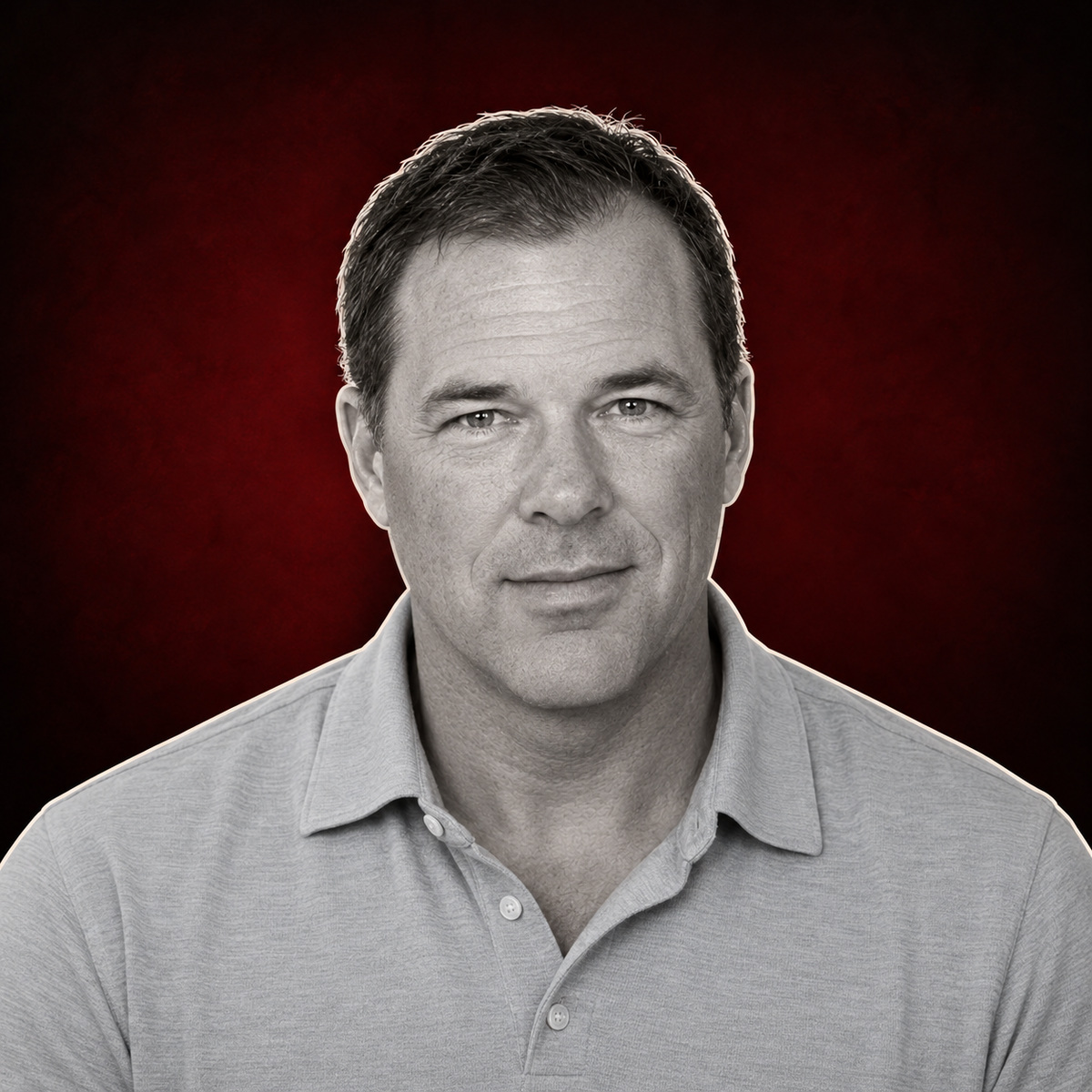
Travis Houston
Travis Houston is a digital marketing strategist and entrepreneur and, with his wife Joy Houston, the co-founder of Book To Buyer, which helps experts write the book that builds their business and the funnel underneath it. Eric introduces him as having 16 years of experience scaling online businesses for health and personal development brands, working with names including John Assaraf, Dr. Amy Myers, Dr. Daniel Amen, Metagenics, Les Brown, and JJ Virgin. Travis is the author of Turn Views Into Profit and runs paid traffic to book sales funnels, using an AI agent connected to Claude to help manage his Meta ads account, and he has built AI tools that interview authors and guide them through front matter, covers, and publishing. Joy is CEO of Heal At Scale, which helps health practitioners build one-to-many programs. Travis coached Eric Berman through Proximity Pays to number one bestseller status, and he is a longtime San Diego member of Speakeasy Mastermind, which he says he has belonged to for well over a decade.
Website (Heal at Scale) Website (Book to Buyer) LinkedIn Instagram Facebook YouTube